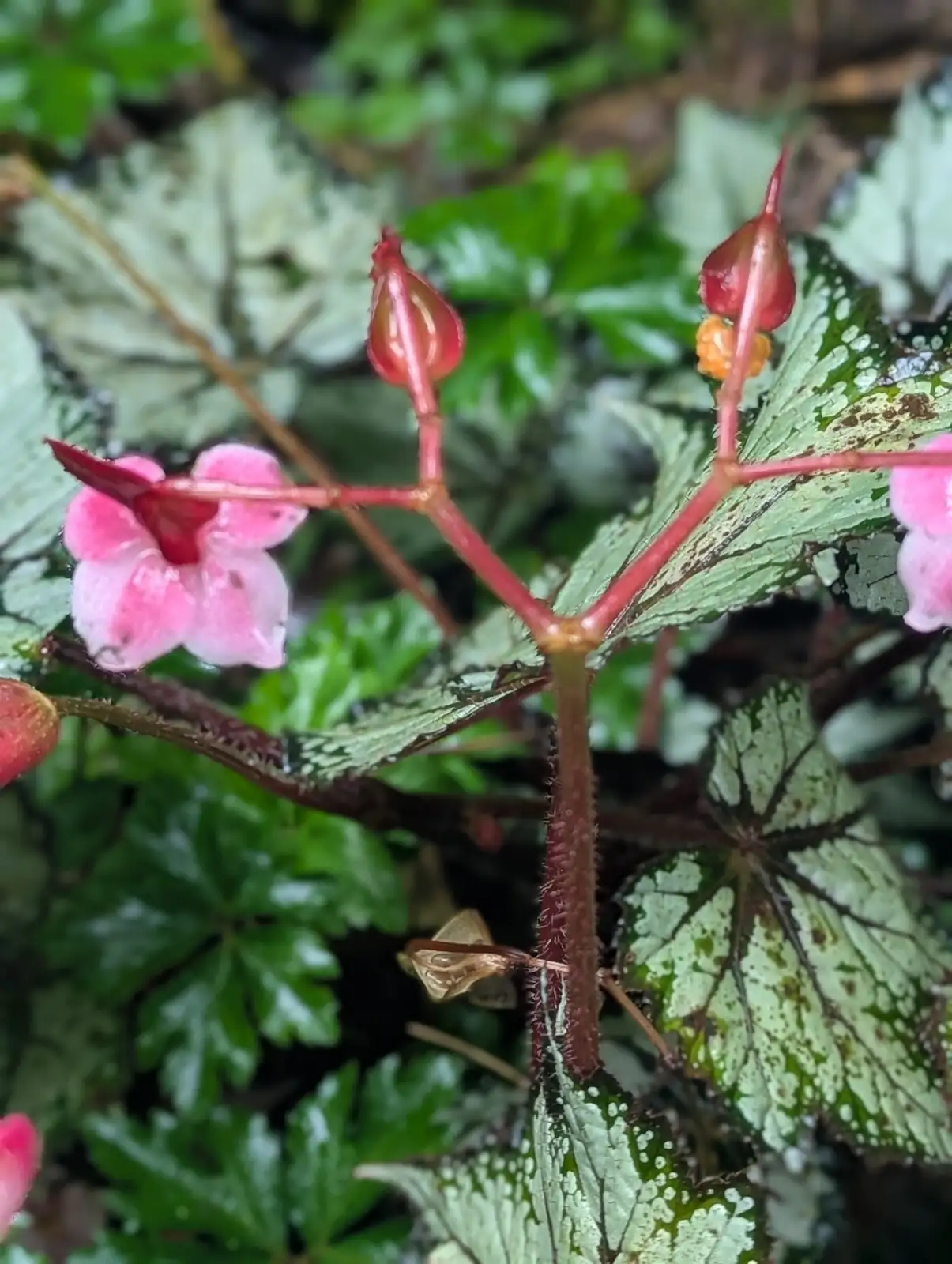
Plant Features
- Size: Typically 20–40 cm (8–16 in) tall with a spread of 25–45 cm (10–18 in), depending on pot size and growing conditions.
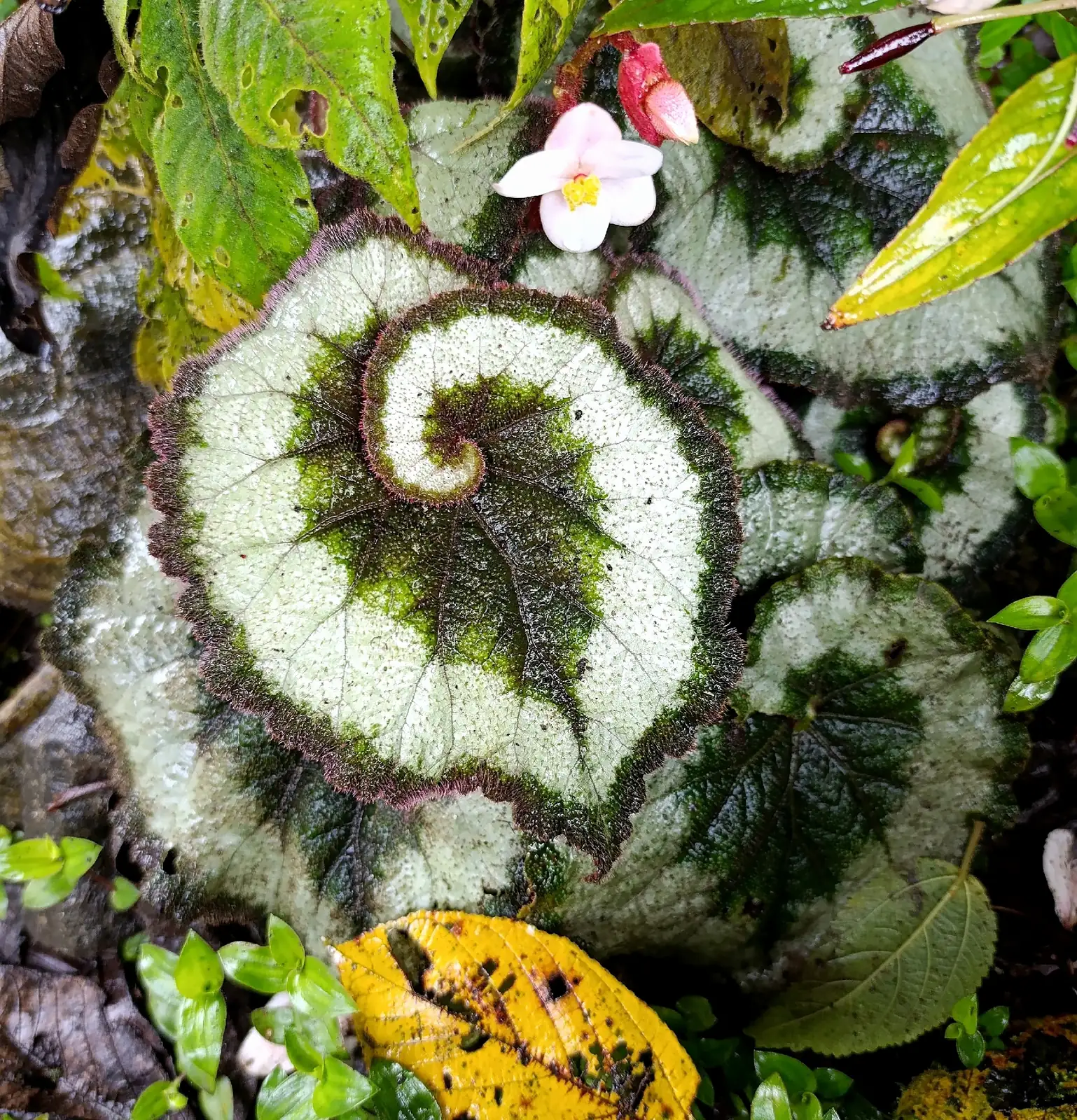
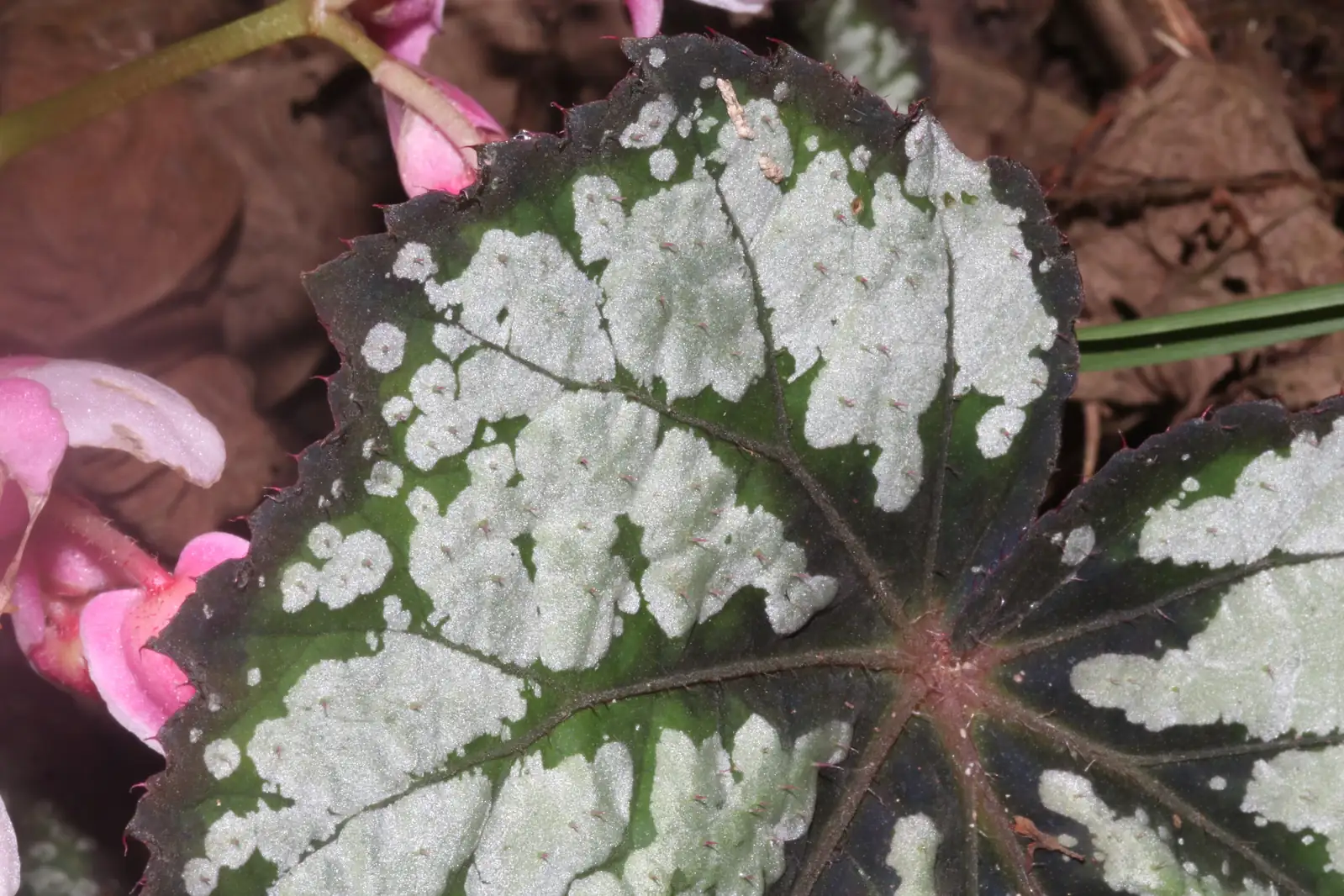
- Foliage: Bold, asymmetrical rex-begonia leaves with a pink-to-red upper surface and very dark, near-black mottling; the leaf underside is red, creating strong contrast and a “glowing” effect in good light.
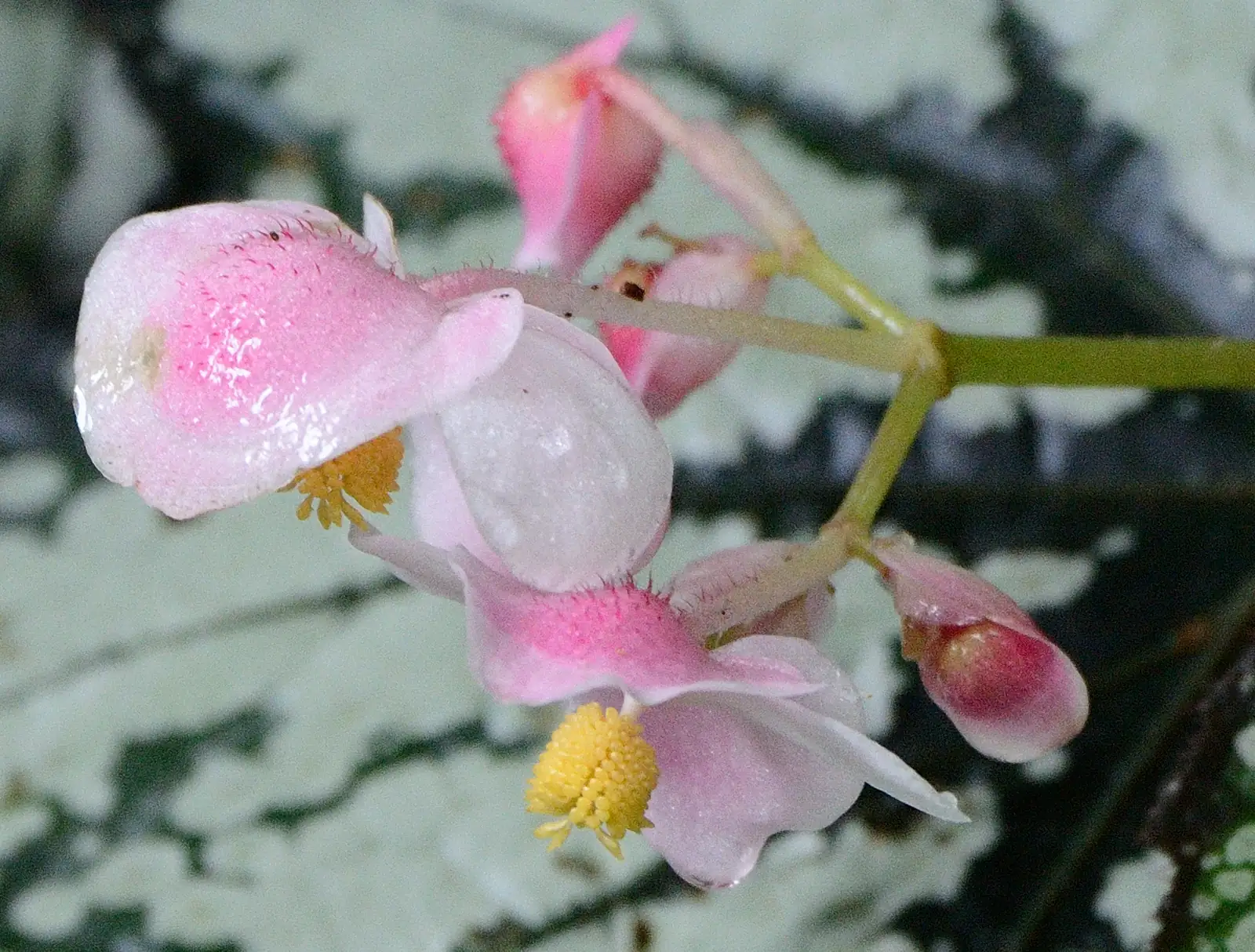
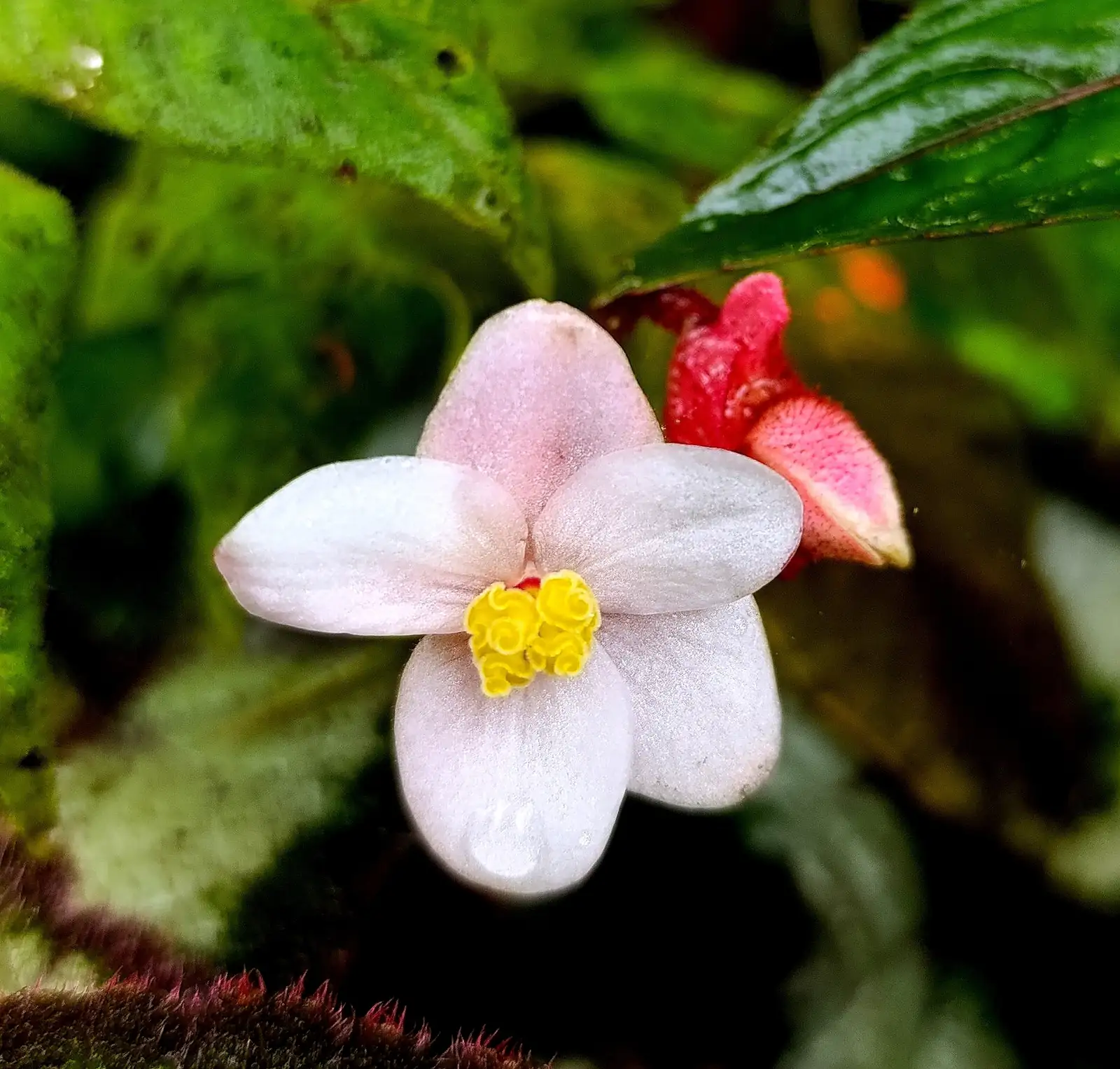
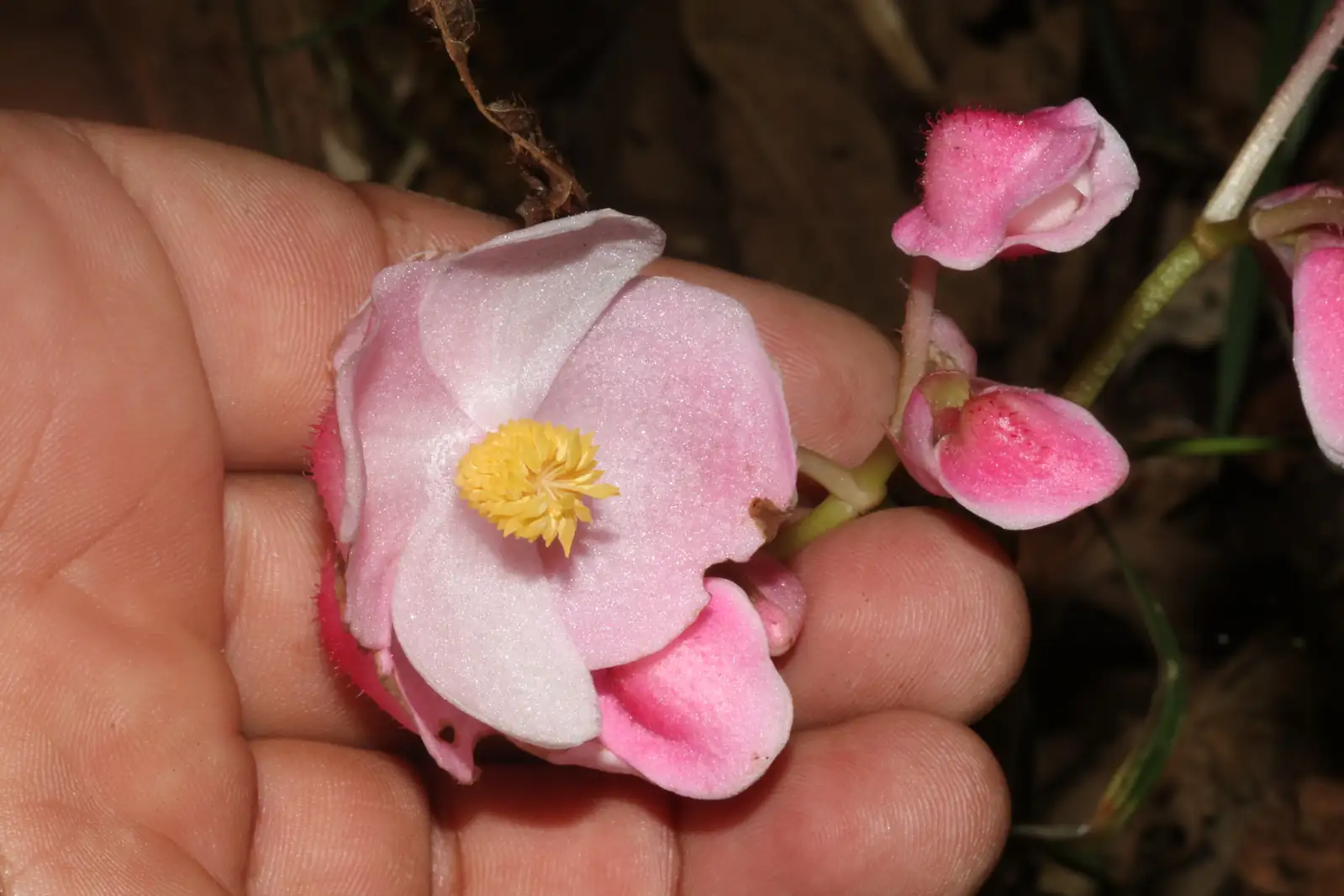
- Flower: May produce small, pale pink to white flowers, but blooms are usually sparse indoors and are considered secondary to the foliage.
- Flowering Season: Intermittent, most often late winter to spring indoors (varies with light and temperature).
- Growth Habit: Compact, clump-forming, rhizomatous perennial; typically grown as a colorful indoor foliage plant.
Environment
Sunlight
Bright, indirect light is ideal; tolerates gentle morning sun or part sun/part shade to enhance leaf color. Avoid harsh midday sun which can scorch leaves.
Temperature
18–27°C (64–81°F); avoid prolonged exposure below 13°C (55°F).
Humidity
Moderate to high humidity, ideally 50–70%. Provide airflow and avoid keeping leaves constantly wet to reduce fungal issues.
Soil
Loose, fast-draining mix that holds light moisture (for example, a peat/coco-based houseplant mix amended with perlite and/or fine bark). It should stay lightly moist, never waterlogged.
Placement
Indoors near an east- or north-facing window, or set back from a bright south/west window; also does well on a bright shelf or in a well-lit bathroom if there’s good ventilation.
Hardiness
Not frost hardy; outdoors year-round mainly in USDA Zones 11–12. Elsewhere it’s best treated as a houseplant or seasonal outdoor container plant.
Care Guide
Difficulty
Moderate: happiest with steady warmth, higher humidity, and careful watering. Too wet can lead to rot; too dry often causes leaf-edge crisping.
Buying Guide
Pick a plant with firm rhizomes, sturdy growth, and clean, unblemished leaves. Avoid plants with mushy stems, a sour smell from the pot (possible rot), or widespread brown/black spotting (possible disease).
Watering
Water when the top 2–3 cm (1 in) of the mix feels dry. Water thoroughly, then let excess drain completely—never let the pot sit in water. Aim for even moisture: rex begonias dislike bone-dry conditions but can rot quickly if kept soggy.
Fertilization
During active growth (spring through early autumn), feed lightly with a balanced fertilizer at 1/4–1/2 strength every 2–4 weeks. Reduce or pause feeding in winter if growth slows.
Pruning
Remove older, damaged, or crispy leaves at the base. If it becomes leggy, trim back to encourage fresh growth from the rhizome.
Propagation
Easily propagated by rhizome division or leaf cuttings. Leaf pieces can be pinned to moist medium until plantlets form; keep warm and humid, but with ventilation to prevent rot or mildew.
Repotting
Repot about every 12–18 months, or when the rhizome crowds the container. Use a shallow pot with excellent drainage and refresh the mix to prevent compaction.
📅 Seasonal Care Calendar
Spring: repot if needed and restart light feeding. Summer: keep moisture steady, boost humidity, and protect from hot sun. Autumn: taper feeding and watch for cooler nights. Winter: water less often, keep above 13°C (55°F), and provide the brightest indirect light you can.
Pests, Diseases & Safety
Common Pests & Diseases
Common pests include spider mites, mealybugs, thrips, and fungus gnats. Issues to watch for are powdery mildew and rhizome/root rot (often from overwatering). Improve airflow, avoid wet foliage, and use a well-draining mix; treat outbreaks with insecticidal soap or horticultural oil as needed.
Toxicity
Toxic if chewed—especially the rhizomes—to cats and dogs, and may cause mouth irritation and digestive upset. Keep out of reach of pets and children.
Culture & Symbolism
Symbolism: Begonias are often linked with individuality and a touch of caution; rex begonias, in particular, are celebrated for their expressive, “painted” leaves.
History & Legends: Rex begonias are horticultural hybrids derived from Begonia rex and close relatives. Cultivars like ‘Rumba’ were selected by growers for standout leaf color and pattern rather than showy flowers.
Uses: A decorative foliage plant for indoor pots and bright shelves; suitable for terrariums only when there’s good ventilation; also lovely in shaded outdoor containers in warm, frost-free climates.
FAQ
Why are the leaves losing their red color?
This is most often a light issue—colors fade in low light. Move it to brighter indirect light or give it gentle morning sun, and avoid strong feeding when light levels are low.
Why are the leaf edges turning brown and crispy?
Usually low humidity, uneven watering, hot direct sun, or fertilizer-salt buildup. Aim for 50–70% humidity, keep watering more even, protect from harsh sun, and flush the pot with clean water occasionally.
Can I mist rex begonias?
Misting can briefly raise humidity, but wet leaves can encourage fungal problems. A humidifier or pebble tray plus good airflow is typically safer.
Fun Facts
- Rex begonias are nicknamed “painted-leaf begonias” because their foliage looks hand-brushed with dramatic dark and sometimes metallic effects.
- Many rex begonia cultivars develop their strongest coloration in bright, filtered light rather than in deep shade.