Plant Features
- Size: About 25 × 25 cm (10 × 10 in) as a mature potted plant; typically stays compact.
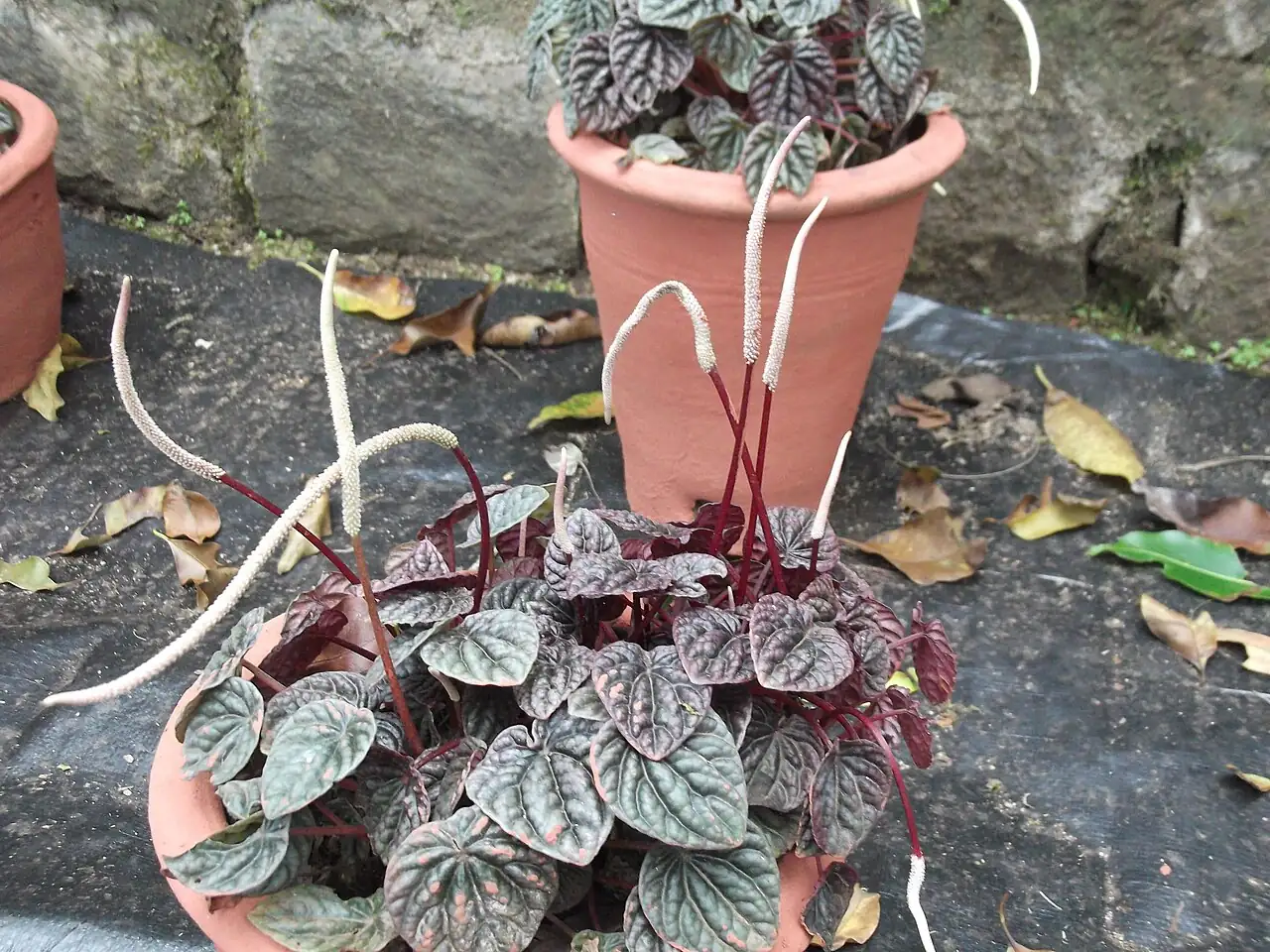
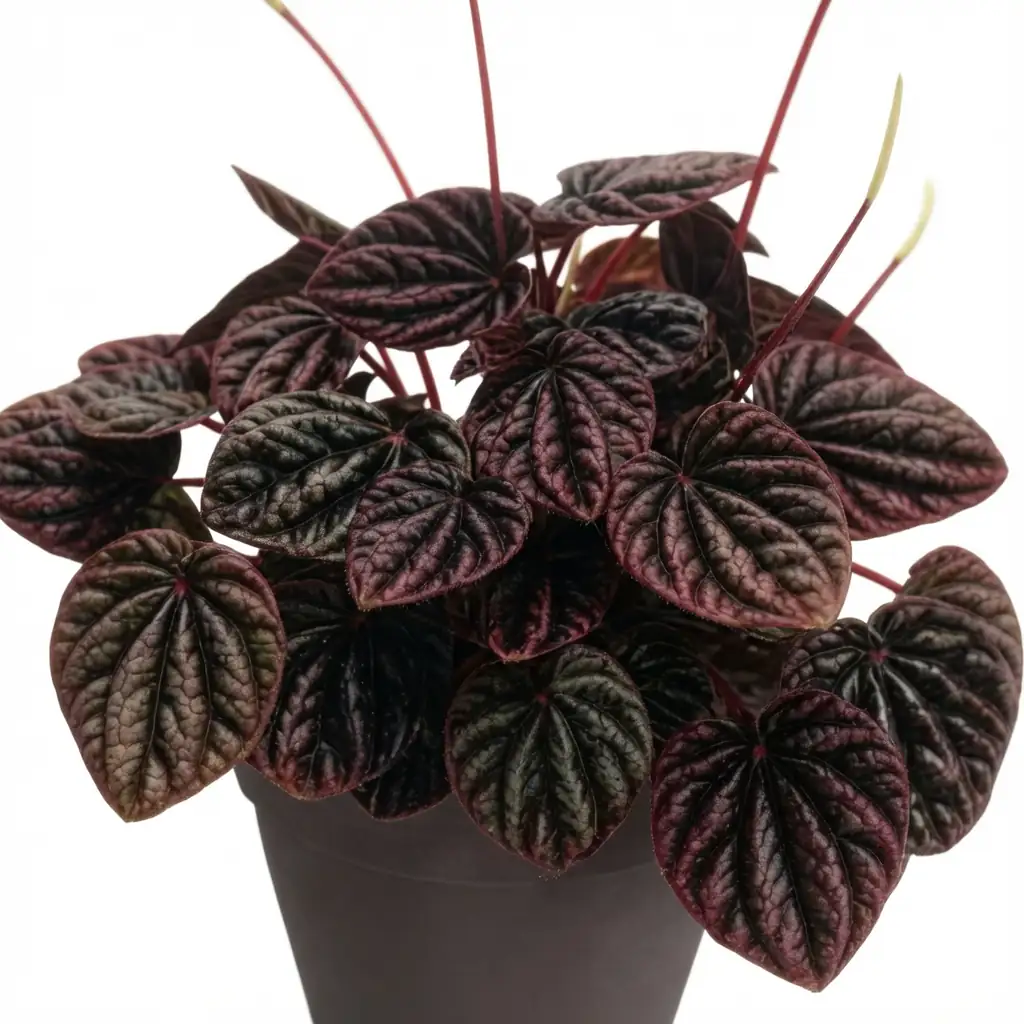
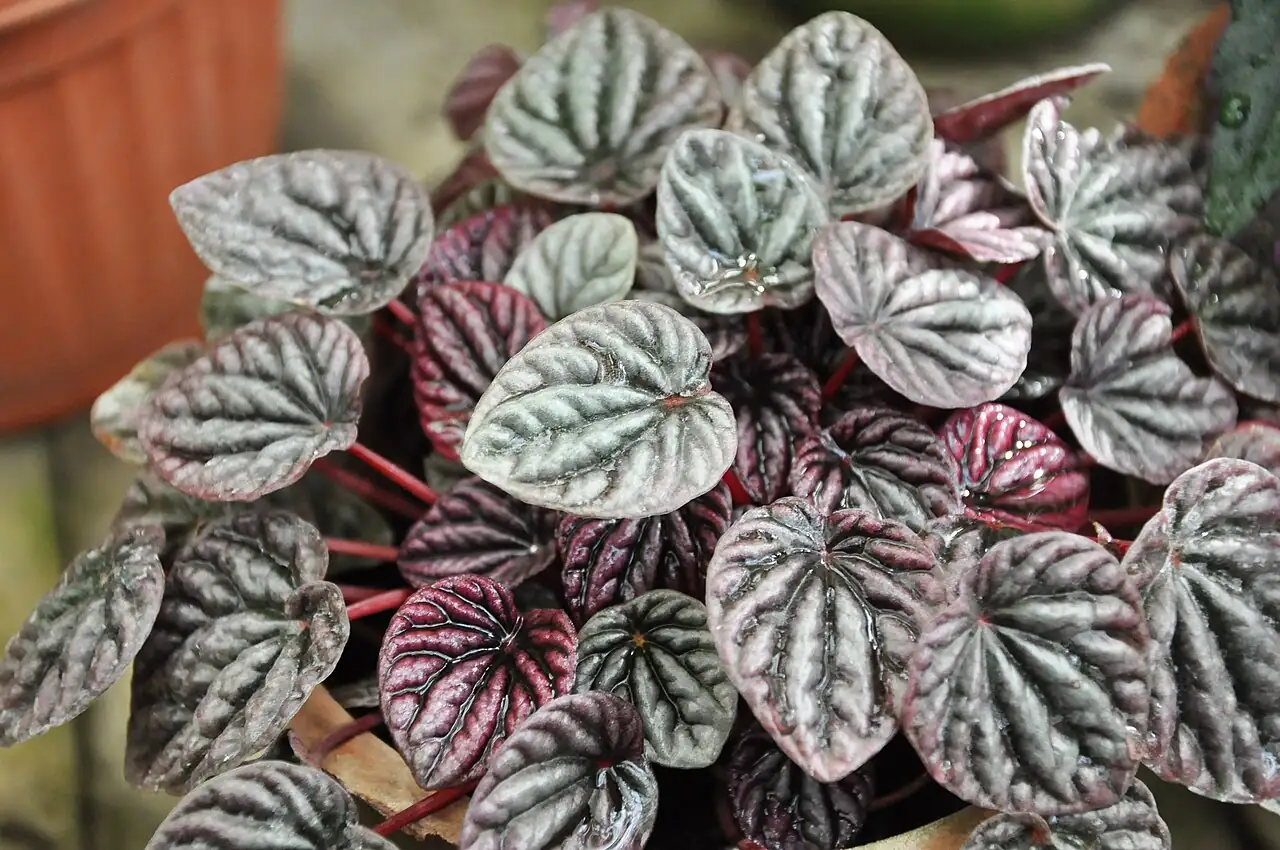
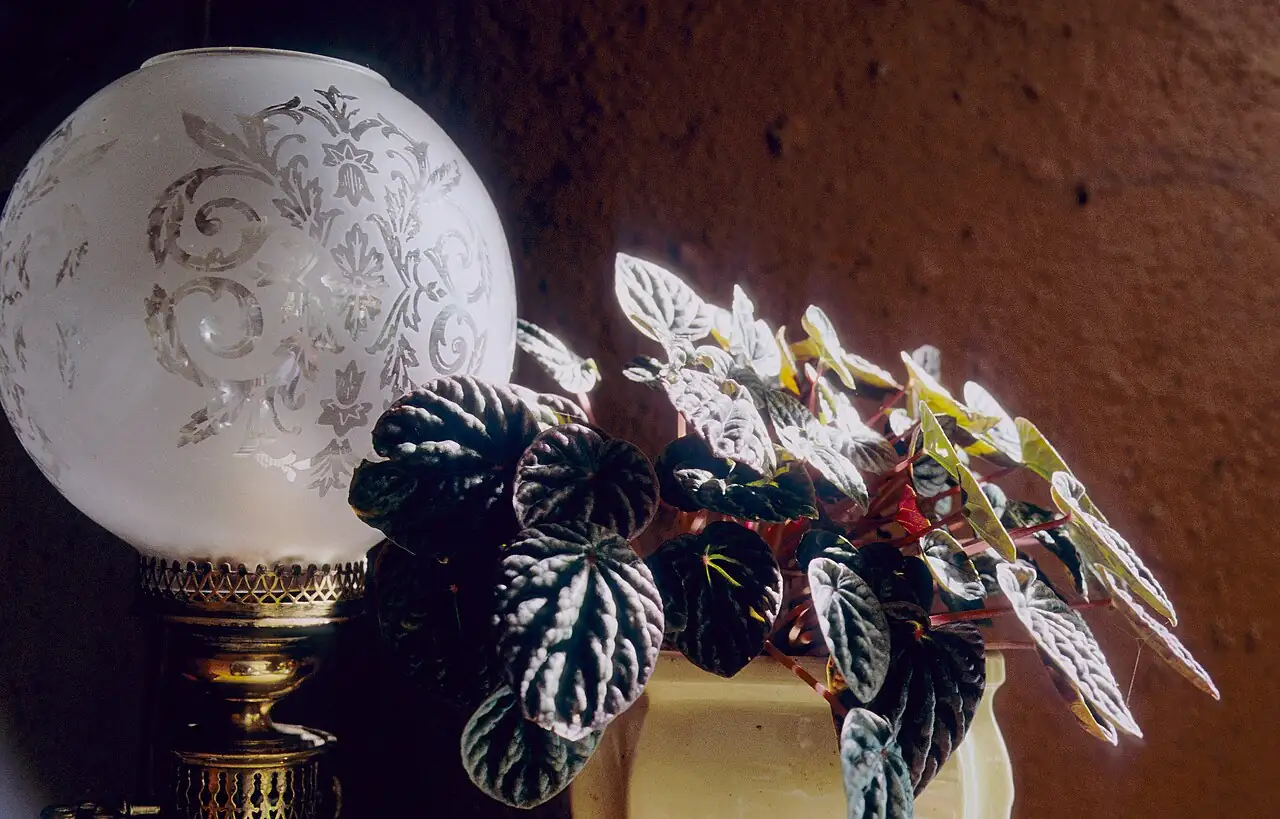
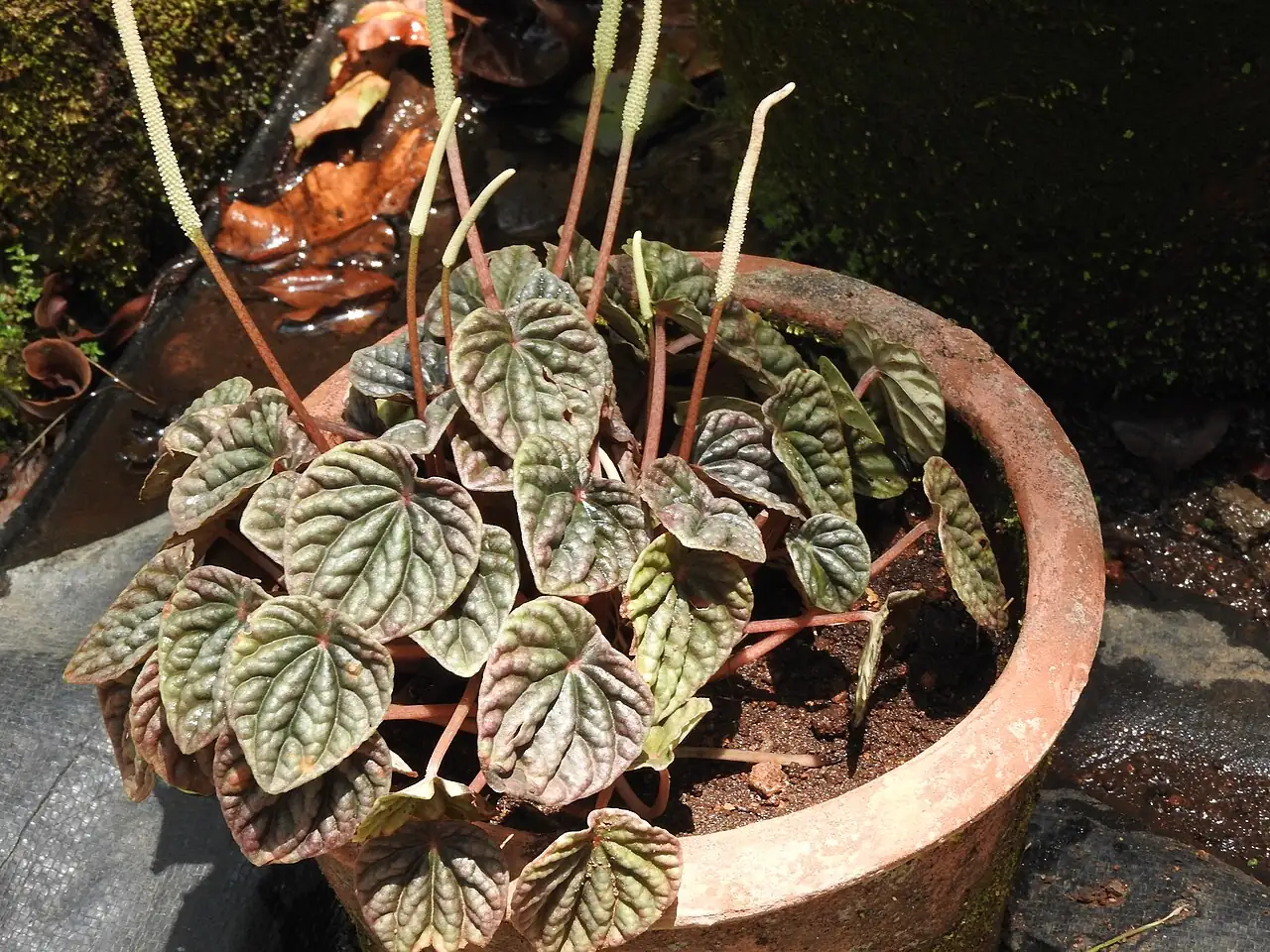
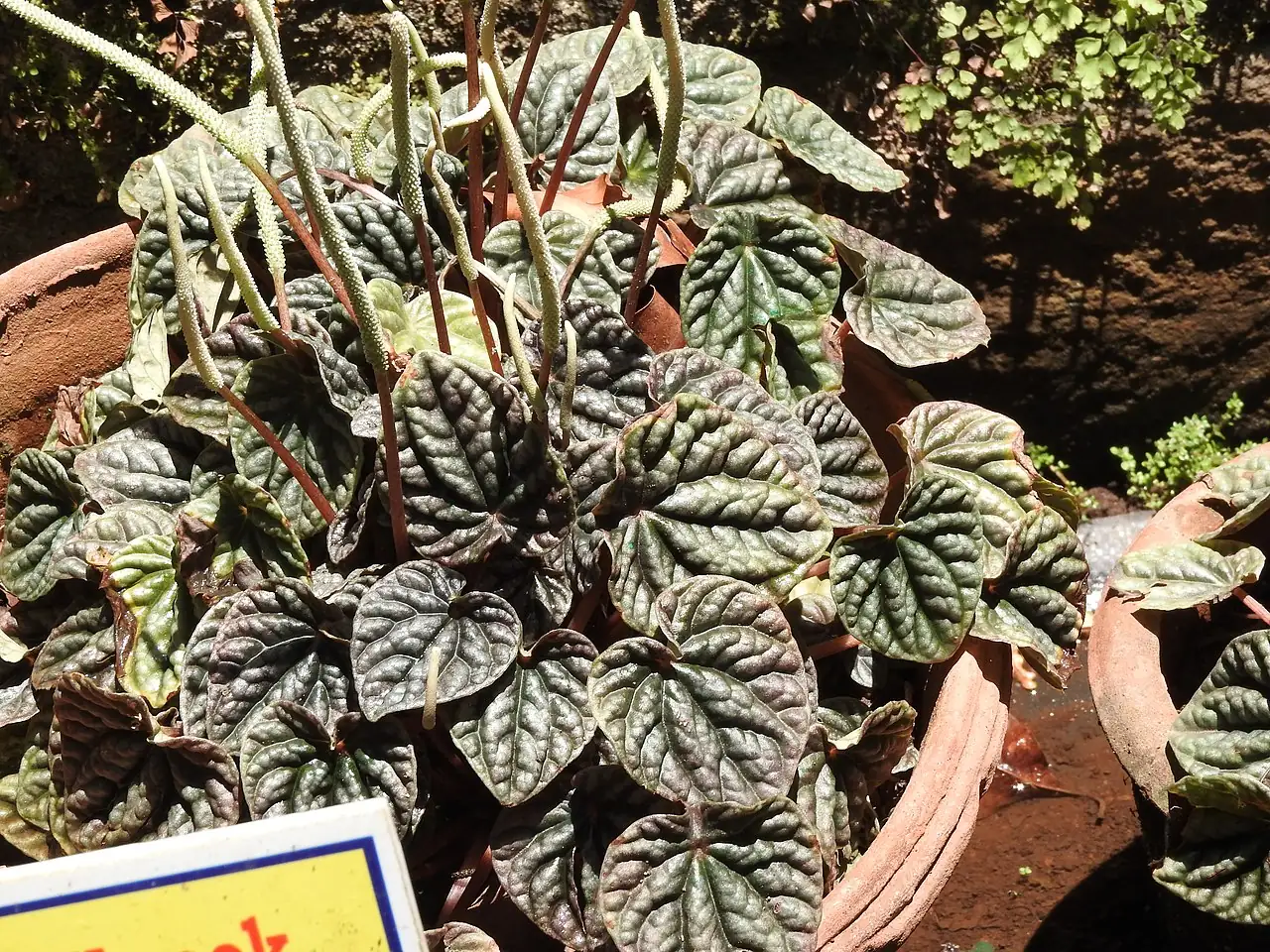
- Foliage: Heart-shaped leaves with a finely crinkled, rippled surface. Color varies by cultivar—often green, red, or burgundy—with a subtle two-tone effect that shows best in bright, indirect light.
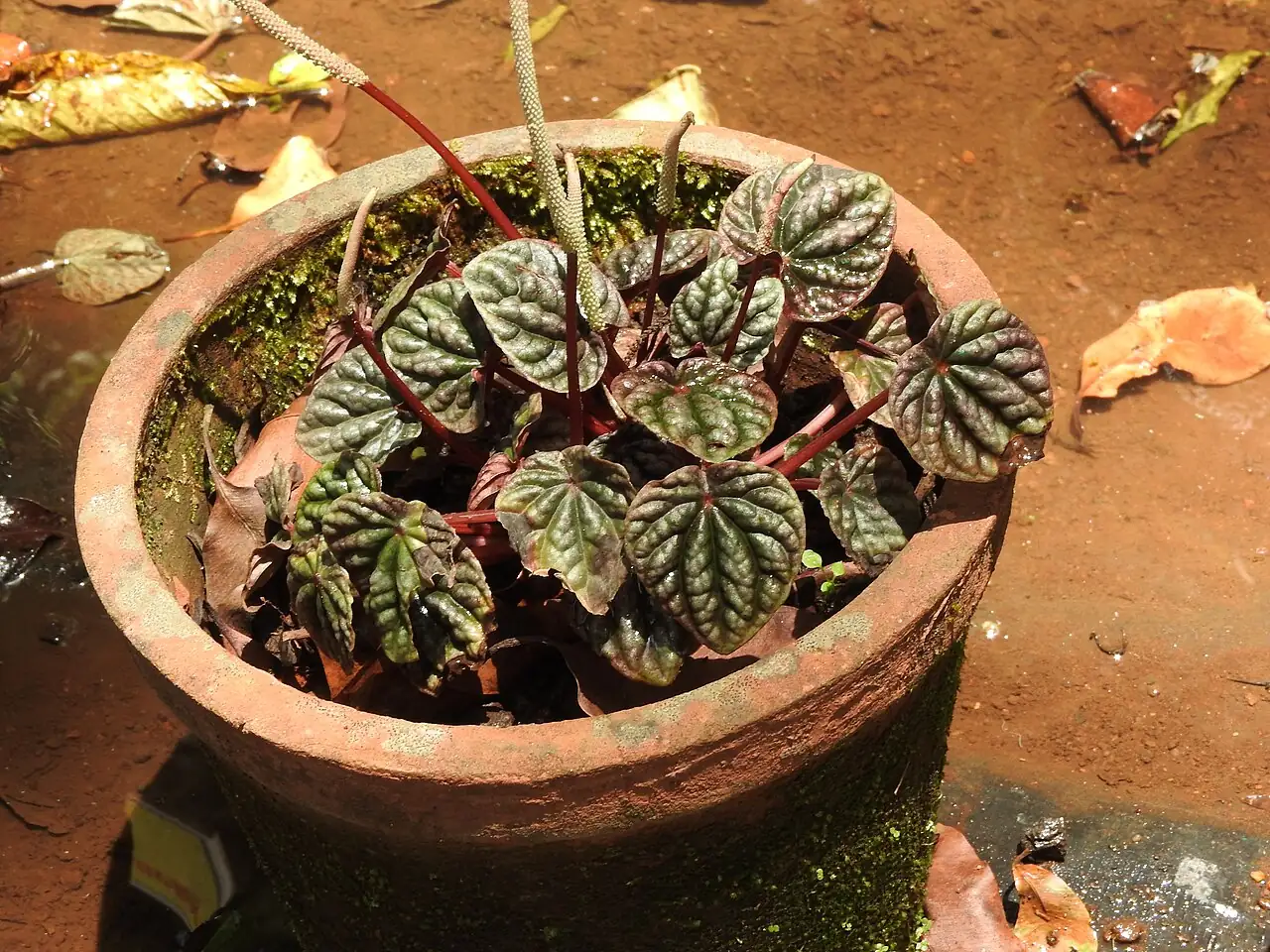
- Flower: Thin, upright, cream to pale green flower spikes (typical Peperomia “rat-tail” inflorescences) held above the foliage.
- Flowering Season: Summer
- Growth Habit: Compact, clump-forming plant with an upright-to-mounded shape; grown mainly for decorative foliage.
Environment
Sunlight
Partial shade to bright, indirect light. Avoid harsh direct sun, especially midday sun, which can scorch leaves.
Temperature
15–24°C (59–75°F). Protect from chills and cold drafts; ideally keep above 12°C (54°F).
Humidity
Moderate to high humidity (around 50%+). Performs especially well in naturally humid rooms.
Soil
Loose, airy, fast-draining potting mix. A quality houseplant mix amended with perlite (e.g., a generous handful) helps prevent waterlogging and root problems.
Placement
Great for a bright bathroom or kitchen (higher humidity), or any stable indoor spot with medium light and good airflow. Keep away from hot sun and cold windows/drafts.
Hardiness
Not frost-hardy; outdoors year-round only in USDA Zone 11–12 (approx.).
Care Guide
Difficulty
Very easy and forgiving, especially if you err on the dry side (overwatering is the main risk).
Buying Guide
Pick plants with firm, crisp leaves and no mushy stems. Avoid waterlogged pots or sour-smelling soil—common signs of developing root rot.
Watering
Spring to autumn: water when the surface of the mix has dried. Winter: keep the mix almost dry and water sparingly. For extra humidity, use a pebble tray (pot above the waterline). Avoid misting—water can sit in the leaf ripples and encourage spotting.
Fertilization
Spring to autumn: feed once a month with a balanced liquid fertilizer at 1/2 strength. Reduce or stop feeding in winter.
Pruning
Minimal. Remove yellowing leaves and cut off spent flower spikes at the base to keep the plant neat.
Propagation
Propagate from leaf or stem cuttings. Take a healthy leaf with a short petiole (or a stem tip), place in a moist, airy medium, and keep warm at about 20–24°C (68–75°F) until rooted.
Repotting
Use a small pot around 10 cm (4 in) with a well-draining mix (with perlite). Repot every 2–3 years or when rootbound; avoid oversized pots that stay wet too long.
📅 Seasonal Care Calendar
Spring–autumn: water when the surface dries; fertilize monthly at half strength. Summer: flower spikes may appear. Winter: keep nearly dry and reduce/stop feeding. Repot every 2–3 years when rootbound.
Pests, Diseases & Safety
Common Pests & Diseases
Overwatering can lead to root/stem rot. Common indoor pests include mealybugs, spider mites, and scale (more likely in dry air). Improve airflow, wipe leaves, and treat early with insecticidal soap or horticultural oil if needed.
Toxicity
Generally considered non-toxic to cats and dogs, though chewing any houseplant may cause mild stomach upset.
Culture & Symbolism
Symbolism: Often linked with quiet resilience and gentle charm—its sculptural, rippled leaves feel like living artwork.
History & Legends: A widely loved modern houseplant from the genus Peperomia, grown around the world for its compact size and richly textured foliage. Its flower spikes are interesting up close but are usually a secondary feature.
Uses: Primarily an ornamental indoor plant—ideal for desks, shelves, and small spaces; especially suited to humid rooms like bathrooms.
FAQ
What temperature range is best?
15–24°C (59–75°F). Keep it above about 12°C (54°F) and away from cold drafts.
What kind of light does it need?
Partial shade to bright, indirect light. Avoid strong direct sun.
How should I water it?
In spring through autumn, water when the top of the potting mix dries. In winter, keep it almost dry and water lightly. For humidity, use a pebble tray rather than misting.
How often should I fertilize, and at what strength?
Feed once a month in spring through autumn with a balanced liquid fertilizer at half strength; reduce or stop in winter.
Where should I place it indoors?
A humid, gently lit spot like a bathroom or kitchen is perfect, but it also does well anywhere with medium light and steady warmth.
When should I repot?
About every 2–3 years, or once it becomes rootbound—keep it slightly snug in its pot.
Fun Facts
- Those quirky “flowers” are actually slender inflorescence spikes typical of Peperomia—fun to inspect up close, even if the leaves steal the show.
- Because the leaf surface is deeply puckered, water droplets can linger and cause spotting—one reason pebble trays often beat misting for this plant.
- Its naturally small size makes it a classic desktop and shelf plant for tight indoor spaces.