Plant Features
- Size: Up to 2 m × 1 m (6.6 ft × 3.3 ft)
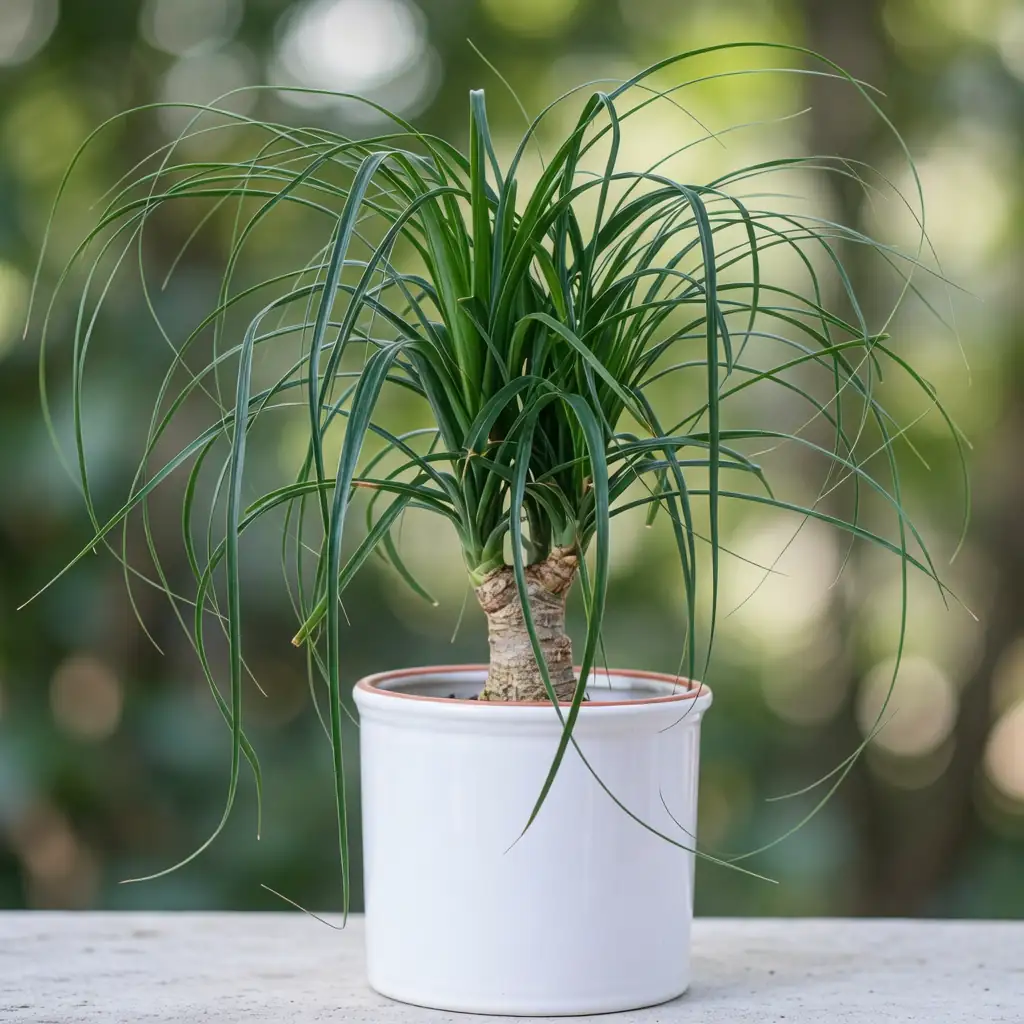
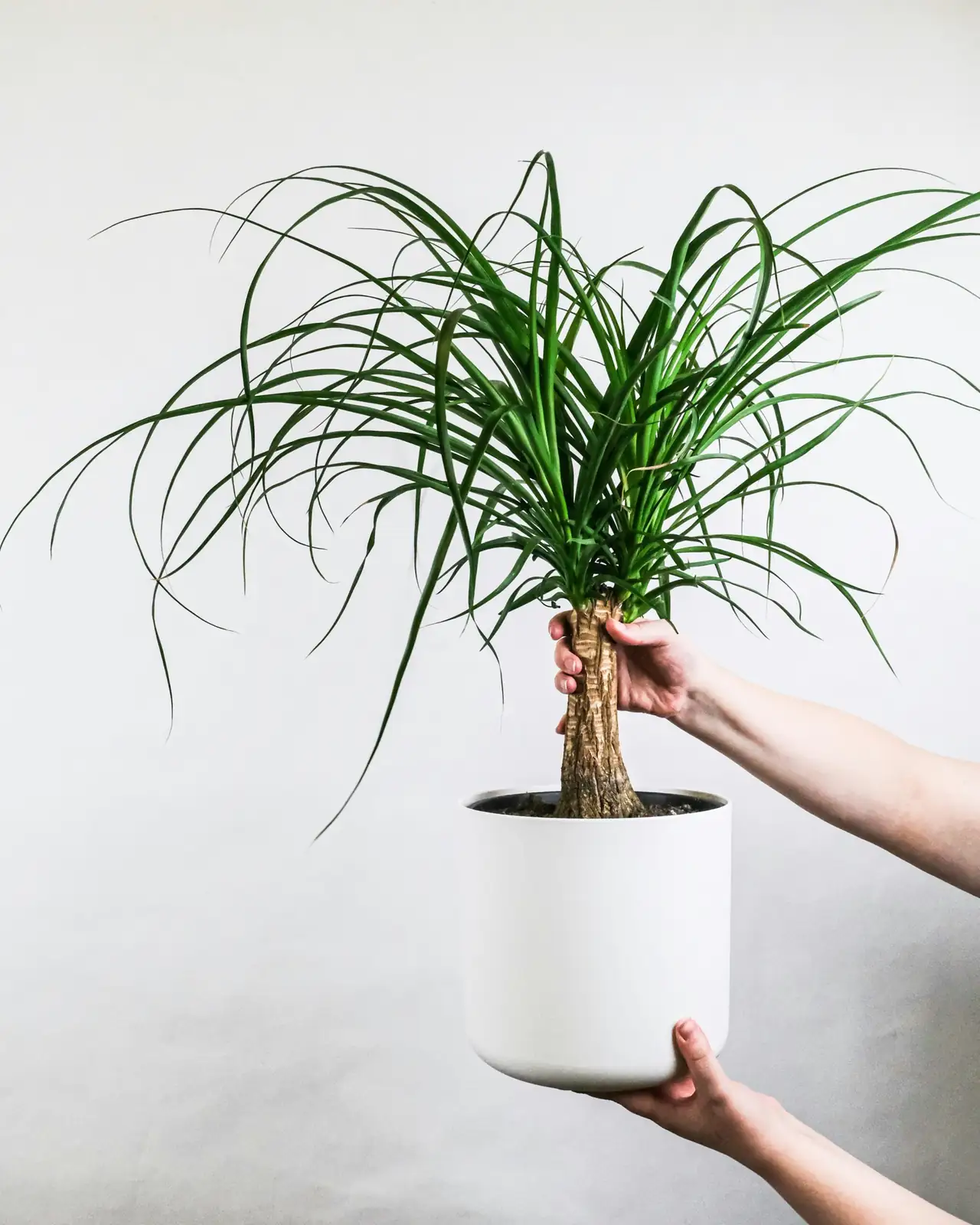
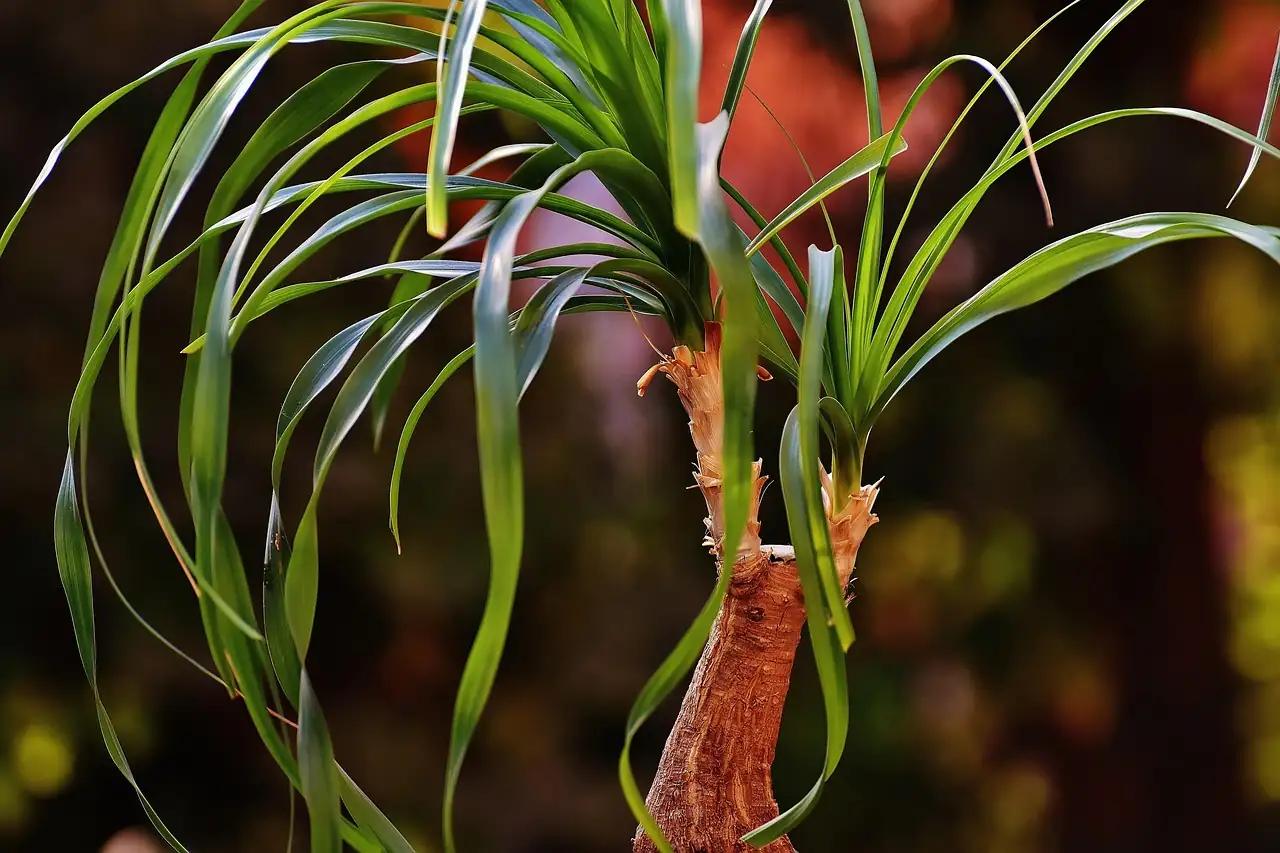
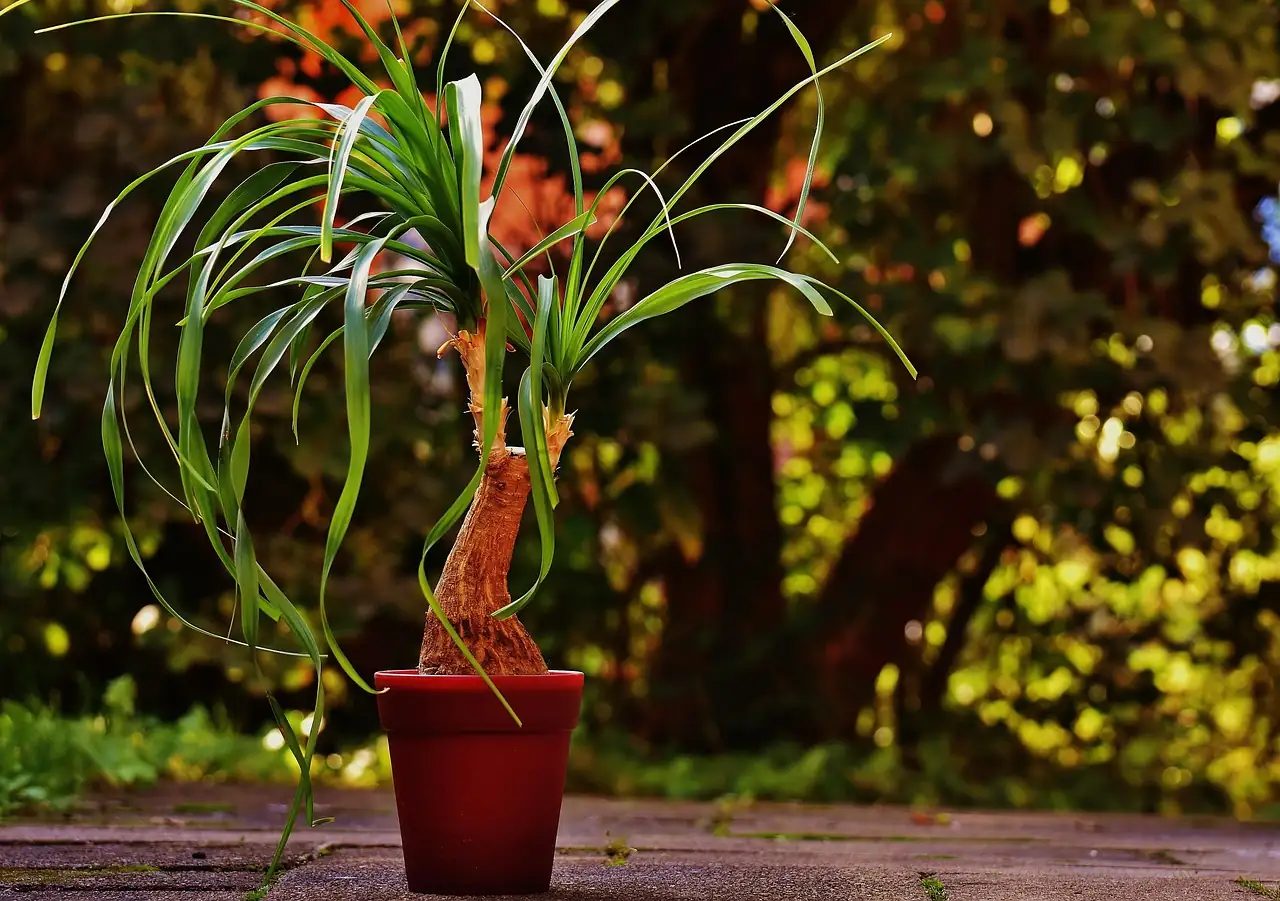
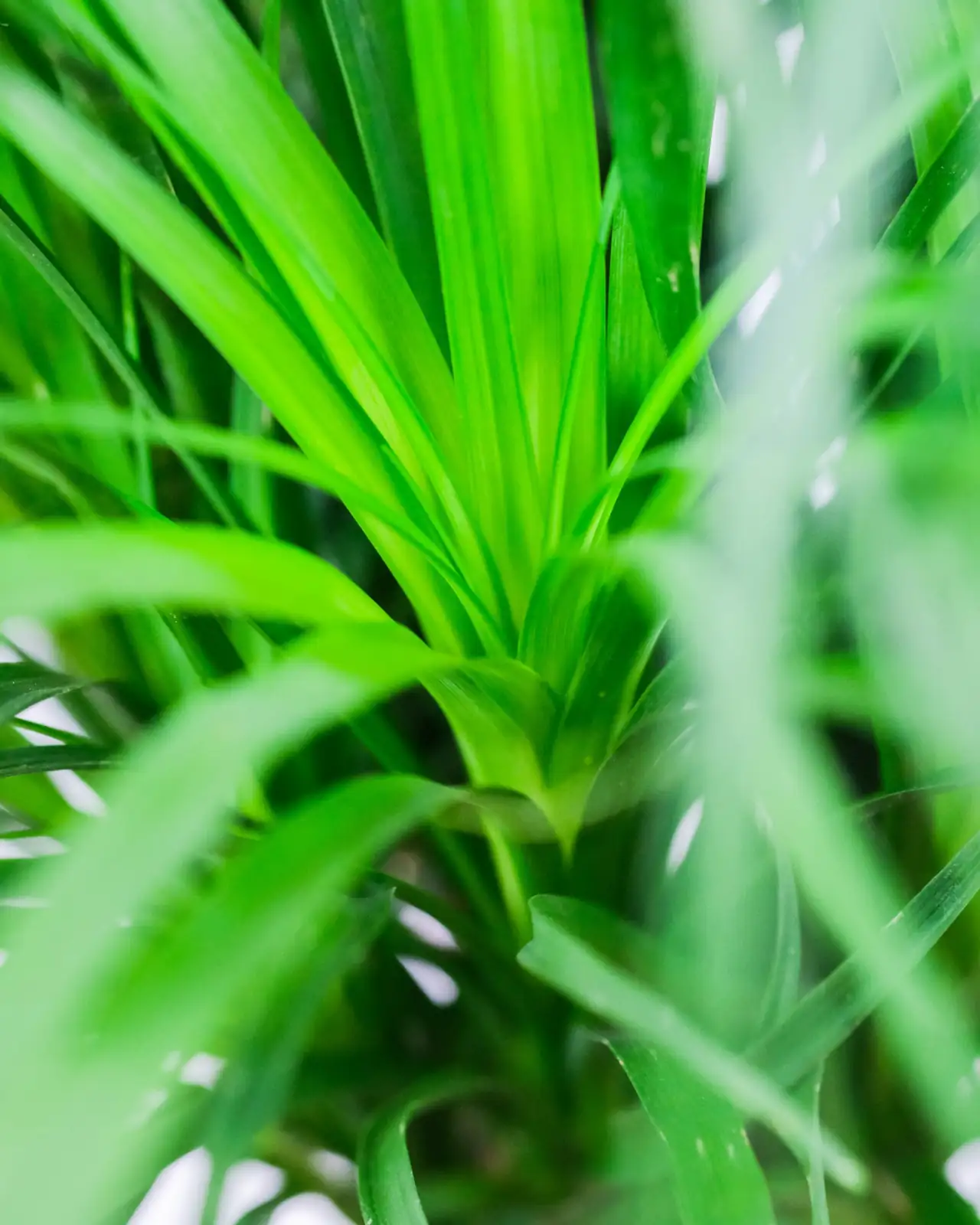
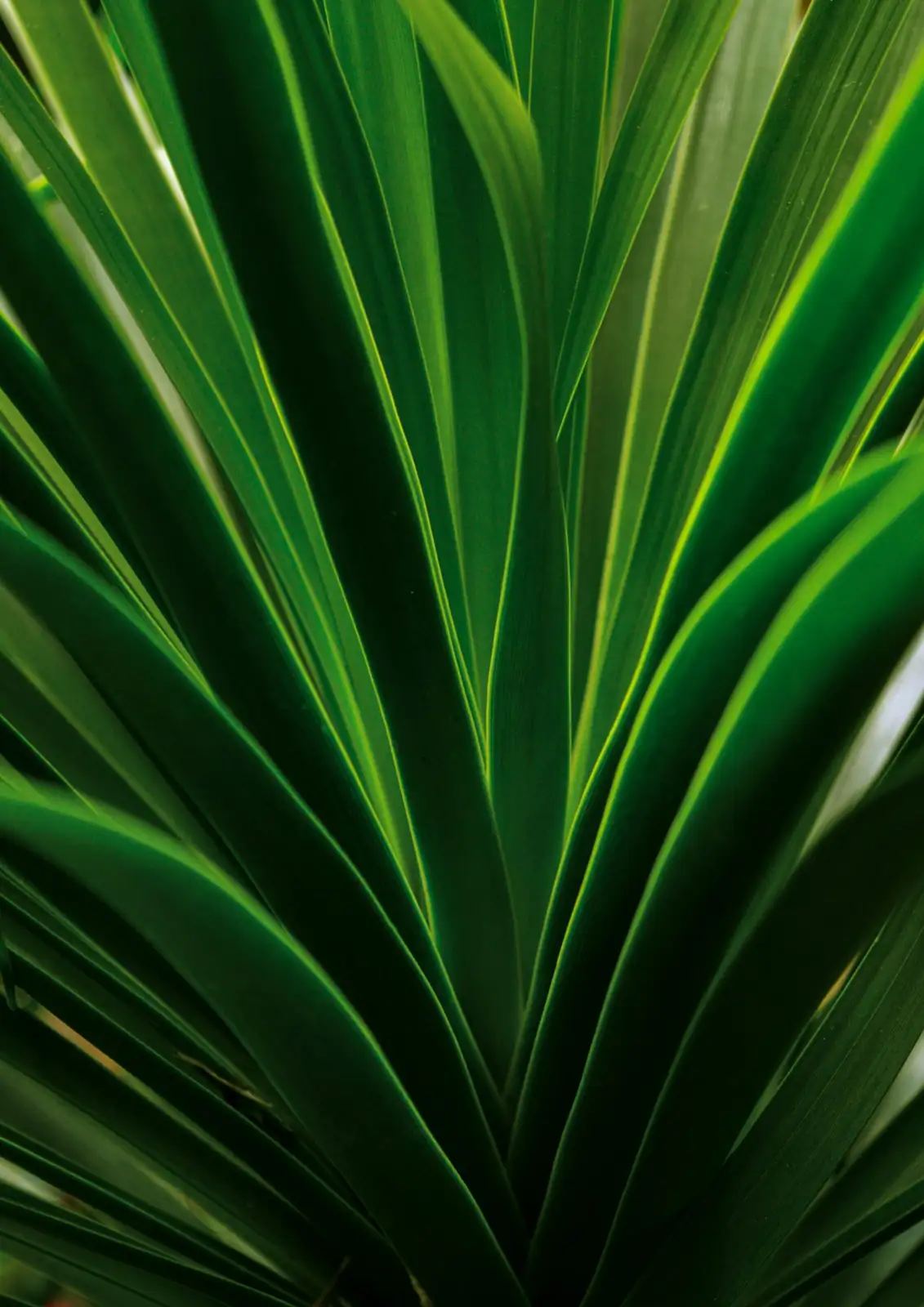
- Foliage: Long, narrow, arching leaves gather into a dense tuft at the top of the plant, cascading like a ponytail. The trunk is woody and textured, and the base is noticeably swollen because it stores water.
- Flower: On mature plants (mainly outdoors), small creamy-white flowers can appear in large, branched clusters; flowering is uncommon for typical indoor houseplants.
- Flowering Season: Typically summer (mainly on mature outdoor plants)
- Growth Habit: Slow-growing and upright, with a bulbous base and a single trunk that may branch with age, each head topped by a tuft of arching leaves.
Environment
Sunlight
Full sun to bright indirect light. Indoors, it’s happiest close to a very bright window and can tolerate some direct sun; in lower light it survives but grows slower and looks less full.
Temperature
5–26°C (41–79°F); protect from frost and prolonged cold.
Humidity
Low to average indoor humidity; avoid consistently humid, stagnant air.
Soil
Very free-draining soil is essential (cactus/succulent mix works well, or roughly 3 parts potting mix to 1 part sharp sand).
Placement
Best near a bright south- or west-facing window indoors, or any very bright spot; makes an excellent statement floor plant.
Hardiness
USDA Zone 9–11 (protect from frost)
Care Guide
Difficulty
Easy; does best with bright light and infrequent watering, making it forgiving for busy plant owners.
Buying Guide
Look for a firm, unwrinkled base (caudex), a sturdy trunk, and clean green leaves. Avoid soft spots at the base (possible rot), sour-smelling soil, or lots of fungus gnats—often signs of chronic overwatering.
Watering
Water thoroughly, then allow the top of the mix to dry before watering again. In summer this is often about once a week in bright conditions, but always adjust to how fast the pot dries. Because the base stores water, it tolerates missed waterings. In winter, keep the mix almost dry and water sparingly.
Fertilization
Spring and summer: feed monthly with a balanced liquid fertilizer at half strength. Autumn and winter: little to no feeding.
Pruning
Minimal. Trim only fully brown, dead leaf tips or remove older spent leaves as needed; do not cut into the living trunk.
Propagation
Most often by offsets (“pups”) when they appear. Let cuts callus, then root in a very free-draining medium with warmth and bright light. Seed propagation is possible but uncommon for home growers.
Repotting
Use a sturdy pot (often around 25–30 cm / 10–12 in wide for an established plant). Top-dress with fresh mix each spring. Repot every 2–3 years or when rootbound, moving up only one pot size—Ponytail Palm prefers being slightly tight in its container.
📅 Seasonal Care Calendar
Spring: top-dress with fresh mix; repot if needed (every 2–3 years, one size up). Spring/Summer: water when the surface dries; feed monthly at 1/2 strength. Summer: watering may be about weekly in bright conditions. Winter: keep nearly dry; water lightly and infrequently.
Pests, Diseases & Safety
Common Pests & Diseases
Usually resilient, but can get spider mites, mealybugs, or scale (especially in dry indoor air). The biggest risk is overwatering, which can lead to root rot or base rot—use a fast-draining mix and let the pot dry between waterings.
Toxicity
Generally considered non-toxic to people and pets, though chewing may cause mild stomach upset. Leaf edges can be sharp, so handle with care.
Culture & Symbolism
Symbolism: Often linked with resilience and self-sufficiency—its swollen base is literally a built-in water reserve that helps it cope with dry spells.
History & Legends: Widely popular as a low-maintenance, architectural houseplant. Its misleading common name is part of its charm: it looks like a palm, but botanically it belongs to the asparagus family.
Uses: Grown primarily as an ornamental foliage plant for bright interiors; also used outdoors as a striking landscape plant in warm, frost-free climates.
FAQ
Why is the base of my ponytail palm swollen?
That bulbous base is a natural water-storage organ (caudex). It helps the plant survive dry periods—so it’s better to underwater than overwater.
Can it live in low light?
It can survive in lower light for a while, but growth slows and the plant becomes less full. Bright light (including some sun) keeps it healthiest.
What’s the most common mistake with ponytail palms?
Overwatering. Use a very free-draining mix and let it dry well between waterings, especially in winter.
Fun Facts
- Despite its common name, Ponytail Palm is not a palm; it belongs to the asparagus family (Asparagaceae).
- Its swollen base stores water, which is why it’s notably drought tolerant and forgiving if you forget a watering now and then.
- Mature outdoor specimens can branch and form multiple heads—creating several “ponytails” on one plant.