

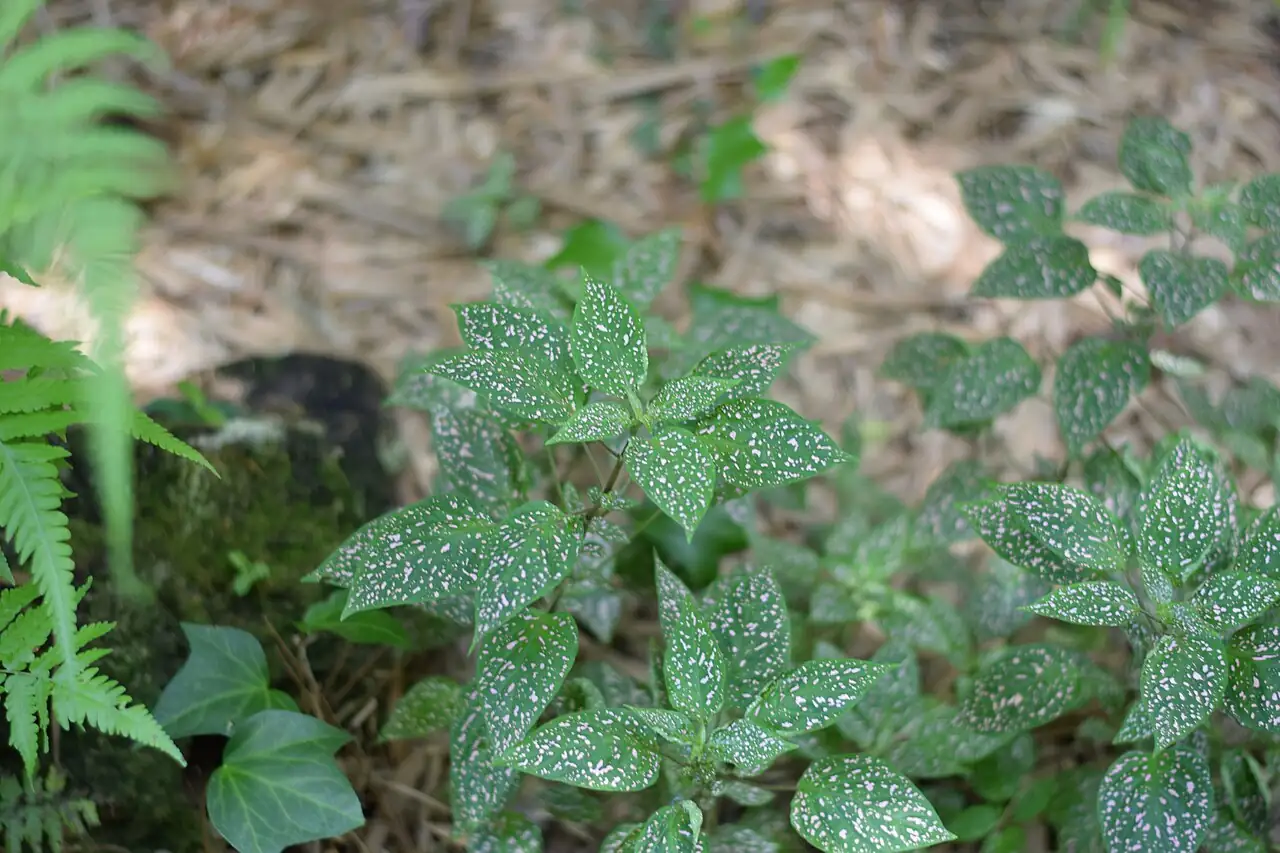
Plant Features
- Size: Typically about 25 × 25 cm (10 × 10 in) as a compact potted plant; can be kept smaller with regular pinching.
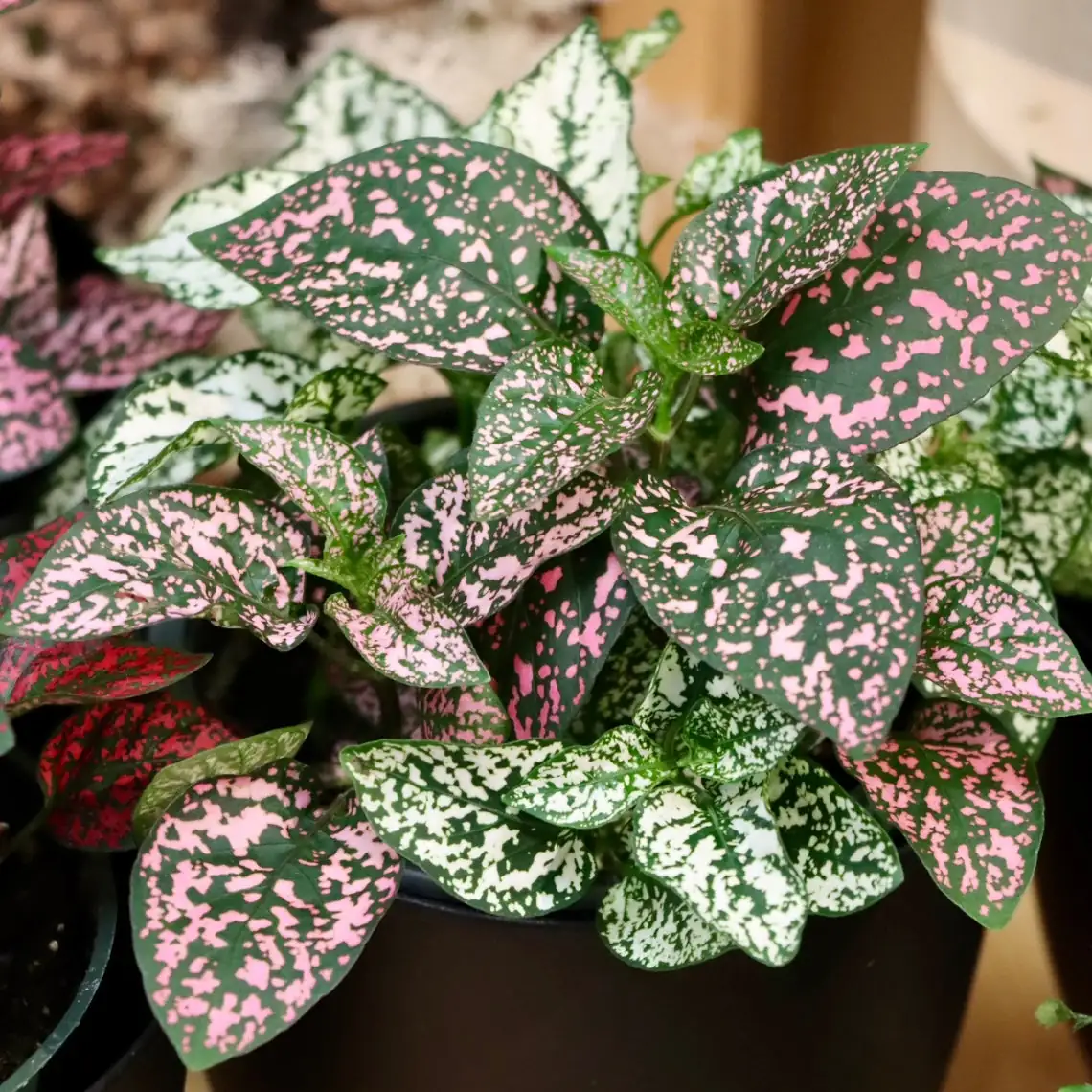
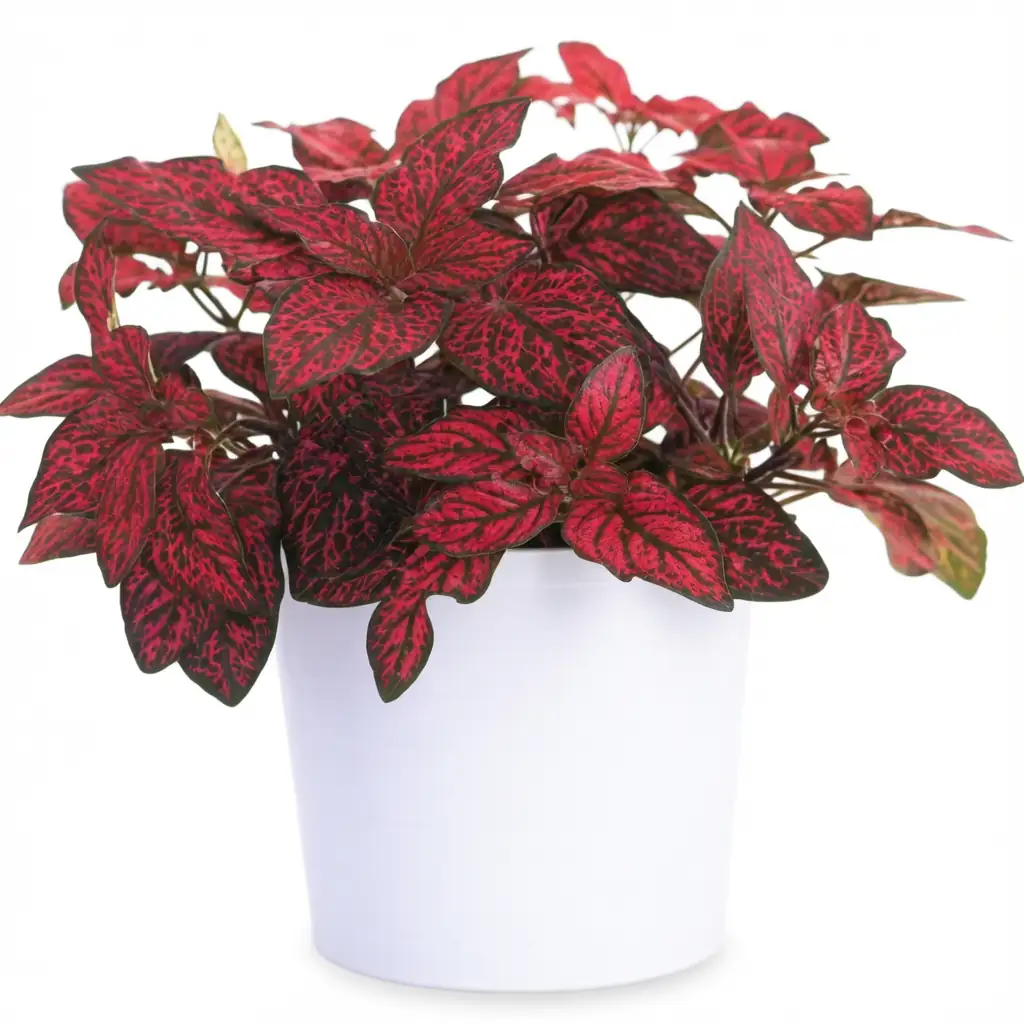
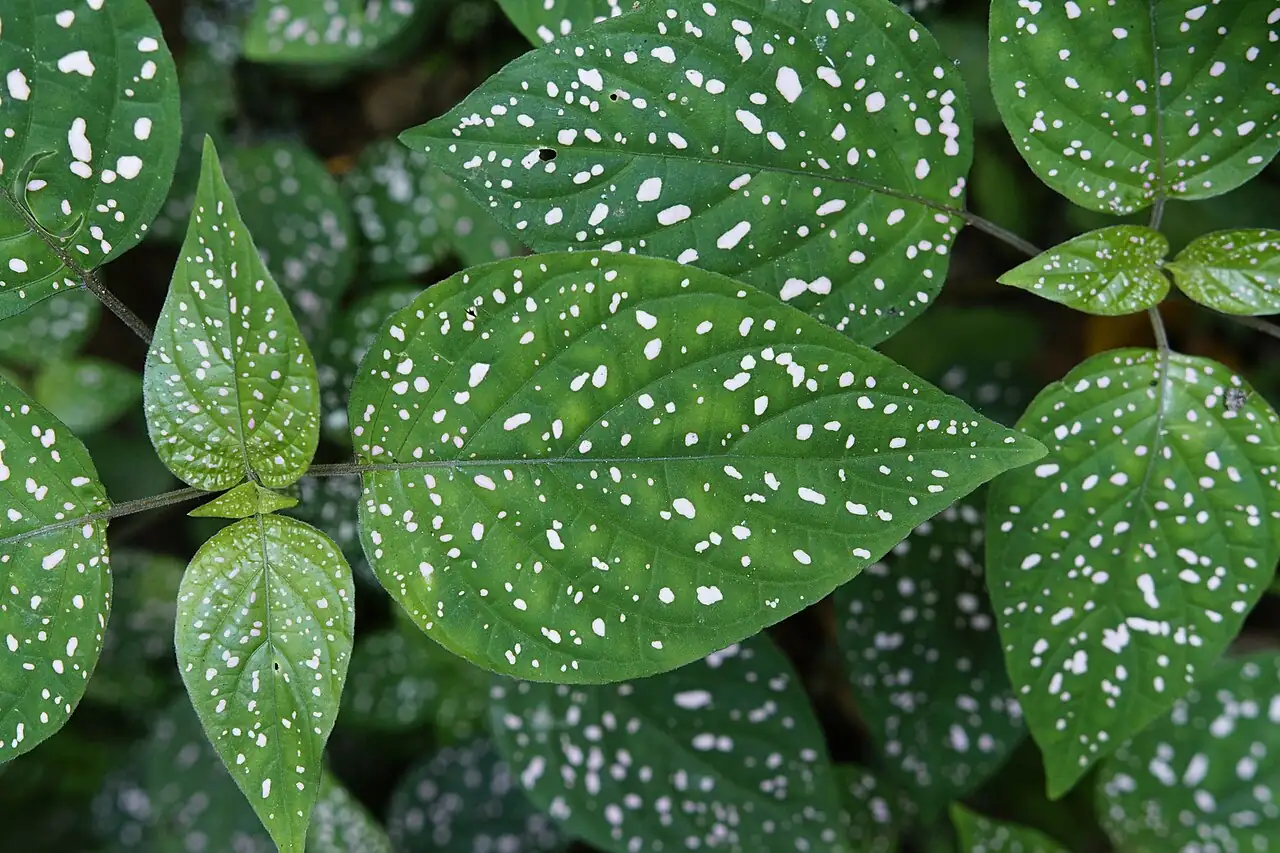
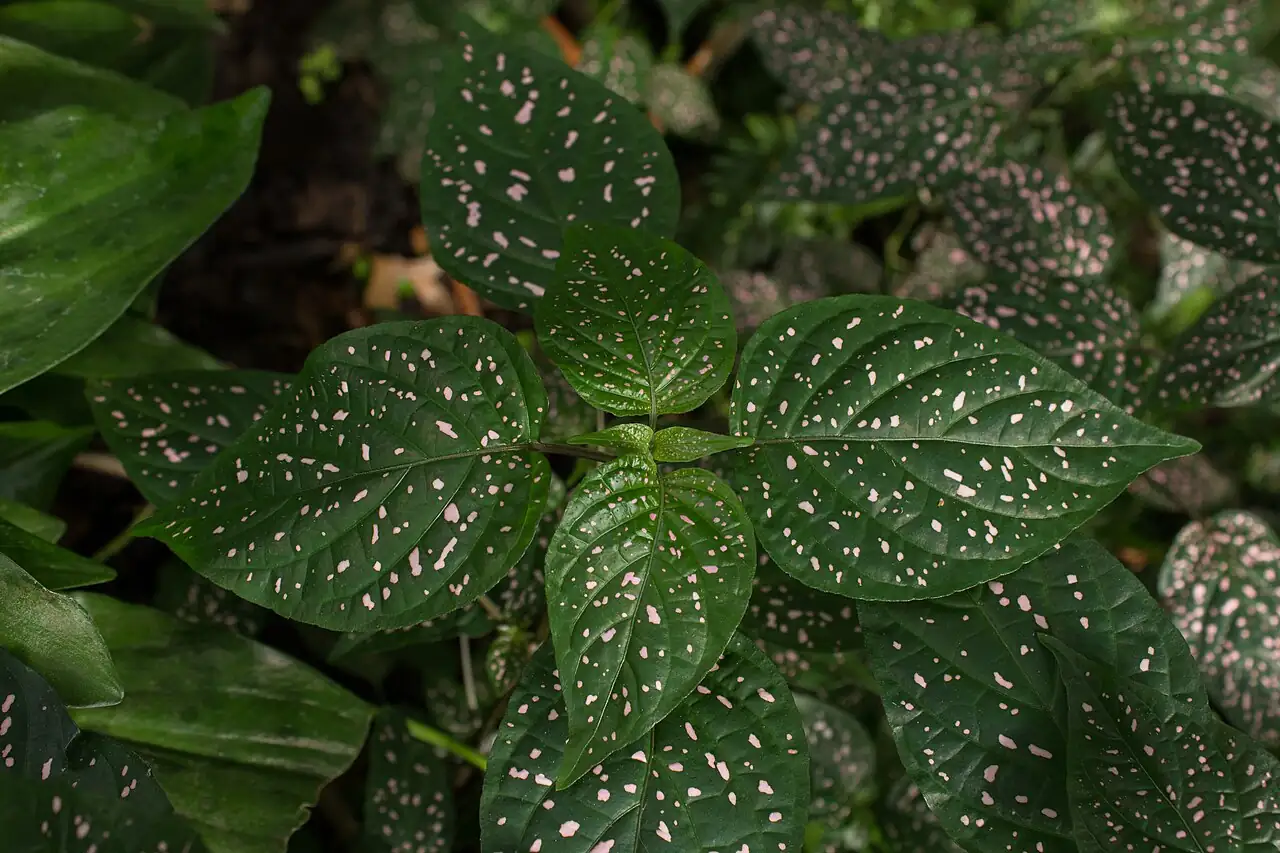
- Foliage: Green leaves (heart- to oval-shaped) heavily patterned with pink, red, or creamy-white spotting or blotching. Color is usually richest in brighter, filtered light; in low light leaves may turn greener and the plant can stretch.
- Flower: Small magenta to purplish flowers may appear in summer. Flowering can reduce the “show” of the foliage, so many growers remove flower spikes to keep the plant focused on leaves.
- Flowering Season: Summer
- Growth Habit: Compact, bushy, mounding plant that can become leggy without regular tip-pinching.
Environment
Sunlight
Bright, filtered light or partial sun; avoid harsh midday sun. Indoors, do well near an east window, a bright north window, or a few feet back from a sunny window.
Temperature
18–27°C (64–81°F); avoid chilling below about 13°C (55°F).
Humidity
Moderate to high humidity; aim for about 50%+ if possible. Benefits from a pebble tray (pot kept above the waterline) or naturally humid rooms.
Soil
Loose, well-draining potting mix (standard houseplant mix improved with perlite works well). Keep evenly moist but never waterlogged.
Placement
Bright spot with gentle light and higher humidity—bathroom or kitchen is ideal; also excellent for terrariums and enclosed glass containers (with some airflow).
Hardiness
USDA Zone 10–11 outdoors; not frost-tolerant (commonly grown as a houseplant in cooler climates).
Care Guide
Difficulty
Easy; the main challenge is preventing legginess and keeping moisture consistent without letting the pot stay soggy.
Buying Guide
Pick a plant that looks dense and bushy with strong leaf patterning. Avoid limp stems, yellowing leaves, or pots that smell sour (a warning sign of overwatering). Check leaf undersides for pests before purchasing.
Watering
Spring to autumn: water when the top 1–2 cm (0.4–0.8 in) of mix feels dry, then water thoroughly and let excess drain. Winter: reduce watering and keep the mix only lightly moist. If indoor air is dry, occasional misting or a pebble tray can help (without soaking the soil).
Fertilization
Spring to autumn: feed every 2 weeks with a balanced liquid fertilizer at 1/2 strength. Reduce or pause feeding in winter when growth slows.
Pruning
Pinch out stem tips regularly to encourage branching and a fuller, compact shape; remove flowers if you want maximum foliage color and density.
Propagation
Very easy from stem cuttings: take 5–10 cm (2–4 in) tips, remove lower leaves, and root in water or moist potting mix. Warm temperatures and higher humidity speed rooting.
Repotting
Move into a 12.5–15 cm (5–6 in) pot with fresh mix when needed. Repot every 2–3 years, or sooner if root-bound.
📅 Seasonal Care Calendar
Spring–autumn: water when the surface dries; feed every 2 weeks at 1/2 strength; pinch tips often for a compact plant. Summer: may bloom with small magenta flowers. Winter: keep just lightly moist and reduce/stop feeding. Repot every 2–3 years or whenever roots crowd the pot.
Pests, Diseases & Safety
Common Pests & Diseases
Can attract spider mites, aphids, mealybugs, and whiteflies—especially in dry indoor air. Treat early with insecticidal soap or horticultural oil and improve humidity/airflow. Overwatering may cause root rot; use a well-draining mix and never leave the pot sitting in water.
Toxicity
Generally considered non-toxic to cats and dogs, though chewing may still cause mild stomach upset. Keep out of reach of pets that like to nibble.
Culture & Symbolism
Uses: Primarily grown as an ornamental foliage plant. Perfect for terrariums, glass jars, and small containers, and it’s especially happy in naturally humid spaces like kitchens and bathrooms.
Fun Facts
- Light has a big say in the leaf pattern: too little light often makes the plant greener, less speckled, and more leggy.
- Regular pinching can keep a polka dot plant neat and compact for months, which is why it’s such a favorite for small pots and terrariums.


