

Plant Features
- Size: Typically 60–150 cm (2–5 ft) tall indoors; commonly around 60–90 cm (24–36 in) for many potted plants. Spread about 30–90 cm (12–36 in) depending on pruning and whether it’s staked.
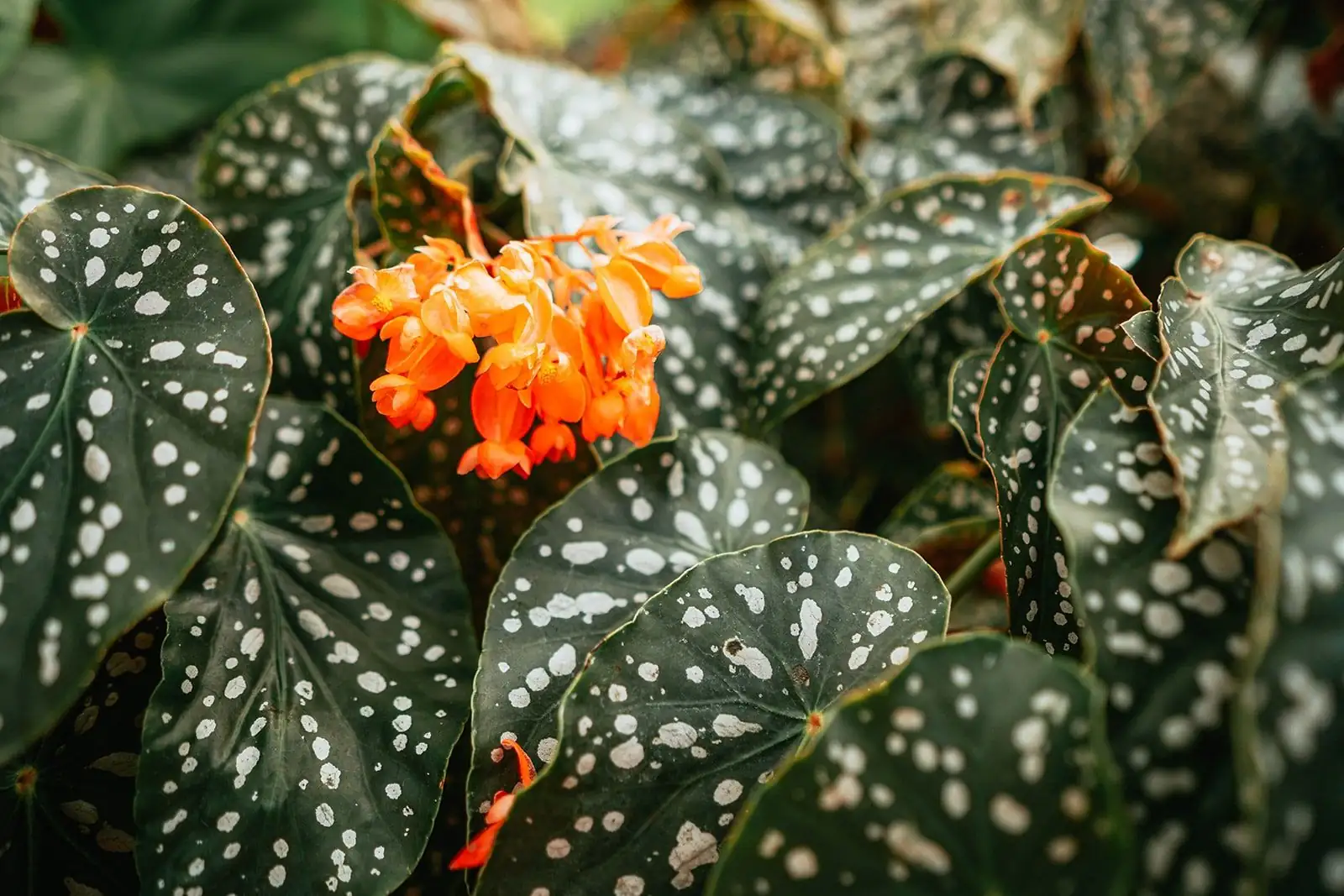
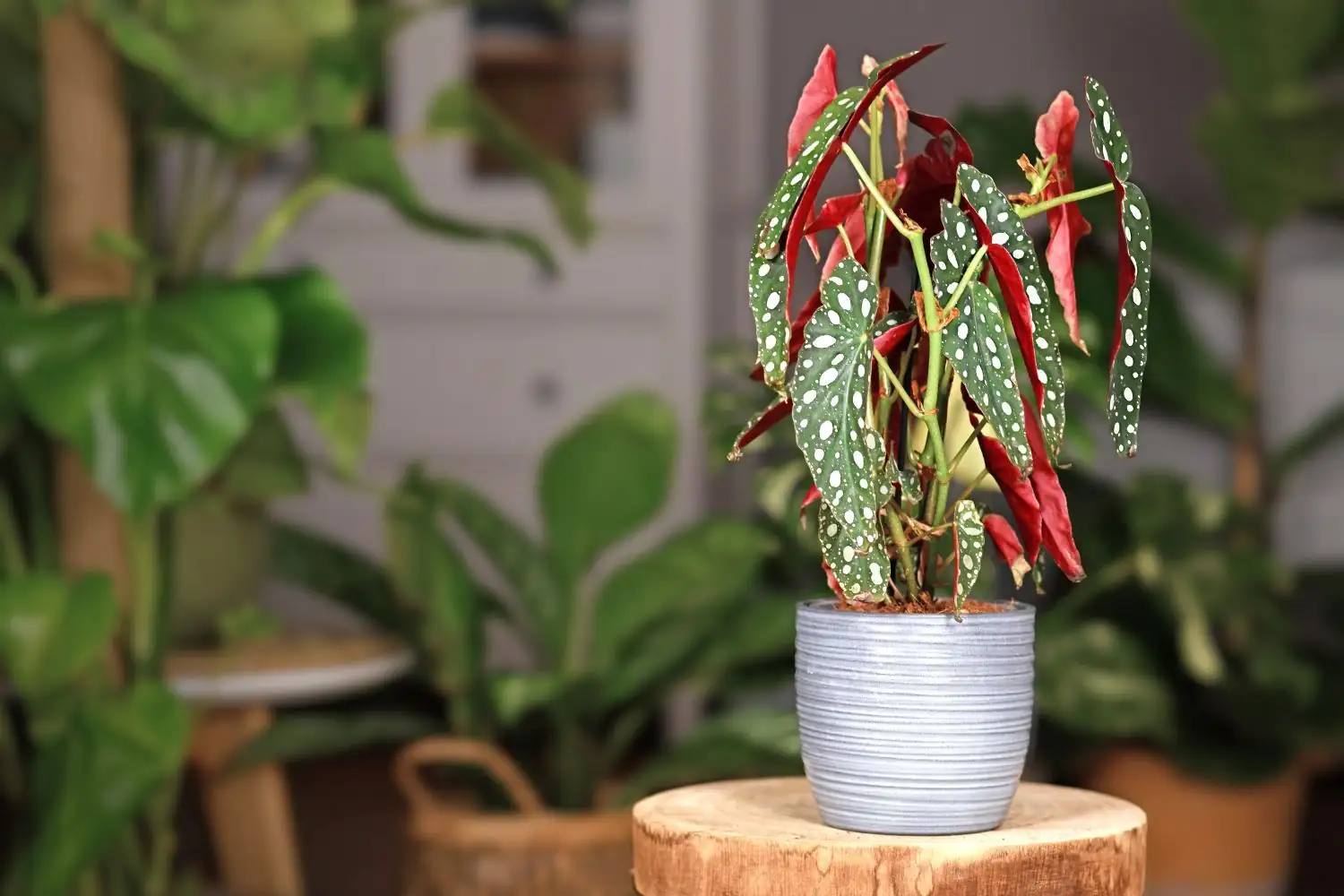
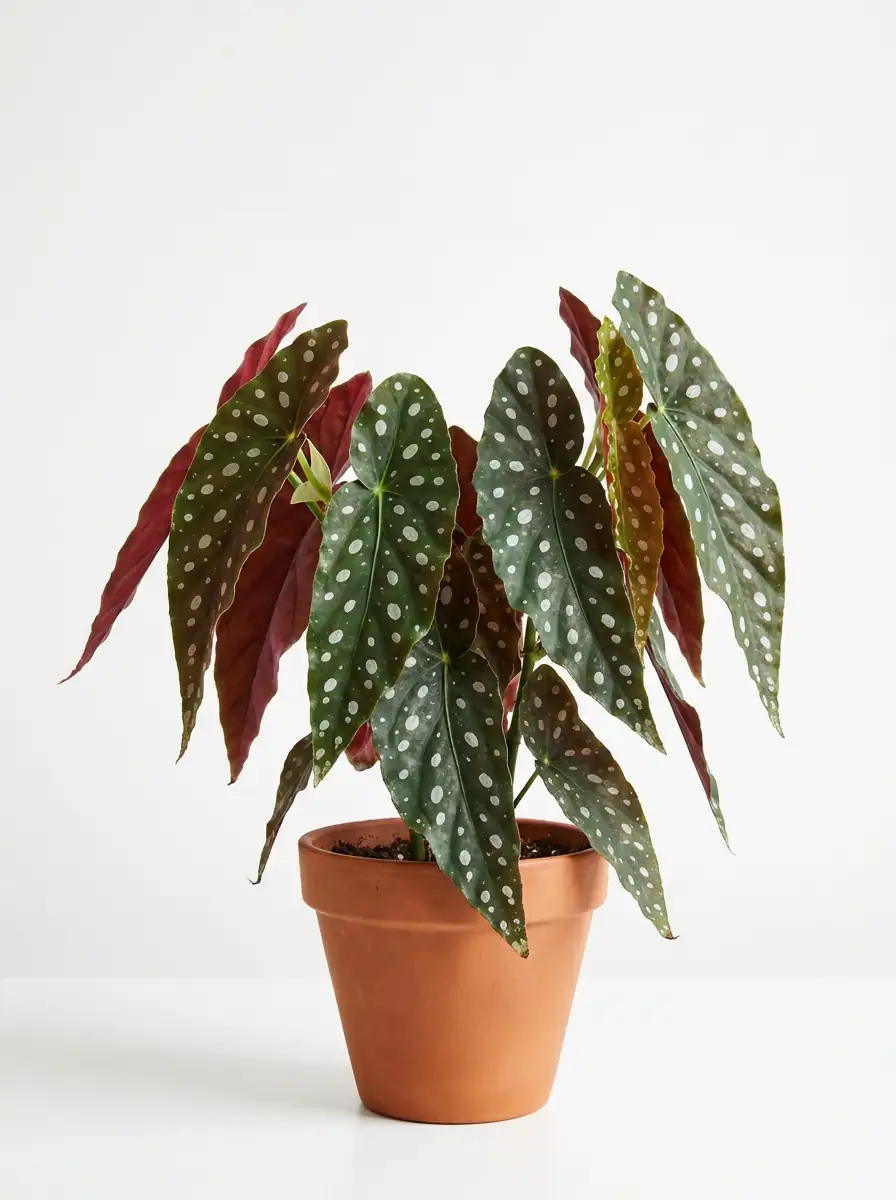
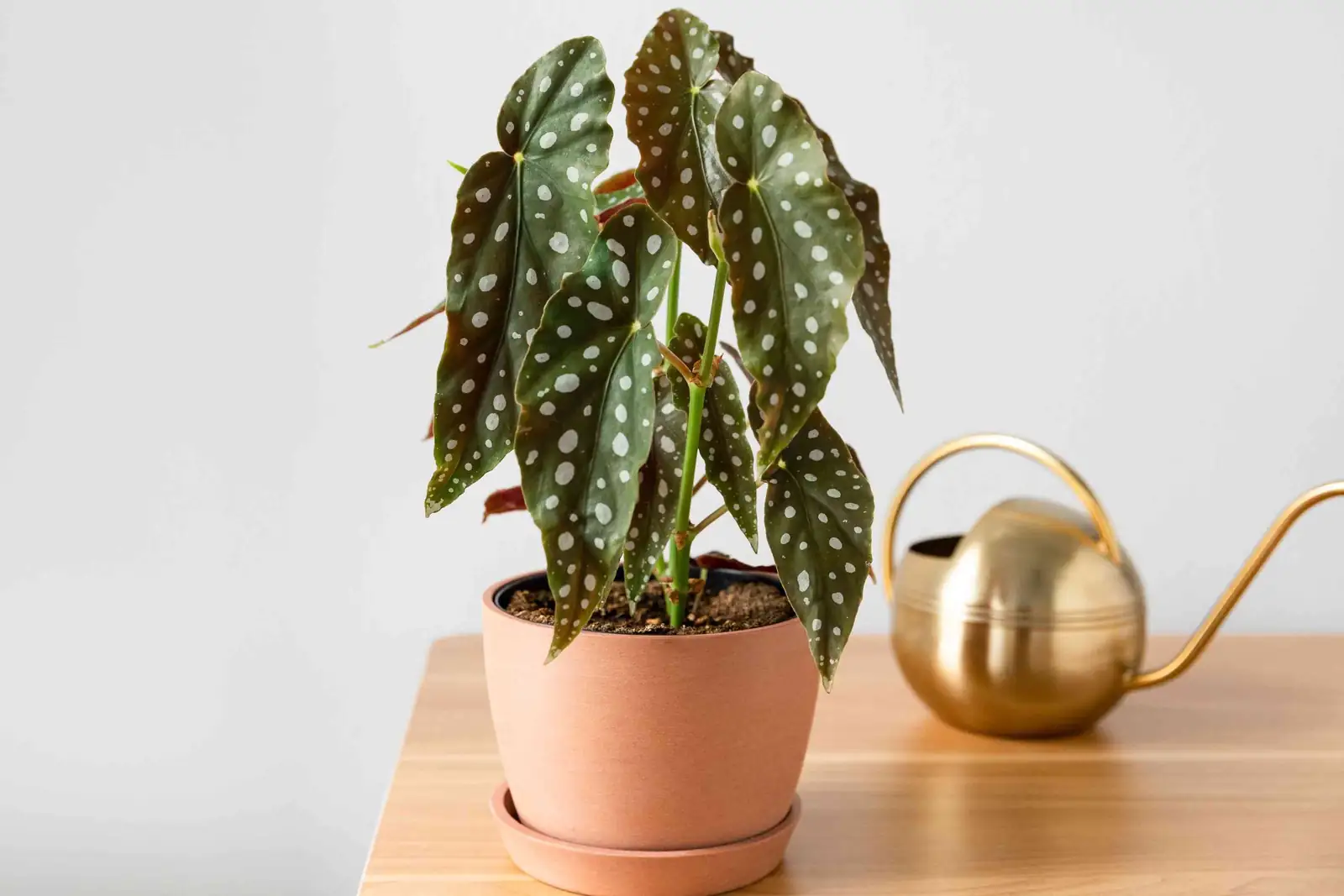
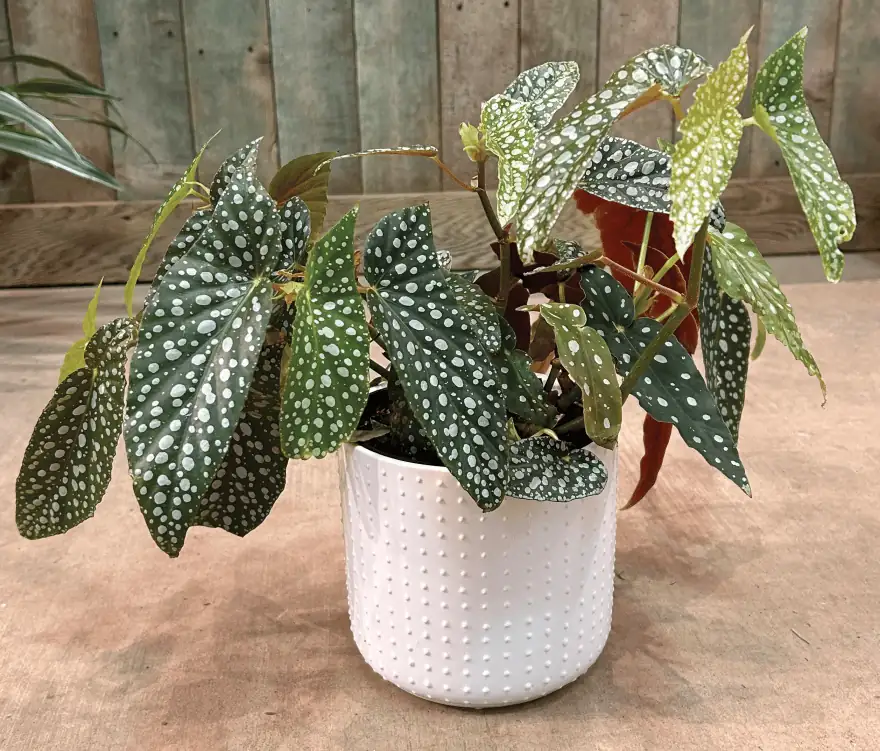
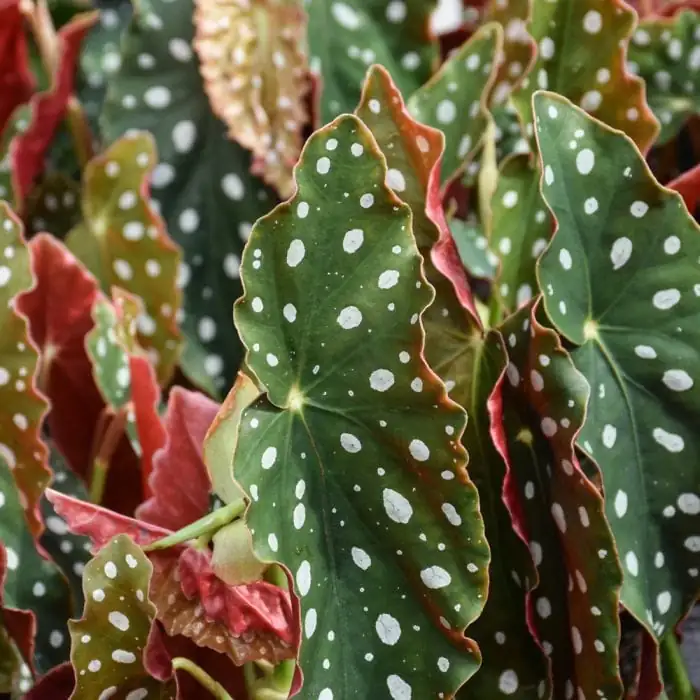
- Foliage: Large, wing-shaped (angel-wing) to lance-like leaves, often up to about 20 cm (8 in) long. Upper surface is dark green with neat, bright silvery-white polka dots; undersides are usually reddish/burgundy. Leaves feel fairly smooth with a slightly waxy look.
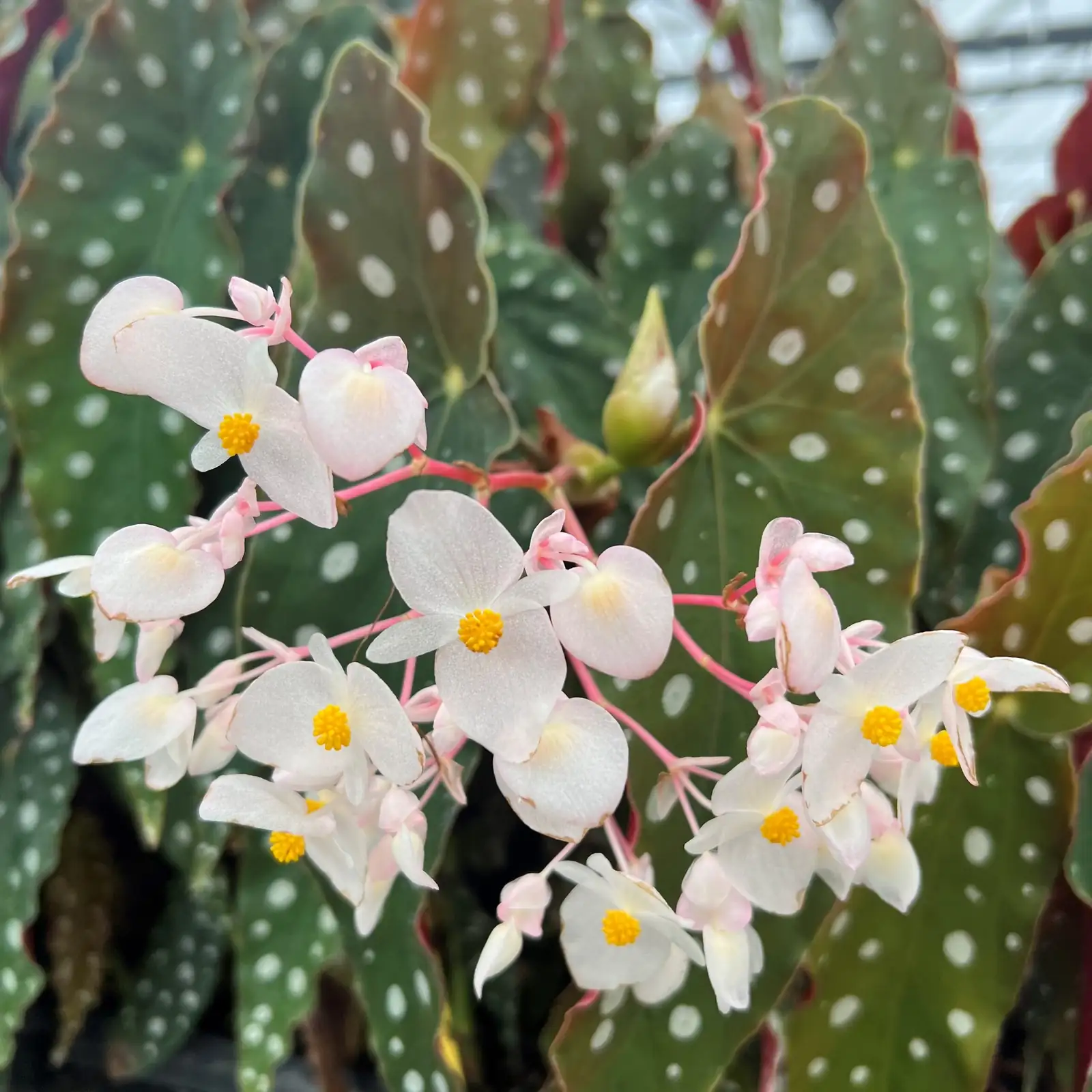
- Flower: Loose, hanging clusters of small flowers in creamy white to pale pink, carried on pinkish-red stems. Blooms are most frequent in warm, bright conditions; some plants may have a light fragrance.
- Flowering Season: Late spring through summer; often continues from spring into fall indoors with steady warmth and bright light (many growers see peak bloom around April–July).
- Growth Habit: Upright, cane-forming begonia with long, jointed “bamboo” stems and noticeable internodes. Can get tall and a bit floppy without support; pinching tips encourages branching for a fuller look, and longer stems may arch slightly.
Environment
Sunlight
Bright, indirect light is ideal. Gentle morning sun can be tolerated, but harsh midday/afternoon direct sun can scorch leaves. For best flowering, aim for roughly 6+ hours of bright filtered light daily.
Temperature
Best at 18–27°C (64–81°F), with a sweet spot around 18–24°C (65–75°F). Keep above about 12–15°C (54–59°F) and away from cold drafts; not frost-tolerant.
Humidity
Prefers moderate to high humidity—about 50–70% (aim for at least ~50%). Higher humidity is great, but pair it with decent airflow to discourage powdery mildew.
Soil
A rich but airy, fast-draining mix that holds light moisture without getting soggy—e.g., a peat/coco-based houseplant mix (African violet-type mixes work well) amended with perlite and/or fine bark. Slightly acidic and always in a pot with drainage.
Placement
Near an east window, a bright north window, or set back from a south/west window behind a sheer curtain. Excellent in a bright bathroom if there’s ventilation; also suits living rooms and offices with strong indirect light.
Hardiness
Not frost-hardy. Outdoors year-round only in warm climates, roughly USDA Zone 10–11 (sometimes listed as 10–12 depending on local conditions).
Care Guide
Difficulty
Moderate. It’s not fussy once you learn its rhythm, but it dislikes extremes—especially cold drafts, soggy soil, and very dry air. Consistent moisture (not wetness) plus higher humidity are the keys.
Buying Guide
Look for firm, upright canes and leaves with clean, crisp spotting. Avoid plants with limp or collapsing stems, blackened edges, powdery residue (possible mildew), sticky honeydew (pests), or obvious webbing. If possible, check the pot isn’t waterlogged and roots look healthy.
Watering
Water when the top 1–2 cm (1/2–3/4 in) to 2–5 cm (1–2 in) of mix feels dry (your home’s light and heat will determine which is closer). Water thoroughly, let excess drain, and never leave the pot sitting in water. Reduce frequency in winter, but don’t let the mix turn bone-dry for long stretches. Use room-temperature water; keeping leaves dry for extended periods helps prevent spotting and mildew.
Fertilization
During spring and summer, feed with a balanced liquid fertilizer (e.g., 10-10-10) at 1/4–1/2 strength every 2–4 weeks (some growers use every 2–3 weeks). Ease off in fall and winter. Too much fertilizer—especially high nitrogen—can push leaves at the expense of blooms and may cause salt buildup.
Pruning
Pinch growing tips to encourage branching and a bushier silhouette. Remove dead leaves, leggy canes, and spent flower clusters; cut back to a node to reshape. Tall plants often benefit from a stake/trellis, and pruning can be timed after a bloom flush or as growth slows in autumn.
Propagation
Very easy from stem cuttings. Take an 8–15 cm (3–6 in) cutting (or up to 10–15 cm / 4–6 in) with at least one node and ideally 2–3 nodes. Remove lower leaves and root in water or a moist, airy medium; keep warm and humid. Roots commonly form in about 2–4 weeks under good conditions.
Repotting
Repot every 1–2 years in early spring or when rootbound. Move up only about 2–5 cm (1–2 in) in pot diameter to avoid excess wet soil around roots. Refresh the mix and add/upgrade support if the canes are tall.
📅 Seasonal Care Calendar
Spring: growth restarts—repot if needed, begin feeding, pinch tips, and take cuttings. Summer: keep evenly moist, boost humidity, provide support, and enjoy flowering. Autumn: reduce fertilizer and gradually ease watering; prune to tidy. Winter: keep warm and bright, water sparingly but don’t let it fully dry out, and avoid cold drafts.
Pests, Diseases & Safety
Common Pests & Diseases
Watch for spider mites, mealybugs, aphids, whiteflies, and thrips. Overwatering can cause root rot; high humidity with poor airflow can encourage powdery mildew, and stressed plants may get leaf spots. Treat pests early with insecticidal soap or horticultural oil (or neem oil), remove badly affected leaves, improve airflow, and correct watering habits.
Toxicity
Toxic if chewed or ingested—especially the roots/tubers—due to insoluble calcium oxalates. Can cause oral irritation, drooling, vomiting, and digestive upset in pets (cats/dogs/birds) and may irritate humans if eaten; sap can cause mild skin irritation in sensitive people. Keep out of reach of pets and children.
Culture & Symbolism
Symbolism: Often linked with individuality and playful beauty thanks to its bold spotted leaves. In Chinese cultural references, begonias are sometimes associated with bittersweet love and longing—earning the “heartbreak flower” reputation—while the Polka Dot Begonia’s pattern is also read as creativity and confidence. Some feng shui traditions consider it a bringer of positive energy and good fortune.
History & Legends: A Brazilian Atlantic Forest begonia described by botanist Giuseppe Raddi in the early 1800s (often cited as 1820, from material collected around Rio de Janeiro). It became especially popular as a modern houseplant for its dramatic spotted foliage and cane-begonia form. The angel-wing silhouette has also inspired folk ideas about attracting good spirits and warding off negative energy.
Uses: Primarily grown as an ornamental indoor plant—perfect as a statement piece for homes and offices, often trained on a stake for vertical impact. Begonias have also appeared in traditional herbal-use anecdotes (for minor ailments), but this is not recommended without expert guidance due to toxicity concerns.
FAQ
Why are my stems getting tall and floppy?
That’s classic cane-begonia behavior, especially in lower light. Move it to brighter indirect light, pinch the growing tips to encourage branching, and use a stake or small trellis so the canes don’t topple.
Why are leaves turning yellow and dropping?
Most often it’s overwatering (leading to stressed roots), chilly drafts, or too little light—though older leaves will also shed naturally. Check that the pot drains well, let the top layer dry before watering again, and keep it warm in bright filtered light.
Why are leaf edges turning brown?
Brown edges usually point to low humidity, inconsistent watering, or fertilizer-salt buildup. Aim for 50–70% humidity, water more evenly, and flush the pot with clean water occasionally to rinse excess salts.
How do I encourage blooming?
Give bright indirect light (often 6+ hours), keep humidity up, and feed lightly during spring/summer. Avoid heavy nitrogen feeding, which can produce lots of leaves but fewer flowers.
What’s the white stuff on the leaves—spots or a problem?
Crisp, evenly spaced white dots are the plant’s natural pattern. If you see cottony clumps, that’s likely mealybugs; if you see a dusty white coating, that can be powdery mildew—improve airflow and treat promptly.
Can I keep it in the bathroom?
Yes—bathrooms often provide the humidity it loves. Just make sure there’s bright, indirect light and some ventilation to prevent mildew.
Fun Facts
- It’s called a “cane begonia” because its bamboo-like, jointed stems look like little canes.
- The reddish leaf undersides can help the plant make better use of low light—an advantage in rainforest understories.
- Pinching the tips can make it bushier and often increases the number of potential flowering stems.
- Many growers keep a beloved plant going for years by regularly propagating stem cuttings, even if an older specimen becomes leggy.


