Plant Features
- Size: Typically 15–30 cm (6–12 in) tall with a spread of about 20–40 cm (8–16 in), depending on pot size and care.
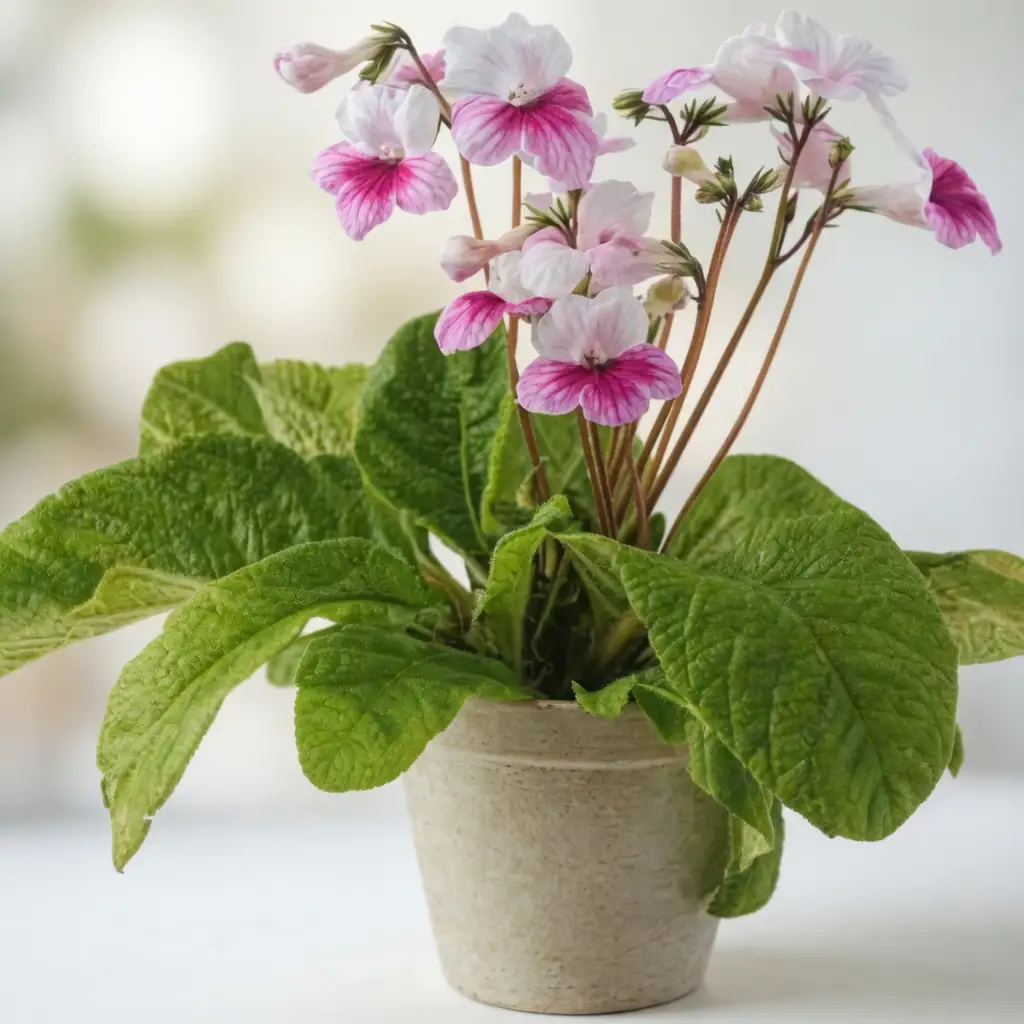
- Foliage: Soft, slightly fuzzy, strap-like to oval leaves forming a low rosette; medium green and often gently rippled.
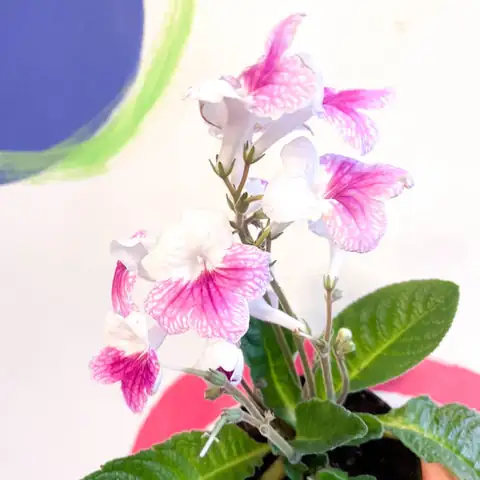
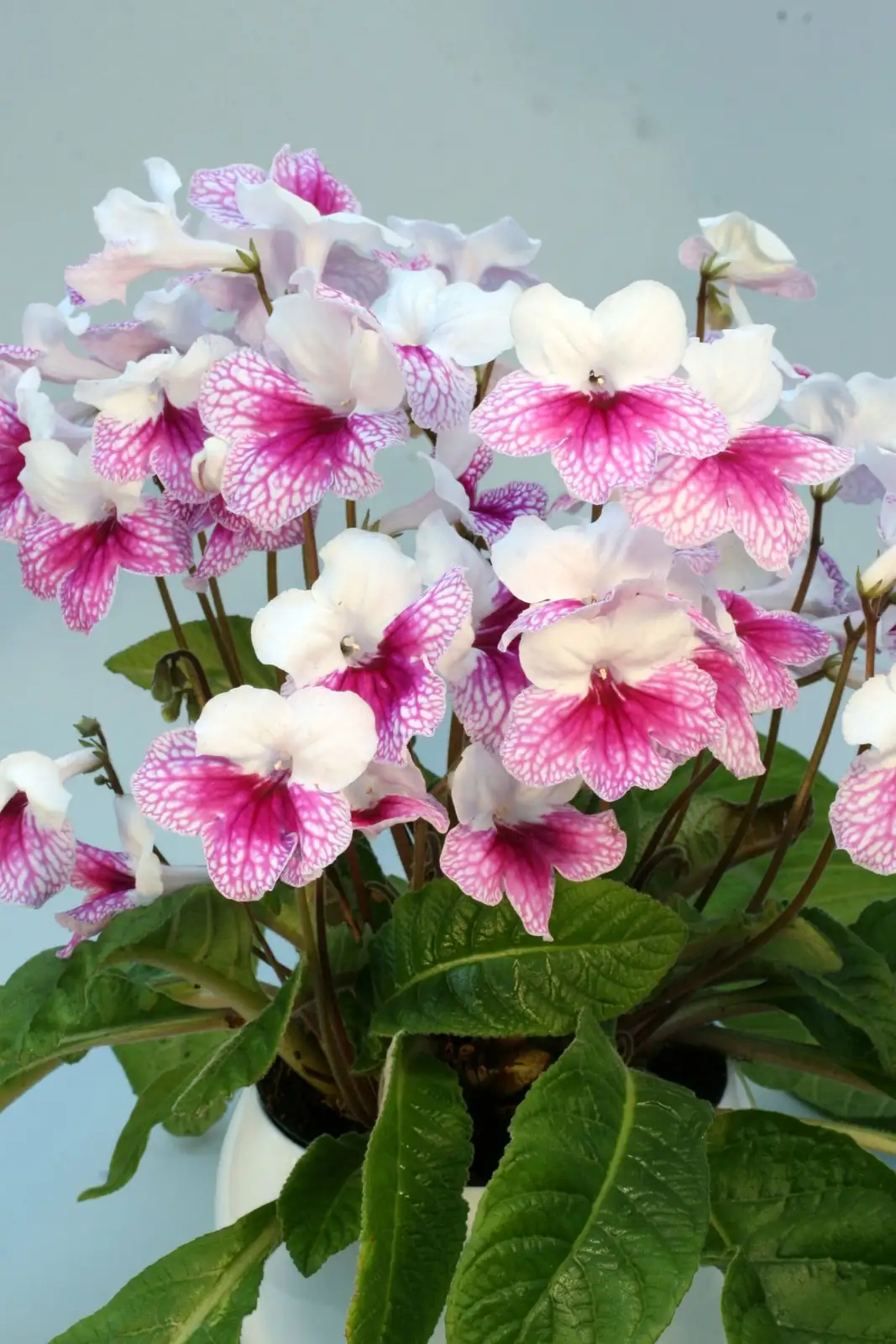
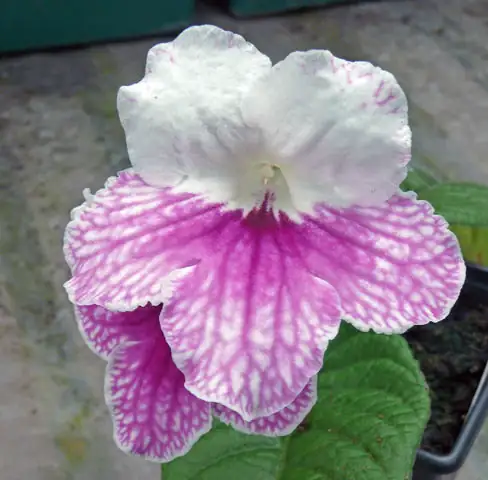
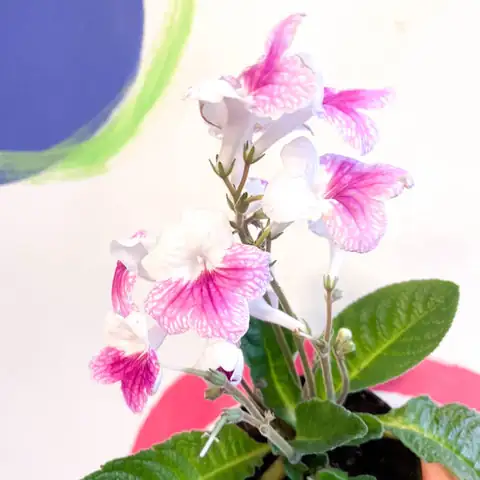
- Flower: Trumpet-shaped flowers with white upper lobes and rose-pink markings on the lower lobes; best appreciated up close for the fine patterning.
- Flowering Season: Intermittently year-round indoors; strongest from spring to autumn (approx. March–October).
- Growth Habit: Compact, rosette-forming perennial; produces flower stalks above the foliage.
Environment
Sunlight
Bright, indirect light; gentle morning sun is fine. Avoid harsh midday sun which can scorch leaves.
Temperature
18–24°C (64–75°F) ideal; keep above 12°C (54°F) and avoid hot, stagnant conditions above ~30°C (86°F).
Humidity
Average home humidity is usually adequate; aim for about 40–60%. Provide airflow and avoid wetting leaves for long periods.
Soil
Light, airy, free-draining mix (e.g., African violet/gesneriad mix) with added perlite; slightly acidic to neutral.
Placement
Bright windowsill (east or north), or under grow lights; keep away from cold drafts and hot radiators.
Hardiness
Not frost-hardy; suitable for indoor culture. Outdoors only in warm climates, roughly USDA Zone 10–11.
Care Guide
Difficulty
Easy to moderate: very rewarding if kept evenly moist (not soggy) with bright, filtered light.
Buying Guide
Choose plants with firm, unblemished leaves and multiple buds. Avoid limp foliage, blackened crowns, or sour-smelling, waterlogged potting mix.
Watering
Water when the top 1–2 cm (0.4–0.8 in) of mix feels dry. Water thoroughly, then drain; do not let the pot sit in water. Bottom-watering helps keep leaves dry and reduces spotting.
Fertilization
Feed in active growth with a balanced or bloom-leaning houseplant fertilizer at 1/4–1/2 strength every 2–4 weeks. Reduce feeding in winter or low light.
Pruning
Remove spent flower stems and any yellowing leaves at the base to encourage continuous blooming and reduce rot risk.
Propagation
Commonly propagated by leaf cuttings (sections of a healthy leaf) or by division of mature clumps; root in a lightly moist, airy medium with warmth.
Repotting
Repot every 12–18 months, or when crowded. Use a small pot (often 10–12 cm (4–5 in)) to prevent overwatering; refresh mix to maintain aeration.
📅 Seasonal Care Calendar
Spring–summer: brightest indirect light, regular watering and feeding. Autumn: continue light feeding if blooming. Winter: water less often, keep warm (above 12°C (54°F)), and maximize light to prevent stretching.
Pests, Diseases & Safety
Common Pests & Diseases
Watch for mealybugs, aphids, thrips, and spider mites. Overwatering can cause crown/root rot and botrytis on flowers. Improve airflow, avoid wet foliage, and use insecticidal soap or horticultural oil as needed.
Toxicity
Generally considered non-toxic to cats and dogs, but ingestion may still cause mild stomach upset. Keep out of reach of pets that chew plants.
Culture & Symbolism
Symbolism: Often associated with gentle affection and quiet appreciation—flowers that reward a closer look.
History & Legends: Cape primroses (Streptocarpus) became popular as houseplants for their long blooming season and easy windowsill nature; ‘Pink Leyla’ is a modern cultivated selection bred for its pretty patterned flowers.
Uses: Primarily ornamental as an indoor flowering plant for windowsills, desks, and bright shelves.
FAQ
Why isn’t my Pink Leyla cape primrose flowering?
Most often it needs more bright, indirect light. Also check that it isn’t overpotted or kept too wet; feed lightly during active growth and remove old flower stems.
Can I mist the leaves to raise humidity?
It’s better to avoid misting; fuzzy leaves can hold moisture and invite spotting or rot. Raise humidity with a pebble tray or a humidifier instead.
Fun Facts
- Streptocarpus are close relatives of African violets and often thrive in similar conditions.
- Many cape primrose cultivars can be propagated from a single leaf, making them easy to share.