Plant Features
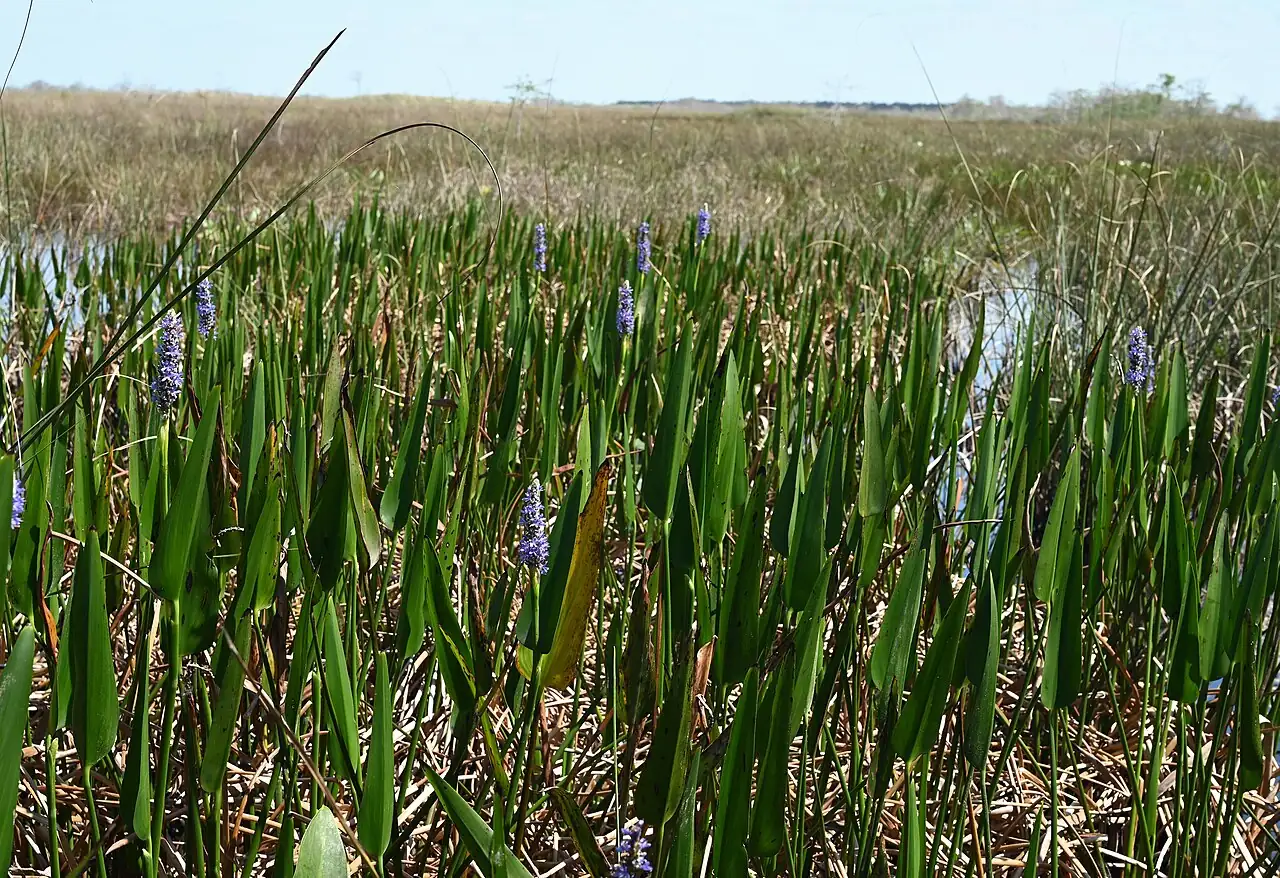
- Size: Typically 20–80 cm (8–31 in) tall, forming clumps that can gradually spread over time via rhizomes.
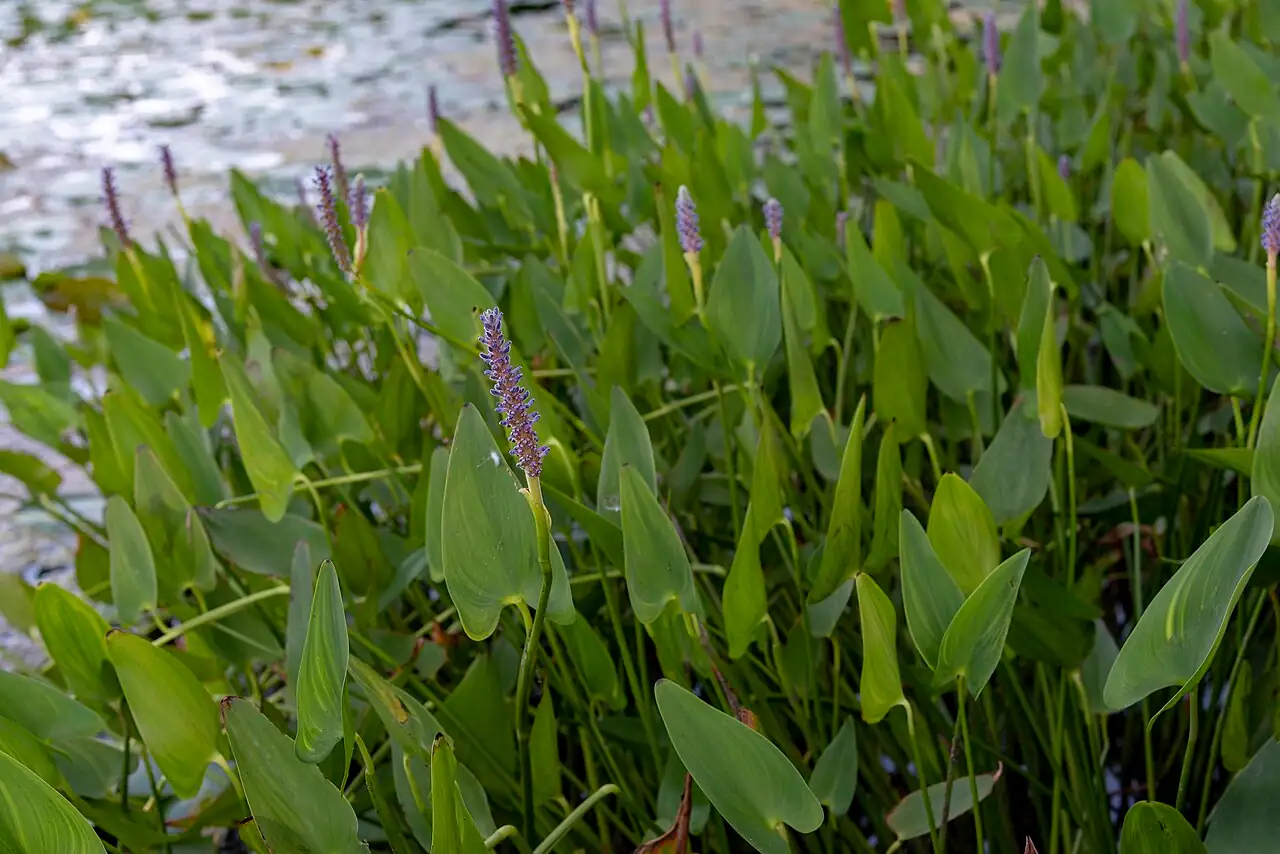
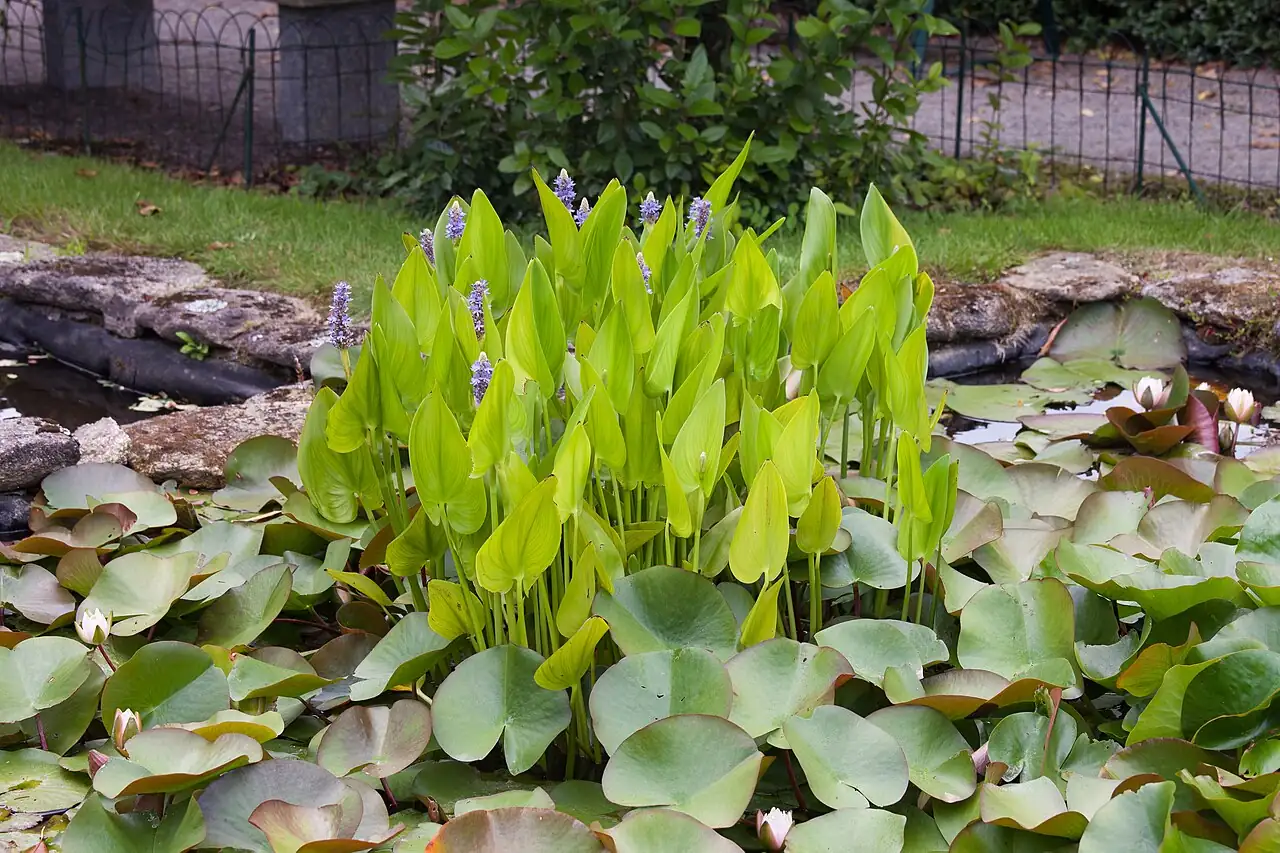
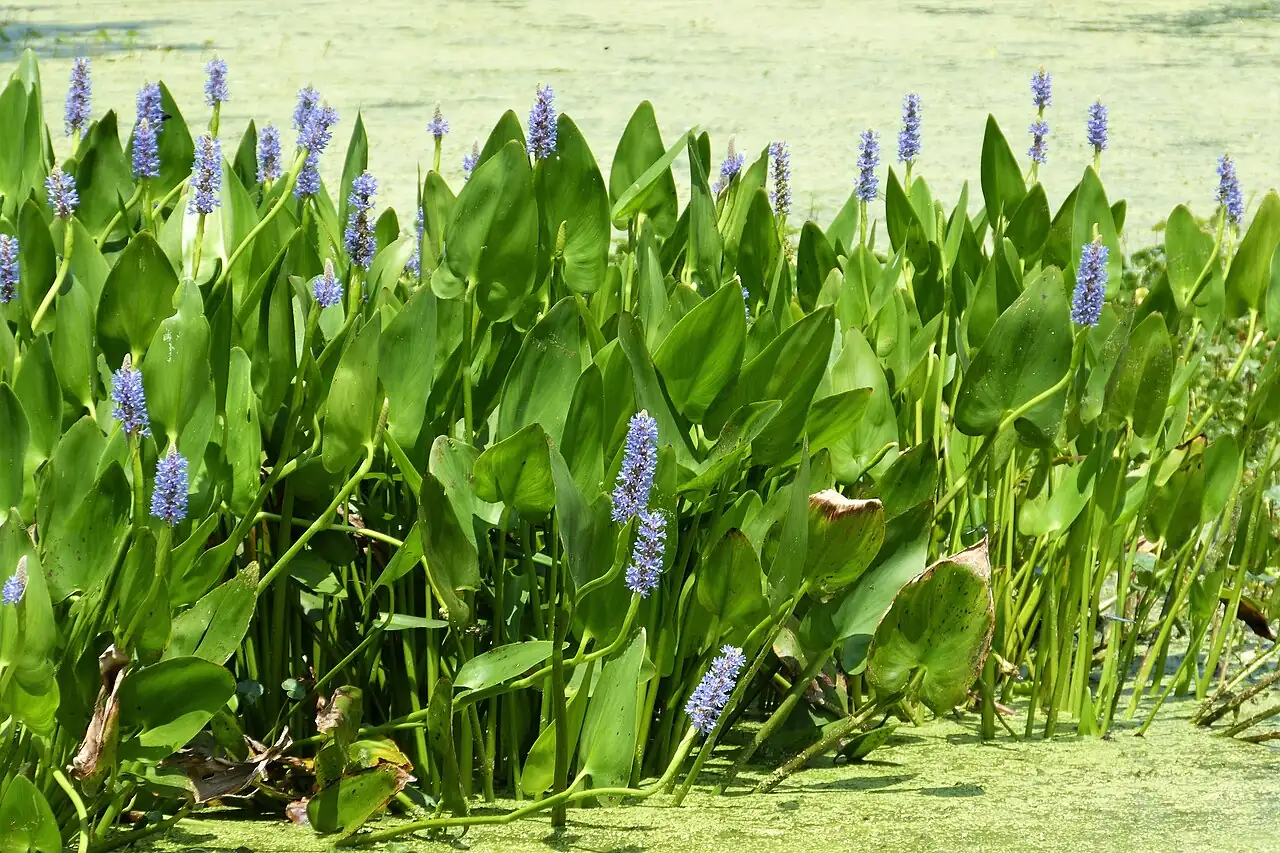
- Foliage: Leaves emerge from basal clumps produced by rhizomes. The leaf stalks are green and cylindrical, and the blades are broad, heart-leaning in outline, and a rich deep green—lush and bold in a water garden.
- Flower: Upright stalks carry dense terminal spikes with dozens (sometimes over a hundred) small, rounded blue‑violet flowers. A standout ID feature is the yellow‑green spotting on the upper petals.
- Flowering Season: May–October
- Growth Habit: Perennial, rhizomatous emergent aquatic that forms sturdy clumps and sends up upright flower spikes; performs best in still or slow-moving water.
Environment
Sunlight
Full sun for strongest growth and best flowering; tolerates light shade but will bloom less.
Temperature
Prefers warmth; best growth around 18–30°C (64–86°F). Protect from cold snaps—young growth can be damaged by late frosts.
Humidity
Ambient humidity is less important than constant root moisture; it’s happiest with warm conditions and roots in water or saturated soil.
Soil
Aquatic planting media or heavy loam. Grow in shallow water or consistently saturated soil; ideal in still to slow-moving water (avoid stagnant, oxygen-poor conditions).
Placement
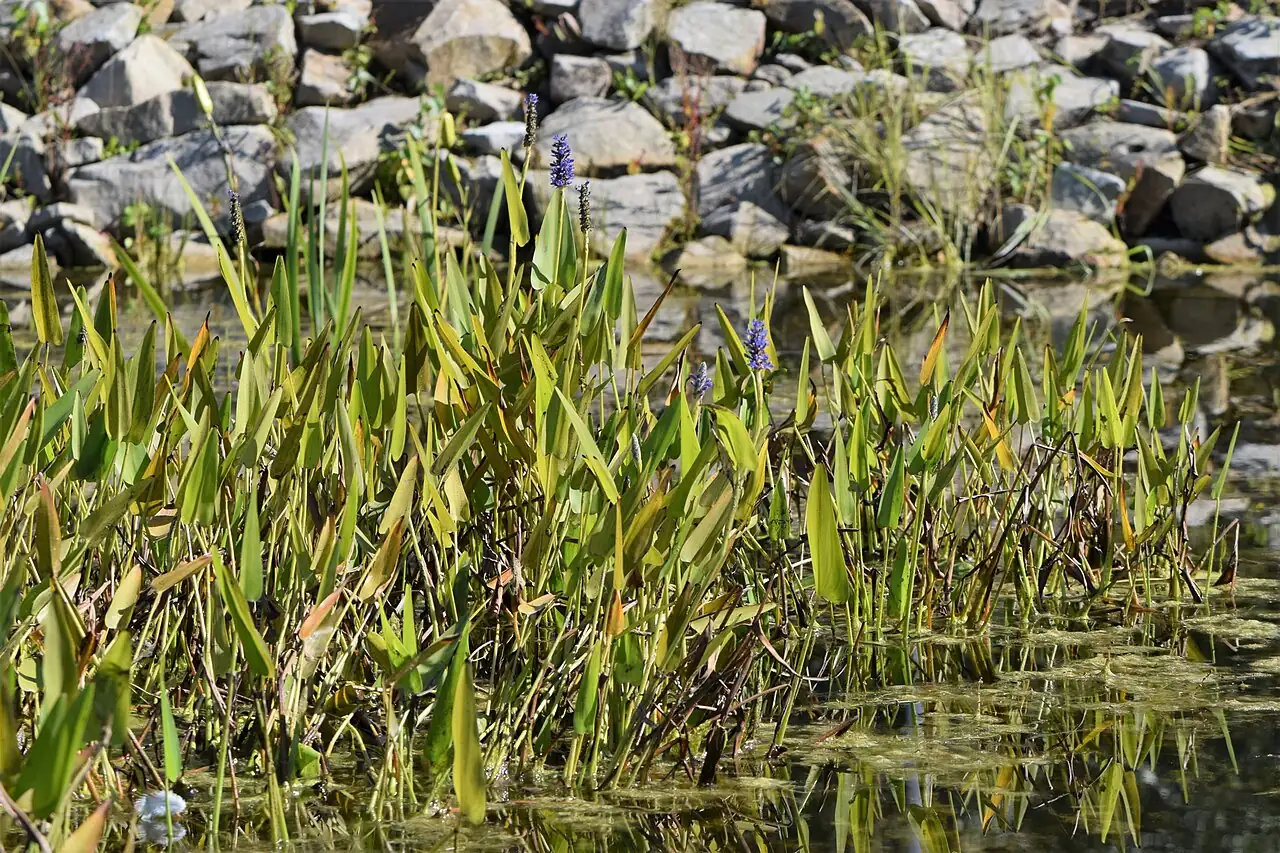
Pond edges, bog gardens, wetland plantings, and shallow shelves in water features; also excellent in large water containers/pots.
Hardiness
Generally considered hardy in USDA Zone 3–10 (coldest minimums roughly −40°C to −34°C / −40°F to −30°F in Zone 3, up to about −1°C to 4°C / 30°F to 40°F in warmer zones), but performance depends on local conditions. Dislikes exposed, windy sites; late frosts can damage fresh growth.
Care Guide
Difficulty
Easy to moderate. It’s forgiving once established at the right water depth in good sun, but flowering and vigor drop in shade, cold snaps, or very windy exposure.
Buying Guide
Look for firm, healthy green foliage and solid rhizomes—avoid anything soft, mushy, or foul-smelling. For pond planting, choose a vigorous clump rather than a weak single shoot.
Watering
Keep the crown and roots consistently wet at all times. Grow in shallow water or saturated soil; never allow the pot to dry out. Still or slow-moving water is ideal.
Fertilization
Container-grown plants benefit from light feeding during active growth using aquatic fertilizer tablets (follow label directions). In nutrient-rich ponds, extra fertilizer is often unnecessary.
Pruning
Remove spent flower spikes to keep it tidy and encourage a clean look. Cut back dead or declining foliage at season’s end or in early spring before new growth starts.
Propagation
Divide the rhizomatous clumps in spring or early summer. Replant divisions promptly into shallow water or wet soil so they don’t dry out.
Repotting
Repot or divide every 1–2 years, or whenever it becomes crowded. Use a wide, heavy container to prevent tipping, refresh the aquatic media, and return it to shallow water.
📅 Seasonal Care Calendar
May–October is the main show. Divide in spring; fertilize during warm months if grown in containers; deadhead for neatness; cut back after flowering or when foliage declines.
Pests, Diseases & Safety
Common Pests & Diseases
Usually trouble-free. Possible pests include aphids on flower stalks and leaf chewing from aquatic insects or snails. Rot can occur if grown in stagnant, oxygen-poor conditions—keep water cleaner, remove decaying debris, and avoid smelly, anaerobic media.
Toxicity
Not commonly listed as toxic to people or pets. Still, it’s best practice to discourage chewing or ingestion (especially by pets) and consult local poison-control guidance if you need absolute certainty.
Culture & Symbolism
Symbolism: Often tied to the peaceful feel of water gardens—calm summer wetlands, natural pond edges, and relaxed, nature-forward planting.
History & Legends: A classic and widely recognized North American wetland plant, long used in ornamental ponds and habitat plantings for its lush foliage, pollinator-friendly flowers, and long bloom season. It has also been introduced and cultivated in parts of northern China.
Uses: A standout ornamental for pond margins, bog gardens, and naturalistic wetland plantings, adding vertical flower spikes and bold greenery. Also very suitable for pot culture in large decorative water containers.
FAQ
How deep should pickerelweed be planted?
Place it so the crown sits in very shallow water—about 0–15 cm (0–6 in) of water over the soil is a reliable starting point. Adjust slightly depending on your pond shelf and plant vigor.
Why is my pickerelweed not flowering?
Lack of sun is the most common reason—full sun gives the best bloom. Cool weather can also slow flowering. If the clump is overcrowded, divide it, and for container plants consider light feeding during active growth.
Fun Facts
- The yellow‑green spots on the upper petals are a handy field mark for identifying pickerelweed.
- It can bloom for months—often from May to October—so ponds get a long run of color.
- As an emergent aquatic plant, it’s happiest rooted in saturated soil with shoots above the waterline—ideal for pond shelves and bog gardens.
- It’s native to the Americas and has been introduced and cultivated in parts of northern China.
- It’s just as happy in a landscaped pond edge as it is in a large decorative water tub.