Plant Features
- Size: Typically 5–15 cm (2–6 in) tall, forming compact clumps.
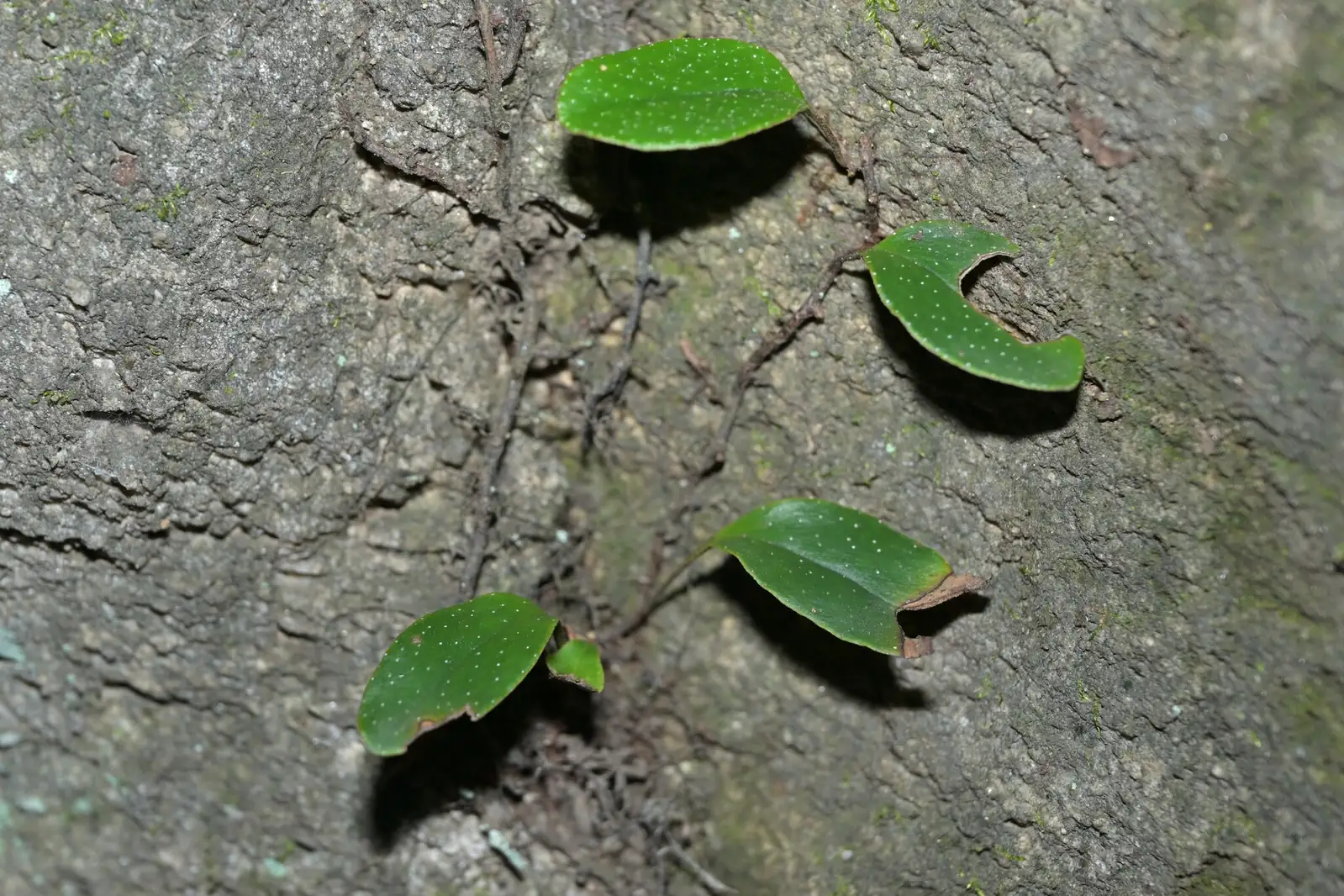
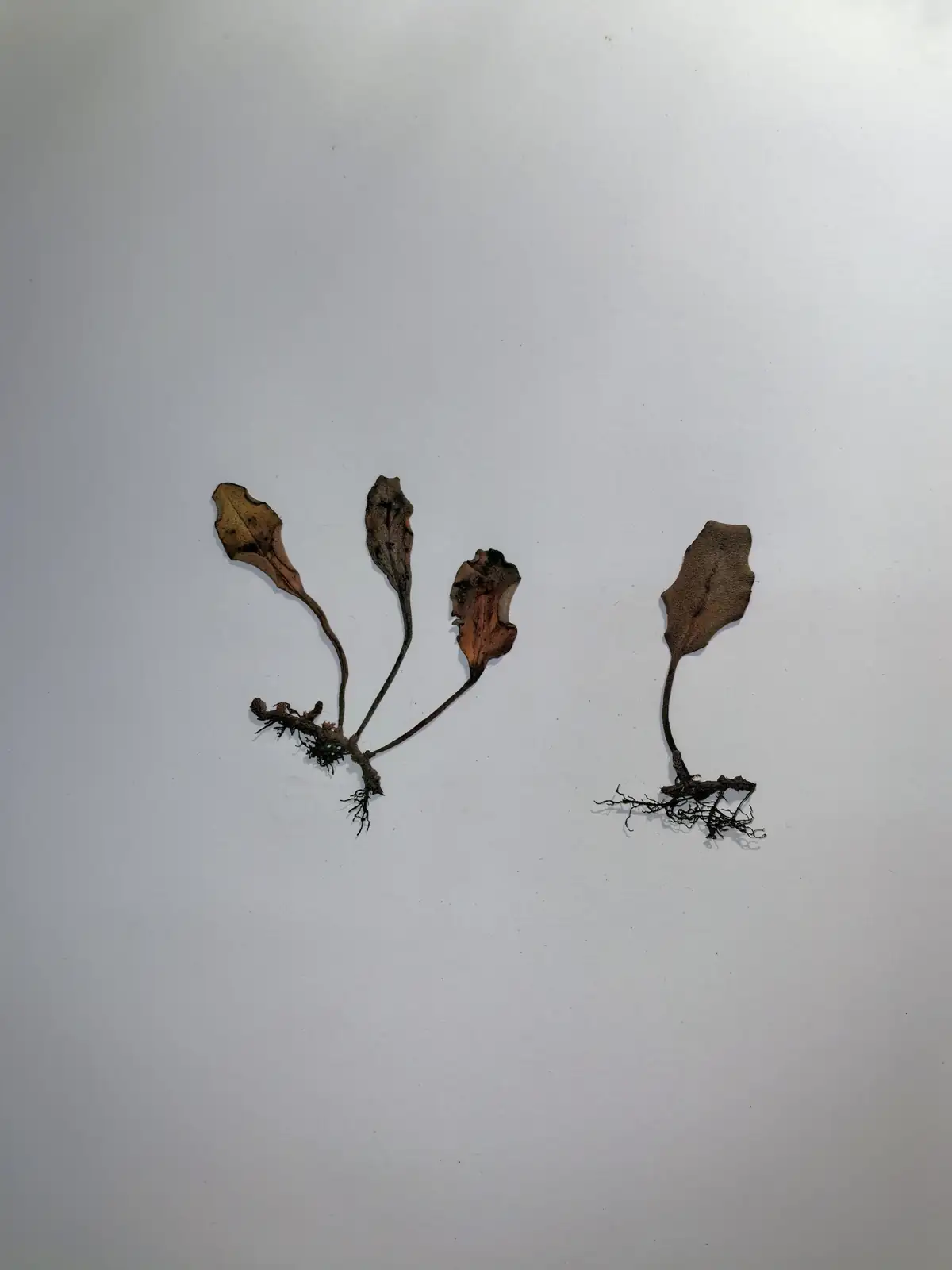
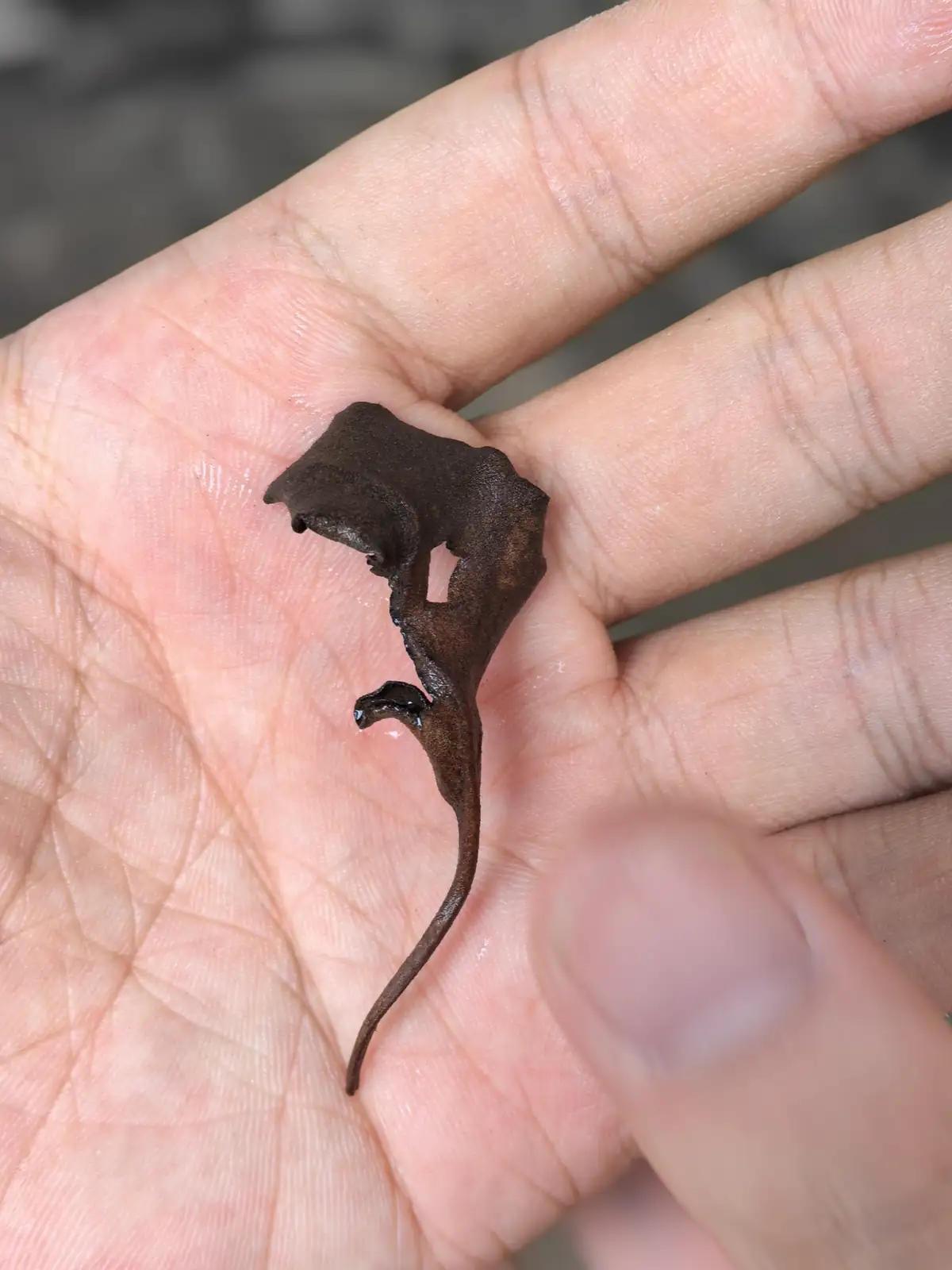
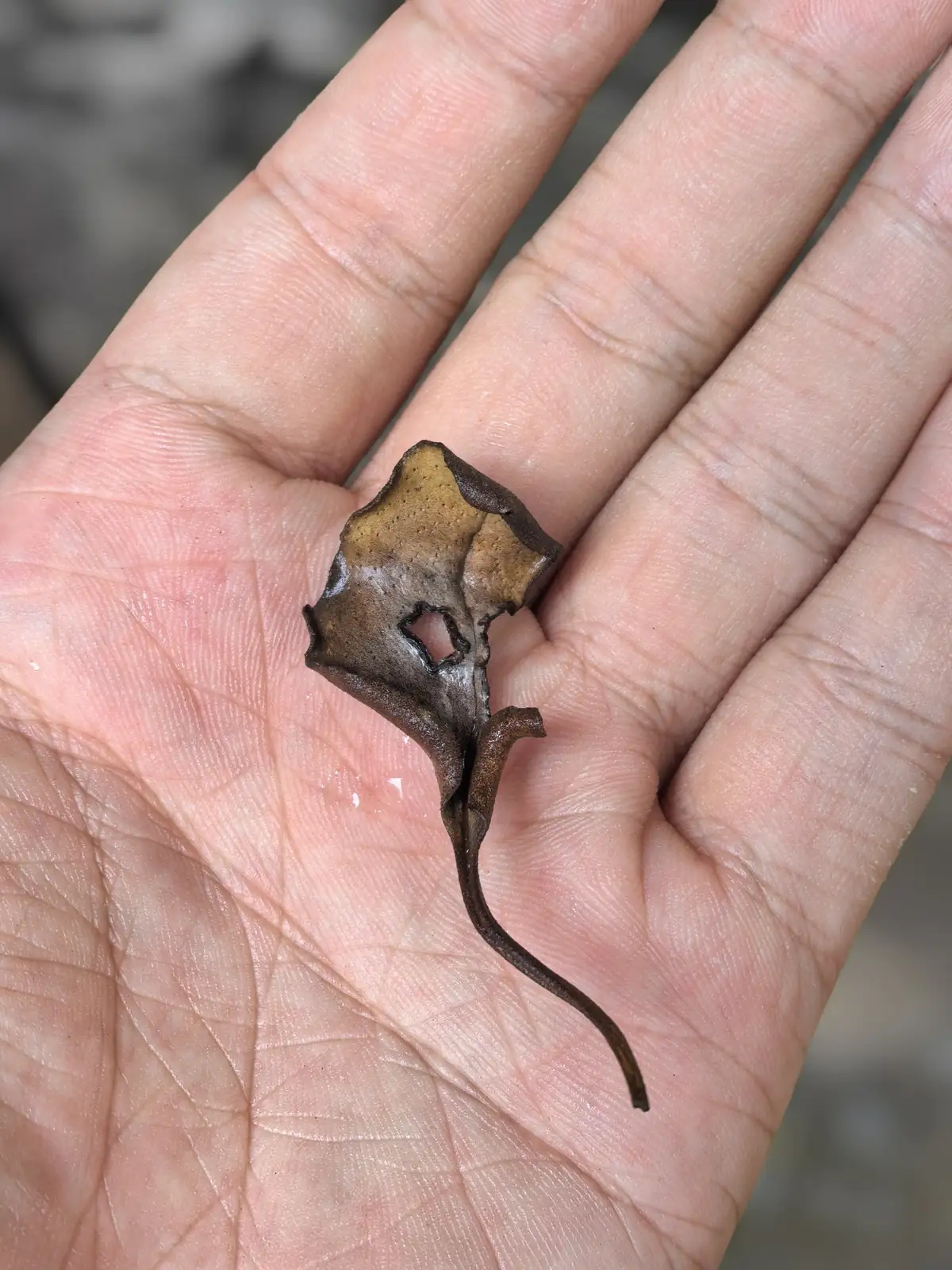
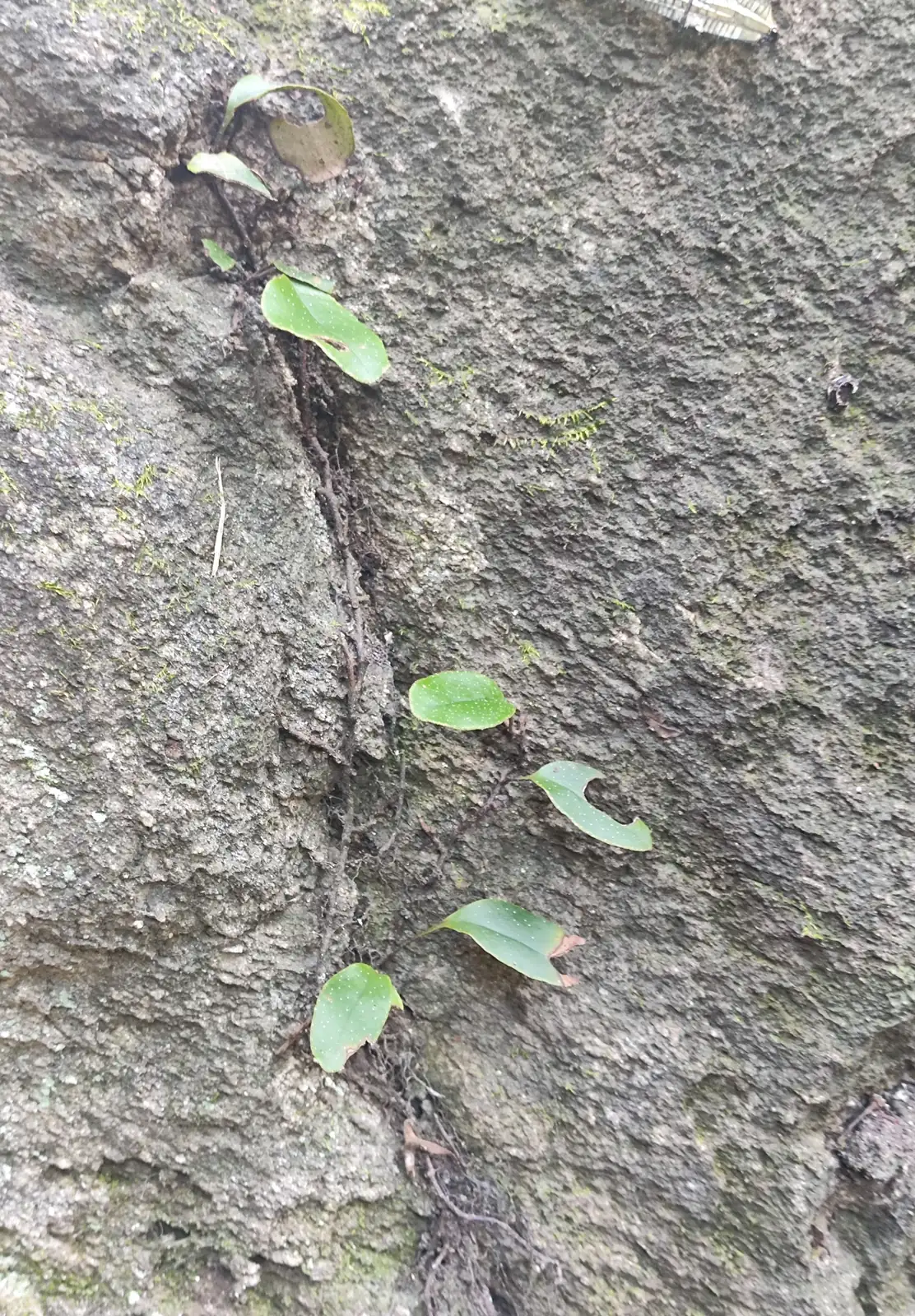
- Foliage: Fronds arise in tufts from a clumping habit. Each frond is simple (undivided) with a long petiole; the base may show small scales. The blade is elliptic, thick and leathery with smooth (entire) margins. The underside is commonly coated with dense, star-shaped hairs that give a felted look. Sori (spore clusters) spread across much of the lower surface and release spores when mature.
- Flower: A fern—does not produce flowers. Reproduces by sori (spore clusters) that can cover much of the frond underside; spores disperse when mature.
- Flowering Season: Not applicable (fern; spores typically mature in autumn, often around October–November).
- Growth Habit: Clump-forming perennial fern; commonly epiphytic on tree trunks or lithophytic on exposed, dry rocks.
Environment
Sunlight
Partial shade to bright indirect light. Outdoors, dappled shade is ideal; avoid harsh midday sun, especially in hot climates.
Temperature
Best around 10–25°C (50–77°F). Generally cold-tolerant for a fern, but container plants should be protected from prolonged hard freezes below about -5°C (23°F).
Humidity
Moderate humidity is ideal, roughly ~40–70% indoors. More drought-tolerant than many ferns once established, but appreciates occasional thorough watering rather than constant dampness.
Soil
Fast-draining, airy medium (e.g., coarse bark/fern mix with grit or pumice). For mounting on rock or bark, use a thin pad of moss or a very well-aerated substrate. Avoid waterlogged conditions.
Placement
Excellent for rock gardens, stone walls, and mounting on bark or tree trunks. Indoors, place near an east- or north-facing window, or in bright filtered light.
Hardiness
Often grown in USDA Zone 7–10 depending on local climate and provenance; not fond of prolonged deep freezes.
Care Guide
Difficulty
Easy to moderate: quite forgiving once established, but it strongly dislikes soggy, airless media—drainage is everything.
Buying Guide
Choose plants with firm, leathery fronds and a healthy silvery-brown felt on the underside (this is normal and desirable). Avoid plants with mushy bases, sour-smelling potting mix, or widespread black spotting.
Watering
Water thoroughly, then allow the medium to dry slightly before watering again. In warm growing periods, water when the top 1–2 cm (0.4–0.8 in) feels dry; in winter, reduce watering. Mounted plants dry faster and may need more frequent light watering or misting. Do not keep constantly wet.
Fertilization
Feed lightly in spring–summer with a balanced fertilizer at 1/4–1/2 strength every 4–6 weeks. Avoid heavy feeding, which can scorch fronds.
Pruning
Remove old, damaged, or browned fronds at the base. Don’t scrub off the felted hairs on the underside—they’re protective and part of the plant’s charm.
Propagation
Best by division of established clumps in spring or early summer. Spore propagation is possible but slow and more technical.
Repotting
Repot every 2–3 years or when crowded. Use a shallow pot with excellent drainage; refresh the mix and avoid burying the rhizome too deeply.
📅 Seasonal Care Calendar
Spring: increase watering a bit and restart light feeding; divide if needed. Summer: keep in bright shade, prevent overheating, and water as the mix approaches dryness. Autumn: taper off fertilizer; sori/spores may mature. Winter: keep cooler and drier with minimal watering.
Pests, Diseases & Safety
Common Pests & Diseases
Usually trouble-free. Indoors, watch for scale insects, mealybugs, and spider mites (especially in dry air). The main issue is root/rhizome rot from poorly drained, constantly wet media—improve airflow, reduce watering, and use a chunkier mix.
Toxicity
No well-documented toxicity to humans or pets for this species. As with many houseplants, chewing or ingesting fronds may still cause mild stomach upset in sensitive pets or people.
Culture & Symbolism
Symbolism: Often linked with resilience and endurance—this little fern can thrive where there’s barely any soil at all.
History & Legends: Traditional descriptions in early Chinese herbal writings note how it spreads over rocks with leathery leaves—an observation echoed in its association with “rock-growing” ferns.
Uses: A hardy ornamental for rockwork, stone slopes, and mounted displays; also used in ecological restoration and greening projects on rocky, degraded sites due to its toughness and drought tolerance once established.
FAQ
Why are there brown dots or patches under the leaves?
Those are sori (spore clusters), which are normal fern reproductive structures. They often spread across much of the underside and release spores when mature.
Can it handle drier conditions than typical ferns?
Yes. Its leathery fronds and felted underside help it cope with exposed, drought-prone rocks. It still performs best with periodic deep watering and excellent drainage rather than constant dryness.
Fun Facts
- It can live on bare rock or tree trunks, behaving more like a tough epiphyte than a delicate woodland fern.
- The dense, star-shaped hairs under the fronds help reduce water loss and buffer the plant from sun and wind.
- It reproduces by spores (not flowers), produced in sori across the underside of the fronds.
- Because it tolerates harsh, rocky sites, it’s been used in restoration and greening projects on exposed stone landscapes.