Plant Features
- Size:10–50 cm (4–20 in) tall; typically forms low, spreading mats depending on site conditions.
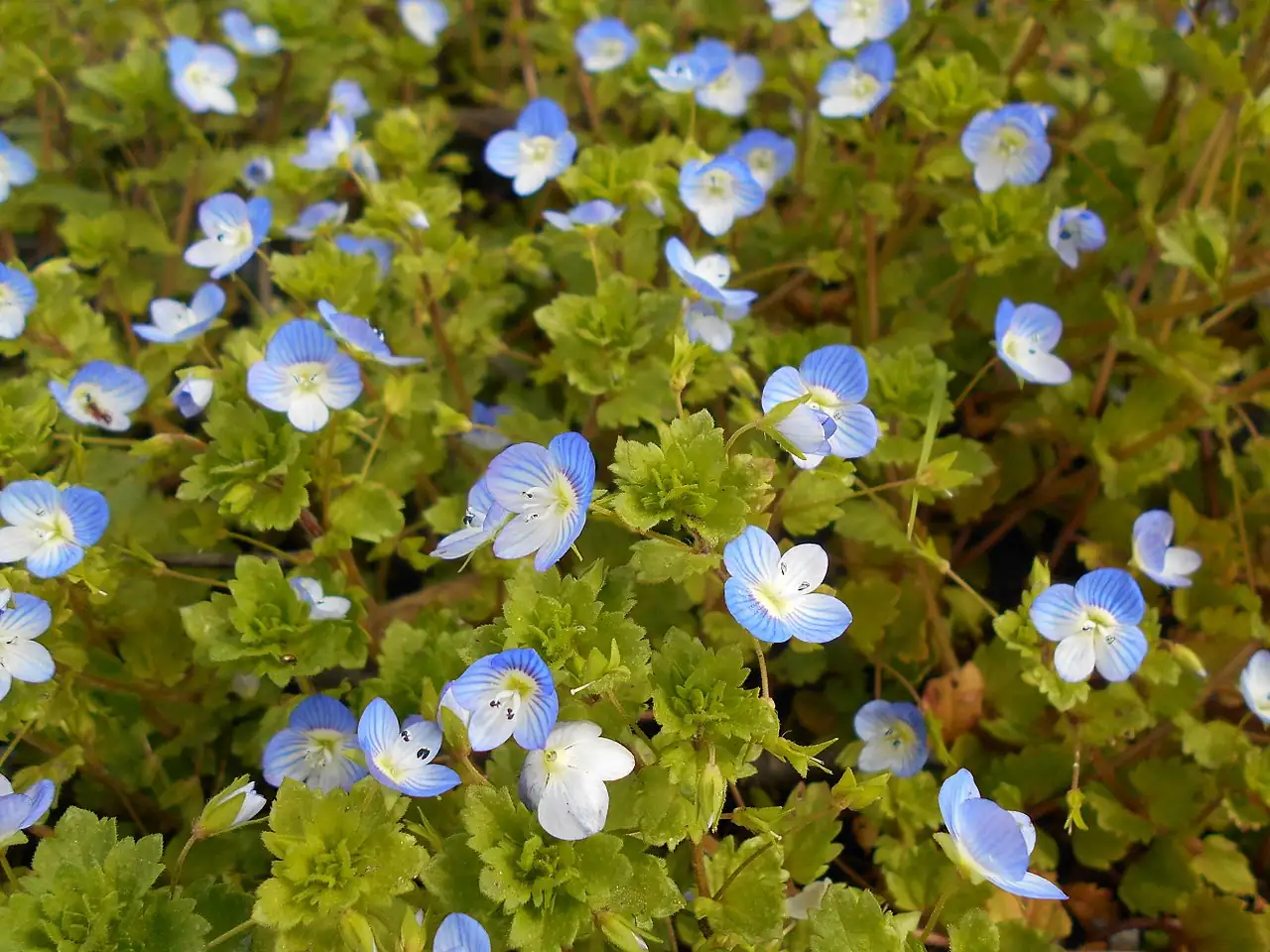
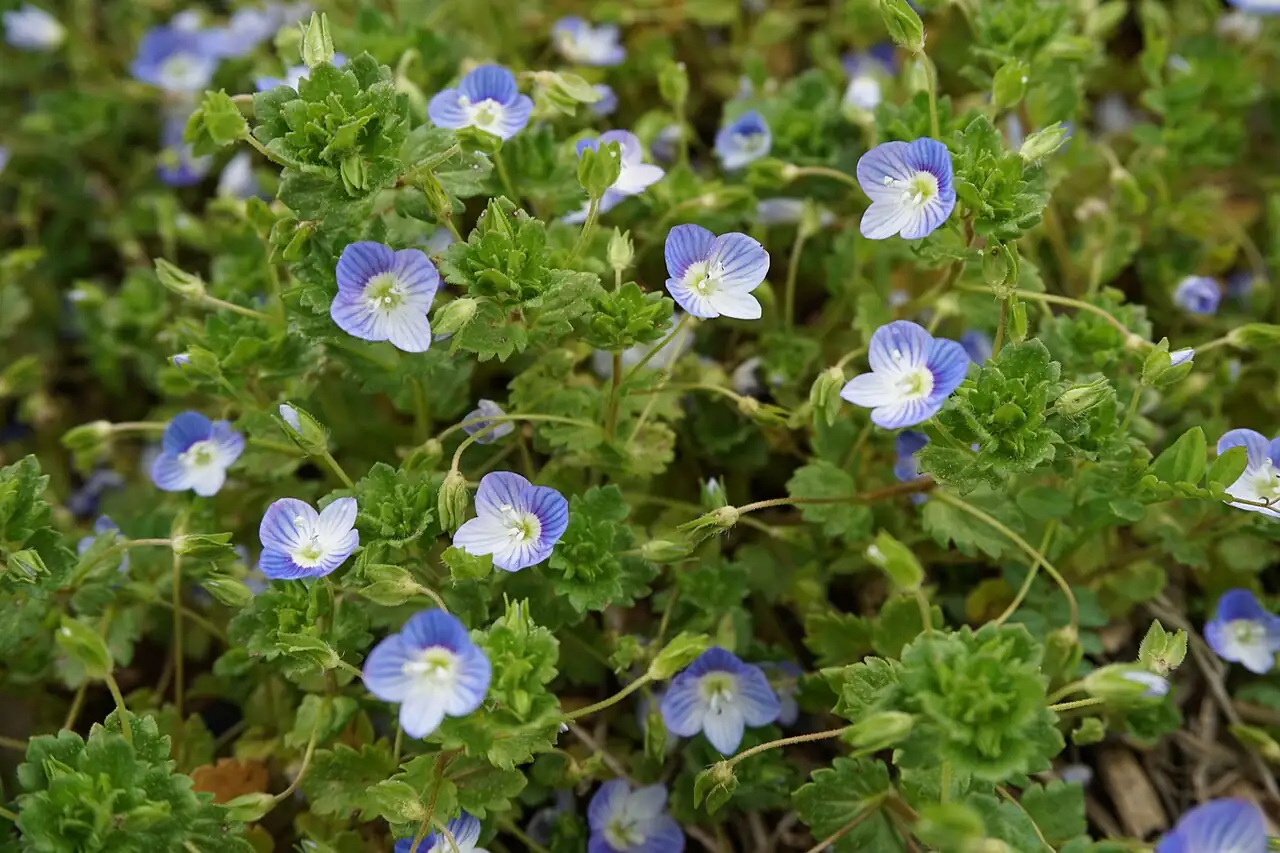
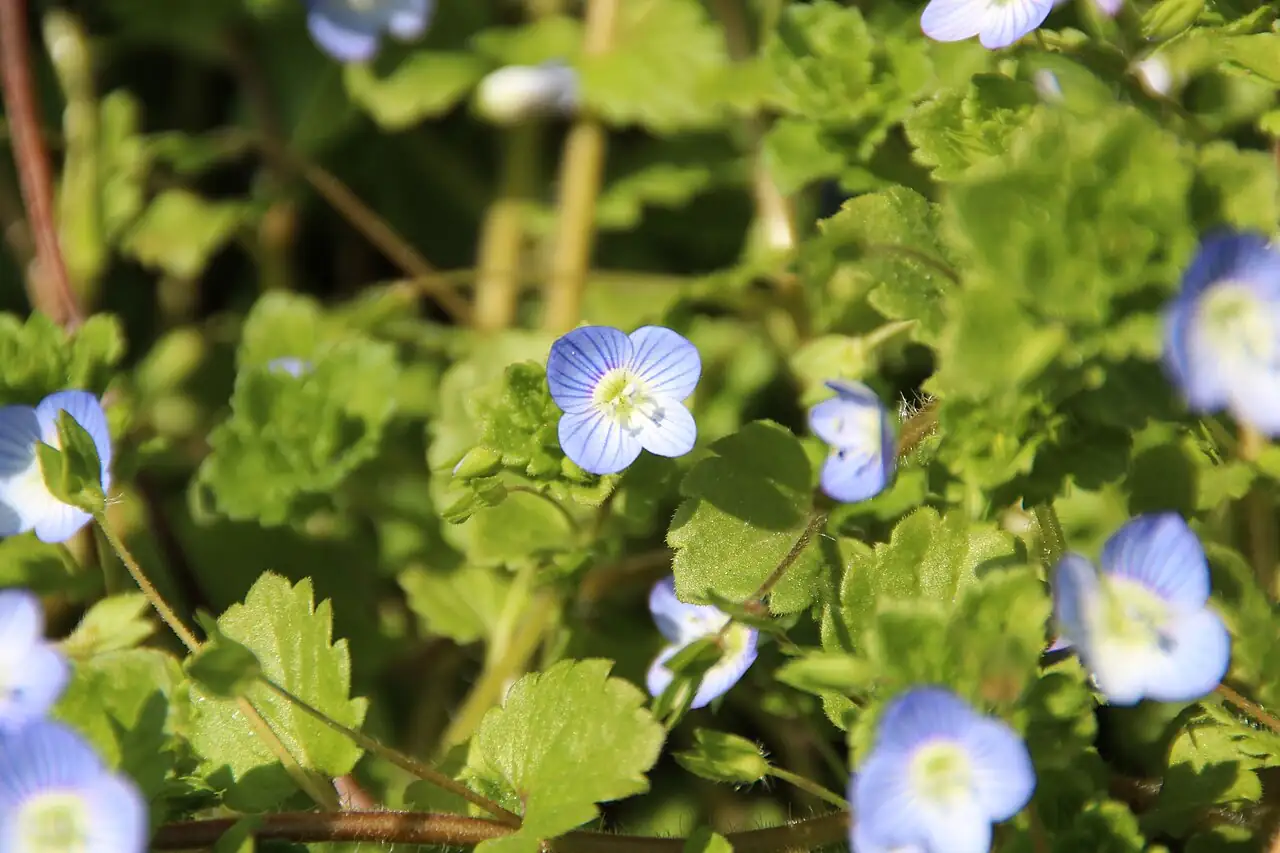
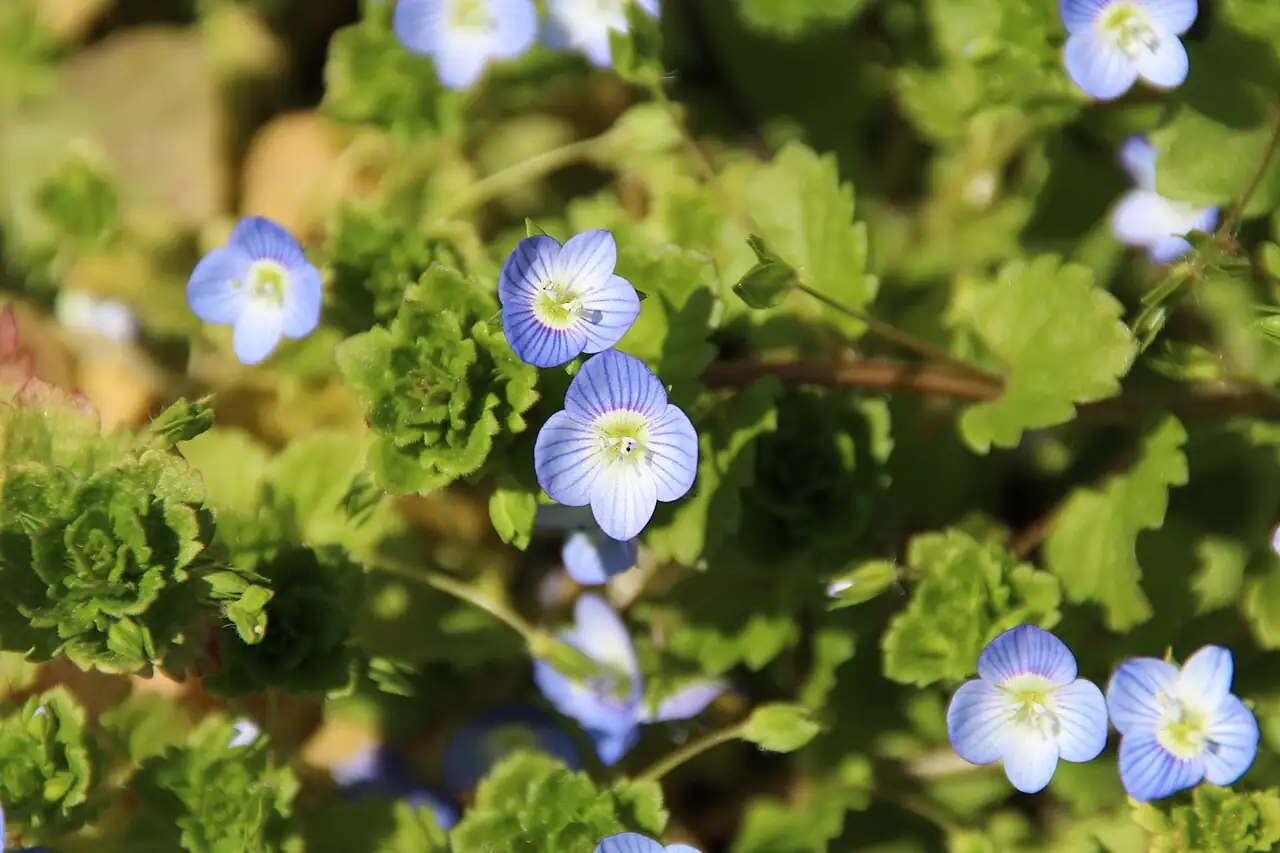
- Foliage: Leaves are rounded to broadly triangular-ovate with softly scalloped (rounded-toothed) edges. Lower leaves sit opposite each other on the stem, while upper leaves tend to become alternate. Stems and leaves are usually softly hairy, giving the plant a slightly fuzzy texture.
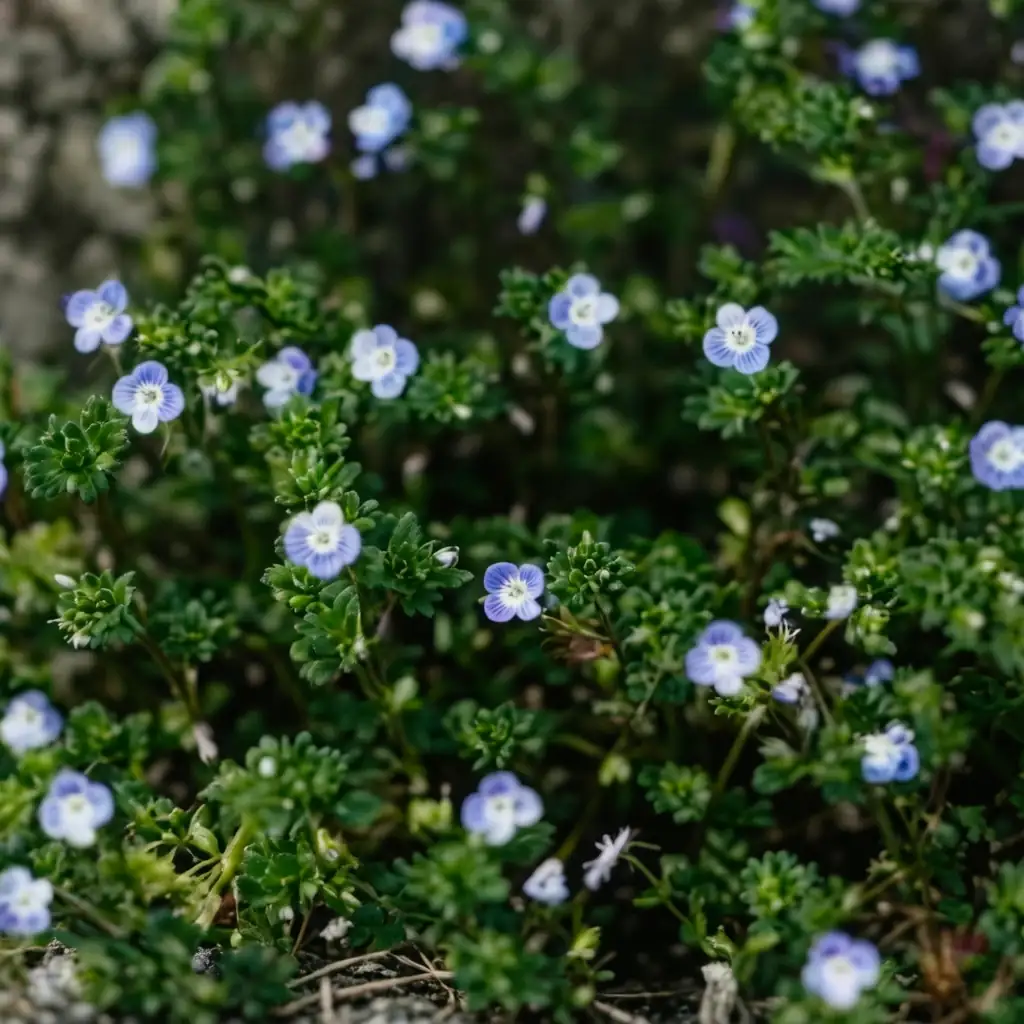
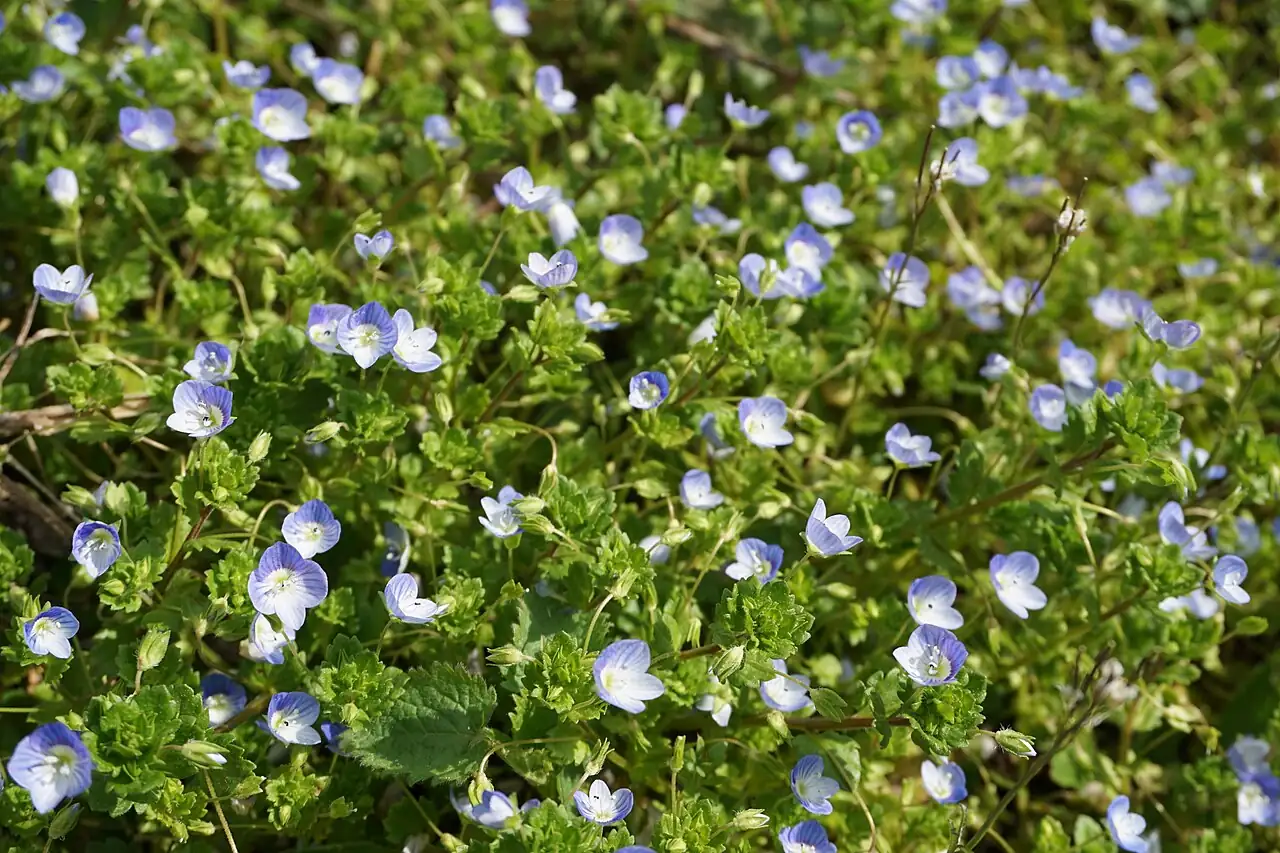
- Flower: Tiny four-lobed flowers with a pale lilac to blue corolla (sometimes pink or white), commonly marked with darker veining and a paler center/“eye.”
- Flowering Season: March–May
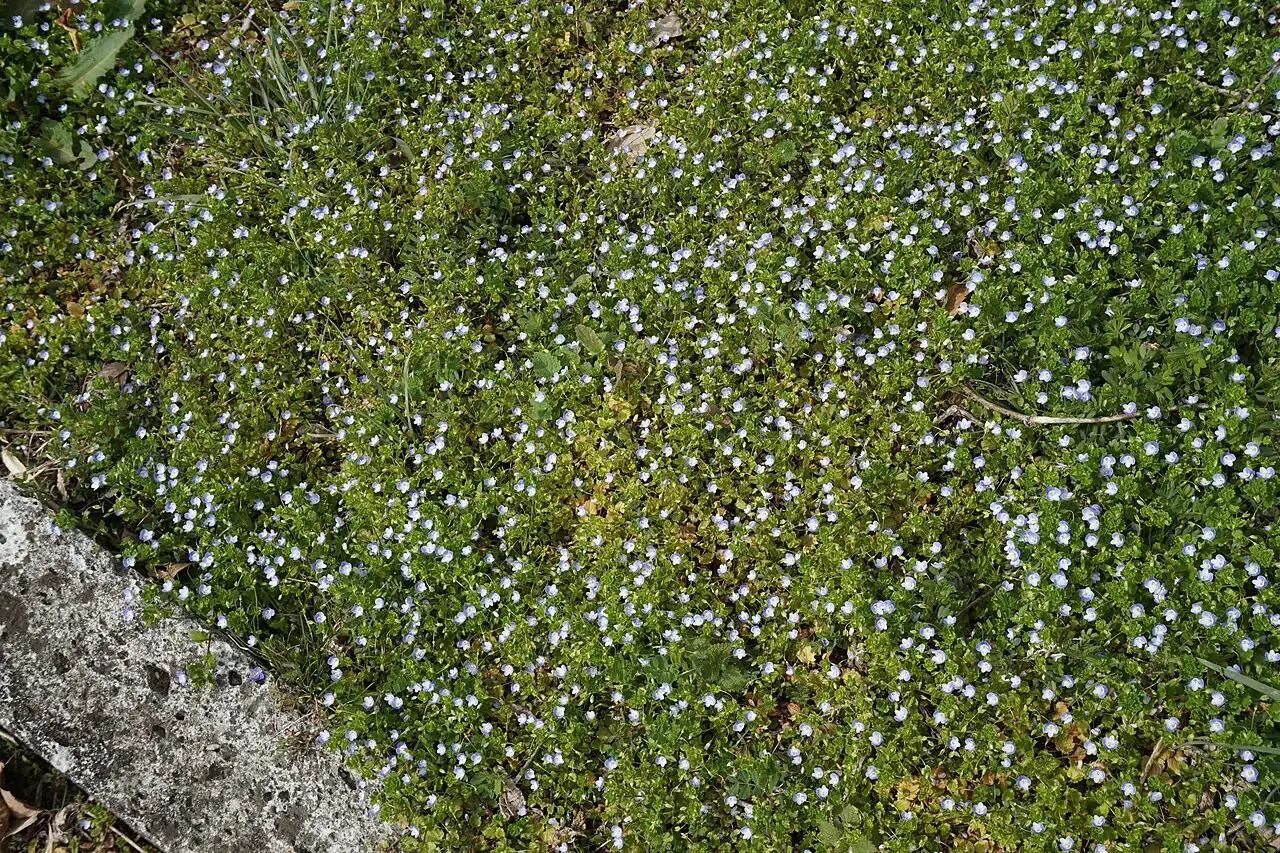
- Growth Habit: Low annual to biennial herb, branching from the base. Lower stems often creep along the ground and may root at nodes under favorable conditions, helping it spread into small patches.
Environment
Sunlight
Full sun to partial shade; it flowers best with brighter light but will tolerate some shade.
Temperature
Cool-season grower; strongest growth typically around 10–20°C (50–68°F). Avoid prolonged cold-season waterlogging.
Humidity
Prefers evenly moist conditions during active growth, but dislikes stagnant, soggy conditions—especially in winter.
Soil
Adaptable, but happiest in fertile, deep, moisture-retentive yet well-drained soil. Good drainage is essential to prevent winter wet problems.
Placement
Front of flowerbeds, rock gardens, and shrub borders; also suitable for containers and casual, informal cut-flower use.
Hardiness
Cold-tolerant in many temperate areas and widely naturalized. Often cited around USDA Zone 4–9, but performance depends heavily on drainage and winter wet.
Care Guide
Difficulty
Easy. A tough, adaptable plant that looks best with bright light and reasonably fertile soil. The main thing to avoid is wet, poorly drained conditions in cold weather.
Buying Guide
Pick plants with fresh, green growth and firm stems. Avoid any with blackened, mushy patches (often a sign of waterlogging). If buying seed, choose reputable suppliers and fresher packets for better germination.
Watering
During active growth, keep soil lightly and evenly moist—then allow the surface to dry a little between waterings. In winter or extended cool, wet periods, water sparingly and prioritize excellent drainage to prevent “wet feet.”
Fertilization
Usually not necessary in the ground. In containers or lean soils, feed lightly with a balanced fertilizer at half strength every 2–4 weeks (2–4 weeks) in spring, or simply work in compost at planting for a gentler boost.
Pruning
Light deadheading keeps it tidy and may encourage more blooms. After flowering, shear back leggy growth to prompt fresh shoots (especially where it’s acting as a small edging plant).
Propagation
Mostly by seed; it can self-seed freely where conditions suit it. Creeping stems may root where they touch soil, so you can also lift and replant rooted pieces like easy divisions.
Repotting
In pots, refresh the top 2–3 cm (0.8–1.2 in) of mix or repot after flowering if the soil has compacted. Always keep drainage holes clear.
📅 Seasonal Care Calendar
Spring (March–May): peak bloom—give bright light and even moisture. Summer: may fade in heat; trim back and water sparingly. Autumn–winter: keep on the dry side and protect containers from prolonged saturation.
Pests, Diseases & Safety
Common Pests & Diseases
Usually trouble-free. In damp, crowded situations it can develop fungal problems such as leaf spots or mildew. Slugs and snails may nibble tender growth; improve airflow, avoid overwatering, and hand-pick or use barriers if needed.
Toxicity
Not generally considered toxic to people or pets. However, eating any plant may cause mild stomach upset in sensitive individuals.
Culture & Symbolism
Uses: A charming small-scale ornamental for rock gardens, border fronts, and container plantings; sometimes used as a light, informal cut flower. In the wild, it readily colonizes disturbed ground, helping fill in bare patches quickly.
FAQ
When does Persian speedwell flower?
Most often in spring, typically March–May, depending on local climate.
When does it set seed?
Usually during March–May as well, often overlapping with the flowering period.
How tall does it grow?
About 10–50 cm (4–20 in), though it often stays low and spreads outward rather than standing tall.
Where is it native and where is it found?
It’s native to Western Asia and has become widely naturalized. In China, it’s common across many regions and often shows up on waste ground and other disturbed sites.
What light and soil does it prefer?
Full sun to partial shade, and it’s fairly adaptable—but it looks best in fertile, evenly moist, well-drained soil. Avoid winter waterlogging.
Fun Facts
- It often thrives in disturbed ground—proof that delicate-looking flowers can belong to surprisingly tough plants.
- Creeping stems may root where they touch the soil, helping it form small, patchy mats.
- Flower color is variable: pale lilac and blue are common, but pink and white forms can appear too—sometimes even within one population.
- It’s a classic “gap-filler” for early spring, especially along border edges and in rock gardens.