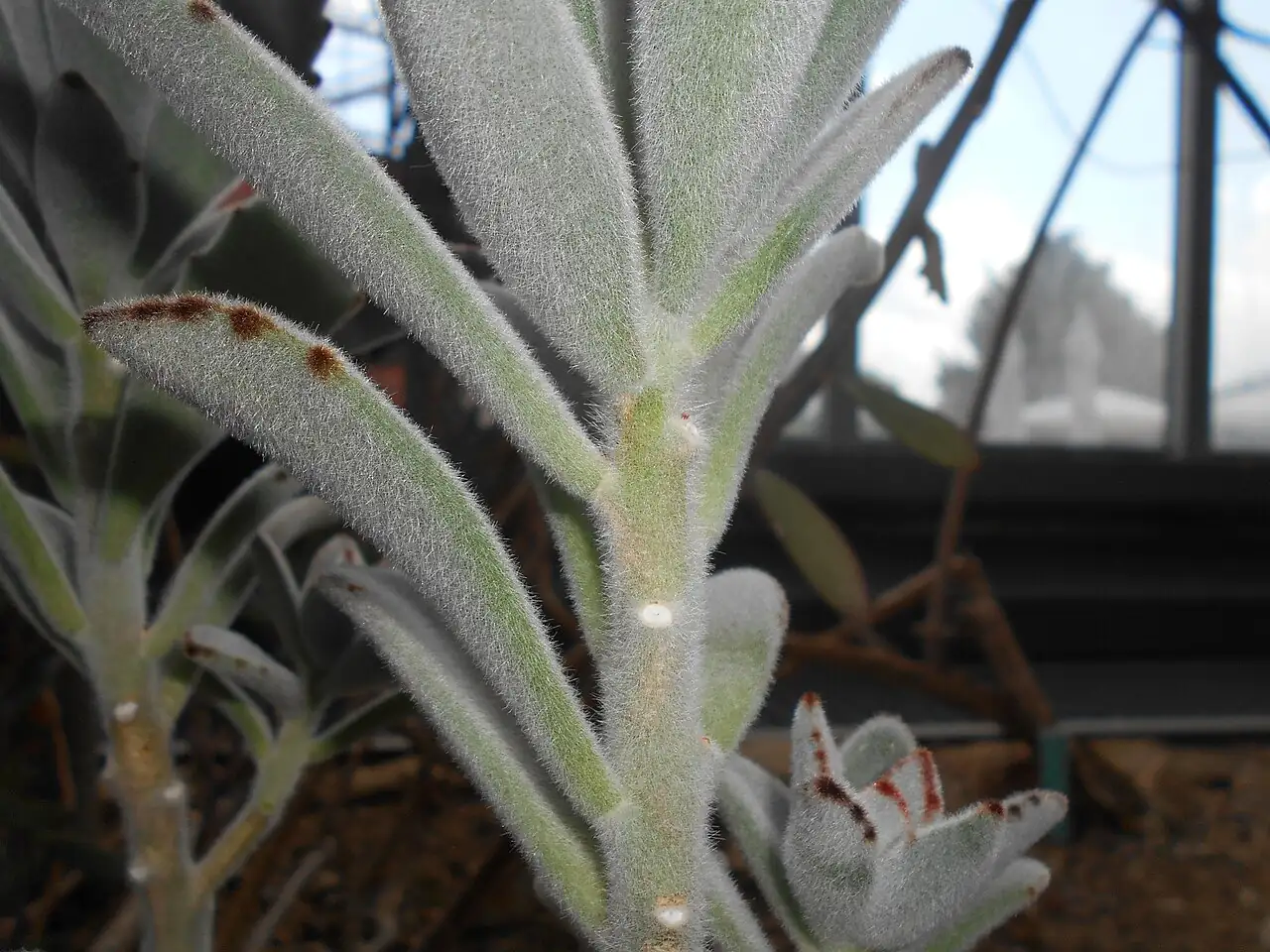
Plant Features
- Size: Up to about 60 × 60 cm (24 × 24 in) in containers
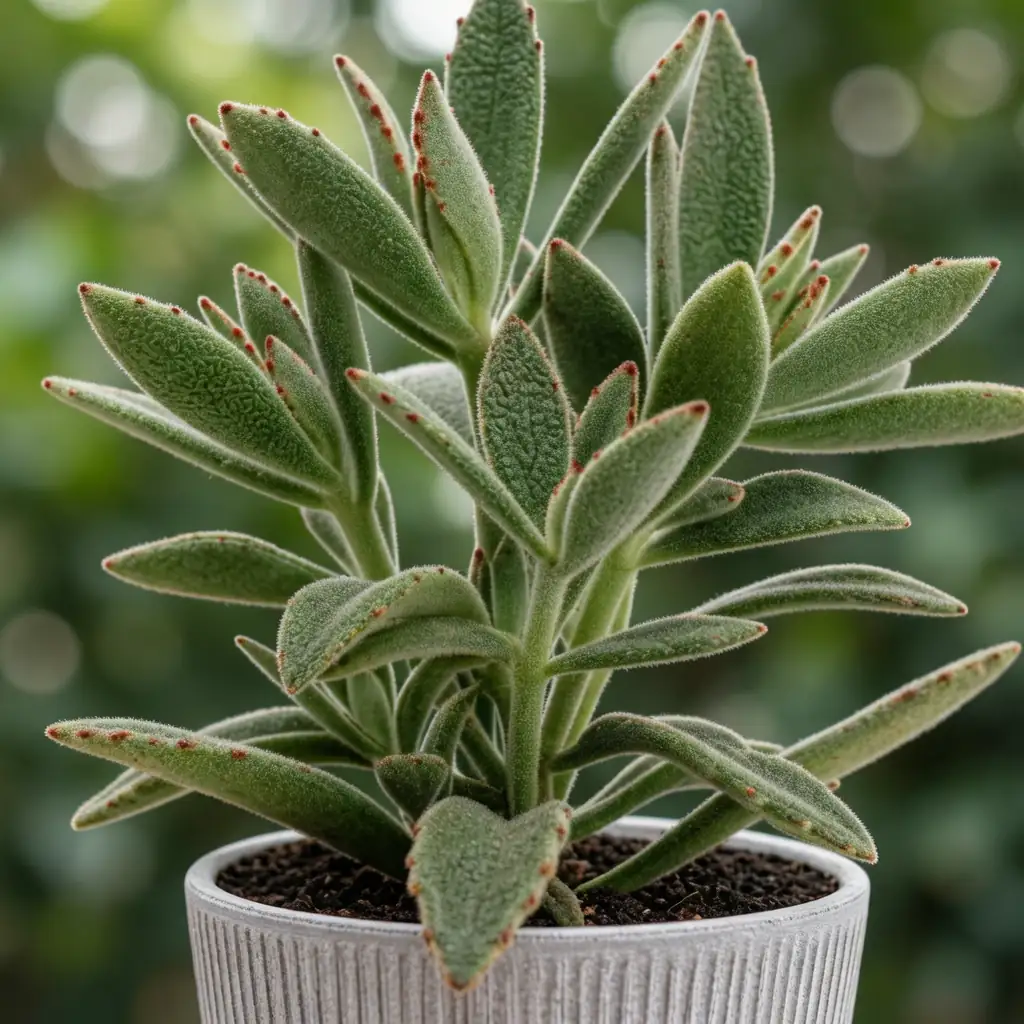
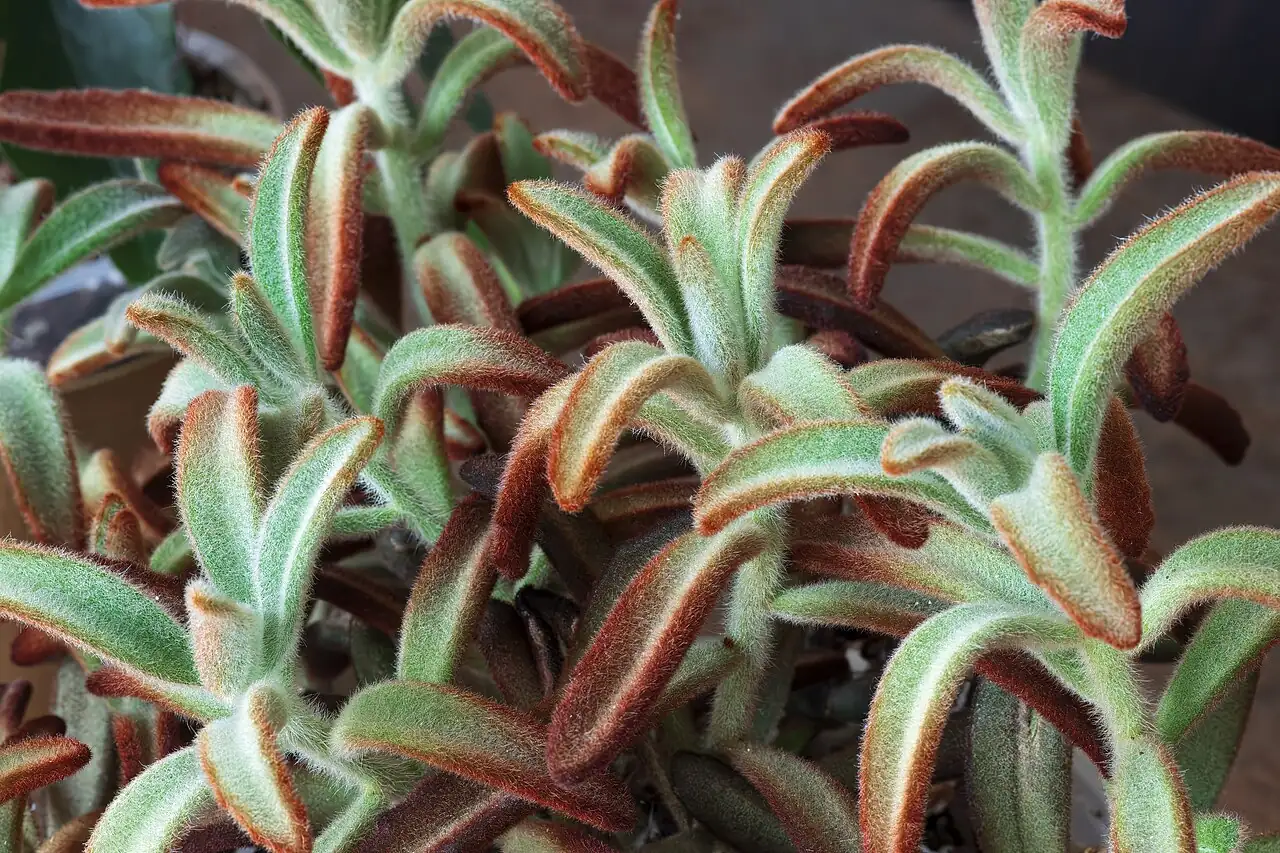
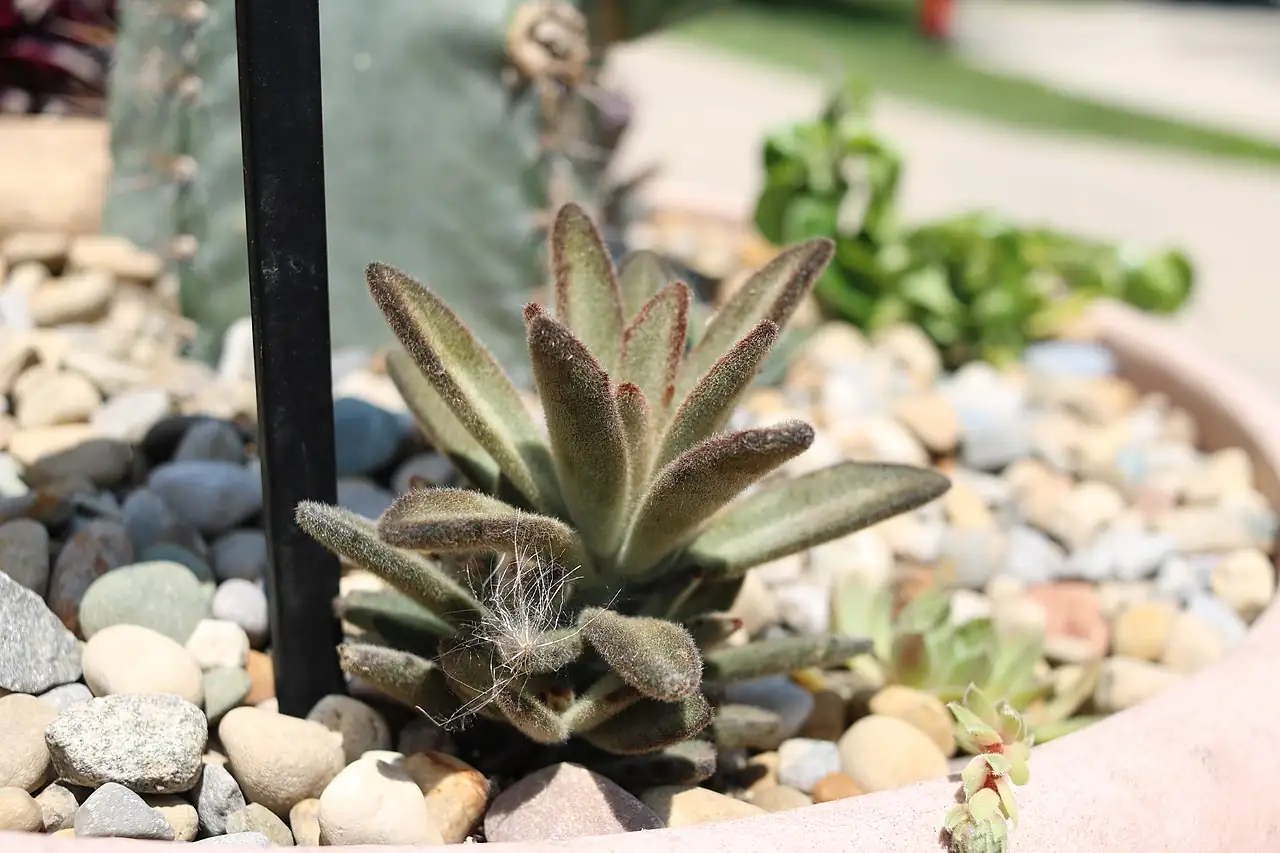
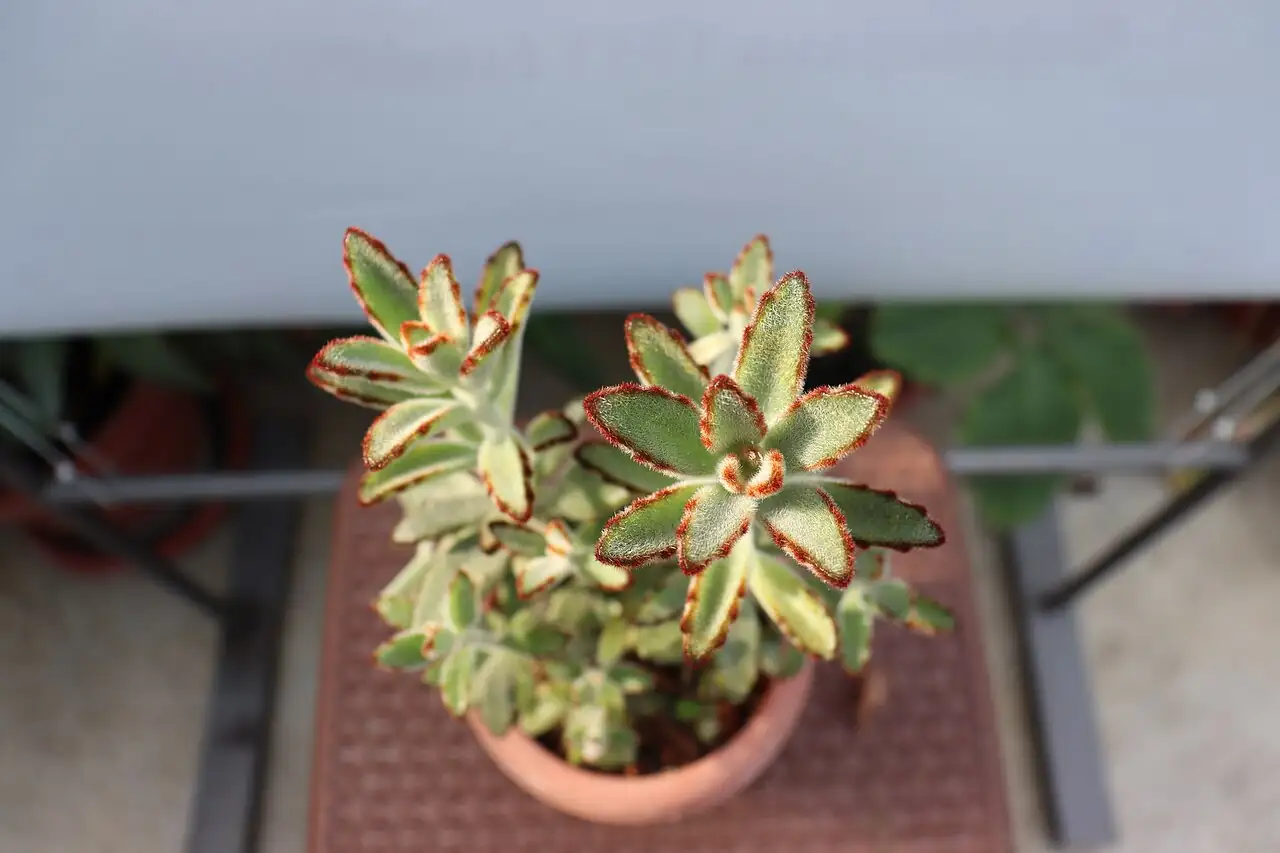
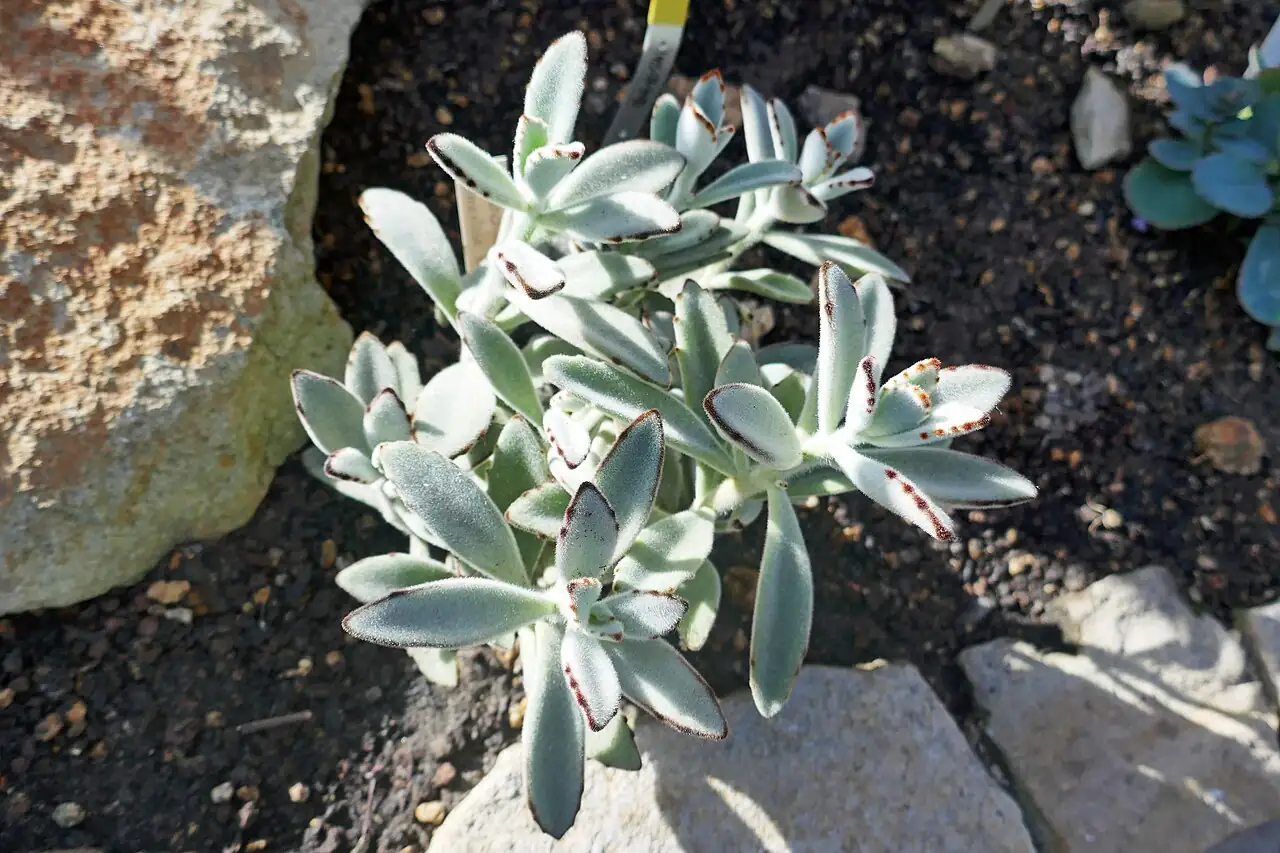
- Foliage: Thick, gray-green leaves densely coated in felt-like hairs (a velvety texture). Leaf tips and margins are marked with brown to chocolate-colored spots or edging, which tends to deepen in strong light.
- Flower: Rare indoors. When it does bloom, it may send up taller stems topped with small, tubular flowers.
- Flowering Season: Typically late winter to spring outdoors; rarely indoors
- Growth Habit: Upright, branching succulent subshrub; can develop a woody, tree-like silhouette with age
Environment
Sunlight
Full sun to very bright light; tolerates partial sun. Indoors, give it the sunniest window you have and good airflow to keep growth compact.
Temperature
Best around 15–23°C (59–73°F). Keep above about 10°C (50°F) and protect from cold drafts; not frost tolerant.
Humidity
Low; average indoor humidity is fine. Avoid persistently damp, stagnant air.
Soil
Fast-draining cactus/succulent mix. A simple option is potting mix blended with grit/sand at about 2:1. Always use a pot with drainage; typical pot size is about 10–20 cm (4–8 in) wide depending on the plant.
Placement
Sunny windowsill or a bright, well-ventilated spot indoors; balcony/sunroom in warm seasons. Avoid dark shelves and cramped, humid corners.
Hardiness
USDA Zone 10–11 (not frost tolerant)
Care Guide
Difficulty
Easy, as long as you resist overwatering. Bright light + a dry-down between waterings is the winning formula; soggy soil is the fastest way to lose it.
Buying Guide
Pick a plant with firm, upright stems and evenly fuzzy, unblemished leaves. Avoid black or mushy areas near the base, leaf drop, or a sour smell from the pot (classic rot warnings). Check leaf axils and stems for mealybugs before buying.
Watering
Spring–summer: water thoroughly only when the soil surface feels dry (bottom-watering works well). Try to keep water off the leaves to prevent spotting and rot. Fall–winter: keep the mix almost dry; water sparingly—just enough to prevent severe shriveling.
Fertilization
Spring through late summer: fertilize about once a month with a balanced liquid fertilizer at 1/2 strength. Stop feeding in fall and winter.
Pruning
Optional. Pinch or trim leggy stems in spring/summer to encourage branching. Let cut ends callus before watering again.
Propagation
Stem cuttings are the most reliable. Take a healthy cutting, let it callus for 2–5 days, then place in a dry, gritty mix; water lightly only after roots begin forming. Leaf cuttings can work but are slower and less dependable.
Repotting
Repot about every 3 years in spring if root-bound. Move up one pot size, refresh with a fast-draining mix, and always keep drainage holes. Common container size is roughly 10–20 cm (4–8 in) wide depending on the plant’s size.
📅 Seasonal Care Calendar
Spring–summer: water when the surface is dry; keep leaves dry; provide maximum light. Spring–late summer: feed monthly at 1/2 strength. Fall–winter: keep almost dry and stop fertilizing. Spring (every ~3 years): repot if root-bound.
Pests, Diseases & Safety
Common Pests & Diseases
Common issues include mealybugs, scale, and spider mites (often worse in dry indoor conditions), plus root rot from wet soil. Isolate infested plants, improve light/airflow, and treat with insecticidal soap or horticultural oil. Prevent rot by using a fast-draining mix and letting the soil dry between waterings.
Toxicity
Toxic to cats and dogs if ingested (Kalanchoe species can cause gastrointestinal upset and more serious symptoms). Keep out of reach and contact a veterinarian if a pet chews it.
Culture & Symbolism
Symbolism: Often linked with softness and resilience—velvet leaves on a plant that stays cheerful through dry spells.
History & Legends: Grown worldwide as a beloved ornamental succulent, prized far more for its fuzzy foliage and “chocolate-tipped” look than for its flowers.
Uses: Ornamental foliage plant for sunny windowsills, succulent collections, and drought-tolerant container arrangements.
FAQ
Is it toxic to pets?
Yes. Panda Plant (Kalanchoe tomentosa) is toxic to cats and dogs if eaten. Keep it out of reach and seek veterinary advice if ingestion is suspected.
How should I water it?
In spring and summer, water only when the soil surface is dry and avoid wetting the leaves; in fall and winter, keep the mix almost dry and water very sparingly.
When should I fertilize?
Feed from spring through late summer about once a month with a balanced liquid fertilizer at 1/2 strength; stop feeding in fall and winter.
Fun Facts
- That velvety leaf coating helps reduce water loss and buffers the plant from intense sun—part of why it’s so tolerant of bright, dry conditions.
- Stronger light typically keeps Panda Plant more compact and intensifies the darker brown edging on the leaf tips.