

Plant Features
- Size: Typically about 60 × 60 cm (24 × 24 in) as a mature potted clump.
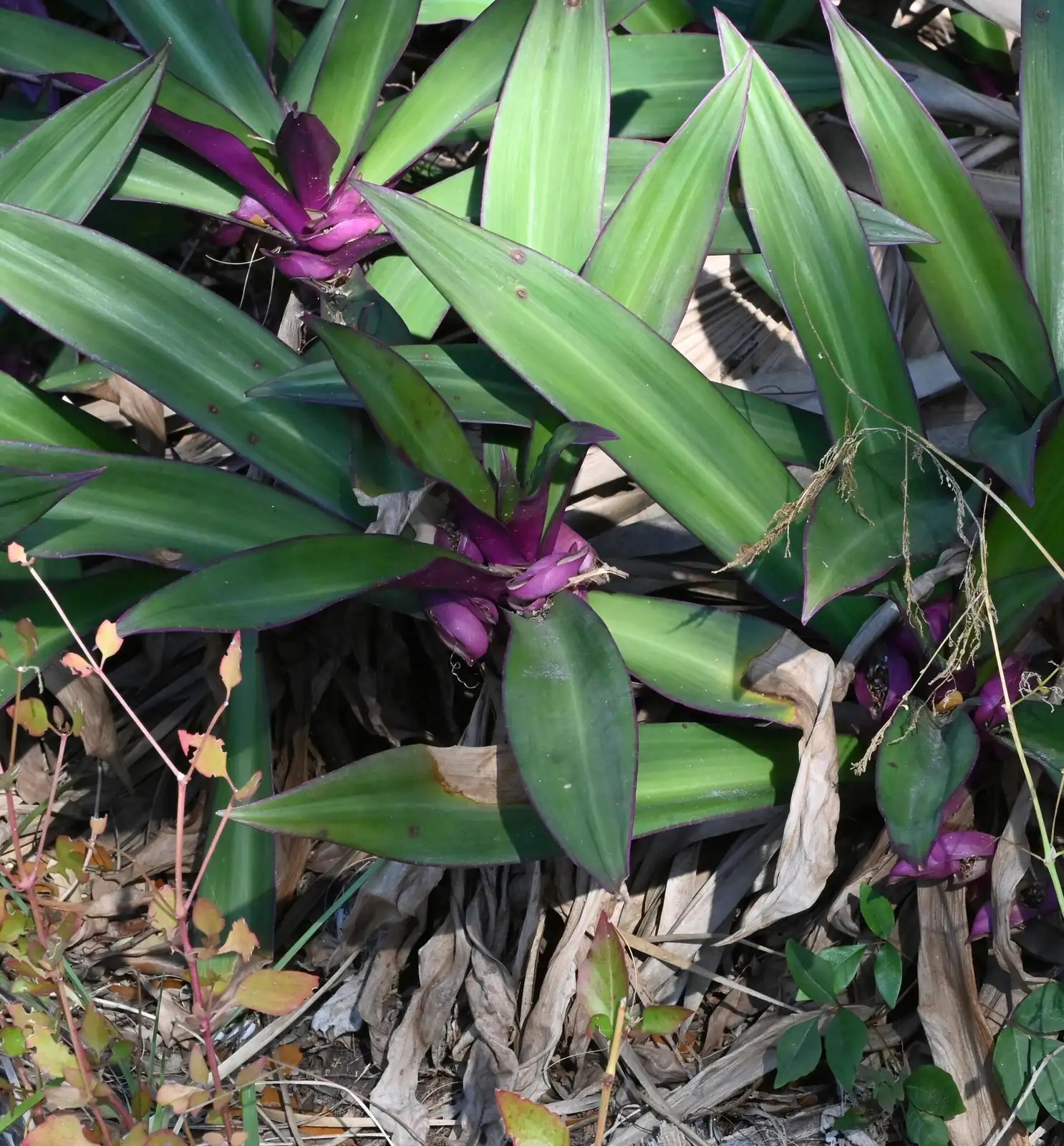
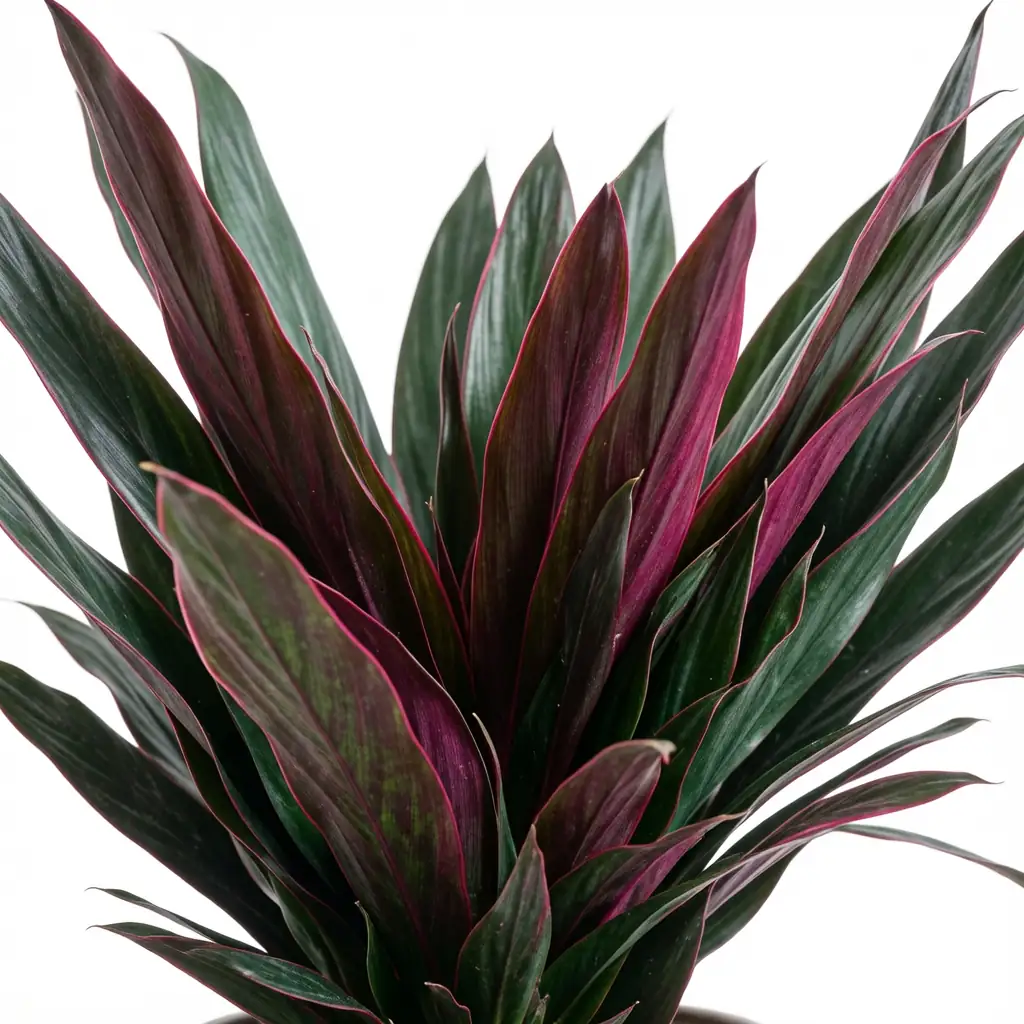
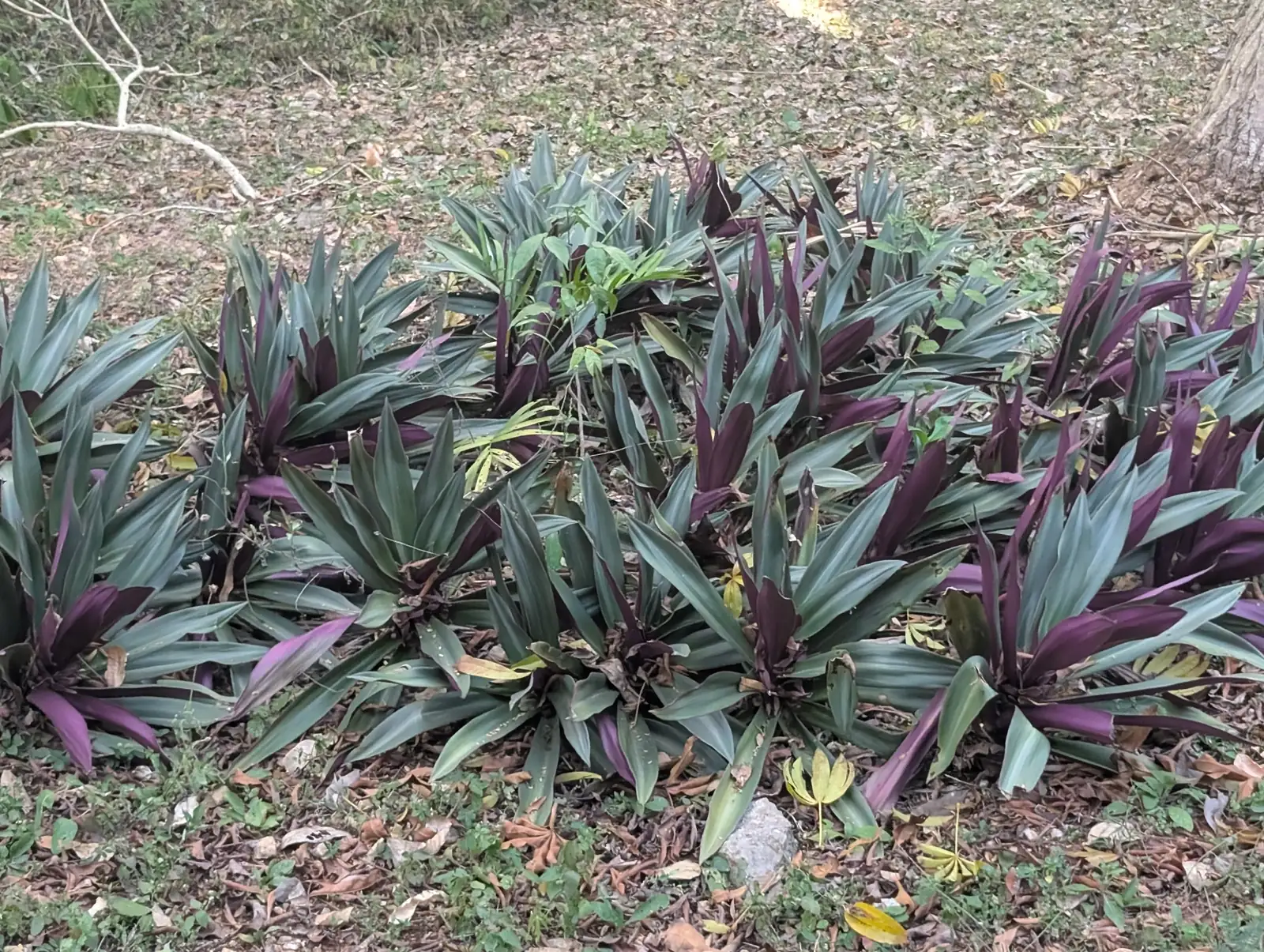
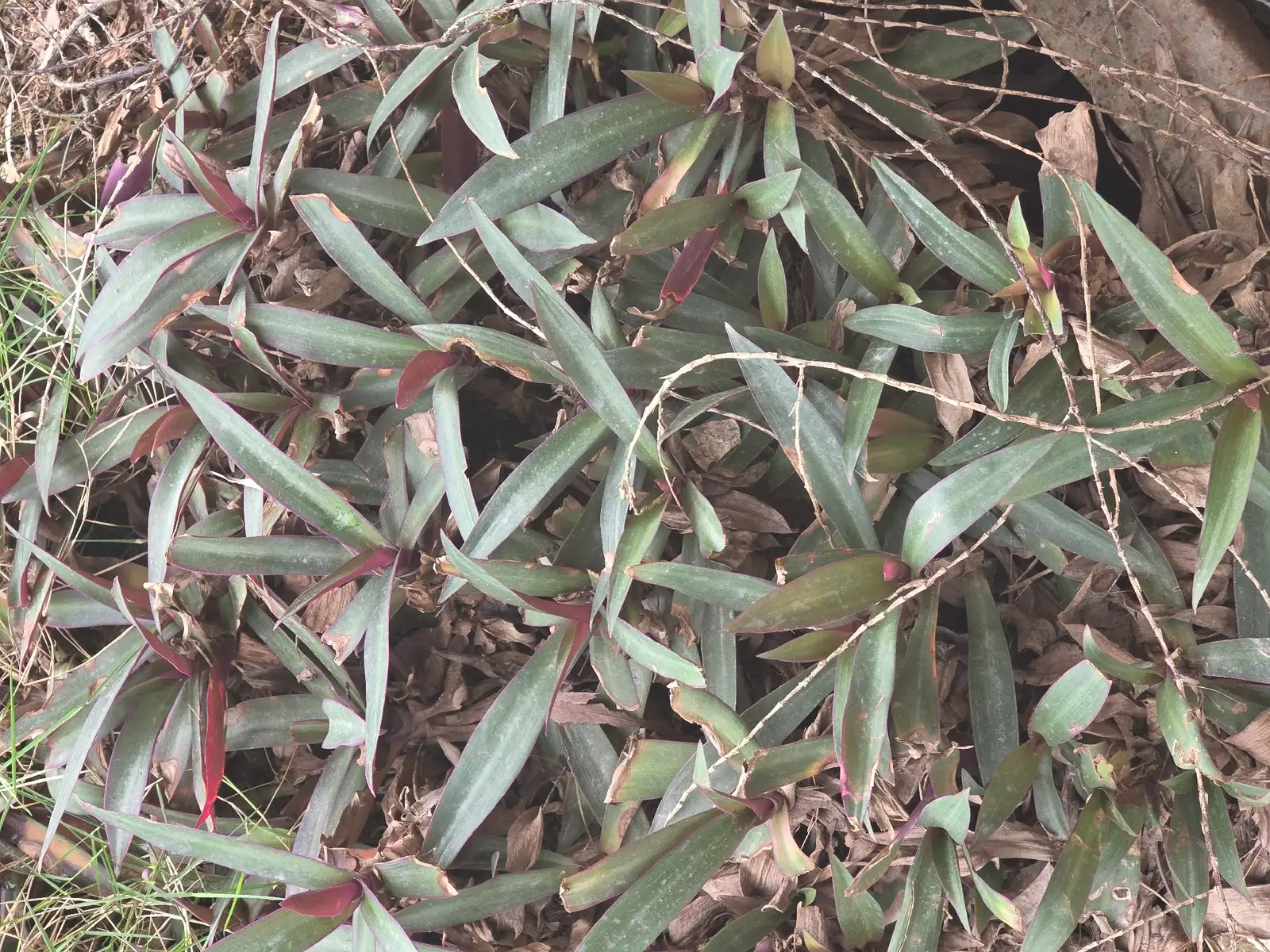
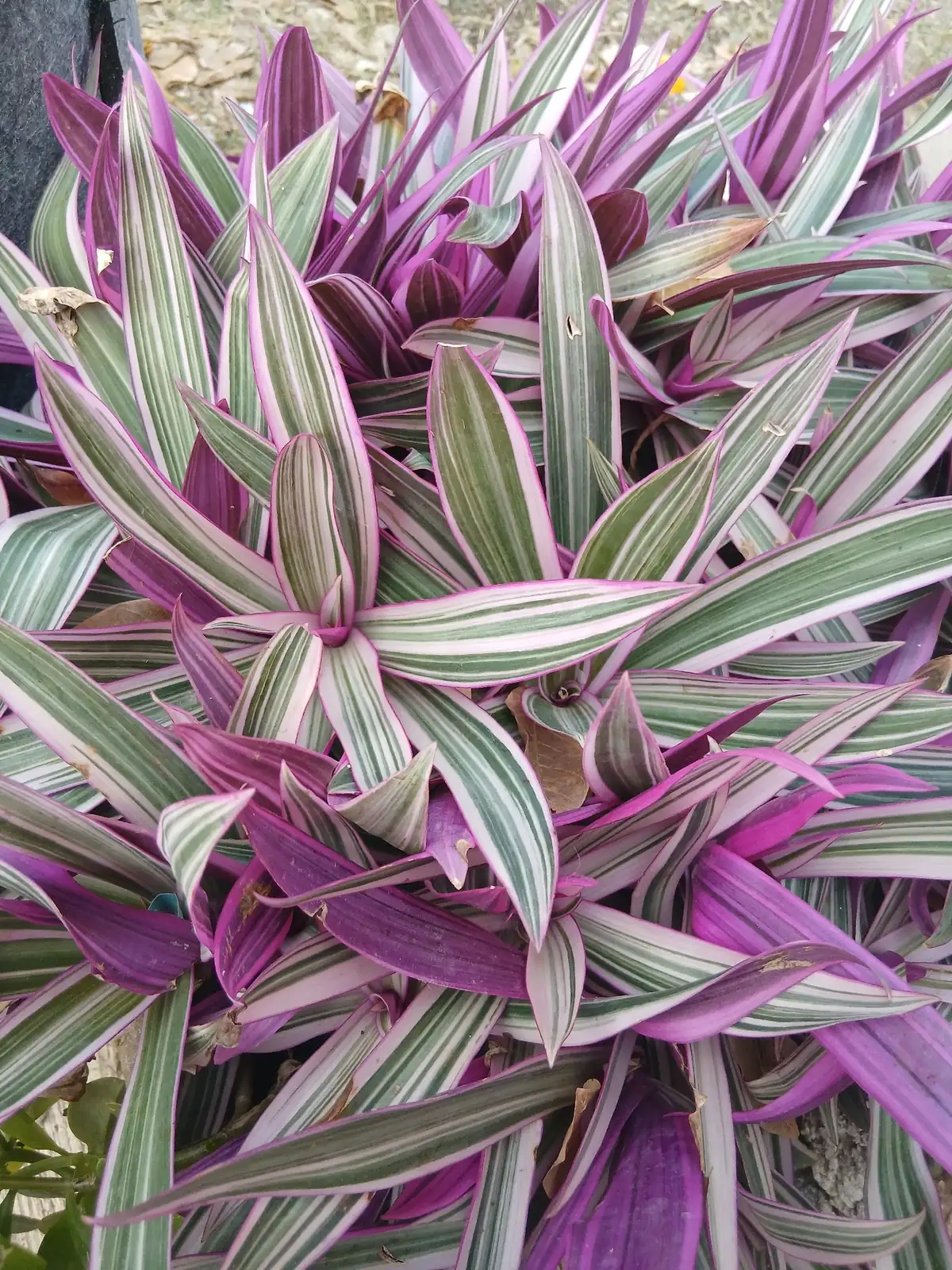
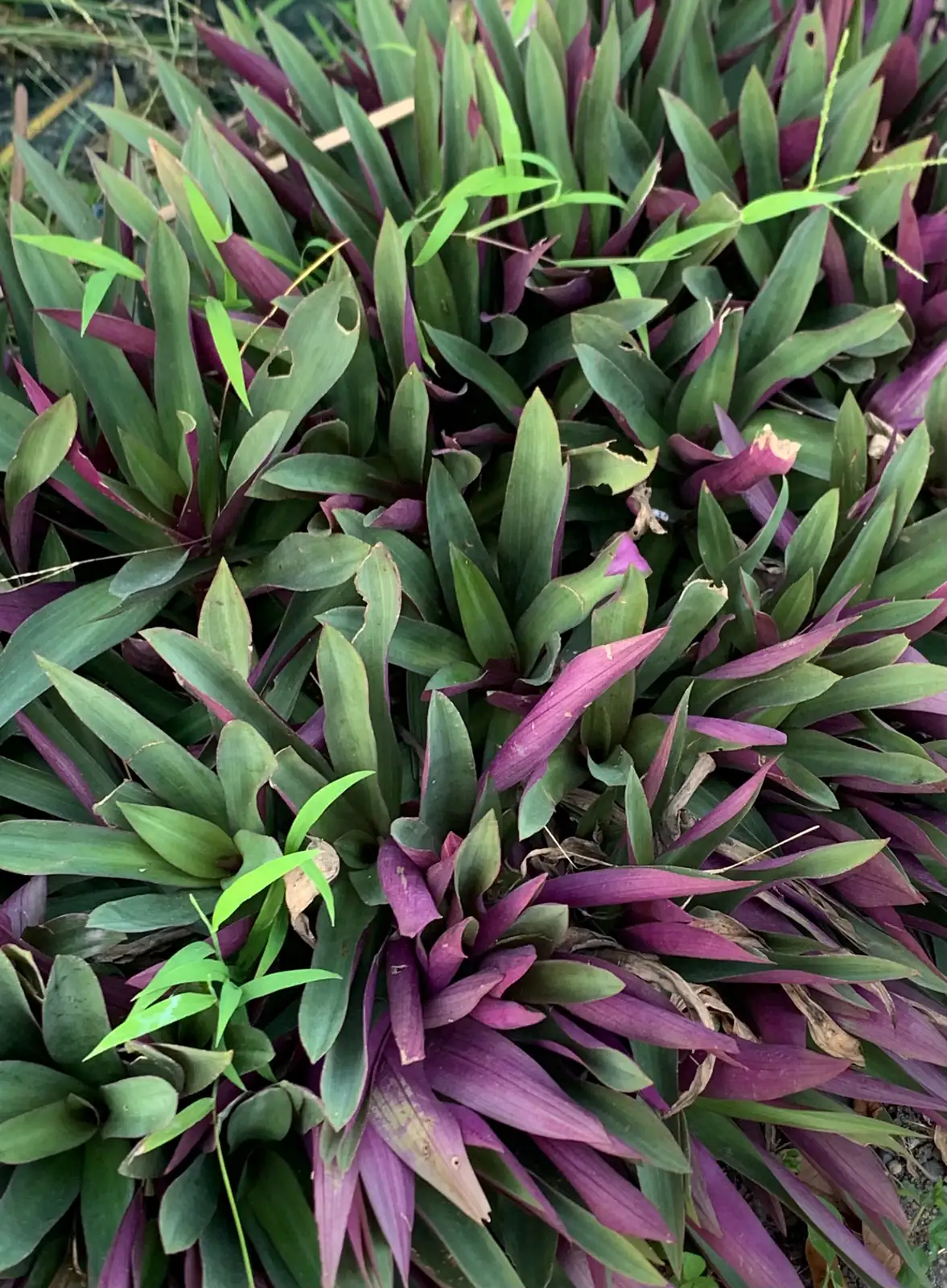
- Foliage: Dense rosettes of narrow, lance-shaped, sword-like leaves forming eye-catching tufts; glossy green upper surface with a vivid purple underside.
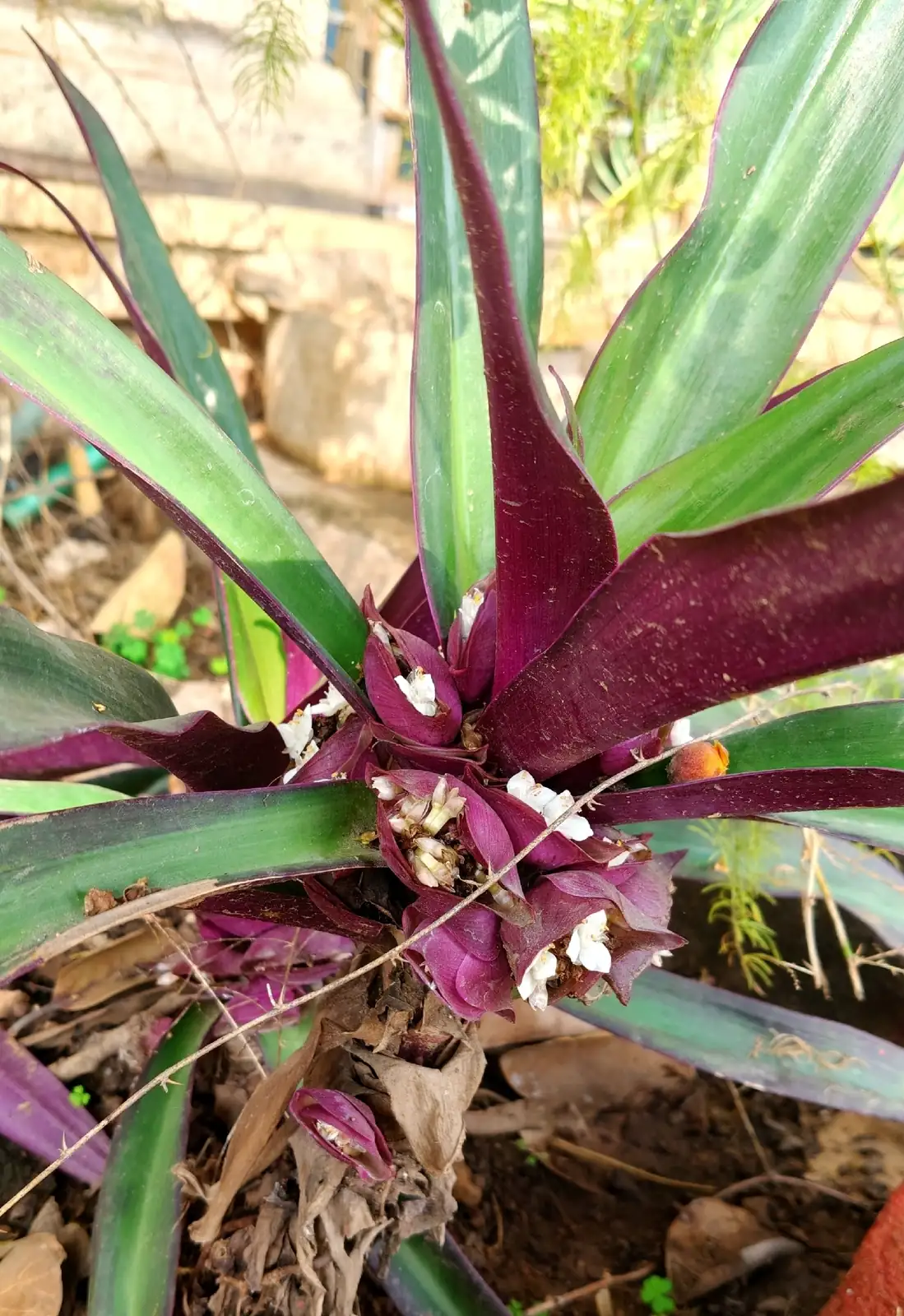
- Flower: Small, subtle white flowers with three petals, produced from distinctive boat-like bracts nestled among the leaves; attractive up close but the foliage is the main show.
- Flowering Season: Intermittently year-round indoors (most often in warm, bright conditions).
- Growth Habit: Compact, evergreen, clump-forming perennial that produces offsets freely, creating a dense mound over time.
Environment
Sunlight
Bright, indirect light to partial shade. Avoid harsh direct sun. Tolerates lower light, but purple coloration may fade.
Temperature
15–27°C (59–81°F). Protect from cold drafts; keep above about 10°C (50°F).
Humidity
Average indoor humidity is usually fine, but it grows best with moderately humid air (great for bathrooms and kitchens). Occasional misting or a pebble tray can help in dry homes.
Soil
Loose, fast-draining potting mix. A practical blend is 2 parts soil-based potting mix to 1 part sand or perlite for extra drainage and aeration.
Placement
Indoors near an east or north window, or set back from a bright south/west window. Excellent in bathrooms/kitchens with higher humidity; typically best grown in pots.
Hardiness
USDA Zone 9–11; not frost hardy.
Care Guide
Difficulty
Easy; forgiving and well-suited to beginners as long as it isn’t overwatered.
Buying Guide
Pick plants with firm, upright leaves and strong purple undersides. Avoid waterlogged pots, mushy bases (a rot warning), or heavy browning/spotting. A clump with several healthy offsets will bulk up faster.
Watering
Spring to autumn: water when the top of the mix feels dry, then let excess drain away. Winter: water more sparingly, keeping the mix only barely moist. For extra humidity, mist every 1–2 days or use a pebble tray—without letting the pot sit in water.
Fertilization
Spring to autumn: feed monthly with a balanced liquid houseplant fertilizer at label rate (or half-strength if growth is slow). Reduce or stop feeding in winter.
Pruning
Remove yellowing or damaged leaves at the base. Trim back leggy growth to keep it compact; older clumps can be refreshed by removing tired rosettes once new offsets have formed.
Propagation
Easiest by division or separating offsets: split the clump and pot up rooted rosettes. Stem cuttings can also root in water or in a moist, well-drained mix in warm conditions.
Repotting
Repot every 2–3 years, or when crowded. A pot around 15–20 cm (6–8 in) wide suits many plants; increase pot size gradually by about 2–5 cm (1–2 in) each time to avoid staying too wet.
📅 Seasonal Care Calendar
Spring–autumn: water when the surface dries; fertilize monthly; keep in bright, indirect light; add humidity support if air is dry. Winter: keep slightly drier, stay warm (above 10°C/50°F), and avoid cold drafts. Repot every 2–3 years as needed.
Pests, Diseases & Safety
Common Pests & Diseases
Can attract spider mites, mealybugs, and scale, especially in dry air. Treat promptly with insecticidal soap or horticultural oil and improve airflow. Overwatering may cause root rot—use fast-draining soil and never leave the pot standing in water.
Toxicity
Sap may irritate skin. Generally considered mildly toxic if chewed by pets or children—keep out of reach and wash hands after handling.
Culture & Symbolism
Symbolism: Often linked with protection and resilience in houseplant folklore—fitting for such a tough plant with flowers “sheltered” in boat-like bracts.
History & Legends: Names like “Moses-in-the-cradle” and “boat lily” come from the little boat-shaped bracts that cradle the tiny white blooms.
Uses: Primarily an ornamental foliage plant for containers—ideal indoors and also for bright shade on patios in warm climates.
Fun Facts
- Its tiny flowers emerge from distinctive boat-shaped purple bracts—one reason it’s called “oyster plant.”
- Leaf color is a handy light gauge: stronger purple usually means brighter (indirect) light, while greener leaves often point to lower light.
- It naturally makes offsets, so a single plant can turn into a full, handsome clump over time.


