Plant Features
- Size: Typically up to about 30 × 15 cm (12 × 6 in), depending on species and cultivar.
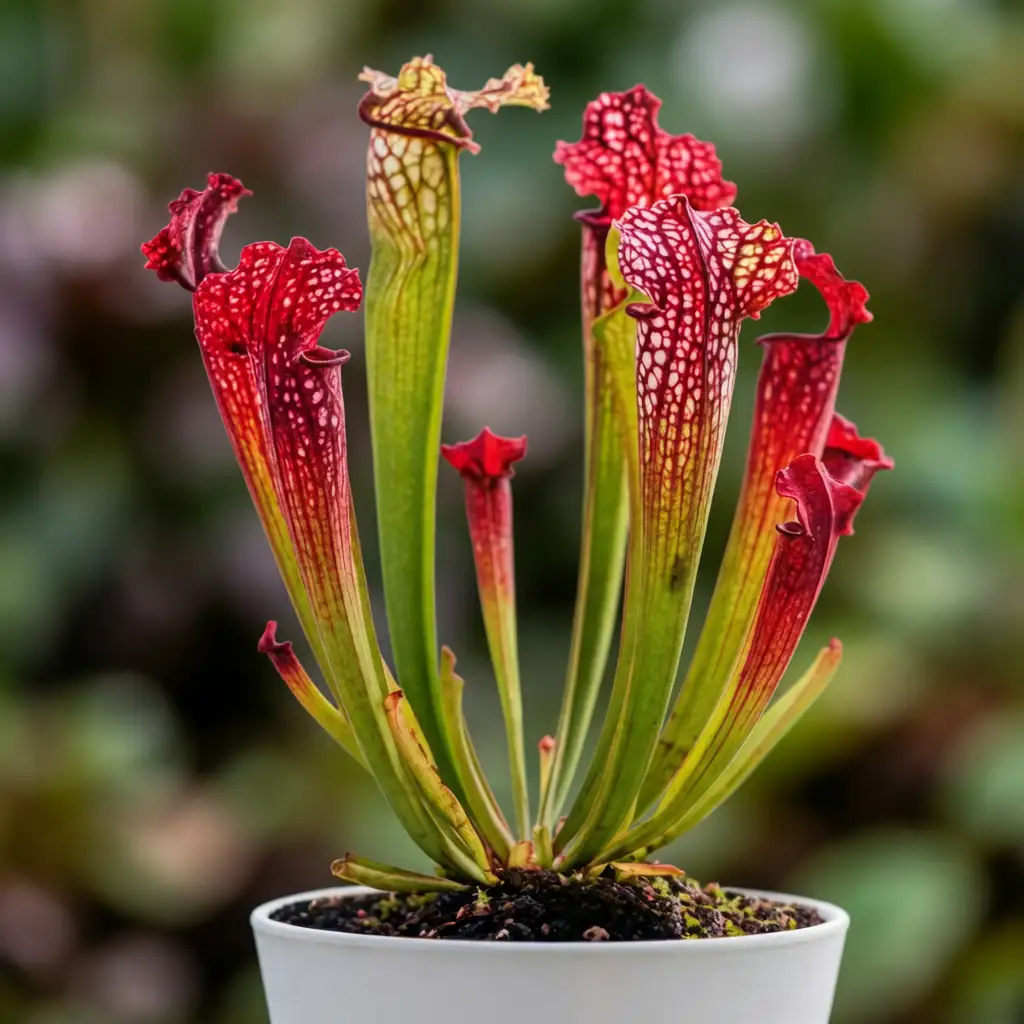
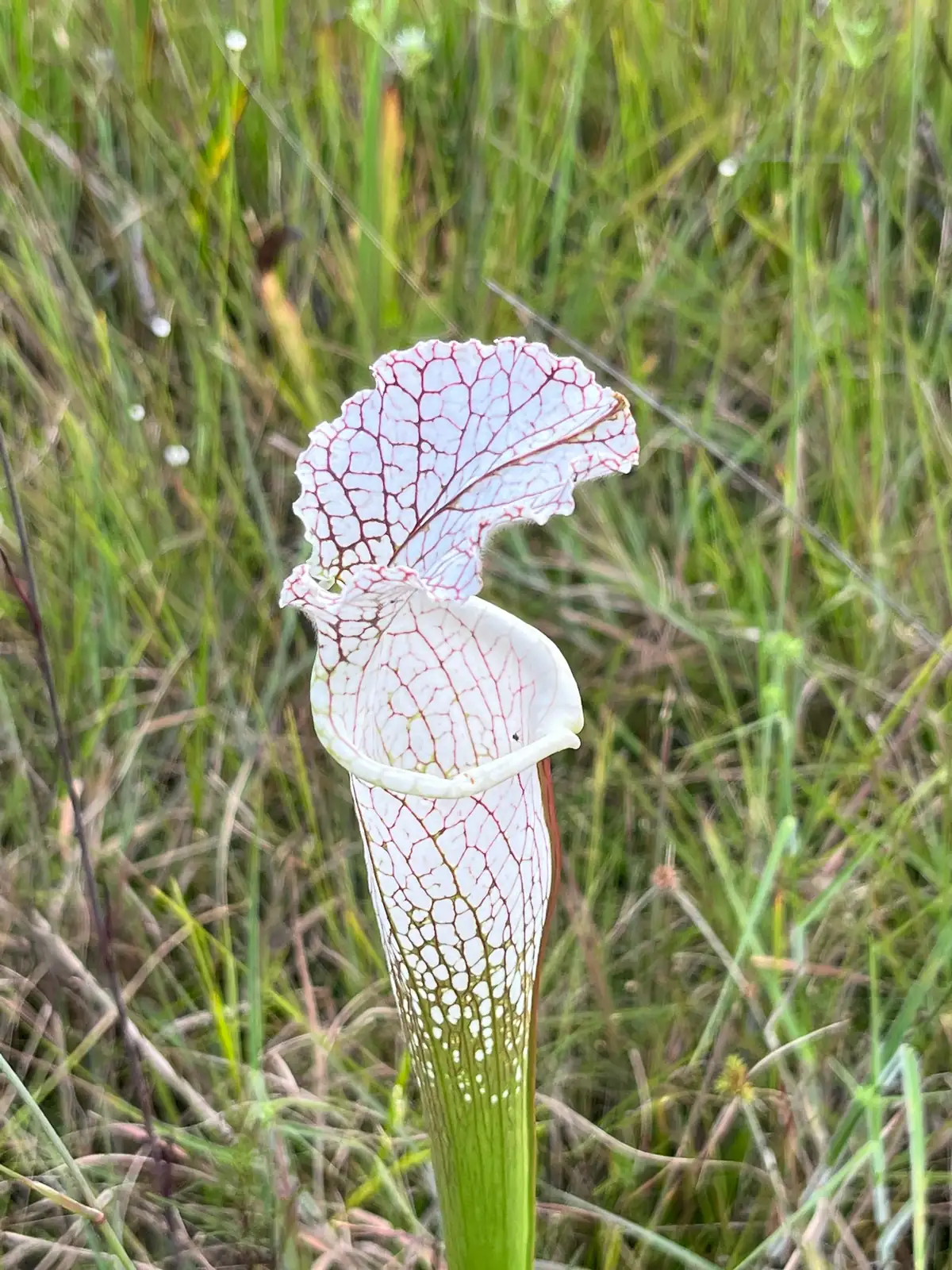
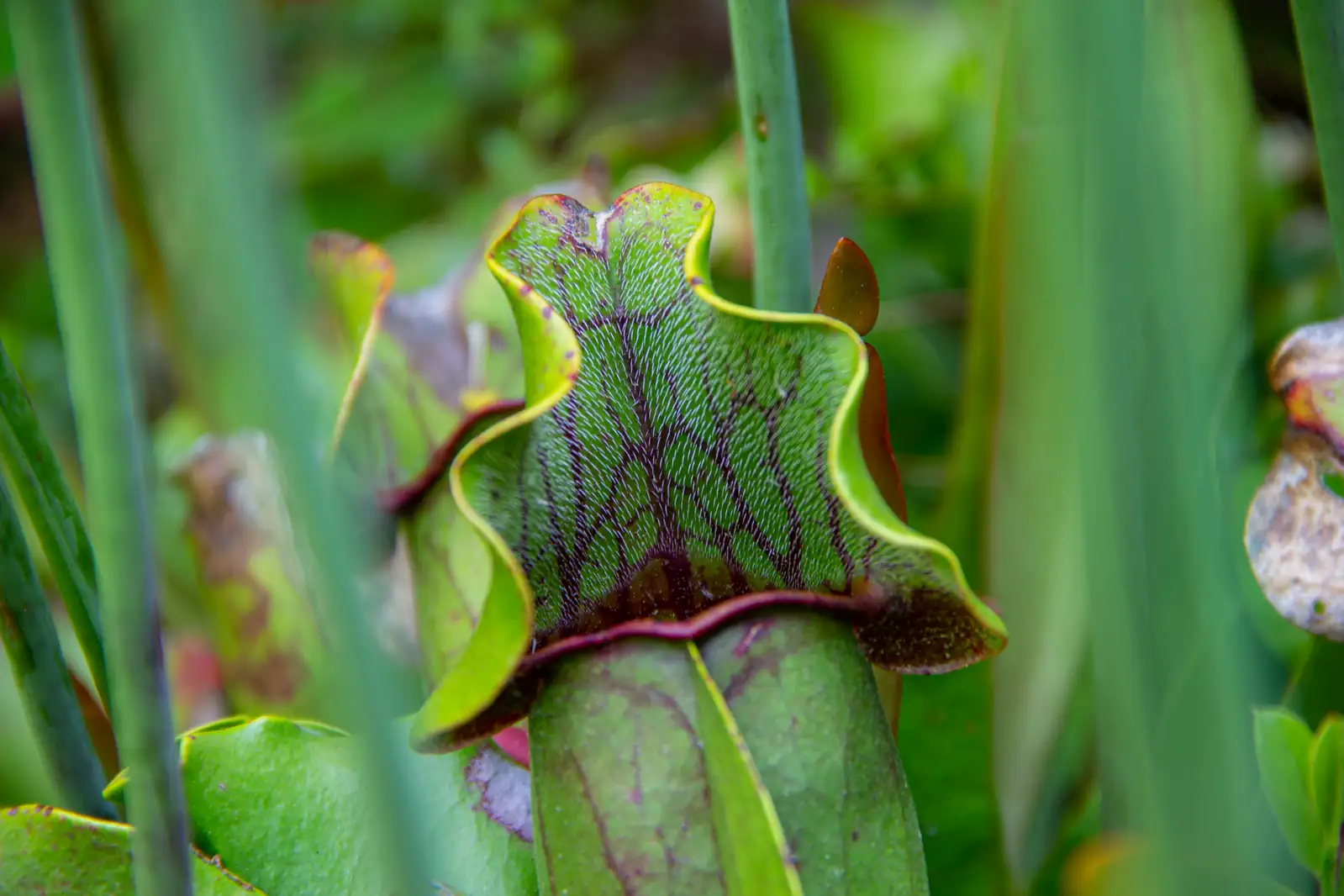
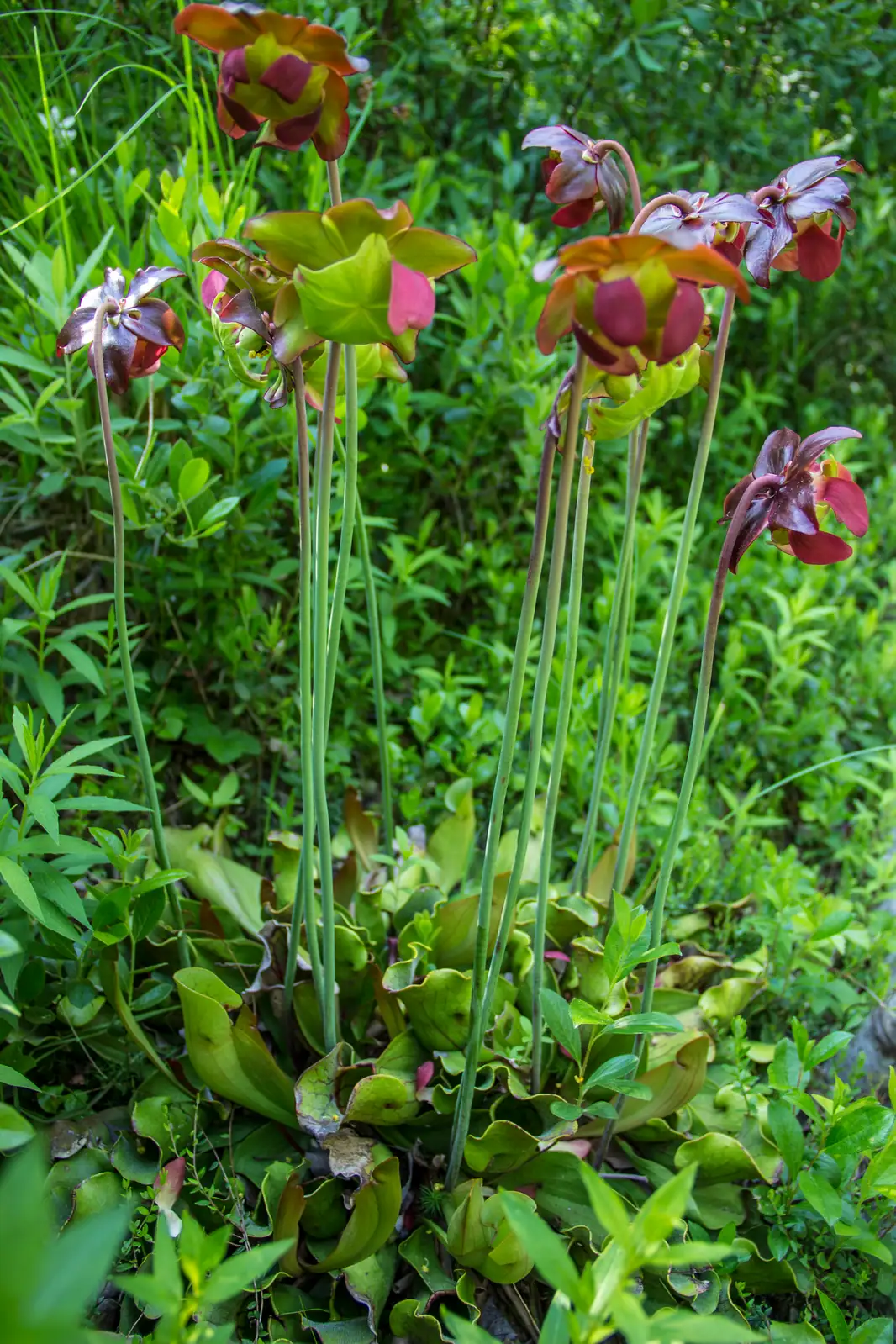
- Foliage: Clump-forming plants with upright tubular pitchers in vivid colors (burgundy, red, pink, green), frequently with strong veining. The pitcher rim produces nectar to attract insects, which fall in and are trapped inside.
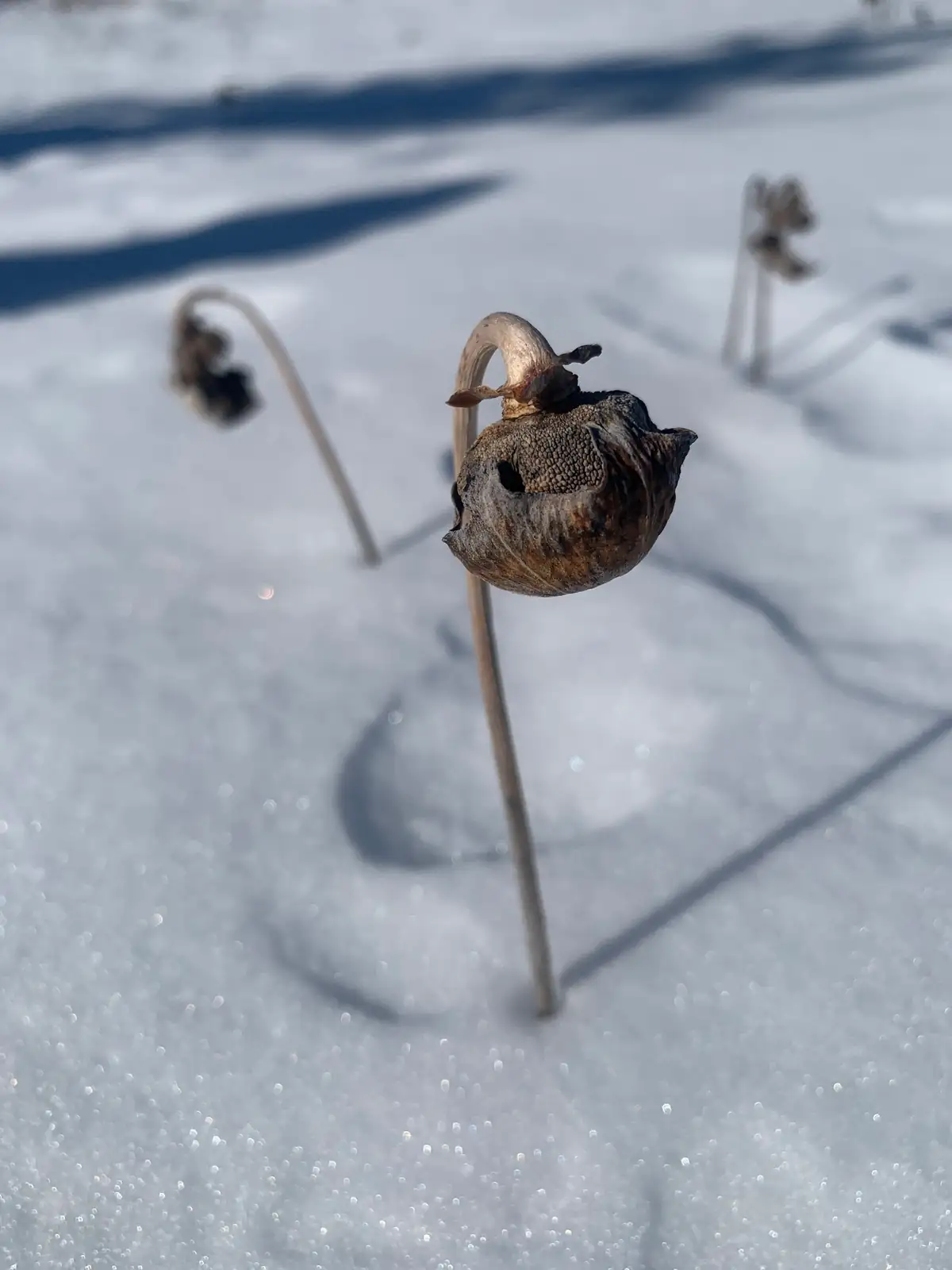
- Flower: Nodding flowers (often red or green) carried on stems above the pitchers.
- Flowering Season: Summer
- Growth Habit: Clump-forming; upright pitchers of varying heights arising from a rhizome.
Environment
Sunlight
Full sun outdoors. Indoors, give the brightest possible light (a very sunny windowsill or bright conservatory).
Temperature
-5–25°C (23–77°F). Needs a cool winter rest; tender types should be kept frost-free or only lightly frosted.
Humidity
Moderate humidity is fine; consistent root moisture matters more than high air humidity.
Soil
Use a specialist carnivorous-plant medium, or a lime-free mix such as chopped fir bark + coarse silica sand (no limestone) + perlite in a 2:1:1 ratio. Avoid regular potting compost and any lime/limestone-containing ingredients, which can quickly harm or kill the plant. Often grown in a small-to-medium pot about 10–15 cm (4–6 in) wide.
Placement
Outdoors in full sun in summer (patio/bog garden), or indoors on a sunny windowsill. For indoor culture, keep in a cool, bright room or unheated conservatory; in late autumn move to a bright place around 10°C (50°F) or colder until spring to maintain dormancy.
Hardiness
Many Sarracenia are hardy outdoors in suitable climates, but all need a cool winter dormancy for long-term vigor. Tender forms may require protection from hard frost. Practical range given: -5–25°C (23–77°F).
Care Guide
Difficulty
Easy—provided you meet the non-negotiables: very bright light, mineral-free water, and a cool winter dormancy.
Buying Guide
Choose plants with firm, well-colored pitchers and a healthy crown/rhizome, avoiding pots crusted with mineral deposits (a sign of hard-water use). If buying in dormancy, look for a solid rhizome and emerging growth points rather than lots of green pitchers.
Watering
In summer, stand the pot in a tray with 1–2 cm (0.4–0.8 in) of rainwater or distilled water so the medium stays constantly moist. Avoid tap water, especially hard water. In winter, remove the pot from the water tray and keep the medium just barely moist—never bone-dry, but not waterlogged either.
Fertilization
Do not fertilize (fertilizer can burn roots and upset the plant’s nutrient balance). Bright conditions and time outdoors in summer usually allow the plant to catch enough insects on its own.
Pruning
Trim away dead, brown, or collapsing pitchers—especially after dormancy—to improve airflow and keep the clump tidy.
Propagation
Divide the rhizome during dormancy (the most reliable method). Seed is also possible but slow, and seedlings may vary from the parent plant.
Repotting
Repot every 2–3 years during autumn dormancy. A 10–15 cm (4–6 in) pot is often ideal; avoid overpotting, as plants commonly grow best slightly root-restricted. Refresh with a fresh, lime-free carnivorous plant mix.
📅 Seasonal Care Calendar
Summer: Keep in full sun; stand in 1–2 cm (0.4–0.8 in) of rainwater/distilled water; outdoor placement boosts prey capture. Late autumn: As growth slows, move to a bright spot around 10°C (50°F) or colder to begin dormancy. Autumn/Winter dormancy: Remove from the tray; keep just moist; repot/divide every 2–3 years during this period. Spring: Gradually increase watering tray use and sun as new pitchers emerge.
Pests, Diseases & Safety
Common Pests & Diseases
May get aphids, scale, mealybugs, or spider mites (more common indoors). Fungal issues can develop if old growth is left to rot or air is stagnant. Improve light and airflow, remove dead pitchers, and treat pests promptly using methods/products appropriate for carnivorous plants.
Toxicity
Generally regarded as non-toxic to people and pets, but it is not edible. Keep away from pets that like to chew plants, and avoid letting children handle pitchers roughly.
Culture & Symbolism
Symbolism: Often associated with curiosity, clever adaptation, and the beauty of the unusual—perfect for plant lovers who enjoy something a little wild and weird (in the best way).
History & Legends: Sarracenia are classic “bog garden” icons and have fascinated growers for centuries because their leaves double as insect traps—an elegant solution to living in nutrient-poor wetlands.
Uses: Grown primarily as an ornamental carnivorous plant for bog gardens, sunny patios, and bright windowsills. Also popular for educational displays because the trapping mechanism is easy to observe.
FAQ
Can I water it with tap water?
It’s best not to. Tap water—especially hard water—often contains minerals that build up in the pot and can weaken or kill Sarracenia over time. Use rainwater, distilled water, or reverse-osmosis water.
Does it really need winter dormancy?
Yes. Most Sarracenia need a cool winter rest to stay vigorous long-term. Without dormancy, they often decline after a year or two, producing weaker pitchers and becoming more prone to problems.
Should I feed it insects or use fertilizer?
Skip fertilizer. If it’s in strong light (and especially if it spends summer outdoors), it will usually catch enough insects by itself. Forced feeding isn’t necessary for healthy growth.
Fun Facts
- The pitchers are modified leaves—built to lure, trap, and digest insects.
- Using tap water (especially hard water) is one of the most common reasons these plants fail in cultivation.
- A true winter dormancy is key to strong spring growth and long-term health.