Plant Features
- Size: Commonly about 10–20 cm (4–8 in) tall in a pot, spreading to around 20 cm (8 in). In ideal conditions it can send out trailing stems about 30–60 cm (12–24 in) long, especially if not pinched back.
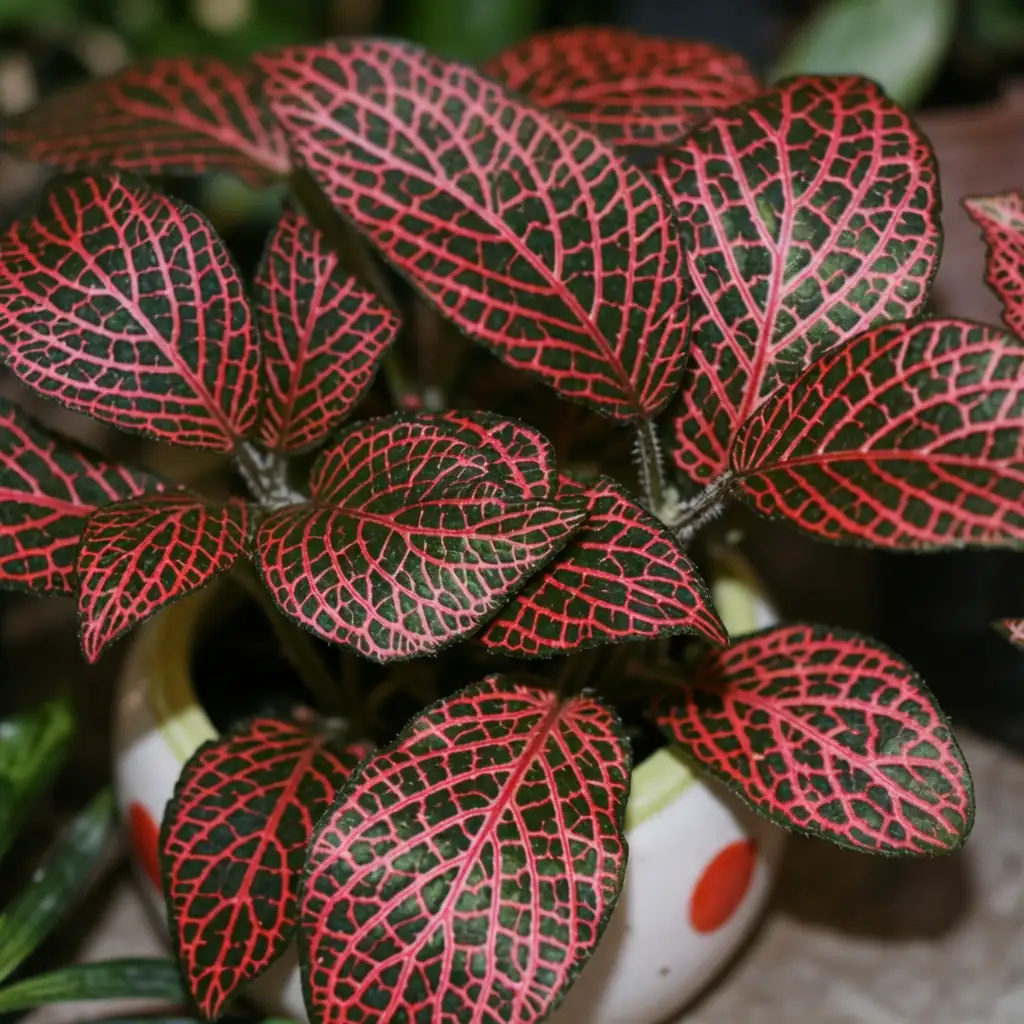
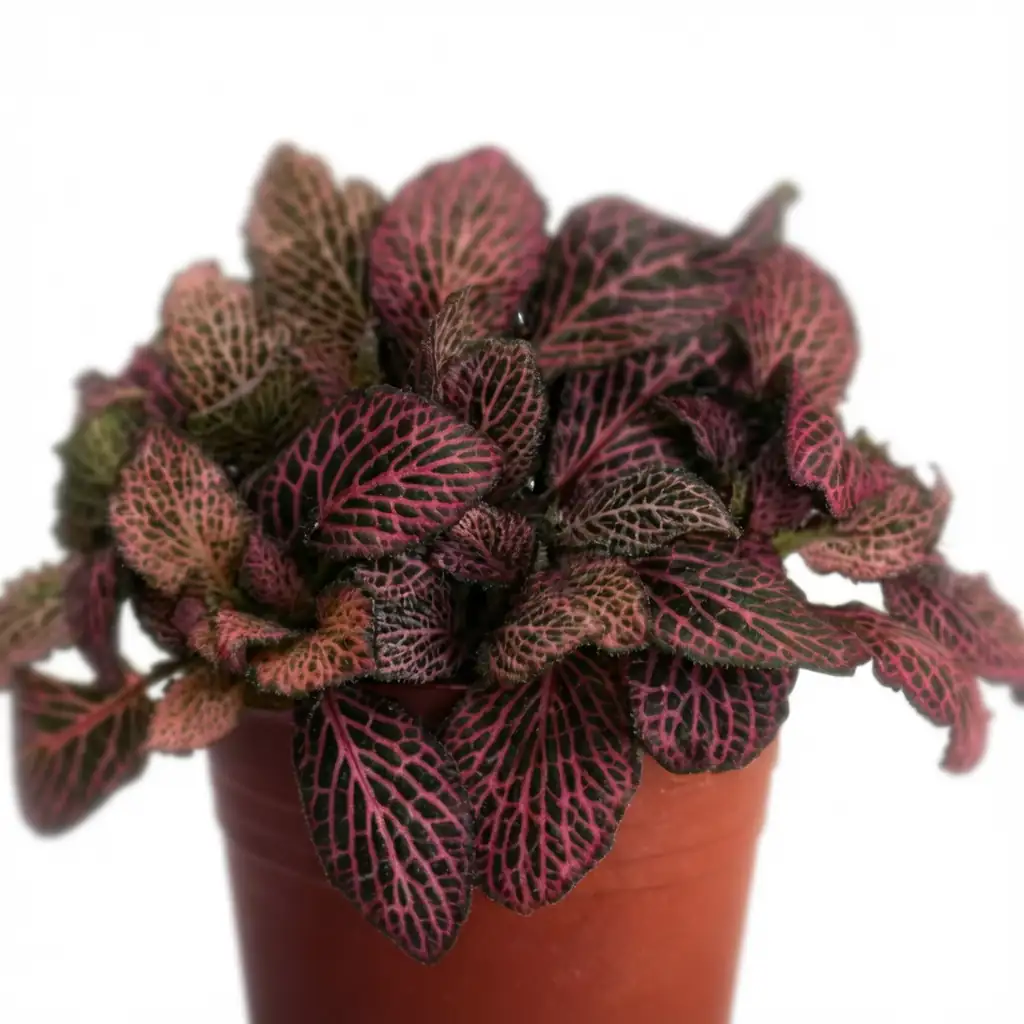
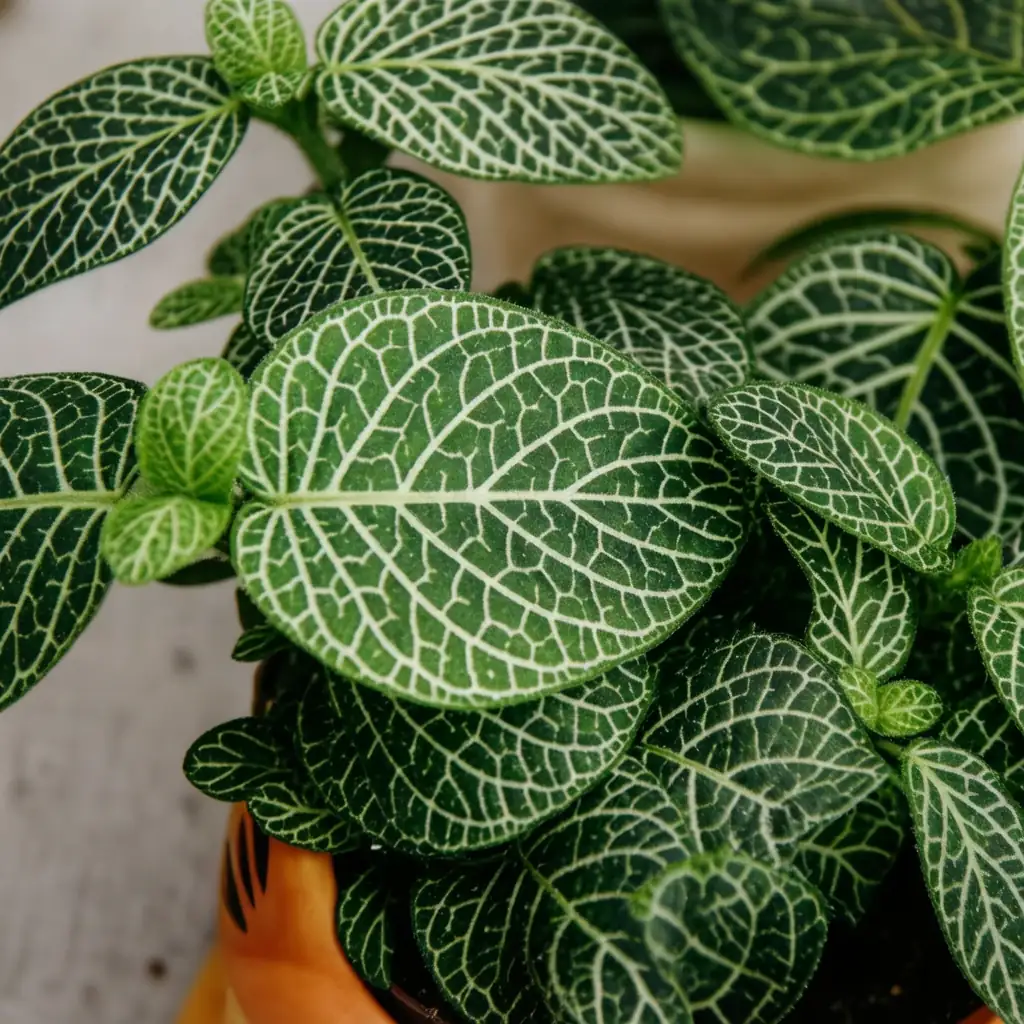
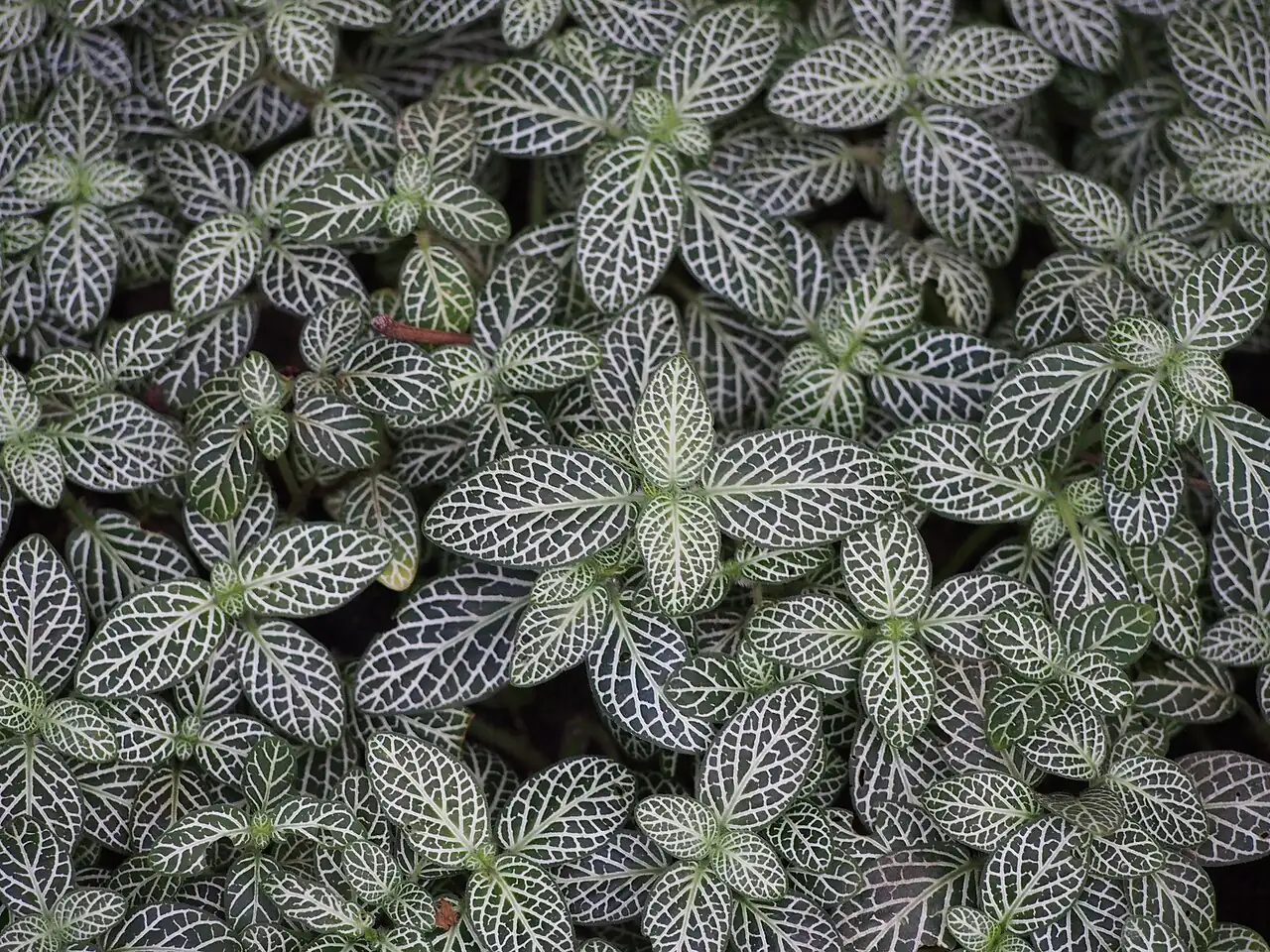
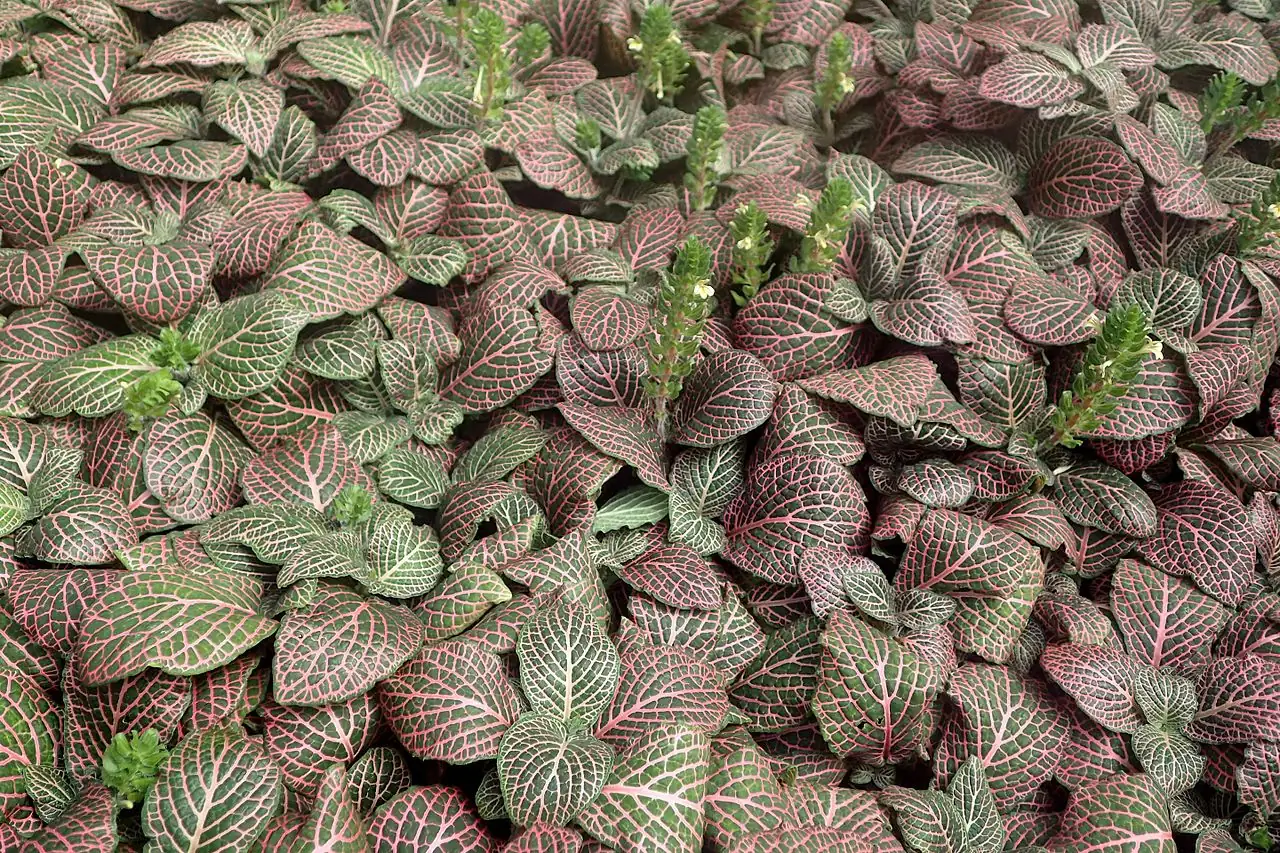
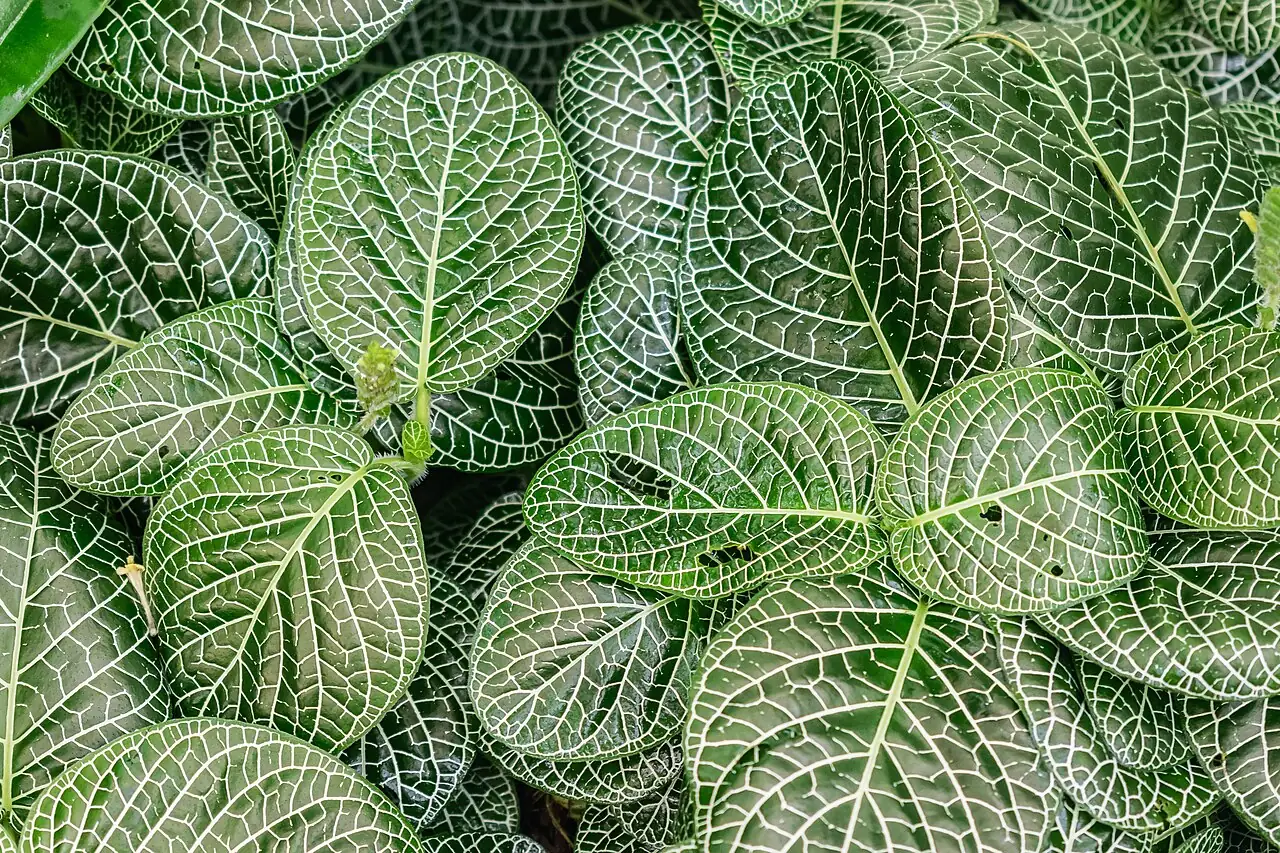
- Foliage: Small, soft, oval leaves in deep to light green with a bold netted “mosaic” of veins—most famously pink, but cultivars may show white or red veining. The foliage is delicate and can crease or bruise if handled roughly.
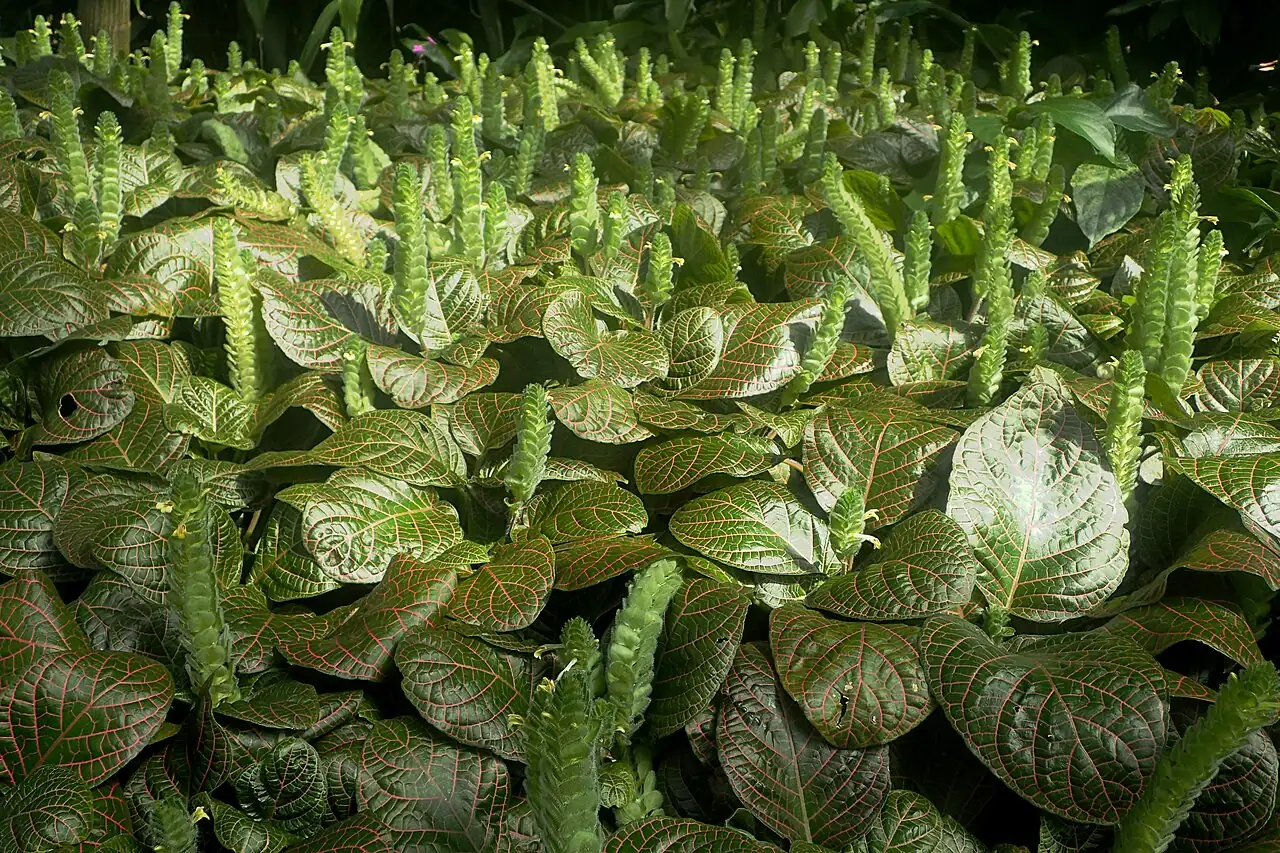
- Flower: Produces small, inconspicuous tubular flowers on short spikes, usually pale white to creamy. Indoors they’re not very showy, and many growers pinch them off to keep the plant focused on leafy growth.
- Flowering Season: Summer to autumn
- Growth Habit: Low-growing, creeping and spreading; can form a compact mat and may trail with age. Stems can root at the nodes, helping it fill out pots and making it easy to propagate.
Environment
Sunlight
Bright, indirect light to partial shade. Avoid strong direct sun (it can scorch leaves and fade the veining). An east-facing window or a bright spot set back from a south/west window is ideal.
Temperature
Best kept warm: about 17–26°C (63–79°F), with an ideal range around 18–25°C (64–77°F). Try to keep it above 15°C (59°F); below about 13°C (55°F) it may suffer cold stress, leaf drop, or collapse. Protect from drafts and heaters/AC blasts.
Humidity
Loves high humidity—ideally 60%+ for lush, crisp leaves. Terrariums are perfect. In rooms, use a pebble tray or humidifier; misting can help, but avoid leaving foliage wet overnight.
Soil
Moisture-retentive but free-draining mix, such as a peat/coco-based houseplant blend with perlite (and optionally a little coarse sand). Keep the mix airy to reduce rot risk. Often grown in small pots around 7.5–12 cm (3–4.7 in) wide.
Placement
Great for bathrooms, kitchens, terrariums, desks, and bright shelves—anywhere warm with steady humidity and filtered light. Keep away from direct midday sun and hot/cold drafts; move to a brighter, warmer spot in winter.
Hardiness
Not frost-hardy. Outdoors only in warm climates; roughly USDA Zone 11–12 (minimum about 11–16°C / 52–60°F depending on conditions).
Care Guide
Difficulty
Easy to moderate. It’s straightforward once you meet its two must-haves—consistent moisture and humid air—but it reacts quickly to drying out, cold, or harsh sun.
Buying Guide
Pick plants with crisp, richly colored leaves and firm stems. Avoid yellowing, limp growth, sour-smelling mix, or pots that are either waterlogged or bone-dry. Check leaf undersides for spider mites, mealybugs, scale, or aphids. Common retail sizes include 9–12 cm (3.5–4.7 in) pots and 12–15 cm (4.7–5.9 in) hanging baskets.
Watering
Keep the potting mix evenly moist year-round, never soggy. Water thoroughly when the top 1–2 cm (0.4–0.8 in) feels slightly dry. If it dries too much, it may dramatically wilt (“faint”)—it often perks up within hours after watering, but repeated swings stress the plant. Yellowing leaves can signal overwatering, cold, or poor drainage; use a pot with drainage holes and an airy mix.
Water culture (hydro): It can be grown in water. Rinse soil from roots (or start with cuttings rooted in water) and keep in bright, indirect light. Change water every 7–10 days (about 1–1.5 weeks) during active growth; during propagation, add a diluted hydroponic nutrient about every 2 weeks and keep solution off the leaves. Provide ventilation in summer and avoid direct sun and stuffy heat.
Fertilization
Spring through autumn: feed lightly with a balanced liquid fertilizer at half strength. A practical rhythm is every 2–4 weeks (more often for fast summer growth, less often for slower growers). Reduce or pause feeding in winter if growth slows. After purchase, wait for new growth before giving the first light feed.
Pruning
Pinch back growing tips to encourage branching and a fuller, bushier plant. Remove old or yellow leaves promptly. If flowers appear, you can remove them to prioritize foliage. Older, leggy plants (often after about 2 years indoors) are easily refreshed by restarting from cuttings.
Propagation
Very easy from stem cuttings. Take 5–10 cm (2–4 in) tip cuttings with several nodes, remove the lower leaves, and root in water or a moist propagation mix. Warmth and humidity speed rooting—about 20–24°C (68–75°F)—and roots often form in roughly 2–3 weeks. Because stems can root at nodes, you can also propagate by layering (pin a runner onto moist mix until it roots, then cut and pot up).
Repotting
Repot in spring when root-bound or to refresh tired soil—commonly every 1–3 years depending on growth rate and pot size. Move up just one pot size (about 2–5 cm / 1–2 in wider) to avoid staying wet for too long. For hanging baskets, a 12–15 cm (4.7–5.9 in) pot planted with 3–5 small plants creates a fuller display.
📅 Seasonal Care Calendar
Spring: Repot if needed, refresh soil, and take cuttings; start regular feeding.
Spring–Summer: Fast growth—keep moisture consistent, increase humidity, pinch tips for fullness; in water culture, change water every 7–10 days and use diluted nutrients during propagation about every 2 weeks.
Summer–Autumn: Possible flowering; continue pinching and keep out of harsh sun.
Winter: Provide brighter light and warmth, protect from drafts, ease up on fertilizer, and maintain humidity (avoid wet leaves overnight).
Pests, Diseases & Safety
Common Pests & Diseases
Spider mites are common in dry air; mealybugs, scale, aphids, and fungus gnats may also appear (gnats often indicate overly wet soil). Rot (root or stem/leaf rot) can occur with soggy mix and poor airflow, especially in cool conditions. Prevention: airy soil, drainage holes, steady (not excessive) watering, warmth, and gentle airflow. Treat pests early with insecticidal soap or horticultural oil, repeating as needed and following label directions.
Toxicity
Generally regarded as non-toxic to cats and dogs. Still, chewing any houseplant can cause mild stomach upset, so it’s best kept away from pets that like to nibble.
Culture & Symbolism
Symbolism: Often linked with vitality and “living artwork,” thanks to its bold, painted-looking leaf veins.
History & Legends: A rainforest native from western South America that became a modern indoor favorite because it stays small, colors up well in bright shade, and thrives in terrarium-style humidity.
Uses: Mainly grown for ornamental foliage—perfect for small pots, mixed dish gardens, terrariums, and hanging baskets. It can also be displayed in water culture for a clean, modern look.
FAQ
Why are my nerve plant’s leaves turning yellow?
The most common causes are overwatering/poor drainage or cold stress. Let the top 1–2 cm (0.4–0.8 in) dry slightly before watering again, make sure the pot drains freely, and keep temperatures above about 15°C (59°F).
Why does my nerve plant wilt so suddenly?
Fittonia is famous for “fainting” when it gets too dry. Water thoroughly and raise humidity; it often recovers within a few hours. Try to avoid repeated dry-outs—consistent moisture keeps it healthier long-term.
Can I grow nerve plant in a terrarium?
Yes—it’s one of the best terrarium plants because it loves warmth and steady humidity. Use a well-draining mix and be careful not to waterlog the container.
Can a nerve plant be grown in water (hydroponically)?
Yes. Rinse soil from the roots (or start from water-rooted cuttings), keep it in bright indirect light, and change the water every 7–10 days (about 1–1.5 weeks) during active growth. Add very diluted hydroponic nutrients during propagation about every 2 weeks, and avoid splashing nutrient solution onto the leaves.
Fun Facts
- It’s often nicknamed the “fainting plant” because it dramatically wilts when thirsty—but usually bounces back quickly after a drink.
- Its stems can root at the nodes, so one plant can gradually knit itself into a dense little mat.
- The flowers are real but easy to miss; the veined leaves are the main show.