

Plant Features
- Size: Height 20–100 cm (8–39 in), depending on water depth and growing conditions.
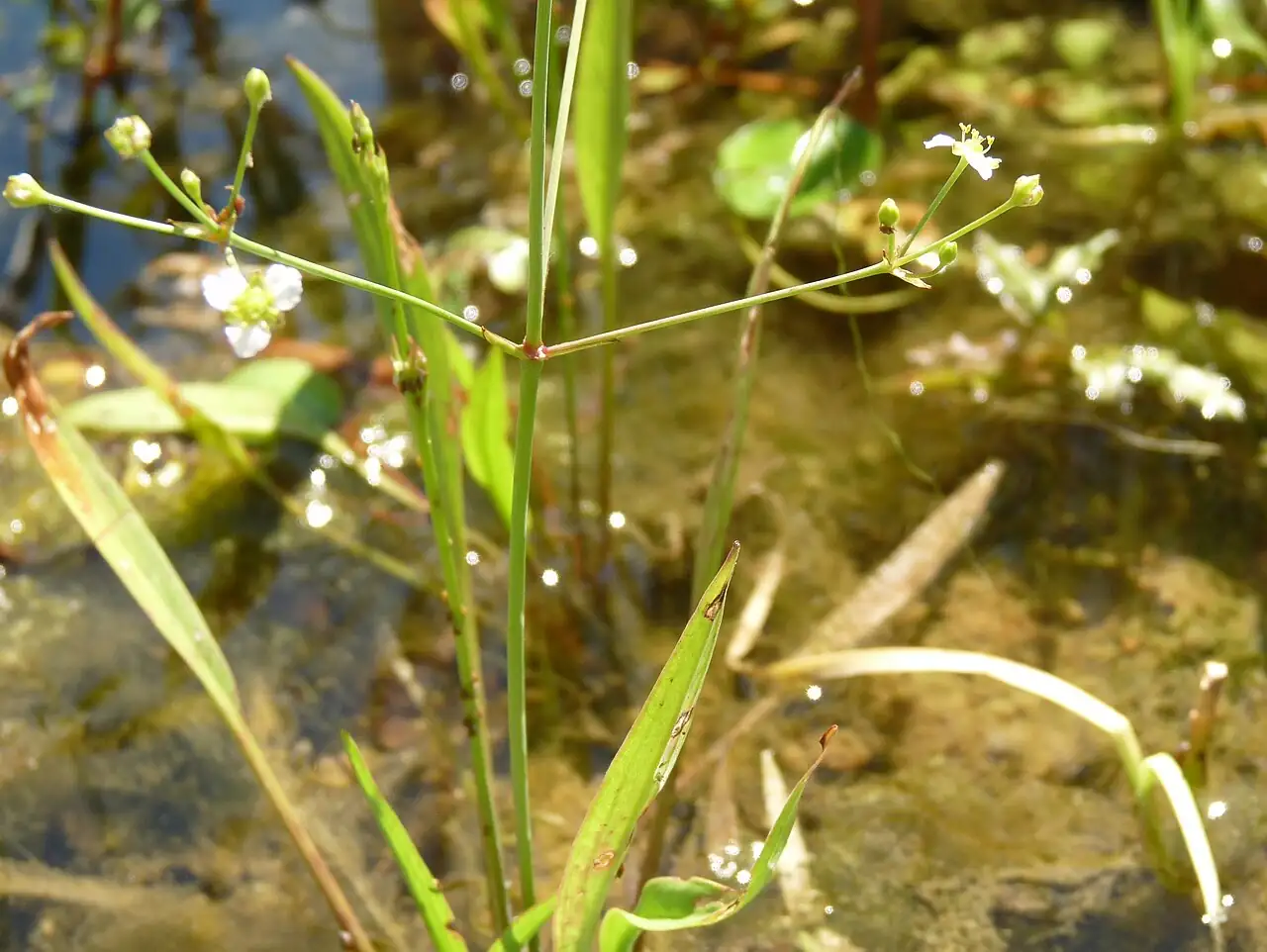
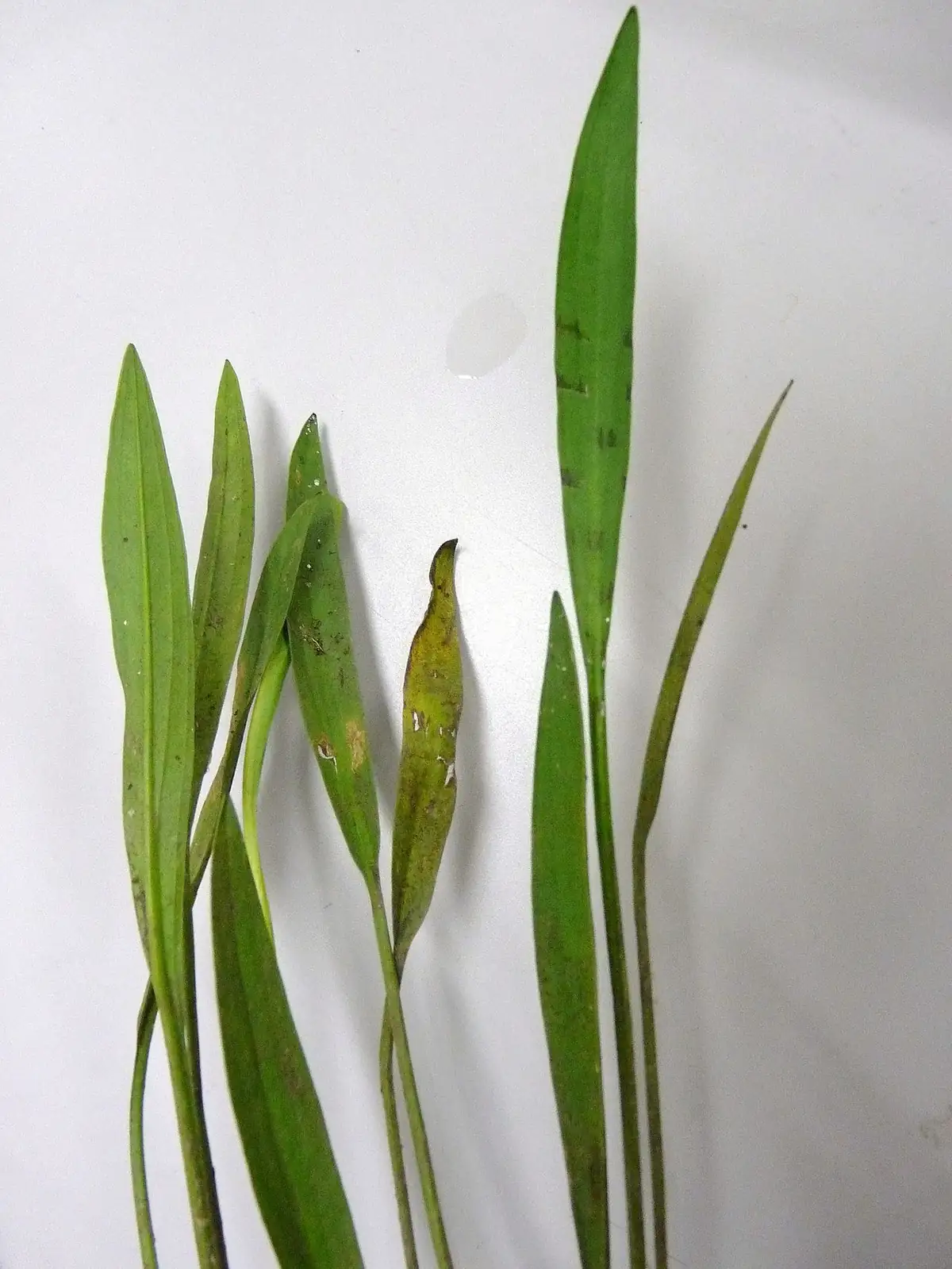
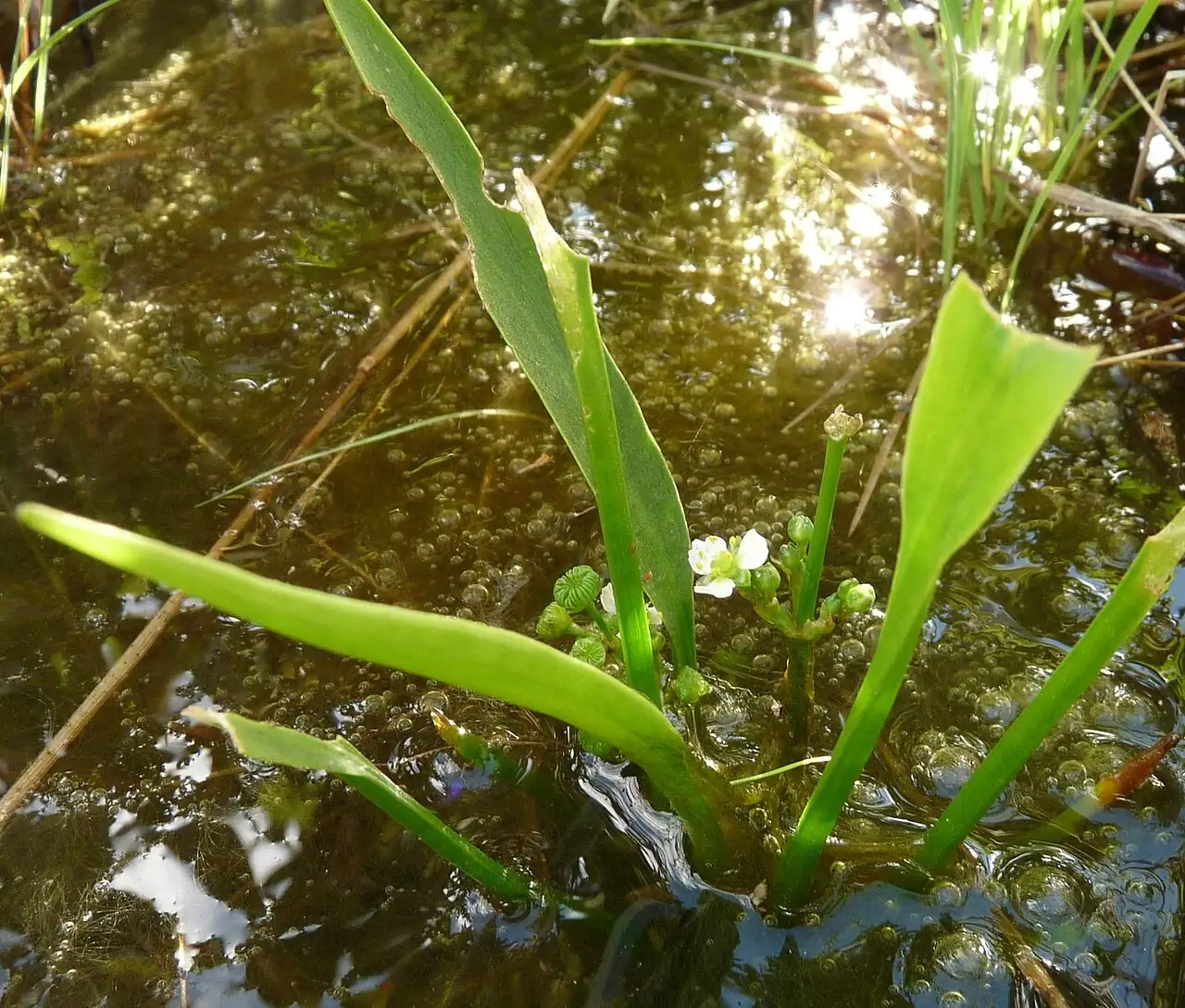
- Foliage: Leaf shape changes with water level: submerged leaves are narrow and strap-like, while emergent leaves are lance-shaped and may curve slightly like a sickle. Overall it reads as a slender, grassy clump.
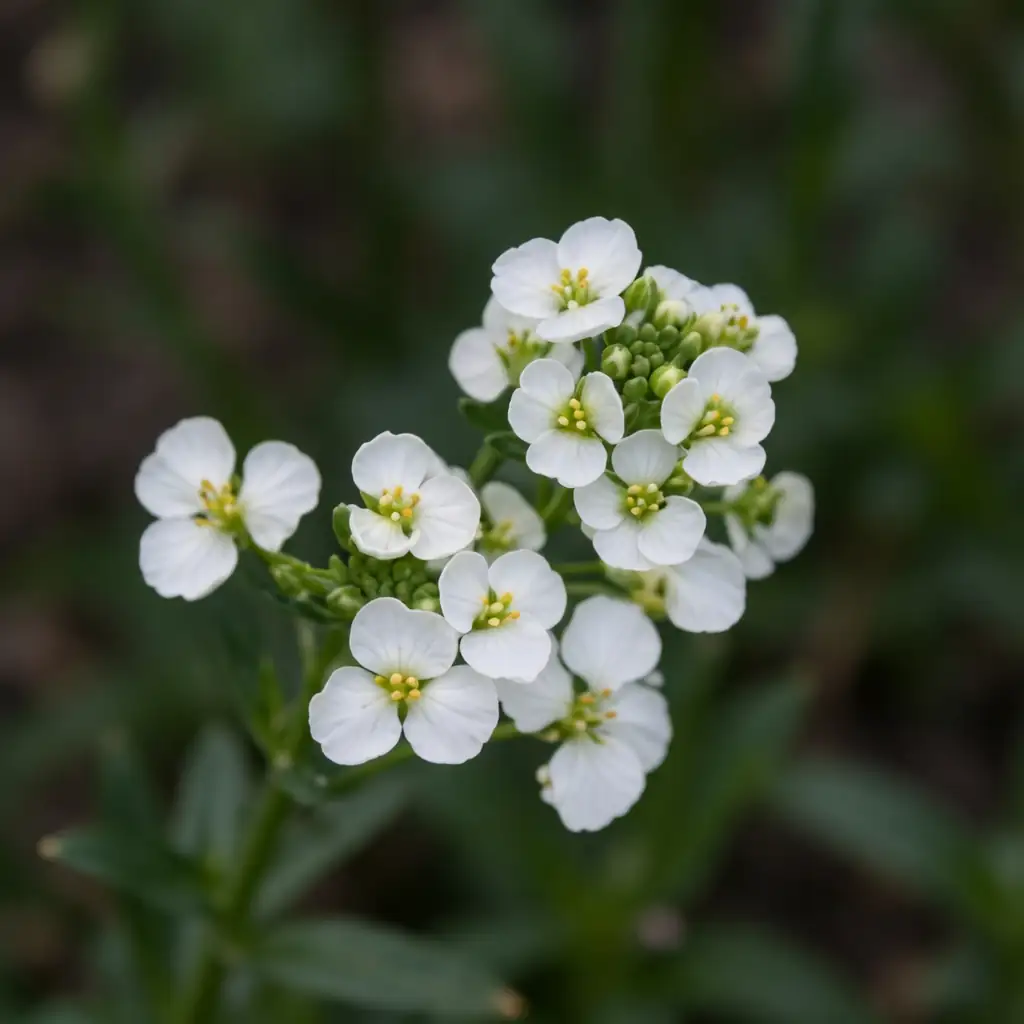
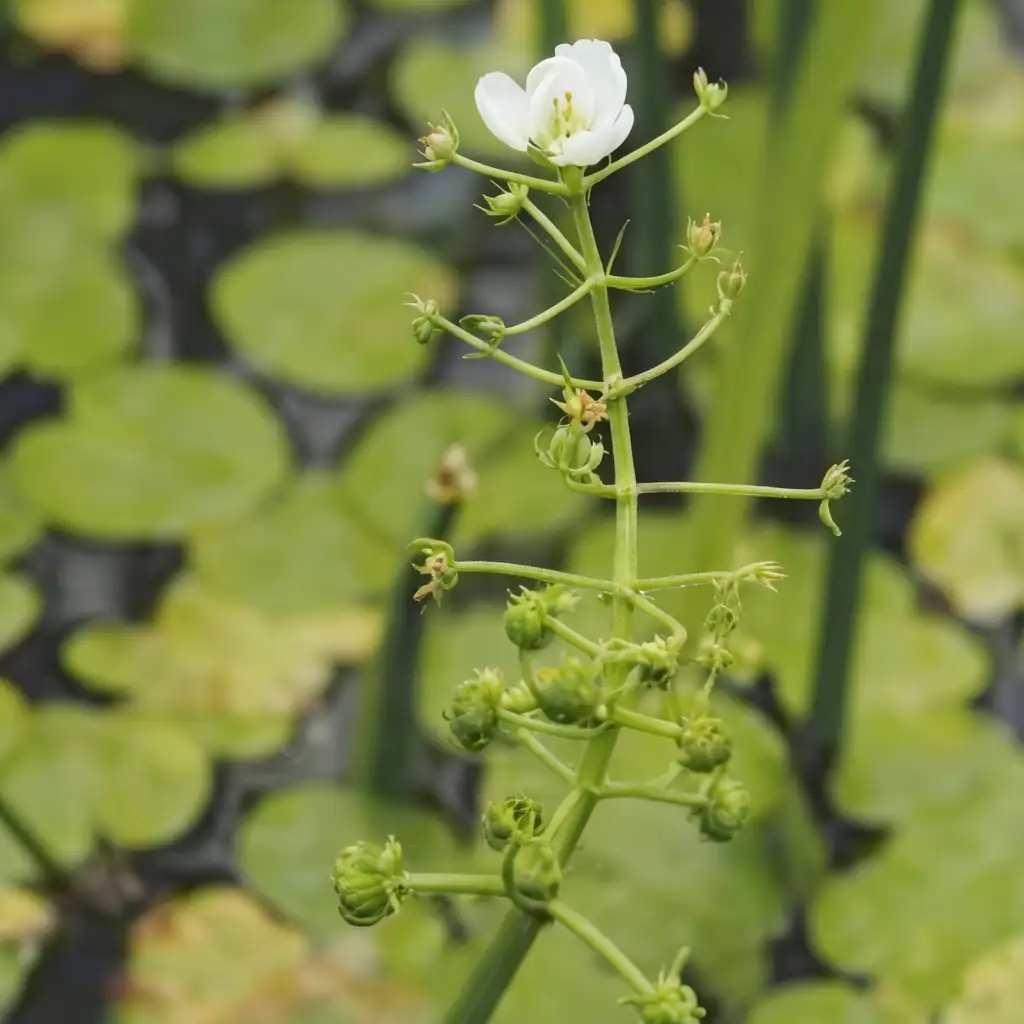
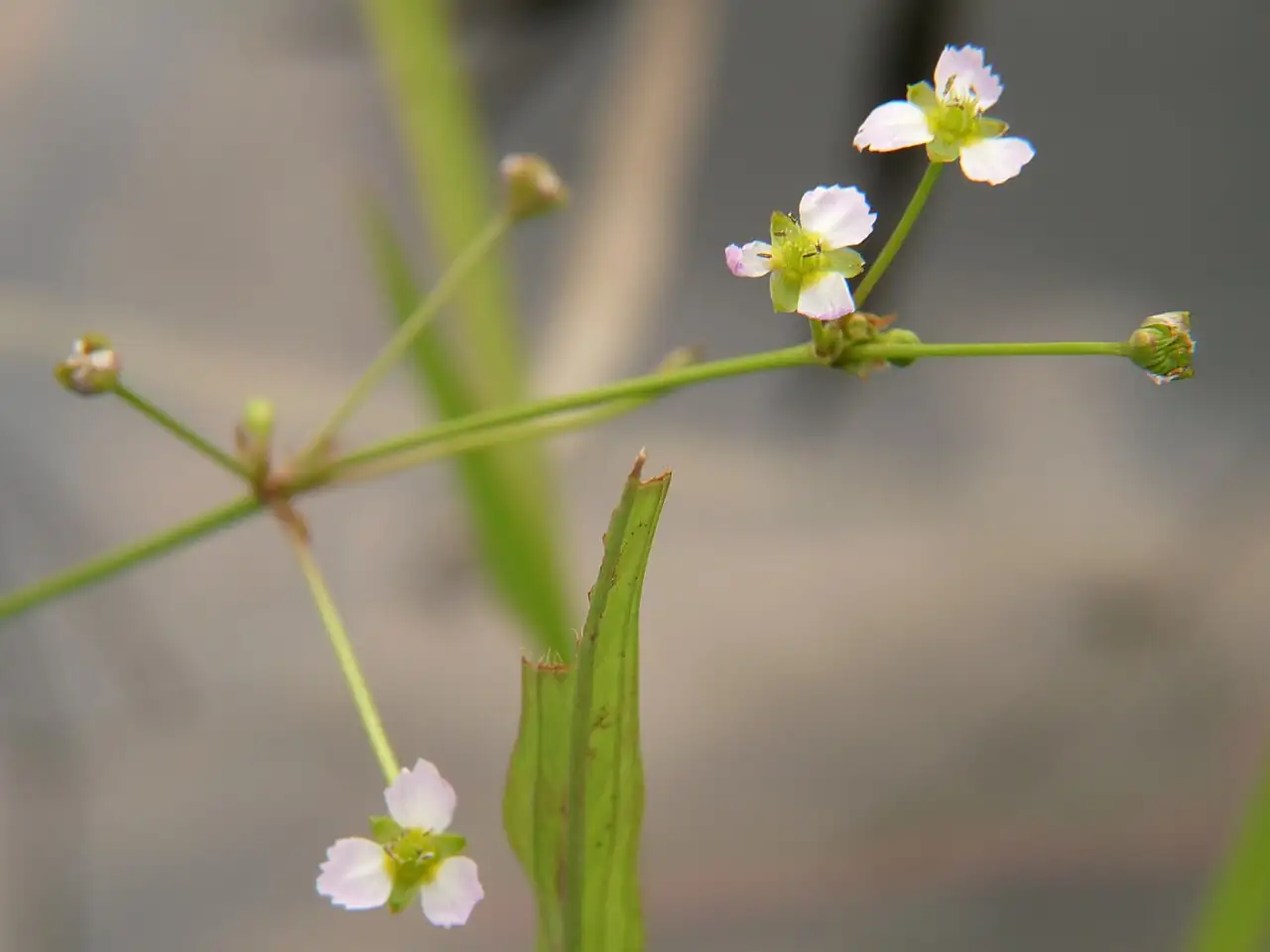
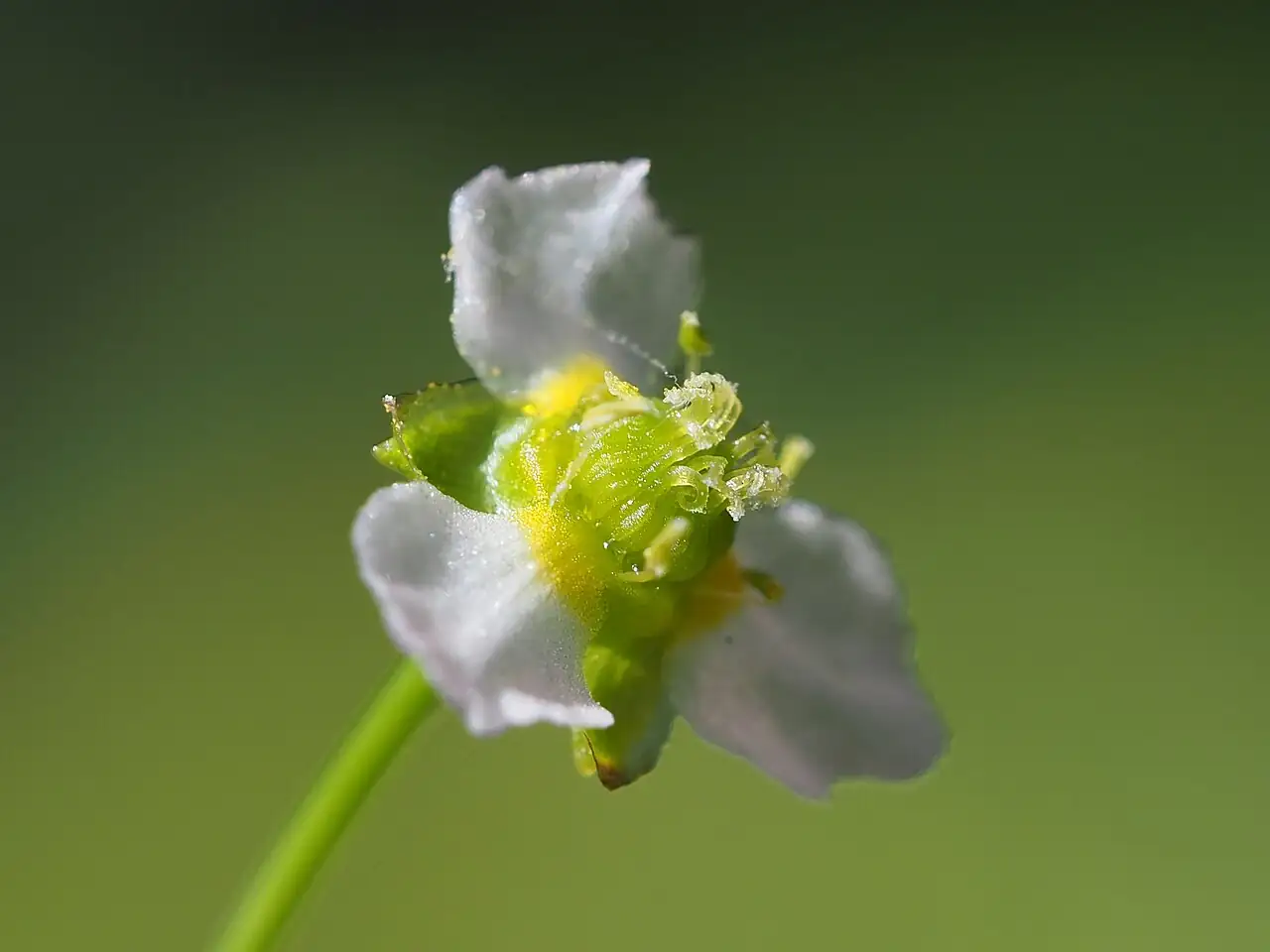
- Flower: Produces upright flowering stems with small white flowers held above the foliage. Fruits are small achenes (often described as obovate); seeds have been noted as deep purple.
- Flowering Season: May–October
- Growth Habit: Perennial aquatic-to-marsh herb; clump-forming, with narrow elongated foliage and upright, lightly branched flower stalks.
Environment
Sunlight
Full sun (bright, direct light) for strongest growth and best flowering.
Temperature
Warm-growing; ideal around 18–30°C (64–86°F). Protect from cold; avoid prolonged exposure below about 5°C (41°F).
Humidity
Very high moisture needs—best with roots constantly wet, in saturated mud, or in shallow standing water.
Soil
Heavy, silty mud or aquatic planting media. Tolerates low-oxygen substrates as long as water is plentiful; best in shallow water or permanently wet soil.
Placement
Pond edges and shallow shelves, bog gardens, wetland planters, and any reliably waterlogged area in full sun.
Hardiness
Generally best in mild climates (approx. USDA Zone 9–11). Not frost-hardy; in colder regions, overwinter protected so the crown doesn’t freeze.
Care Guide
Difficulty
Moderate: very straightforward if kept sunny and constantly wet/shallowly submerged, but it quickly sulks if it dries out or gets chilled.
Buying Guide
Pick plants with firm crowns and clean green leaves (avoid anything mushy or foul-smelling). If adding to a pond, check for hitchhikers like snails or egg masses, and avoid pots showing sour, anaerobic rot.
Watering
Do not let it dry out. Grow with the pot set in shallow water or in permanently wet mud, and keep water levels steady—especially during hot weather.
Fertilization
If growth is sluggish, press an aquatic-plant fertilizer tablet into the mud during active growth, about every 4–6 weeks (follow label rates). Avoid overfeeding in small ponds to help prevent algae issues.
Pruning
Remove yellowing/damaged leaves and spent flower stalks to keep clumps tidy and reduce decaying debris in the pond.
Propagation
Division is easiest: split established clumps in warm weather (late spring through summer) and replant into mud or aquatic baskets. Seed propagation may be possible by collecting mature fruits.
Repotting
Repot or divide when crowded, typically every 1–2 years. Use heavy loam/aquatic soil; top-dress with gravel to keep the soil from floating or clouding the water.
📅 Seasonal Care Calendar
May–October: peak growth, flowering, and fruiting—keep in full sun with stable water levels, and deadhead/remove tired stems as needed. Cool season: protect from cold and freezing; keep wet but minimize disturbance.
Pests, Diseases & Safety
Common Pests & Diseases
Can be nibbled by snails/slugs and aquatic insects. Stressed plants may develop crown/root rot, especially in stagnant, foul conditions—remove decaying debris and aim for cleaner water and gentle circulation when possible.
Toxicity
No confirmed, widely cited toxicity information is provided here. Treat as non-edible and keep away from pets/children who may chew plants unless verified by reliable local references.
Culture & Symbolism
Symbolism: Often associated with calm water and simple wetland elegance, rather than a single widely standardized “flower meaning.”
History & Legends: Primarily known as a native East Asian wetland plant; no major, widely repeated English-language legends are commonly tied to this species.
Uses: Mainly grown as an ornamental aquatic plant for pond margins and bog gardens, valued for its narrow clumping foliage and airy white flowers.
FAQ
When does it flower?
Usually from May to October (May–October), depending on warmth and light.
When does it fruit?
Fruiting typically overlaps with the warm season flowering period, around May–October.
How tall does it grow?
Roughly 20–100 cm (8–39 in), with water depth and conditions making a big difference.
What habitat does it need to thrive?
Shallow water or permanently wet mud—think pond edges, marshy ground, and saturated wetlands.
What light and temperatures are best?
Full sun and warm conditions; protect it from cold snaps and frost.
Fun Facts
- It can switch between submerged and emergent leaf forms depending on water depth, so the same plant may look different through the season.
- The flower stems rise above the foliage and give a light, airy effect—great for softening hard pond edges.
- In the wild, it’s a true wetland specialist found along lakesides, streamsides, ponds, and marshes.
- Its seeds have been described as deep purple.
- In cultivation, stable water levels plus strong sun are often the key to a lush clump and reliable flowering.


