

Plant Features
- Size: Up to about 3 m × 3 m (10 ft × 10 ft) when trained on supports
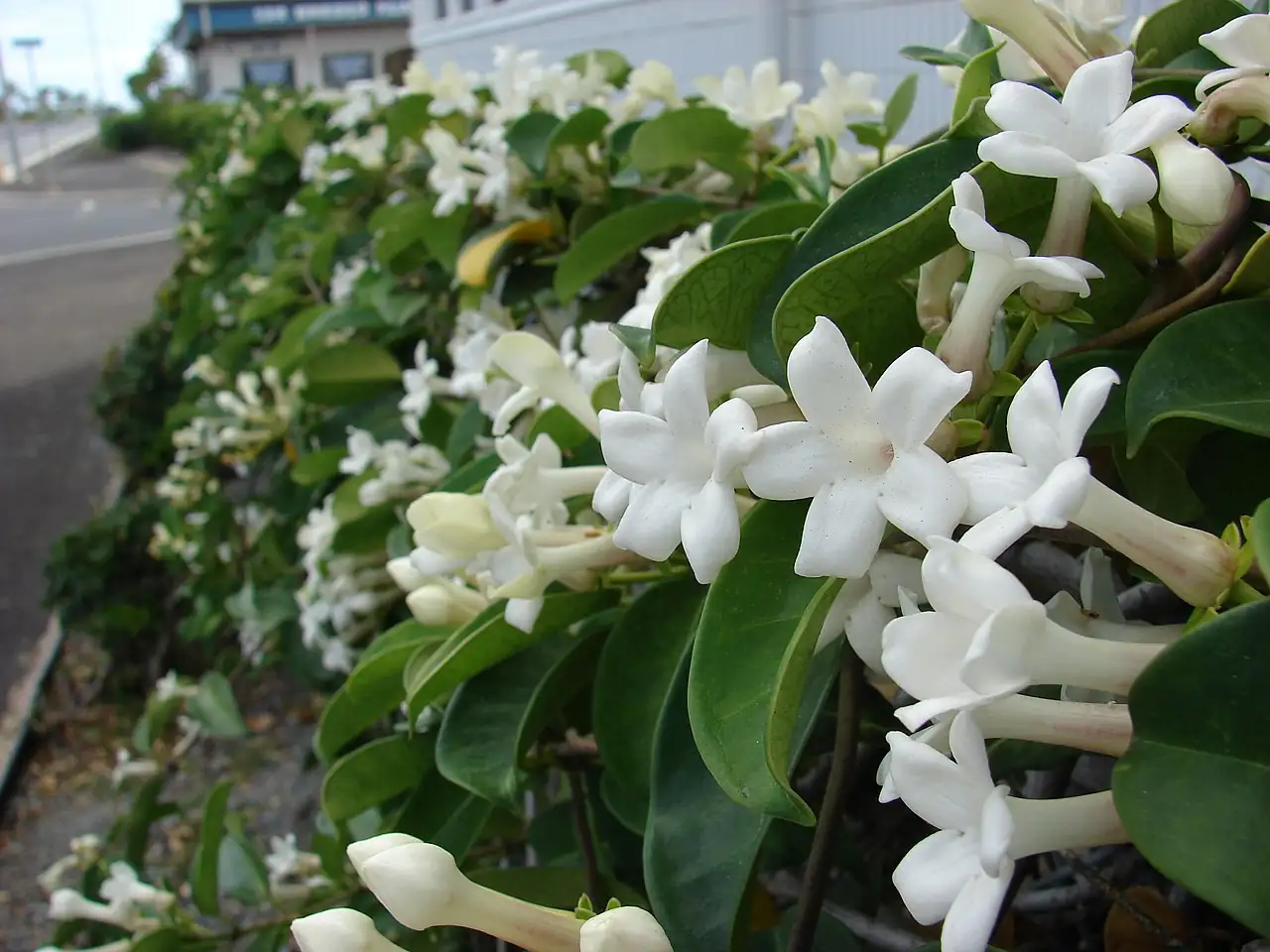
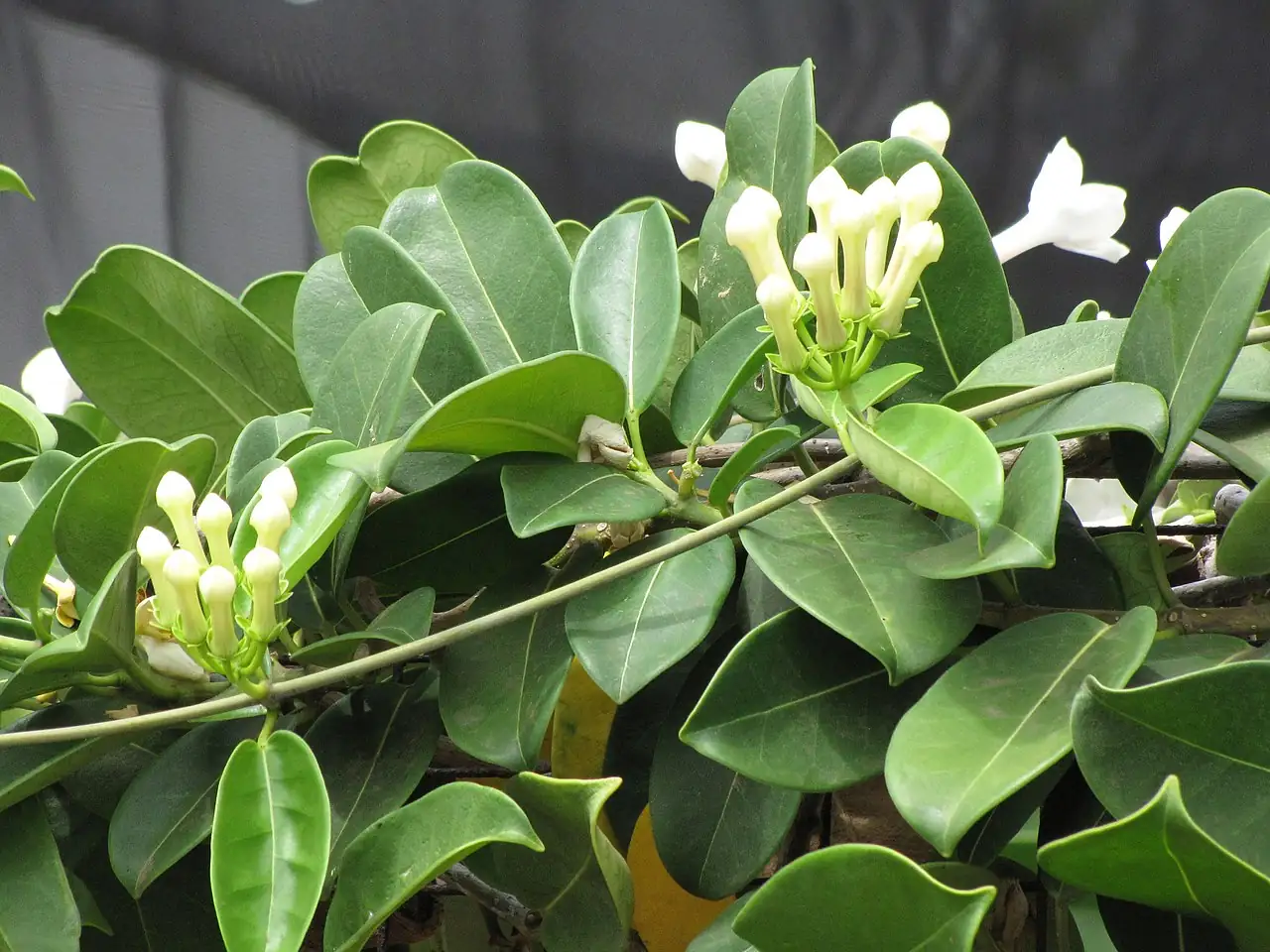
- Foliage: Evergreen, glossy, deep-green leaves that look polished and make a lush backdrop for the flowers.
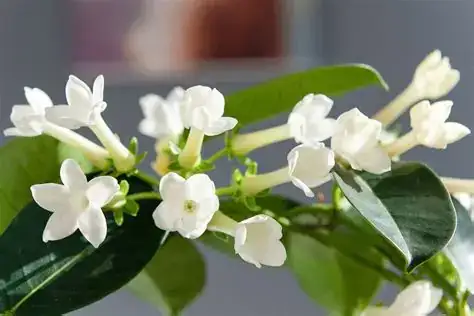
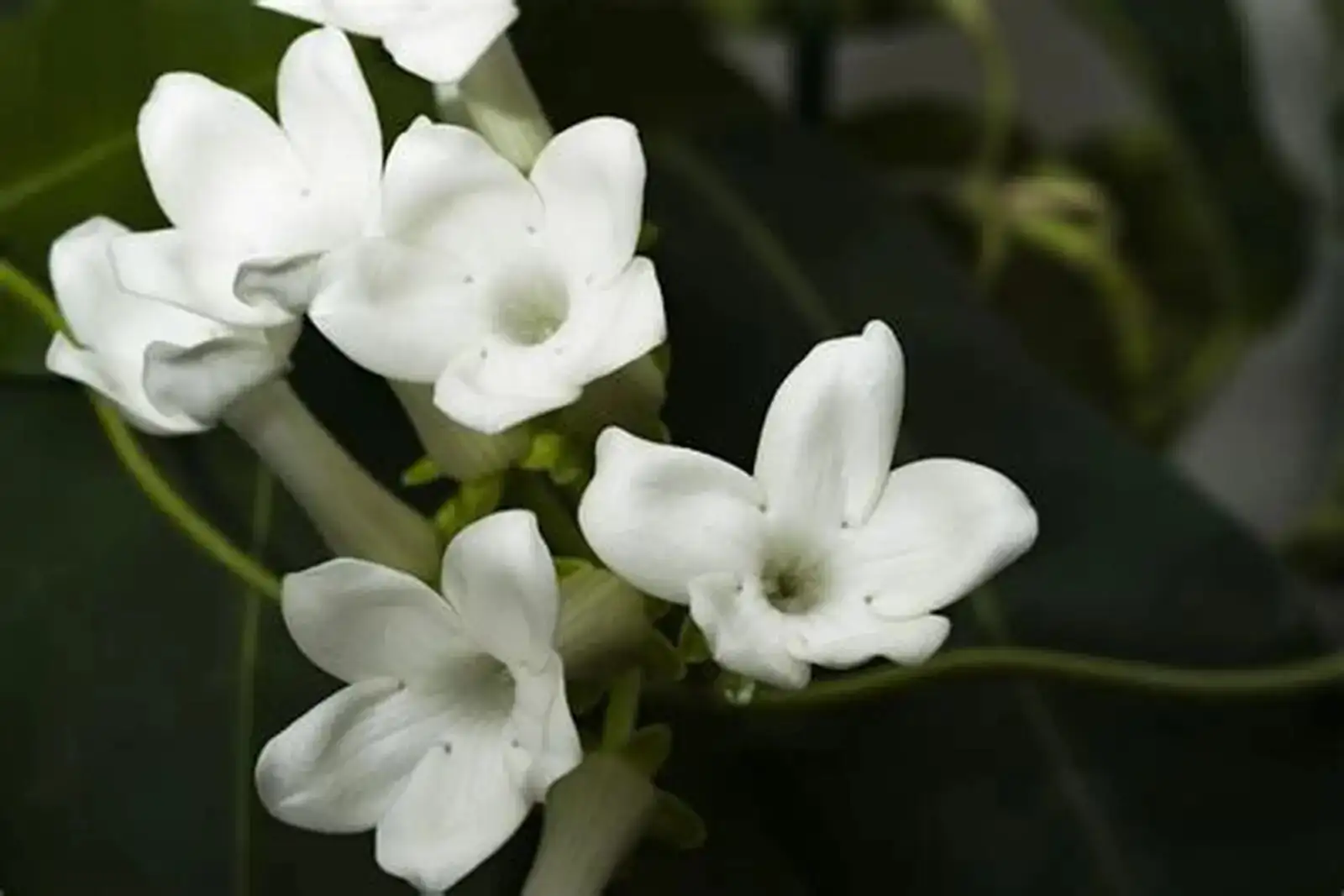
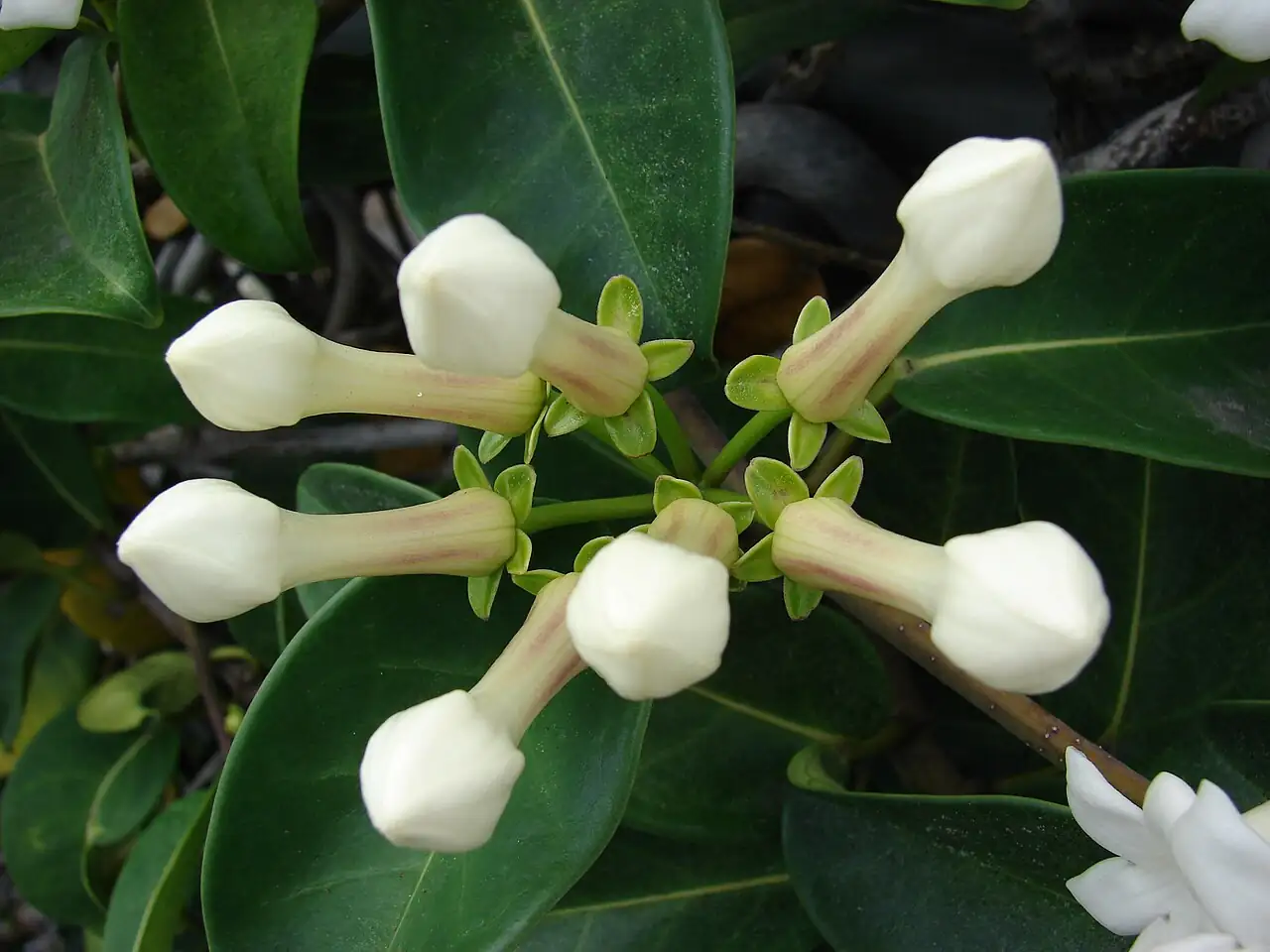
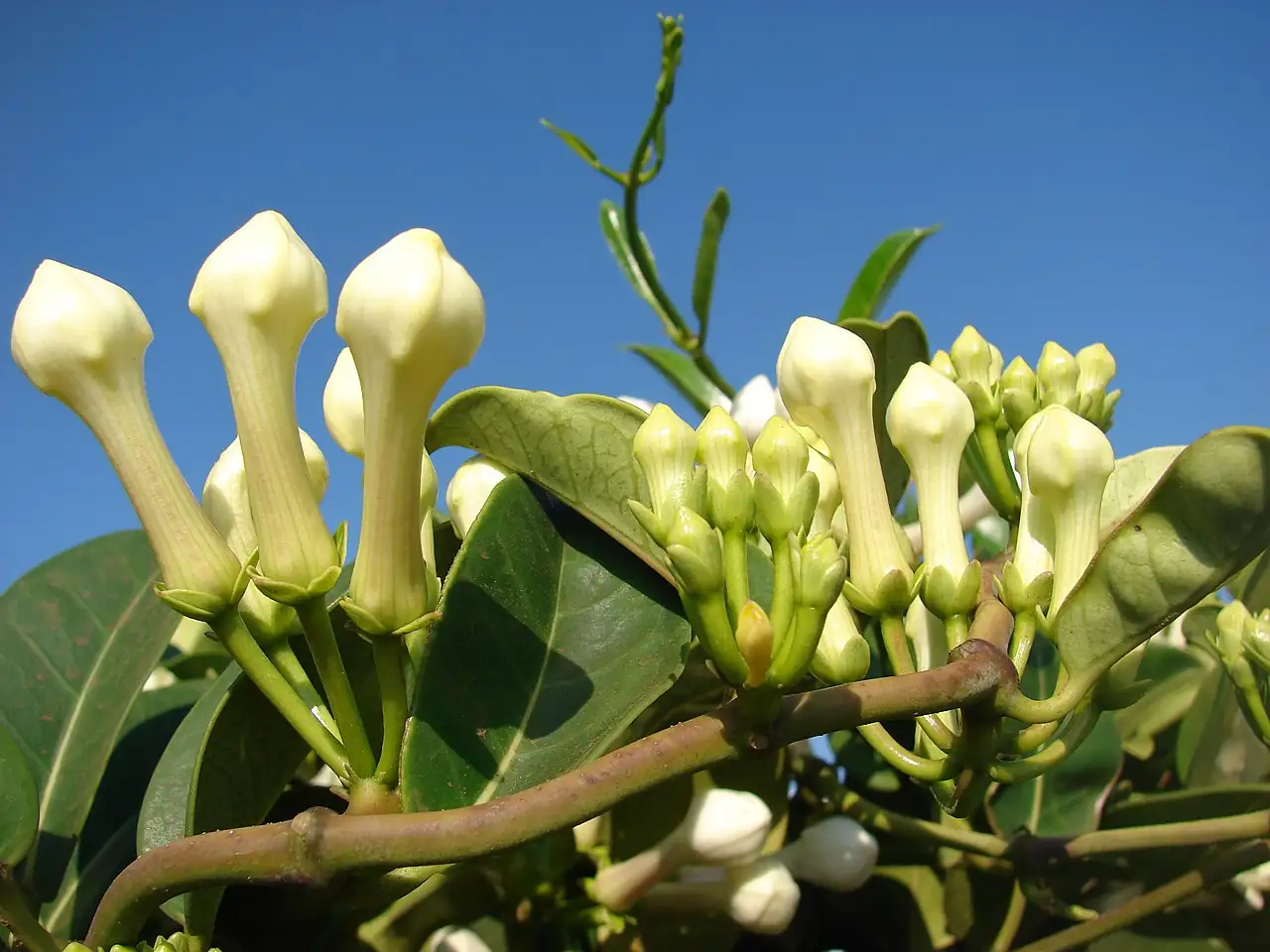
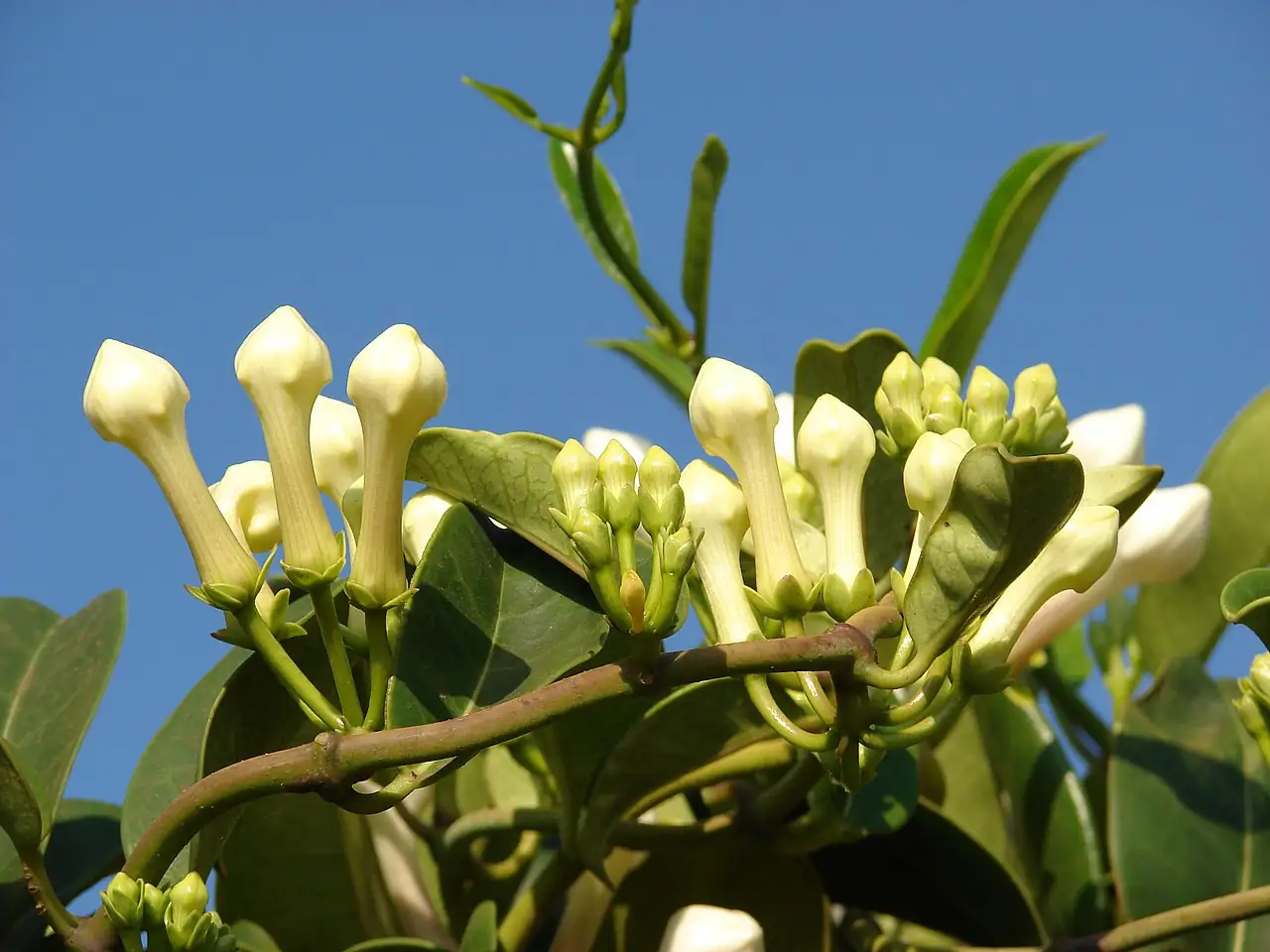
- Flower: Clusters of long-lasting, waxy, star-shaped white flowers with a strong, sweet fragrance; a classic choice for cut-flower work when available.
- Flowering Season: Summer (often late spring through summer indoors, depending on light and warmth)
- Growth Habit: Twining, climbing evergreen vine; naturally wraps its stems around supports such as a trellis, hoop, or wires.
Environment
Sunlight
Bright light with some gentle sun (especially morning sun); avoid harsh midday direct sun. A bright east window or filtered south/west light is ideal.
Temperature
10–23°C (50–73°F). Aim for about 21–23°C (70–73°F) in summer with good airflow; keep slightly cooler in winter to support rest and future flowering.
Humidity
Moderate humidity is usually fine, but it flowers and holds buds better with extra humidity in warm weather (especially in dry indoor air).
Soil
Rich but free-draining mix: a quality houseplant potting mix amended with perlite and/or fine bark for aeration. Use a pot sized to the root ball rather than an overly large container.
Placement
A bright indoor spot near a window with filtered light; give it a trellis/hoop/wires to climb. Avoid frequent moving once buds form to reduce bud drop.
Hardiness
Not frost-hardy; best as a houseplant/conservatory plant. Outdoors only in frost-free climates, roughly USDA Zone 10–12.
Care Guide
Difficulty
Easy to moderate: straightforward if you provide bright light, a support to climb, and steady moisture during active growth (most problems come from low light, dry air, or inconsistent watering).
Buying Guide
Pick a plant with glossy, unblemished leaves and sturdy, well-supported stems. Avoid yellowing foliage, visible pests (especially scale or mealybugs), and pots that smell sour or stay waterlogged. If buying in bud, choose plants with lots of firm buds (not mostly open flowers) for a longer display at home.
Watering
Spring to autumn: keep the mix evenly moist—never bone-dry, but not soggy. Winter: water less, letting the top of the mix dry before rewatering. If indoor air is dry, use a pebble tray and/or mist foliage every 1–2 days in summer (avoid soaking open flowers).
Fertilization
Spring to autumn: feed every 2 weeks with a high-potassium liquid fertilizer at label strength to support flowering. Reduce or stop feeding in winter when growth slows.
Pruning
In spring, lightly prune to shape and control size. Pinch/trim long shoots during the growing season to encourage branching and a fuller look; remove weak or overly long growth and retie stems neatly to the support.
Propagation
Semi-ripe stem cuttings taken from late spring through summer. Root best in warmth and humidity (bottom heat helps), using a free-draining propagation mix.
Repotting
Repot every 2–3 years into the next pot size up, or top-dress by replacing the upper layer of potting mix each spring. Avoid overpotting, which can slow flowering and increase the risk of soggy soil.
📅 Seasonal Care Calendar
Spring: refresh soil (top-dress or repot if due), prune lightly, start feeding, and begin training new growth onto supports. Summer: keep evenly moist, feed every 2 weeks, raise humidity if air is dry, and provide airflow while avoiding hot midday sun. Autumn: continue steady care while growth remains active, then gradually ease off feeding. Winter: keep in bright light, slightly cooler, and water sparingly once the surface dries.
Pests, Diseases & Safety
Common Pests & Diseases
Watch for scale insects, mealybugs, and spider mites (often worse in dry air). Bud drop is common when the plant is moved, chilled, exposed to sudden light/temperature changes, or watered irregularly. Improve airflow, keep moisture consistent, raise humidity appropriately, wipe leaves, and treat pests early with insecticidal soap or horticultural oil.
Toxicity
Sap may irritate skin. Toxicity to pets is not well documented for this species; treat as potentially irritating and keep out of reach of cats and dogs to prevent chewing.
Culture & Symbolism
Symbolism: Strongly linked with marital happiness, devotion, and “wedding-day” romance—thanks to its pure white, powerfully fragrant flowers.
History & Legends: Long grown as a conservatory and houseplant around the world, Stephanotis became especially famous in Europe and North America as a traditional wedding flower for bouquets and corsages.
Uses: Ornamental: prized for long-lasting, intensely fragrant white blooms and glossy foliage. Great for training over hoops, trellises, or wall wires to create a scented summer feature indoors or in a frost-free conservatory.
Fun Facts
- The “stephanotis” seen in classic wedding bouquets is the same plant commonly called Madagascar jasmine (Stephanotis floribunda).
- If your plant drops buds, it’s often reacting to being moved, getting chilled, or swinging between too-dry and too-wet soil.


