

Plant Features
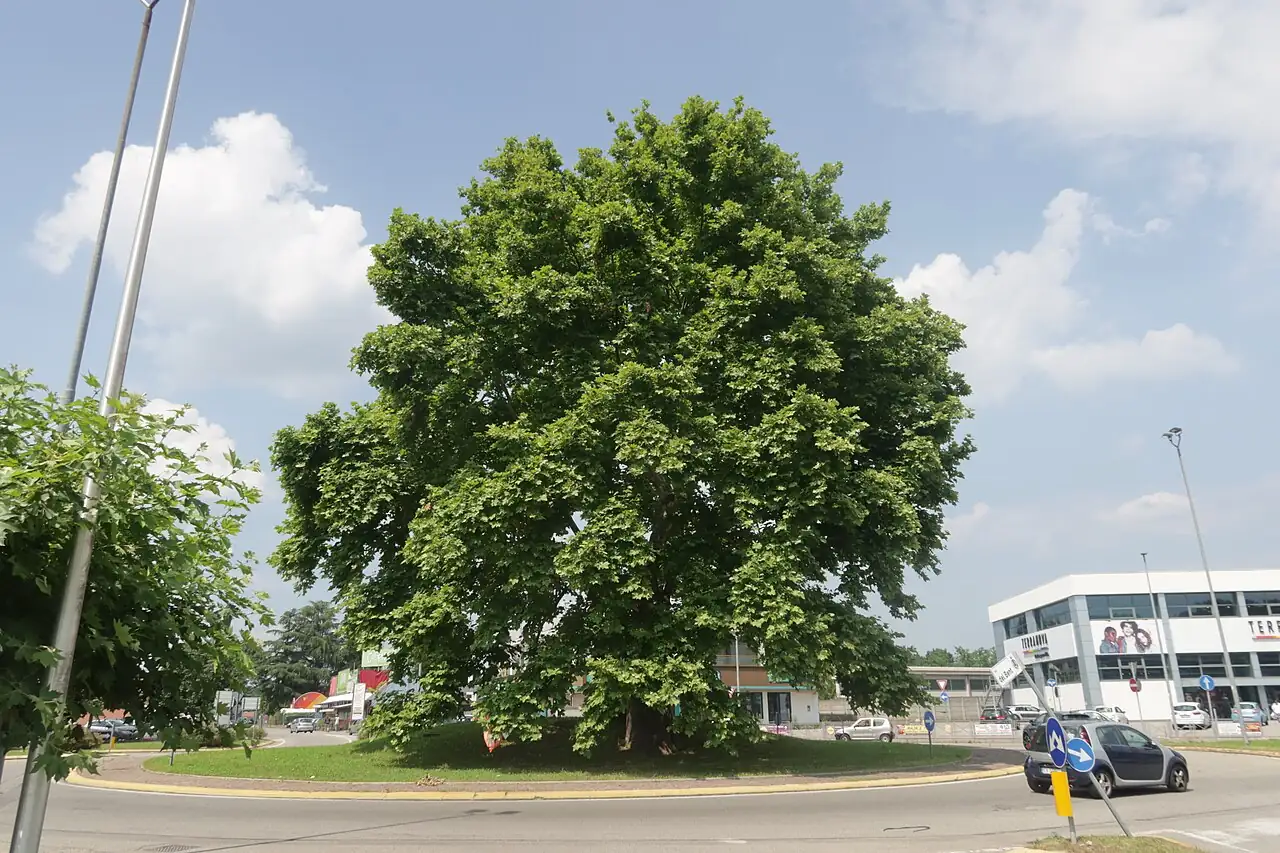
- Size: Typically 20–35 m (66–115 ft) tall with a broad, rounded crown; mature spread often 15–25 m (49–82 ft) depending on site and pruning.
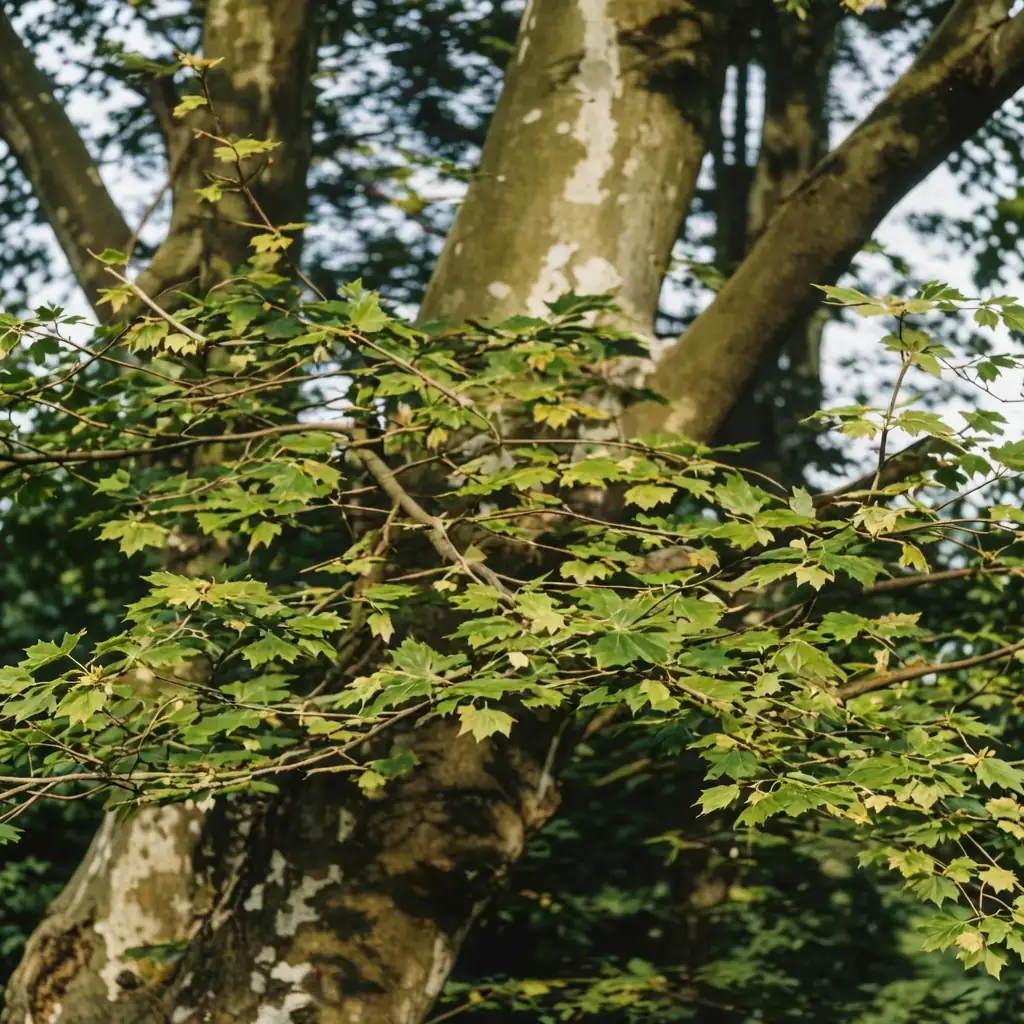
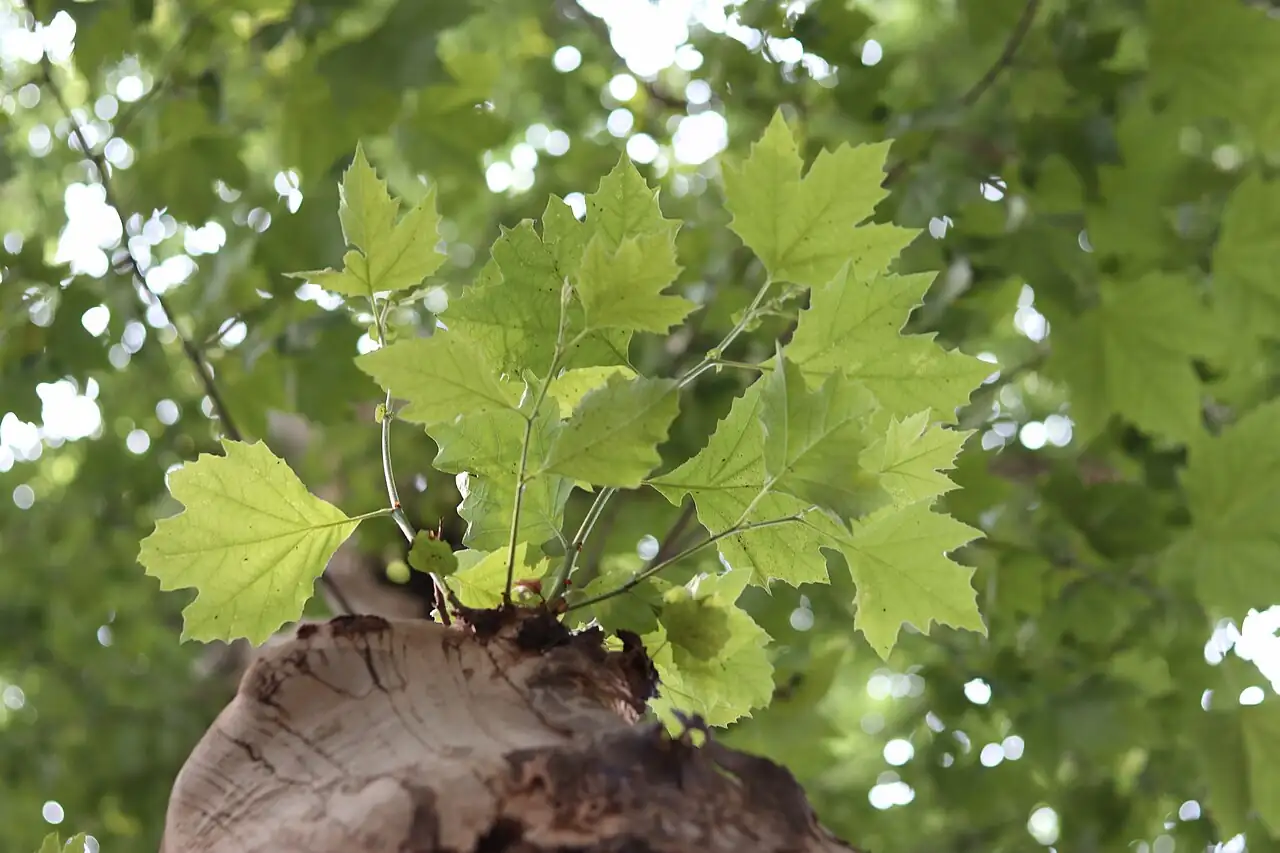
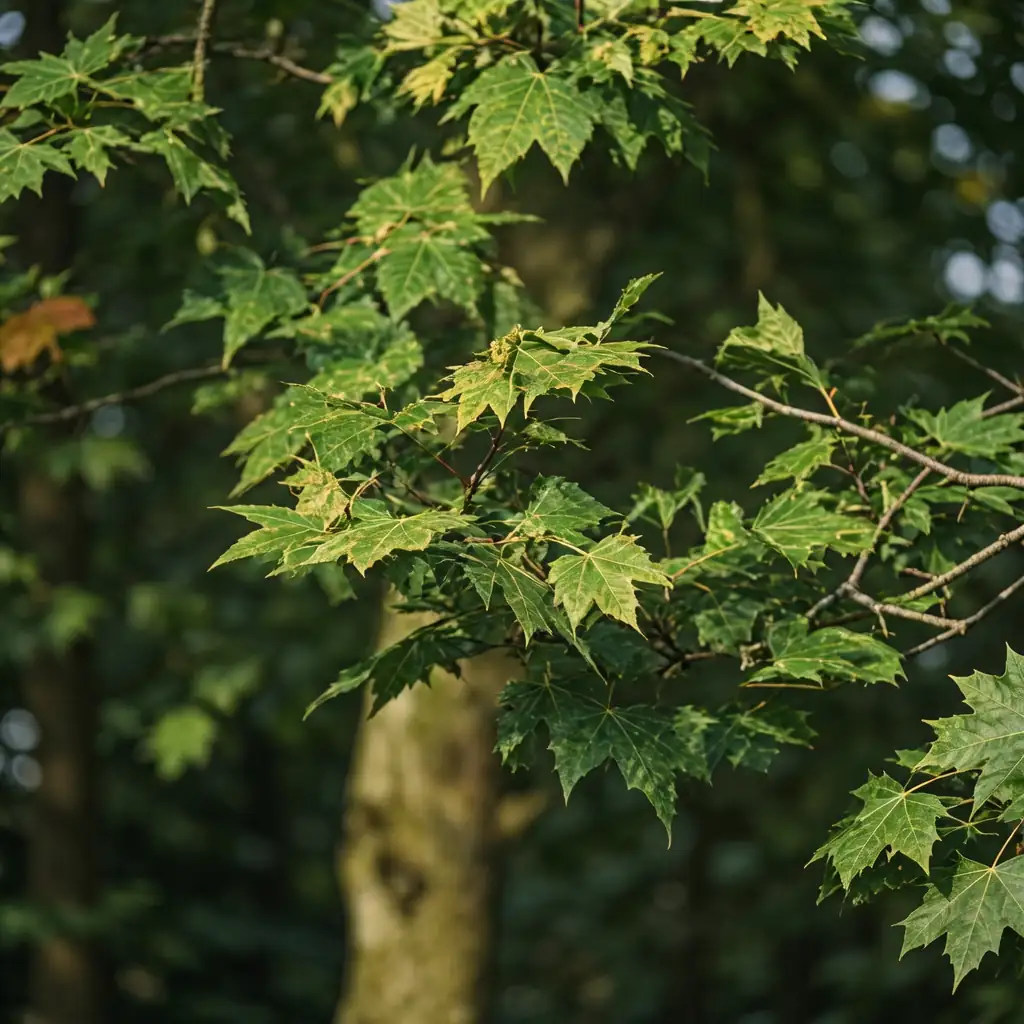
- Foliage: Large, maple-like leaves with deep lobes; leaf bases are often heart-shaped to squared-off. Young shoots may be covered with star-shaped hairs.
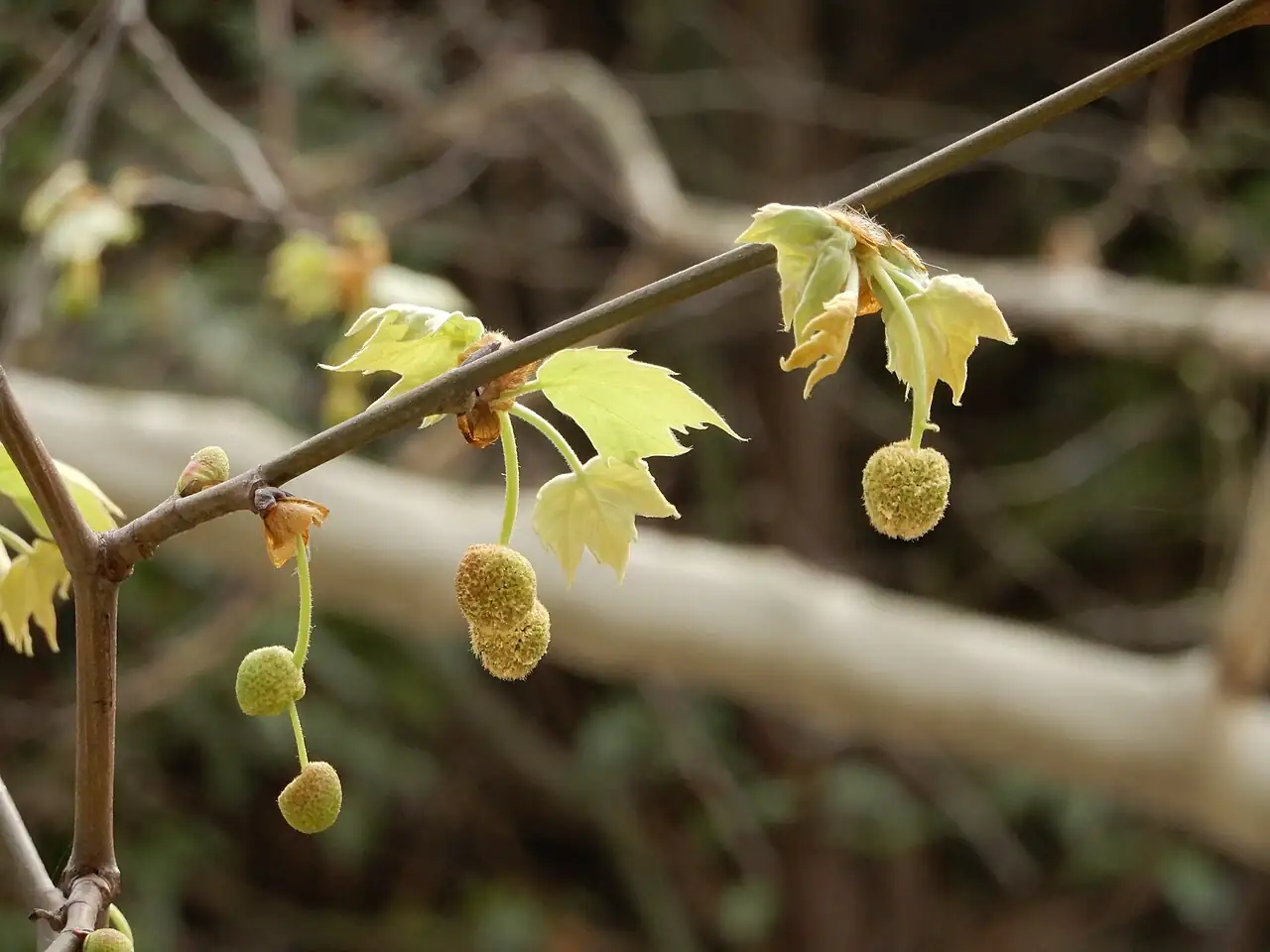
- Flower: Flowers are small and not showy, held in spherical heads. The familiar seed/fruit balls usually hang in pairs from one stalk—an identifying feature behind the Chinese name “二球悬铃木.”
- Flowering Season: April–May (spring)
- Growth Habit: A vigorous, large deciduous tree with a broad, rounded canopy. Often shallow-rooted (surface roots can be noticeable), can be somewhat wind-sensitive in exposed sites, and resprouts strongly; highly tolerant of heavy pruning, including pollarding where practiced.
Environment
Sunlight
Full sun for best growth; not well-suited to deep shade.
Temperature
Prefers mild to warm conditions and does best with steady moisture, but adapts well once established. Strong growth roughly 10–30°C (50–86°F).
Humidity
Moderate to high humidity is ideal, though it generally performs well under typical urban humidity levels.
Soil
Very adaptable: thrives in most well-drained soils and also tolerates heavier soils and periodically wet ground. Once established it can handle poorer or drier soils, but growth is fuller with consistent moisture.
Placement
Outdoors only—excellent for streets, parks, campuses, and large gardens. Give it generous space for a wide canopy and potential surface roots, and keep it away from cramped foundations or narrow planting strips.
Hardiness
Roughly USDA Zone 5–9 (down to about −29°C / −20°F).
Care Guide
Difficulty
Easy and resilient overall—one of the more forgiving large landscape trees, especially in cities (pollution and dust tolerant, broadly soil-adaptable).
Buying Guide
Look for a healthy young tree with a strong central leader (unless you want a multi-stem form), well-spaced branches, and no trunk wounds. Avoid pot-bound stock; choose a plant with a firm root ball and evenly healthy bark and buds.
Watering
After planting, water deeply and regularly to keep soil evenly moist for the first 1–2 growing seasons. Once established, water during prolonged drought—especially when the top 5–8 cm (2–3 in) of soil remains dry. Prioritize deep soakings over frequent shallow watering.
Fertilization
Often not needed in decent soils. If growth is weak, use a balanced slow-release fertilizer in early spring following label rates. Avoid heavy nitrogen late in summer to prevent soft growth going into winter.
Pruning
Very pruning-tolerant. Prune in late winter to early spring (while dormant) to remove dead/crossing branches and to lift the canopy for clearance. Pollarding is possible in traditional streetscapes but requires consistent, skilled repeat pruning to keep structure safe.
Propagation
A cultivated hybrid of Oriental plane (Platanus orientalis) and American sycamore (Platanus occidentalis). Commercially propagated by cuttings, grafting, or other clonal methods to keep desirable traits consistent.
Repotting
Not applicable as a landscape tree. Container-grown young plants may be stepped up briefly in nurseries, but should be planted out when size and site are appropriate.
📅 Seasonal Care Calendar
Spring (Apr–May): flowering period. Autumn (Sep–Oct): seed balls mature. Late winter–early spring: main structural pruning window.
Pests, Diseases & Safety
Common Pests & Diseases
Can be affected by anthracnose (especially in cool, wet springs), powdery mildew, leaf scorch during heat/drought, and occasional aphids or scale. A major concern in some areas is canker stain. Reduce stress with deep watering in drought, encourage airflow, and avoid overhead watering where feasible.
Toxicity
Not generally considered poisonous. However, the fine hairs from young leaves and seed balls can irritate skin, eyes, or airways for sensitive people—wear gloves and a mask when raking or handling debris if you react.
Culture & Symbolism
Symbolism: Often linked with endurance and protection—an iconic, dependable “city shade tree.”
History & Legends: London plane is a long-cultivated European hybrid between Oriental plane and American sycamore. Its ability to tolerate pruning and polluted urban air helped it become a signature tree of boulevards and parks in Europe, and it later spread worldwide, including widespread planting for urban greening in China.
Uses: Primarily used as an ornamental and functional shade tree for streets, avenues, parks, and campuses. Loved for quick canopy formation, strong urban tolerance, and its beautifully mottled, exfoliating trunk; used as a specimen tree or planted in rows for summer shade.
FAQ
Why does the trunk look patchy and peeling?
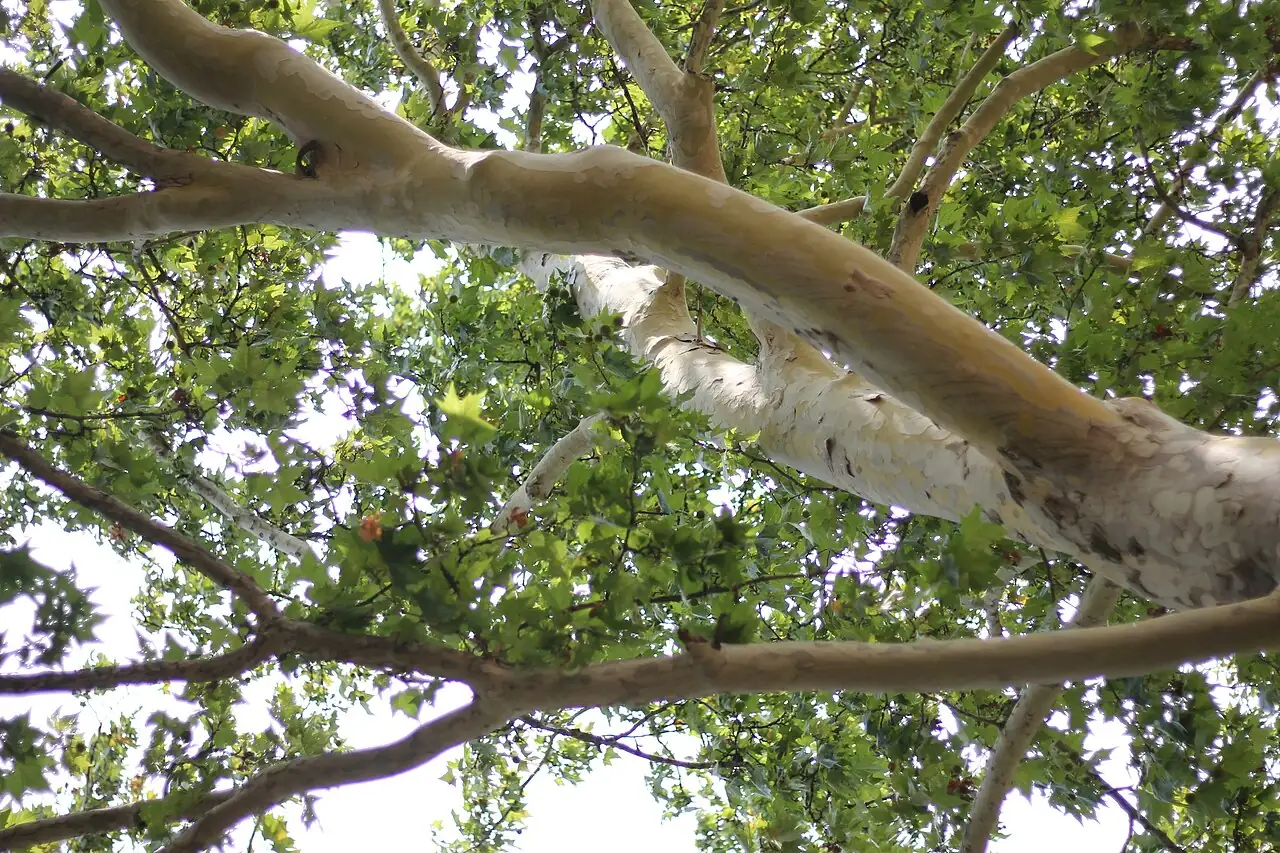
That mottled look is normal: the bark naturally flakes off in plates, exposing lighter inner bark. It’s part of the tree’s character and can help shed accumulated grime and surface growth.
Is it suitable for small gardens?
Usually not. It grows into a very large tree with a broad crown and often shallow surface roots, so it’s better suited to parks, wide streets, and spacious landscapes.
Fun Facts
- It’s a cultivated hybrid derived from Oriental plane (Platanus orientalis) and American sycamore (Platanus occidentalis).
- Its “camouflage” trunk comes from exfoliating bark that reveals pale yellow to creamy inner bark.
- Seed balls often hang in pairs from one stalk—an easy ID clue (and echoed in the Chinese name).
- Despite being wind-sensitive in very exposed sites, it resprouts strongly and handles heavy pruning better than many large trees.
- A go-to tree for urban greening thanks to its tolerance of air pollution and dust.


