
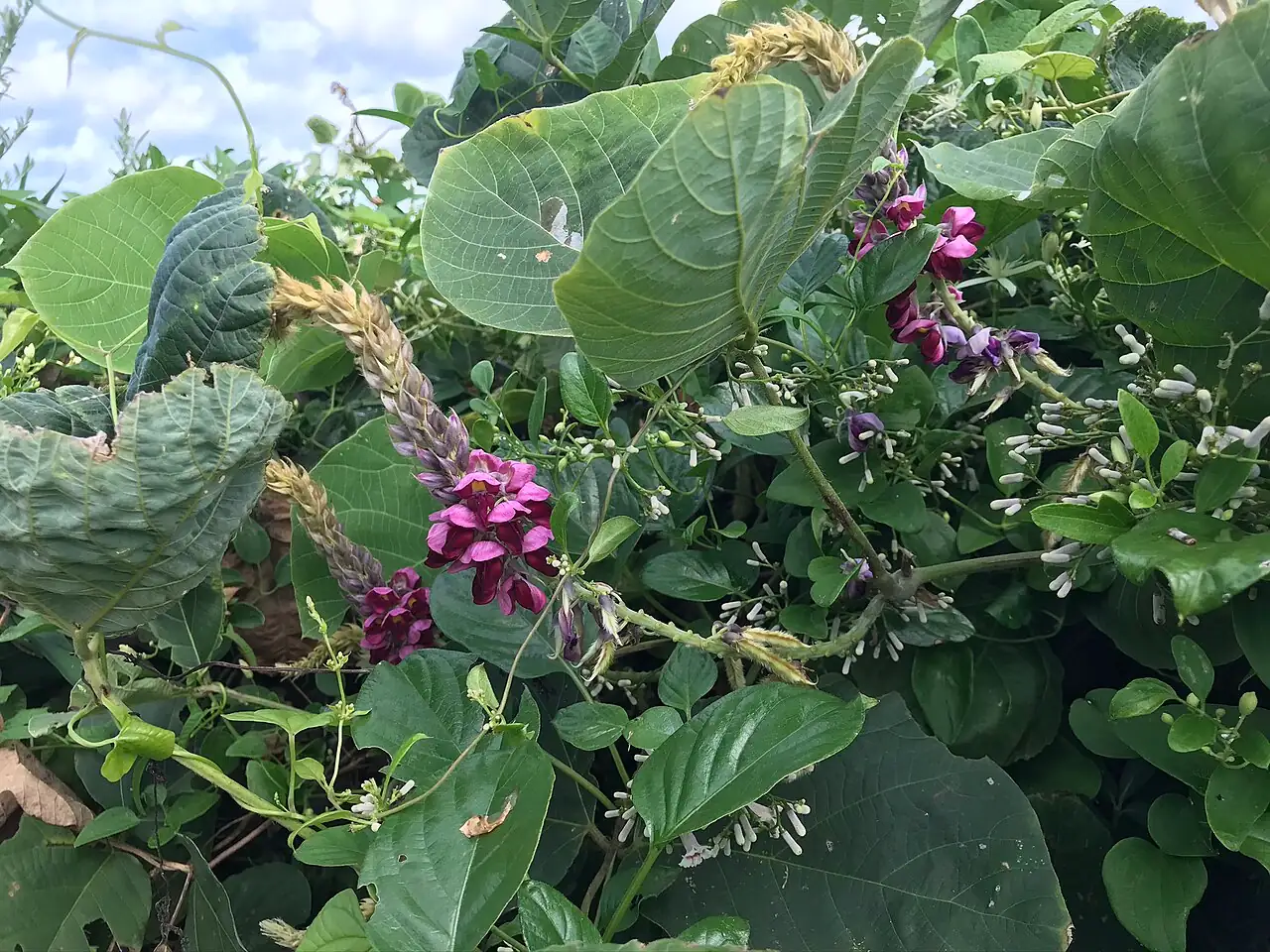
Plant Features
- Size: Vine length up to about 8 m (26 ft) under favorable conditions.
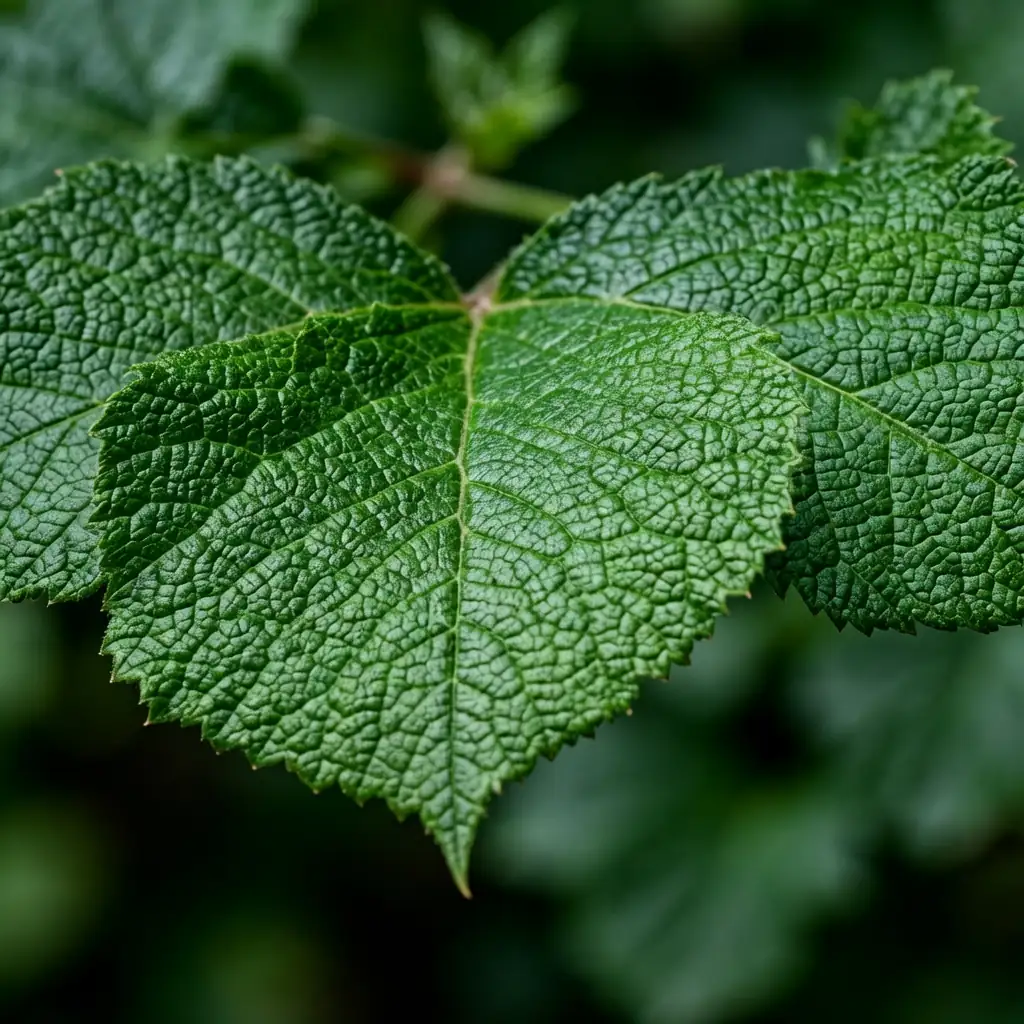
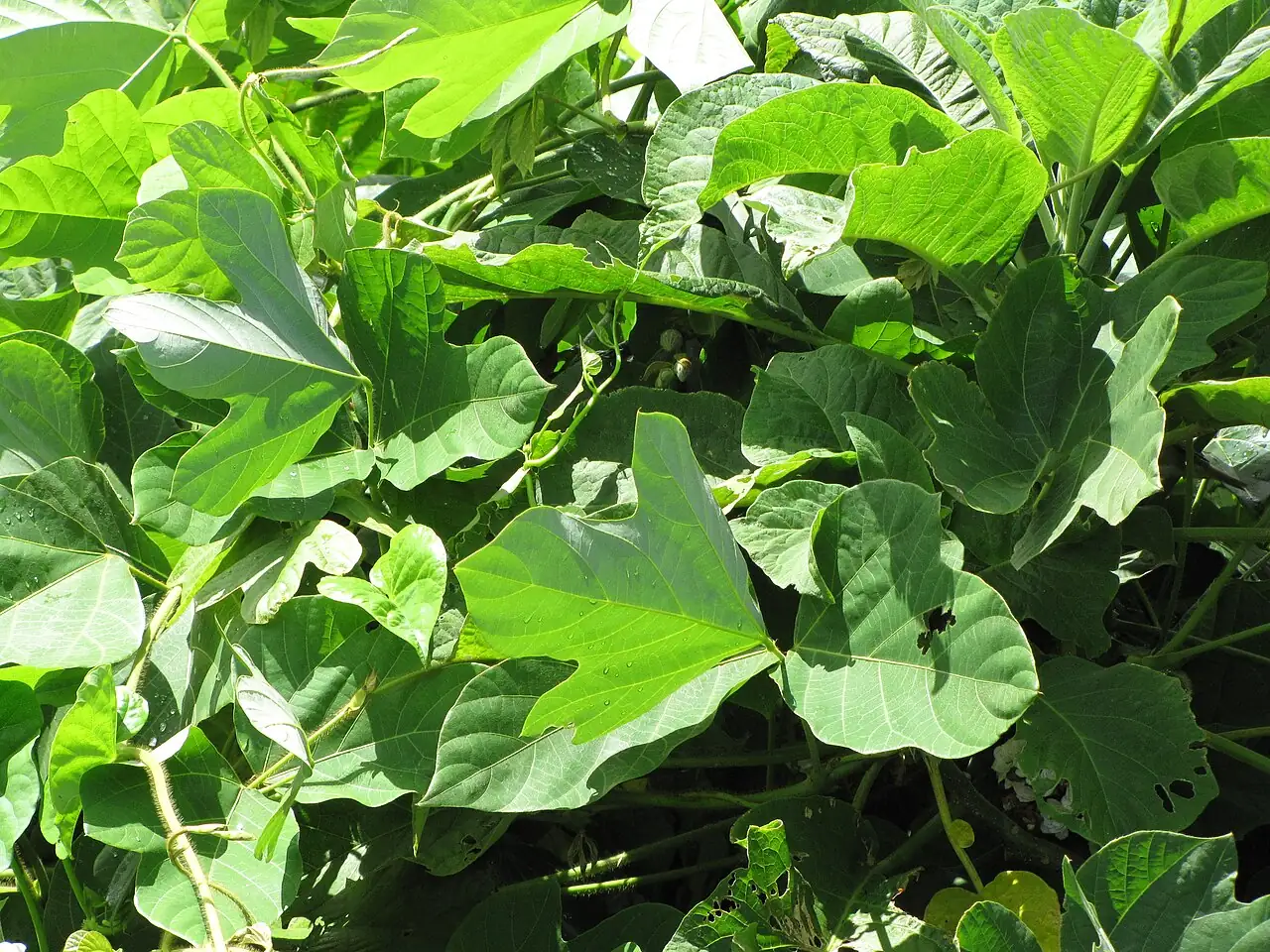
- Foliage: Leaves are alternate and divided into three leaflets. Leaflets are broadly ovate to obovate, with a noticeably gray-white, velvety underside from dense, silvery hairs; veins are numerous and prominent on the lower surface.
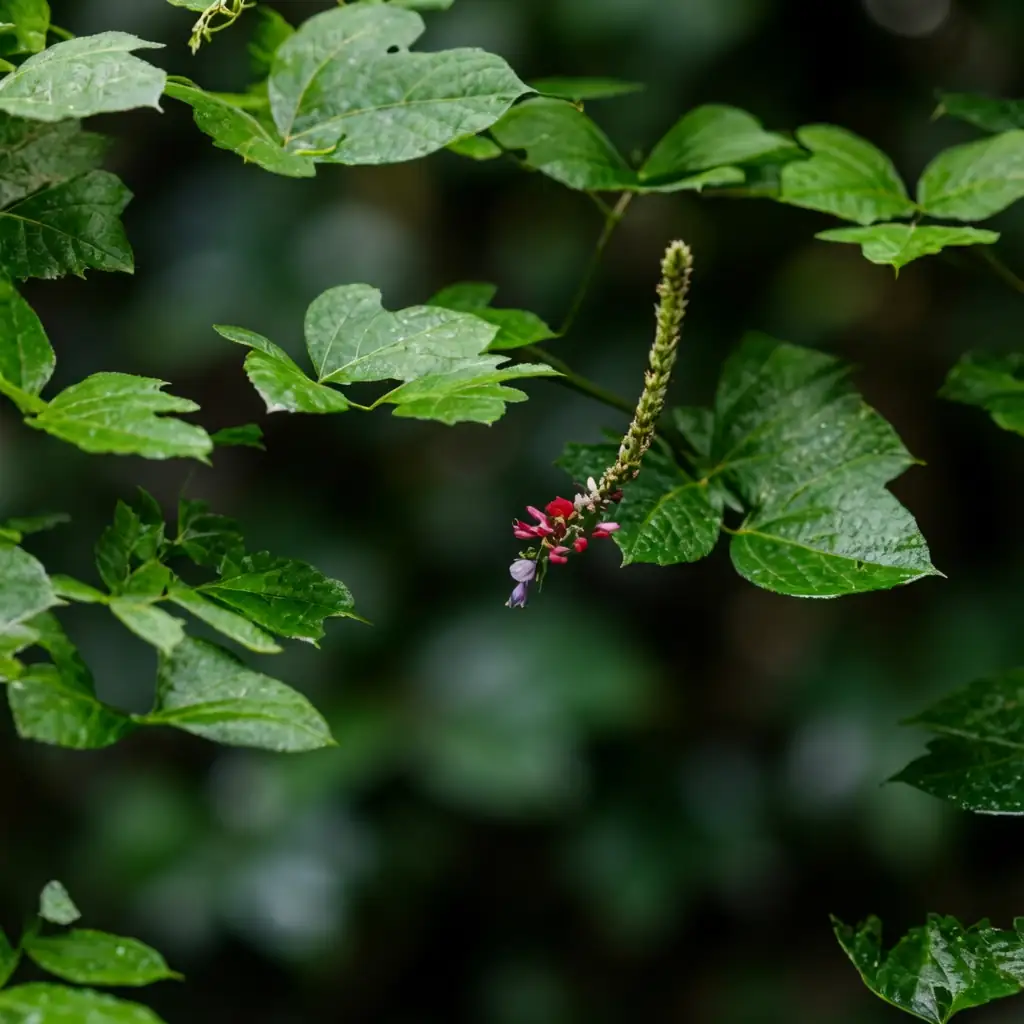
- Flower: Pea-family flowers are carried in racemes, often clustered. Bracts can be purplish. The corolla is somewhat funnel-like to tubular, typically pale pink through pinkish-purple; the banner (standard) petal is obovate.
- Flowering Season: July–October (mid/late summer to autumn).
- Growth Habit: Fast-growing, twining, herbaceous perennial climber; spreads readily and can form dense tangles if unmanaged.
Environment
Sunlight
Full sun to partial shade; flowering is best with at least 6 hours of sun per day.
Temperature
Best growth around 20–30°C (68–86°F). Once established, it is notably cold-tolerant and can survive winter temperatures well below 0°C (32°F).
Humidity
Very adaptable; does fine in typical outdoor humidity and tolerates short dry spells after establishment.
Soil
Adaptable to many soils, including acidic ones. Prefers well-drained loam, but will still grow in poorer ground as long as it isn’t waterlogged.
Placement
Outdoors on slopes, embankments, woodland edges, or along very sturdy fences/trellises—ideally in places where vigorous spread can be strictly managed.
Hardiness
Commonly grown in USDA Zone 5–9 (approx.); generally not bothered by cold once established, but can be checked by severe frost when young.
Care Guide
Difficulty
Easy to grow, difficult to control. It’s hardy and forgiving, but its speed and spread require active management.
Buying Guide
Choose plants/crowns with firm, healthy roots and no rot. Before buying or planting, confirm local rules—kudzu is regulated or considered invasive in many regions outside its native range.
Watering
Water consistently during the first growing season to establish roots. After that, water mainly during prolonged drought; let the top layer of soil dry slightly between waterings and avoid waterlogging.
Fertilization
Often unnecessary because it’s a nitrogen-fixing legume. If growth is weak in very poor soil, apply a light, balanced fertilizer in spring at label rates; avoid high-nitrogen feeding that can supercharge vine growth.
Pruning
Prune hard and often to keep it contained. Cut back repeatedly through the growing season; thin dense mats to improve airflow and reduce pest/disease issues.
Propagation
Easily propagated by seed, stem cuttings, and layering where nodes touch soil; also spreads from root crowns. Take care to prevent escape into nearby natural areas.
Repotting
Not ideal as a long-term container plant due to vigor and size. If kept in a container temporarily, pot up as roots fill the pot, use a well-drained mix, and provide an exceptionally sturdy support.
📅 Seasonal Care Calendar
Spring: plant/establish, install strong supports, begin containment pruning. Summer: rapid growth—prune repeatedly; water during heat if newly planted. Autumn: main flowering period; continue containment. Winter: dormant—cut back and remove dead vines if needed.
Pests, Diseases & Safety
Common Pests & Diseases
Generally tough. May see aphids, spider mites during hot/dry spells, and occasional fungal leaf spot in crowded, humid growth. Improve airflow with thinning, avoid late-day overhead watering, and keep growth from forming dense, wet tangles.
Toxicity
Not generally considered poisonous; the root is widely used as a food ingredient and in traditional herbal preparations. Even so, avoid unsupervised medicinal use, and don’t let pets/livestock consume large amounts of unfamiliar plant material.
Culture & Symbolism
Symbolism: Often linked with resilience and tenacity—kudzu thrives where many plants struggle and pushes onward with unstoppable energy.
History & Legends: In East Asia, kudzu has a long practical history: its starchy root has been used in food and traditional herbal contexts, while its strong fibers were historically valued for textiles and papermaking.
Uses: Commonly planted for soil stabilization and erosion control on slopes. The root (especially), along with stems, leaves, and flowers, appears in traditional herbal practices and as a functional-food ingredient. Stem-bark fibers can be processed for weaving and paper.
FAQ
Is kudzu suitable for a small garden?
Usually not. It grows extremely fast and can smother supports and nearby plants. Only grow it with strict containment, frequent pruning, and after checking local regulations.
When does kudzu flower?
Typically from July to October, producing clusters of pale pink to pinkish-purple pea-like flowers.
What conditions does kudzu tolerate well?
Once established, it tolerates drought, cold, and acidic soils, and it can handle sites ranging from open slopes to lightly wooded edges.
Fun Facts
- Kudzu’s aggressive growth is exactly why it has been used for slope stabilization—its spread can hold soil in place.
- The plant has a long multi-purpose history: food starch from the root, traditional herbal use, and strong fibers from the stems.
- The leaf undersides can look noticeably silvery because of their soft, gray-white hairs.
- In good conditions, a single season’s growth can produce vines up to about 8 m (26 ft) long.
- Because it’s a legume, kudzu can partner with soil microbes to fix nitrogen, helping it thrive in poorer soils.