Plant Features
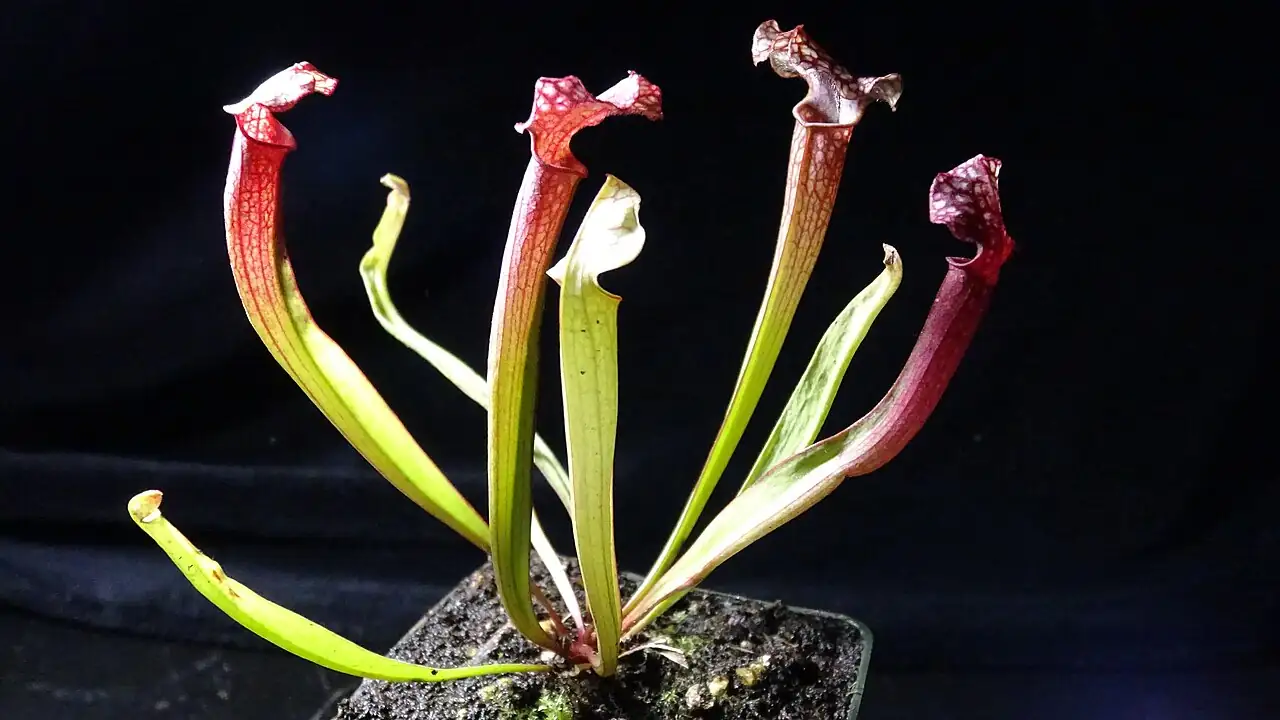
- Size: Typically about 30–60 cm (12–24 in) tall in active growth, forming clumps about 30–60 cm (12–24 in) wide (size varies with pot size and conditions).
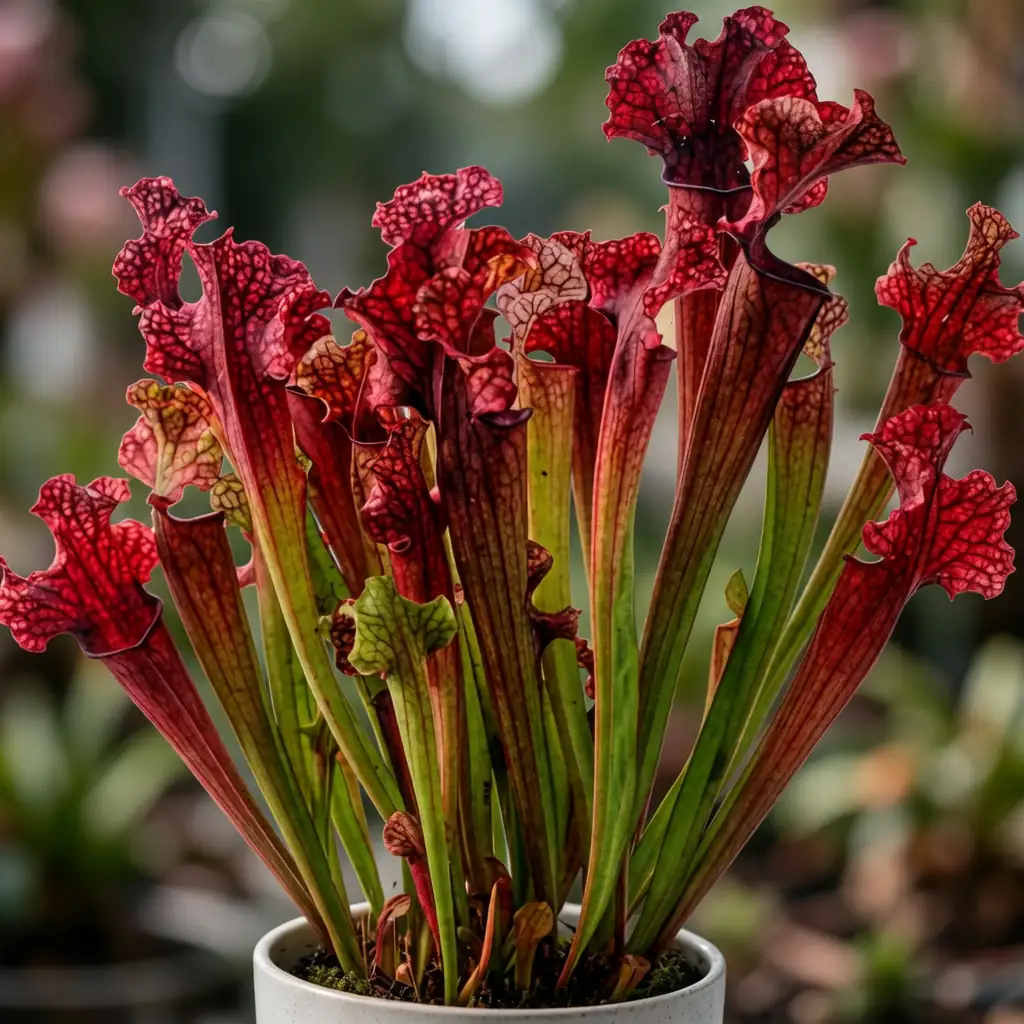
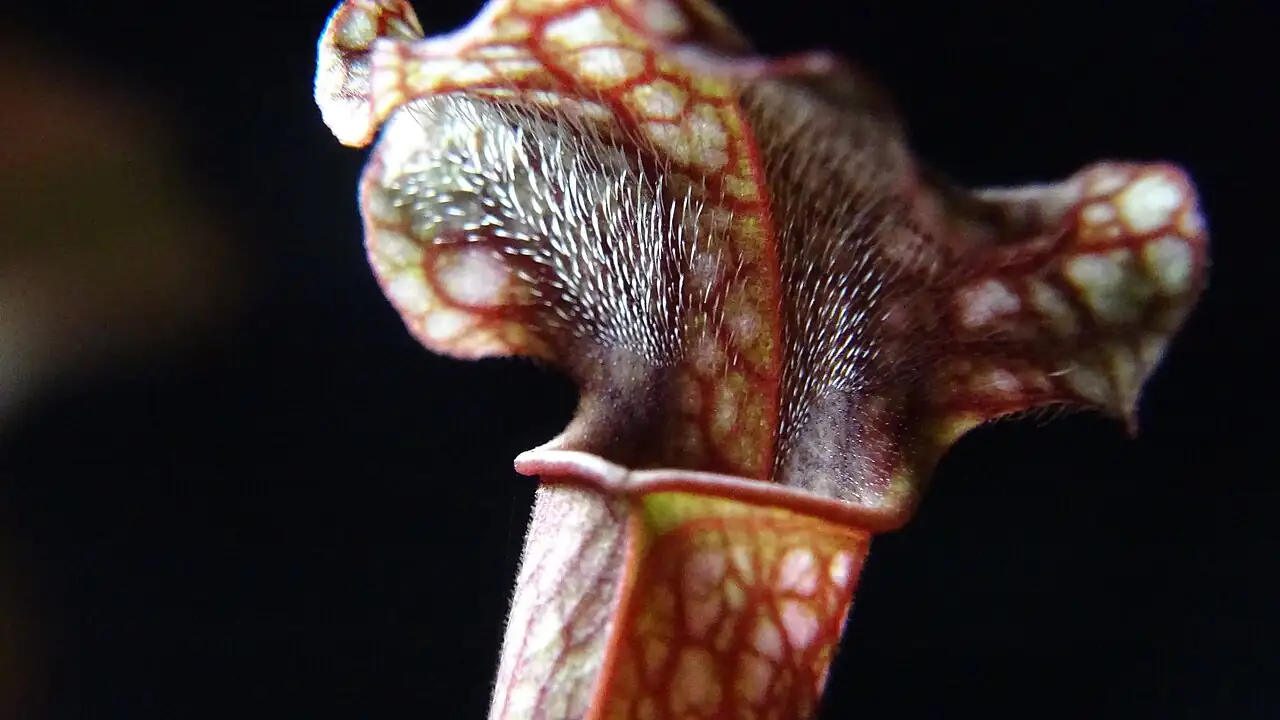
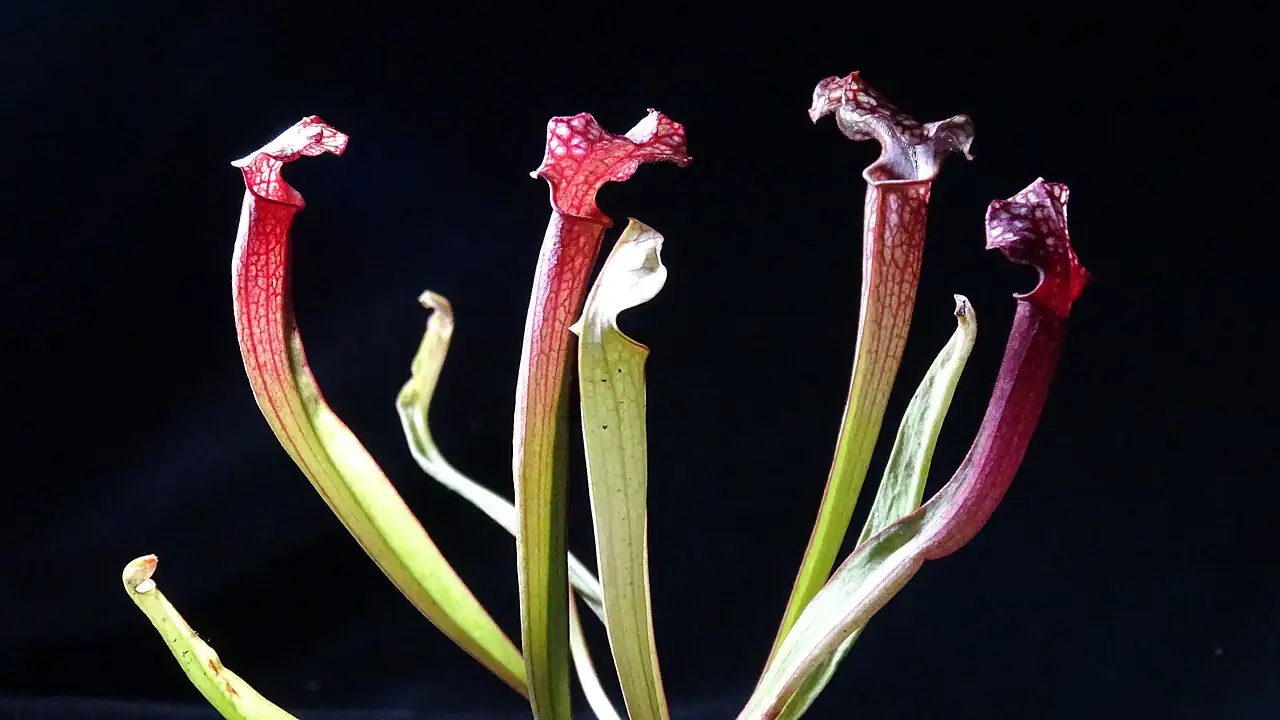
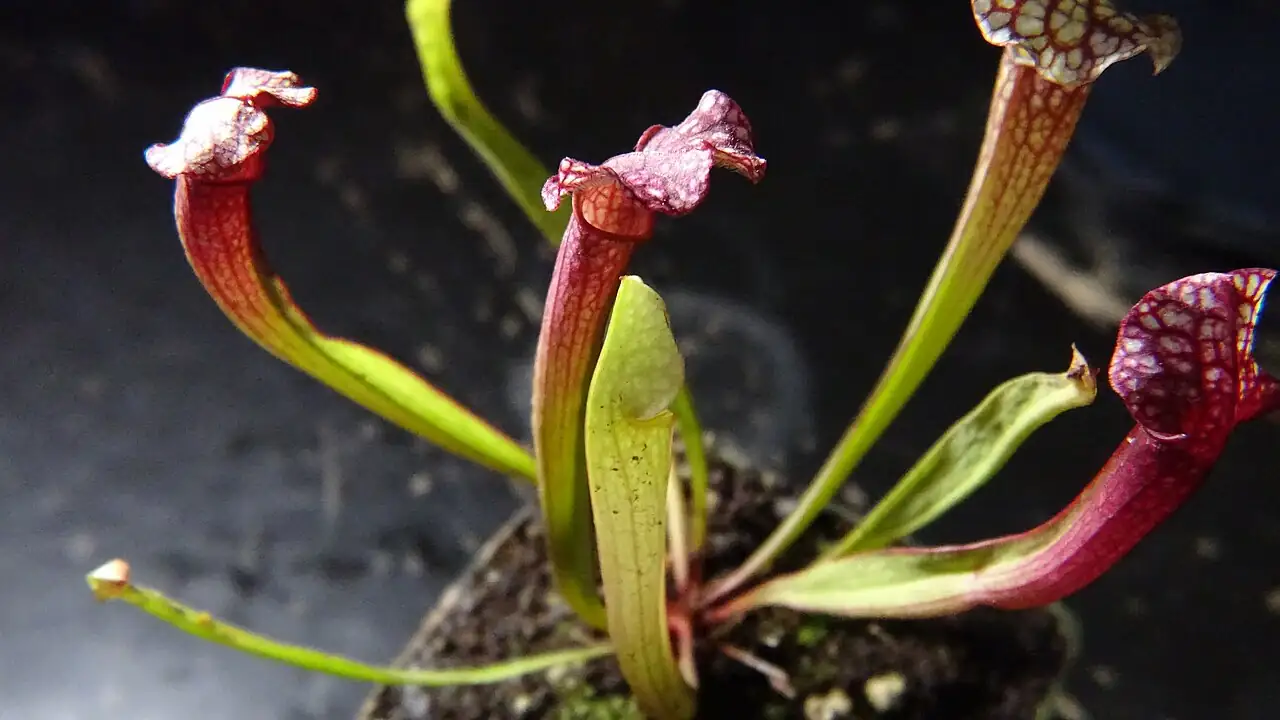
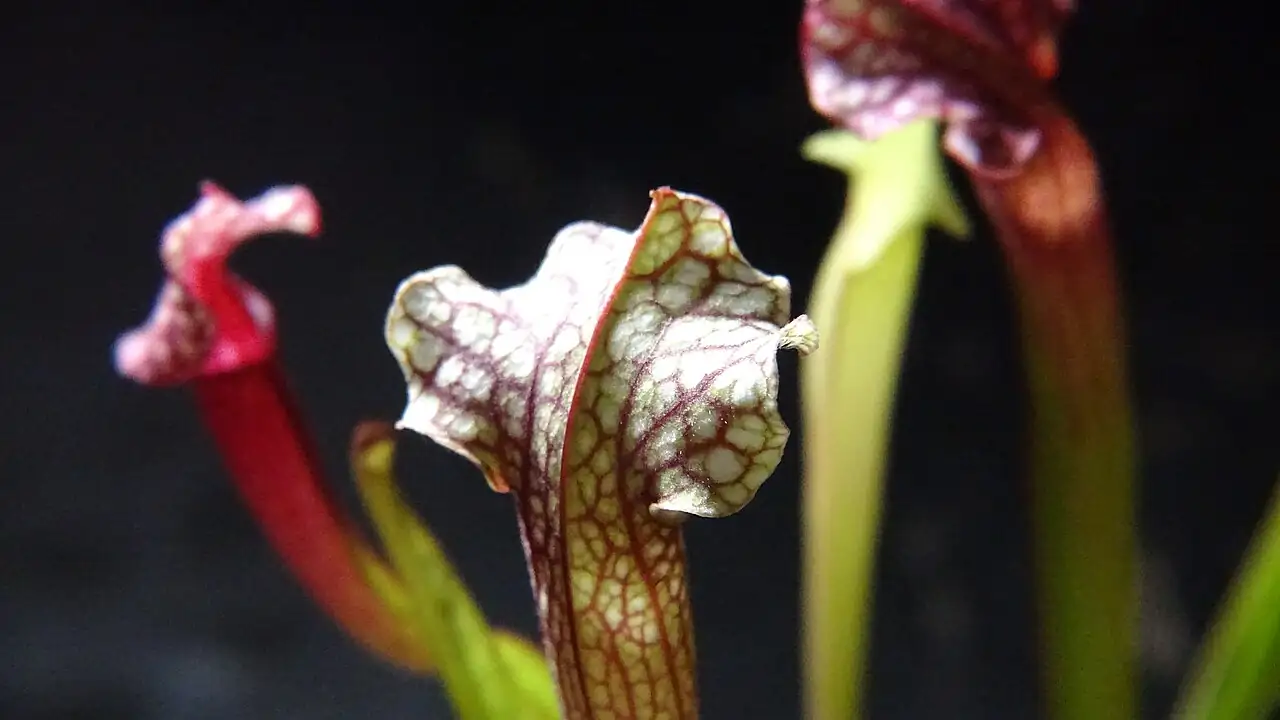
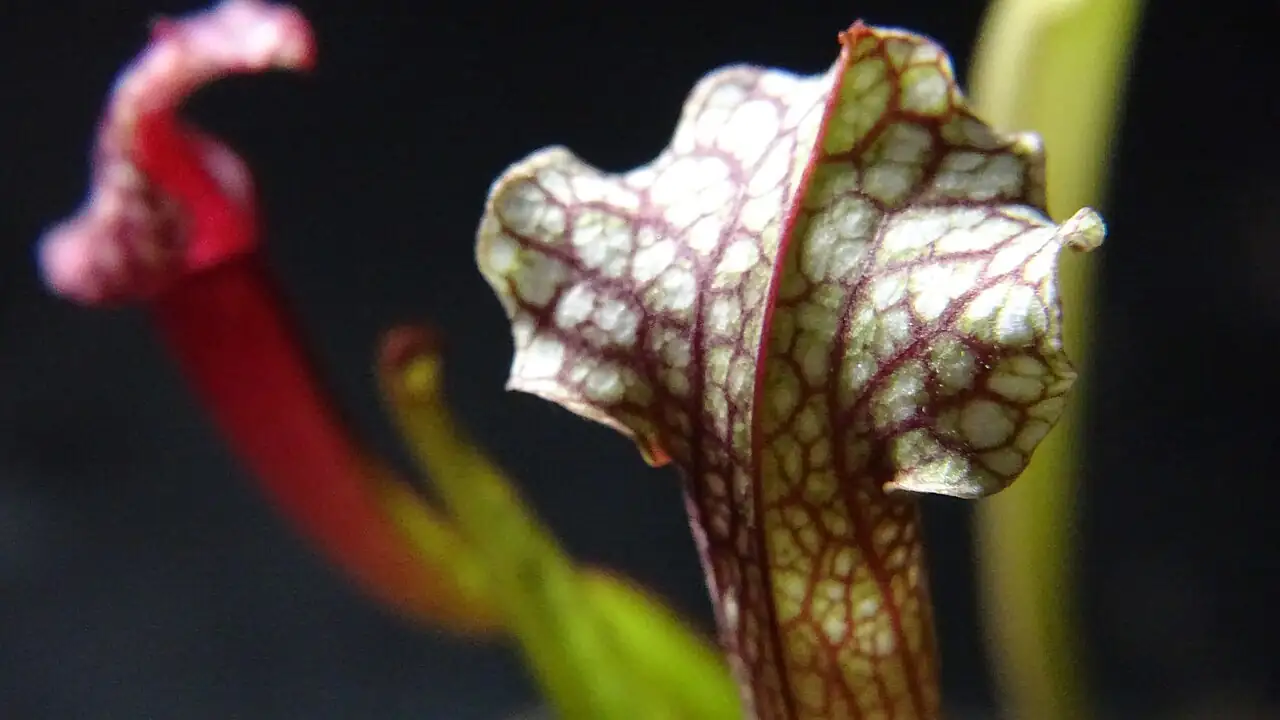
- Foliage: Produces many narrow, upright tubular pitchers (modified leaves) with a noticeably frilled, ruffled lid. Young pitchers often emerge green and then deepen to red as they mature, frequently showing marbled or strongly veined patterning.
- Flower: Deep red, nodding Sarracenia-type flowers held above the pitchers.
- Flowering Season: Spring
- Growth Habit: Clump-forming, upright, temperate carnivorous perennial with tubular pitfall traps (pitchers) arising from a rhizome.
Environment
Sunlight
Full sun for best color: at least 6–8 hours of direct sun daily. In very hot climates, it can appreciate some afternoon shade, but too little sun often means greener, weaker pitchers.
Temperature
Active growth: about 18–30°C (64–86°F). Winter dormancy is strongly preferred: about 0–10°C (32–50°F). Brief light frosts are usually tolerated when dormant, but container plants should be protected from deep freezes.
Humidity
Average to high humidity works well (roughly 40–80%), but the more important factor is consistently wet, boggy roots with mineral-free water.
Soil
Nutrient-poor, acidic bog mix such as sphagnum peat moss with perlite and/or silica sand (often about 1:1). Avoid standard potting soil and do not add fertilizer to the substrate.
Placement
Best outdoors in a sunny patio/balcony bog pot or tray setup. Indoors only with extremely strong light (very bright south-facing window or high-output grow lights) and a way to provide a cool winter dormancy.
Hardiness
Often treated as a temperate Sarracenia suitable for roughly USDA Zone 7–9, depending on winter protection; potted plants are more vulnerable to hard freezes than in-ground bog plantings.
Care Guide
Difficulty
Moderate. It becomes quite straightforward once you consistently provide the “big four”: strong sun, pure water, nutrient-poor bog mix, and a cool winter dormancy.
Buying Guide
Choose plants with firm, upright pitchers and healthy growth points. Avoid plants with a sour smell, black/mushy rhizomes, or widespread rot. Some pitchers may brown after shipping or around dormancy—this can be normal if the growth point is healthy.
Watering
Use only rainwater, distilled water, or reverse-osmosis water. During the growing season, keep the pot sitting in about 2–5 cm (0.8–2 in) of water using the tray method. In winter dormancy, keep the medium just damp (never bone-dry) and reduce or eliminate standing water to lower the risk of cold-season rot.
Fertilization
Do not fertilize the soil. Outdoors, it typically catches enough insects. If grown indoors with little prey, feeding an occasional small insect can help; alternatively, use an appropriate carnivorous-plant fertilizer very sparingly and only as directed (overfeeding can burn or deform pitchers).
Pruning
Trim brown or dead pitchers at the base with clean scissors. In late winter/early spring, clear out old foliage to reduce mold and make room for fresh pitchers and flower stalks.
Propagation
Divide the rhizome in late winter/early spring while dormant to keep the cultivar true to type. Seed can be grown, but seedlings will not reliably match ‘Judith Hindle’.
Repotting
Repot every 1–2 years in late winter/early spring. Refresh the bog mix, give the rhizome space, and avoid burying the growth point too deeply.
📅 Seasonal Care Calendar
Spring: flowers and new pitchers start; keep in strong sun and standing water. Summer: peak growth and color—maintain tray watering and maximum light. Autumn: growth slows; allow natural cooling and reduce tray depth slightly. Winter: provide a cool dormancy around 0–10°C (32–50°F), keep medium lightly damp, and remove dead tissue to prevent fungus.
Pests, Diseases & Safety
Common Pests & Diseases
Watch for aphids on tender new growth and flower stalks, plus scale, mealybugs, thrips, and spider mites (especially indoors). Rot and fungal issues can appear when old pitchers are left to decay in cold, stagnant, overly wet conditions—improve airflow, remove dead material, and use carnivorous-plant-safe treatments (such as insecticidal soap) when needed.
Toxicity
Generally considered non-toxic to people and pets, though it is not edible. The pitchers can trap insects; discourage pets from chewing or pulling at the plant.
Culture & Symbolism
Symbolism: Often linked with fascination, resilience, and the charm of nature’s clever adaptations—equal parts beautiful and slightly mysterious.
History & Legends: A named horticultural cultivar (a man-made hybrid selection) popular among carnivorous plant growers. Because it’s a cultivar, it isn’t tied to one specific wild habitat the way a species is.
Uses: A standout ornamental for sunny bog containers and patio displays, and a favorite “teaching plant” for showing how carnivorous plants lure, trap, and digest insects.
FAQ
Why are my pitchers staying green instead of turning red?
This plant’s red coloration is highly light-dependent. Increase sun exposure (aim for 6–8+ hours of direct sun), keep it in nutrient-poor bog mix, and use mineral-free water. Low light is the most common reason it stays green.
Does it need winter dormancy?
Yes. Like most temperate Sarracenia, it stays stronger long-term with a cool winter rest. Without dormancy, it often declines and produces smaller, weaker pitchers over time.
Can I use tap water?
Usually not. Tap water often contains dissolved minerals that accumulate and damage roots. Stick with rainwater, distilled, or reverse-osmosis water whenever possible.
Fun Facts
- Each pitcher is a modified leaf designed as a pitfall trap, often with slippery surfaces and downward-pointing hairs that make escape difficult.
- Color and veining typically intensify with stronger light and as the season progresses.
- To keep the plant looking like ‘Judith Hindle’, propagation is best done by rhizome division rather than seed.