

🌱 Plant Features
- Size:1.5–15 m (5–49 ft) tall; typically forms a rounded to broadly conical crown with layered, spreading branches.
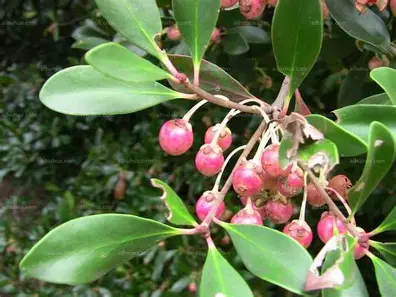
- Foliage: Leaves are thick, leathery, and glossy with a dark-green upper surface. A key detail is the midrib, which is distinctly sunken on the upper side; the leaf base gradually tapers toward the petiole, giving the plant a refined, “finished” look year-round.
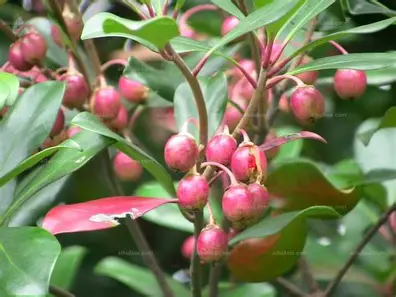
- Flower: Flowers are pale yellow, strongly fragrant, and often appear in small clusters near branch tips. After flowering, the plant develops nearly spherical fruits, with sepals that persist around the fruit.
- Flowering Season: May–July
- Growth Habit: Evergreen shrub or small tree with stout gray-green branches that may look almost whorled; repeatedly branching growth creates a naturally rounded, layered canopy.
🌤️ Environment
Sunlight
Prefers part shade to dappled light, especially when young. Established plants can handle brighter light if soil moisture is reliable and the site isn’t scorchingly hot or windy.
Temperature
Prefers mild to warm conditions and is relatively cold-tolerant for a broadleaf evergreen. Best where winter lows generally stay above about -10 to -5°C (14 to 23°F).
Humidity
Average outdoor humidity is usually fine; avoid very dry, hot, windy exposures that can stress foliage and invite mites.
Soil
Does best in fertile, loose, well-structured, slightly acidic soil with excellent drainage. Choose a spot that drains well but is easy to irrigate—deep soils on slopes or well-prepared beds are ideal.
Placement
A great choice near entrances, along paths, at corners, and at lawn edges; also works beautifully as a woodland-edge evergreen in gardens and parks.
Hardiness
Moderately cold-hardy; protect from severe frost and drying winter winds (roughly USDA Zone 7–9 depending on local conditions and shelter).
🪴 Care Guide
Difficulty
Moderate. Give seedlings/young plants shade or dappled light and consistent moisture; once established, it’s fairly resilient and often handles cooler conditions better than many broadleaf evergreens.
Buying Guide
Pick plants with dense growth and evenly colored, glossy leaves. Avoid specimens with black spotting, sticky residue (possible pest honeydew), or obvious stress. Check that the plant isn’t severely pot-bound (roots circling tightly) and that the mix drains freely.
Watering
Water deeply after planting and keep evenly moist during establishment. Afterward, water when the top few centimeters/inch of soil dries, aiming for steady moisture without waterlogging. Good drainage plus dependable irrigation is the sweet spot.
Fertilization
Feed in spring using a balanced slow-release fertilizer or one formulated for acid-loving shrubs. Avoid heavy feeding in late summer so new growth can mature before winter.
Pruning
Usually minimal. Light shaping after flowering or in late winter/early spring works well—remove crossing, weak, or inward-growing branches to preserve the naturally rounded form.
Propagation
Commonly propagated by semi-hardwood cuttings taken in summer. It can also be grown from seed, though seedlings may vary from the parent plant.
Repotting
In containers, repot every 2–3 years in spring into a slightly larger pot with a free-draining, slightly acidic mix; if not repotting, refresh the top layer of soil annually.
📅 Seasonal Care Calendar
Flowers: May–July. Fruits: August–October. Water more during hot spells; shelter young plants from harsh sun and drying winds, and protect from severe winter exposure.
🔬 Pests, Diseases & Safety
Common Pests & Diseases
Possible pests include scale insects, mealybugs, aphids, and spider mites (more likely in dry conditions). Root issues can develop in poorly drained soils. Improve airflow, avoid soggy ground, and treat outbreaks with horticultural oil or insecticidal soap as needed.
Toxicity
No widely cited, well-documented toxicity to humans or pets, but it’s still best to discourage chewing/ingestion and supervise children and animals around ornamental plants.
🎋 Culture & Symbolism
Symbolism: Often linked with calmness, refinement, and evergreen endurance—thanks to its tidy form and year-round glossy foliage.
History & Legends: A traditional broadleaf evergreen in East Asian garden design, valued more for its elegant structure and gentle fragrance than for flashy flowers.
Uses: Mainly ornamental: an evergreen shrub/small tree for entrances, path corners, lawn edges, and woodland-style plantings. The thick leaves provide year-round structure, and the fragrant flowers add a subtle seasonal highlight.
❓ FAQ
When does it flower?
Typically May–July.
When does it fruit?
Usually August–October.
How tall can Japanese ternstroemia grow?
About 1.5–15 m (5–49 ft), depending on age, pruning, and site conditions.
Where does it grow naturally?
It’s native to China and often occurs in montane forests, along woodland edges and roadsides, and in open woods near ridges and summits.
What planting site does it like best?
A fertile, slightly acidic, well-drained soil with reliable moisture—avoid waterlogged spots.
Do young plants need shade?
Yes—seedlings and young plants perform best in shade or dappled light.
💡 Fun Facts
- The pale yellow flowers are notably fragrant and often appear in small clusters near branch tips.
- Its fruits are nearly spherical, and the sepals stay attached around them (they’re “persistent”).
- The branches can look almost whorled and repeatedly fork, naturally building a layered, rounded crown.
- A distinctive ID clue: the leaf midrib is clearly sunken on the upper surface.
- For a broadleaf evergreen, it’s comparatively tolerant of cooler conditions once established.