Plant Features
- Size: Typically 10–15 m (33–49 ft) tall; forms a medium-to-large canopy with an upright, woody structure.
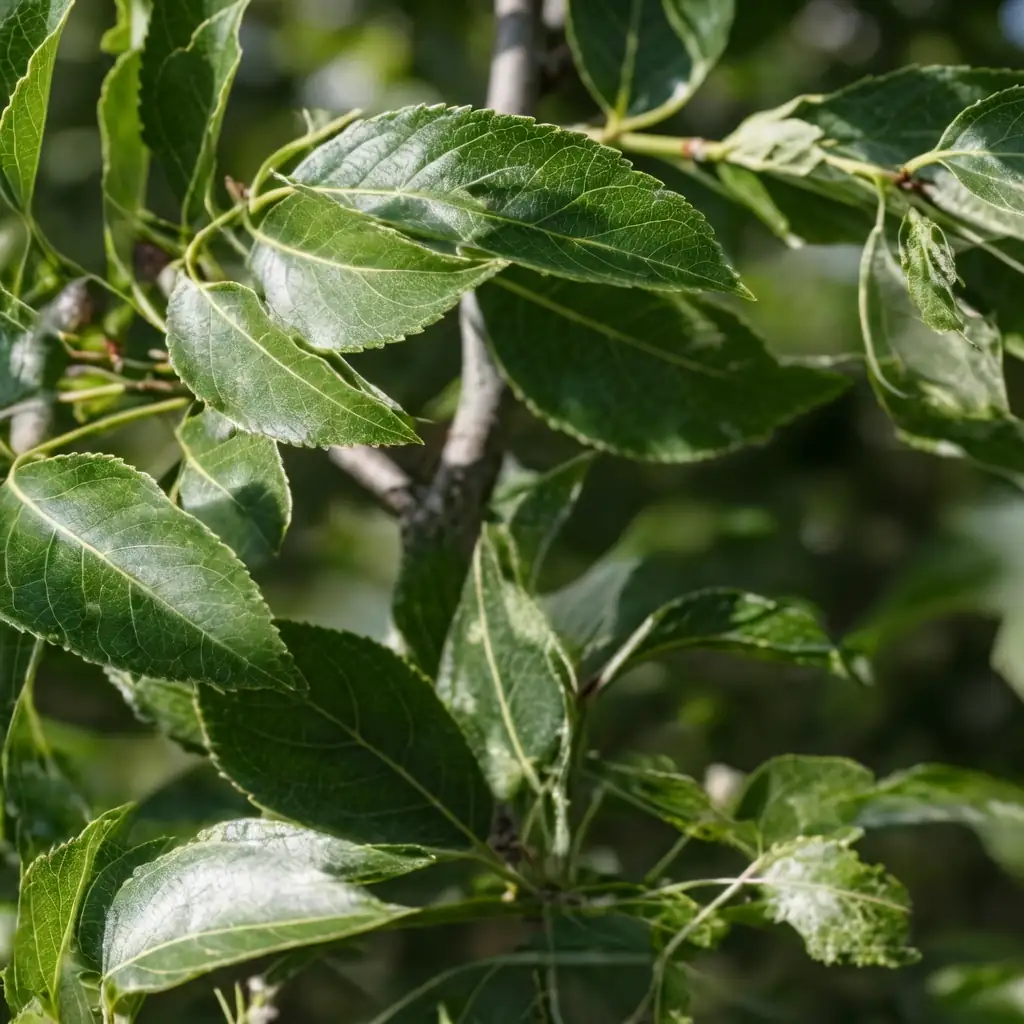
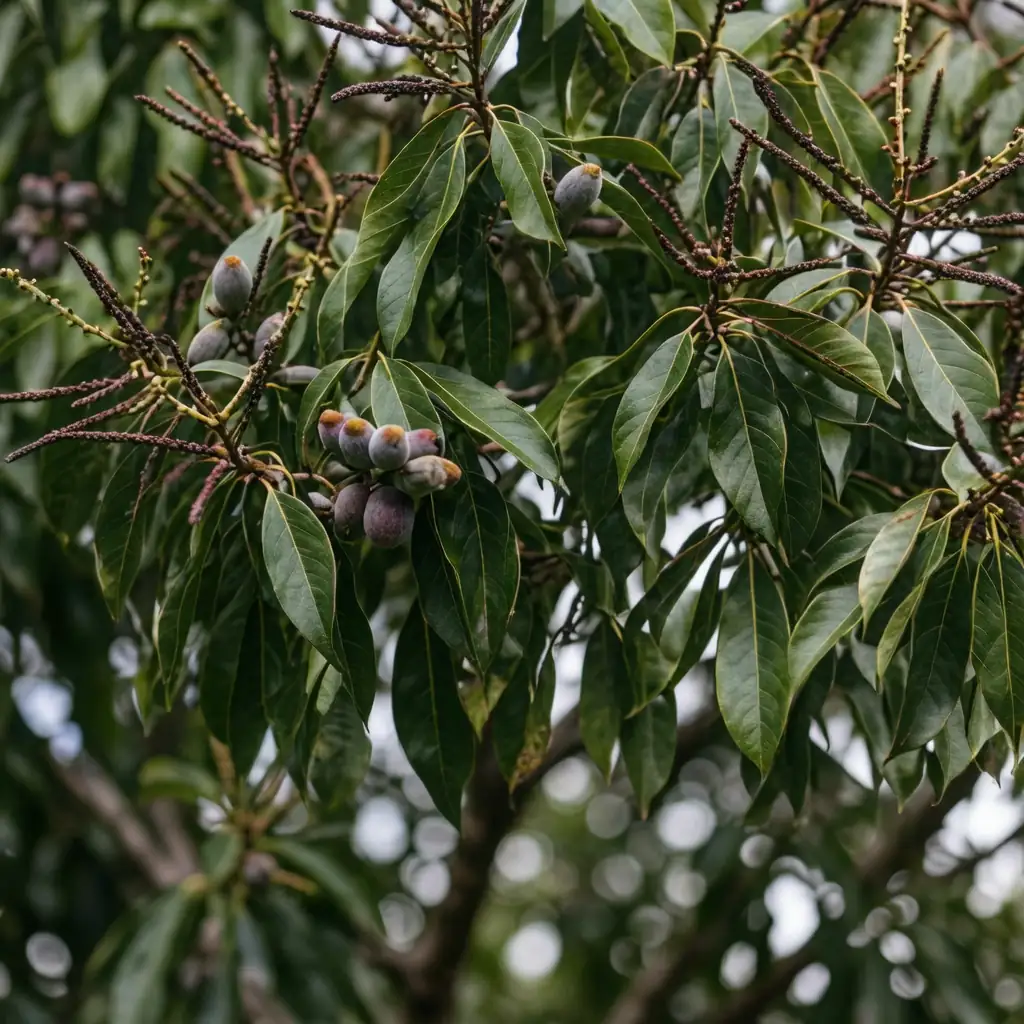
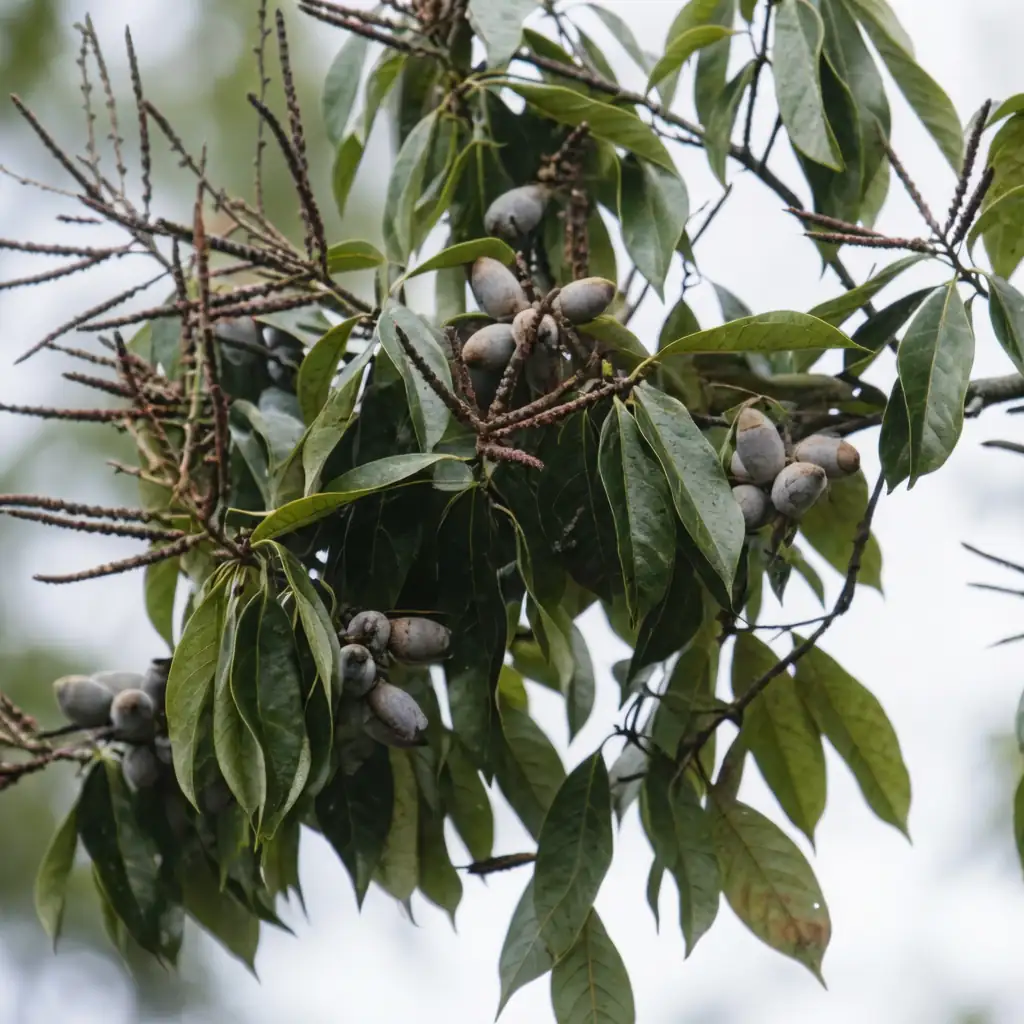
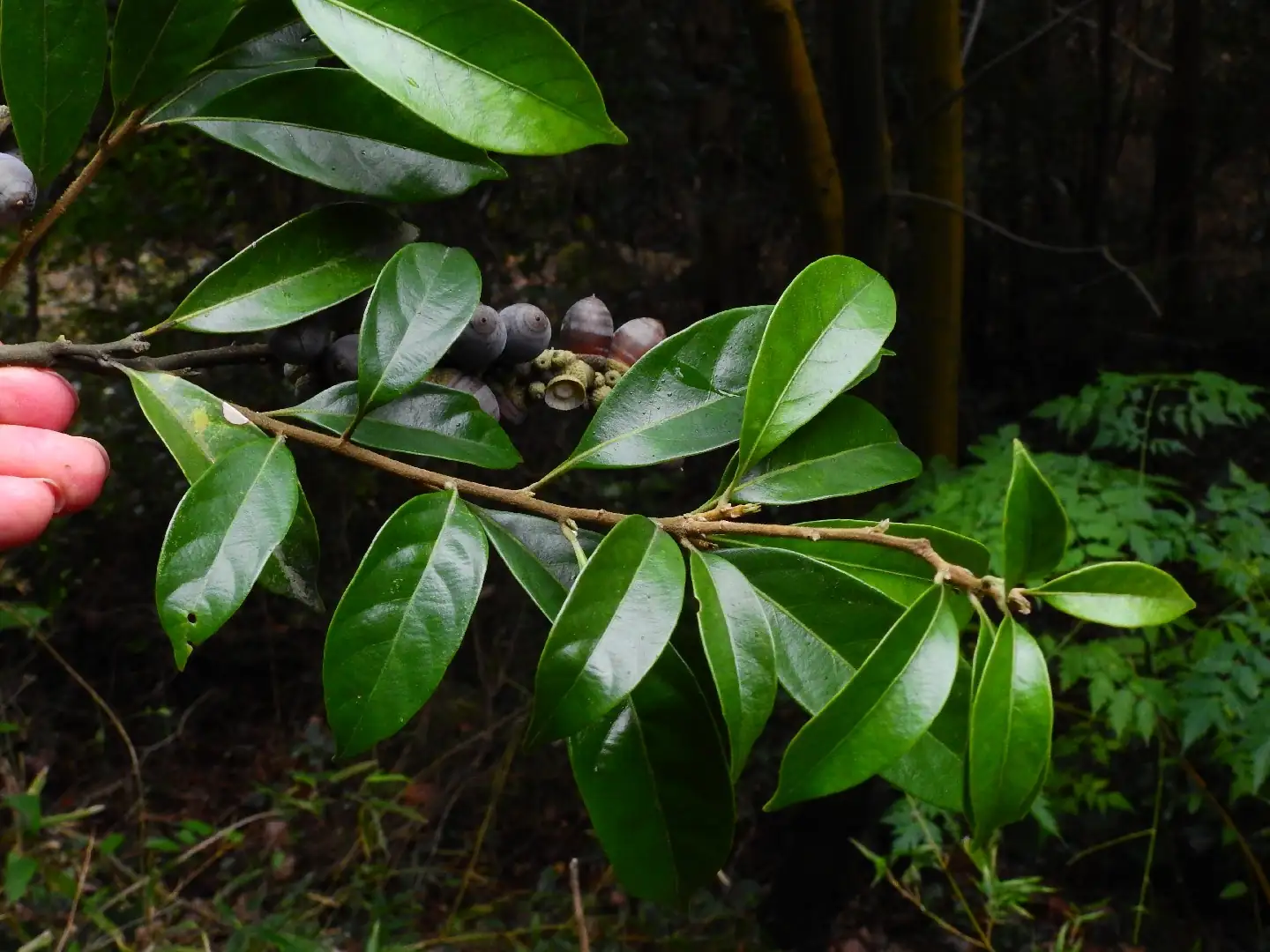
- Foliage: Evergreen leaves are leathery to thick-papery and often obovate. The tip is pointed—sometimes with a short tail-like point, sometimes more gradually tapered—while the base is wedge-shaped. The midrib is slightly raised on the upper surface, and the overall look is notably tough and glossy.
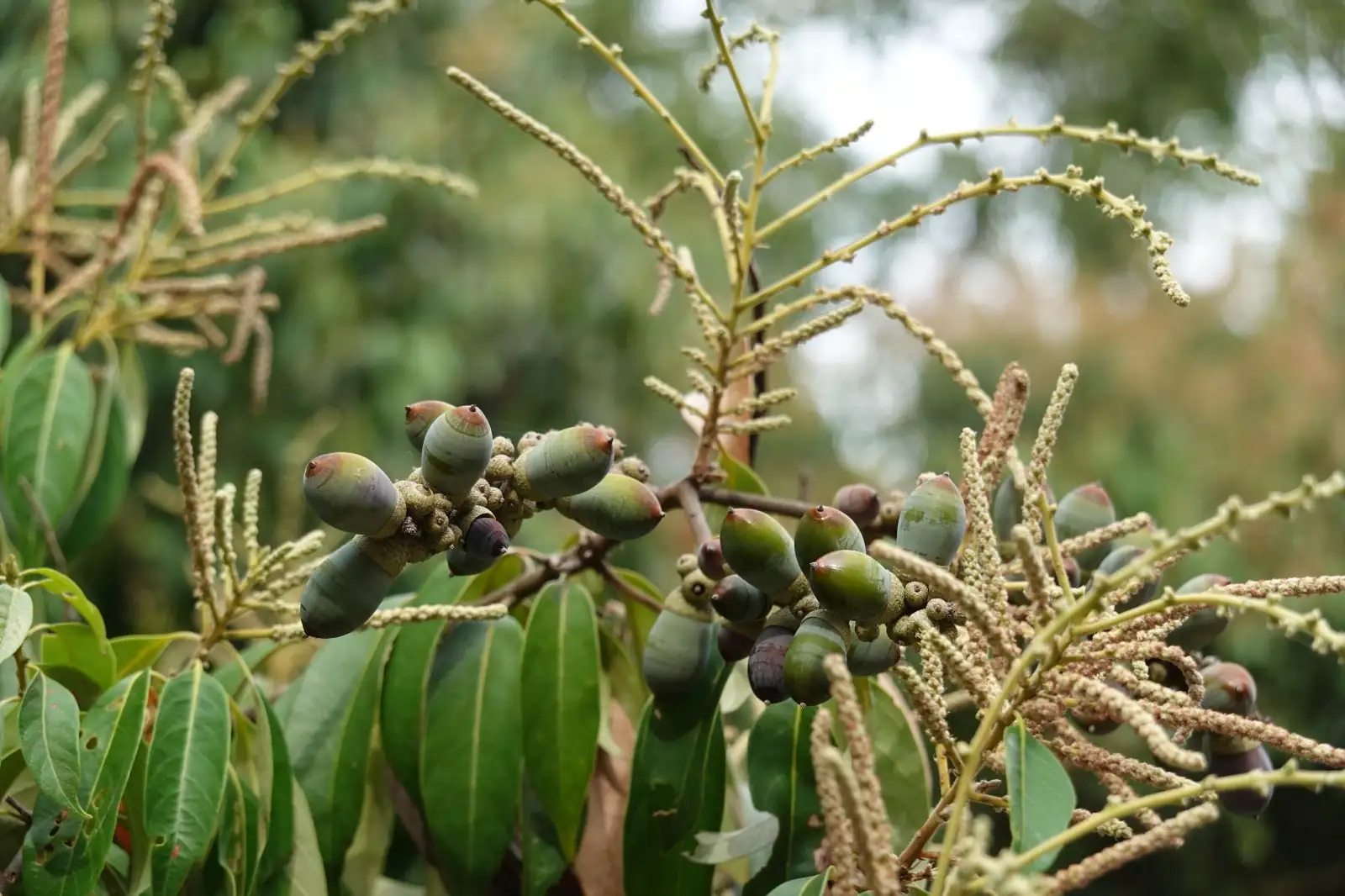
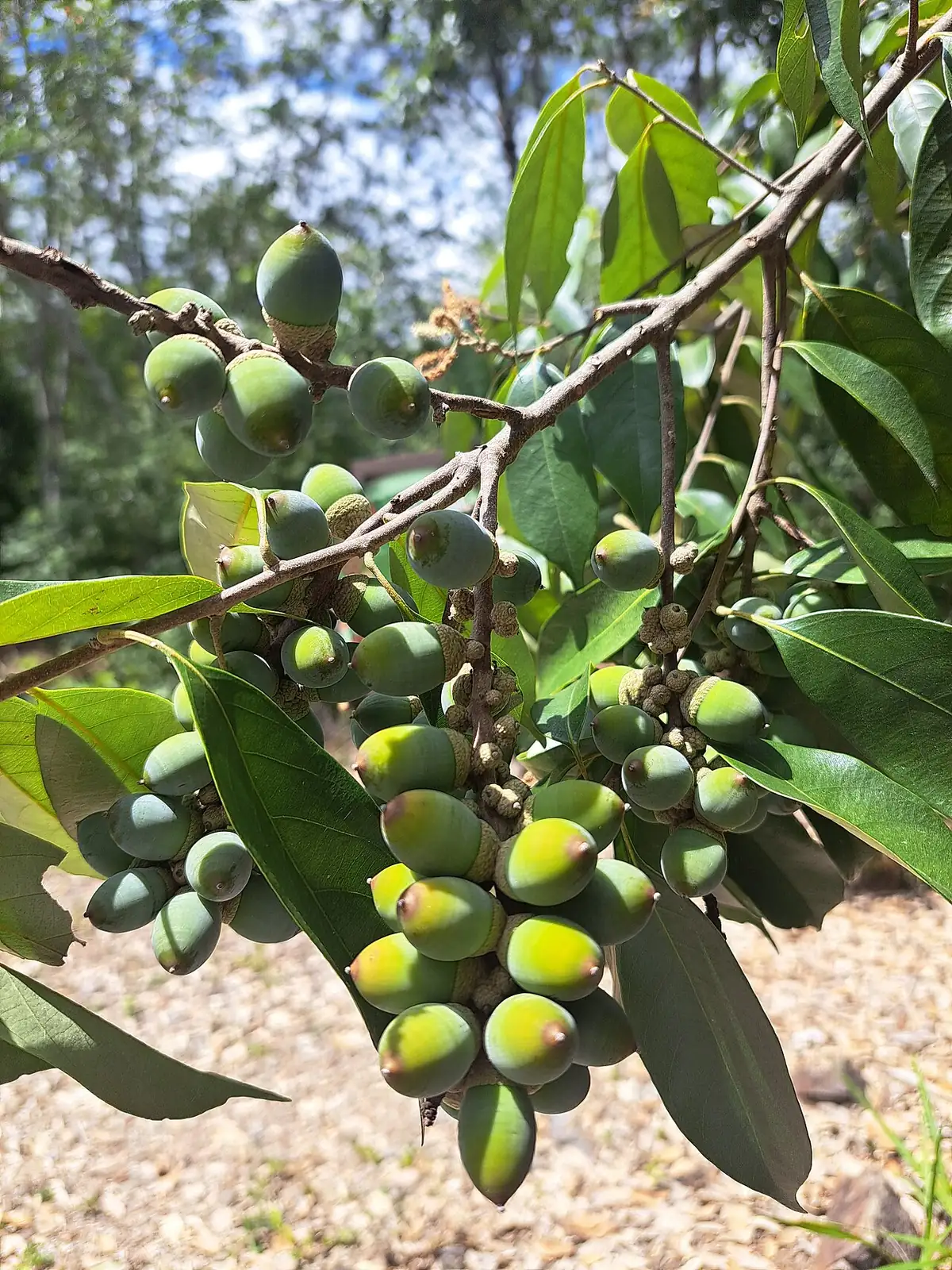
- Flower: Flowers are arranged in a classic oak-family style: male flowers in catkins, often grouped into branched clusters. Female inflorescences usually include a few male flowers as well, and female flowers are commonly grouped in threes (rarely five). The fruiting axis is typically covered with short, soft hairs. Fruits are acorn-like: an egg-shaped nut sits in a saucer-shaped to shallow-saucer-shaped cupule that is often broader at the top and narrower at the base; the nut typically matures in the following year.
- Flowering Season: September–October
- Growth Habit: Evergreen tree with an upright, woody habit
Environment
Sunlight
Full sun to light shade; naturally especially common on sunny slopes.
Temperature
Warm-temperate conditions; best growth roughly 15–28°C (59–82°F).
Humidity
Prefers humid to moderately humid air; avoid prolonged hot, very dry conditions when possible (young trees establish better with some atmospheric moisture).
Soil
Fertile, moisture-retentive but well-drained loam; tolerates slightly acidic to neutral soils. Avoid chronically waterlogged ground to prevent root stress.
Placement
Outdoors as a landscape tree—great for hillsides, woodland edges, and restoration/watershed plantings. Allow ample room for a medium-to-large canopy and a deep soil profile.
Hardiness
Approximate USDA Zone 8–10; generally not frost-tender once established, though cold tolerance can vary by provenance.
Care Guide
Difficulty
Moderate (outdoors): tough and resilient once established, but it needs space and benefits from steady moisture during the first years while roots settle in.
Buying Guide
Look for a young tree with a straight central leader and an undamaged trunk. Avoid pot-bound stock with circling roots, and skip plants with sparse, dull foliage. Plan ahead: choose a planting site with good drainage and enough room for a sizeable canopy.
Watering
During the first 1–2 growing seasons, water deeply and regularly—aim for evenly moist soil, never soggy. After establishment, it’s fairly durable, but still appreciates deep watering during extended droughts, especially in hot weather.
Fertilization
If growth seems weak, feed in spring with a balanced slow-release fertilizer. On already-rich soils, avoid heavy nitrogen; adding compost is often the gentler, more sustainable way to boost fertility while improving moisture retention.
Pruning
Prune in late winter to early spring. Remove dead, crossing, or crowded branches. When young, encourage a single strong leader; once mature, avoid heavy pruning and focus on light structural clean-up.
Propagation
Primarily by seed (nuts). Sow fresh nuts in autumn, or cold-stratify for about 1–3 months at 1–5°C (34–41°F) before sowing. Protect seed from rodents. Seedlings transplant best when young.
Repotting
Not a long-term container plant. If started in a pot, shift up in early spring before it becomes root-bound, and plant into the ground as soon as practical.
📅 Seasonal Care Calendar
Flowering: September–October. Fruit ripens: September–October of the following year (a typical ‘two-season’ maturation pattern for the nuts).
Pests, Diseases & Safety
Common Pests & Diseases
Watch for scale insects, aphids, and occasional caterpillar feeding. Root issues can develop in poorly drained soils. Best prevention: plant in well-drained ground, avoid waterlogging, keep the canopy airy, and check tender new growth for sap-sucking pests.
Toxicity
No well-documented toxicity to people or pets. As with many woody plants, chewing leaves or nuts in large quantities may cause mild digestive upset—so it’s wise to discourage pets from snacking.
Culture & Symbolism
Symbolism: Often linked with endurance and steadiness—fitting for an evergreen tree with notably hard, durable wood.
Uses: A valuable timber tree: the wood is straight-grained, hard, and naturally lustrous, used for furniture, construction, boat building, and decorative veneer/plywood. It’s also widely planted for watershed protection and soil conservation on slopes.
FAQ
Why do the nuts seem to take so long to mature?
This species commonly flowers one season, then the nuts mature in the same season of the following year—so it can feel like they’re taking “two seasons” to finish.
Can it grow in partial shade?
Yes—light shade is tolerated. For best vigor and the most natural growth habit, give it plenty of sun, especially in open landscape plantings.
Fun Facts
- The nuts usually ripen the following year, not in the same year the tree flowers.
- Female flowers most often appear in groups of three; groups of five are uncommon.
- The cupule (the “cap” that holds the nut) is characteristically saucer-shaped and often wider at the top than the base.
- Its timber is prized for being straight-grained, hard, and naturally glossy.