

Plant Features
- Size: Typically 6–12 m (20–39 ft) tall with a rounded crown
- Foliage: Leaves are obovate to elliptic with pointed tips and a clearly double-serrated margin. Young twigs are brown and glossy; terminal buds are usually absent, with solitary lateral buds.
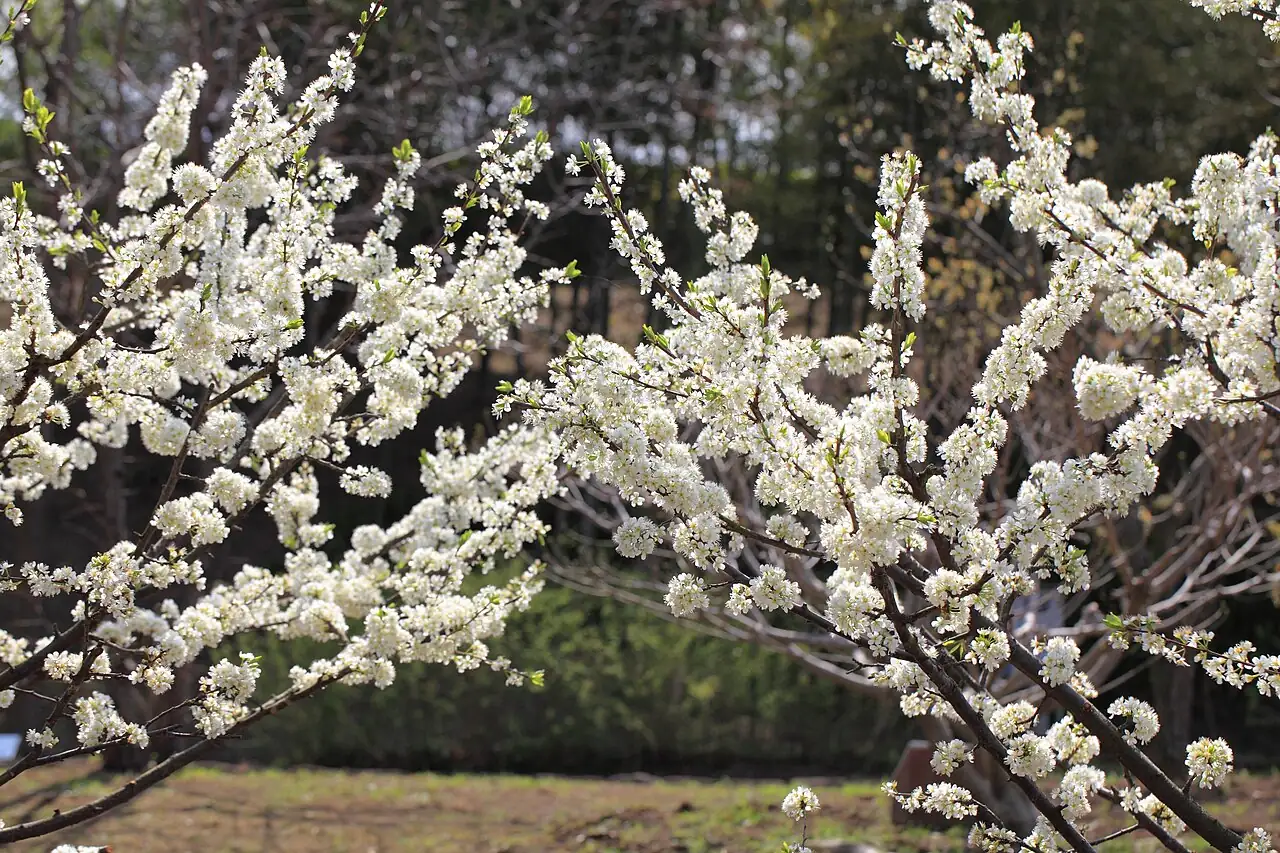
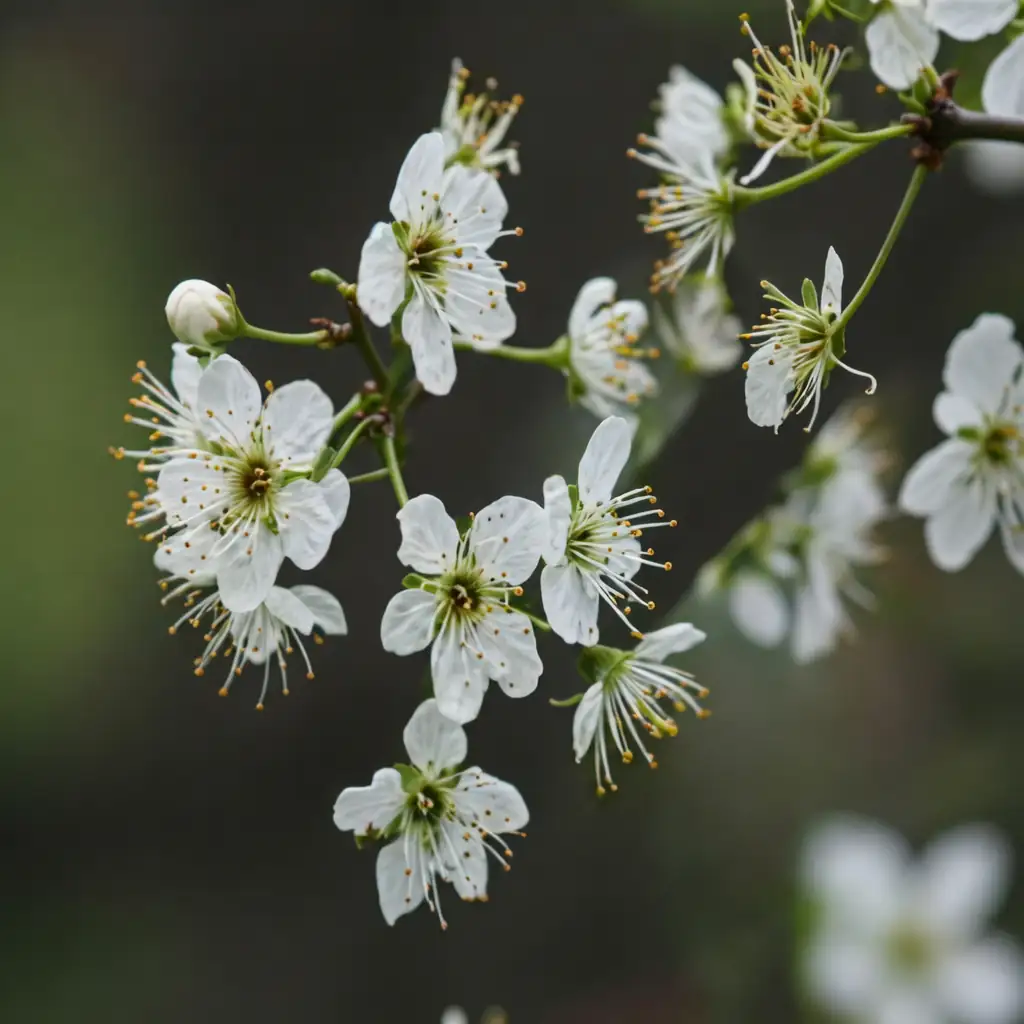
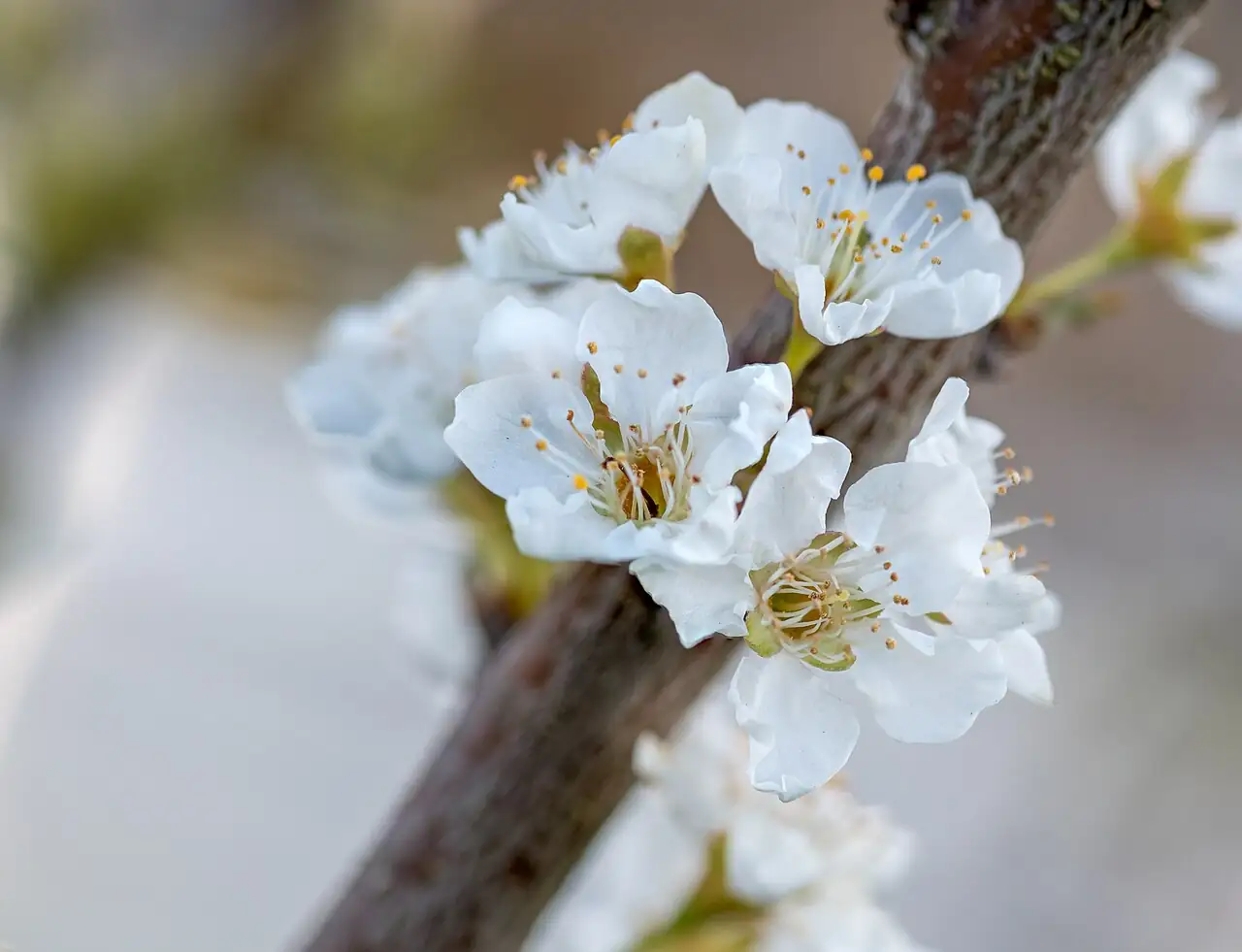
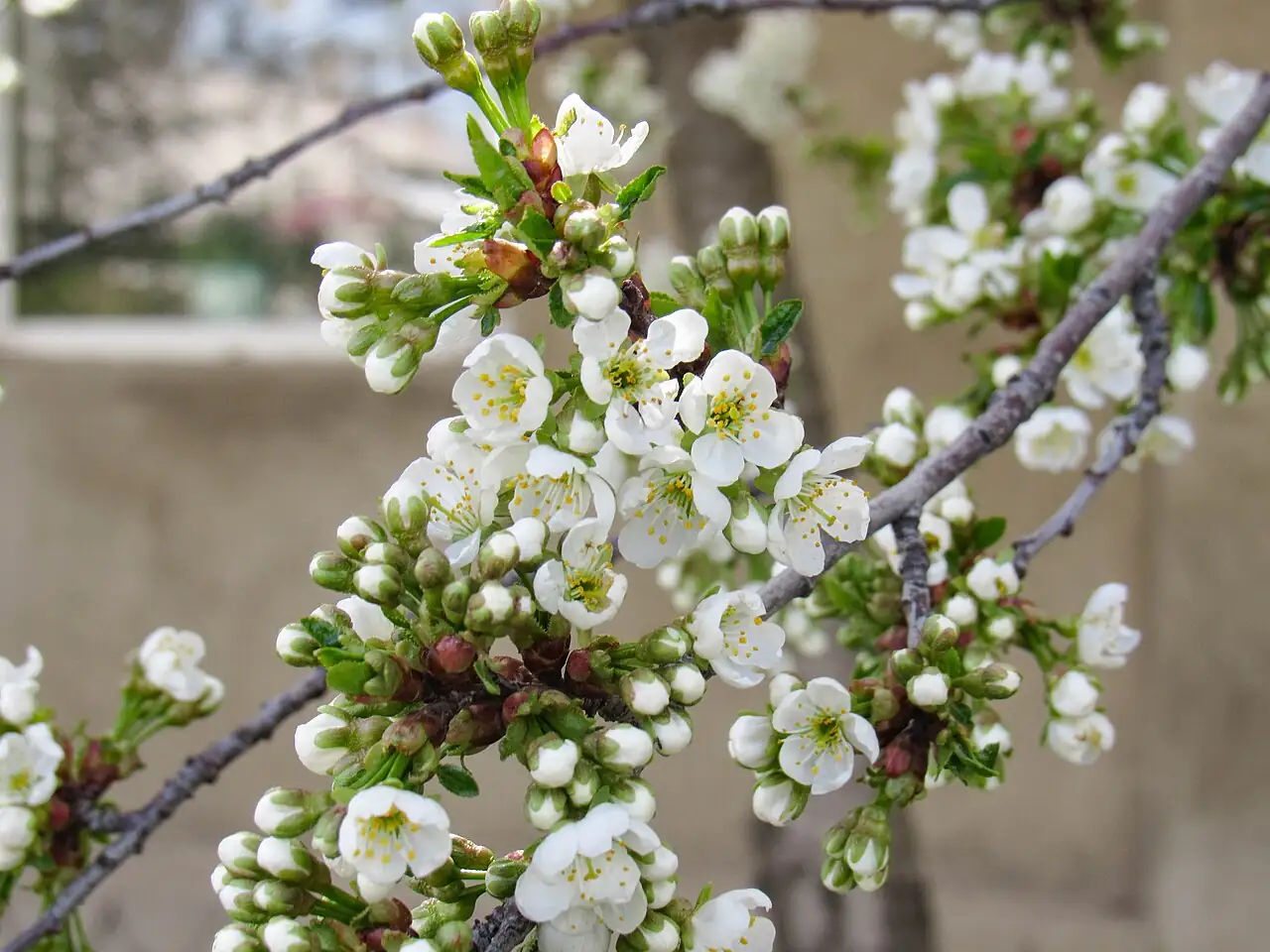
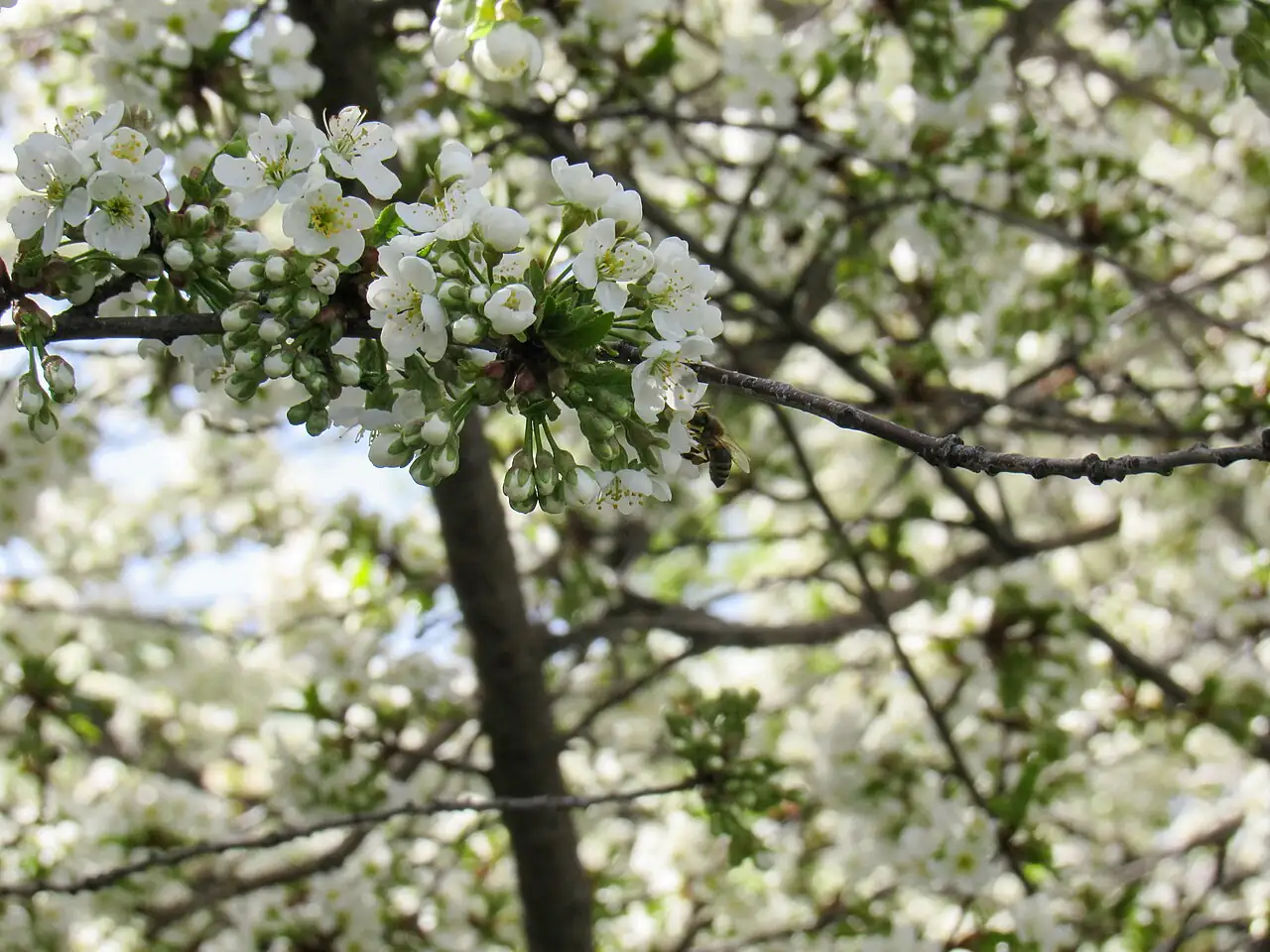
- Flower: Produces small, white flowers about 1.5–2 cm (0.6–0.8 in) across, commonly in clusters of three. The calyx is bell-shaped with finely toothed lobes. Flowers open in early spring before or as the leaves emerge, giving the tree a bright, airy look.
- Flowering Season: March–April
- Growth Habit: A deciduous, rounded-canopy tree with a relatively shallow, wide-spreading root system; grown as an orchard and garden fruit tree.
Environment
Sunlight
Full sun is best for strong flowering and good fruit sweetness; tolerates partial shade (with reduced bloom/fruit).
Temperature
Cold hardy; reported tolerance down to about -35°C (-31°F) in suitable conditions.
Humidity
Prefers evenly moist conditions; dislikes prolonged drought. Good airflow helps reduce common stone-fruit diseases.
Soil
Adaptable, but happiest in fertile, moist, well-drained sandy loam. Avoid waterlogging and heavy, constantly wet soils.
Placement
Home orchards, edible landscapes, courtyards, parks and scenic plantings—choose a sunny, open spot with decent airflow and room for the crown to spread.
Hardiness
Very cold hardy (reported to about -35°C / -31°F). Not tolerant of standing water; performs poorly in very droughty, nutrient-poor soils.
Care Guide
Difficulty
Moderate—straightforward if you can provide sun, consistent moisture, and the routine pruning and hygiene typical of fruit trees.
Buying Guide
Choose vigorous, well-branched nursery stock with clean bark (no cankers or gumming) and a healthy-looking graft union (if grafted). Pick cultivars suited to your local chill hours and disease pressure for better flowering and reliable crops.
Watering
Water deeply while the tree is establishing and during dry spells. Aim for consistently moist soil, but never soggy—Japanese plum dislikes both drought stress and waterlogged roots.
Fertilization
Feed in early spring with compost or a balanced fertilizer based on your soil’s needs. Avoid heavy nitrogen, which can cause lush leafy growth while reducing flowering and fruit quality.
Pruning
Prune in dormancy to maintain an open, well-lit canopy: remove crossing branches and any dead/diseased wood, and thin crowded shoots to improve airflow. This supports healthier growth and better fruiting spurs.
Propagation
Most commonly propagated by grafting or budding onto suitable Prunus rootstocks. Seed propagation is possible but seedlings won’t come true to named cultivars.
Repotting
Generally grown in the ground. If kept in a large container, up-pot in late winter/early spring, refresh the mix, and prioritize excellent drainage.
📅 Seasonal Care Calendar
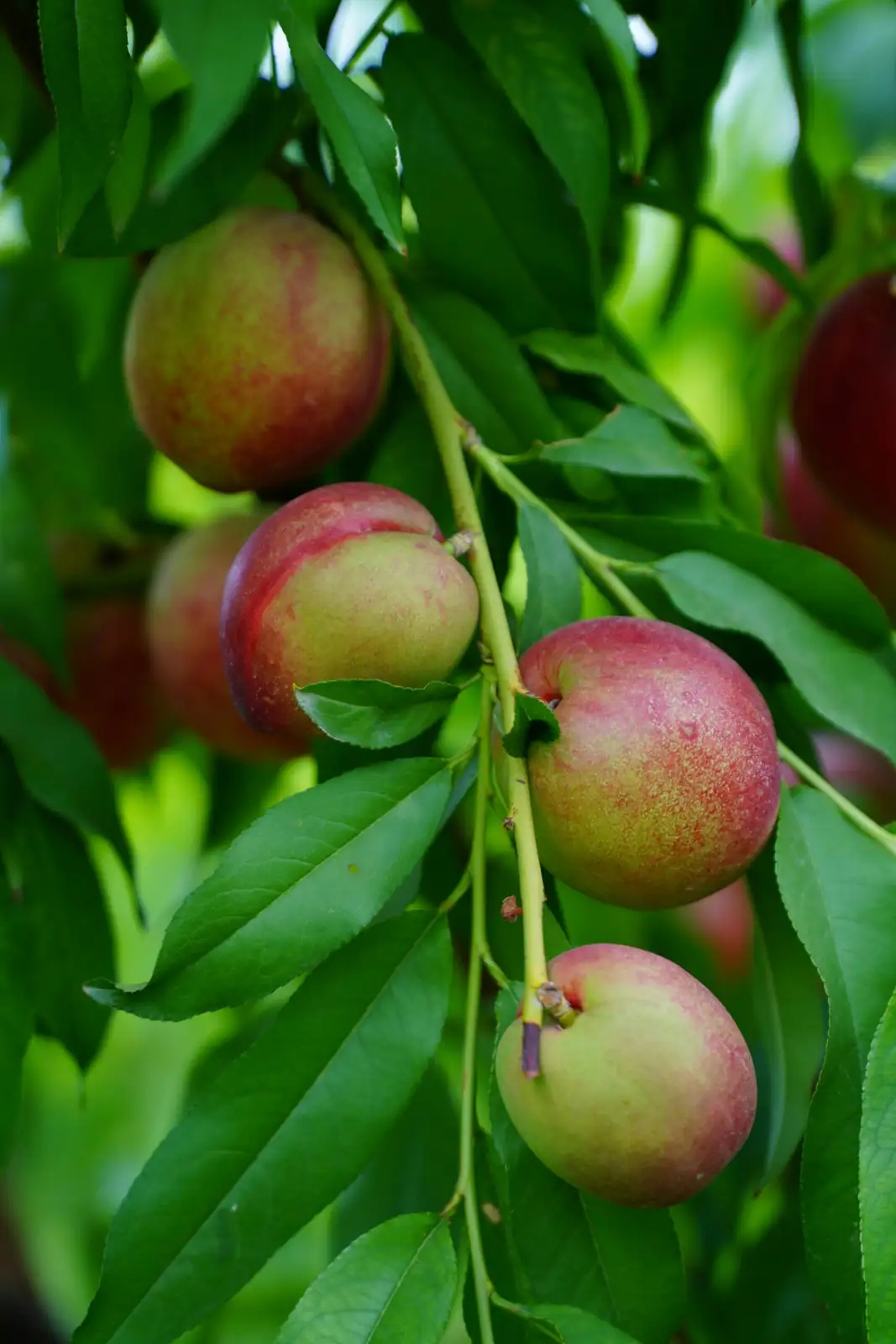
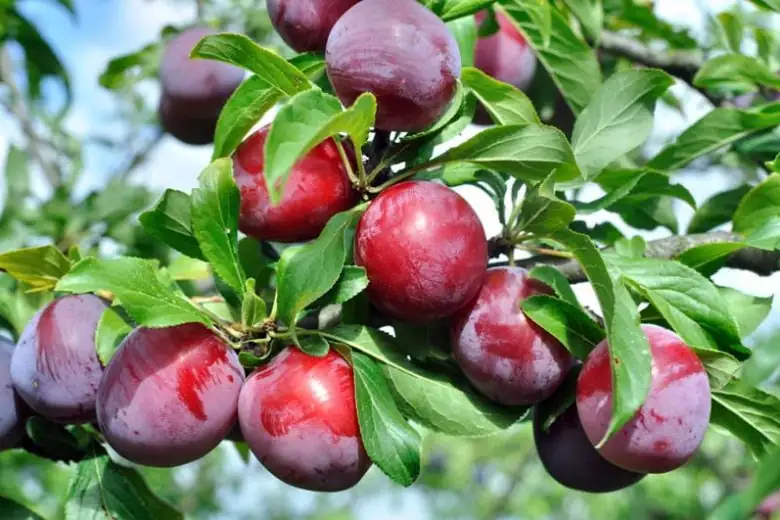
Flowering: March–April. Fruit ripening: typically July–August (varies by climate and cultivar).
Pests, Diseases & Safety
Common Pests & Diseases
Can be affected by aphids, scale insects, fruit moths, and common stone-fruit diseases such as brown rot and leaf spot. Good sanitation (removing mummified fruit), pruning for airflow, and locally appropriate integrated pest management help keep problems in check.
Toxicity
The fruit flesh is edible. Like many Prunus species, the pits/seeds contain compounds that can release cyanide if crushed and eaten in quantity—avoid ingestion of pits and keep them away from children and pets.
Culture & Symbolism
Symbolism: Often linked with spring renewal (early blossoms) and abundance (heavy fruiting).
History & Legends: Cultivated in China for over 3,000 years, prized both as a productive fruit tree and as a spring-bloom ornamental.
Uses: Fresh eating and processing (jams, preserves, desserts), plus ornamental planting for its early spring flowers. Works well in orchards, courtyards, parks, and edible landscape designs.
FAQ
Why does my Japanese plum flower well but set little fruit?
Many cultivars need a compatible pollinator and good pollinator activity (bees). Late frosts during bloom can also kill flowers, and too much shade reduces fruit set. Plant in full sun and consider adding a suitable pollinizing plum cultivar if needed.
How can I reduce disease on the fruit and leaves?
Keep the canopy open with dormant pruning for airflow, remove fallen leaves and any “mummified” fruit, avoid overhead watering, and follow locally recommended IPM steps. Good spacing and sun also make a big difference.
Fun Facts
- The fruits often look lightly frosted because of a natural waxy bloom on the skin.
- Flowers are petite—about 1.5–2 cm (0.6–0.8 in) across—and commonly appear three together.
- It’s noted for impressive cold tolerance, with reports of surviving around -35°C (-31°F) under the right conditions.
- This plum has been cultivated in China for more than 3,000 years.


