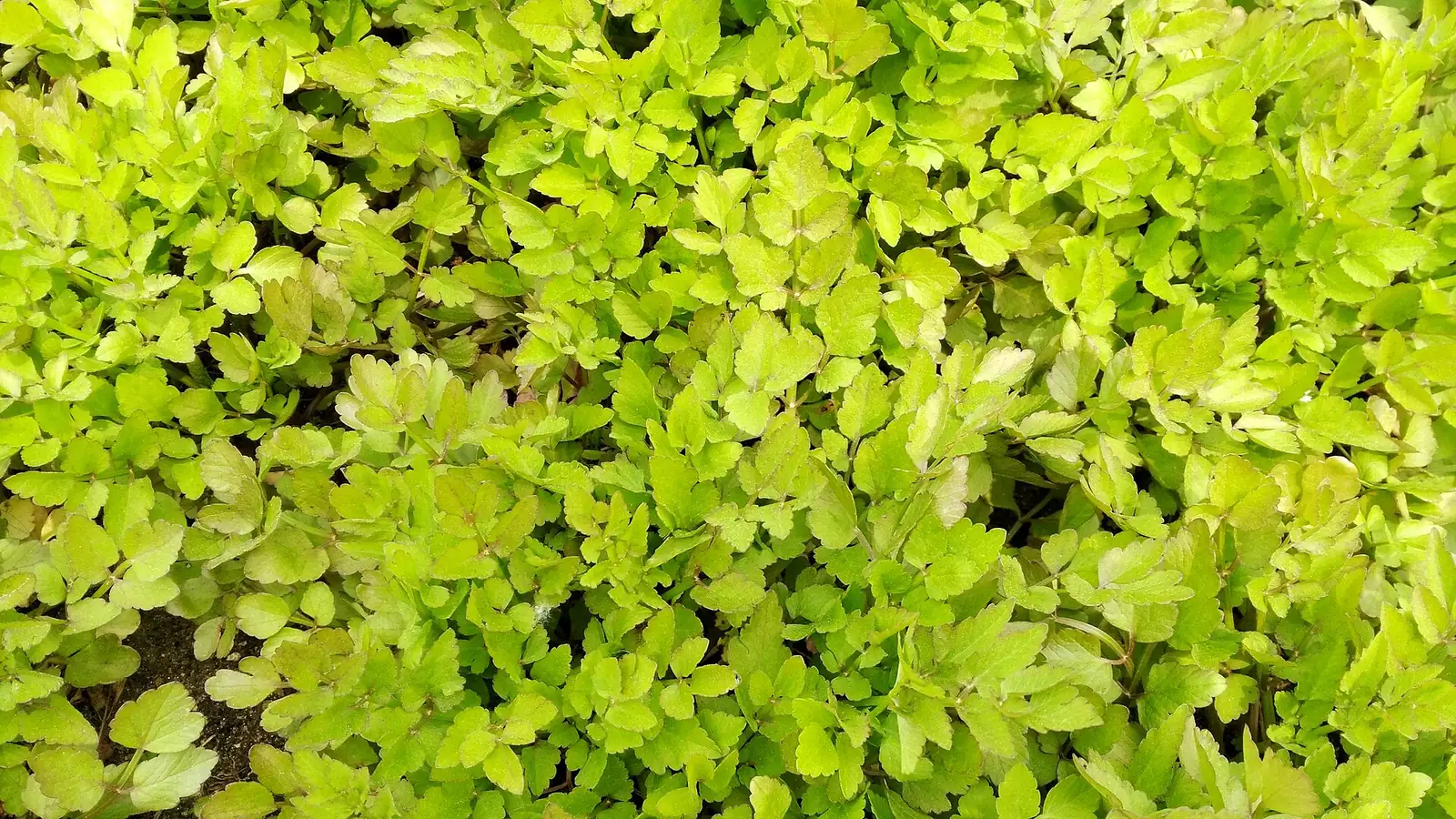
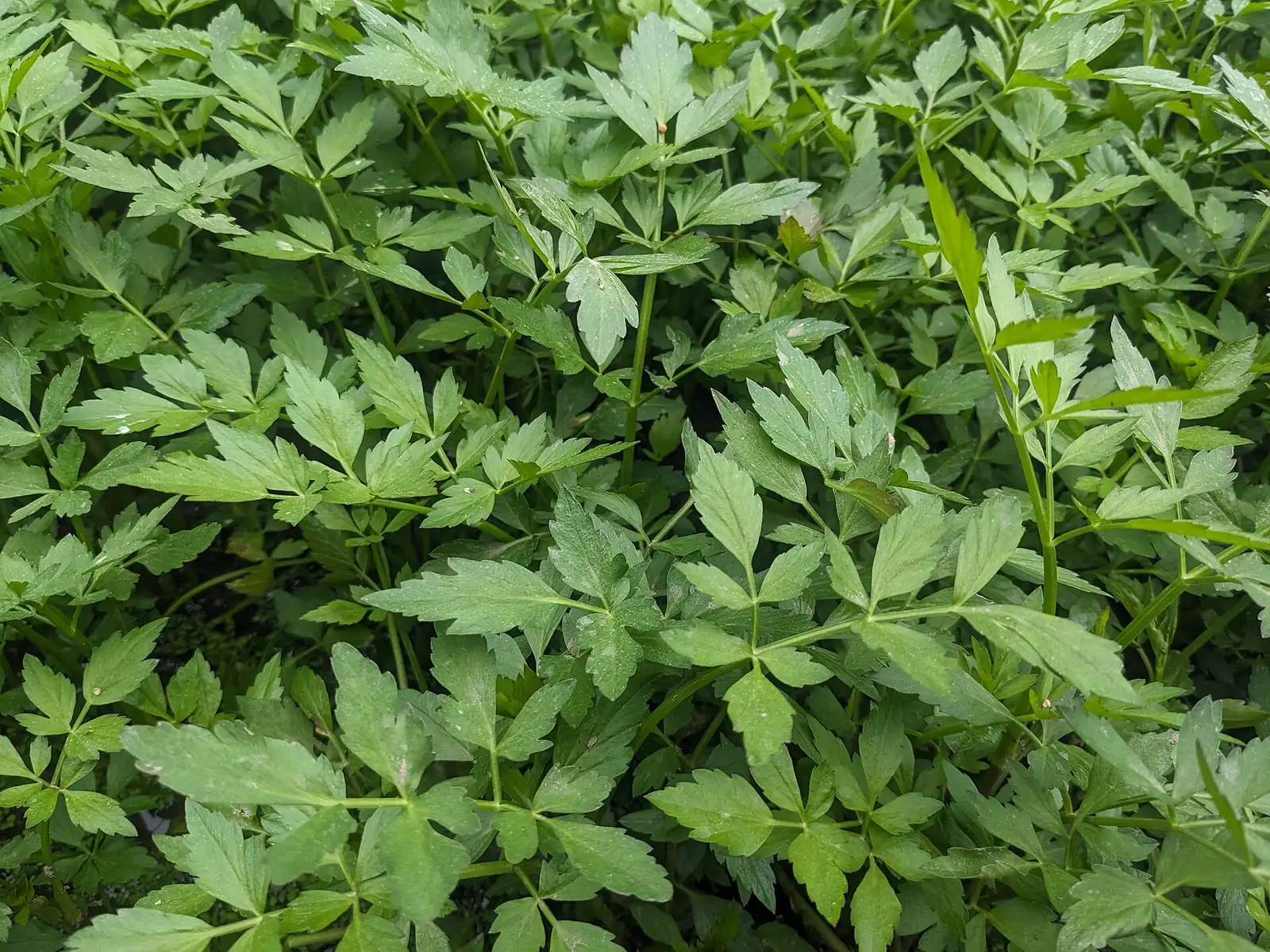
Plant Features
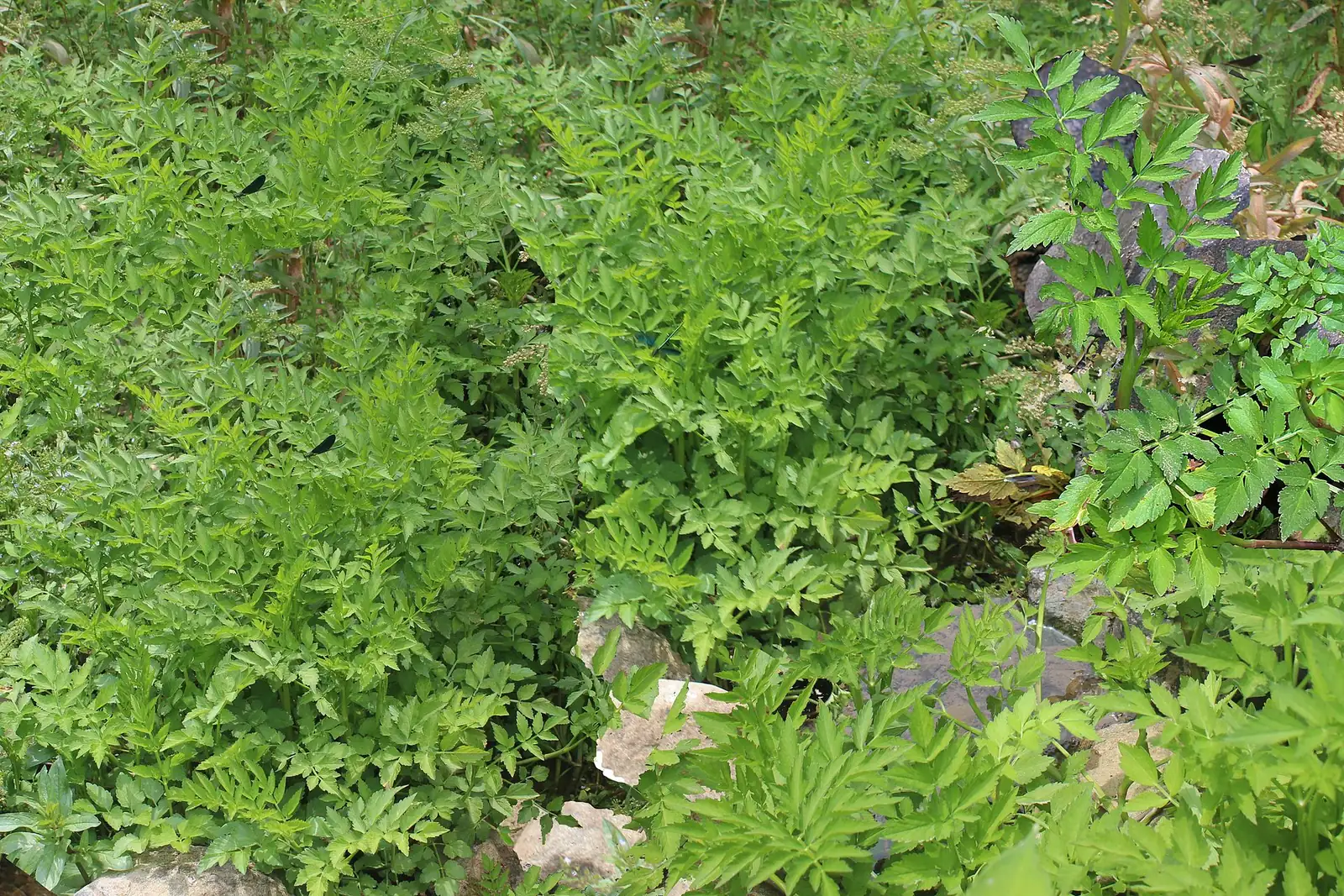
- Size:15–80 cm (6–31 in) tall; spreads outward by creeping stems to form patches.
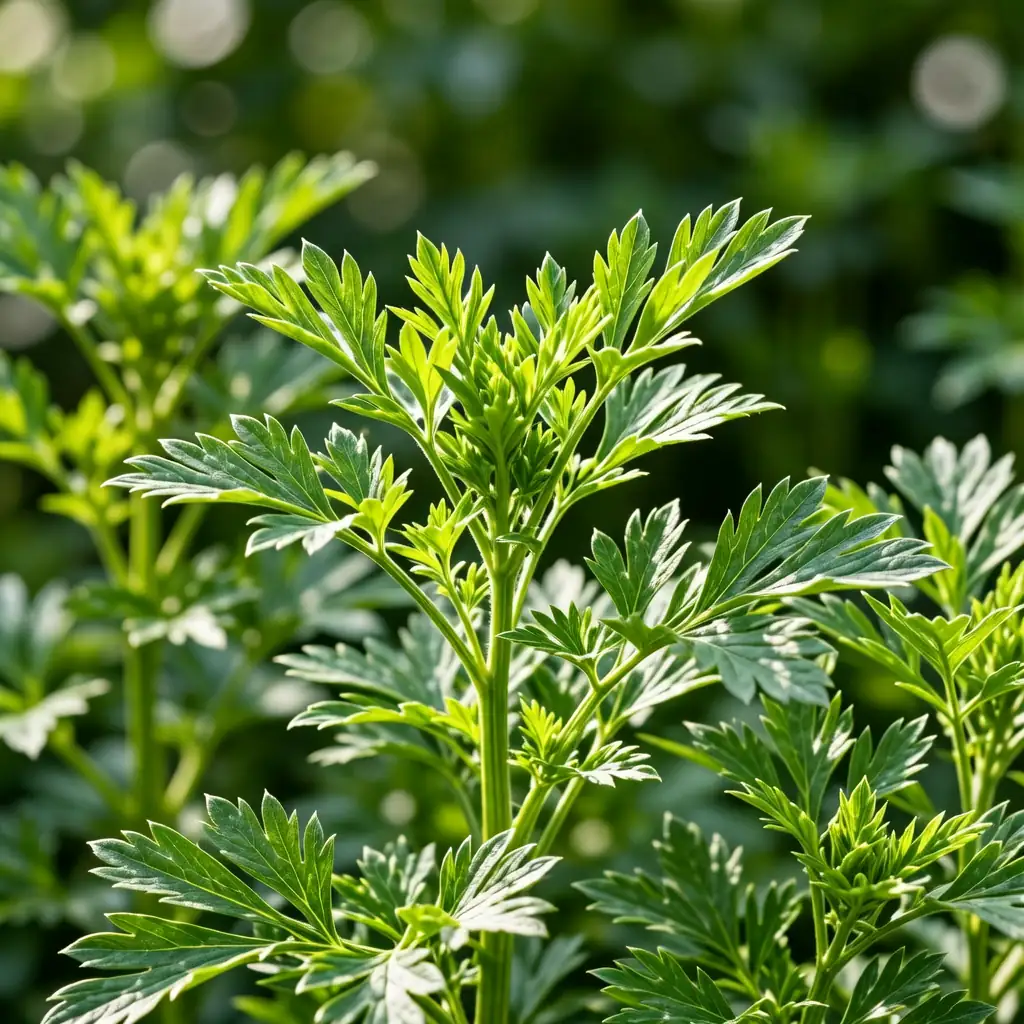
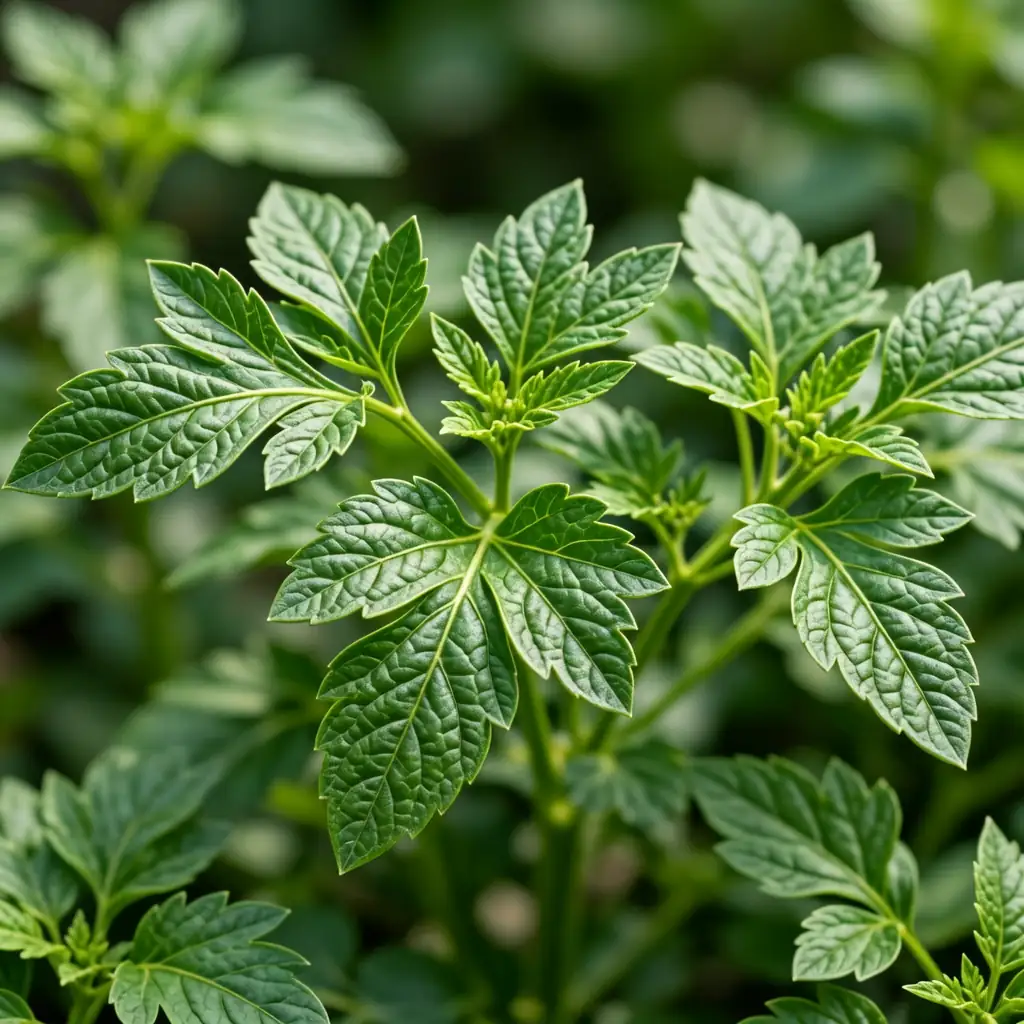
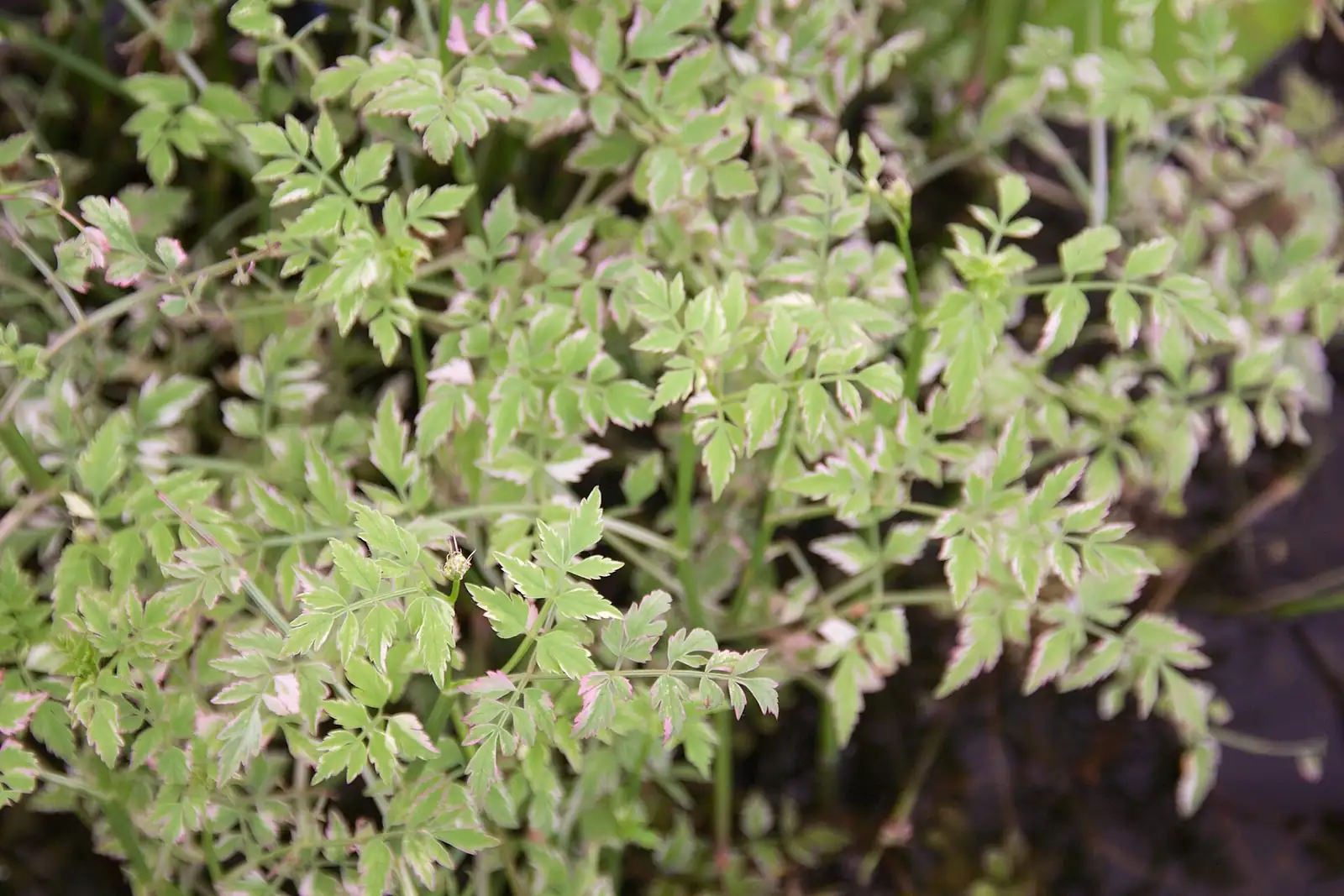
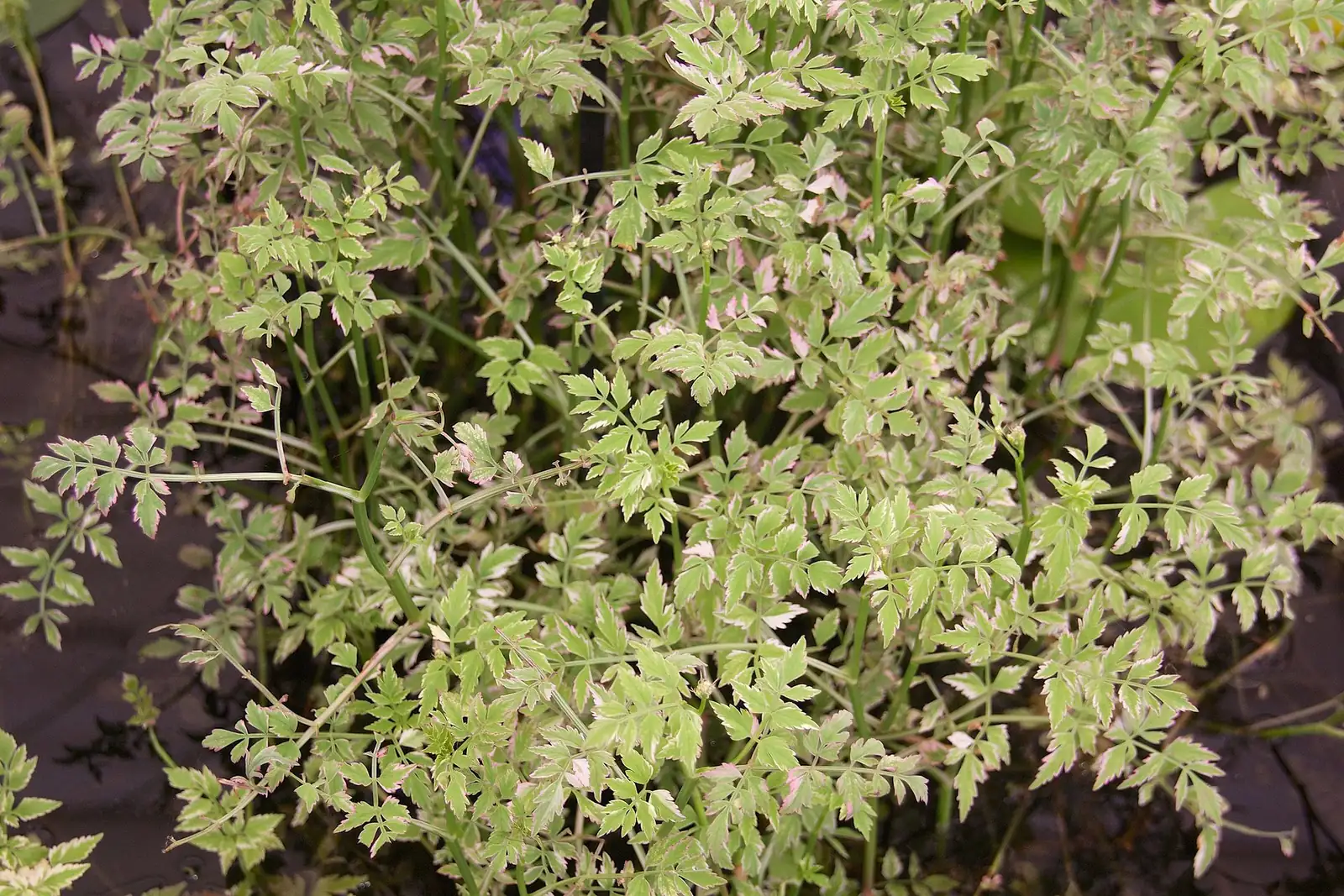
- Foliage: Leaves are finely divided (often twice pinnate) with narrow lobes and an overall ferny look; they are alternately arranged along ridged stems. The upper stem portions are typically green, while lower sections may look paler to whitish when growing in very wet conditions.
- Flower: Produces small white flowers arranged in compound umbels (classic “umbrella” clusters typical of the carrot family). After flowering, it forms small, somewhat angular to oblong fruits with prominent ridges and a corky texture.
- Flowering Season: June–July
- Growth Habit: Aquatic to semi-aquatic herbaceous perennial with stolon-like creeping stems that root at nodes and readily create new plants. It overwinters from the crown/rhizomes and often regrows strongly in cooler seasons; stems that lodge on the ground commonly root and branch into new clumps.
Environment
Sunlight
Full sun to partial shade. Longer days tend to encourage creeping growth and flowering/fruiting, while shorter days often promote more leafy basal growth.
Temperature
Prefers cool conditions and can struggle in hot, dry weather unless consistently irrigated. Cold-tolerant to about -10°C (14°F) when kept adequately moist.
Humidity
Moisture-loving—does best with high and consistent moisture; thrives in wet ground and can grow in shallow water or waterlogged soils.
Soil
Rich, fertile, organic matter–rich soil that stays consistently moist (often moisture-retentive clay-loam works well). Aim for evenly moist to wet conditions rather than periodic drying.
Placement
Ideal for pond edges, bog gardens, rain gardens, wet ditches, or any garden bed that stays reliably damp. In containers, it performs well when the pot can be kept constantly moist (for example, set in a shallow water tray).
Hardiness
Cold-tolerant to about -10°C (14°F); best performance typically occurs where summers are not excessively hot and dry.
Care Guide
Difficulty
Easy when it has constant moisture; more demanding in hot/dry climates unless water is reliably available.
Buying Guide
Pick plants that look fresh and vigorous with crisp green leaves. Avoid bunches or pots with a sour odor or slimy, collapsed stems, which can indicate poor storage. If buying for edible use, purchase from reputable sources—Apiaceae plants can look similar, so correct identification matters.
Watering
Keep soil continuously moist to wet—this plant should not dry out. Drought and heat stress quickly reduce leaf quality and may cause dieback. For pots, stand the container in a tray of water and refresh/replace the water regularly.
Fertilization
For edible shoot production, top-dress with compost or feed lightly with a balanced fertilizer during active growth. Avoid excessive nitrogen if growth becomes overly soft, floppy, or prone to lodging.
Pruning
Treat it like a cut-and-come-again herb: harvest young stems and leaf stalks regularly to encourage tender new growth. Remove yellowing or damaged foliage to keep clumps clean and reduce disease pressure.
Propagation
Very easy by division and by replanting stem sections with nodes. Creeping stems naturally root where they touch the soil, and new plants often form readily from nodes (especially in autumn); simply lift and replant rooted pieces to establish new patches.
Repotting
Repot or divide crowded container plants in spring or autumn. Use a heavier, moisture-retentive mix and ensure the pot never dries out.
📅 Seasonal Care Calendar
Flowering typically occurs June–July; fruits follow in August–September. In autumn, fallen or lodged stems frequently root at nodes and produce new shoots; regrowth also comes from the crown/rhizomes. Day length can shift the plant’s focus: longer days often bring more creeping and flowering, while shorter days encourage denser basal leafy growth.
Pests, Diseases & Safety
Common Pests & Diseases
Usually trouble-free when grown in its preferred wet conditions. Aphids may appear on tender new growth. Leaf spots can develop in stagnant, overcrowded plantings—thin/harvest to improve airflow and remove affected leaves promptly.
Toxicity
Generally considered edible (tender stems and leaf stalks are commonly eaten fresh or cooked). Take care with identification if foraging or growing from unknown sources, since the carrot family includes look-alikes; also harvest only from clean, unpolluted water/soil.
Culture & Symbolism
Uses: Edible and ornamental: young stems and leaf stalks are crisp and aromatic, used in salads, quick stir-fries, soups, and hot pot. It also makes an attractive edible groundcover for pond margins, bog gardens, and other consistently wet spots.
Fun Facts
- It naturally thrives in wet habitats like ditches and rice paddy margins, which is why it performs so well in bog gardens and at pond edges.
- It spreads fast by creeping stems that root at the nodes—great for filling space, but easy to share by division.
- In autumn, stems that flop over often root and create new plants almost on their own.
- Day length can influence its growth style: longer days tend to encourage creeping and flowering, while shorter days often bring more leafy basal growth.
- With enough moisture, it can tolerate cold down to about -10°C (14°F).