

Plant Features
- Size: Typically 3–10 m (10–33 ft) tall; often kept smaller with pruning, especially in hedges and containers.
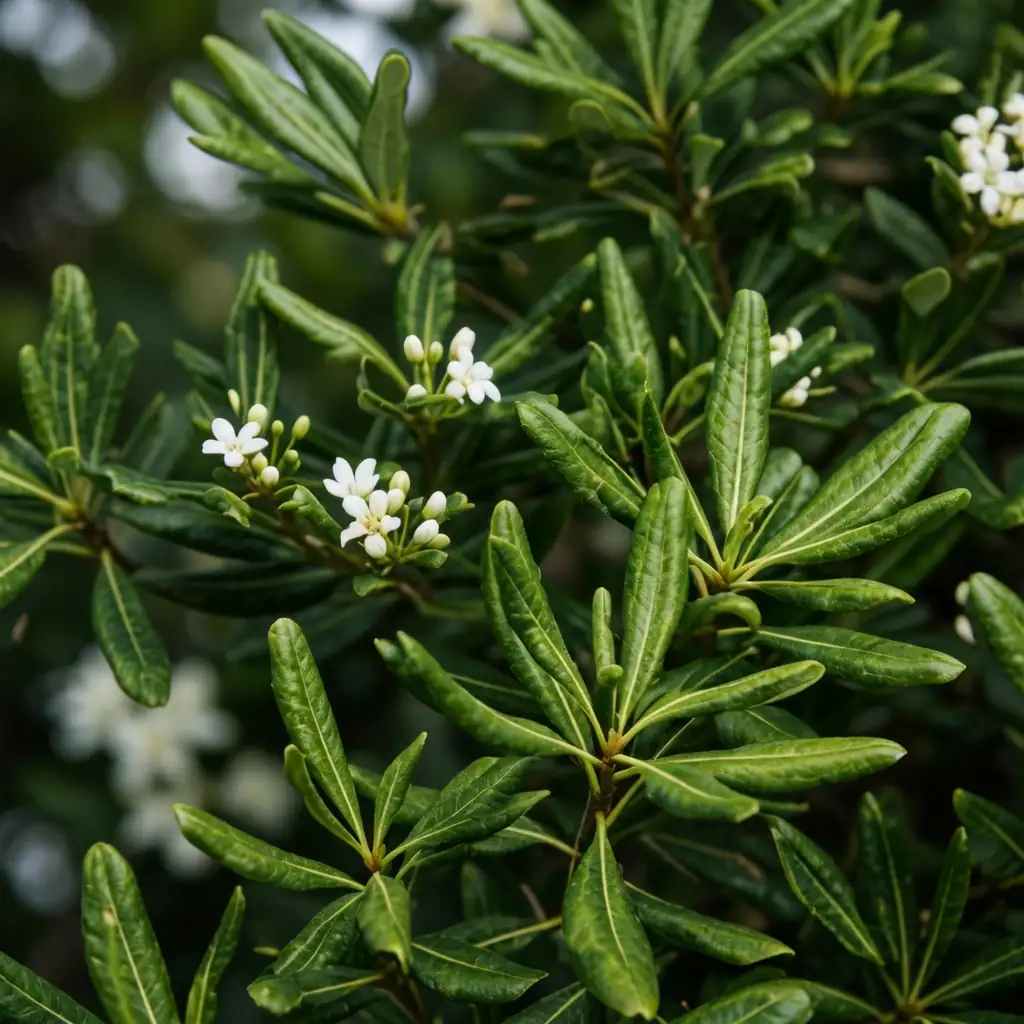
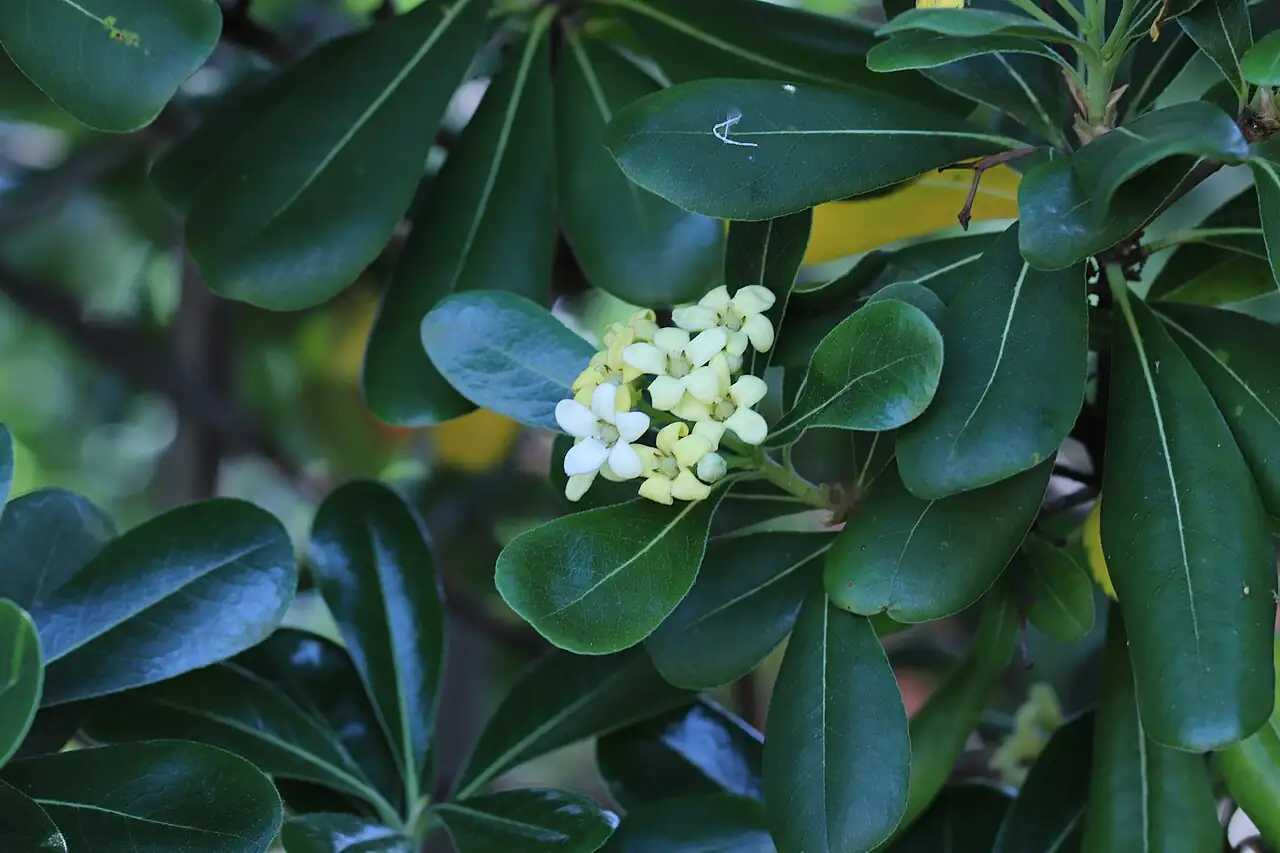
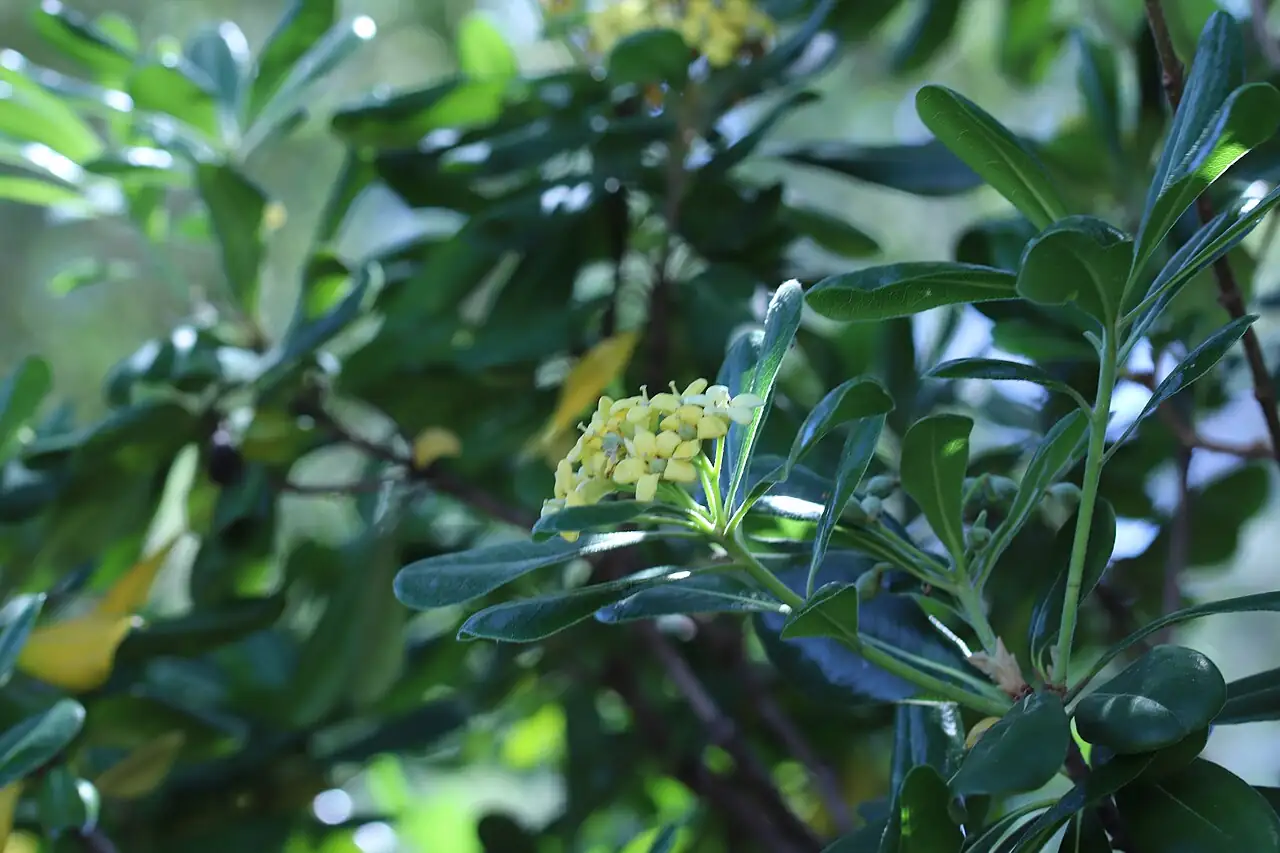
- Foliage: Leaves are thick, leathery, and glossy, often clustered toward the shoot tips; new growth may show fine brownish hairs.
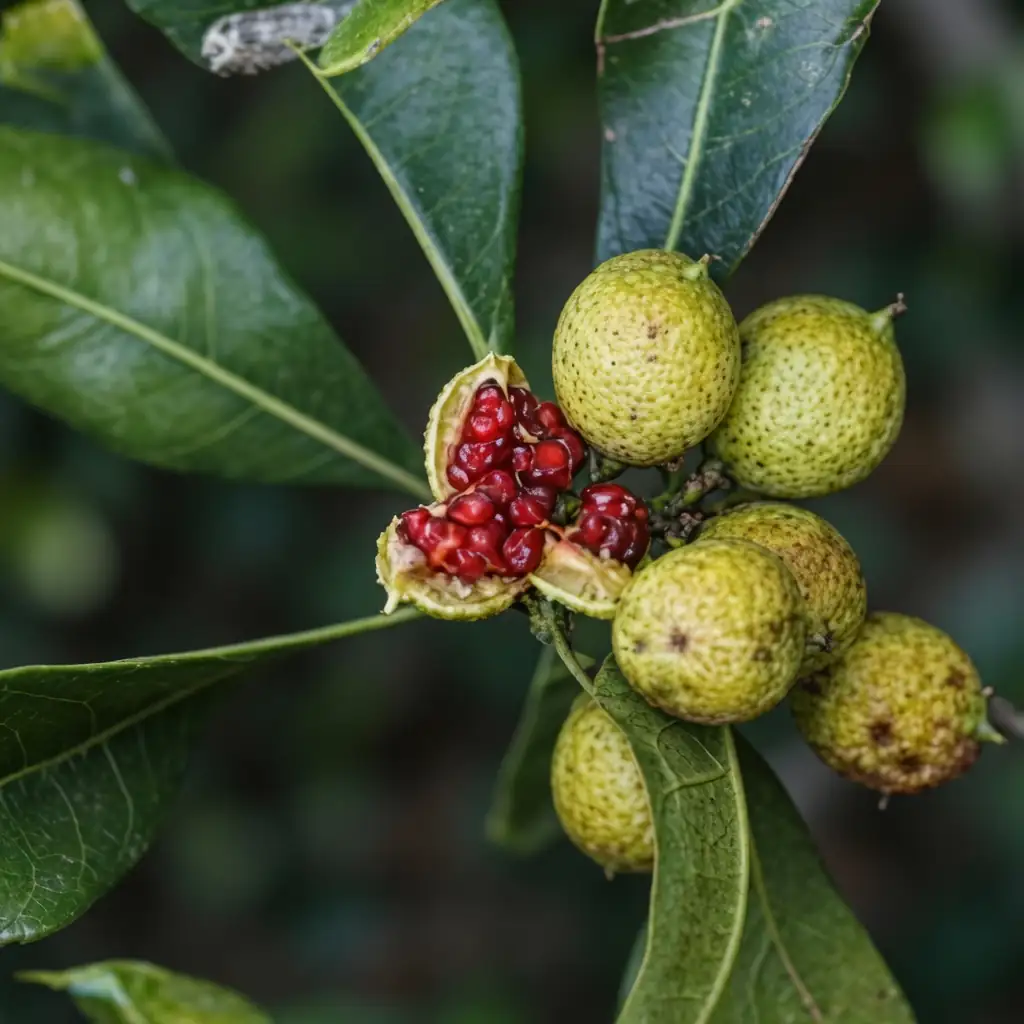
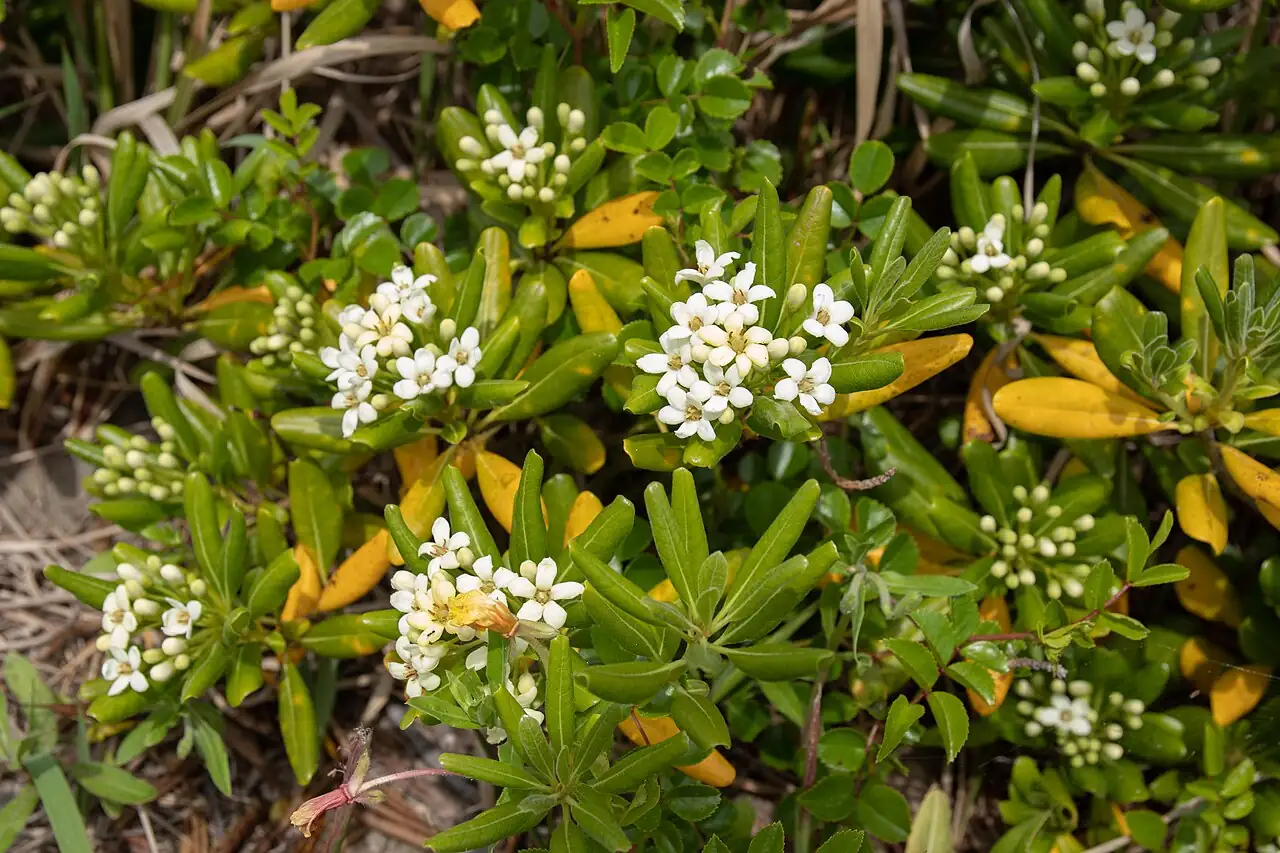
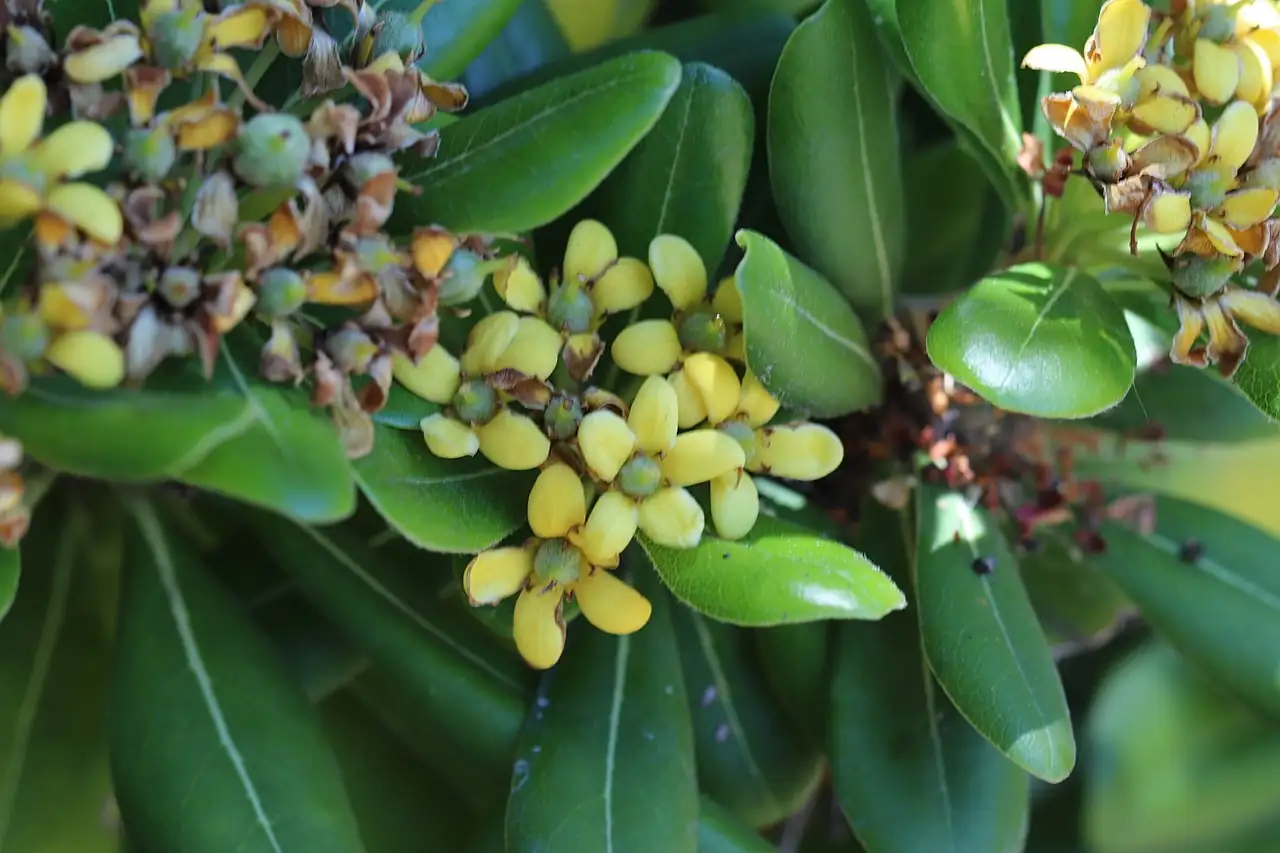
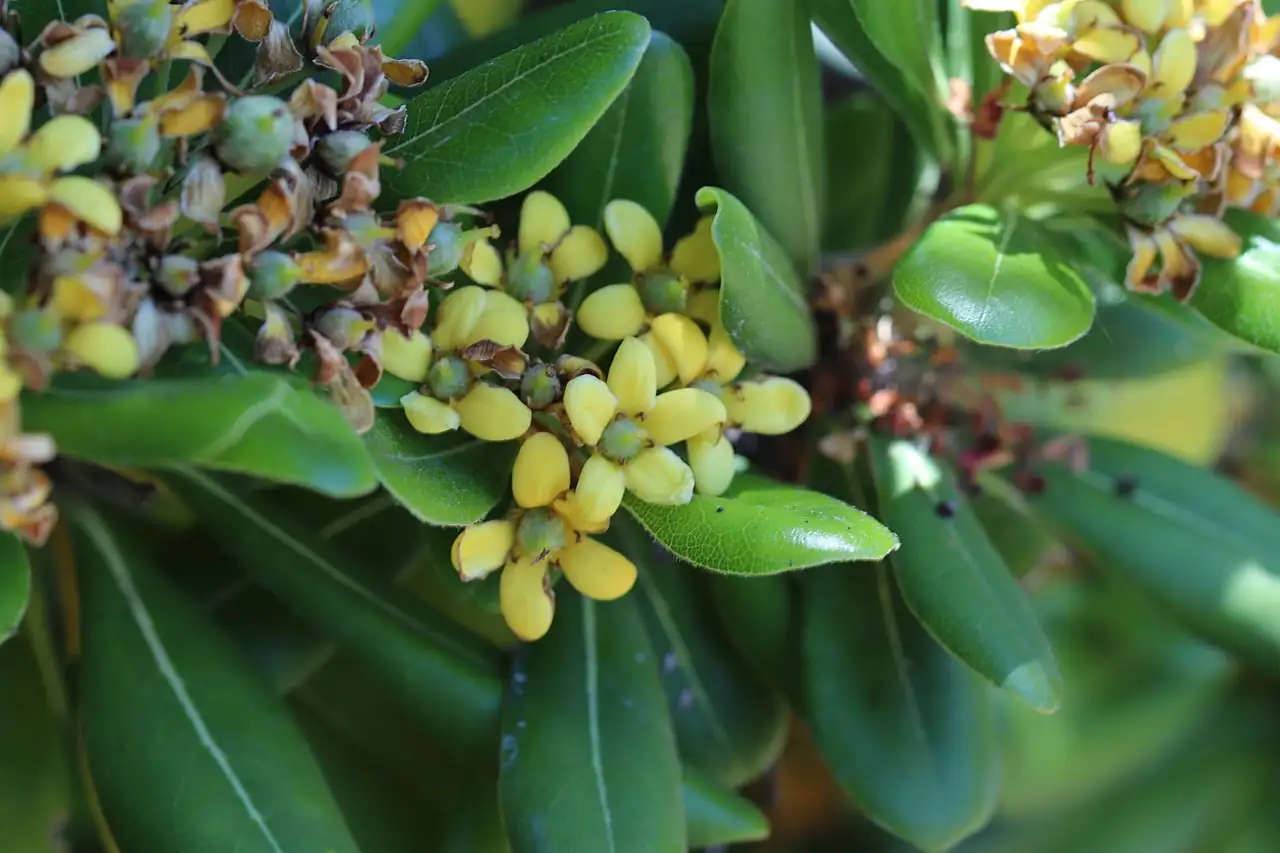
- Flower: Small, star-shaped flowers held in terminal clusters; they open white and strongly fragrant, then often turn creamy yellow with age. Fruits are rounded capsules about 12 mm (0.47 in) across that split in autumn to reveal bright red, sticky seeds.
- Flowering Season: Spring (March–May / 3–5)
- Growth Habit: Evergreen shrub or small tree with a dense, rounded habit; responds well to shaping and hedging.
Environment
Sunlight
Full sun to partial shade. For the best flowering and a tight, dense shape, give it plenty of sun; in very hot climates, a bit of afternoon shade can help prevent stress.
Temperature
Heat tolerant and moderately cold hardy; happiest around 15–30°C (59–86°F). Protect from hard freezes; once established it may tolerate brief dips to about -7 to -10°C (19–14°F), depending on site conditions and cultivar.
Humidity
Adaptable in average outdoor humidity and notably tolerant of coastal air and breezes.
Soil
Very adaptable: grows in clay, sandy soils, and mildly saline/alkaline soils as long as drainage is reasonable. Best performance comes from fertile, well-drained loam.
Placement
Great for hedges, screens, foundation planting, and roadside/urban greening. Also performs well in containers on patios and courtyards; can be used in bright public interiors or venues with strong natural light.
Hardiness
USDA Zone 8–11. Usually stays evergreen in warmer areas; in colder winters it can suffer leaf damage. Well known for tolerance of air pollution and some industrial gases.
Care Guide
Difficulty
Easy. A forgiving plant that handles many soils and climates and stays resilient even in polluted urban conditions.
Buying Guide
Pick plants with dense, evenly green foliage. Check for scale insects, sticky residue (honeydew), and black sooty mold. If buying for long-term container growing or hedges, avoid severely pot-bound plants with circling roots.
Watering
Water regularly during establishment (the first growing season). In the ground, it becomes moderately drought tolerant—water during extended dry spells. In pots, water when the top 2–5 cm (1–2 in) of potting mix has dried; don’t let the container stay soggy.
Fertilization
Feed in spring with a balanced slow-release fertilizer, or use a light liquid feed every 4–6 weeks during active growth. Ease off and stop feeding in late autumn and winter.
Pruning
Prune after flowering to shape and to maintain hedges. Remove dead, weak, or crossing branches any time. Avoid heavy pruning in late autumn in cold-winter regions.
Propagation
Semi-hardwood cuttings in summer are the most reliable. Seed is possible but slower, and seedlings may not match named cultivars.
Repotting
Repot every 2–3 years in spring, moving up one pot size and refreshing the mix. Trim circling roots if needed and prioritize excellent drainage.
📅 Seasonal Care Calendar
Flowering: March–May (3–5). Fruiting: September–October (9–10). Prune after spring flowering; take semi-hardwood cuttings in summer; mulch and feed in spring.
Pests, Diseases & Safety
Common Pests & Diseases
Can attract scale insects, mealybugs, aphids, and spider mites (especially when stressed). Honeydew from sap-feeders can lead to sooty mold. Poor drainage may cause root issues. Improve airflow, avoid overwatering, and treat outbreaks with horticultural oil or insecticidal soap as needed.
Toxicity
Not typically considered highly toxic, but ingestion may cause stomach upset. Keep foliage and especially the seeds away from pets and small children; seek veterinary/medical advice if ingestion is suspected.
Culture & Symbolism
Symbolism: Often linked with evergreen steadiness and the comforting, welcoming feel of a sweetly scented garden.
History & Legends: Long cultivated across East Asia and widely planted worldwide as a dependable evergreen for hedges and coastal or urban sites—loved for its perfume and its “can-do” toughness.
Uses: Ornamental shrub/small tree for hedges, screens, foundation planting, roadsides, and urban/industrial greening. Also popular in pots for patios, courtyards, and venue decoration thanks to its neat form and tolerance of pruning.
FAQ
Why are the flowers white at first and then turn yellowish?
That color shift is normal—many blooms naturally age from white to creamy yellow. The strongest fragrance is often when the flowers are freshest.
Can Japanese mock orange handle poor or salty soils?
Yes. It’s notably adaptable and can cope with clay, sand, and mildly saline/alkaline soils, as long as water can drain away rather than pooling around the roots.
Is it good for hedging?
Absolutely. Its dense evergreen habit and strong tolerance of pruning make it a classic hedge and screening plant.
Fun Facts
- In autumn the fruit capsules split open to reveal vivid red, sticky seeds.
- It’s widely used in urban and industrial plantings because it tolerates air pollution better than many ornamentals.
- It can grow in clay, sand, and mildly saline soils—an unusually broad comfort zone for an evergreen shrub.
- Its naturally rounded shape looks attractive even with minimal pruning.
- The flowers are strongly fragrant and often change from white to creamy yellow as they age.


