Plant Features
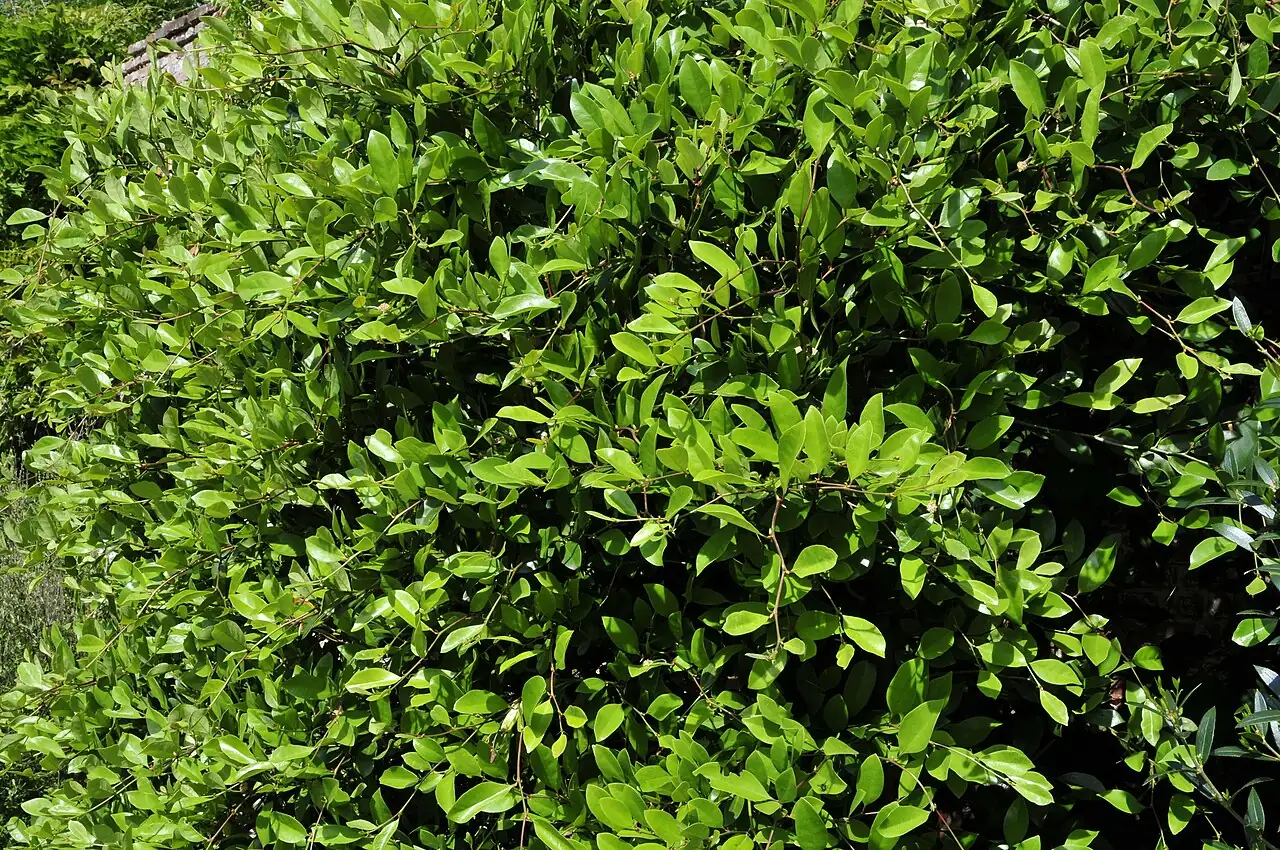
- Size: Up to about 16 m (52 ft) tall in the wild; typically kept much smaller in gardens with pruning (often maintained as a shrub or hedge).
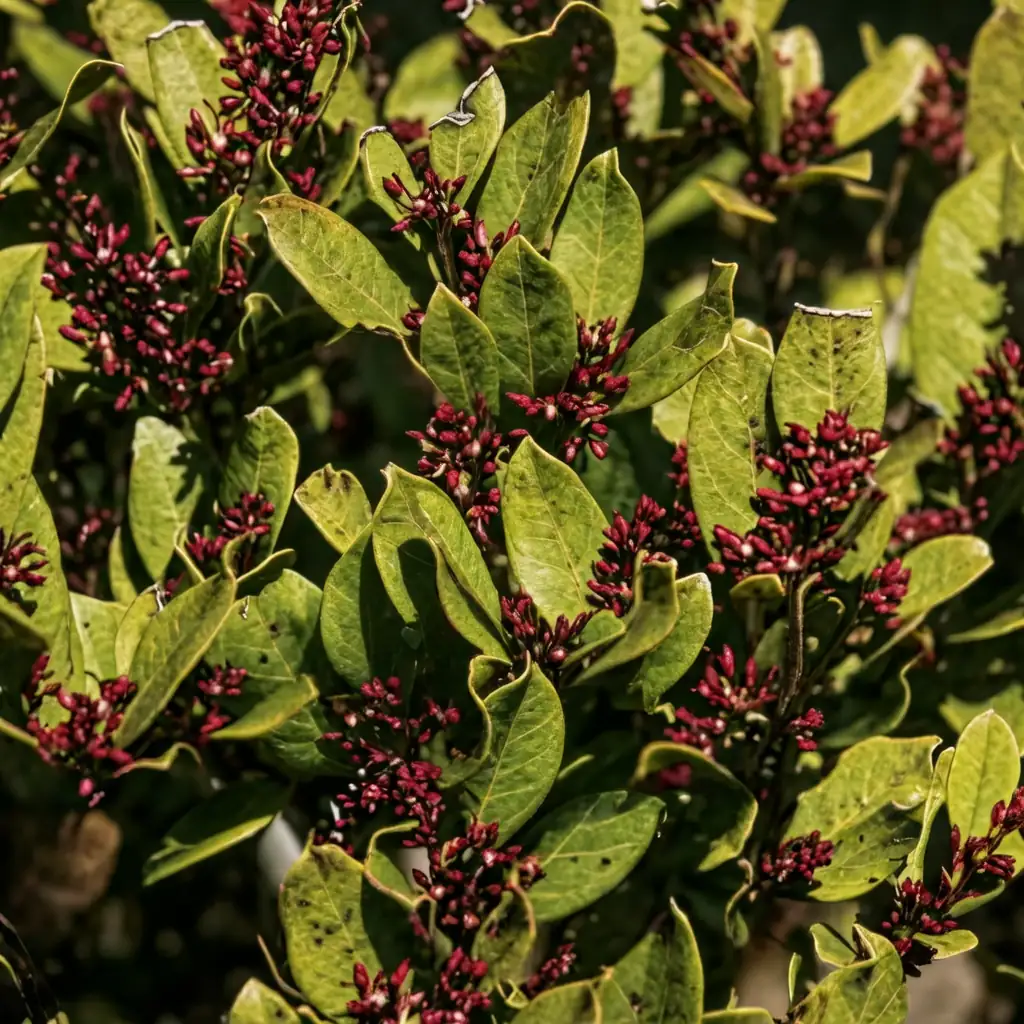
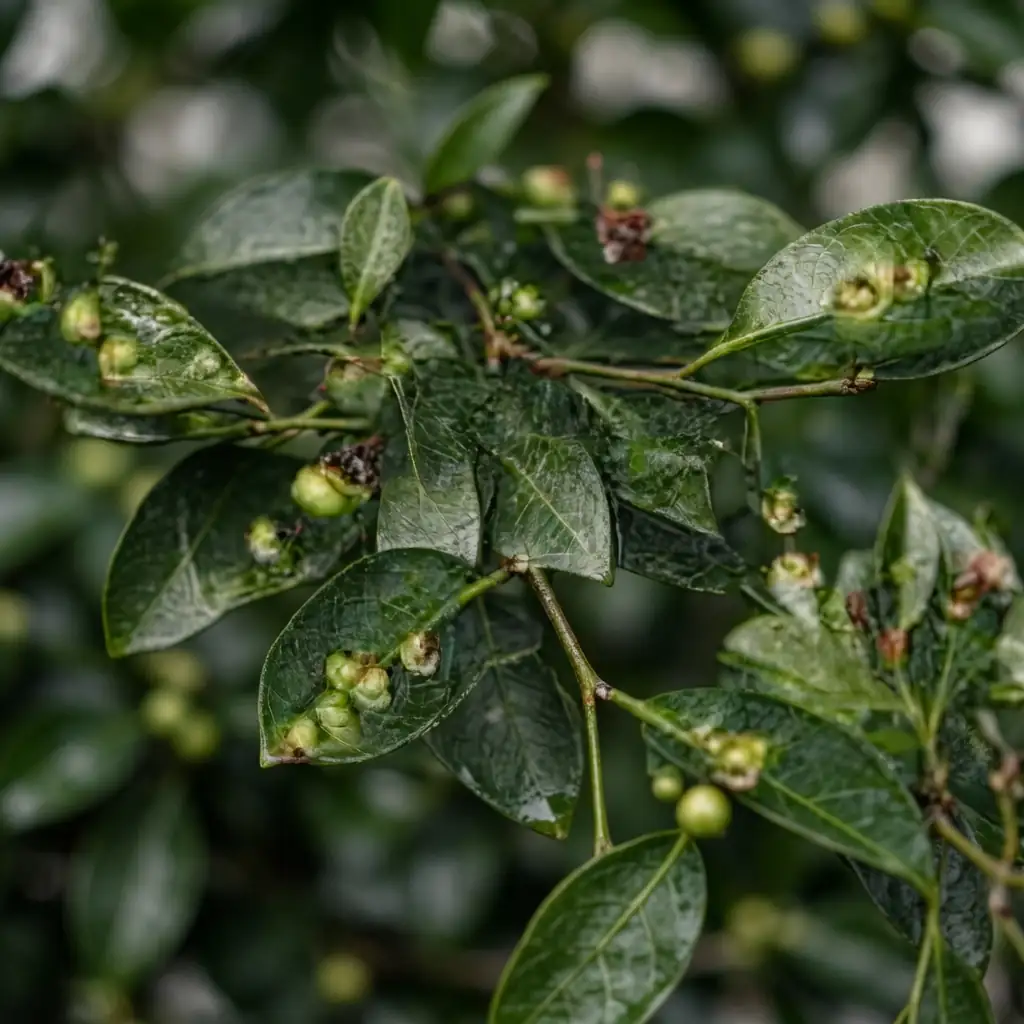
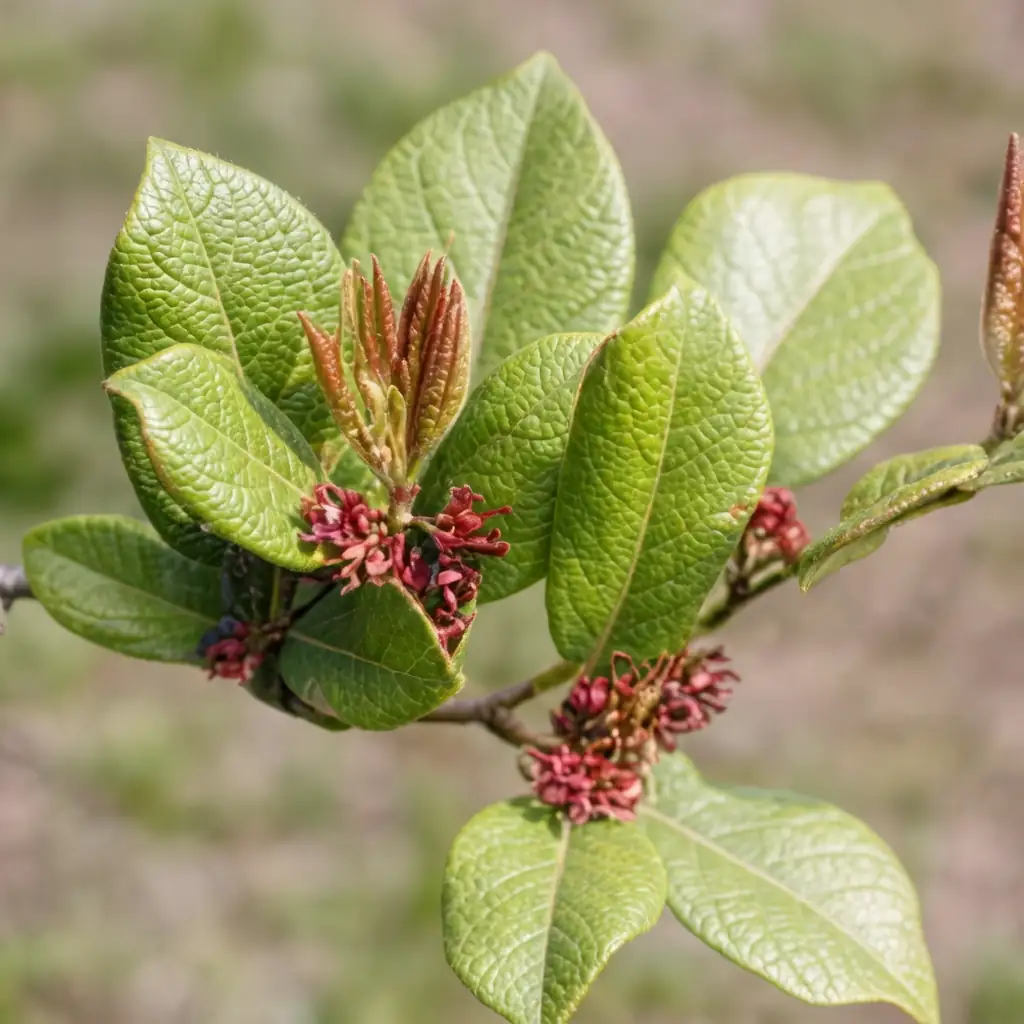
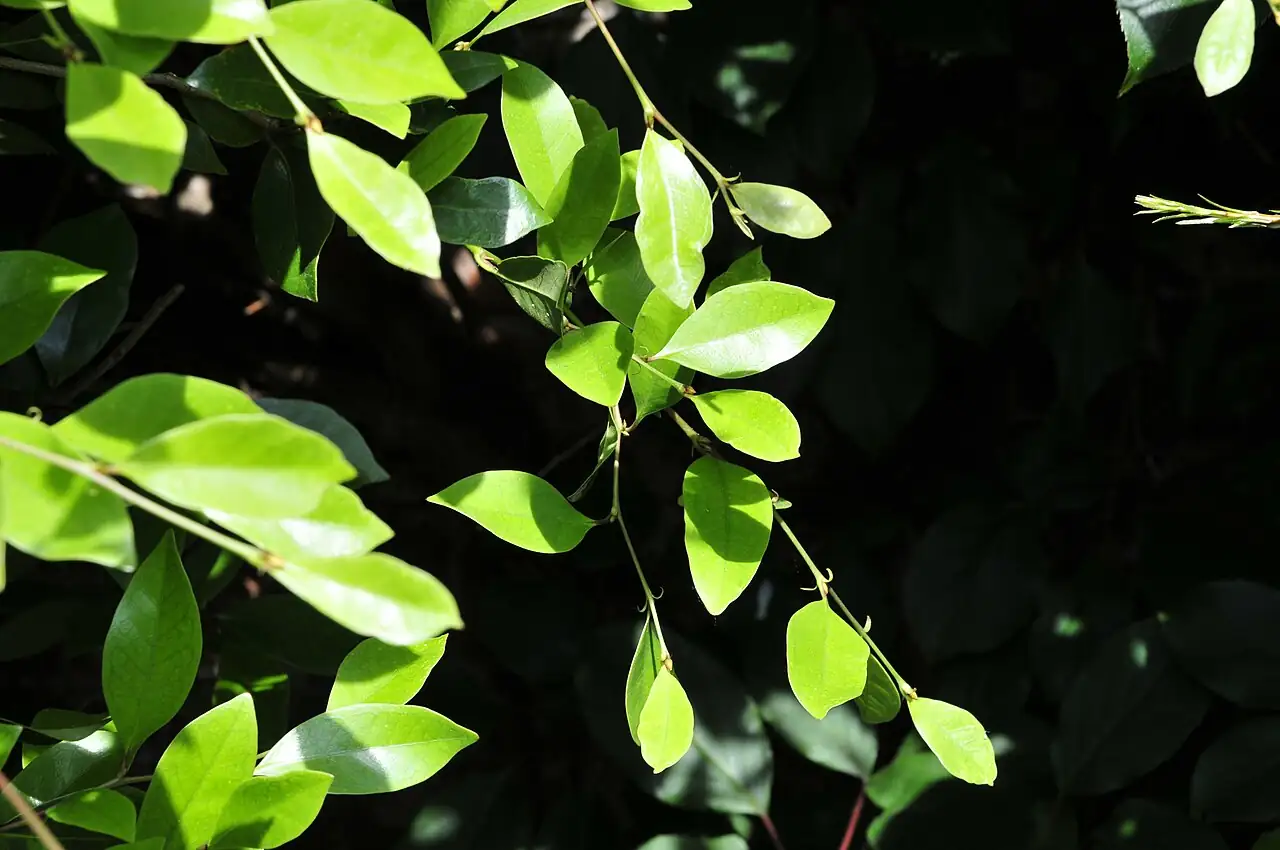
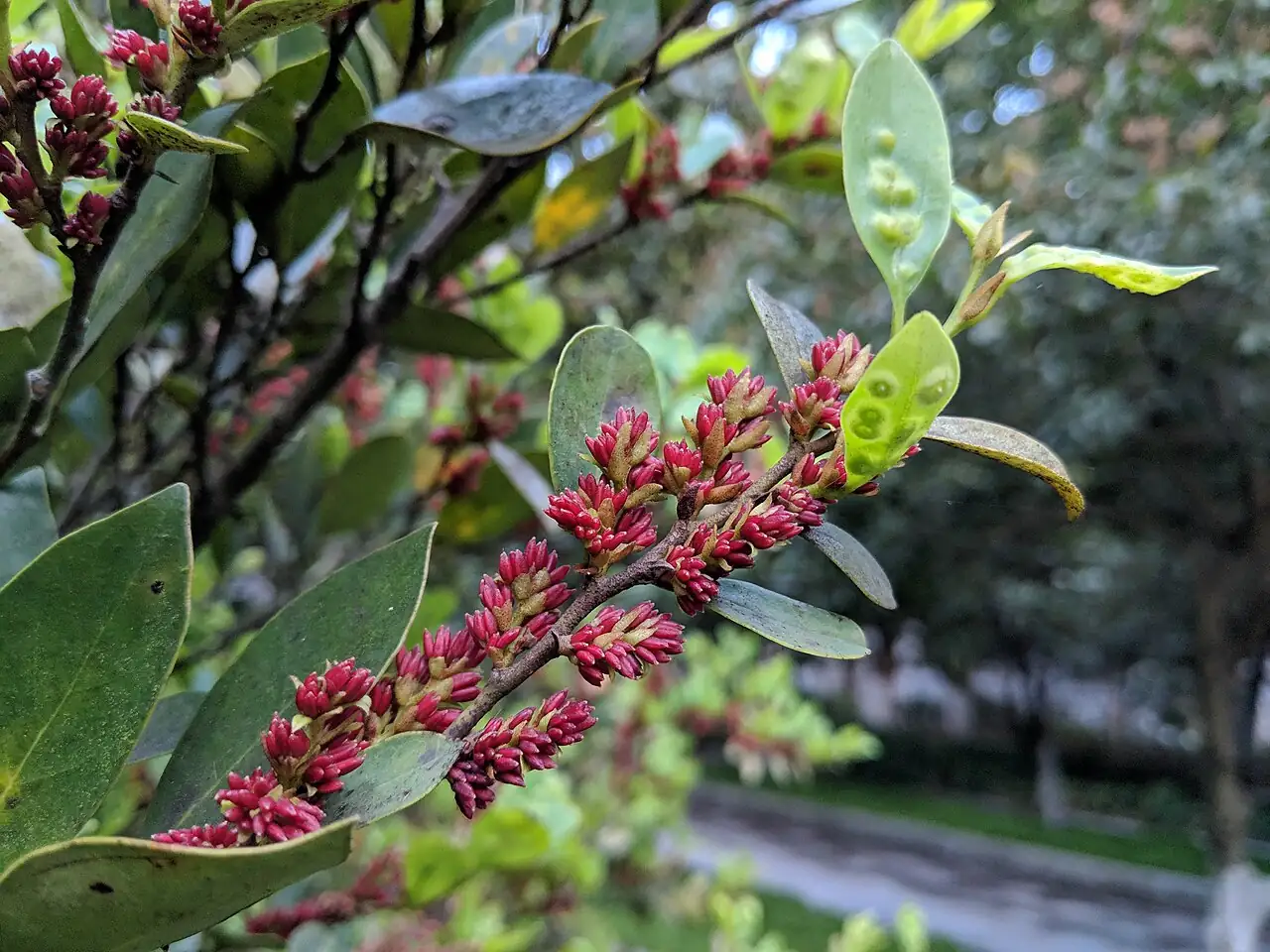
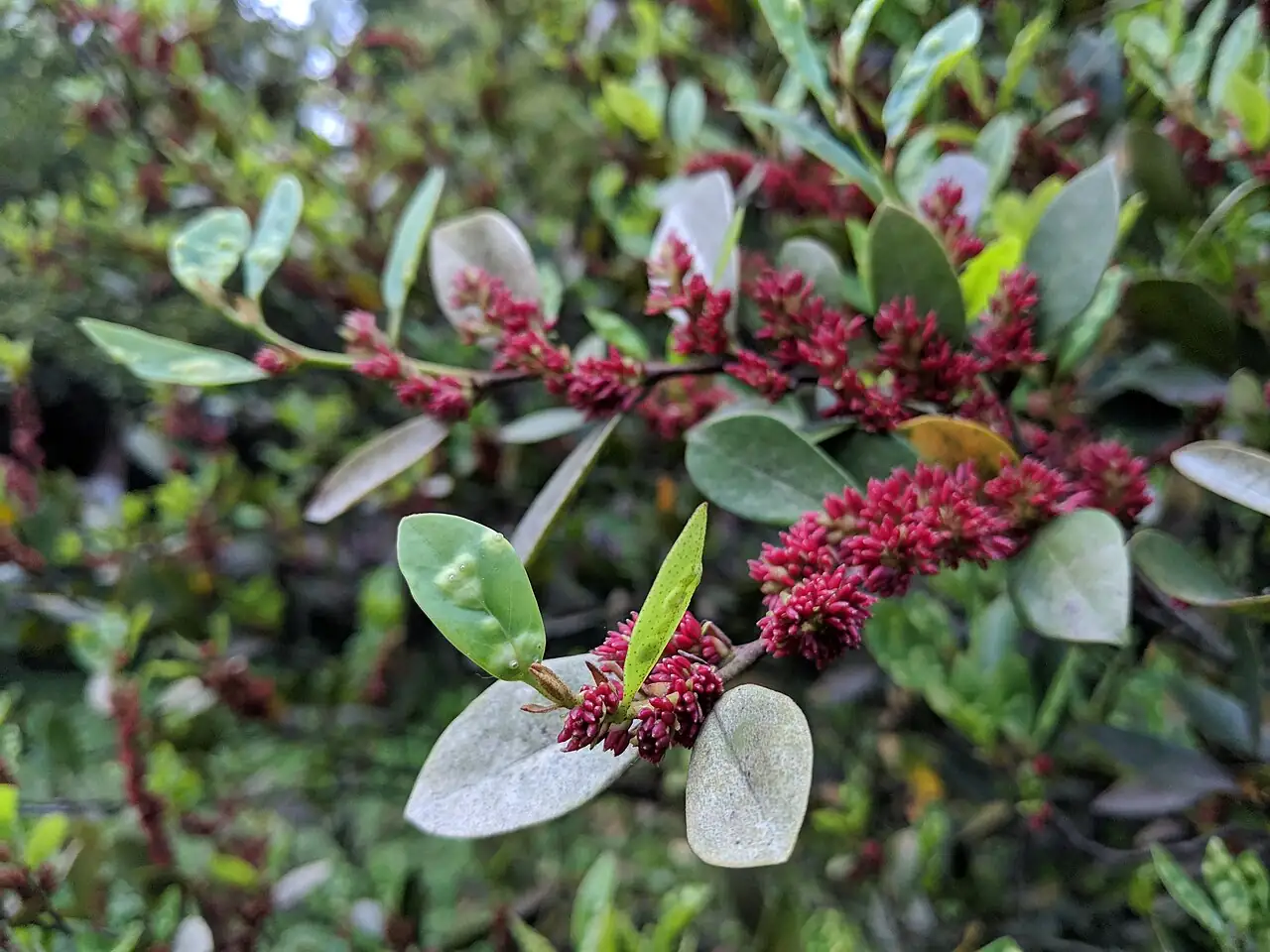
- Foliage: Leaves are alternate and simple, thick and leathery with a smooth, glossy surface. Shape is usually elliptic to obovate, with an entire (non-toothed) margin, a blunt tip, and a broadly wedge-shaped base. Veins may appear slightly raised beneath.
- Flower: Spring flowers are small and inconspicuous, carried in racemes; bracts are narrow and needle-like. Overall ornamental appeal comes far more from the evergreen foliage and neat branching structure than from the bloom.
- Flowering Season: April–May (spring).
- Growth Habit: Evergreen shrub or small tree with a broad, spreading, dense crown. Twigs may look subtly zig-zag; young shoot tips can show tiny star-like scale hairs. Terminal buds are often slightly off-center and dark brown.
Environment
Sunlight
Full sun to partial shade. It stays fuller and denser with brighter light, but it’s notably tolerant of shade compared with many evergreen shrubs.
Temperature
Prefers warm conditions; best growth around 15–28°C (59–82°F). Fairly cold-tolerant once established, but prolonged severe freezes can cause damage (especially on young or container-grown plants).
Humidity
Prefers moderate to high humidity and appreciates evenly moist conditions; avoid extended drought or very dry, hot exposure without supplemental watering.
Soil
Adaptable, but happiest in well-drained, moisture-retentive loam. Tolerates a range of soil pH and copes well with many urban conditions; avoid chronically waterlogged soils to prevent root issues.
Placement
Great for gardens and parks as a hedge, screen, foundation shrub, or mass planting. Also suitable for courtyards, along paths, and for container/bonsai culture (with winter protection in colder areas).
Hardiness
Generally USDA Zone 7–9 (approx. minimum -17 to -1°C / 1 to 30°F), depending on local climate, site exposure, and plant provenance; protect from harsh, prolonged freezes.
Care Guide
Difficulty
Easy and forgiving. It tolerates shade, many soil types, and a range of conditions, but looks best with warmth, steady moisture, and decent drainage.
Buying Guide
Pick plants with dense, evenly green foliage and healthy twig tips (no dieback). Avoid badly rootbound plants with circling roots or pots that stay soggy. Check leaf undersides and stems for scale insects before bringing one home.
Watering
During establishment, water regularly to keep soil evenly moist. After it’s rooted in, water deeply during dry spells. In containers, let the top 2–5 cm (1–2 in) dry slightly between waterings, but don’t allow the root ball to fully dry out.
Fertilization
Feed lightly in spring with a balanced slow-release fertilizer. For containers, a diluted balanced liquid fertilizer every 4–6 weeks during active growth works well. Avoid heavy feeding late in the season to reduce tender late growth.
Pruning
Prune after the spring flush to shape, tighten up hedges, or keep a compact habit. Remove dead, weak, or crossing branches at any time. Responds well to clipping for formal hedges and screens.
Propagation
Propagate from semi-hardwood cuttings in summer (more reliable with high humidity and bottom heat) or by seed; fresh seed typically germinates more readily than old seed.
Repotting
For pots and bonsai, repot about every 2–3 years (or when roots fill the container) in spring. Use a free-draining mix; trim roots moderately and avoid moving into an oversized pot.
📅 Seasonal Care Calendar
Spring (Apr–May): flowering; do light feeding and shaping after the growth flush. Early summer (Jun–Jul): fruits mature; keep moisture steady. Summer: watch for dryness and mites; water deeply during heat. Autumn: taper off fertilizer and avoid heavy pruning. Winter: protect young or container plants from hard freezes.
Pests, Diseases & Safety
Common Pests & Diseases
Usually trouble-free. Possible pests include scale insects, aphids, and spider mites (especially when plants are stressed by heat or dryness). Root problems can occur in poorly drained soils—prevent by improving drainage and avoiding constant waterlogging.
Toxicity
No widely documented toxicity to humans or pets is commonly cited for Distylium racemosum. Still, treat it as an ornamental (not food) and discourage pets from chewing leaves or twigs.
Culture & Symbolism
Symbolism: Often linked with steadiness and resilience—an evergreen that stays composed through changing seasons and less-than-perfect conditions.
History & Legends: A long-used East Asian evergreen (China, Japan, Korea), appreciated in traditional and modern plantings for reliable structure and year-round greenery rather than flashy flowers.
Uses: Ornamental: hedges, privacy screens, mass planting, foundation shrubbery, and evergreen structure in mixed borders. Also used for containers and bonsai training thanks to its dense habit and good response to pruning.
FAQ
Is Japanese distylium a good hedge plant?
Yes—its dense evergreen foliage, tolerance of clipping, and adaptability to different light and soil conditions make it a strong choice for hedges and screens.
Does it need full sun to grow well?
Not strictly. It grows well in full sun but also performs in partial shade and can handle fairly shaded sites; it’s usually densest and most compact with more light.
How tall will it get?
In the wild it can reach about 16 m (52 ft), but in cultivation it’s often kept much smaller through pruning—especially when grown as a hedge or in containers.
Fun Facts
- It typically flowers in spring (April–May), with fruit maturing in early summer (June–July).
- Even though wild plants can become small trees, gardeners often maintain it as a neat shrub by pruning.
- The subtly zig-zag twigs and tiny star-like scale hairs on young shoots can be handy ID clues.
- It naturally grows in warm-temperate to subtropical evergreen broadleaf forests in East Asia.