Plant Features
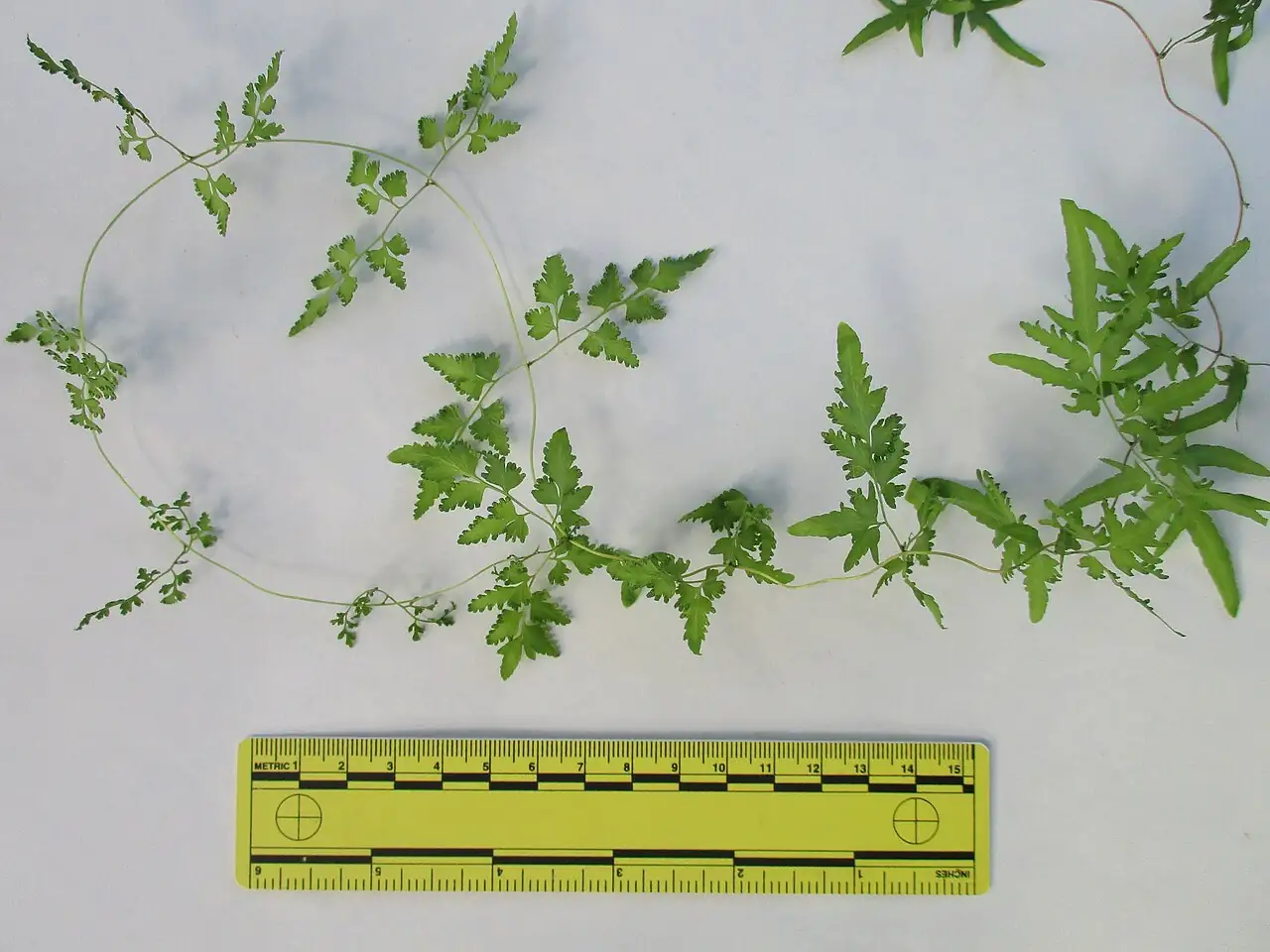
- Size: Climbing fronds can reach about 4 m (13 ft) when supported.
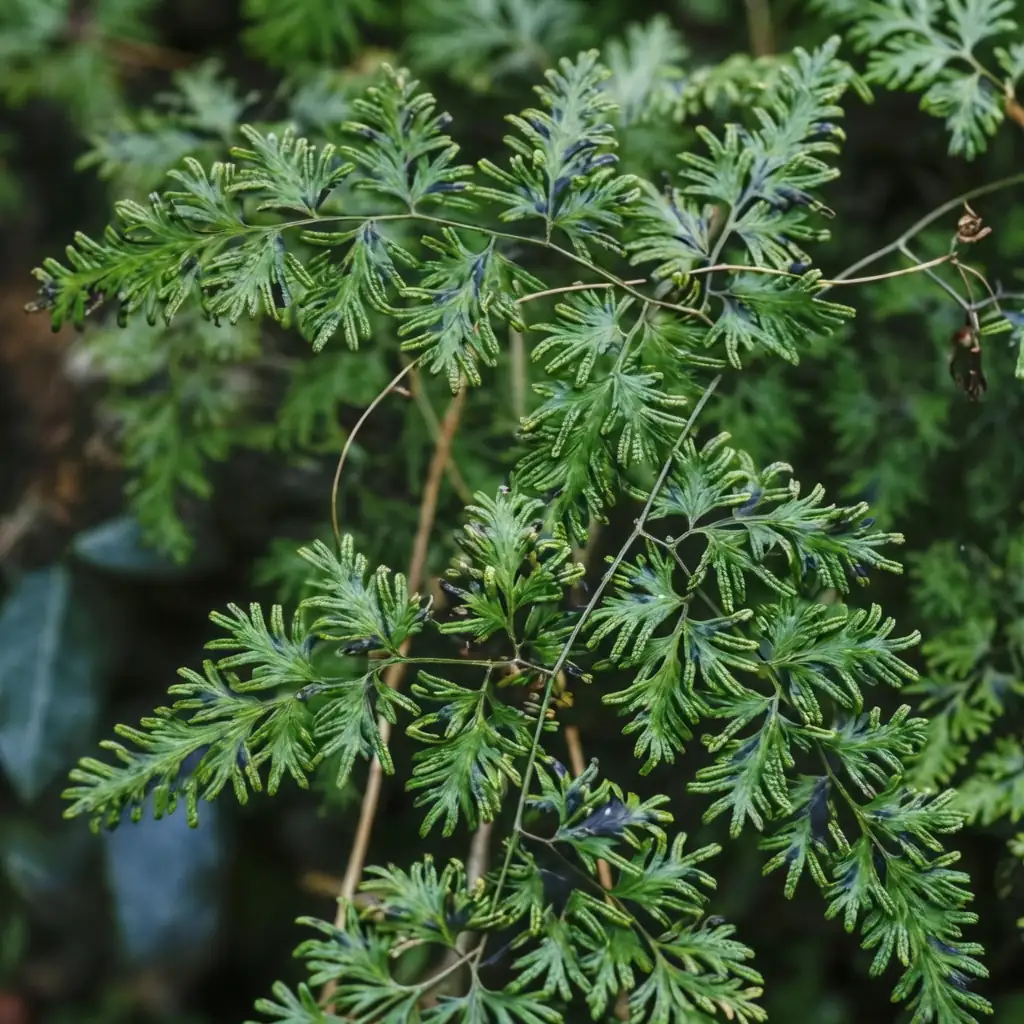
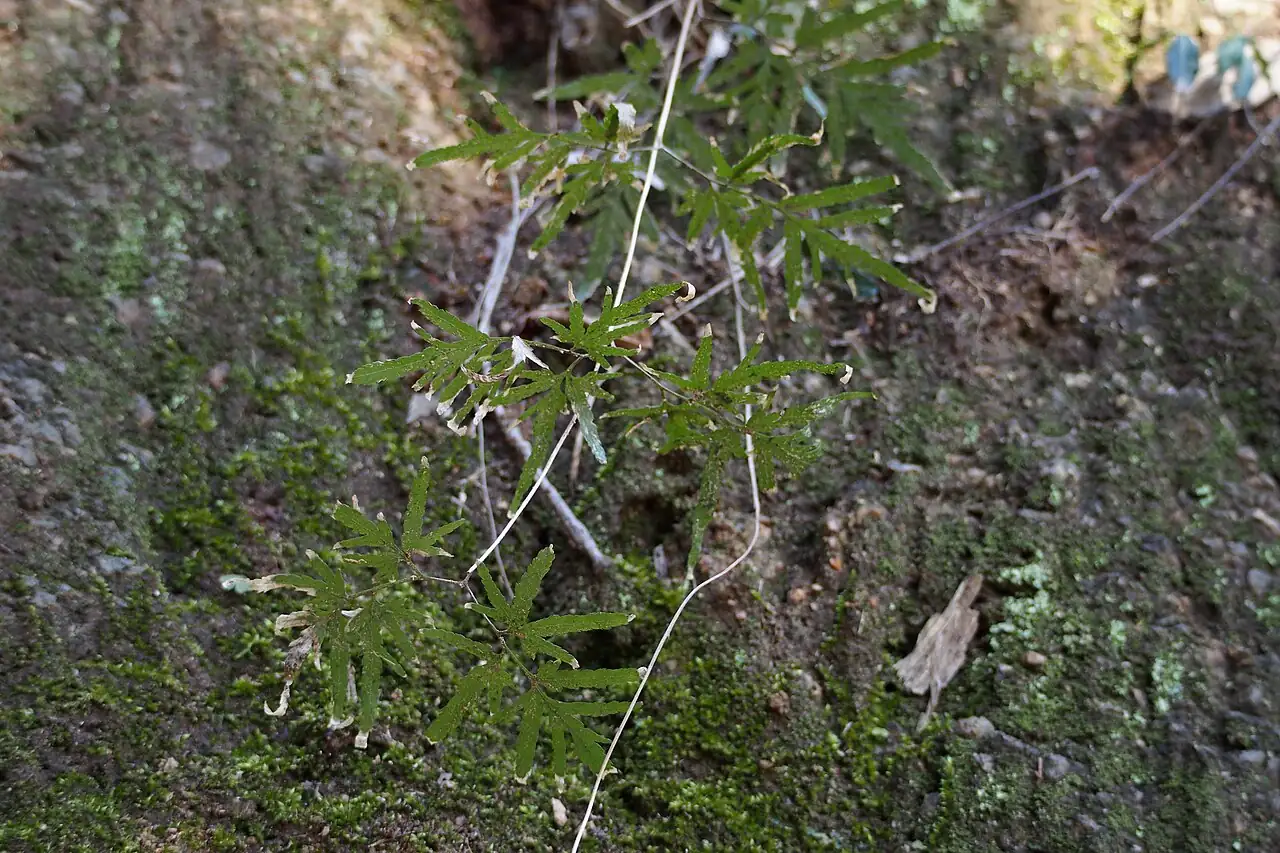
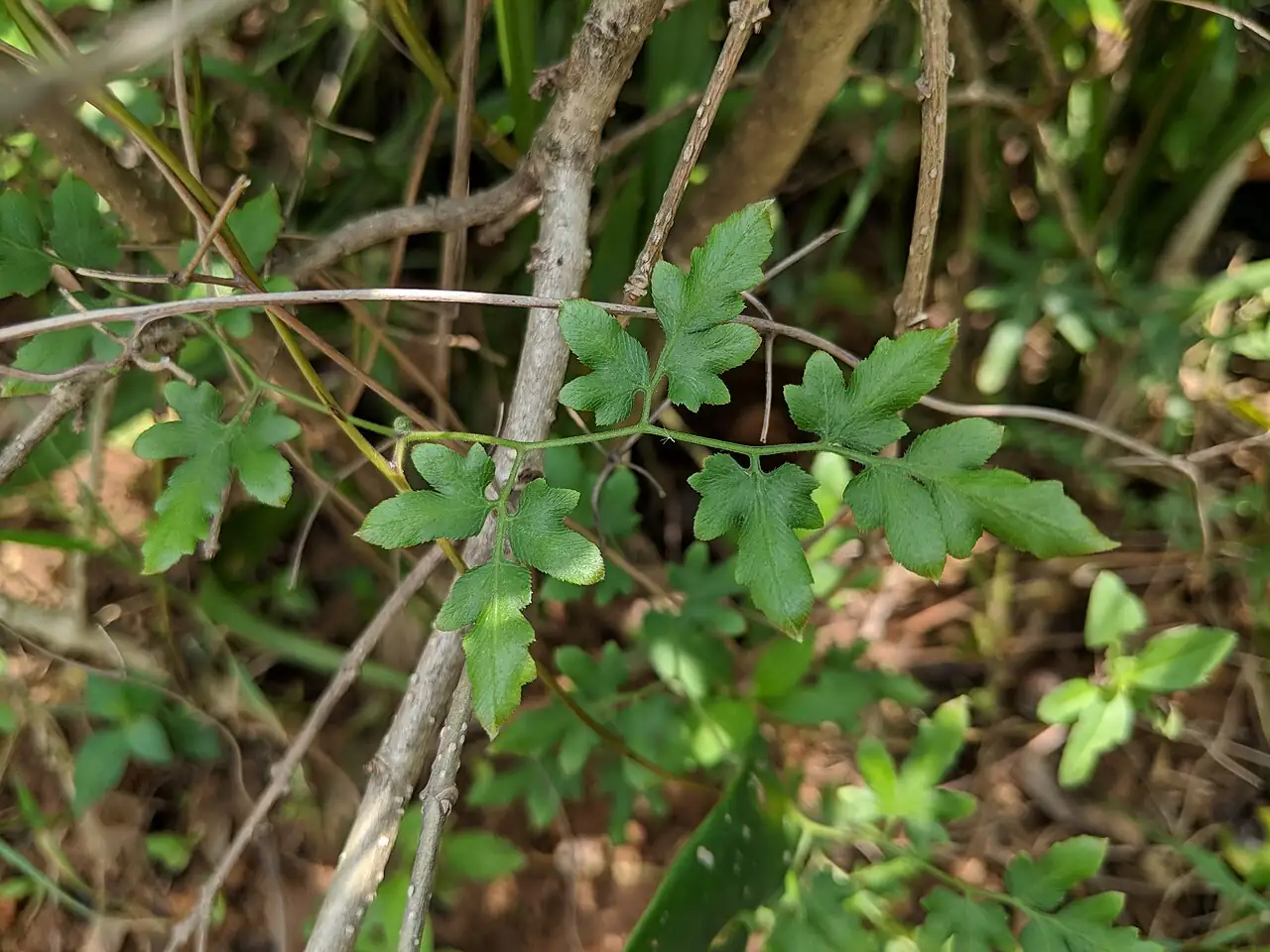
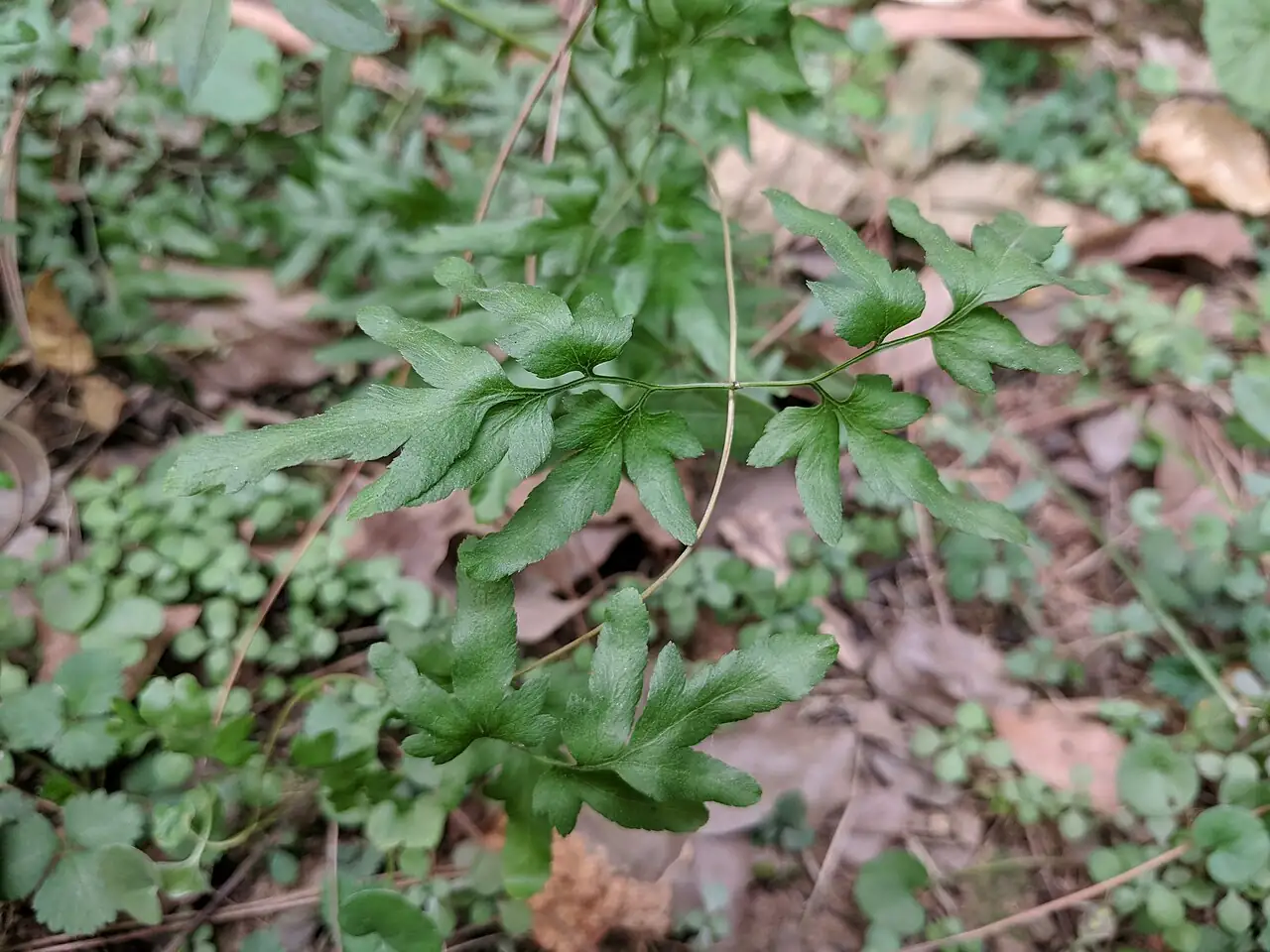
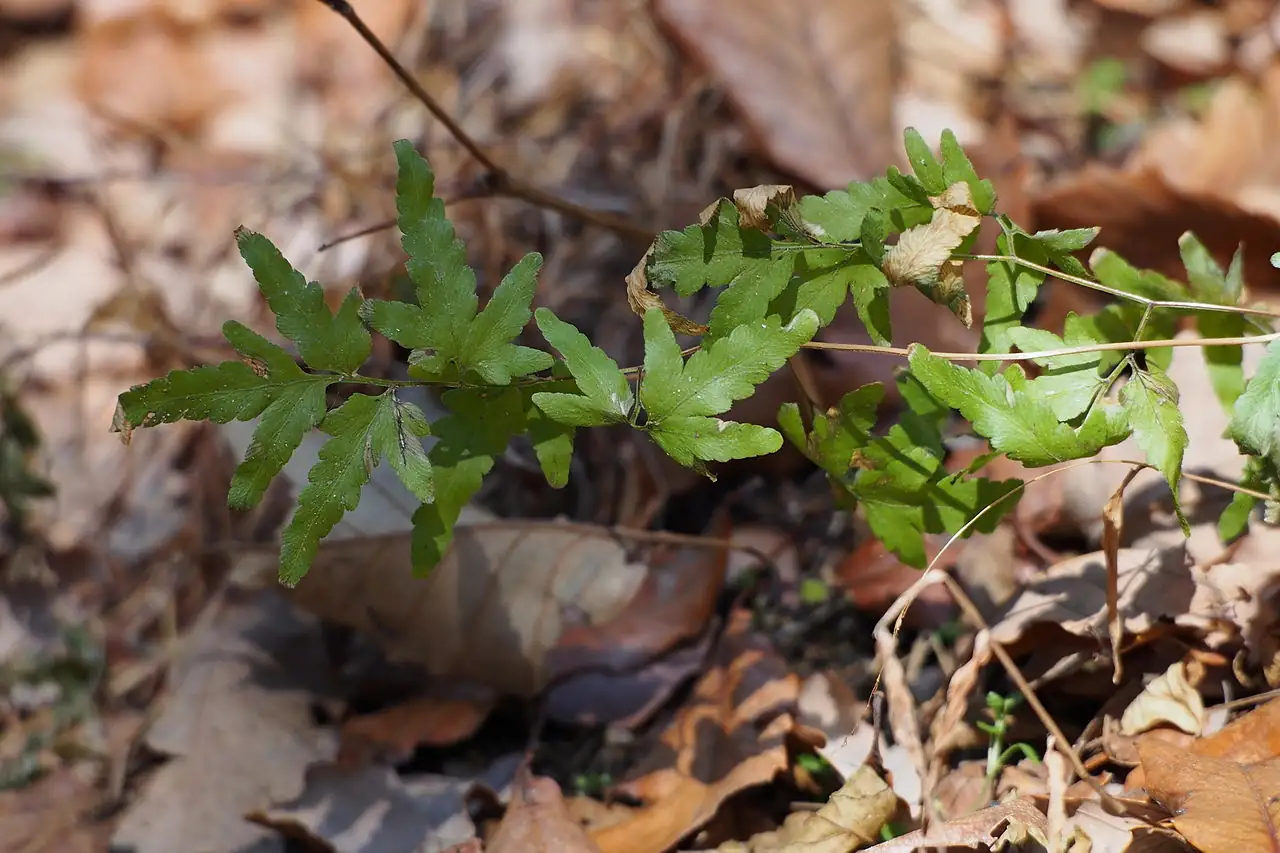
- Foliage: Papery-textured, deep-green fronds with many paired side segments. The ultimate leaflets are typically triangular to lobed, with shallow, irregular teeth along the margins. The rachis is slender, wiry, and twining—this is what lets the plant wrap itself around supports and climb through nearby vegetation.
- Flower: No flowers (fern). Fertile segments carry sparse sporangia that are often noted as dark brown when mature.
- Flowering Season: No flowering season (fern). Fertile growth and spore production typically occur from May to November (May–November).
- Growth Habit: Terrestrial twining/climbing fern; scrambles over and through other plants using vine-like fronds.
Environment
Sunlight
Bright, filtered light or dappled shade. Avoid strong direct sun, especially midday, which can scorch fronds and dry the plant too quickly.
Temperature
Prefers warm conditions: about 18–30°C (64–86°F). Protect from prolonged cold and frost.
Humidity
Likes humid air; aim for 60%+ relative humidity (60%+). It is more prone to stress and spider mites in hot, dry air.
Soil
Well-drained sandy loam that holds some moisture. Keep consistently moist but never waterlogged; good drainage and airflow around the roots help prevent fungal problems.
Placement
Outdoors in a sheltered bright-shade spot with a trellis, pergola, fence, or shrub support. Indoors, place in bright indirect light with extra humidity (such as a conservatory or a bright, steamy bathroom).
Hardiness
Best in frost-free to mild-winter climates; roughly USDA Zone 8–11 (8–11) depending on local conditions. Not reliably frost-hardy.
Care Guide
Difficulty
Moderate. It’s happiest when moisture and humidity stay steady (60%+ RH) and light is bright but filtered. It often struggles in harsh sun, dry air, or if allowed to swing between soggy and bone-dry.
Buying Guide
Look for fresh, deep-green fronds with minimal browning and no crispy edges. Avoid plants in sour-smelling, wet pots (a sign of waterlogging) and those with many snapped or dried climbing stems. If buying for indoor growing, choose a plant showing active new growth and inspect undersides and stems for pests (especially on fertile segments).
Watering
Keep evenly moist during active growth. Water when the top 2–3 cm (about 1 in) of the mix feels slightly dry, then water thoroughly and let excess drain—don’t leave the pot sitting in water. In cooler seasons or low light, reduce frequency, but don’t let the root zone dry out completely.
Fertilization
Light feeder. In spring and summer, use a balanced liquid fertilizer at 1/4–1/2 strength every 3–4 weeks. Reduce or pause feeding in autumn and winter.
Pruning
Remove yellowing or damaged fronds at the base. If it outgrows its space, trim back long wandering fronds and guide new growth onto its support for a tidier, more intentional look.
Propagation
Primarily by spores; fertile fronds typically produce spores from May to November (May–November). In cultivation, division of established clumps can also work during repotting—make sure each division has multiple healthy crowns and roots.
Repotting
Repot in spring when roots fill the pot or growth slows. Step up only one pot size (about 2–5 cm / 1–2 in wider). Refresh with a well-draining sandy-loam style mix and provide a support structure for climbing.
📅 Seasonal Care Calendar
Spring–summer: peak growth—keep evenly moist, maintain humidity, and provide bright filtered light. May–November (May–November): fertile fronds may appear and produce spores. Autumn: traditionally, spores are collected for medicinal use; taper feeding and keep the plant from drying out. Winter (indoors): slower growth—water less often but avoid letting it fully dry.
Pests, Diseases & Safety
Common Pests & Diseases
Spider mites can be an issue in dry air; mealybugs and scale may hide along stems. Overly wet soil and stale air can encourage fungal problems. Prevent issues with good drainage, consistent (not excessive) moisture, and better airflow. Treat pests with insecticidal soap or horticultural oil, repeating as needed.
Toxicity
No well-documented toxicity to people or pets for typical household exposure, but spores and plant material may irritate sensitive individuals. Keep out of reach of pets that chew plants, and avoid inhaling large amounts of spores when handling fertile fronds.
Culture & Symbolism
Symbolism: Often linked with resilience and graceful persistence—its fronds keep reaching upward, calmly weaving themselves through whatever support they find.
History & Legends: In traditional Chinese herbal practice, the spores are collected (often in autumn) and used as a medicinal material. The classic comparison of its yellow spores to sparkling sand is echoed in the name “海金沙.”
Uses: Grown mainly as an ornamental climber for trellises, pergolas, and green screening in mild climates, and as a dramatic indoor foliage plant where humidity is high. Its spores have also been used traditionally in medicine.
FAQ
When does Japanese climbing fern flower?
It doesn’t—this is a fern. Instead of flowers, it produces spores on fertile fronds, most commonly from May to November (May–November).
When is its fruiting season?
Ferns don’t make fruit. What you’ll see are sporangia on fertile fronds, with spore production often noted from May to November (May–November).
How tall can it grow?
With something to climb, the fronds can reach about 4 m (13 ft).
What is the spore season and why is it notable?
Spore production is commonly from May to November (May–November). The yellowish spores were traditionally collected (often in autumn) and compared to glittering grains of sand—one inspiration for its Chinese name.
What growing conditions does it prefer?
Warm temperatures (18–30°C / 64–86°F), higher humidity (around 60%+), bright filtered light, and a well-drained soil kept evenly moist.
Where does it naturally grow?
It’s native to warm-temperate to tropical Asia and is widely distributed in China, often found at woodland edges, along roadsides, on shrubby slopes, and in streamside thickets where it twines over other plants.
Fun Facts
- It climbs like a vine, but it’s a true fern—its fronds twine around supports rather than using tendrils.
- “海金沙” refers to its yellow spores, traditionally compared to sparkling grains of sand.
- Given a trellis or shrub support, it can scramble up to about 4 m (13 ft), creating a light, ferny screen.
- It naturally favors humid habitats like forest edges and stream valleys—one reason it appreciates higher indoor humidity, too.
- In mild climates, training it over a pergola can create a surprisingly lush, lacy canopy effect.