
Plant Features
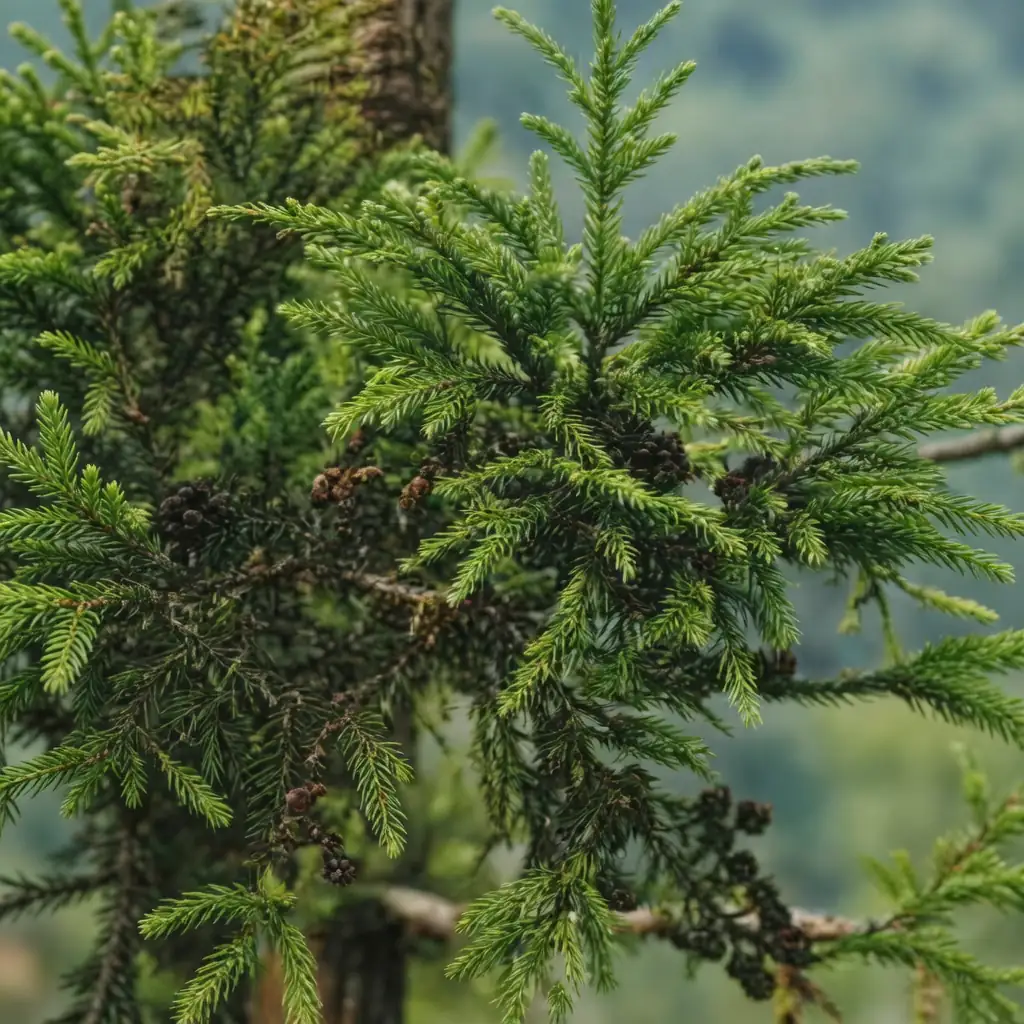
- Size: Typically 30–60 m (98–197 ft) tall in the landscape/forest; crown narrow to broadly conical with whorled main branches.
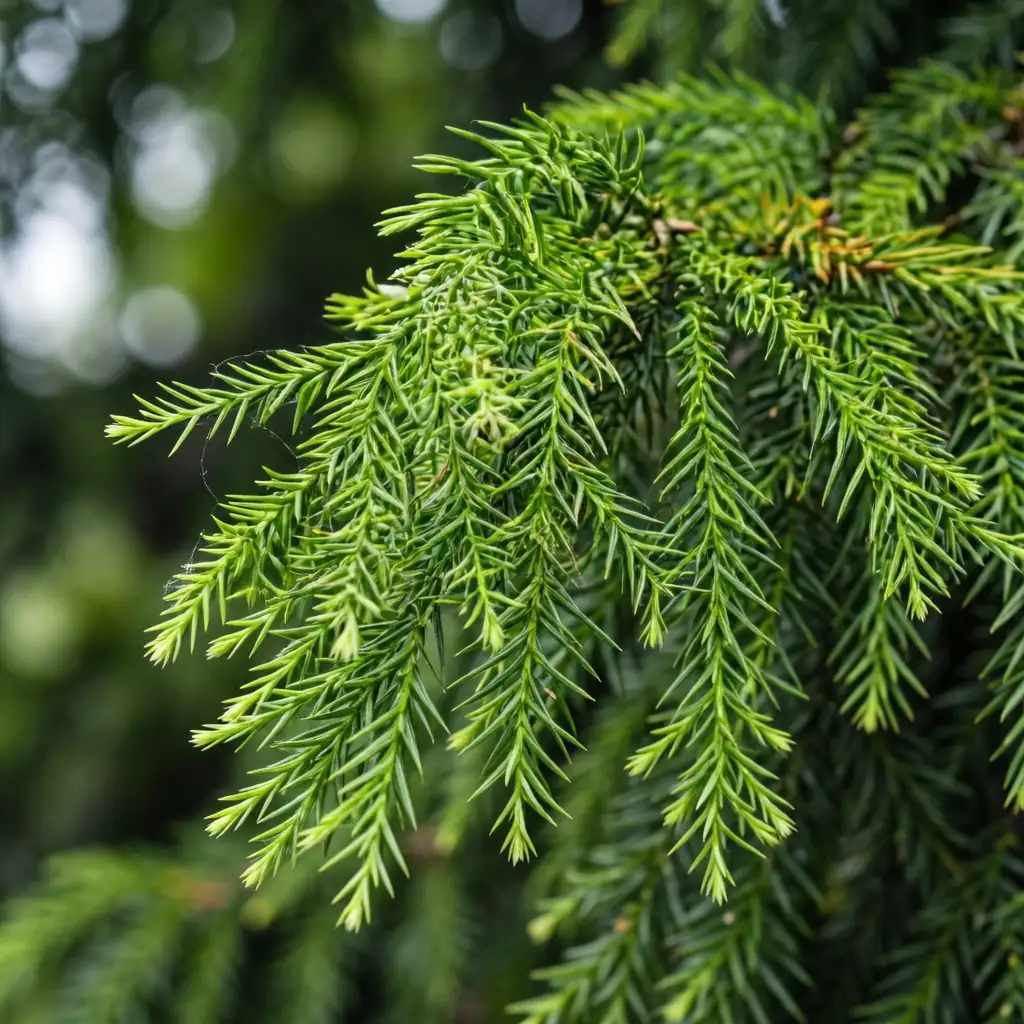
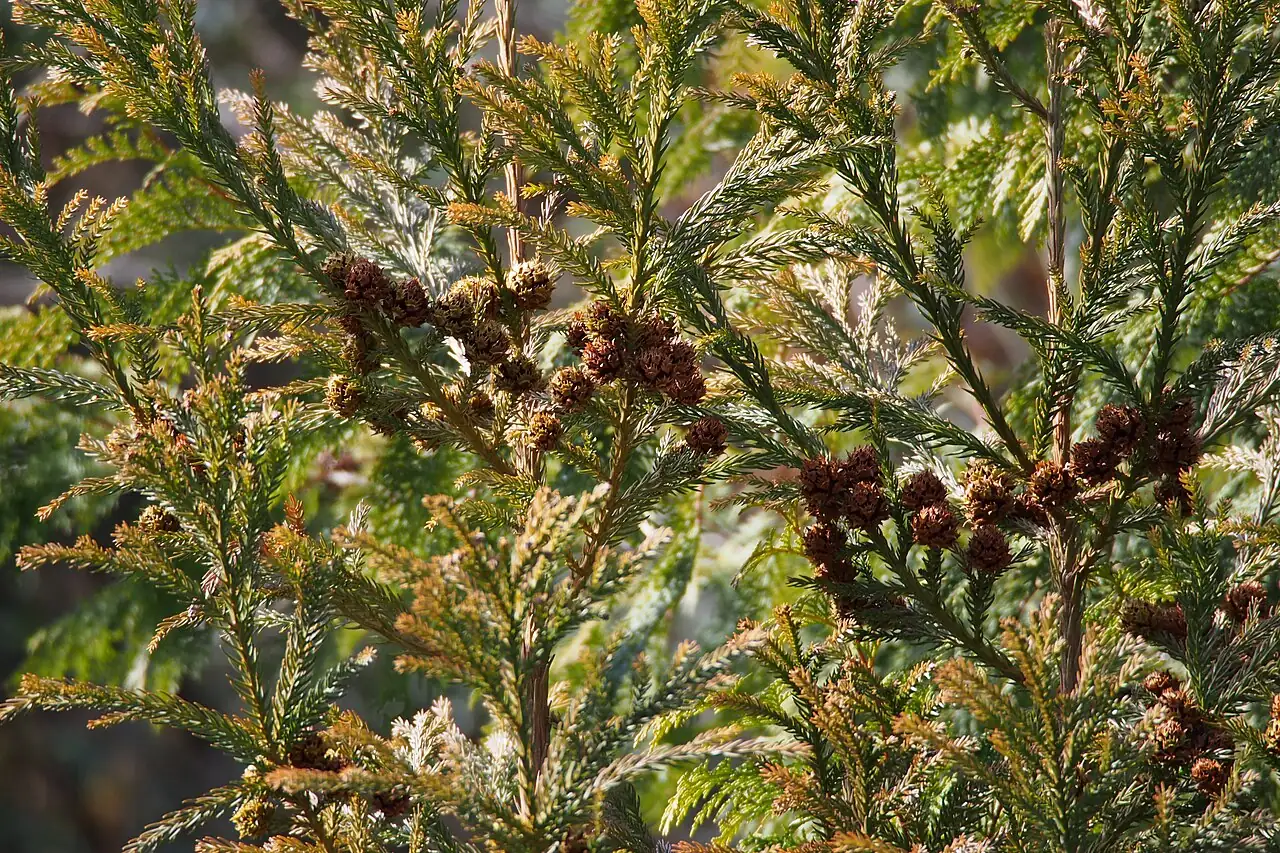
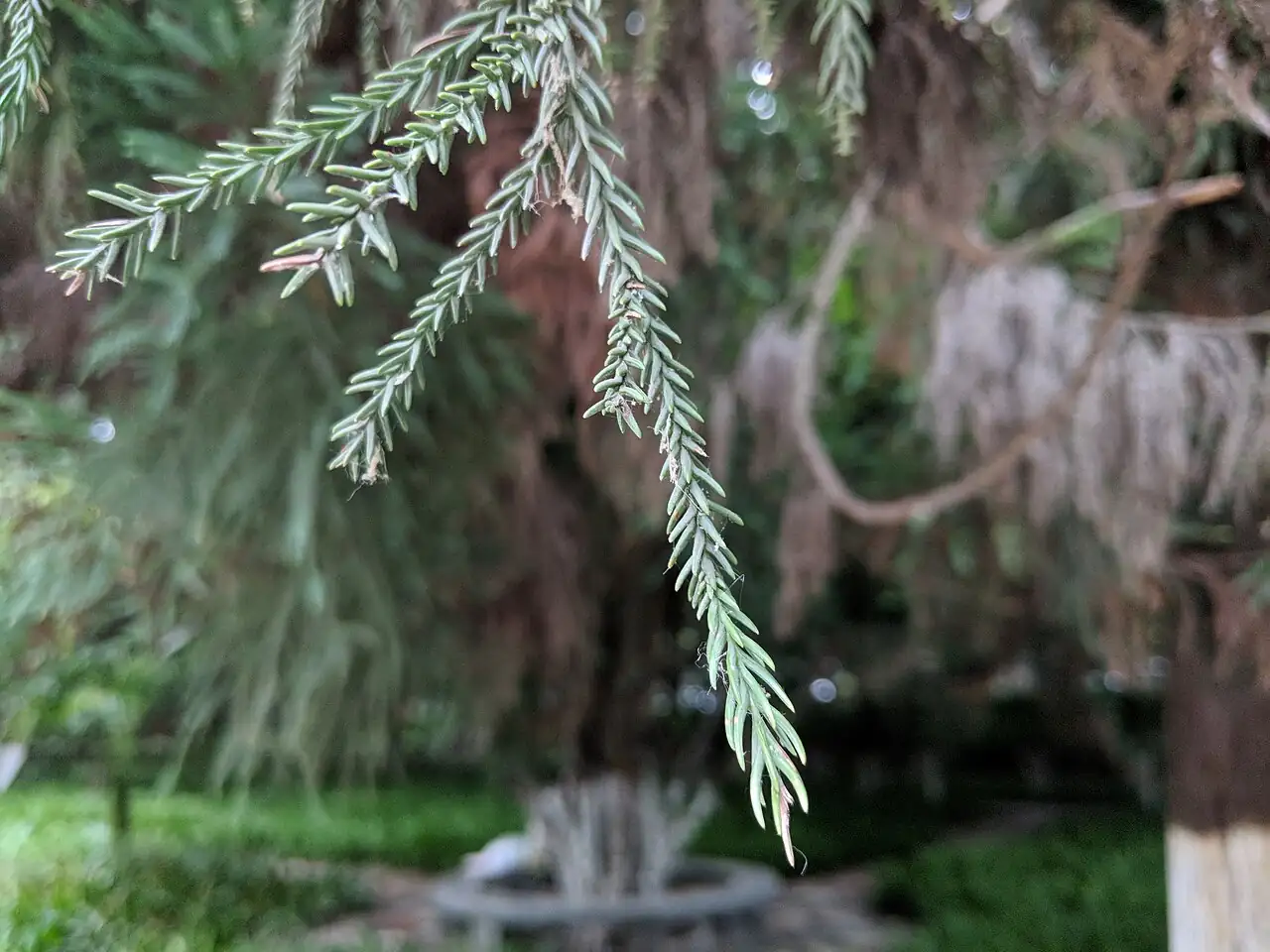
- Foliage: Leaves are awl-shaped to needle-like and arranged all around the shoots, pointing outward. Multiple-sided stomatal lines can be visible, creating a subtly striped effect.
- Flower: Male pollen cones are elongated to oval. Female cones are round; seed cones become nearly spherical, mature to brown, and release brown seeds.
- Flowering Season: April (spring) (timing varies by climate).
- Growth Habit: A large evergreen tree with a strong central leader. Main branches are often in whorls, spreading horizontally to slightly drooping; smaller branchlets commonly hang pendulously. Bark is reddish-brown, fibrous, and peels in strips.
Environment
Sunlight
Full sun to partial shade; grows densest and most symmetrical in full sun.
Temperature
Prefers a mild, moist climate. Best growth is around 10–25°C (50–77°F). It’s generally cold-tolerant, but prolonged heat—especially above about 32–35°C (90–95°F) combined with dry air—can stress it.
Humidity
Moderate to high humidity is ideal; it appreciates steady air and soil moisture rather than drying winds and droughty conditions.
Soil
Deep, fertile, well-drained sandy loam or loam. Avoid waterlogged or poorly drained soils, which can lead to root rot.
Placement
Outdoors as a specimen tree, park/garden conifer, or windbreak. Give it plenty of space away from buildings and overhead lines, and avoid exposed sites with hot, drying winds.
Hardiness
USDA Zone 5–8 (approx.; varies with cultivar and provenance). Not drought-tolerant; can struggle in very hot-summer climates.
Care Guide
Difficulty
Moderate. Generally easy where summers are mild and moisture is reliable; more challenging in hot-summer or drought-prone areas because it dislikes heat-and-dry stress.
Buying Guide
Look for a straight central leader, evenly spaced branching, and dense, healthy green foliage. Avoid plants that are rootbound or show browning tips, cankers, or soft/waterlogged roots. If space is limited, choose a cultivar (including dwarf forms) suited to your climate and garden size.
Watering
Water deeply after planting and keep the soil evenly moist while establishing. After it’s established, water during dry spells—don’t let the root zone dry out completely. At the same time, prioritize drainage: standing water can trigger root rot.
Fertilization
If growth is sluggish, feed in early spring with a balanced, slow-release fertilizer. Avoid heavy fertilizing in late summer so new growth has time to harden off before winter.
Pruning
Prune lightly. Remove dead, damaged, or crossing branches in late winter to early spring. Avoid cutting back into older, bare wood, which may not reshoot reliably.
Propagation
Seed is commonly used for forestry production. Named cultivars are typically propagated by cuttings or grafting to keep their traits true-to-type.
Repotting
Not usually a long-term houseplant. For young container-grown plants, pot up in spring into a free-draining mix; don’t oversize the pot and make sure drainage holes stay clear.
📅 Seasonal Care Calendar
Pollen/flowering season is typically in April (spring). Cones mature later in the year, often around October (fall), depending on region and climate.
Pests, Diseases & Safety
Common Pests & Diseases
Watch for root rot in poorly drained soil, plus needle browning from drought/heat stress. Scale insects and spider mites may appear, especially in dry conditions. Good drainage, steady watering during hot spells, and decent airflow help prevent most problems.
Toxicity
Generally not considered highly toxic to people or pets, though sap or foliage may cause mild irritation in sensitive individuals. Avoid ingestion and discourage pets from chewing.
Culture & Symbolism
Symbolism: Often linked with longevity, endurance, and steadfastness—classic evergreen virtues that make it feel quietly reassuring in a landscape.
History & Legends: A culturally important tree in Japan and a cornerstone of forestry there. It has also been widely introduced across East Asia, valued both for timber and as an elegant ornamental.
Uses: Grown as a specimen and park tree, for windbreaks, and extensively as a plantation/forestry species. The wood is pleasantly fragrant, reddish-toned, relatively light yet strong, and prized for water and decay resistance in construction and carpentry.
FAQ
Why is my Japanese cedar turning brown?
Most often it’s stress: drought, hot/dry winds, winter burn, or roots sitting too wet from poor drainage. Keep the soil evenly moist (not soggy), improve drainage if water lingers, and use mulch plus supplemental watering during heat or dry spells.
Can Japanese cedar grow in shade?
It tolerates partial shade, but it usually looks fuller and grows more evenly in full sun. In deeper shade, the crown can become thinner and more open.
Fun Facts
- In Japan it’s one of the most important traditional forestry trees.
- The trunk’s reddish-brown bark peels in fibrous strips, creating a distinctive, textured look.
- Its timber is known for a pleasant scent and natural durability, including good decay resistance.
- It strongly prefers well-drained soil—waterlogging can lead to root problems quickly.
- It has been noted as relatively tolerant of certain air pollutants (such as sulfur dioxide) compared with some other conifers, which is one reason it can be seen in urban parks in parts of Asia.