Plant Features
- Size: A compact, rhizomatous begonia often grown in a 12–15 cm (4.7–5.9 in) pot. Mature plants commonly reach about 20–30 cm (8–12 in) tall and may spread roughly 30–45 cm (12–18 in) when happy.
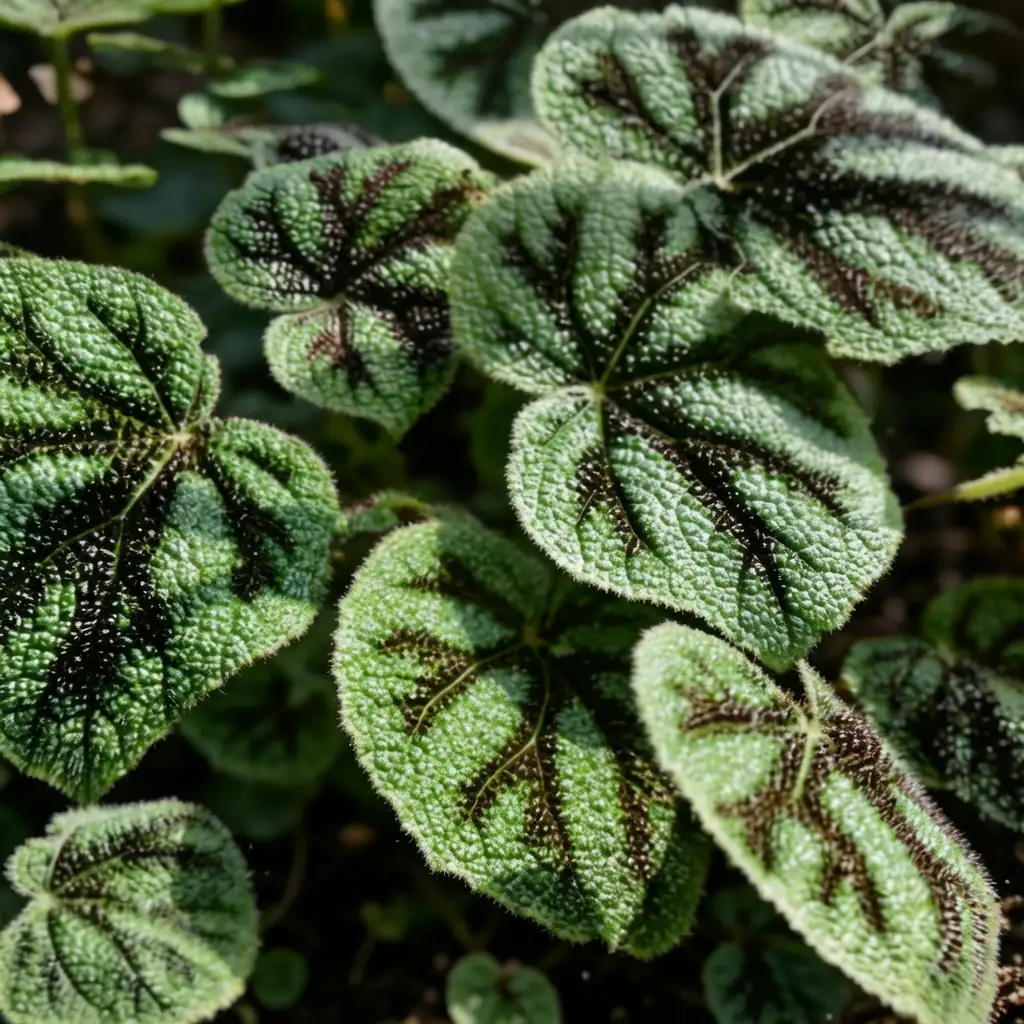
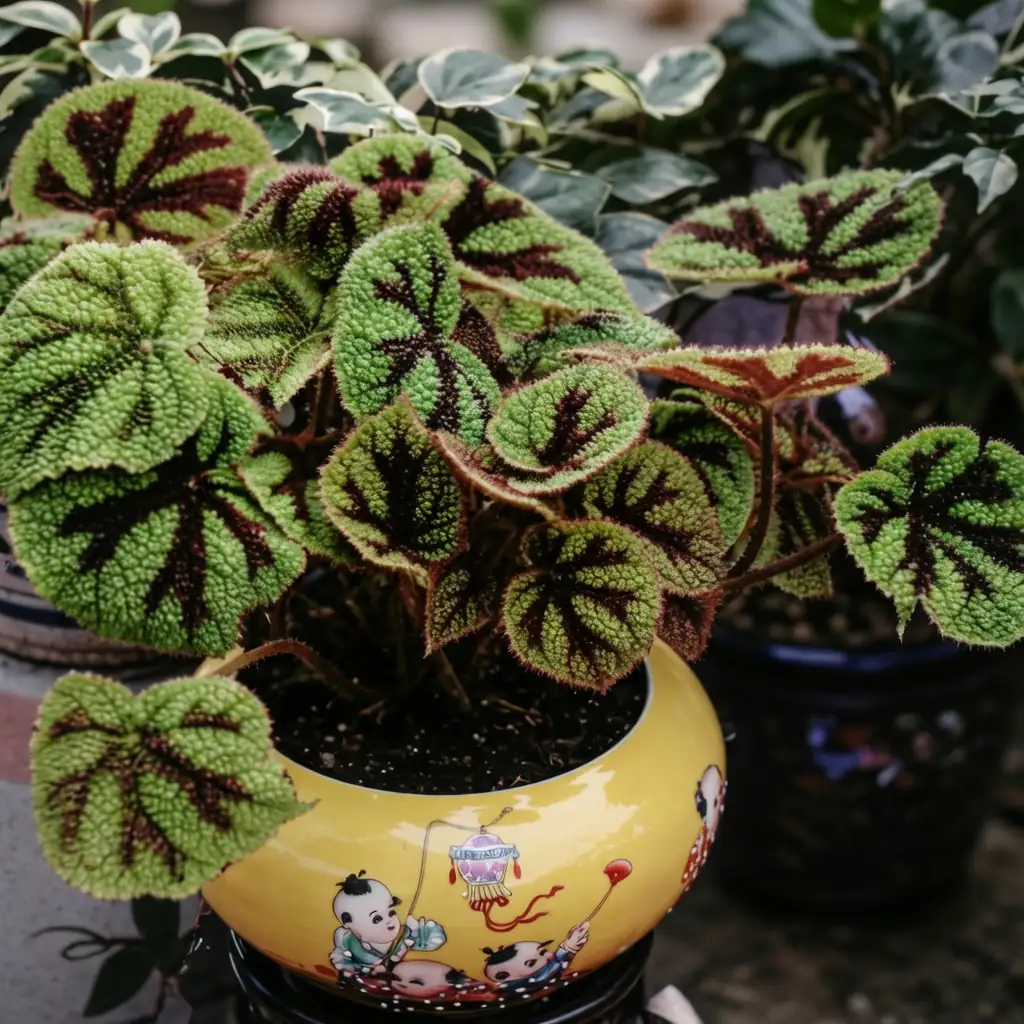
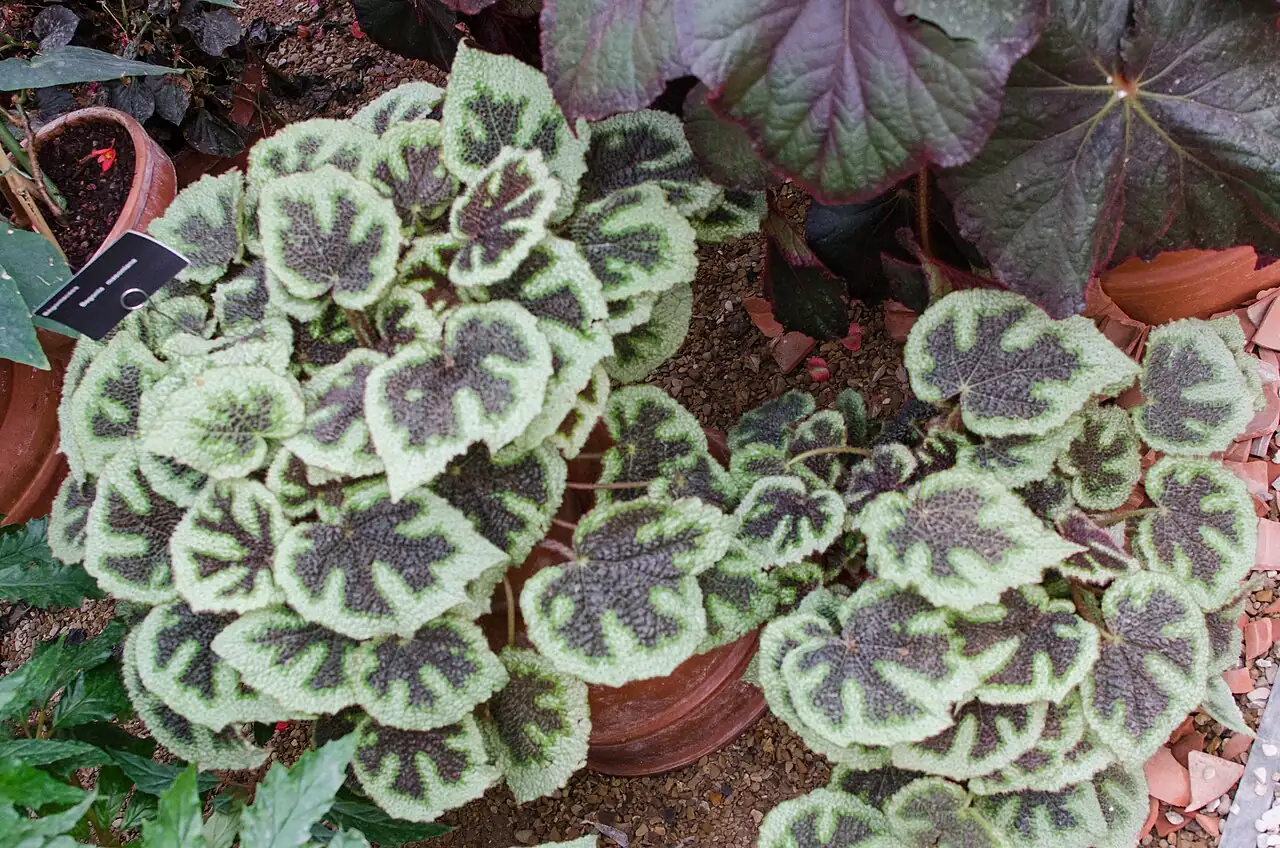
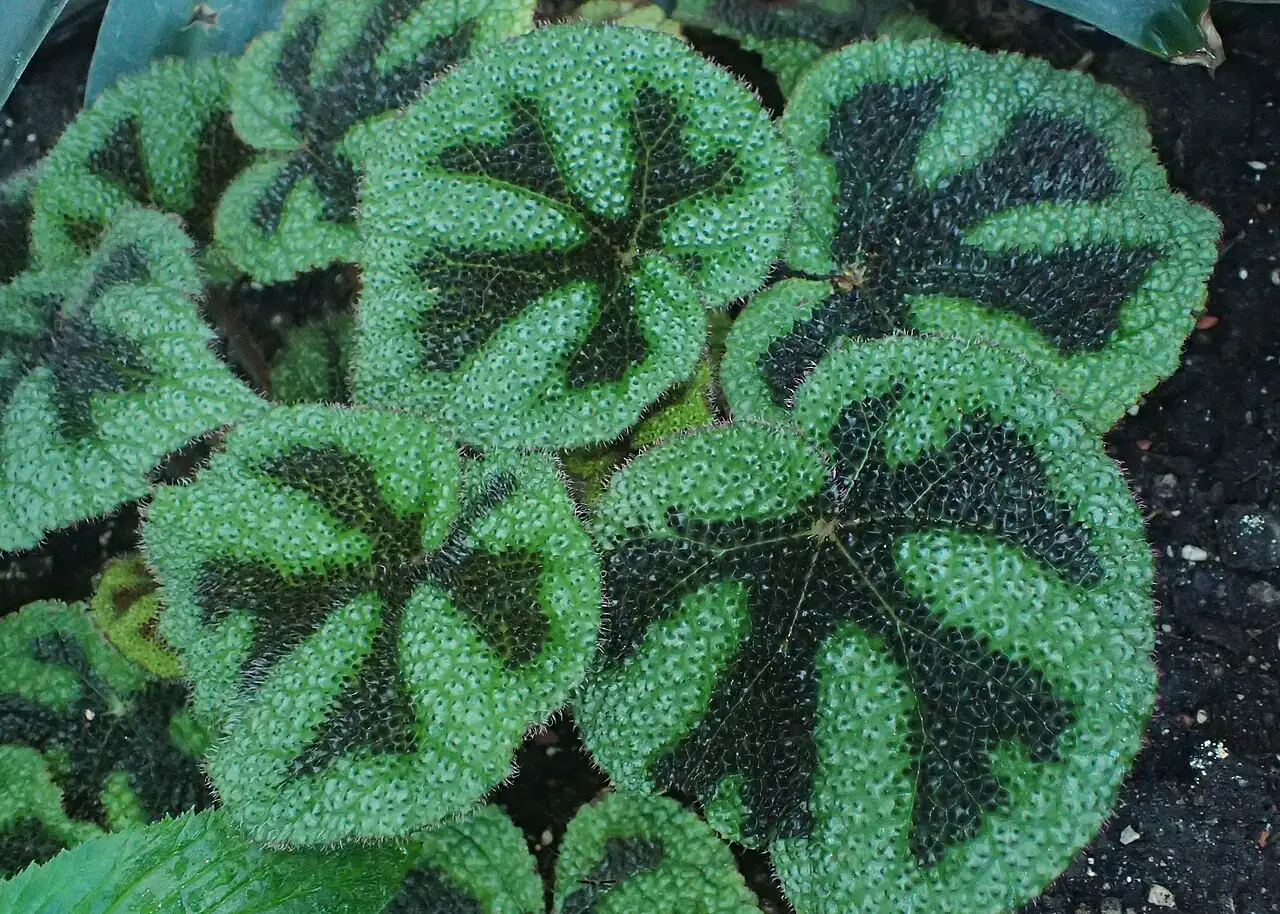
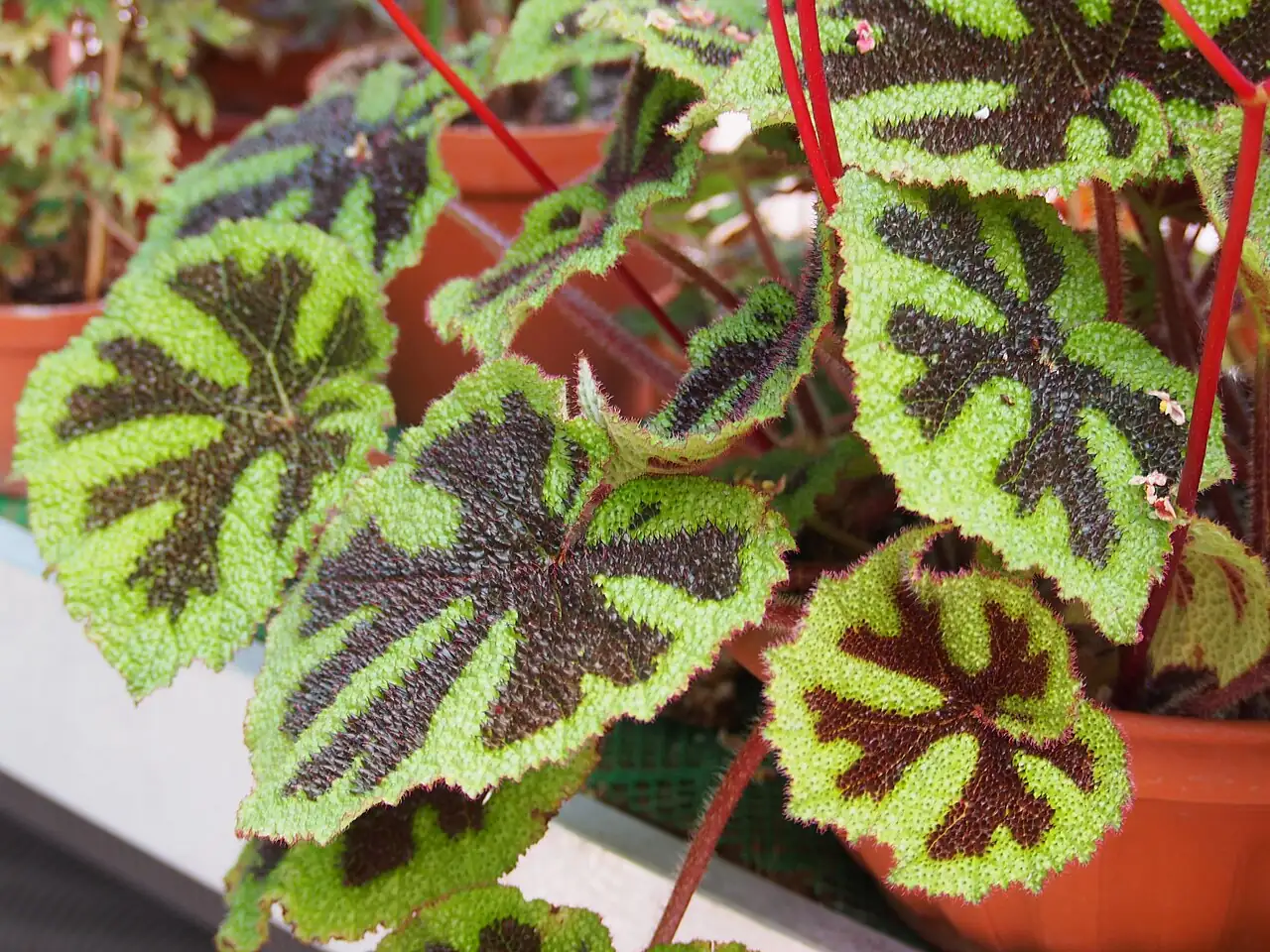
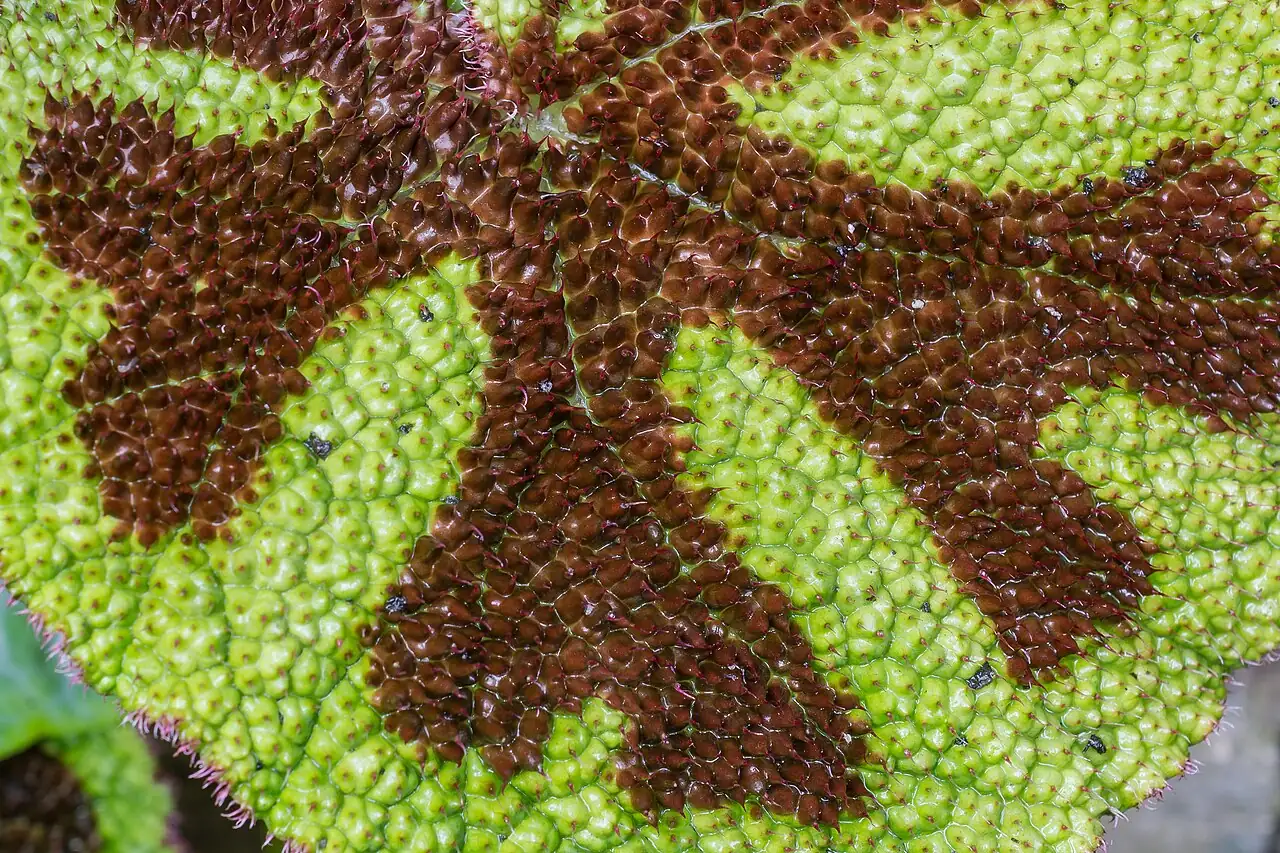
- Foliage: Soft-textured leaves with the signature dark cross pattern. The foliage can yellow when stressed by cold, dry air, or harsh direct sun. Below about 10°C (50°F), chilling injury is common—look for brown, crispy margins and scorch-like patches.
- Flower: Produces small, pale flowers on slender stems. Blooms are usually subtle and secondary to the dramatic leaves.
- Flowering Season: Summer
- Growth Habit: Rhizomatous, clump-forming, and gently spreading; in warm, shaded outdoor sites it can fill in to form a low, carpet-like planting.
Environment
Sunlight
Bright, indirect light to partial shade; avoid strong direct sun. During active growth, aim for roughly 50–70% shade (about 30–50% of full sun). Ideal near an east- or north-facing window, or set back behind a sheer curtain. Keep away from hot or cold drafts.
Temperature
Grows best around 14–22°C (57–72°F). Growth slows above about 32°C (90°F). Keep above 10°C (50°F) in winter to prevent leaf damage.
Humidity
Prefers higher humidity—about 60–70% is ideal. Low humidity combined with brighter light often leads to yellowing or scorched patches; use a humidifier or pebble tray and avoid drying vents.
Soil
Loose, airy, fast-draining mix such as potting compost blended with peat or coco coir plus coarse sand/perlite. Always use a pot with drainage holes.
Placement
Indoors: a bright room with filtered light (windowsill with a sheer curtain). Outdoors (warm climates only): a shaded, sheltered spot under trees, protected from midday sun and wind.
Hardiness
Frost-tender and not cold hardy; outdoors year-round only in warm climates (about USDA Zone 10–12).
Care Guide
Difficulty
Moderate: generally forgiving and very easy to propagate, but sensitive to cold, hot/dry air, and direct sun.
Buying Guide
Choose a full, compact plant with many intact leaves. Look for vivid color and a crisp cross pattern, with no spots, lesions, rot, or tears. Transport carefully—the foliage bruises and rips easily.
Watering
Keep the mix evenly moist during the growing season, but never waterlog. In summer, watering about every 3–4 days is common (adjust for heat, pot size, and drying speed). In winter it often rests—water very sparingly or pause watering to avoid rhizome rot. For better cool-season leaf growth, raise humidity (around 60–70%); mist the air nearby rather than repeatedly soaking the leaves.
Fertilization
Feed from April to August with a balanced fertilizer about every 2 weeks (e.g., 20-20-20 at label dilution). Reduce or stop feeding in cooler, low-light months.
Pruning
Thin crowded growth in summer by removing older leaves at the base to improve airflow and encourage fresh leaves. After about 4–5 years, plants may decline—restart vigor by taking cuttings and re-growing young plants.
Propagation
Division (spring, often during repotting): lift and cut the rhizome into sections about 10 cm (4 in) long, each with a growing tip; let cut surfaces dry briefly, then pot. Often 2–3 rhizome pieces per pot works well, each carrying at least 4–5 leaves; water lightly and keep in partial shade until established. Leaf cuttings (early summer): take a mature healthy leaf and cut it about 1 cm (0.4 in) from the petiole; sections around 6–7 cm (2.4–2.8 in) can be inserted into moist sand or sterile propagation mix with part of the leaf above the surface. Roots often form in about 3–4 weeks; transplant after ~2 months when plantlets have produced a couple of new leaves.
Repotting
Repot yearly in spring. Use a 12–15 cm (4.7–5.9 in) pot with a loose mix (potting compost + peat/coco + coarse sand/perlite). Remove some old leaves, divide if crowded, and replant offsets that already have 2–3 strong roots plus some leaves.
📅 Seasonal Care Calendar
Spring: repot annually; divide rhizomes if needed. Growing season: provide 50–70% shade, keep soil lightly moist; in summer water about every 3–4 days; fertilize every 2 weeks from April–August. Early summer: propagate by leaf cuttings; rooting in ~3–4 weeks; transplant after ~2 months when plantlets have 2 small leaves. Autumn: increase humidity (aim ~60–70%) to support new leaves. Winter: semi-dormant; water very sparingly or stop; keep above 10°C (50°F).
Pests, Diseases & Safety
Common Pests & Diseases
Can suffer from gray mold (Botrytis), powdery mildew, and leaf spot—usually when air is stagnant and foliage stays wet. Improve airflow, avoid splashing leaves, and remove affected tissue. Copper-based products are sometimes used preventively; if disease appears, use an appropriate fungicide following label directions. Pests may include scale insects; treat with horticultural oil or insecticidal soap and repeat as needed.
Toxicity
Considered toxic if eaten (especially rhizomes/underground parts) and may irritate skin in sensitive people. Keep away from pets and small children; wash hands after handling if you’re prone to irritation.
Culture & Symbolism
Symbolism: Not strongly standardized, but often associated with bold beauty—its dramatic leaf pattern makes it feel like a little statement plant that thrives quietly in shade.
History & Legends: A longtime favorite in houseplant circles thanks to its unmistakable cross-marked leaves and its reputation for being easily shared—one leaf cutting can become a whole new plant to pass along.
Uses: Primarily grown as an ornamental foliage plant indoors. In warm, humid regions it can also be planted outdoors in sheltered shade as a groundcover under trees.
FAQ
Why are my Iron Cross begonia leaves suddenly turning yellow?
Most often it’s stress from cold temperatures, dry air, or too much sun. Move it to bright, indirect light, keep it above 10°C (50°F), and raise humidity (ideally 60–70%). Healthier new leaves usually follow once conditions improve.
How do I choose a healthy Iron Cross begonia at the store?
Look for a compact plant with many intact leaves, strong color, and a clear cross pattern. Avoid leaves with spots, rot, or tears, and handle gently because the foliage is delicate.
Fun Facts
- The plant’s name comes from the dramatic dark “cross” marking on each leaf.
- It’s famous for easy propagation—one good leaf can make several new plants.
- In warm shaded gardens, planting in groups can create a lush, carpet-like effect.
- Filtered light helps keep the leaf pattern crisp; harsh sun can scorch the soft foliage.