

Plant Features
- Size: Typically grown as a trailing plant in containers: stems commonly reach 30–90 cm (12–35 in) long. Overall size is often around 15 cm (6 in) tall with a trailing/spreading reach up to about 60 cm (24 in), depending on light and pruning. For a full pot, many growers plant 3–5 young cuttings in a 15–20 cm (6–8 in) pot or hanging basket.
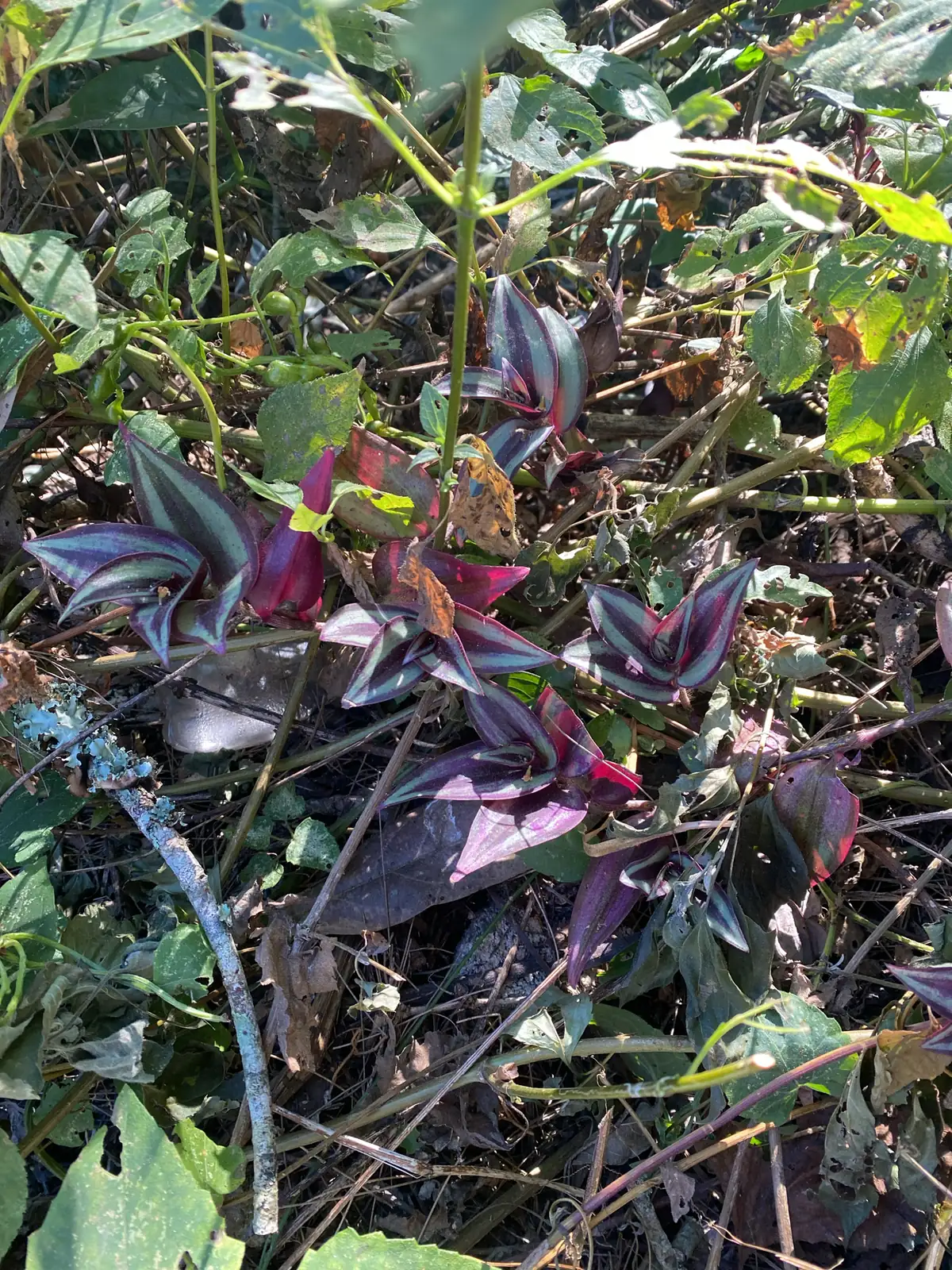
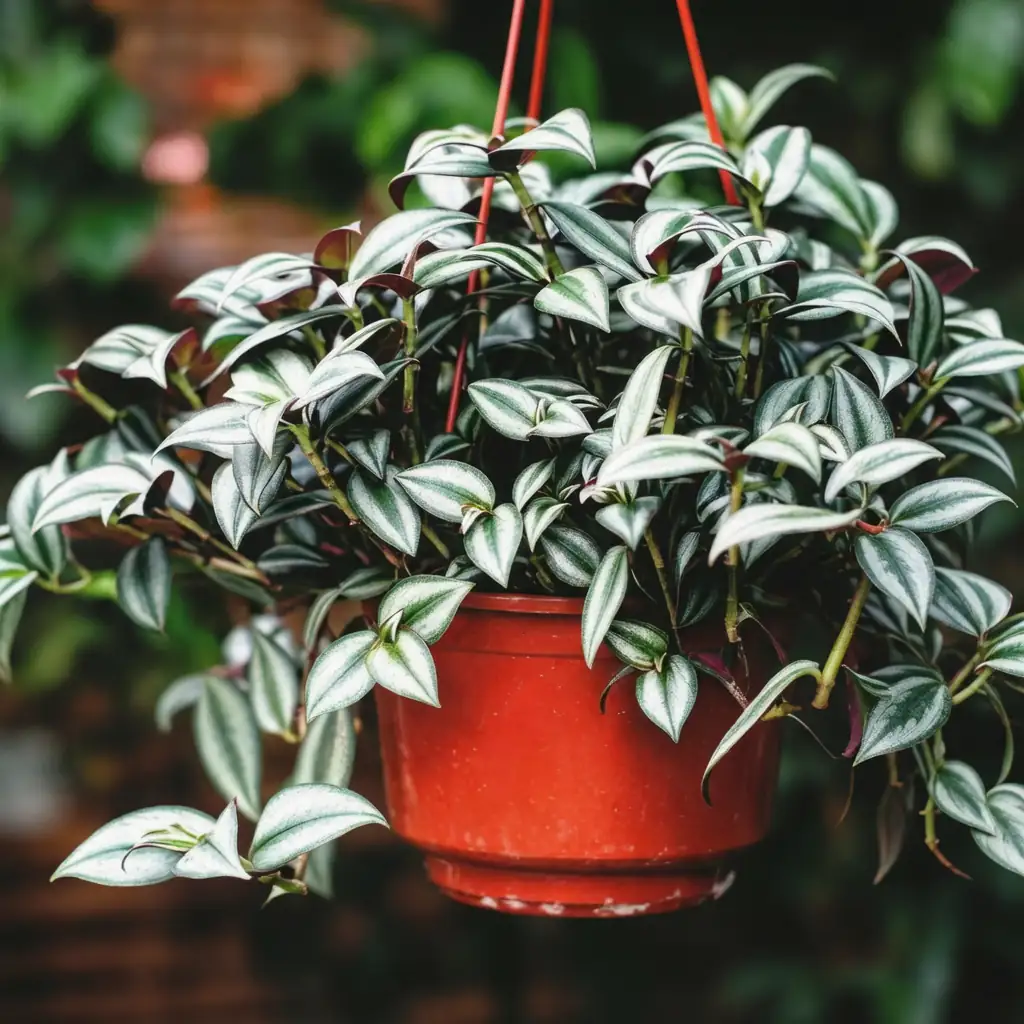
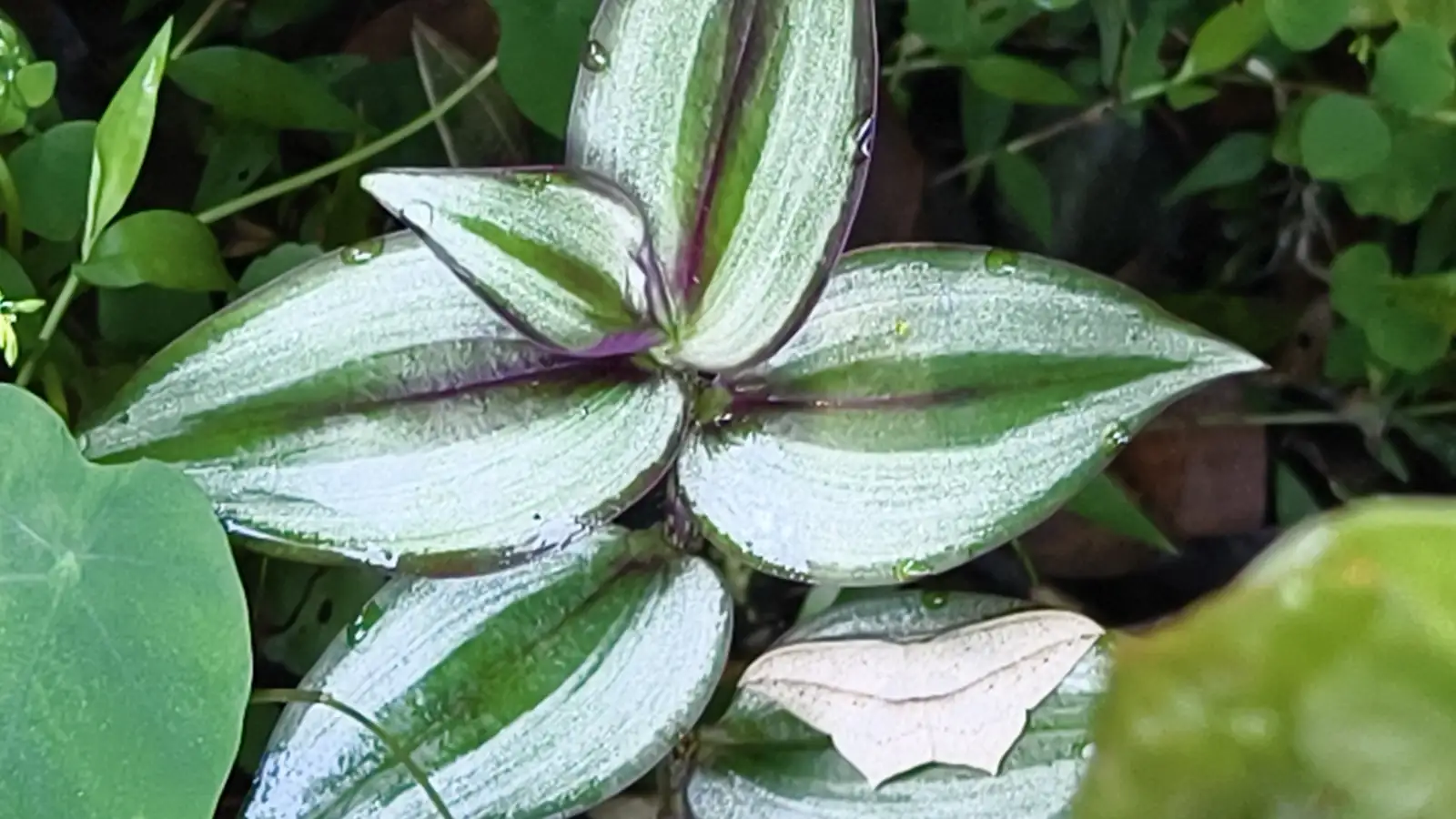
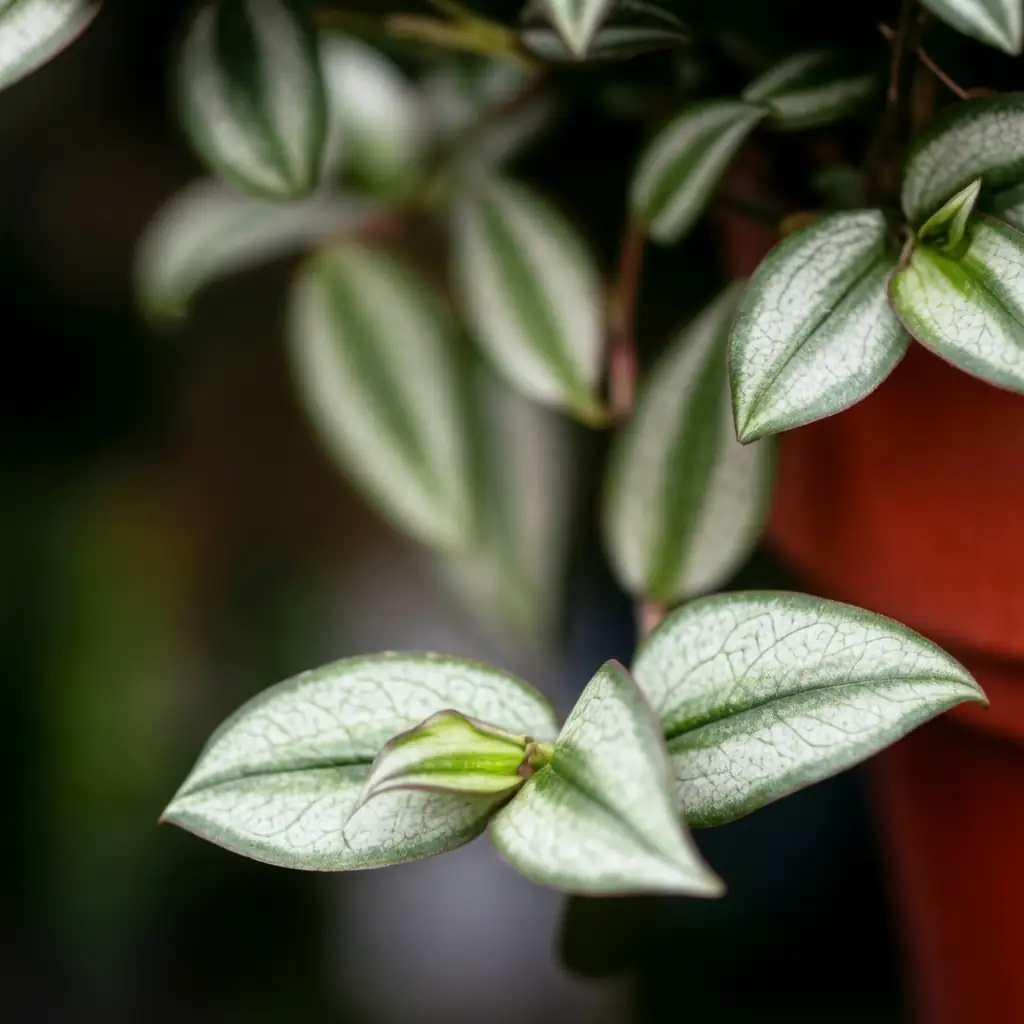
- Foliage: Fleshy, oval-to-lance-shaped leaves with bold silver and green striping on top and rich purple undersides; new growth often shows stronger purple tones for a lively tricolor effect. In dry air, leaf tips can brown; in low light, the plant can turn greener and stretch. Older basal leaves may yellow and drop with age, and excessive nitrogen feeding can make the colors look washed out.
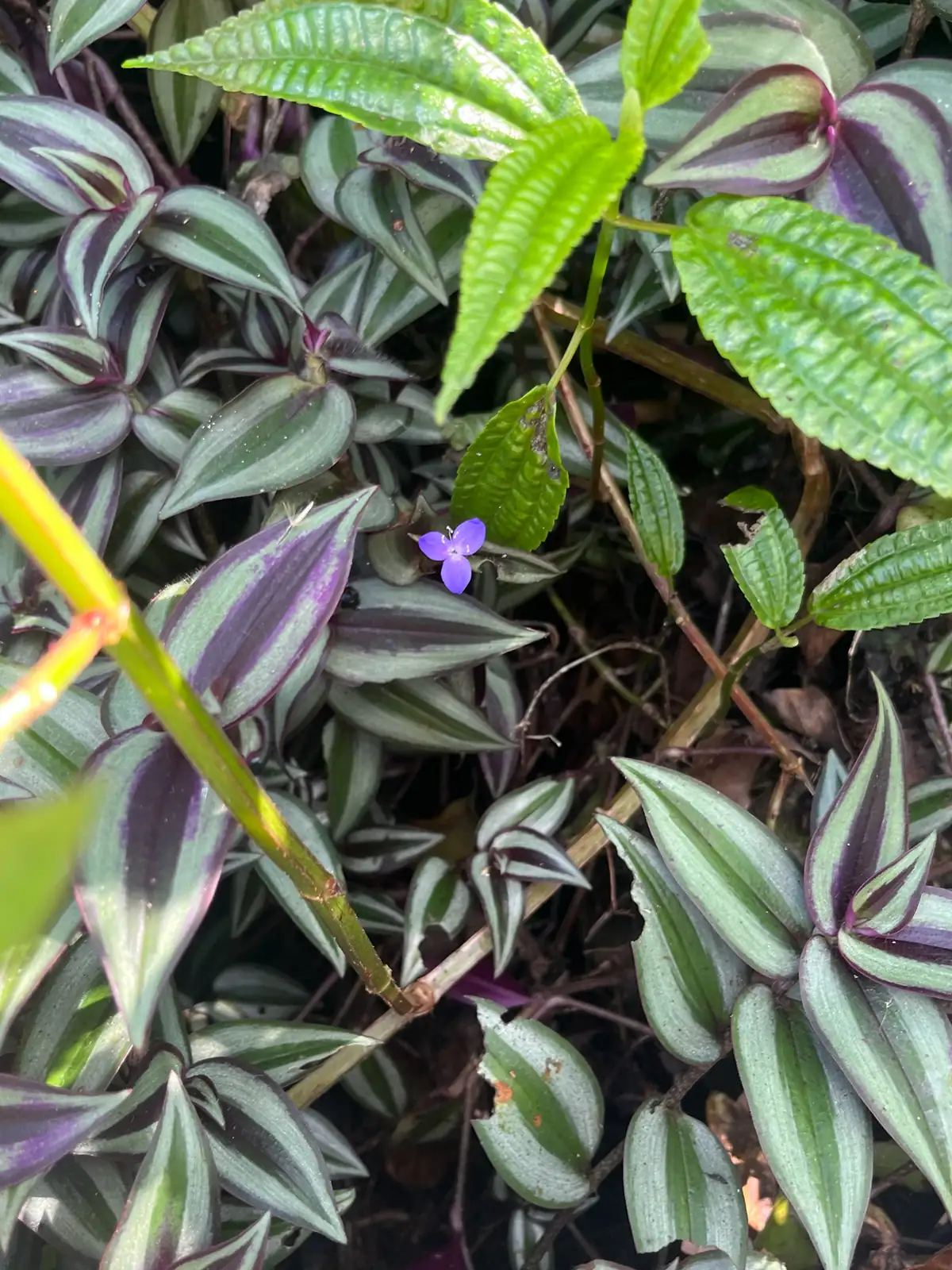
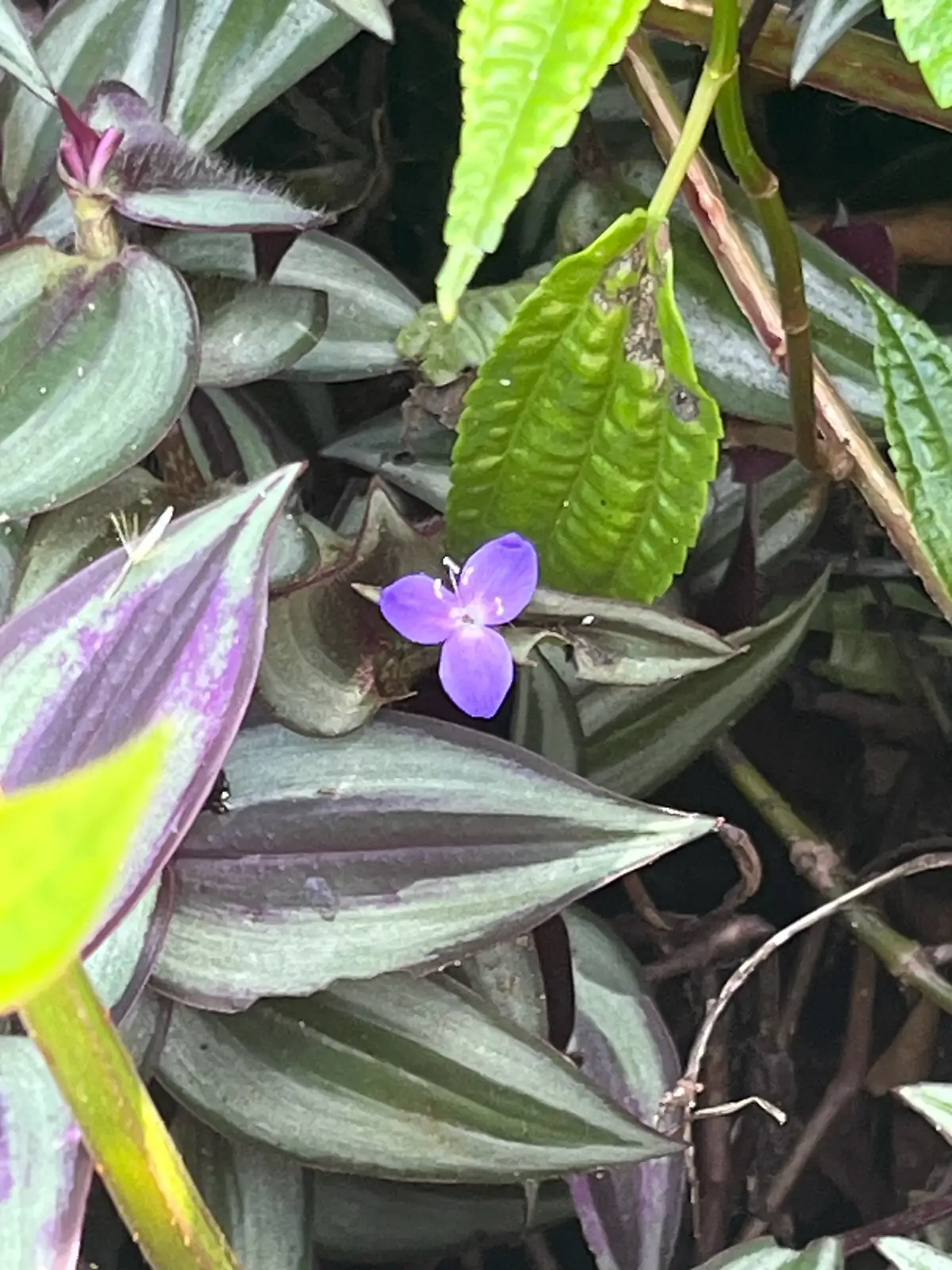
- Flower: Small, three-petaled flowers in pink to purple/lavender, produced sporadically (more likely when the plant gets good light).
- Flowering Season: Intermittent year-round indoors with good light; most often from spring through summer (especially in warm, bright conditions).
- Growth Habit: Trailing to creeping, with cascading stems that readily root at the nodes where they touch moist soil. Naturally fast and a bit “wander-y,” it can become leggy unless pinched and trimmed to encourage branching.
Environment
Sunlight
Bright, indirect light to light shade. Gentle morning sun is usually fine, but avoid harsh midday direct sun (especially in summer), which can scorch or yellow leaves. Too little light leads to duller color and lanky stems.
Temperature
Grows best around 18–22°C (64–72°F), and generally does well in the broader indoor range of about 12–24°C (54–75°F). Keep above 10°C (50°F); damage can occur below about 5°C (41°F). Protect from cold drafts.
Humidity
Prefers moderate humidity (around 50%+), but adapts to average home humidity. In very dry air it may get brown tips; occasional misting or a humidity tray can help, as long as airflow is good.
Soil
Loose, fertile, fast-draining mix. A general houseplant potting mix amended with perlite or coarse sand works well (about 3:1 potting mix to perlite/sand). Always use a pot with drainage to prevent rot.
Placement
Indoors near a bright east- or north-facing window, or any bright spot with filtered light. Excellent for hanging baskets, shelves, balconies, and porches where stems can trail (keep out of strong summer sun).
Hardiness
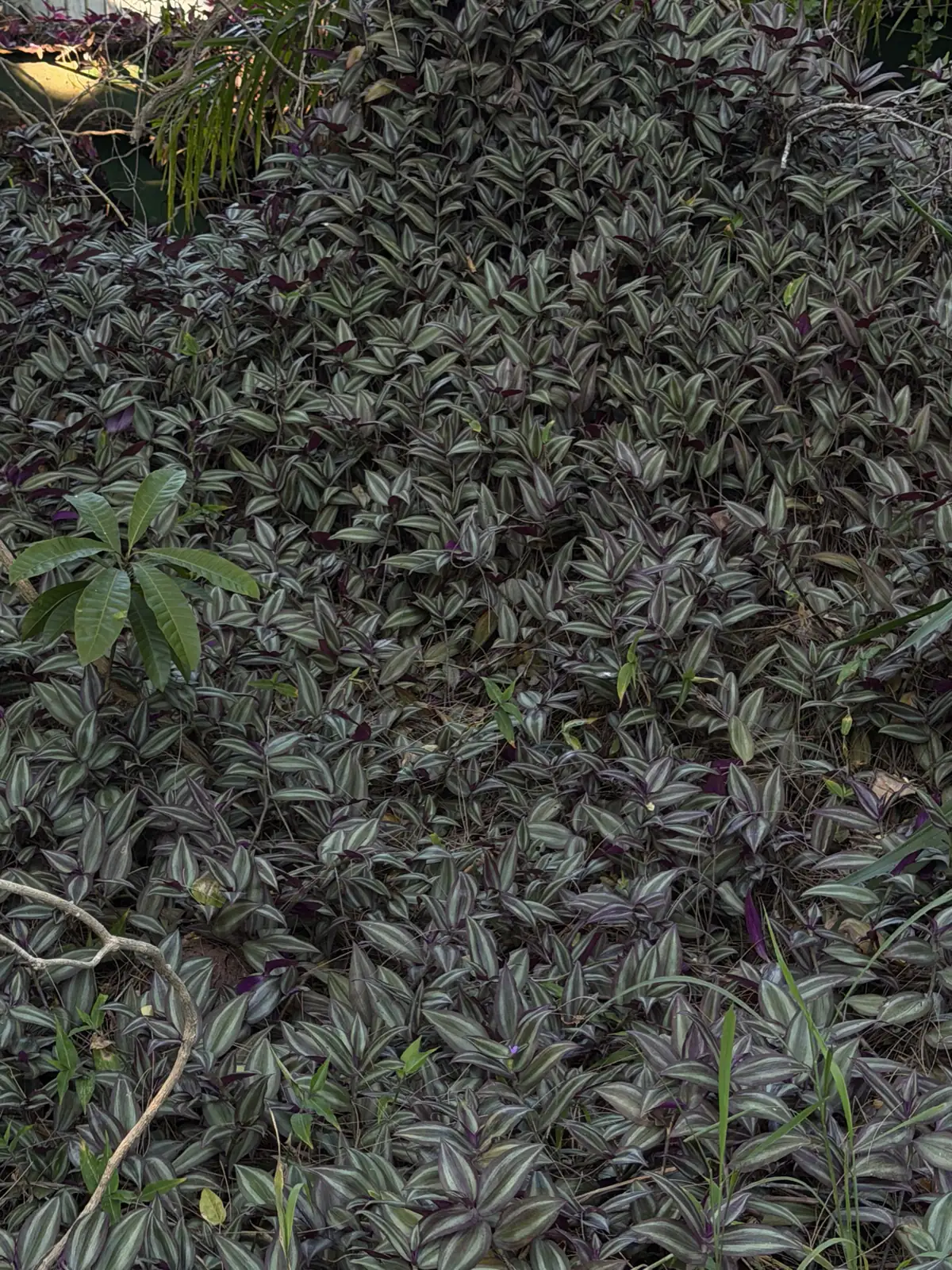
Frost-tender; suitable outdoors year-round mainly in USDA Zone 10–12. In frost-free climates it can spread and naturalize, so manage and dispose of trimmings responsibly.
Care Guide
Difficulty
Easy to moderate: very forgiving and quick to grow, but it stays much prettier with bright light, regular pinching/trimming, and sensible watering (not too dry, not soggy).
Buying Guide
Pick a plant with dense, compact growth, firm stems, and strong striping/purple tones. Avoid pots with lots of bare, stretched stems, mushy nodes, leaf spots, or obvious pests (sticky residue, cottony clusters, webbing).
Watering
Water thoroughly, then let excess drain. As a rule, water when the top 2–3 cm (about 1 in) feels dry (or when the surface is nearly dry). Spring through autumn: keep lightly and evenly moist but never waterlogged. Winter: reduce watering and keep just slightly moist. Underwatering and dry air can cause crispy tips; constantly wet soil can lead to stem/root rot—drainage is essential.
Fertilization
During active growth (spring to early autumn), feed with a balanced liquid fertilizer. A practical range is every 2 weeks at a diluted rate, or about once a month at label strength—either approach works if growth stays sturdy and colors remain strong. Avoid overfeeding, especially high nitrogen, which can soften growth and fade leaf color. If you want more flowers, a bloom-leaning feed (higher phosphorus/potassium) a few times during the growing season can help.
Pruning
Pinch or snip the growing tips regularly to encourage branching and a fuller cascade. If it gets leggy or bare at the base, cut stems back hard and re-root the healthiest tips to “restart” the pot. A major refresh is commonly done every 1–2 years indoors (or sooner if it’s looking tired).
Propagation
Exceptionally easy from stem cuttings. Take 7–12 cm (3–5 in) cuttings (or longer 15–20 cm / 6–8 in pieces), remove the lower leaves, and place at least 1–2 nodes in water or moist potting mix/perlite. Nodes typically root in about 7–10 days (often around ~10 days). Plant multiple rooted cuttings together for a thicker, more lush pot.
Repotting
Repot in spring as needed, usually every 1–2 years (some growers stretch it to 2–3 years). Use a breathable 15–20 cm (6–8 in) pot or hanging basket with a fresh, well-draining mix. Many people skip “potting up” and instead refresh by replanting rooted cuttings for a fuller look.
📅 Seasonal Care Calendar
Spring: increase light and watering as growth resumes; pinch tips often; begin feeding. Summer: keep in bright filtered light (avoid harsh sun), water as needed, and support humidity with airflow. Autumn: gradually reduce feeding and watering as growth slows. Winter: keep above 10°C (50°F), avoid cold drafts, water sparingly (just lightly moist), and trim lightly if needed.
Pests, Diseases & Safety
Common Pests & Diseases
Can attract spider mites, mealybugs, aphids, and scale—especially in dry indoor air. Rinse the plant, then treat with insecticidal soap or horticultural oil and repeat as needed. Overwatering and poor airflow can lead to stem rot or leaf spot/blight; remove affected leaves, improve ventilation, and keep the mix fast-draining (copper-based products are sometimes used for leaf spot where appropriate).
Toxicity
The sap can irritate skin in sensitive people. If chewed, it may cause mild mouth or stomach upset in pets or children; best kept out of reach, and wear gloves if you’re prone to irritation.
Culture & Symbolism
Symbolism: Often linked with resilience, adaptability, and hope—thanks to its easy-going nature and its talent for bouncing back from a haircut.
History & Legends: A long-time favorite houseplant and warm-climate groundcover around the world. An older common name is widely considered offensive today, so many growers prefer friendlier names such as “inch plant” or “wandering dude.”
Uses: Primarily ornamental: ideal for hanging baskets, shelves, and mixed planters indoors. In frost-free climates it’s also used as a fast, colorful groundcover—though it can spread aggressively if allowed to escape cultivation.
FAQ
My plant is getting bare at the base and the older leaves are yellowing—what should I do?
That’s very common with inch plant as it ages. Pinch tips regularly to force side shoots, and when it looks scruffy, cut it back and re-root healthy tip cuttings to replant a fuller pot (many people do this refresh every 1–2 years).
Why is it leggy and not flowering?
Low light is the usual culprit. Move it to brighter, indirect light (or gentle morning sun), and pinch tips once stems reach about 20 cm (8 in) to encourage branching. Older plants often flower better after a trim and fresh new growth.
Can it handle direct sun?
A little morning sun is fine, but strong midday sun—especially in summer—can scorch and wash out the leaves. Bright shade or filtered light gives the best color without burning.
How do I make it look fuller in a hanging basket?
Plant several cuttings together and pinch the growing tips often. Regular trimming triggers branching, which creates a thicker, more dramatic cascade.
Fun Facts
- It roots wherever a stem node touches moist soil—one reason it spreads so quickly and is almost impossible to “fail” at propagating.
- The silver striping and purple tones intensify in brighter (filtered) light, but tend to fade in deep shade or with overly nitrogen-rich fertilizer.
- In warm, frost-free regions it can escape cultivation—so compost or discard trimmings responsibly rather than tossing them outdoors.


