Plant Features
- Size: Height: 1.2–2.4 m (4–8 ft); Spread: 30–60 cm (1–2 ft)
- Foliage: Leaves are large, green, and palmately lobed (mallow-like), with a coarse, slightly rough texture. Plants usually form a low basal rosette in the first year before sending up tall flowering stems later on.
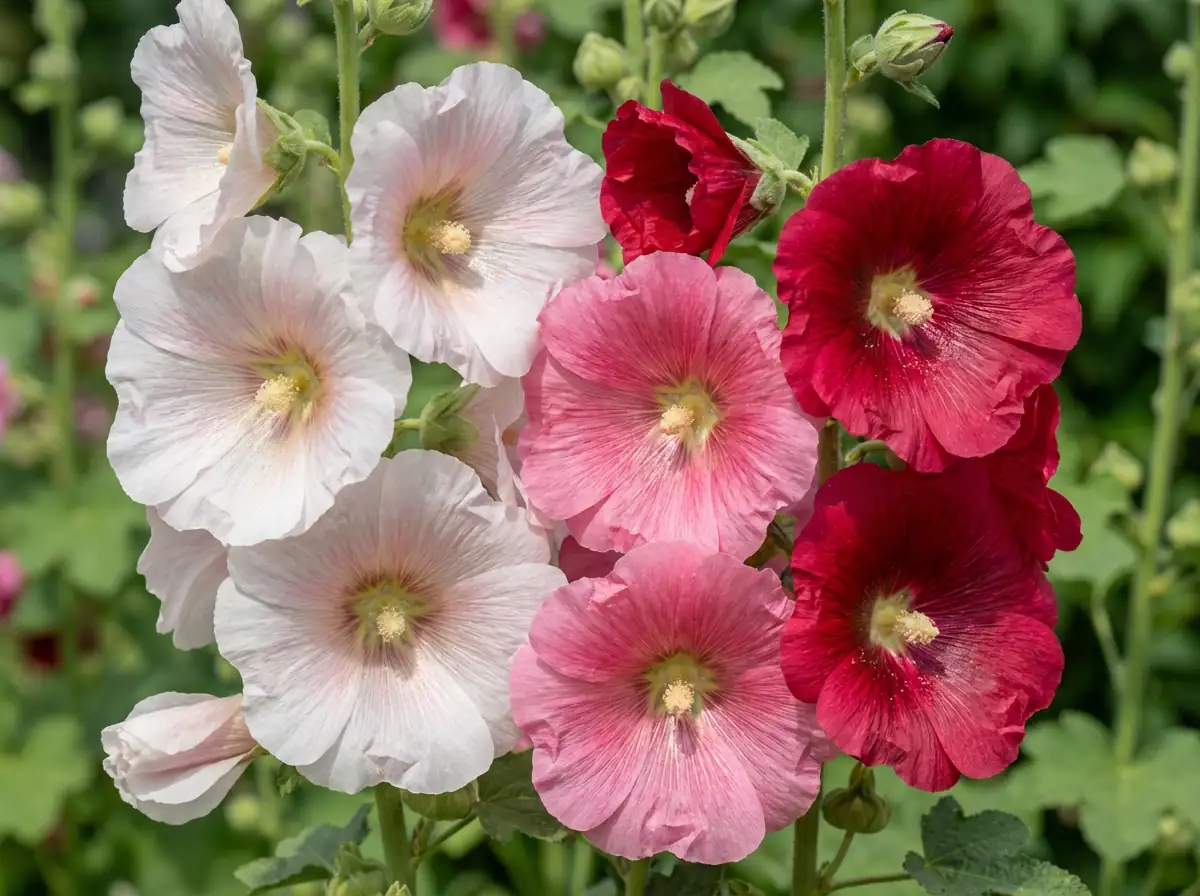
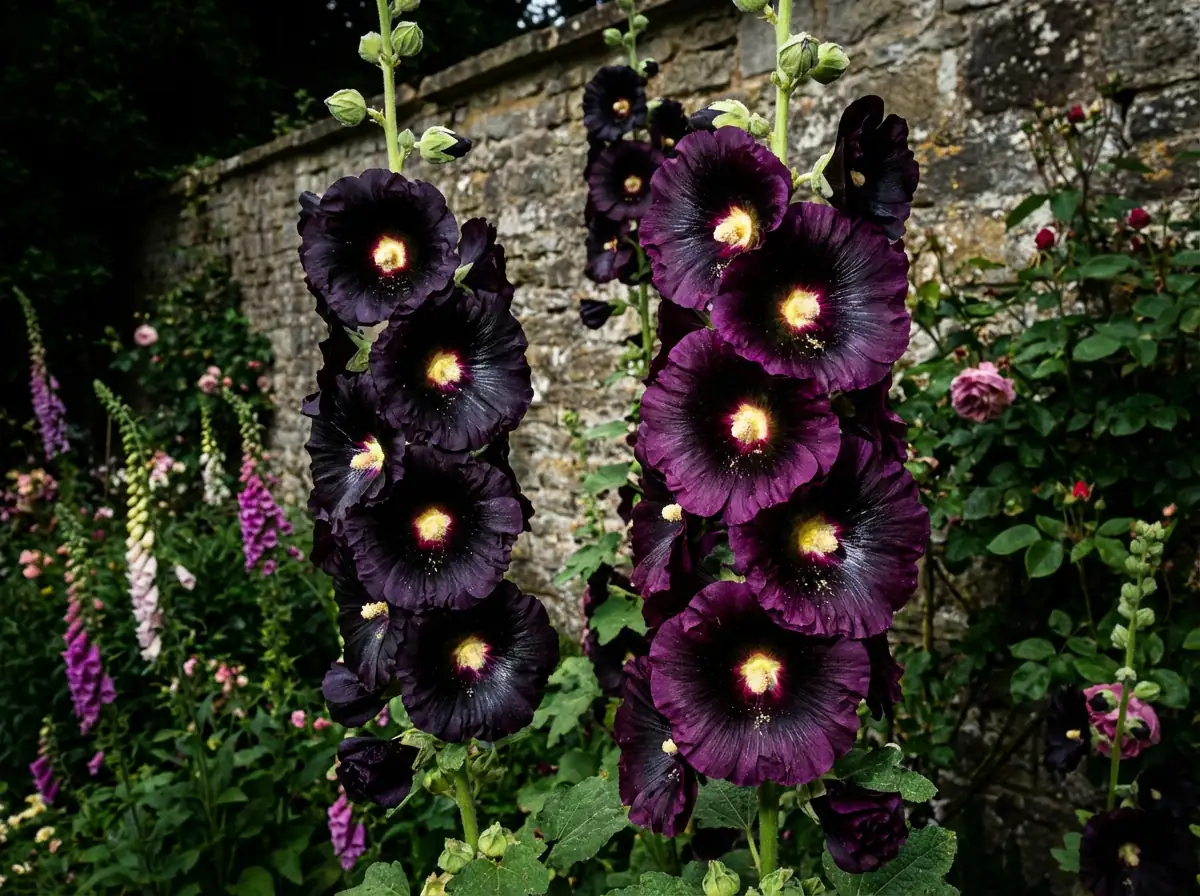
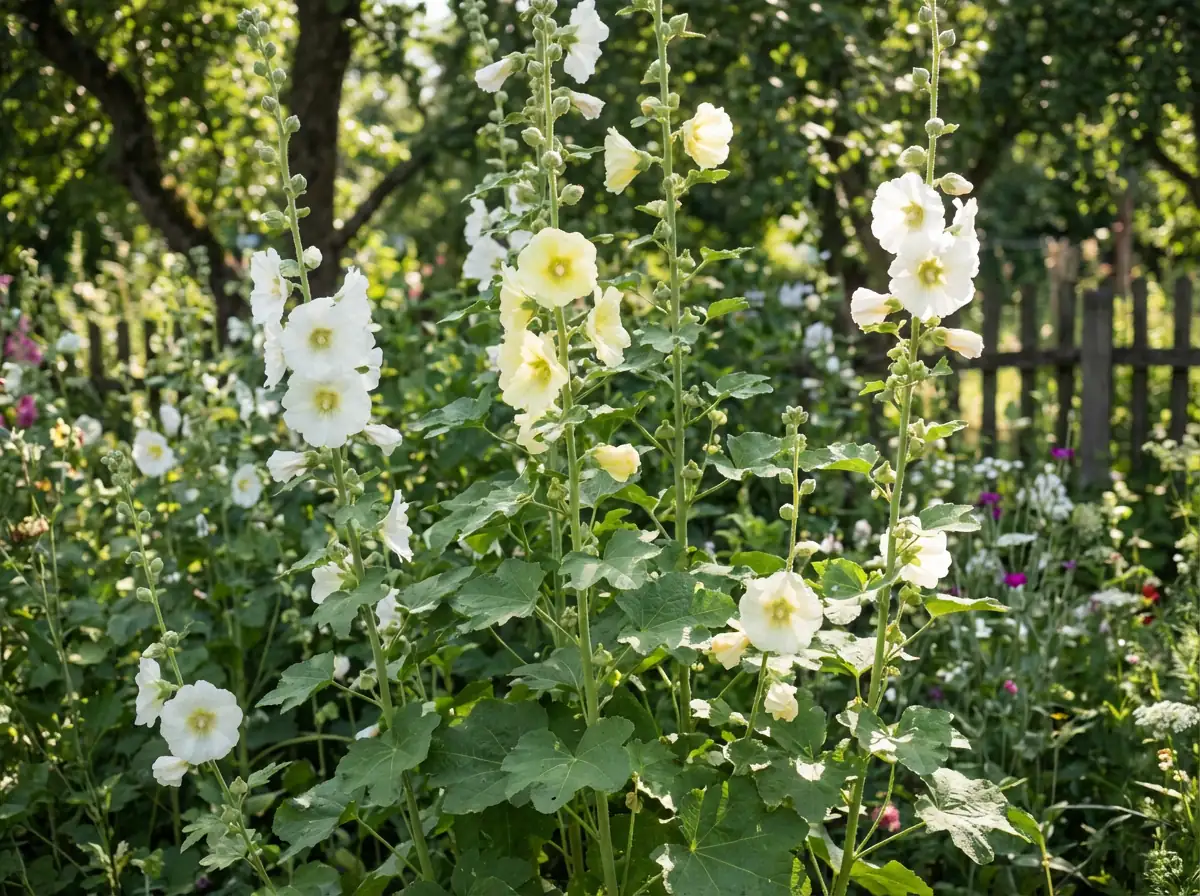
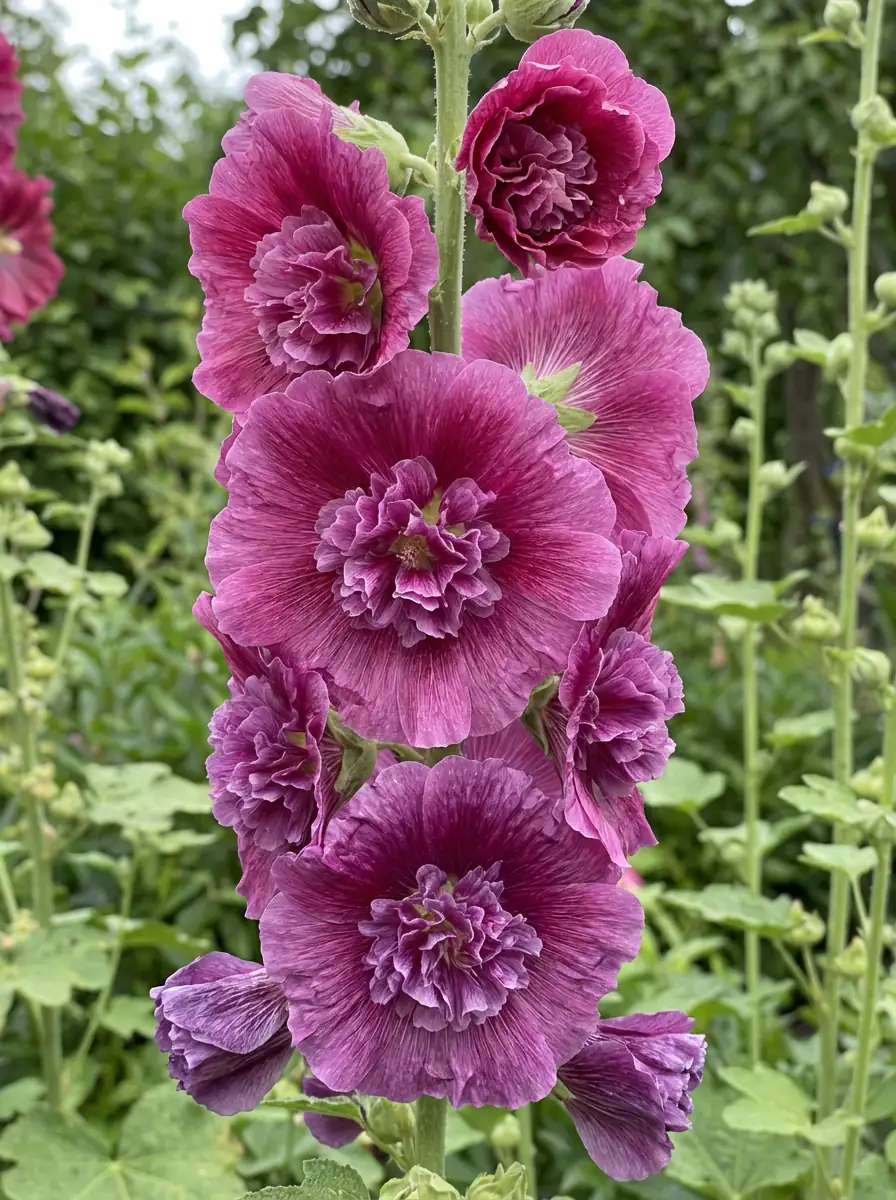
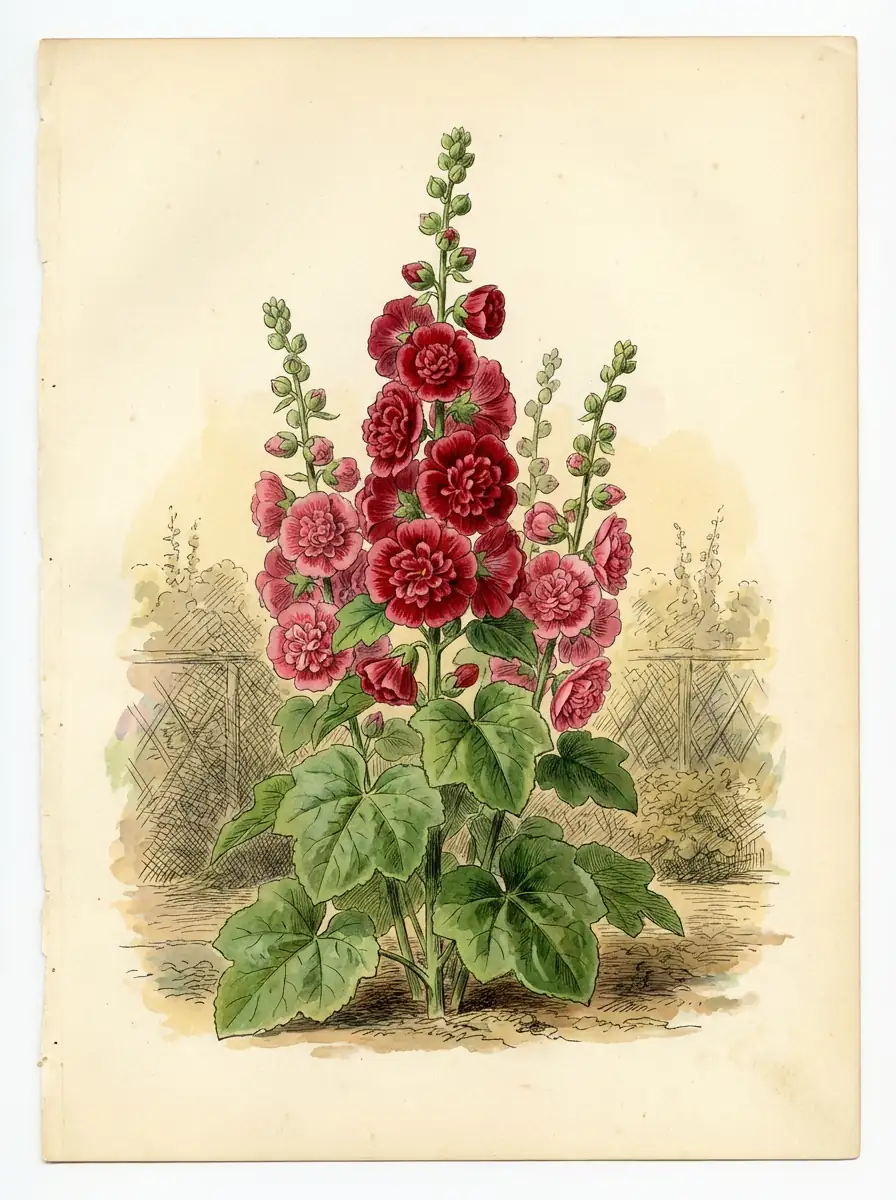
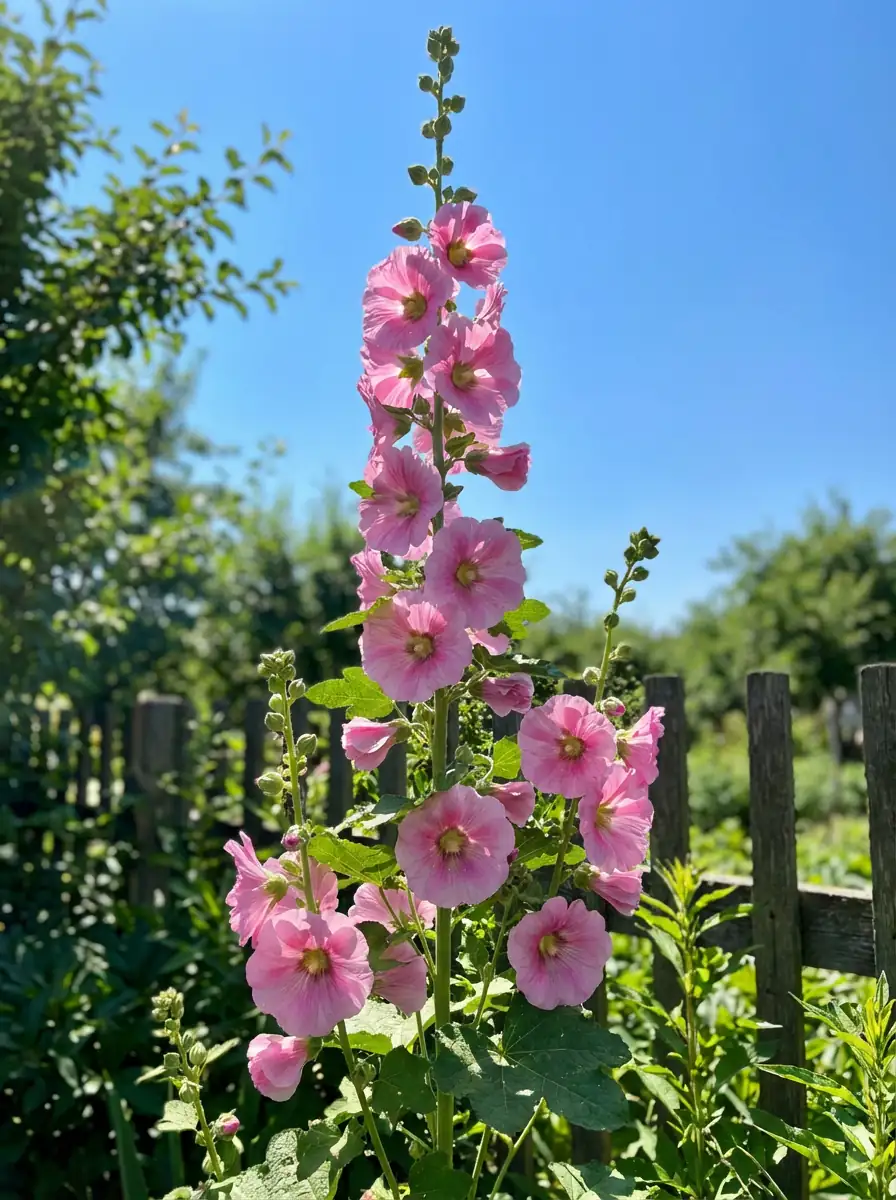
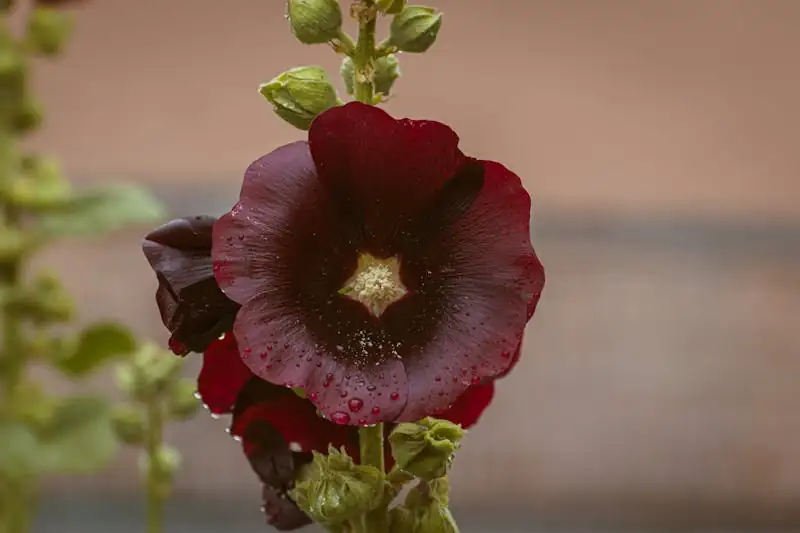
- Flower: Large, cup-shaped flowers (single or double) about 7.5–12.5 cm (3–5 in) across are borne densely along tall spikes. Blooms appear in many colors—white, pink, red, purple, yellow, and very dark maroon to near-black—with flowers opening progressively up the stem for a long-lasting display.
- Flowering Season: June–August (mid- to late summer), often lasting 2–3 months as flowers open from bottom to top
- Growth Habit: Upright and strongly vertical, typically with one or more tall flower spikes. Most forms are biennial, though some modern cultivars can bloom in their first year and persist as short-lived perennials.
Environment
Sunlight
Full sun is best (about 6–8 hours of direct light daily). Tolerates partial shade, but flowering is often lighter and plants may stretch or flop if too shaded.
Temperature
Best in temperate conditions. Generally cold-hardy; many garden forms tolerate winter cold down to about -18°C (0°F). Late blooms can be nipped by early fall frosts. In hotter summers, consistent watering helps keep plants performing well.
Humidity
Prefers moderate humidity. High humidity plus still air encourages hollyhock rust, so give plants plenty of spacing and airflow.
Soil
Rich, fertile, well-draining soil that holds some moisture is ideal. Incorporate compost, aged manure, or leaf mold before planting for stronger growth and better flowering.
Placement
Perfect for the back of borders, along fences/walls, cottage gardens, and sunny foundations. Shelter from strong winds when possible and space plants about 45–60 cm (18–24 in) apart for airflow.
Hardiness
USDA Zones 3–9 (some varieties reported hardy to Zone 2); not fond of repeated freeze-thaw without some winter protection
Care Guide
Difficulty
Easy and beginner-friendly. Once established it’s fairly low-maintenance, though keeping rust at bay takes a bit of attention (mainly spacing, airflow, and watering technique).
Buying Guide
Look for vigorous plants with clean, unspotted leaves—avoid any with orange/yellow rust spotting. If buying seed, choose reputable suppliers and check freshness/germination dates for best results.
Watering
Keep seedlings and young plants evenly moist while they establish. Mature plants handle short dry spells better, but flowering is best with regular deep watering during hot, dry weather. Water at the base (avoid wetting leaves) to reduce rust problems; deep, occasional watering is better than frequent light sprinkling.
Fertilization
In average garden soil, feed once or twice during the growing season with a balanced fertilizer (e.g., 10-10-10). In poorer soils, a light feed every 2–4 weeks during bloom can help. Too much nitrogen makes lush leaves at the expense of flowers—shift emphasis toward phosphorus and potassium once buds form.
Pruning
Deadhead to extend bloom and limit unwanted self-seeding (or leave some seed heads if you want volunteers). After flowering, cut spent stalks down. If rust appears, remove affected lower leaves promptly. In fall, cut plants back to about 15 cm (6 in) and clear debris to reduce disease carryover.
Propagation
Most commonly grown from seed. Sow outdoors about 1 week before the last frost date, or start indoors 8–10 weeks before last spring frost. Seeds typically germinate in 10–14 days at about 16–21°C (60–70°F). Plants also self-seed readily if seed heads mature. Division (spring) or basal cuttings can work, though seed is easiest for most gardeners.
Repotting
If grown in containers, repot in early spring when root-bound. Use a deep pot to accommodate the long taproot, and handle roots gently—hollyhocks dislike being disturbed once established.
📅 Seasonal Care Calendar
Spring: sow seeds (indoors or out), enrich soil, begin steady watering. Summer: flowering time—deadhead, water deeply during heat, stake in windy sites, watch for rust and treat early. Fall: collect seed if desired, cut back, remove debris; in mild areas you may sow seed for next year. Winter: in cold regions, mulch crowns with about 10–15 cm (4–6 in) straw after the ground freezes; pull mulch back gradually in spring.
Pests, Diseases & Safety
Common Pests & Diseases
The big one is hollyhock rust (yellow/orange spots on upper leaf surfaces with rusty bumps underneath). Also seen: powdery mildew, anthracnose, southern blight, and leaf spots. Prevention focuses on spacing, airflow, watering at the soil line (not overhead), removing infected leaves quickly, and thorough fall cleanup. Fungicides can help if applied early. Pests may include Japanese beetles, leafhoppers, spider mites, slugs/snails (especially on young plants), and root-knot nematodes. Deer usually leave hollyhocks alone.
Toxicity
Generally considered non-toxic to people and pets (dogs/cats). Flowers are commonly used as edible garnishes, and other parts are sometimes eaten. Some gardeners may experience mild skin irritation from tiny scratchy hairs/fibers on stems and leaves.
Culture & Symbolism
Symbolism: Often linked with dreams and ambition; in Victorian flower language it also carried ideas of fruitfulness and the rhythm/cycle of life.
History & Legends: Hollyhocks have been grown in China for roughly two millennia and traveled westward along trade routes such as the Silk Road, becoming established in Europe by the late medieval period. A popular story ties the name “hollyhock” to the Crusades era, when the plant was associated with soothing salves used on horses’ hocks. By Victorian times it became a signature cottage-garden flower—so common it even earned the nickname “outhouse flower” for its ability to prettify and screen utilitarian corners of the garden.
Uses: Ornamental: a standout for cottage gardens, borders, and vertical accent planting, especially against walls and fences. Cutting: flowers can last about 7–10 days in a vase if cut at the right stage. Edible: petals (and sometimes young leaves) are used as colorful garnishes or cooked greens. Traditional uses: historically used in soothing, anti-inflammatory preparations, including for respiratory comfort. Wildlife value: attracts bees, butterflies, hummingbirds; painted lady butterflies are known to use mallows/hollyhocks as host plants.
FAQ
Do hollyhocks bloom the first year?
Most are biennials, so they typically flower in their second year. That said, some modern cultivars can bloom the first year—especially if started indoors 8–10 weeks before the last frost and planted out early.
How do I prevent hollyhock rust?
Give plants space (about 45–60 cm / 18–24 in apart), grow them in full sun with good airflow, water at the base (avoid overhead watering), remove infected leaves quickly, and clean up all debris in fall. If rust shows up, treat early with an appropriate fungicide and stay consistent.
Do hollyhocks need staking?
Often, yes—especially in windy spots or heavy summer rain. Planting near a fence or wall helps, and adding stakes early prevents tall spikes from snapping or flopping.
Are hollyhocks annuals or perennials?
They’re usually biennials, but because they self-seed so reliably, they can look “perennial” in the garden. Some cultivars behave as short-lived perennials and may return for a few seasons.
Why are my hollyhock leaves turning yellow?
Common causes include rust disease (look for orange/rust bumps underneath leaves), overwatering/poor drainage, nutrient issues, or simply the natural aging of lower leaves on mature plants.
Fun Facts
- Hollyhock belongs to the mallow family (Malvaceae), alongside hibiscus, okra, and cotton.
- Victorian gardeners sometimes called them “outhouse flowers” because they were often planted to disguise privies and sheds.
- Garden designers have long used shorter plants (like dahlias) in front to hide hollyhock’s sometimes bare lower stems—its “shins.”
- The plant’s long taproot is part of why it resents transplanting once established.
- Hollyhock flowers can act as a natural pH indicator—their pigments can shift with acidity/alkalinity.
- Painted lady butterflies are closely associated with mallows, including hollyhocks, as host plants for caterpillars.
- All parts are often described as edible, with petals especially popular as salad garnishes.
- Historically, hollyhock roots were used in soothing preparations—part of the same tradition that inspired early marshmallow-like confections.