Plant Features
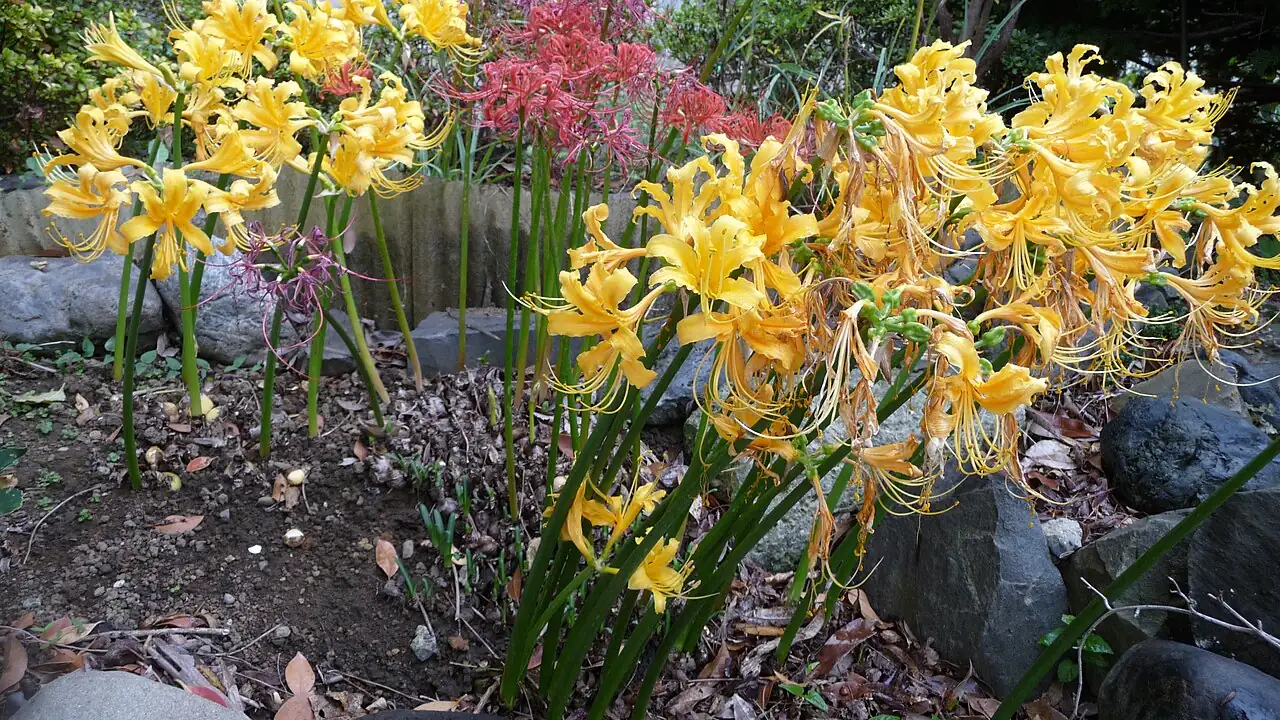
- Size: Herbaceous, bulb-forming perennial; flowering stems commonly about 30–60 cm (12–24 in) tall, forming clumps over time.
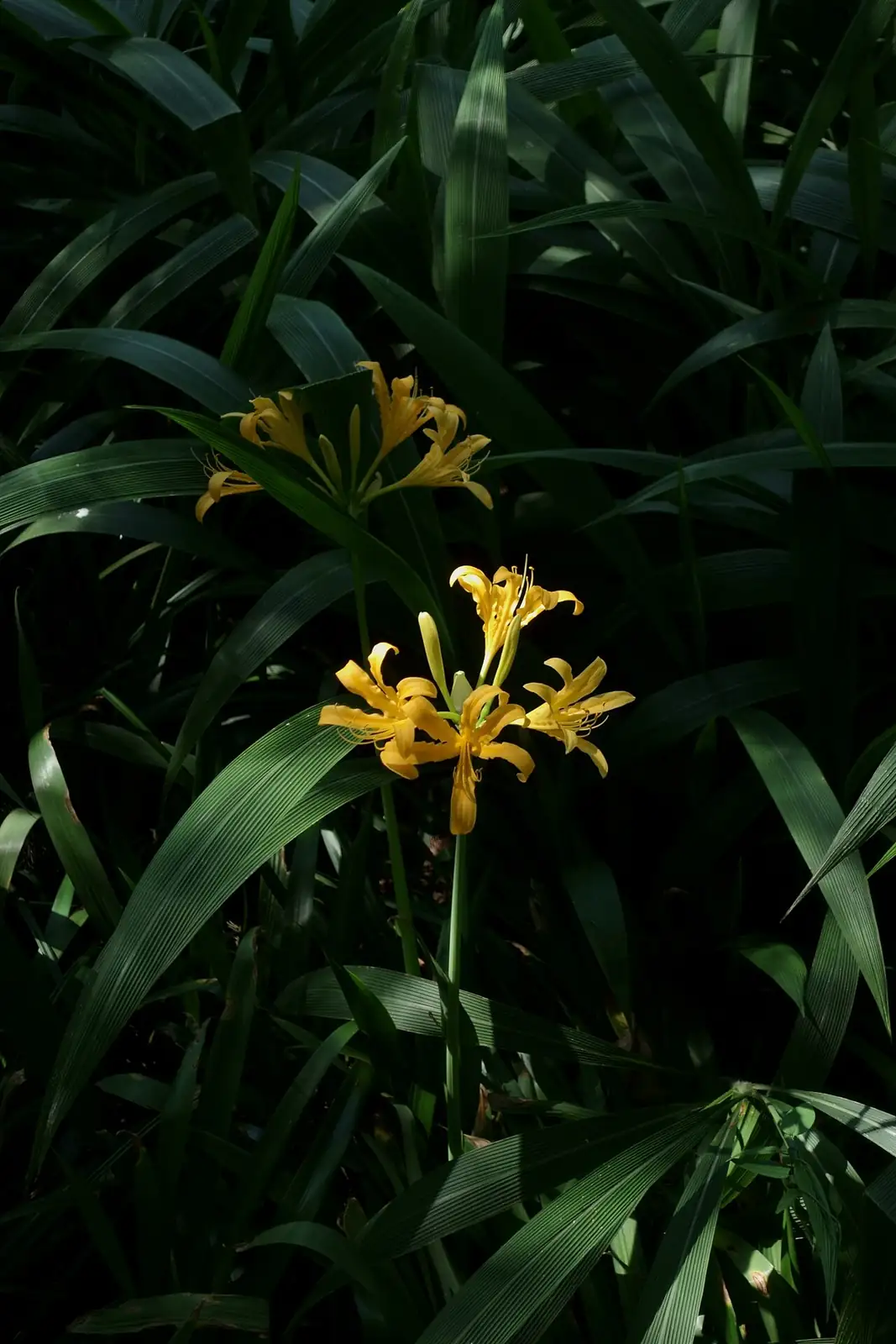
- Foliage: Sword-shaped, strap-like leaves emerging from an egg-shaped bulb; foliage is typically rich green and often broader/larger than many other Lycoris species. Leaves should be allowed to yellow naturally after flowering so the bulb can recharge.
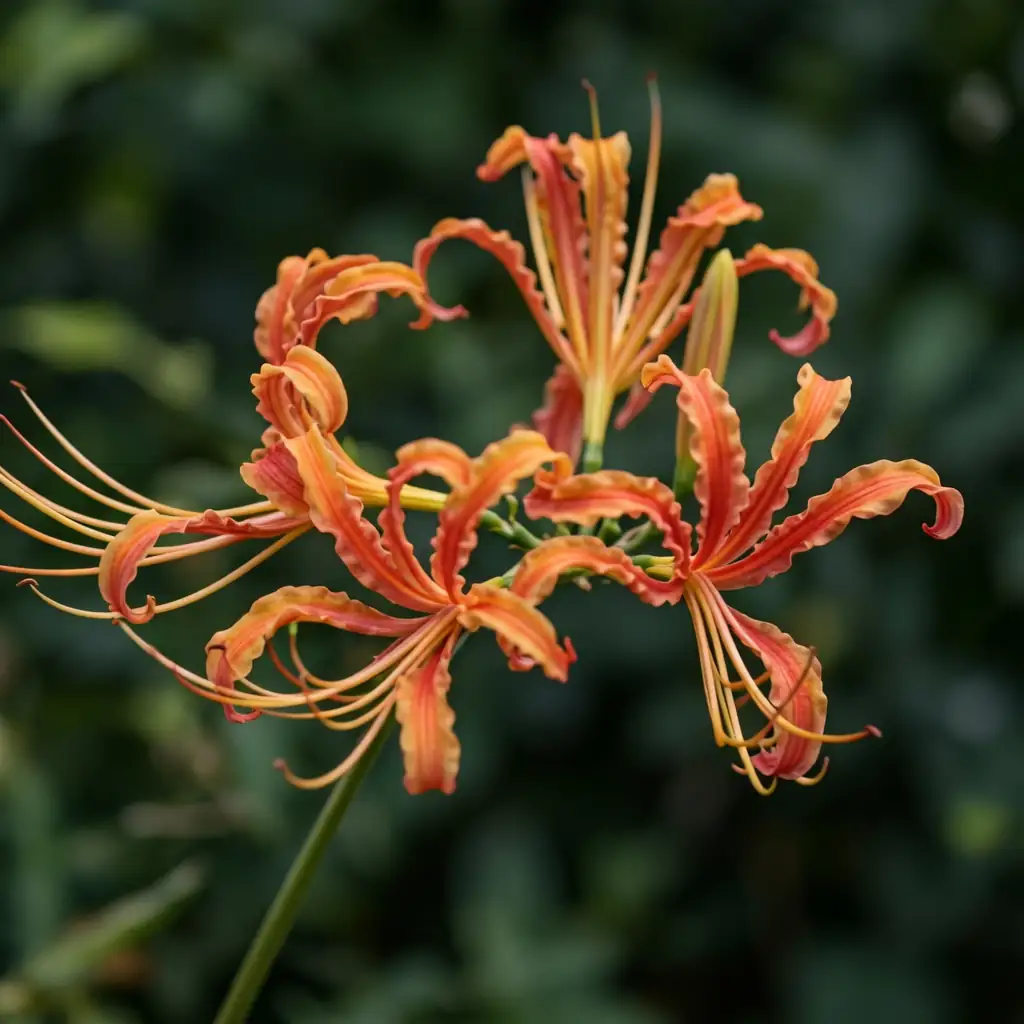
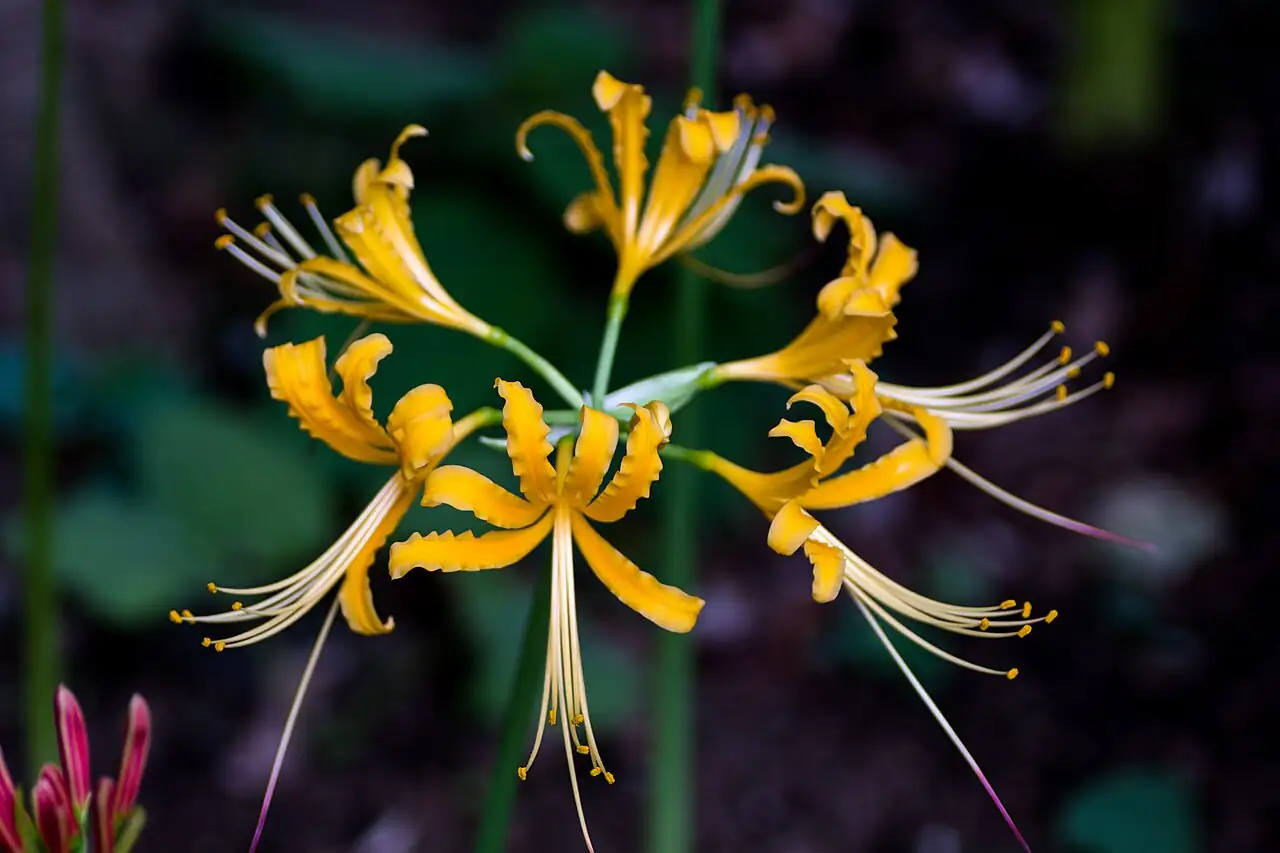
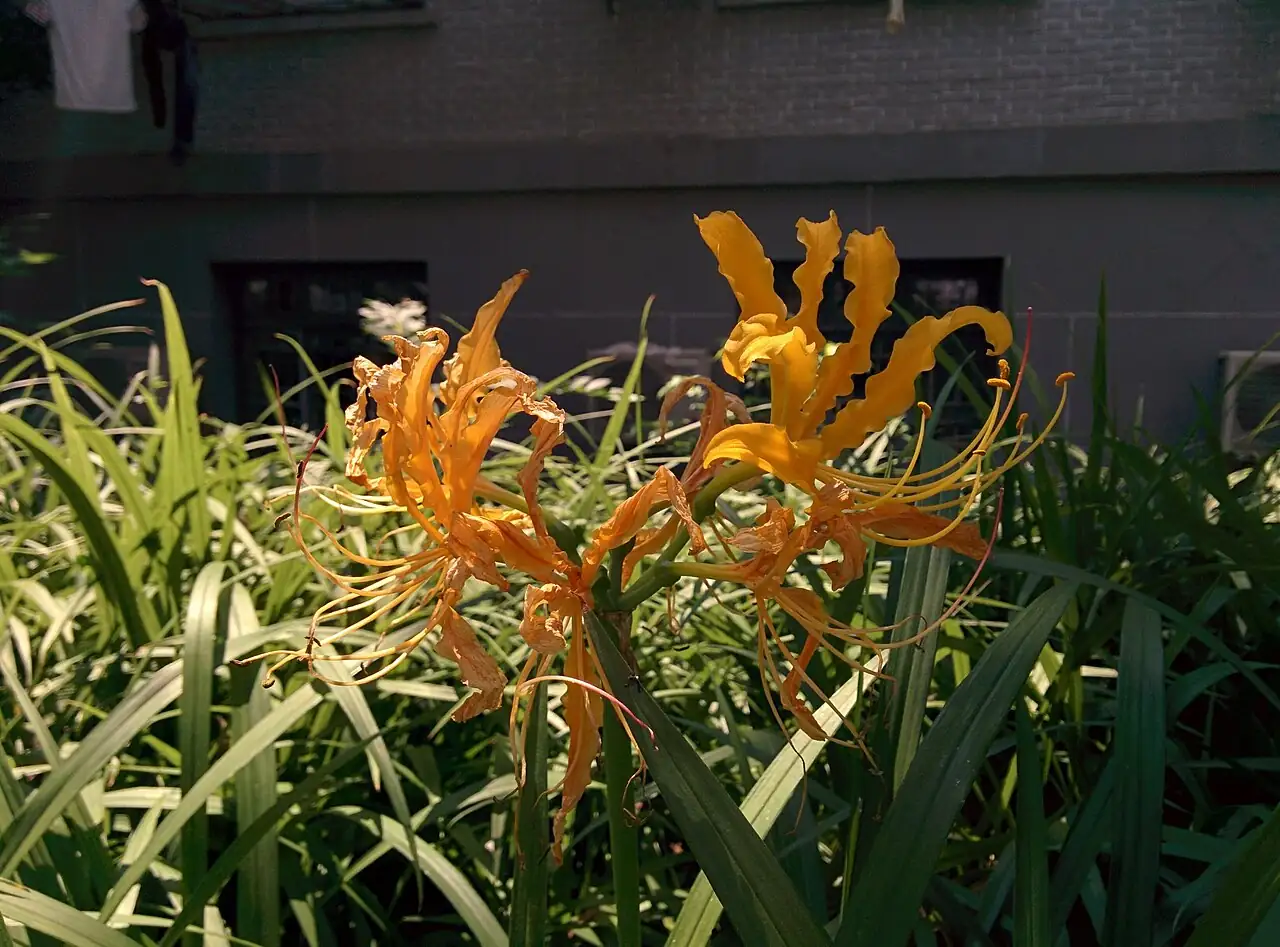
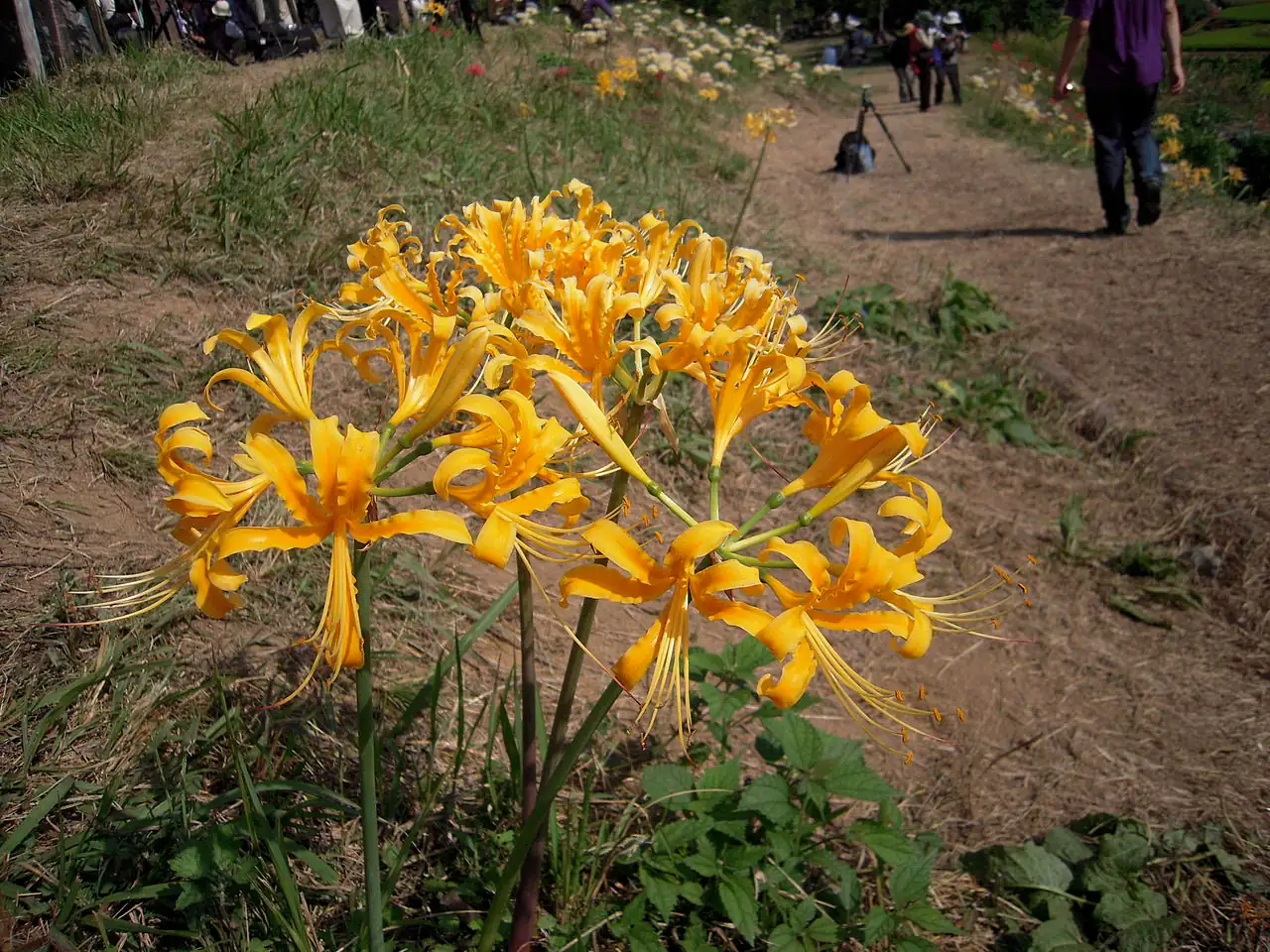
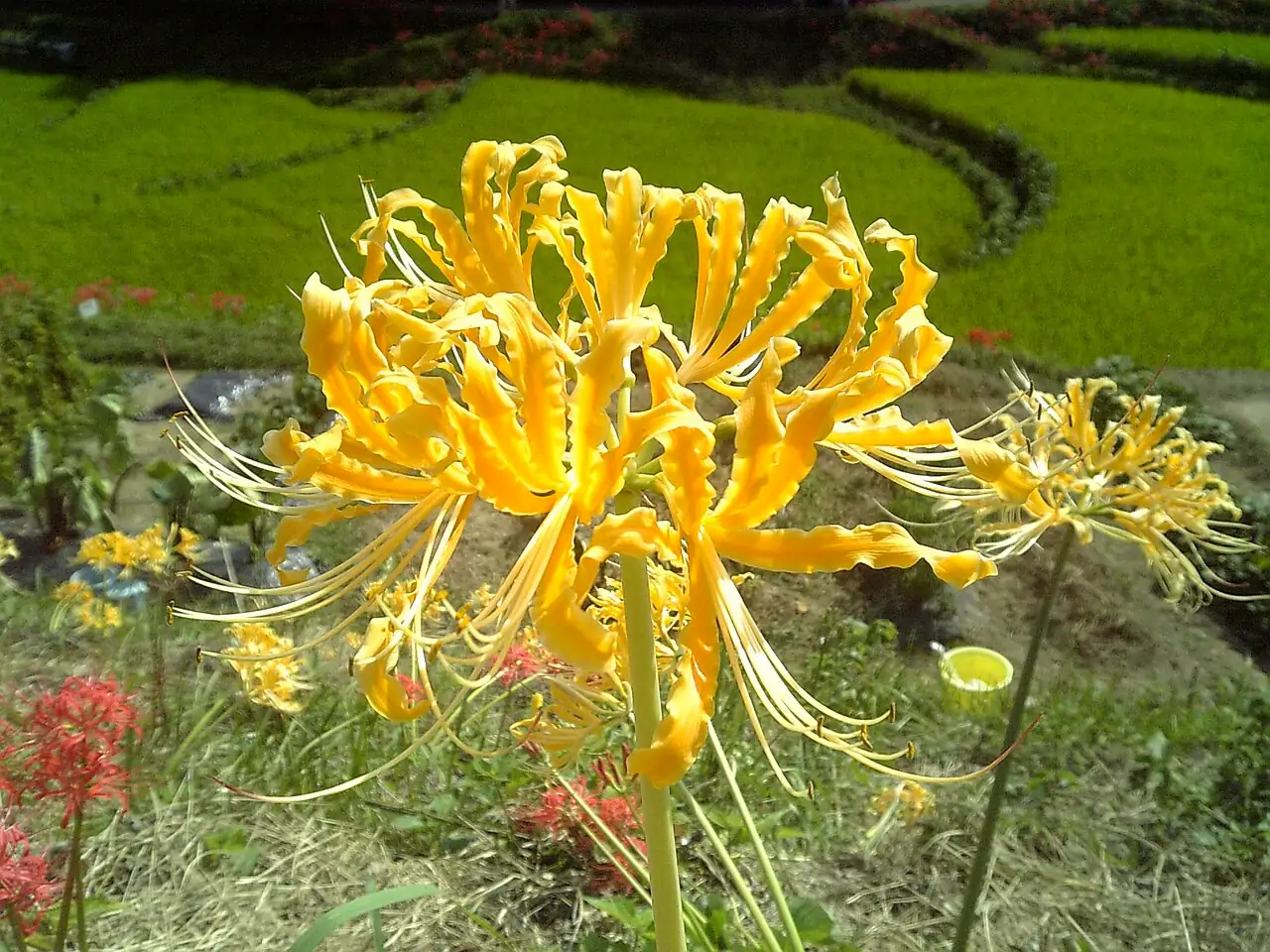
- Flower: Flowers appear in umbel-like clusters of about 4–8 blooms per stem. Each flower is vivid golden yellow with narrow, recurved tepals and prominent stamens that extend beyond the tepals, creating the classic “spider” look; the backs of the tepals may show a faint green midrib. After flowering, it can form three-angled seed capsules that split open when mature; seeds are few and nearly spherical.
- Flowering Season: August–September (late summer to early autumn)
- Growth Habit: Terrestrial, bulbous perennial with upright flowering stems and a clump-forming habit over time; shade-tolerant and moisture-friendly once established.
Environment
Sunlight
Partial shade to full shade; best in bright, filtered light (such as under an open woodland canopy). Very deep shade can reduce flowering.
Temperature
Grows best around 10–25°C (50–77°F). Protect from prolonged hard freezes, especially when grown in containers.
Humidity
Prefers evenly moist conditions during active growth; moderately drought-tolerant once established. Avoid persistently wet, airless conditions that can encourage bulb rot.
Soil
Loose, well-drained yet moisture-retentive soil—ideally a loam improved with leaf mold and/or compost. Good drainage is key for healthy bulbs.
Placement
Woodland understory plantings, shaded borders, along rock edges, lawn margins, and in pots/planters where drainage can be carefully controlled.
Hardiness
Approximately USDA Zone 7–10 (cold tolerance can vary by clone and local conditions). Not reliably frost-hardy in colder regions without protection.
Care Guide
Difficulty
Easy to moderate: performs best when sited well and then largely left alone; frequent disturbance can reduce flowering.
Buying Guide
Choose firm, heavy bulbs with intact basal plates and no soft spots or mold. Look for labeling with the full scientific name (Lycoris aurea) to avoid confusion with other yellow-flowering Lycoris species or hybrids.
Watering
Keep soil lightly and evenly moist during active growth and around flowering. Reduce watering during dormancy. Avoid waterlogged soil, which can quickly lead to bulb rot.
Fertilization
Feed lightly at the start of active growth with a balanced slow-release fertilizer or a thin top-dressing of compost. Avoid heavy nitrogen, which can encourage lush leaves at the expense of flowers.
Pruning
Remove spent flower stalks after blooming. Let foliage yellow and die back naturally; don’t cut green leaves early, because that reduces next season’s bloom potential.
Propagation
Primarily by bulb offsets (division) when clumps become crowded. Seed propagation is possible but slow and may be variable.
Repotting
For containers, refresh the potting mix or repot every 2–3 years. Bulbs often flower best when not frequently disturbed—divide only when clearly crowded.
📅 Seasonal Care Calendar
Spring–summer: maintain even moisture; light feeding if needed. Late summer–early autumn (Aug–Sep): flowering period; keep soil slightly moist. Autumn–winter: allow leaves to mature, then die back; reduce watering during dormancy and protect from hard freezes.
Pests, Diseases & Safety
Common Pests & Diseases
Generally trouble-free. Main risk is bulb rot in poorly drained soil. Occasionally aphids or thrips may appear on flower stems. Improve drainage and airflow, avoid overwatering, and remove or treat affected growth as needed.
Toxicity
Toxic if ingested (bulbs are especially poisonous). Keep away from children and pets; wear gloves if you have sensitive skin and wash hands after handling bulbs.
Culture & Symbolism
Symbolism: Often linked with late-season brightness and resilience, since its golden blooms arrive as summer transitions into autumn.
History & Legends: A cherished ornamental bulb in East Asia, grown for generations in shaded gardens where its dramatic spider-like flowers provide a bold seasonal moment.
Uses: Ornamental planting under open trees, in shaded borders, along rocks and lawn edges, and as a feature bulb in containers and planters.
FAQ
Will golden spider lily bloom in deep shade?
It handles shade very well, but it usually blooms best in bright shade or dappled light. In very dark, dense shade, you may get leaves with few or no flowers.
Why does it produce leaves but no flowers?
Common causes include too little light, bulbs being disturbed too often, overly nitrogen-rich feeding, or poor drainage that weakens the bulb (sometimes before rot is obvious).
Fun Facts
- The tepals can show a faint green midrib on the reverse side.
- The long stamens extending beyond the tepals are what give it the signature “spider” silhouette.
- Its seed capsules are distinctly three-angled and split open when ripe; seeds are few and nearly spherical.
- Flowering is typically August–September, with fruiting often around October under suitable conditions.
- In nature it’s often seen on shady, moist mountain slopes across several provinces in China.