

Plant Features
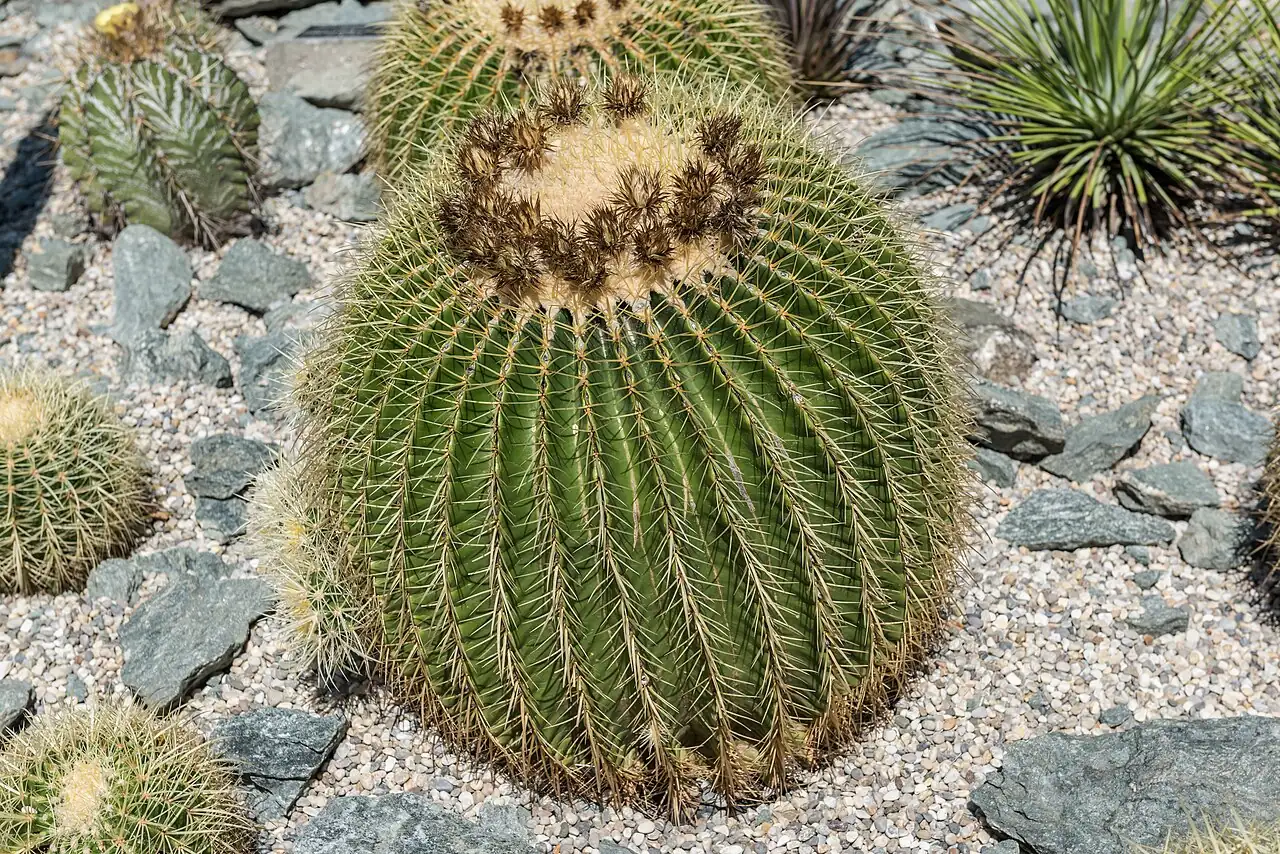
- Size: In cultivation it’s commonly grown in pots about 12–40 cm (4.7–15.7 in) in diameter. The plant itself typically reaches about 30–90 cm (12–35 in) tall and 30–90 cm (12–35 in) wide over time, and can become larger with great light, patience, and age.
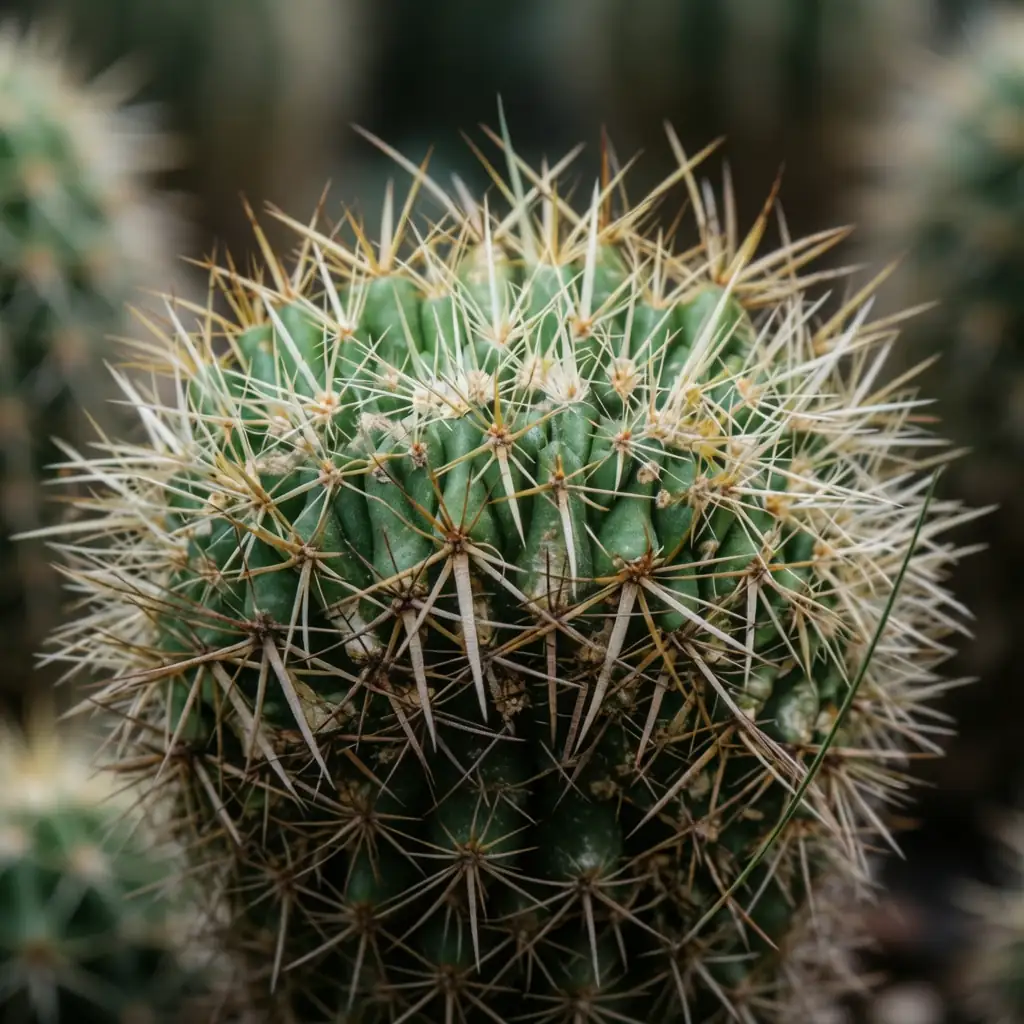
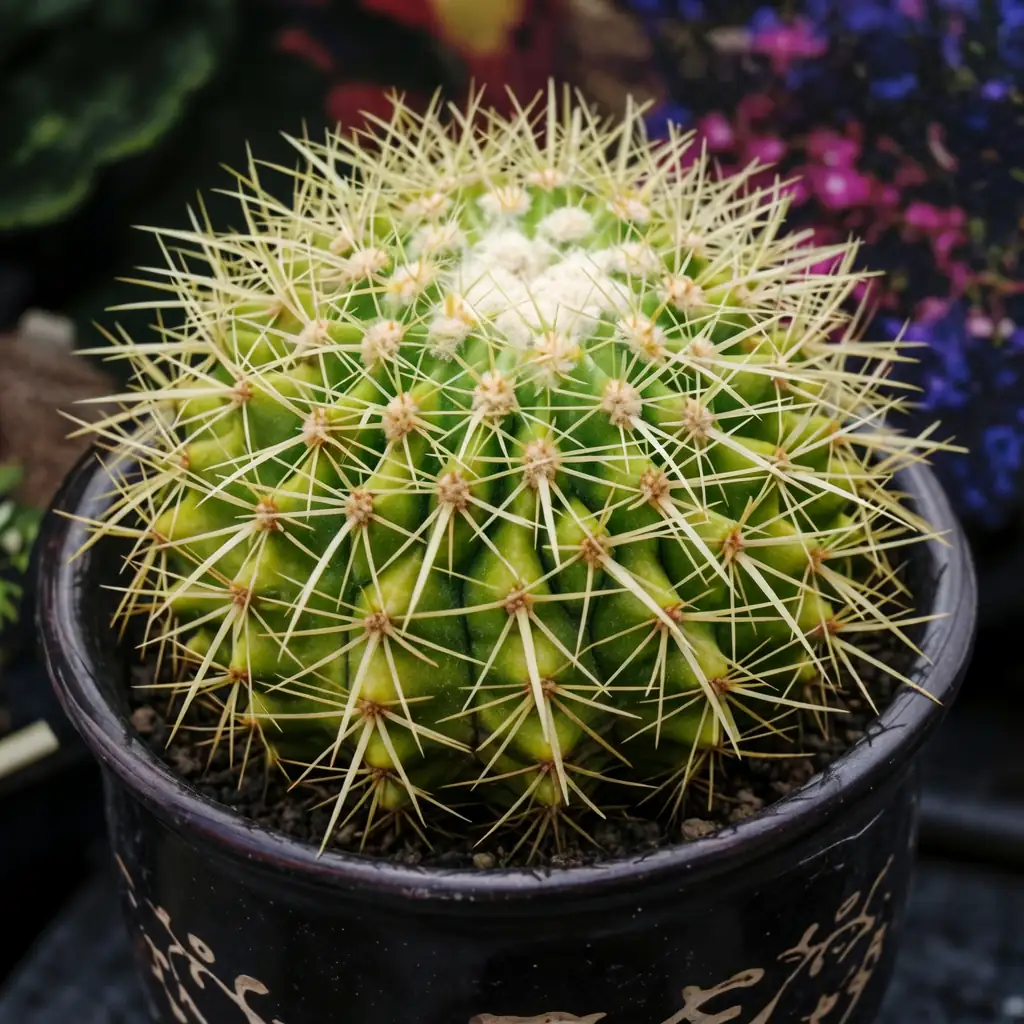
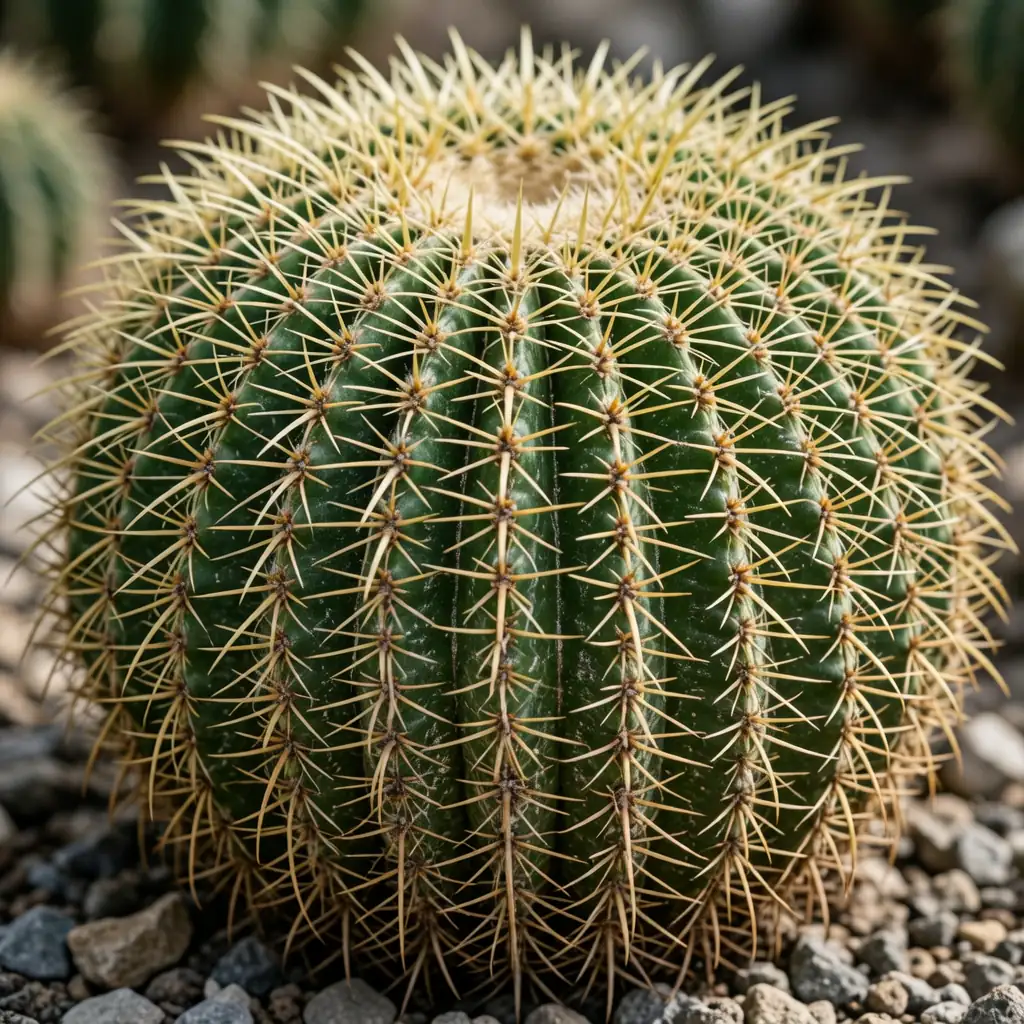
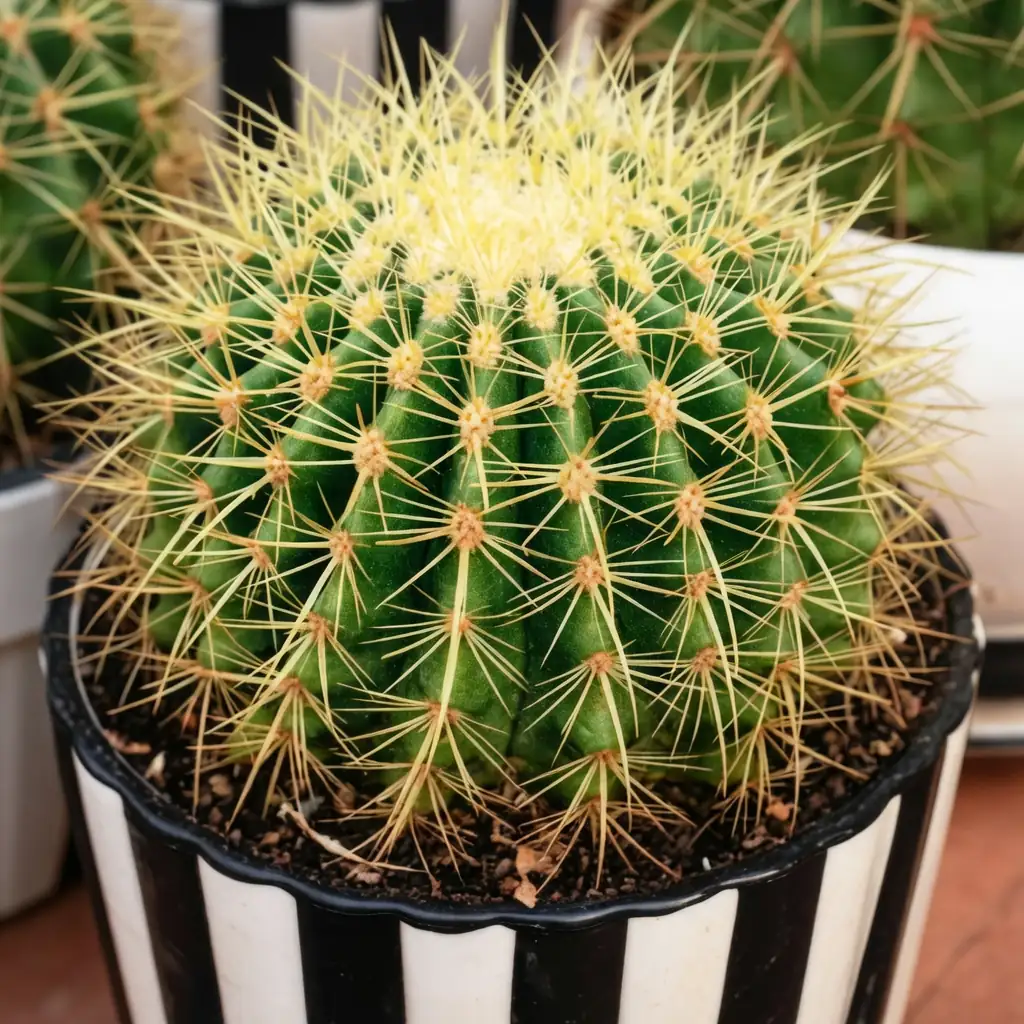
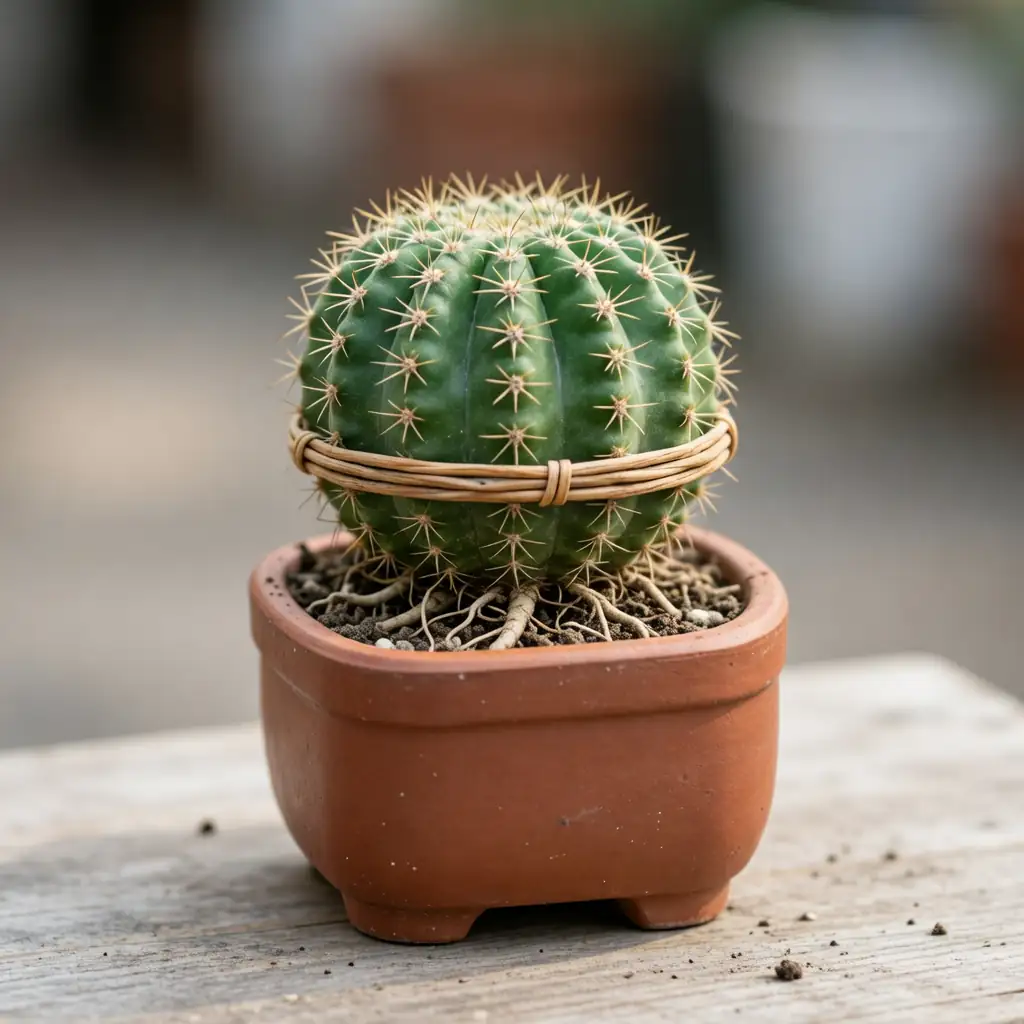
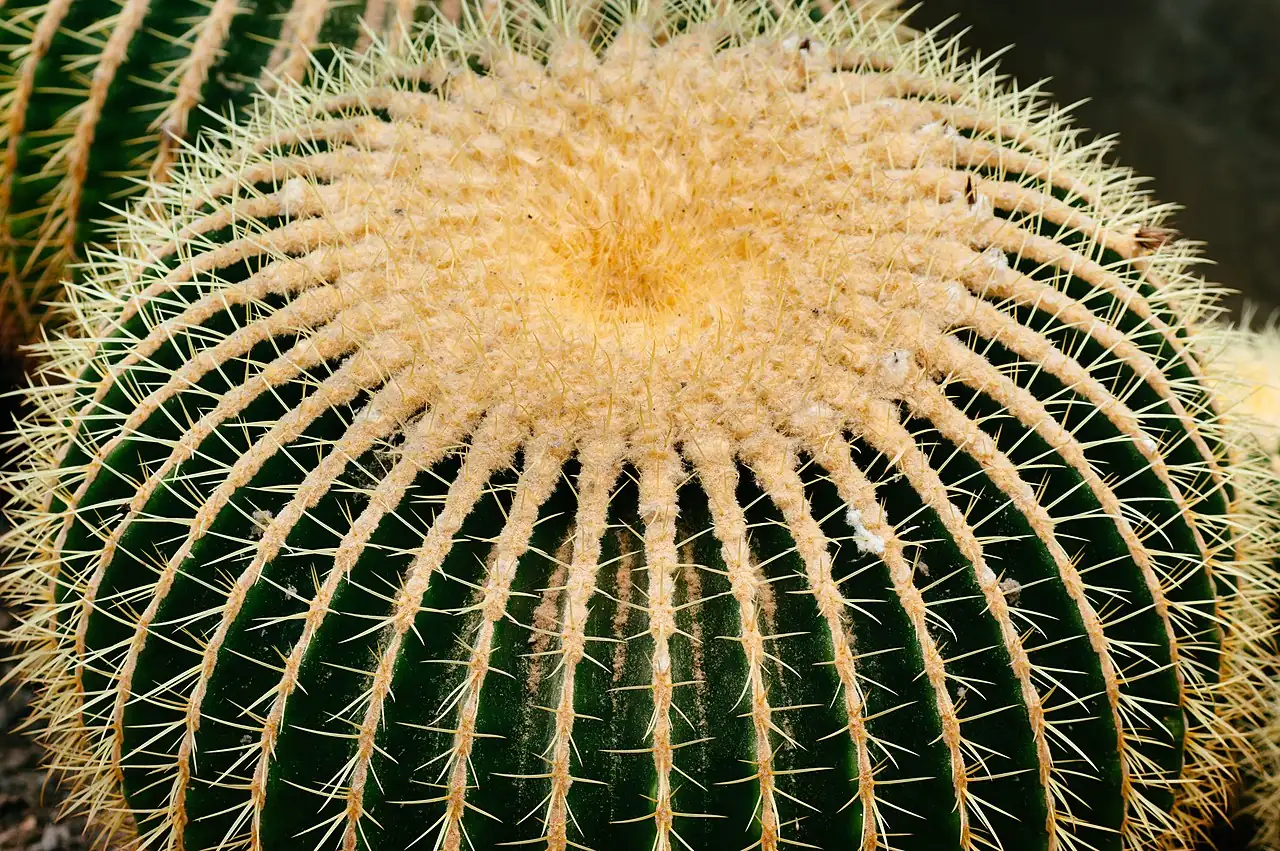
- Foliage: No true leaves—photosynthesis happens in the stem. The body is bright green, strongly ribbed, and spherical to short-barrel shaped with prominent areoles. Spines are stiff and densely packed, usually a rich golden-yellow in strong light; variegated forms may show creamy-yellow to pale white patches.
- Flower: On mature plants, small yellow flowers form in a ring near the crown. Flowering is most likely in warm, bright summers and generally requires strong light and a well-established, older plant.
- Flowering Season: Summer
- Growth Habit: Slow-growing, globose to short-barrel cactus. Usually solitary, but may produce offsets over time and can eventually form a clump.
Environment
Sunlight
Bright light to full sun. Indoors, a south- or east-facing window is ideal. In very intense midsummer sun (especially behind glass), give light/temporary shade if scorching occurs or while the plant is acclimating—but avoid prolonged low light, which dulls spine color and can lead to stretched growth.
Temperature
Best growth around 13–24°C (55–75°F). Nights around 10–13°C (50–55°F) are fine during active growth. In winter, keep above about 8°C (46°F) and keep the soil dry; protect from frost.
Humidity
Prefers dry air and does well in average indoor humidity. If the air is extremely dry, lightly mist the surrounding air (not the plant body), and prioritize good ventilation to reduce rot risk.
Soil
A very free-draining cactus mix is essential. A practical blend: loam-based potting soil or loamy garden soil plus leaf mold/compost, amended heavily with coarse sand/grit. Avoid heavy, water-retentive mixes; if adding any organic richness (even well-aged manure), use it sparingly.
Placement
Sunny windowsill, sunroom, bright office/study, balcony, porch/entryway, or a bright living-room display spot—anywhere it can get strong light and airflow. Keep out of dim corners, and protect from extreme midday heat behind glass if you notice scorching.
Hardiness
Not frost hardy; keep frost-free. Suitable outdoors only in warm, dry climates (roughly USDA Zone 10–11). Drought tolerant when established, but vulnerable to rot in cold, wet conditions.
Care Guide
Difficulty
Easy to moderate: it thrives when you give it strong light, warmth, and a “less is more” watering style. The biggest pitfalls are overwatering (especially when cool), poor drainage, and sudden exposure to intense sun without acclimation.
Buying Guide
Choose a firm, symmetrical plant with well-defined ribs and evenly spaced areoles. Spines should be dense and golden (not sparse, dull, or badly broken). The skin should look fresh green (or cleanly patterned on variegated plants) with no soft spots, rot, pests, or suspicious scars. Avoid severely stretched (etiolated) plants and beware of artificially dyed “colored” specimens. After bringing it home, place it in a bright, airy spot and acclimate gradually if moving into very strong sun.
Watering
Water thoroughly only after the mix has dried out well.
– Spring: about every 2 weeks in many homes, adjusting to light and pot size.
– Summer (active growth/possible flowering): often about once per week in warm, very bright conditions, but always let the mix dry between waterings and never let the pot sit in water.
– Autumn: reduce watering as growth slows.
– Winter: keep almost completely dry; if kept cool, stop watering entirely until warmth and light return.
Avoid pouring water onto the crown/body.
Hydroponic option (less common): it can be done with care—wash soil from roots, stabilize the plant, keep about half the roots in water, change water weekly in summer and monthly in winter, clean the container, rinse roots gently, and add a small amount of nutrient solution during changes. Rot risk is higher without excellent hygiene and aeration.
Fertilization
During the growing season, feed about once per month with a cactus fertilizer or a low-nitrogen formula (e.g., 15-15-30) at half strength/diluted rate. Do not fertilize in winter.
Pruning
Usually not needed. Remove offsets if they crowd the main plant or if you want to keep a perfect globe shape (offsets can be rooted or used for grafting). When repotting, trim overly long or damaged roots with a clean tool and let cuts dry before watering. Handle carefully—spines are sharp.
Propagation
Seed: flowers and seed are mostly produced by mature plants (often many years/decades old). Sow on the surface with a thin cover; best germination around 20–24°C (68–75°F), often sprouting in about 20–25 days.
Offsets/cuttings: some plants offset naturally; removing the growing point during active growth can stimulate offsetting. Detach offsets when about 1–2 cm (0.4–0.8 in) across, let the cut dry/callus, then root in a gritty/sandy medium—often about 20–30 days in warm conditions.
Grafting: commonly done May–July onto a vigorous rootstock; unions may take about 3–4 weeks to heal.
Repotting
Repot about every 2 years in spring, or when rootbound. Use a pot sized to the root system with excellent drainage; heavy pots help prevent tipping. Typical pot diameters are about 12–40 cm (4.7–15.7 in), depending on plant size. After repotting, keep dry for several days so any root wounds can callus before the first watering.
📅 Seasonal Care Calendar
Spring: increase watering gradually, start monthly feeding, and repot if needed; give maximum light.
Summer: water more regularly but still only after drying; provide light shade during extreme heat or after moving into stronger sun; ensure airflow.
Autumn: taper watering and stop feeding as growth slows.
Winter: keep cool, bright, and dry; protect from cold and don’t water unless kept warm and actively growing.
May–July: prime time for grafting (if you do it).
Pests, Diseases & Safety
Common Pests & Diseases
Main problems are rot and fungal issues from excess moisture—especially in cool weather. Pests may include spider mites, mealybugs, and scale insects. Prevent trouble with strong light, gritty fast drainage, and good airflow. If pests appear, isolate and treat with insecticidal soap or horticultural oil (or an appropriate targeted product). For rot/fungal issues, remove affected tissue, keep the plant drier, and use a suitable fungicide when necessary following label directions.
Toxicity
Not known to be poisonous, but the spines can puncture skin and are a practical hazard for children and pets. Place out of reach and handle with thick gloves, folded newspaper, or tongs.
Culture & Symbolism
Symbolism: Often seen as a symbol of resilience, endurance, and protective strength—commonly gifted as a “stay strong” plant, especially for desk workers and cactus lovers.
History & Legends: Native to central Mexico and now cultivated worldwide. It has become an iconic cactus in collections and warm-climate, arid landscaping thanks to its near-perfect geometry and golden spines.
Uses: Primarily ornamental: a bold container specimen for sunny interiors (windowsills, living rooms, offices) and for patios, balconies, and frost-free dry gardens outdoors. Also popular as a gift plant.
FAQ
Why are the spines turning dull, darker, or less golden?
Insufficient light is the most common cause—this cactus needs very bright light to keep spines richly colored. Give it a brighter spot and acclimate gradually if moving into strong sun. Brief, light shade during extreme midsummer heat can prevent scorch, but too much shade for too long can lead to dull spines and stretched growth.
How do I choose a healthy golden barrel cactus, and what should I do after bringing it home?
Pick a firm, symmetrical plant with dense golden spines and no soft spots or pests. Put it in a bright, airy place right away (a south- or east-facing window is ideal). If sunlight is intense, acclimate over a week or two. Water only after the mix dries well, avoid wetting the crown, and keep it completely dry in winter if it’s cool.
Can golden barrel cactus be grown in water (hydroponically)?
It’s possible but riskier than soil. Clean soil off the roots, stabilize the plant, keep roughly half the roots in water, and change the water weekly in summer and monthly in winter while cleaning the container. Add a small amount of nutrient solution during changes, and watch closely for any signs of rot.
Fun Facts
- Although it’s often sold as a small “desk cactus,” truly impressive specimens take many years to build their classic barrel size.
- It has no true leaves—the green stem does the photosynthesis, and the ribs help it expand after rainfall.
- Its golden spine color is usually strongest in high light; low light can make the plant elongate and the spines look less vibrant.
- Seeds can germinate in roughly 20–25 days at 20–24°C (68–75°F) under good conditions.
- Grafting is commonly done from May to July, and the graft union may heal in about 3–4 weeks.


