Plant Features
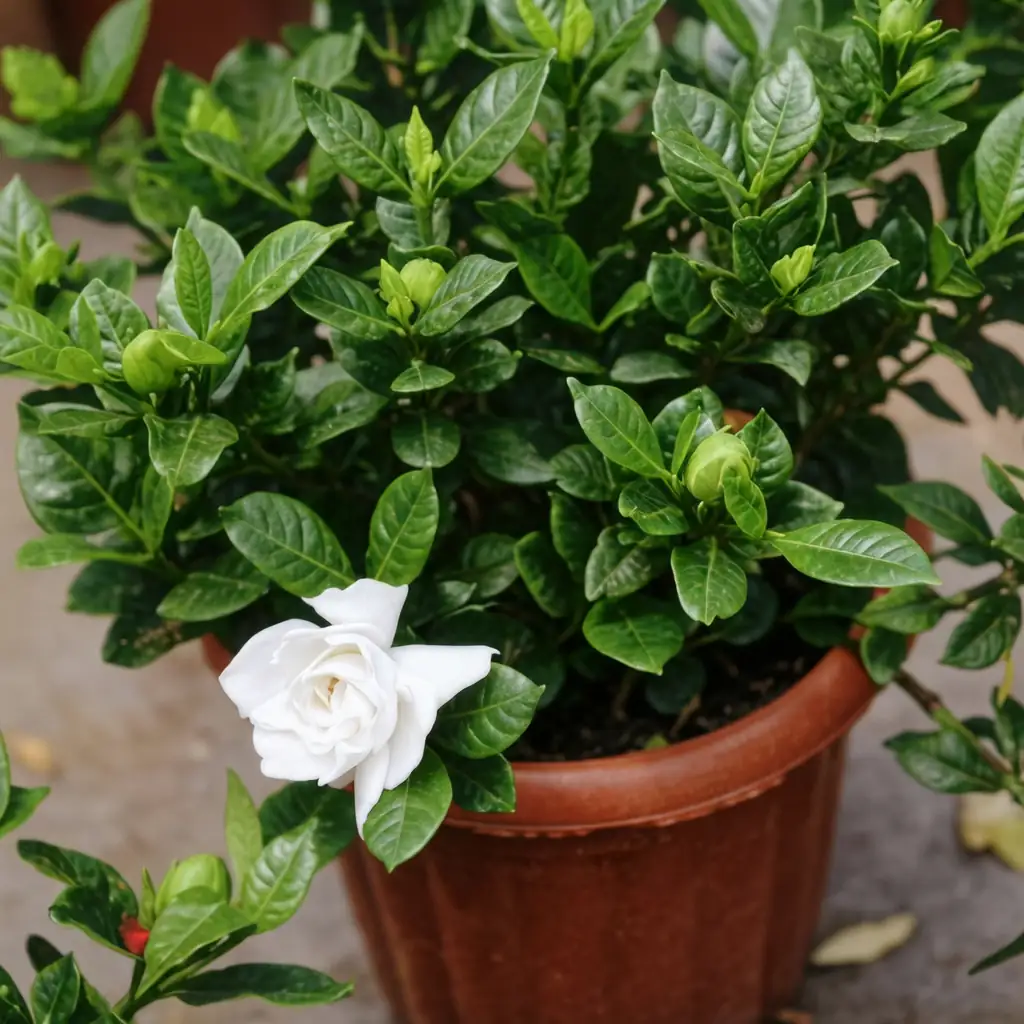
- Size: Outdoors (warm climates): typically 90–240 cm (3–8 ft) tall and 90–180 cm (3–6 ft) wide, depending on cultivar and pruning. Indoors/in pots: often kept compact around 50–60 cm (20–24 in) tall with a balanced, bushy crown; pot sizes commonly 12–30 cm (5–12 in) diameter depending on plant size.
- Foliage: Evergreen, thick, glossy, deep-green, leathery leaves with smooth (entire) edges; commonly 5–10 cm (2–4 in) long. Leaves are typically opposite or in whorls of three. In cold stress foliage can scorch and drop; in neutral to alkaline conditions leaves often turn pale or yellow (iron chlorosis), usually with greener veins.
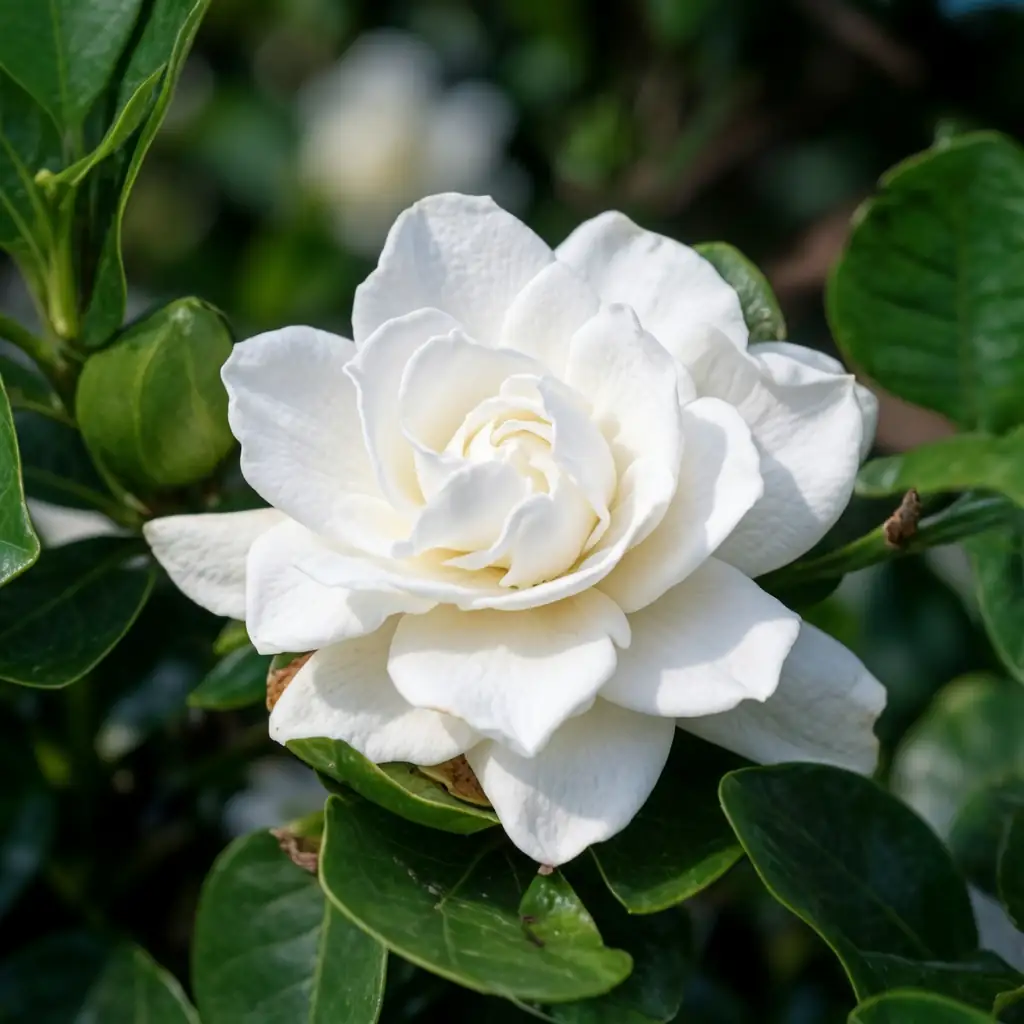
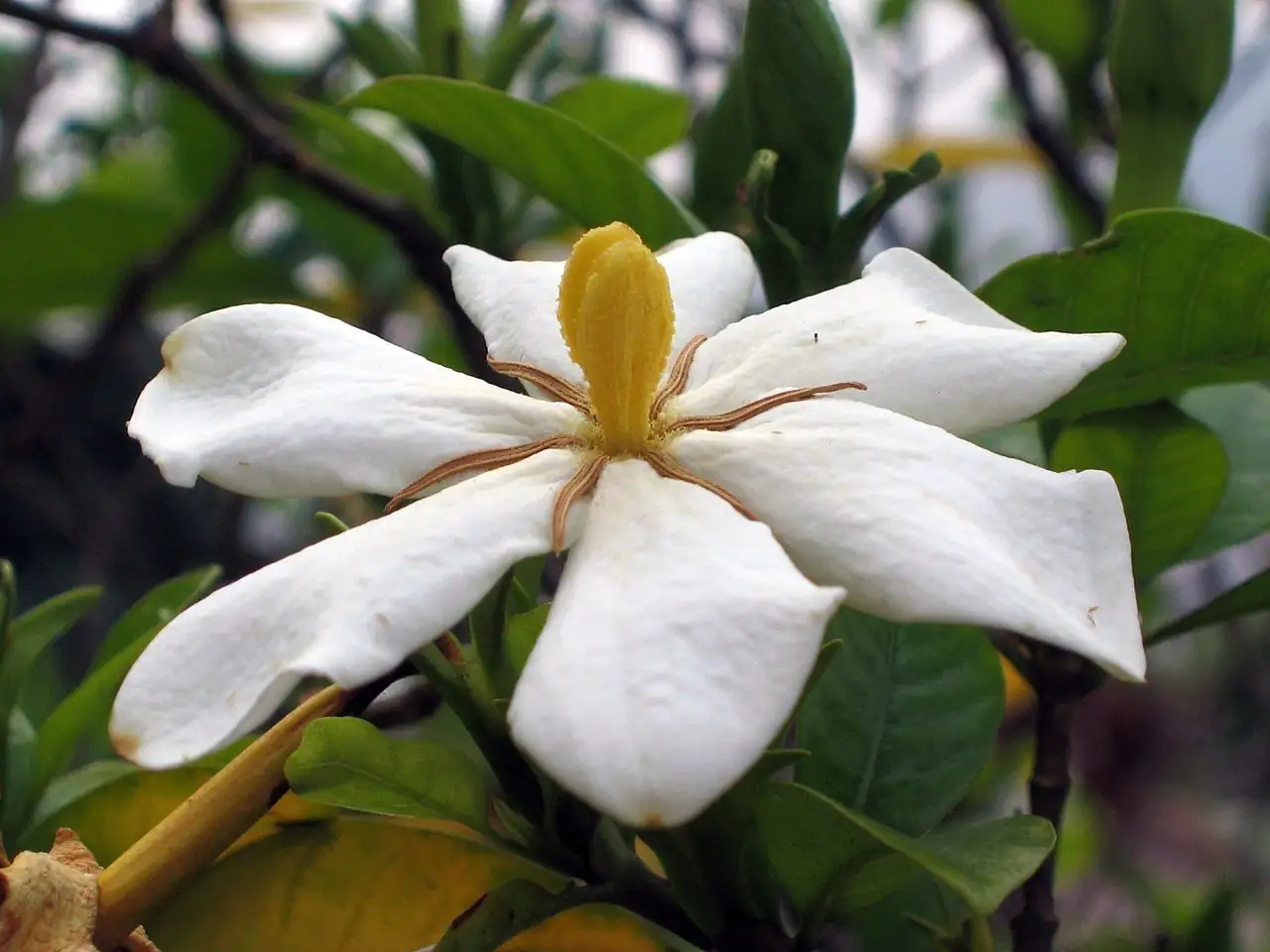
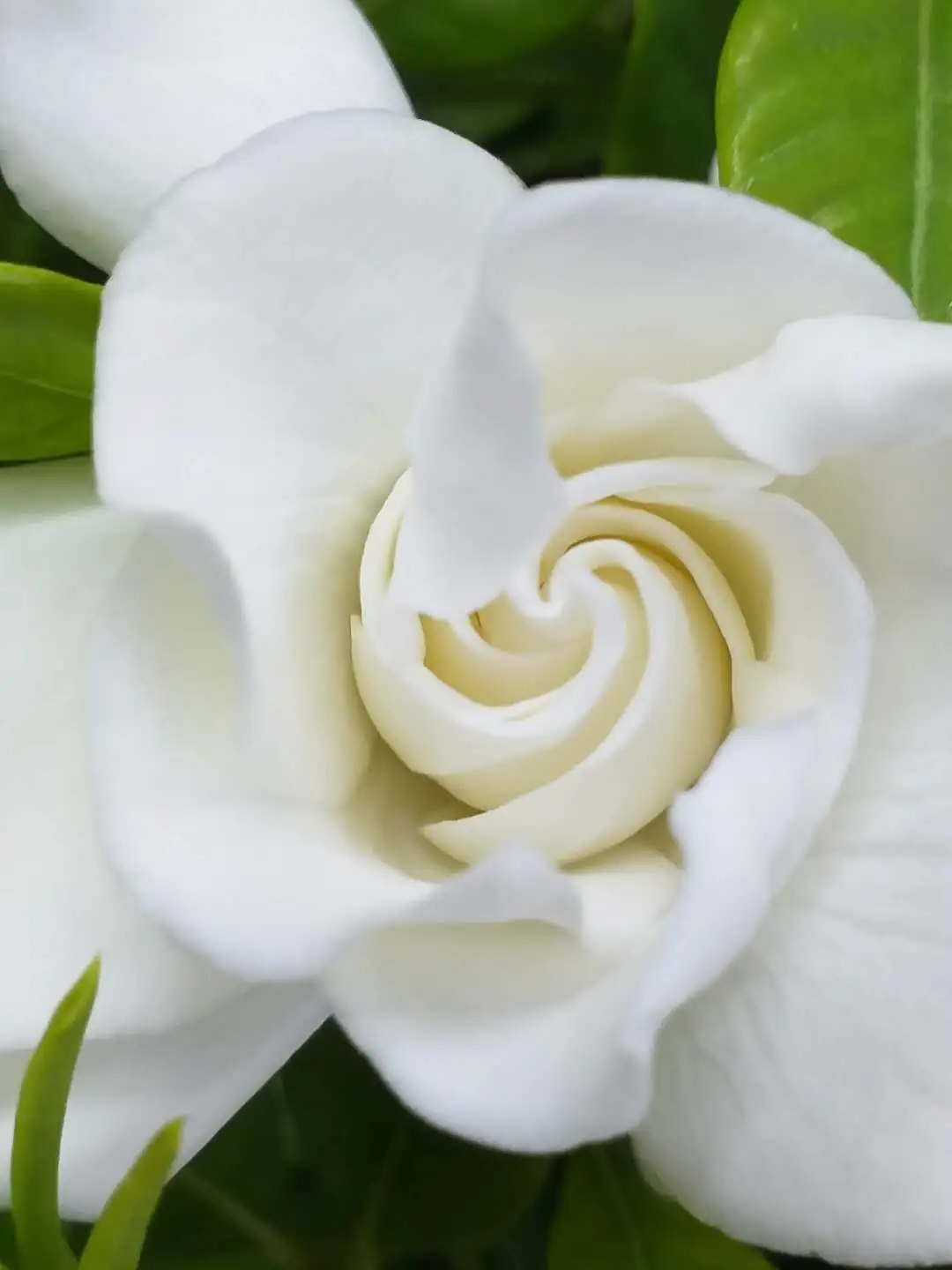
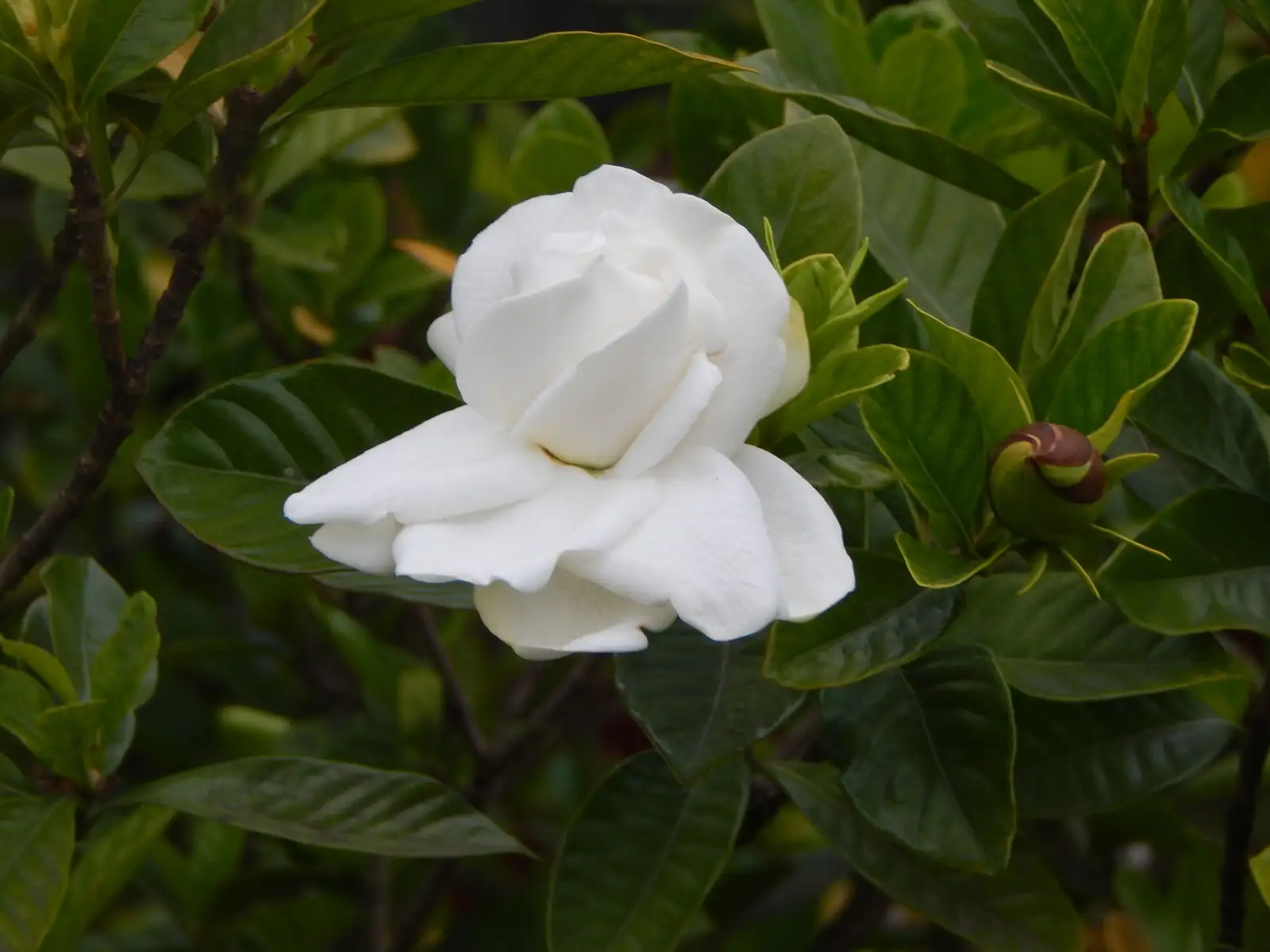
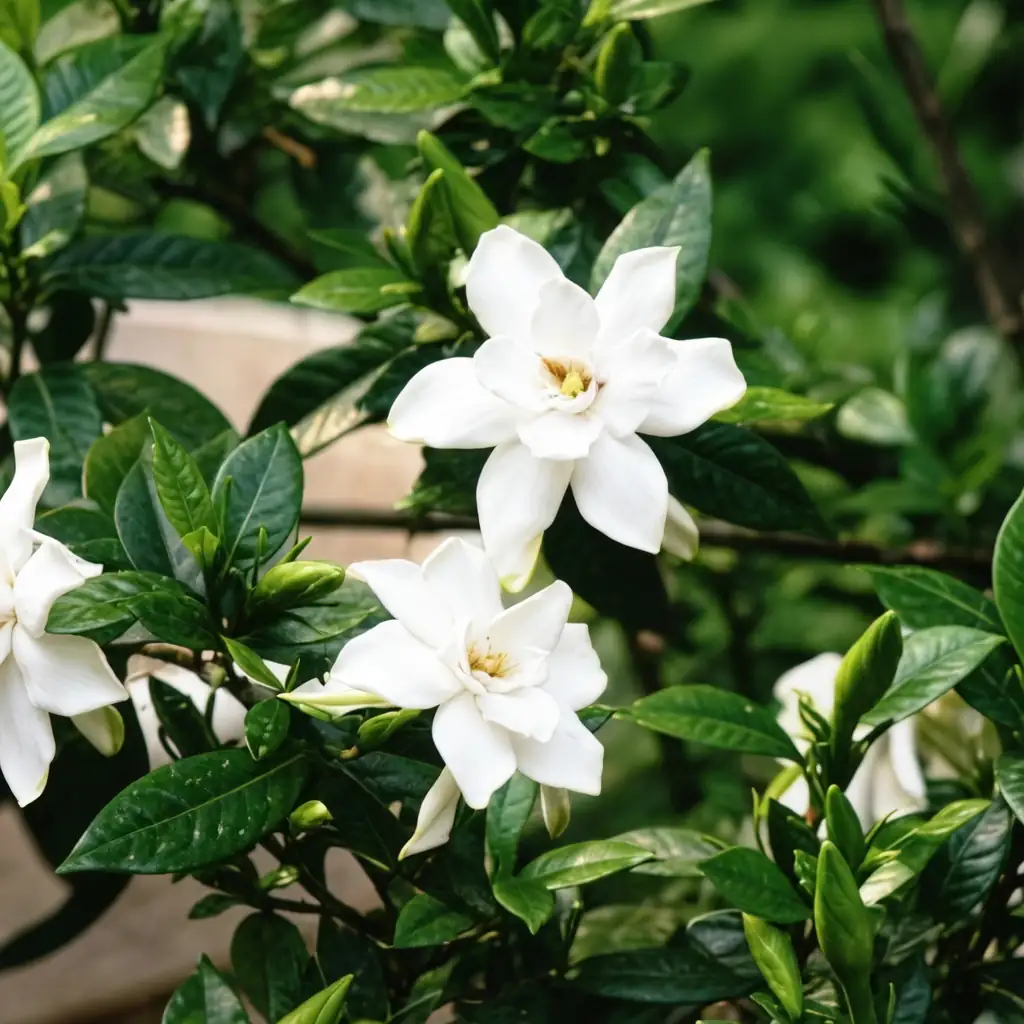
- Flower: Large, waxy, creamy-white to pure white flowers with a rich, sweet, intensely fragrant scent; commonly 5–10 cm (2–4 in) across. Flowers may be single (often ~6 petals) or double depending on cultivar. Blooms usually open white and can age to ivory or soft yellow. Plants often carry multiple buds at once for a longer show.
- Flowering Season: Late spring through summer into early autumn (often May–June peak in many climates; many forms continue sporadically through summer and sometimes into fall).
- Growth Habit: Evergreen shrub with an upright-to-rounded, dense, compact branching habit. Slow to moderate growth. Responds well to pruning and can be maintained as a tidy patio/houseplant shrub.
Environment
Sunlight
Bright, indirect light to partial sun. Best is gentle morning sun with afternoon shade in hot climates; in cooler areas it can take more direct sun. Indoors, place at a very bright east/south/west window; avoid harsh midday sun through glass and keep away from drafts and vents.
Temperature
Best growth around 16–25°C (61–77°F). For good bud set, steady warmth matters—many plants form buds best with cooler nights around 10–13°C (50–55°F) during bud initiation, and stable summer conditions around 21–24°C (70–75°F) days and 16–18°C (61–64°F) nights help reduce bud drop. Frost-tender: brief dips to about -5°C (23°F) may be survived by some plants, but cold often causes leaf damage and dieback; protect from hard freezes.
Humidity
Moderate to high humidity, ideally about 50–70%. Use pebble trays, humidifiers, and light misting in dry weather (mist leaves rather than open flowers). Dry heat indoors and dry winds outdoors commonly trigger bud drop and crispy leaf edges.
Soil
Acidic, fertile, well-drained yet moisture-retentive soil/potting mix; target pH about 5.0–6.5 (often ideal 5.0–6.0). Use ericaceous/azalea-camellia-type mixes or a peat-based mix amended with bark and perlite/sand for drainage. Avoid lime and avoid waterlogging (root rot risk). In hard-water areas, use rainwater, distilled/low-mineral water, or lightly acidified water to help keep pH in range.
Placement
Place where the fragrance can be enjoyed—near entryways, patios, paths, or bright windows. Indoors: a bright, draft-free room; move to a sunnier windowsill in winter. Outdoors: sheltered spot with good airflow (not cold wind) and protection from prolonged frost.
Hardiness
Best outdoors in mild climates roughly USDA Zones 8–11 (often safest Zones 9–11). In colder regions, grow in containers and overwinter frost-free indoors.
Care Guide
Difficulty
Moderate to high. Gardenias aren’t hard once their basics are stable, but they’re picky about three things: acidic soil, consistent moisture (never soggy), and steady conditions (light, humidity, temperature). Drafts, hard water, and sudden changes often lead to yellow leaves or dropped buds.
Buying Guide
Choose a compact, well-branched plant (often under 50–60 cm / 20–24 in for pots) with thick, glossy, deep-green leaves and no widespread yellowing. Look for lots of plump buds and ideally 2–3 flowers just opening for a longer display. Avoid plants with sticky residue (pests), soggy soil, or lots of fallen buds. If possible, buy one already growing in an ericaceous (acidic) mix.
Watering
Keep evenly moist during active growth and flowering, but never waterlog. A practical rule: water thoroughly when the top 2–3 cm (about 1 in) of mix feels dry. In summer heat and bloom, watering may be more frequent; in winter, reduce and water when the surface dries, keeping the root ball slightly moist rather than wet or bone-dry. Use lukewarm, low-mineral water (rain/distilled/filtered) to avoid raising soil pH; drip watering is gentle for their shallow roots. Avoid frequent root disturbance.
Fertilization
Feed during the growing season with an acid-loving fertilizer (azalea/camellia/gardenia type). Options from the sources can be blended like this: either apply a slow-release acid-forming feed in spring and repeat about 6 weeks later, or use a liquid feed every 2–4 weeks (many growers do every 2 weeks at half strength) from spring to late summer. Before flowering, 1–2 feeds slightly higher in phosphorus and potassium can support blooming—then ease back once buds are set to reduce soft growth and bud drop. If leaves yellow from high pH, add iron (chelated iron or iron sulfate per label); treat, then reduce once foliage greens up.
Pruning
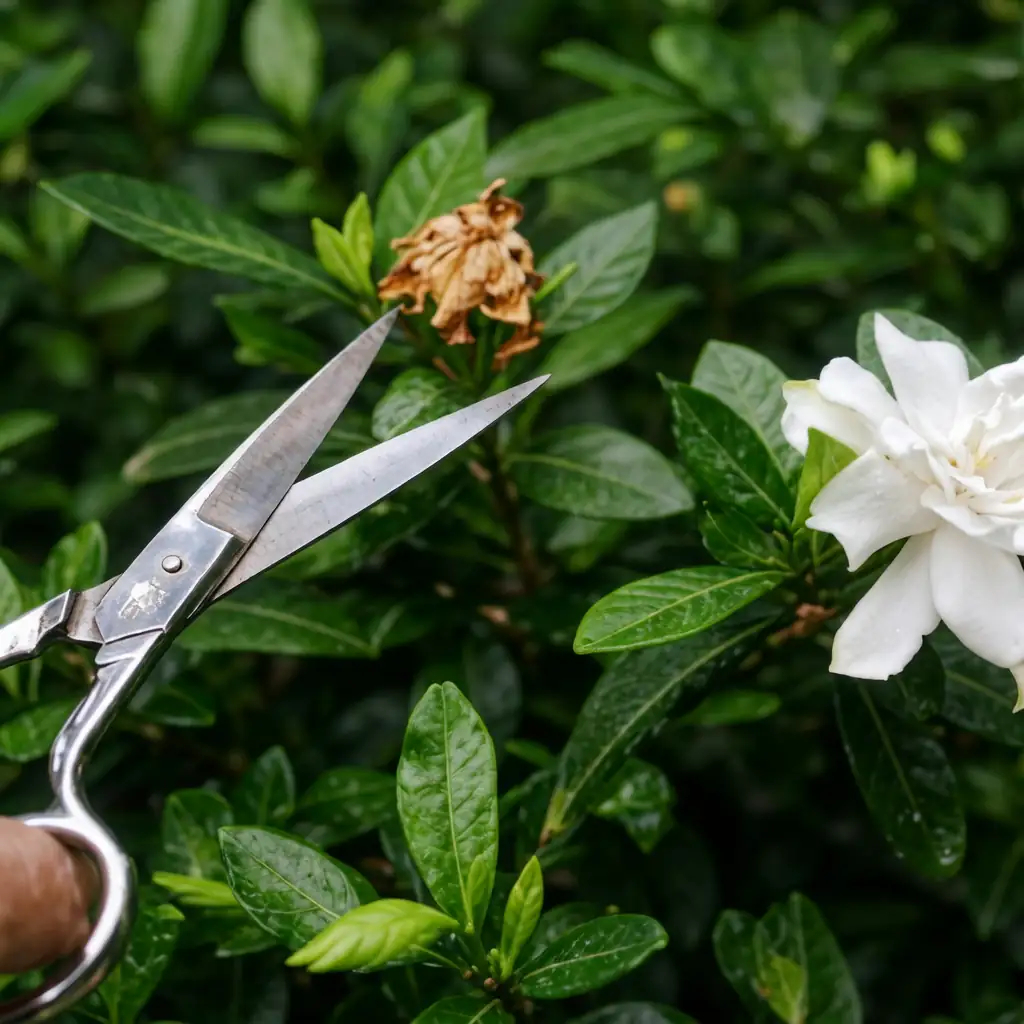
Prune to shape in early spring (remove dead, weak, or overly long shoots). After flowering, lightly trim to keep the plant compact and encourage branching; deadhead spent blooms. Avoid heavy pruning while buds are forming.
Propagation
Most commonly by stem cuttings. Take softwood cuttings in late spring/early summer or semi-ripe cuttings in late summer; typical cutting length is about 7–12 cm (3–5 in). Root in a warm, humid environment in an acidic, free-draining medium; rooting often takes about 3–4 weeks (around 20–30 days). Layering in spring also works; seeds are possible (more typical for single-flowered forms) with warm germination around 19–24°C (66–75°F).
Repotting
Repot in spring using fresh acidic mix and excellent drainage. Small to medium container plants are often repotted annually; larger, established specimens can be repotted every 2–3 years with annual top-dressing. Common pot guidance across sources: about 12–25 cm (5–10 in) for smaller plants, up to 20–30 cm (8–12 in) for larger, stable plants.
📅 Seasonal Care Calendar
Spring: repot/top-dress; begin feeding; prune to shape; increase watering as growth starts. Summer: protect from harsh midday sun, keep evenly moist, raise humidity, and keep temperatures steady to reduce bud drop; deadhead. Late summer/early fall: stop or reduce feeding as growth slows; continue careful watering. Winter: brighter window, keep away from drafts/vents, water sparingly (when surface dries), maintain humidity, and protect from frost if outdoors.
Pests, Diseases & Safety
Common Pests & Diseases
Common pests: whiteflies, aphids, scale, mealybugs, spider mites, and occasionally caterpillars. Treat early with insecticidal soap or horticultural oil and improve growing conditions (especially airflow without drafts). Common problems: iron-deficiency chlorosis from alkaline soil/hard water; bud drop from drafts, low humidity, uneven watering, or temperature swings; and diseases such as leaf spot, powdery mildew, sooty mold, anthracnose, and root rot (usually from poor drainage/overwatering). Prevent issues with acidic media, good drainage, stable conditions, and avoiding overhead watering late in the day.
Toxicity
Low toxicity overall, but not a snack: ingestion may cause mild gastrointestinal upset in people and pets. Several sources note gardenias can upset cats and dogs (vomiting/drooling/diarrhea). Best practice: keep out of reach of pets that chew plants and small children.
Culture & Symbolism
Symbolism: Gardenias are classic symbols of purity, grace, and refined love—often tied to “secret love” in Victorian flower language. Their white blooms are popular in weddings to express devotion, trust, and lasting affection; some traditions also link them with happiness and good fortune.
History & Legends: Cultivated in China and wider East Asia for well over a thousand years, gardenias spread globally as a prized fragrance plant. The genus name honors Alexander Garden (1730–1791), a Scottish naturalist. In folk traditions they’ve been connected with romance, and their perfume made them a longtime favorite in courtyards, conservatories, and warm-climate gardens.
Uses: Ornamental: cherished as a shrub, hedge, patio plant, and fragrant houseplant. Fragrance: flowers used in perfumery and sometimes scented teas. Traditional medicine: the fruit (栀子/“Zhi Zi”) is used in traditional Chinese medicine. Natural dye/food color: the fruit yields a yellow pigment used historically in Asia for foods and textiles.
FAQ
Why are my gardenia leaves turning yellow?
Most often it’s iron chlorosis caused by soil or water that’s too alkaline. Move to an acidic mix (pH about 5.0–6.5), switch to rain/distilled/low-mineral water, and consider an iron supplement (chelated iron or iron sulfate per label). Also check drainage and watering—waterlogging can also lead to yellowing and root problems.
Why do gardenia buds drop before opening?
Bud drop is usually stress: drafts, low humidity, uneven watering, or temperature swings. Keep humidity around 50%+, keep the mix evenly moist (not soggy), avoid moving the plant once buds form, and aim for steady temperatures—many growers find warm days with slightly cooler nights help buds develop normally.
Can gardenias grow indoors?
Yes—if you can give them very bright light, high humidity, and acidic soil with soft water. Keep them away from heat vents and cold drafts, and water when the top 2–3 cm (1 in) dries. Many people move them outdoors in warm months and bring them in before cold weather.
How do I choose a good gardenia at the shop?
Pick a compact, well-branched plant with glossy deep-green leaves, no sticky residue or pests, and lots of plump buds—ideally with a couple of flowers just starting to open. Avoid plants with many yellow leaves, soggy compost, or lots of dropped buds.
What’s the best soil and pot for a potted gardenia?
Use an ericaceous/azalea-type acidic mix with excellent drainage. Pot size depends on the plant, but many do well in roughly 12–25 cm (5–10 in) pots when small, moving up as needed; large specimens may sit in 20–30 cm (8–12 in) pots. Always ensure drainage holes and don’t let the pot sit in water.
Fun Facts
- Gardenias belong to the coffee family (Rubiaceae).
- Their fragrance often feels strongest in the evening and early morning—one flowering plant can scent a whole room.
- The fruit is a traditional source of a natural yellow dye and food color in parts of Asia.
- In Japan, gardenia fruit is associated with traditional crafts—and the bottoms of Go and Shogi boards are sometimes shaped like the fruit.