
Plant Features
- Size:10–80 cm (4–31 in) tall
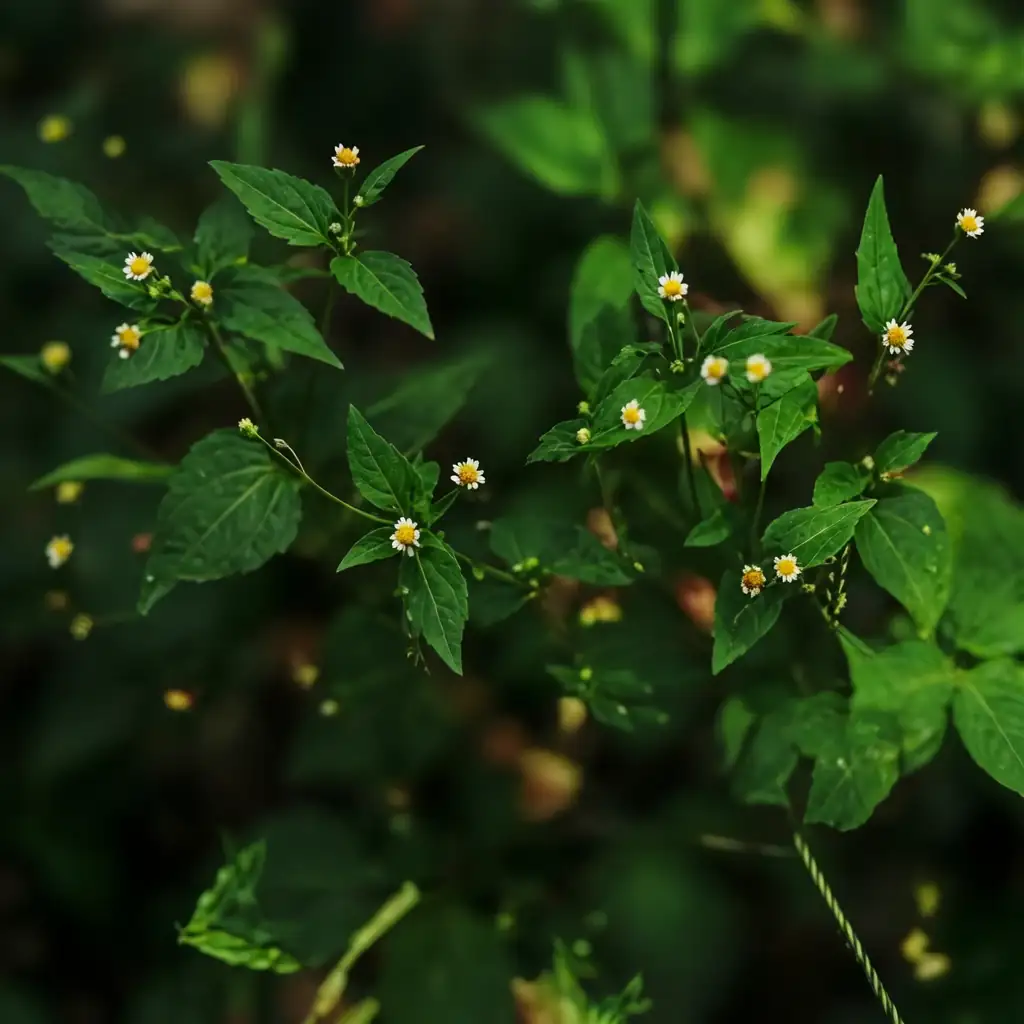
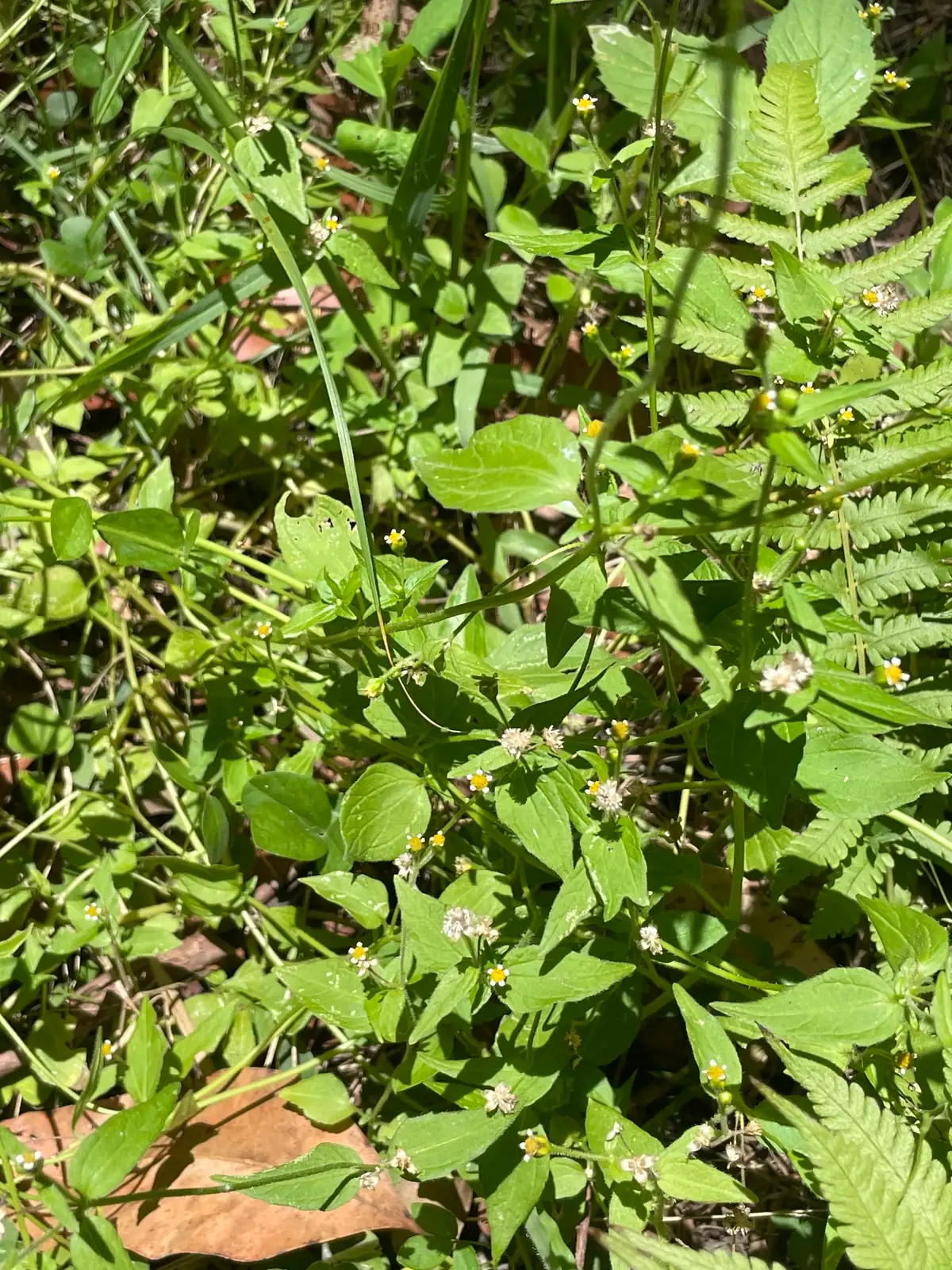
- Foliage: Slender, branching stems with opposite leaves, giving the plant a light, airy, slightly “weedy” look typical of small annuals.
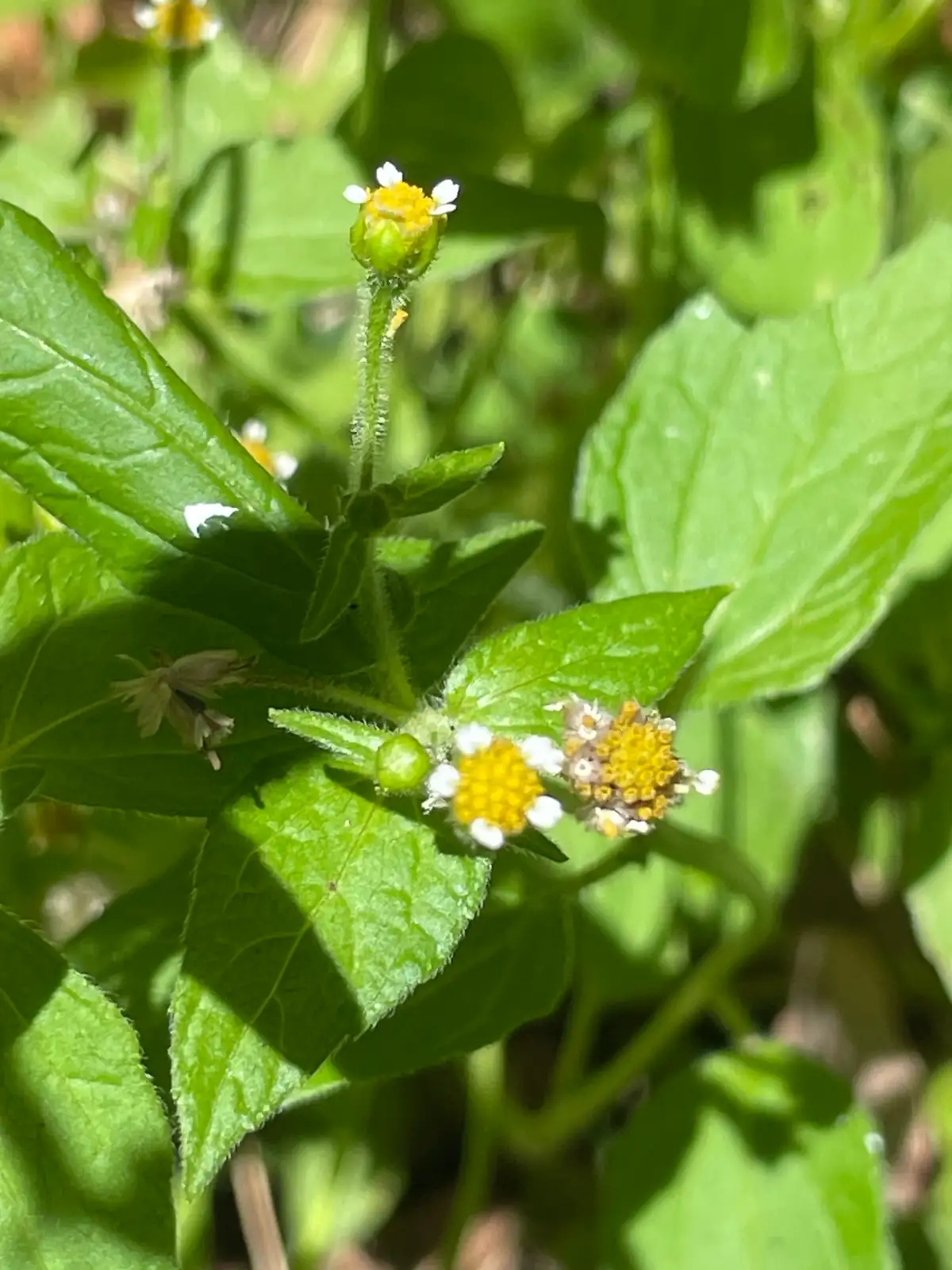
- Flower: Small, hemispherical daisy-like flower heads held on long stalks; a yellow disc surrounded by tiny white ray florets. The fruits are flattened achenes that ripen dark brown to black and carry fine pale hairs that help them spread.
- Flowering Season: July–October
- Growth Habit: Fast-growing annual herb that readily self-sows and can form dense patches, especially in moist, sunny disturbed sites.
Environment
Sunlight
Full sun to bright light; flowers best with strong sun (about 6+ hours daily).
Temperature
Prefers mild to warm conditions during the growing season, roughly 15–30°C (59–86°F).
Humidity
Does best where moisture is fairly consistent; handles average outdoor humidity as long as the soil doesn’t dry out completely.
Soil
Very adaptable, but most vigorous in moist, fertile, well-drained soil—especially in disturbed ground such as field edges, streambanks, and roadsides.
Placement
Best outdoors in naturalistic areas (meadow edges, wild corners). Avoid small, tidy beds—or containers—unless you’re committed to preventing self-seeding.
Hardiness
Not frost-hardy; typically behaves as a warm-season annual in temperate regions and is killed by freezing.
Care Guide
Difficulty
Easy to grow, but hard to contain: it establishes quickly, self-seeds heavily, and may become invasive in gardens.
Buying Guide
Usually not sold as an ornamental and often shows up as a volunteer. If you do buy seed, check the label carefully for the scientific name Galinsoga parviflora to avoid confusion with other Galinsoga species.
Watering
Keep soil evenly moist while seedlings establish. After that, it tolerates brief dry spells, but spreads fastest with regular moisture. In heavy soils, avoid overwatering to reduce the risk of root problems.
Fertilization
Typically unnecessary—rich soil makes it even more vigorous. If growing intentionally in poor soil, apply a light, balanced fertilizer at half strength every 4–6 weeks during active growth.
Pruning
To limit spread, deadhead promptly or cut plants back before seeds mature. For control, hand-pull or hoe seedlings while they’re small and before they flower.
Propagation
By seed (achenes). It self-sows readily; collect seed when fruits darken, or prevent reseeding by removing flower heads before they set mature seed.
Repotting
Not commonly kept long-term in containers. If grown in pots, use a free-draining mix, refresh soil each season, and pot up only one size when needed.
📅 Seasonal Care Calendar
Spring: remove unwanted seedlings early. Summer: watch for flowering and deadhead to prevent seed set. Autumn: pull plants before mature seeds disperse; compost only if seed heads have been removed.
Pests, Diseases & Safety
Common Pests & Diseases
Usually trouble-free. In crowded, damp growth it may show minor leaf spots or mildew. Aphids sometimes gather on soft new shoots—manage with a firm water spray or insecticidal soap if needed.
Toxicity
No well-established toxicity issues for typical household exposure, but it isn’t a food plant for most people—discourage pets and children from eating it as a sensible precaution.
Culture & Symbolism
Uses: Mostly used (when tolerated) as a casual, spontaneous “wildflower” in naturalized settings. Far more often, it’s considered an agricultural and garden weed because it grows quickly and reseeds aggressively.
FAQ
Why does gallant soldier keep coming back every year?
It’s an annual that produces a lot of seed. If seed heads mature, the seeds drop into the soil and germinate readily the next season.
How can I control it without chemicals?
Pull or hoe seedlings early, mulch bare soil to reduce germination, and remove flower heads before seeds ripen and disperse.
Fun Facts
- Although native to South America, it has naturalized widely around the world.
- It can flower and set seed for a long stretch of the season (often July–October).
- Its delicate, airy look hides a talent for forming dense patches in moist, sunny disturbed ground.
- The ripe achenes often turn dark and carry fine pale hairs that help them disperse.