

Plant Features
- Size: Typically 60–100 cm (24–39 in) tall; forms a bushy clump about 45–75 cm (18–30 in) wide in good conditions.
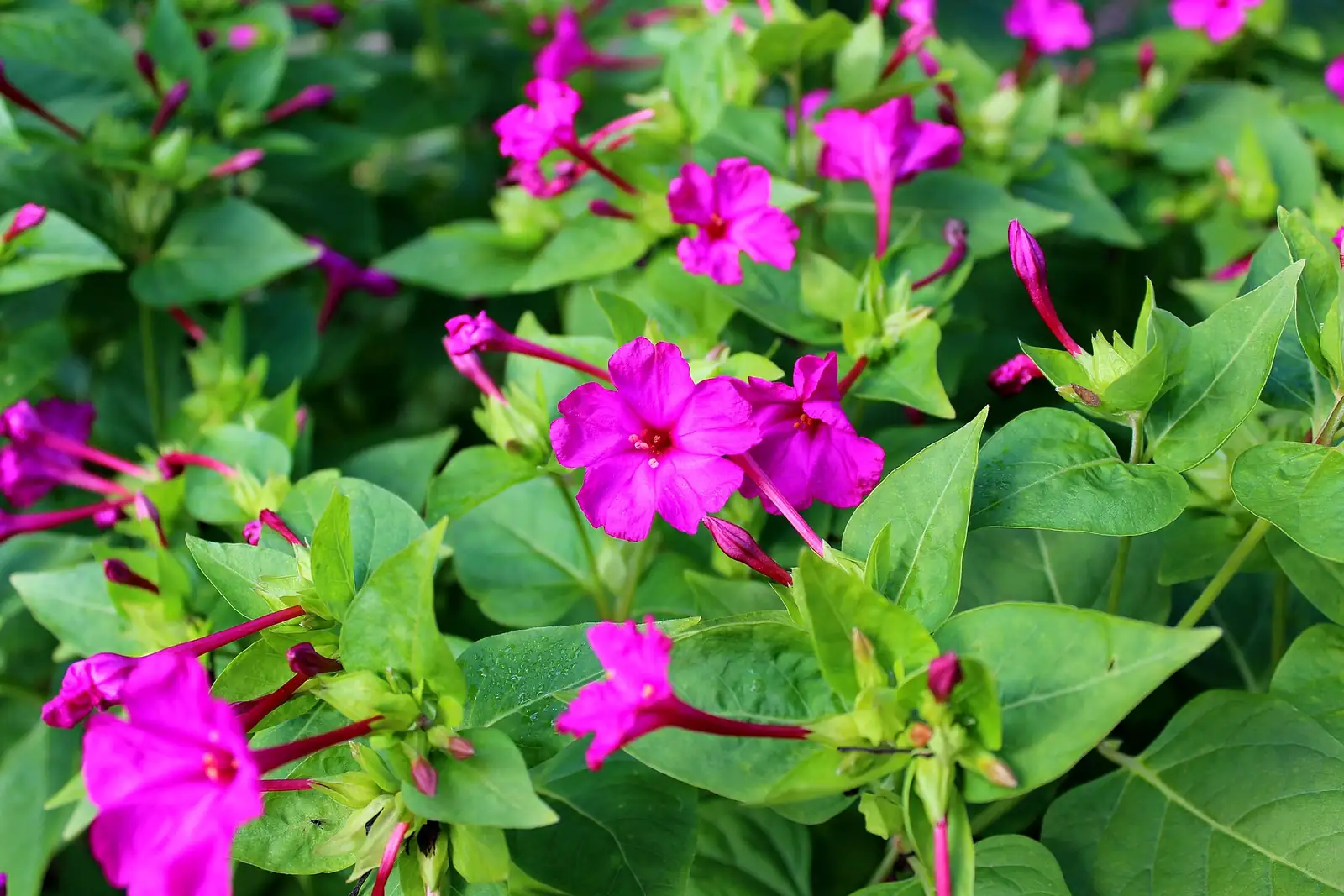
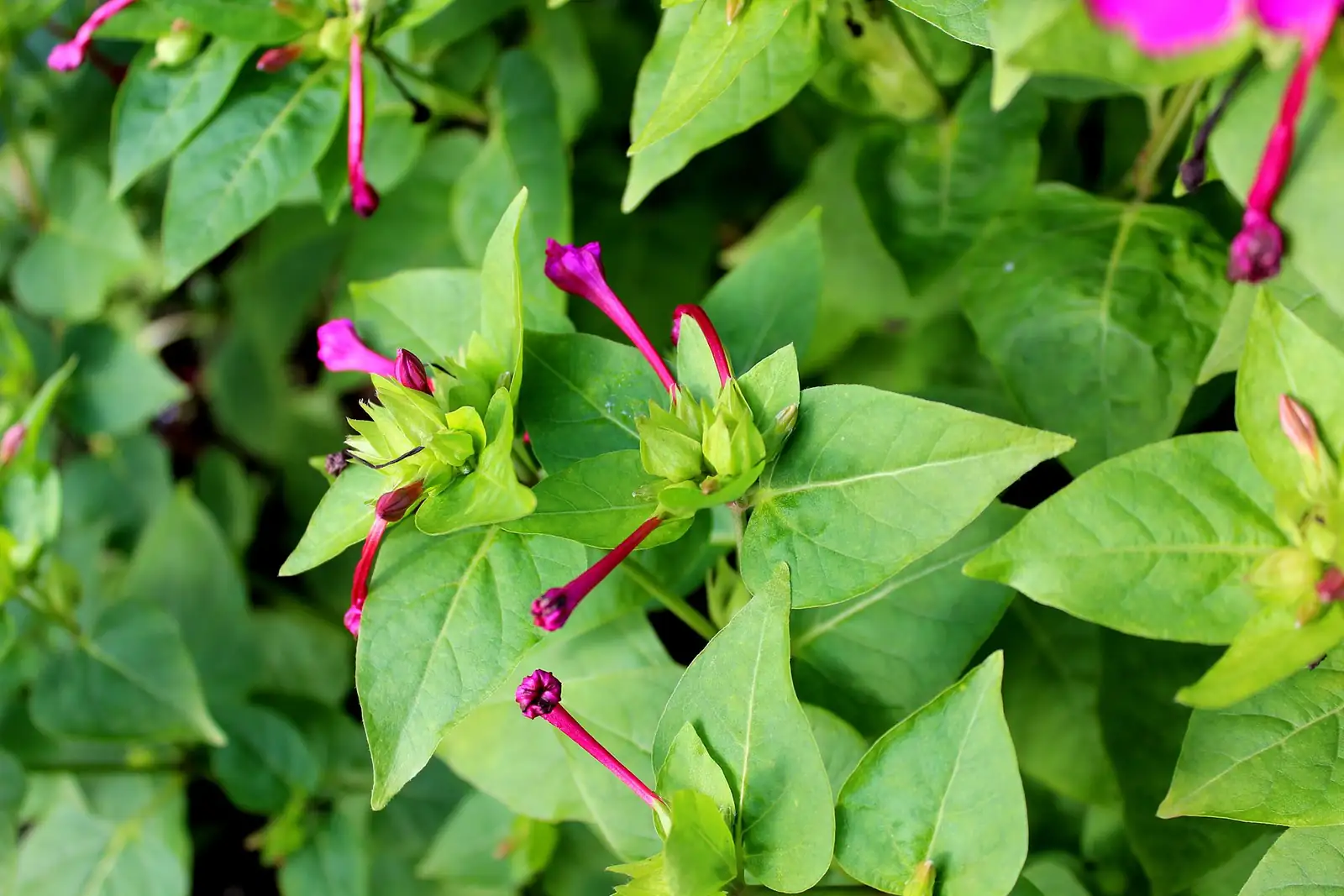
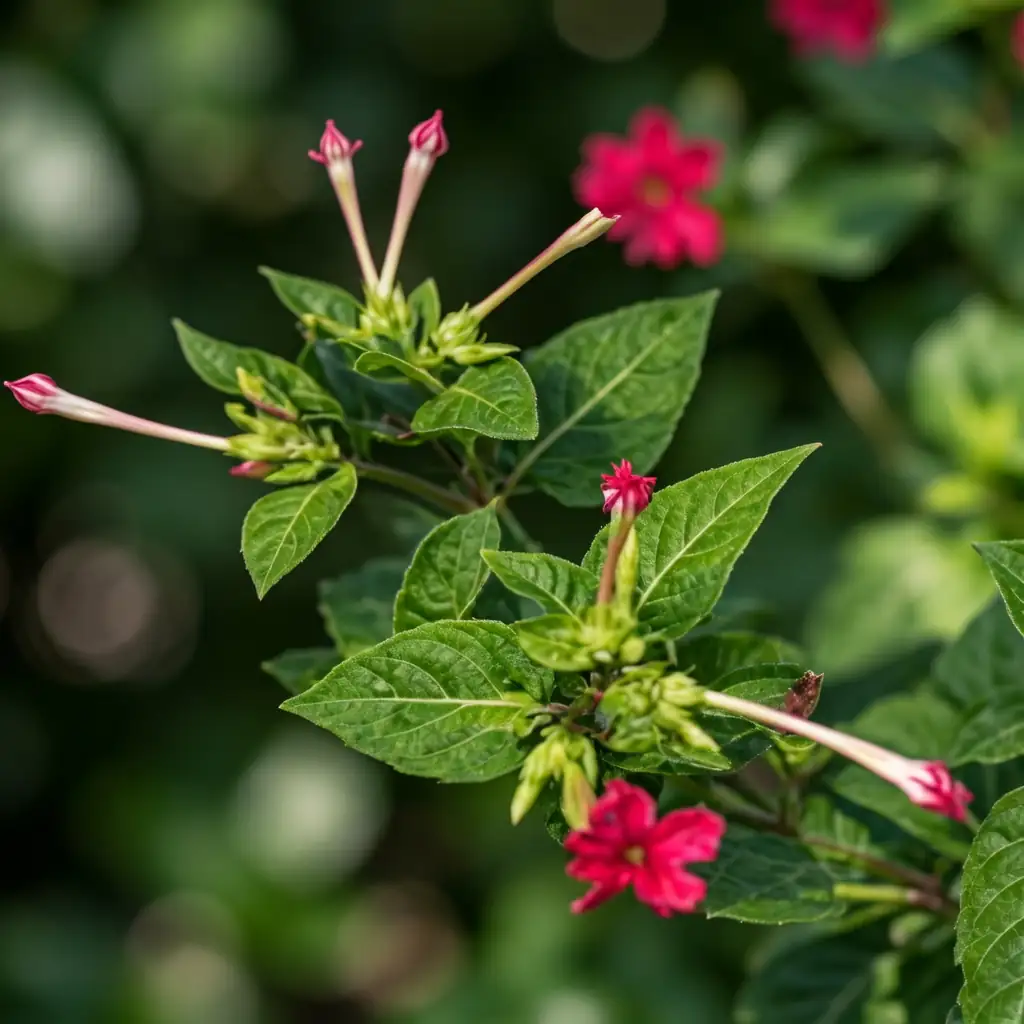
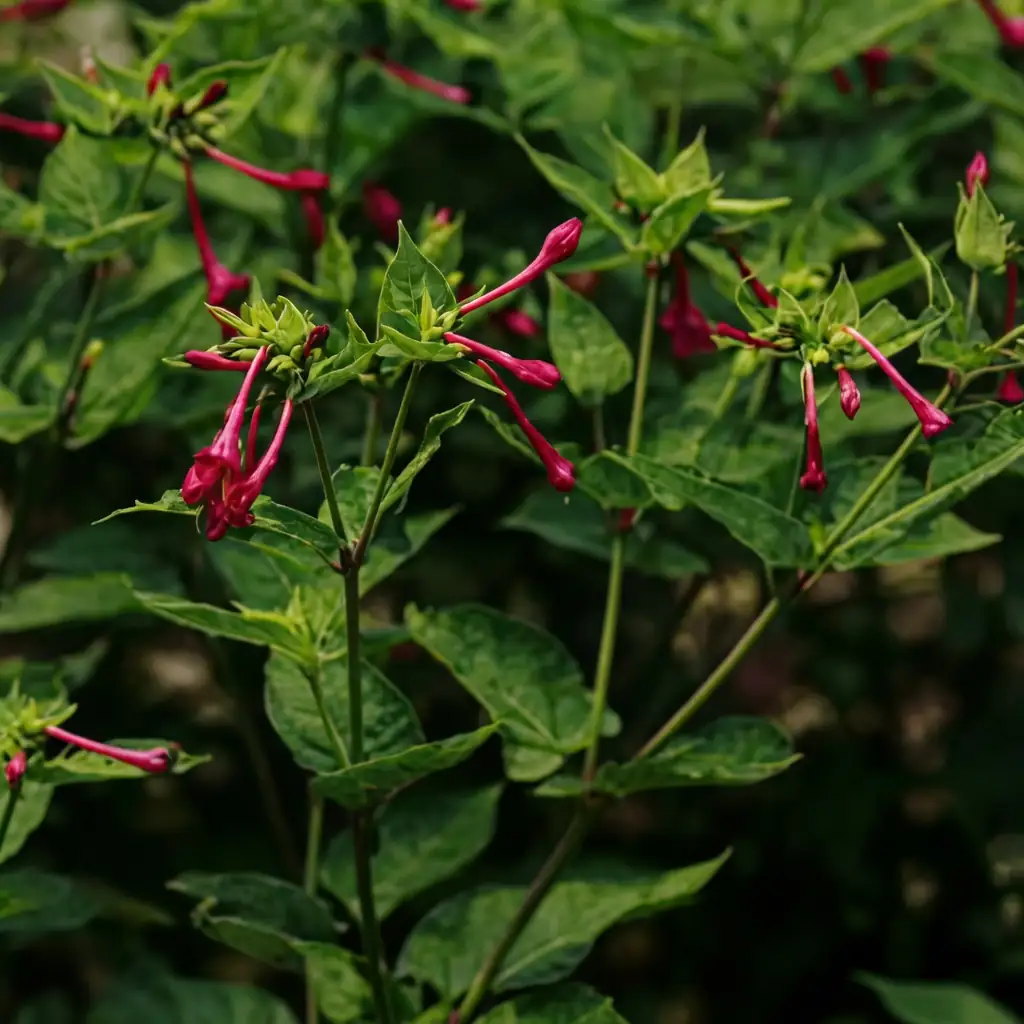
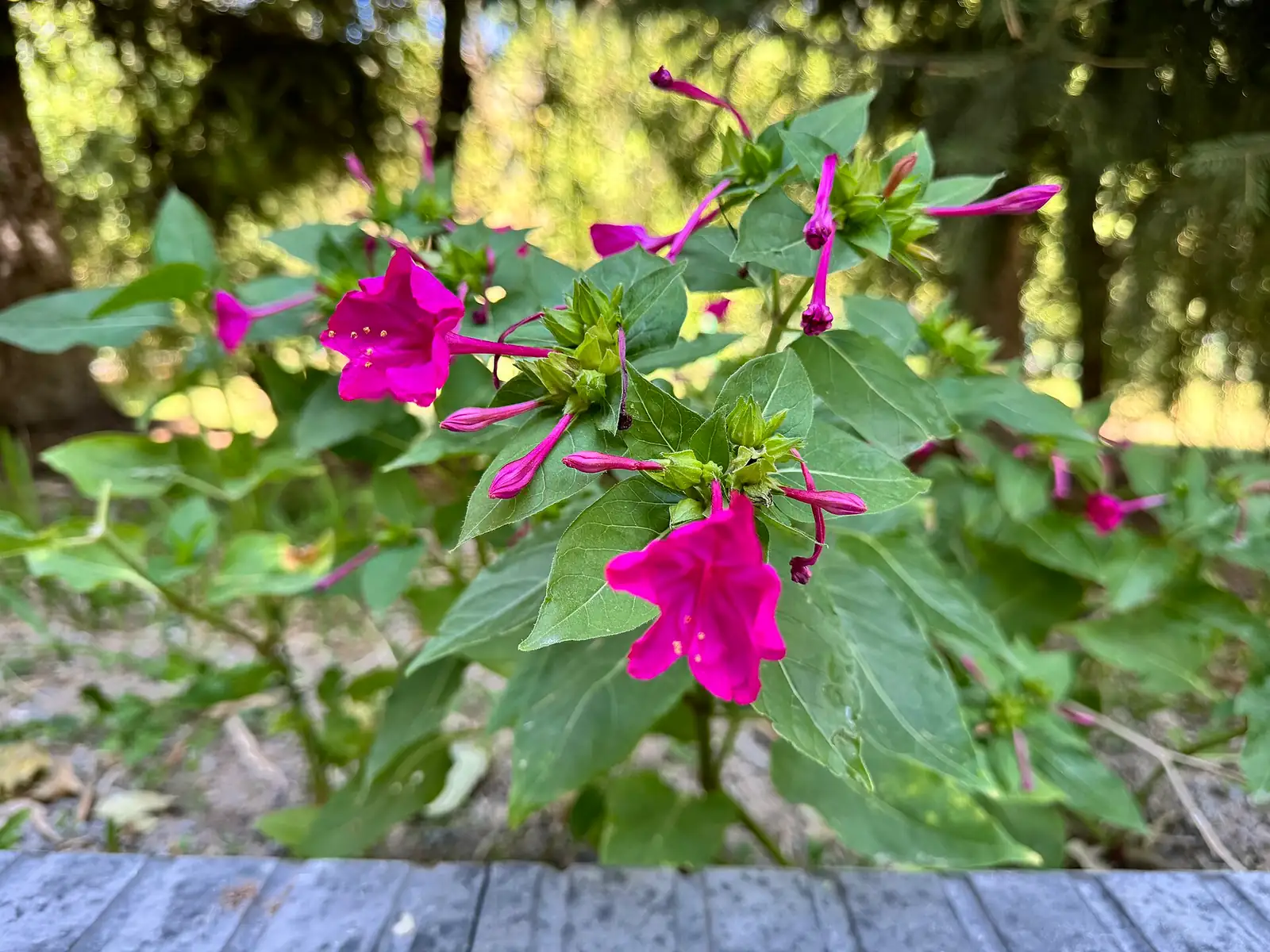
- Foliage: Leaves are opposite, broadly ovate to ovate-triangular with pointed tips. Foliage is medium green and a bit soft-textured, helping the plant read as lush and full even before the evening flowers open.
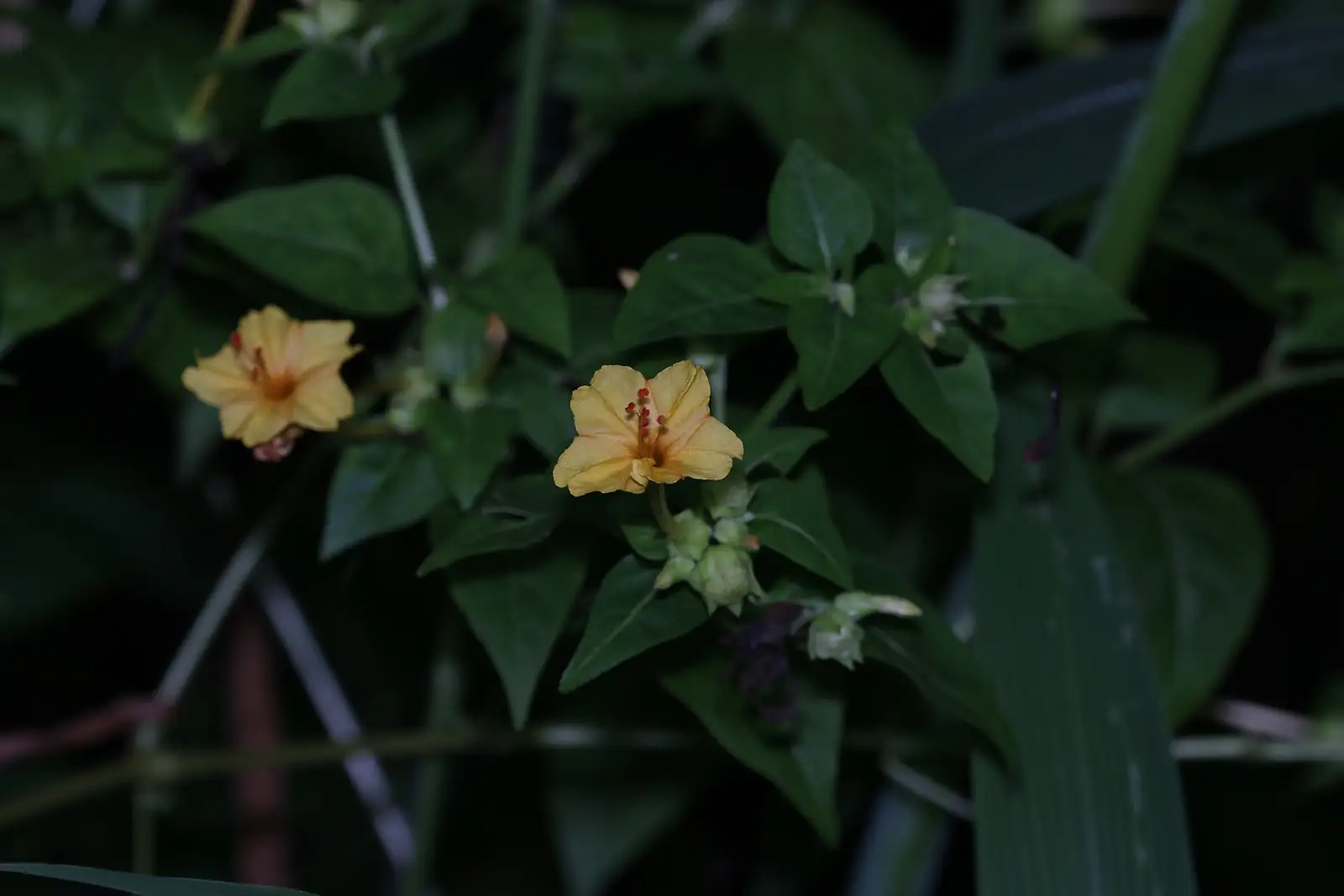
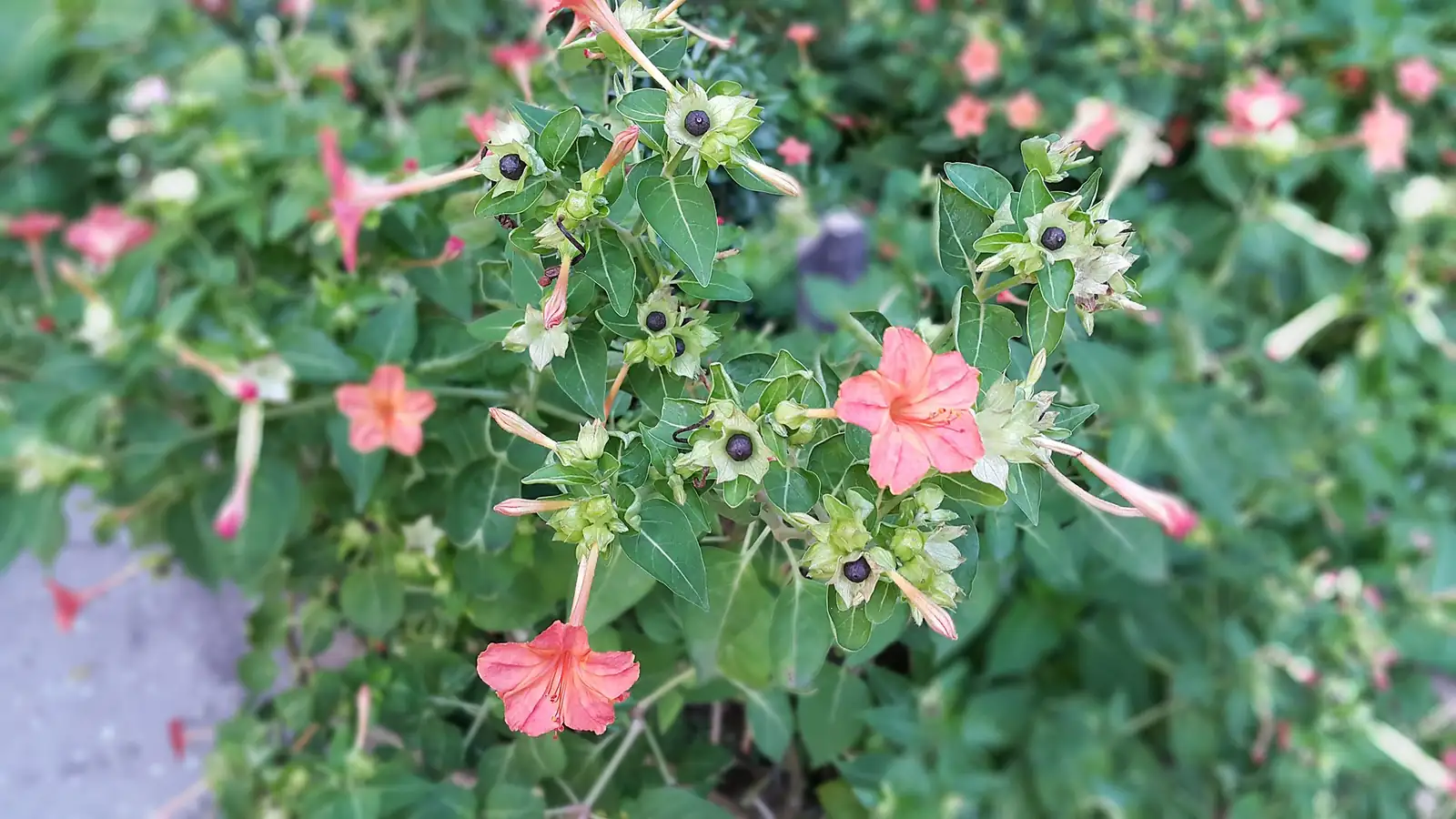
- Flower: Trumpet-shaped flowers are produced in small clusters at the tips of shoots. Colors range from red, pink, yellow, orange, and white, often appearing as stripes, speckles, or bicolors. The blooms typically open late afternoon to evening and close by morning, and they’re often most noticeably sweet-scented in the evening. After flowering, the plant forms distinctive seeds that are black, rounded, and wrinkled—often compared to tiny “grenades” because of their shape and texture.
- Flowering Season: June–October (roughly summer to autumn)
- Growth Habit: Bushy, upright, much-branched herbaceous perennial in mild climates; commonly grown as an annual where winters are cold.
Environment
Sunlight
Full sun to partial shade; for the heaviest flowering, aim for full sun (about 6+ hours/day).
Temperature
Loves warmth; grows best around 18–30°C (64–86°F). Not frost-tolerant—freezing temperatures around 0°C (32°F) kill the top growth.
Humidity
Adaptable, but happiest with moderate humidity and decent airflow. Avoid sites that stay constantly wet or stuffy.
Soil
Well-drained garden soil is key. Tolerates average soil and some dryness once established, but performs best in fertile, loamy soil with fairly even moisture.
Placement
Ideal for garden beds, borders, cottage gardens, and large containers—especially near patios, paths, or seating areas where the evening fragrance can be enjoyed.
Hardiness
USDA Zone 9–11 as a perennial; grown as an annual in cooler zones. Not frost-hardy.
Care Guide
Difficulty
Easy. A dependable warm-season bloomer that handles summer heat well, forgives average soil, and flowers quickly.
Buying Guide
Pick plants that look sturdy and well-branched, with fresh green leaves. Skip any with limp growth, blackened stems, or potting mix that stays soggy. If buying seed, choose reputable suppliers and fresh-season seed for best germination.
Watering
Water regularly while establishing. Once settled, water when the top 2–5 cm (1–2 in) of soil feels dry. Avoid waterlogging. Container plants need more frequent watering during hot, sunny spells.
Fertilization
In the ground, it often needs little feeding—mixing in compost at planting is usually enough. In containers or poor soil, feed every 2–4 weeks during active growth with a balanced fertilizer, following label directions.
Pruning
Pinch young plants to encourage bushiness. Deadheading isn’t required, but light trimming can keep plants compact and can encourage fresh bloom flushes.
Propagation
Most commonly grown from seed. In frost-free or mild-winter climates, it may return from its perennial root system after dying back, resprouting in spring.
Repotting
For container plants, repot in spring into fresh, well-drained potting mix and a pot with drainage holes. If rootbound, move up about 2–5 cm (1–2 in) in pot diameter.
📅 Seasonal Care Calendar
Spring: sow seeds after the last frost once soil has warmed; pinch to promote branching. Summer: water as needed, enjoy the evening blooms, and feed lightly if growth is pale or flowering slows. Autumn: flowering often continues; let some seeds mature if you want volunteers or saved seed. Winter: protect from frost; in mild climates it may die back and return from the roots in spring.
Pests, Diseases & Safety
Common Pests & Diseases
Usually quite trouble-free. Watch for aphids and spider mites (especially in hot, dry weather) and occasional powdery mildew in crowded, humid conditions. Improve airflow, avoid late-day overhead watering, and use insecticidal soap for soft-bodied pests if needed.
Toxicity
May cause mild stomach upset if eaten; sap can irritate sensitive skin. Keep seeds and plant parts away from pets and small children who might chew them.
Culture & Symbolism
Symbolism: Often linked with evening charm and pleasant surprises—thanks to its late-day opening and its tendency to produce multiple colors, even on one plant.
History & Legends: A classic cottage-garden favorite grown around the world. The name “four o’clock” comes from its typical habit of opening in late afternoon.
Uses: Mainly ornamental, valued for long-season color and evening fragrance in beds, borders, and containers—especially near outdoor living spaces.
FAQ
When does it bloom?
Usually from June to October (summer into autumn), depending on your local climate.
When does it set seed/fruit?
Commonly from August to November, after the main flowering period.
How tall does it get?
Typically about 60–100 cm (24–39 in) tall, with a clump spread around 45–75 cm (18–30 in) in good conditions.
What time of day do the flowers open?
Most open in late afternoon to evening and close again by the next morning, often with the strongest fragrance in the evening.
Where is it native to?
Tropical America.
Fun Facts
- The flowers are famous for opening late in the day and often smelling sweetest in the evening.
- One plant can carry flowers in different colors—and some blooms can be striped or bicolored.
- The mature seeds are black, rounded, and wrinkled, with a very distinctive texture.
- In frost-free or very mild-winter areas, it can die back and return from the roots the following spring.
- It’s widely grown as an old-fashioned, reliable summer garden flower.


