Plant Features
- Size: Typically 15–30 cm (6–12 in) tall with a spread of about 15–30 cm (6–12 in) in pots; compact/mini forms may stay smaller.
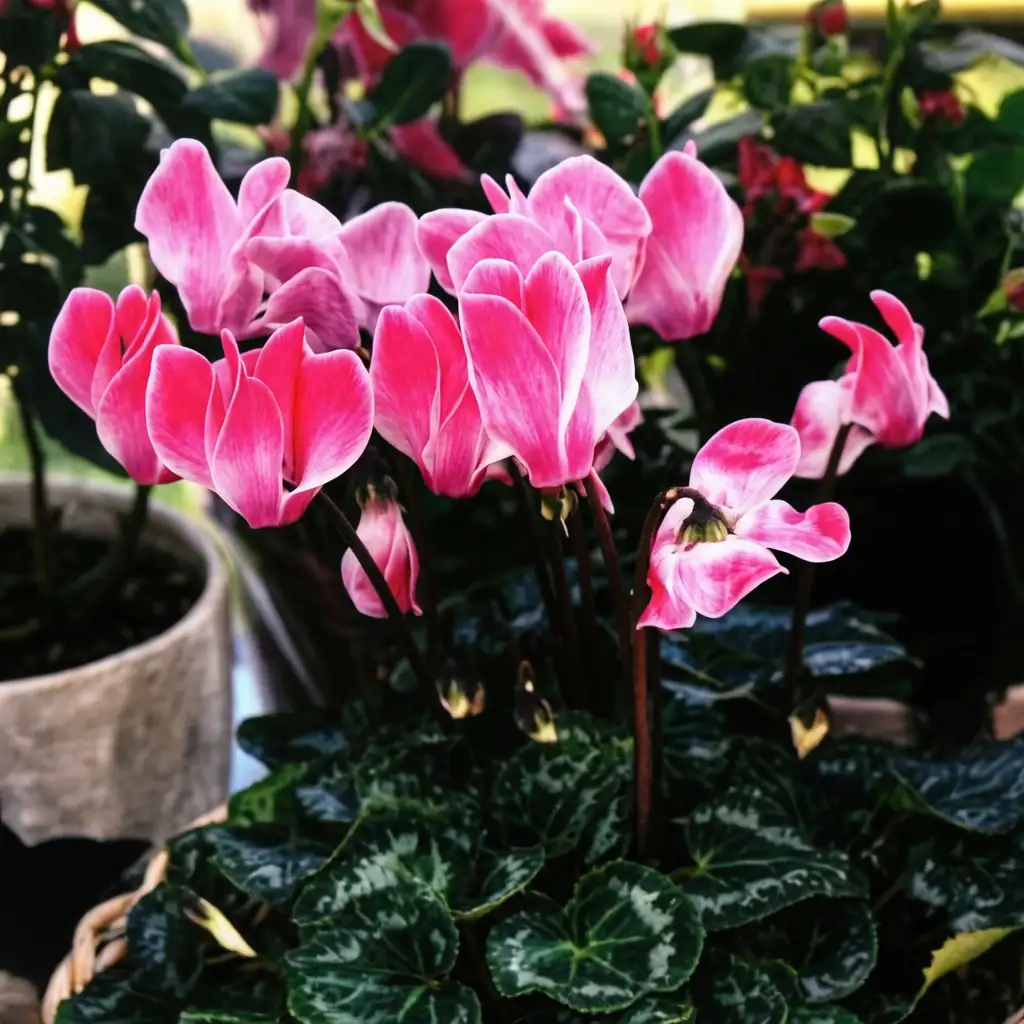
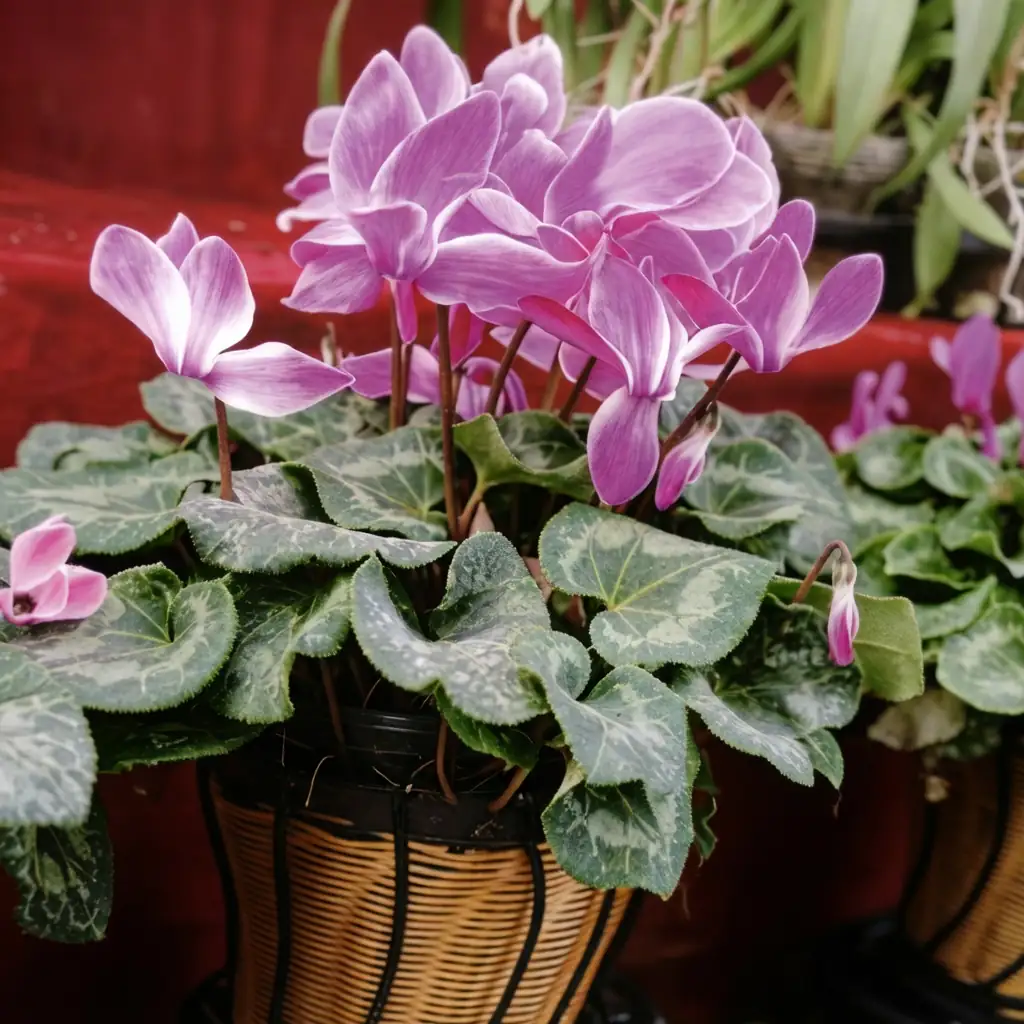
- Foliage: Leaves are heart-shaped and held in a compact, low rosette, usually deep green with silvery marbling or patterned markings. In low light, the leaf stalks tend to stretch and flop. After the flowering show, foliage often yellows as the plant shifts toward a rest period—this is a cue to cut back watering. Good airflow helps keep leaves healthier and reduces rot issues at the crown.
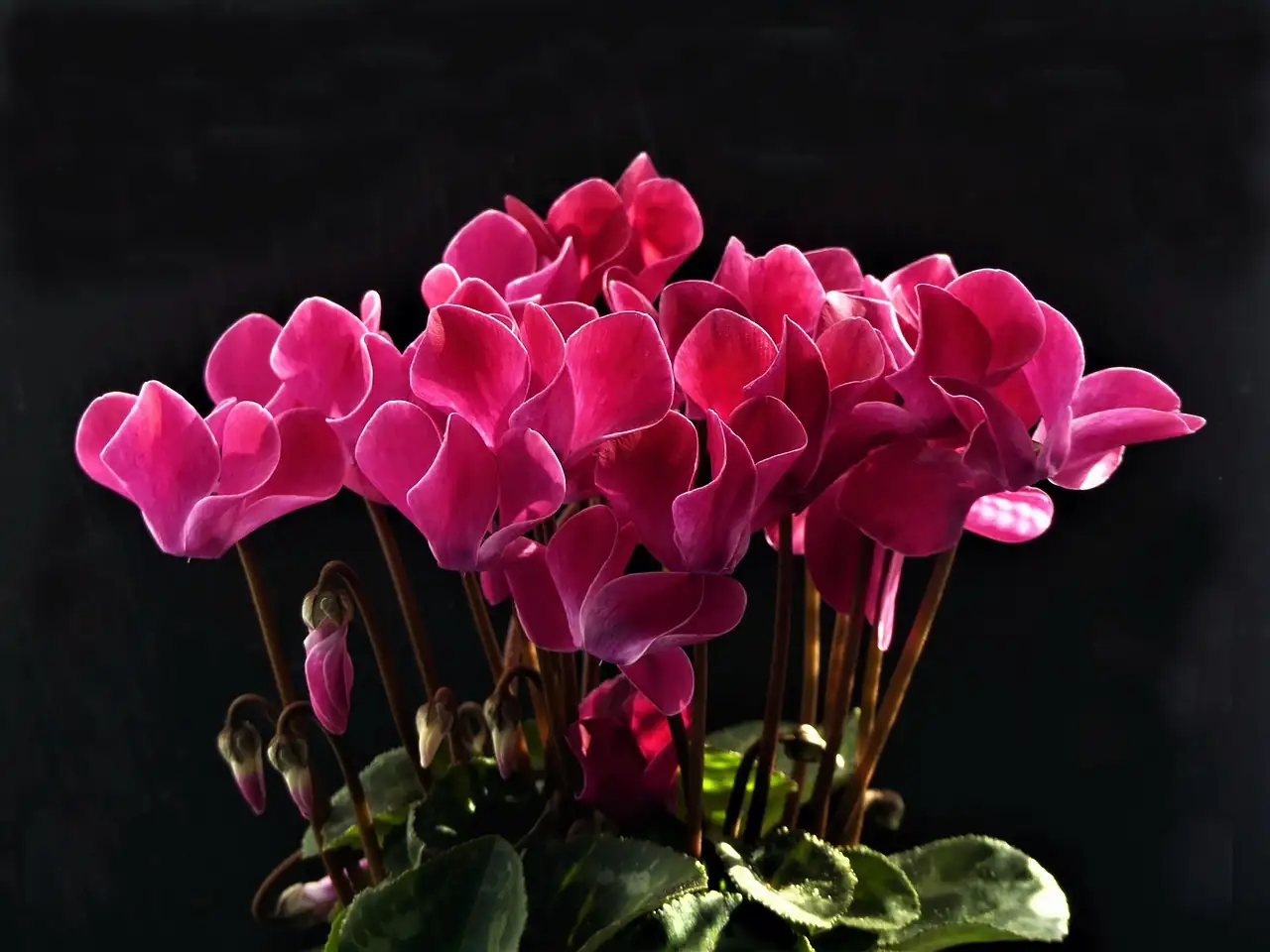
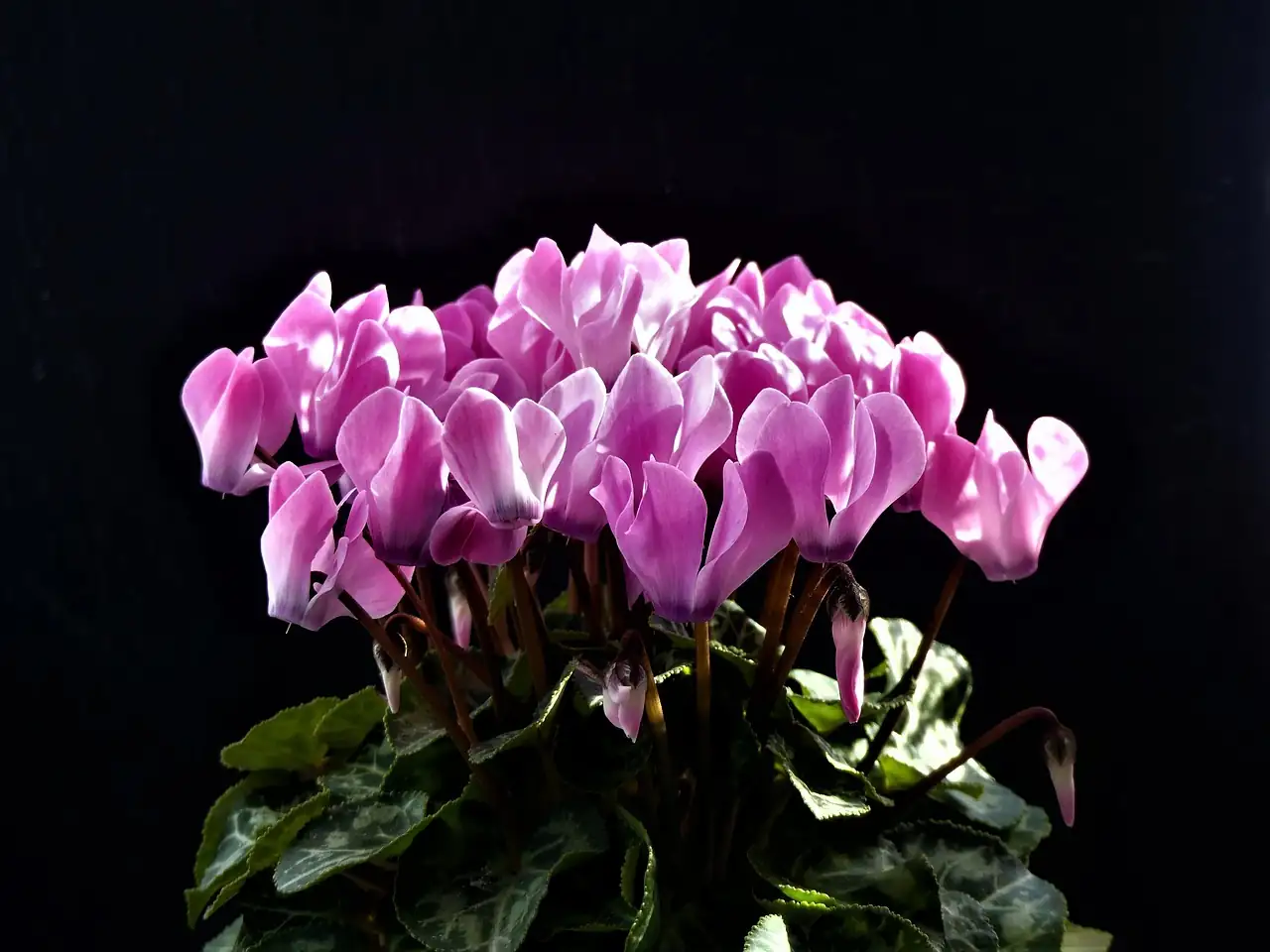
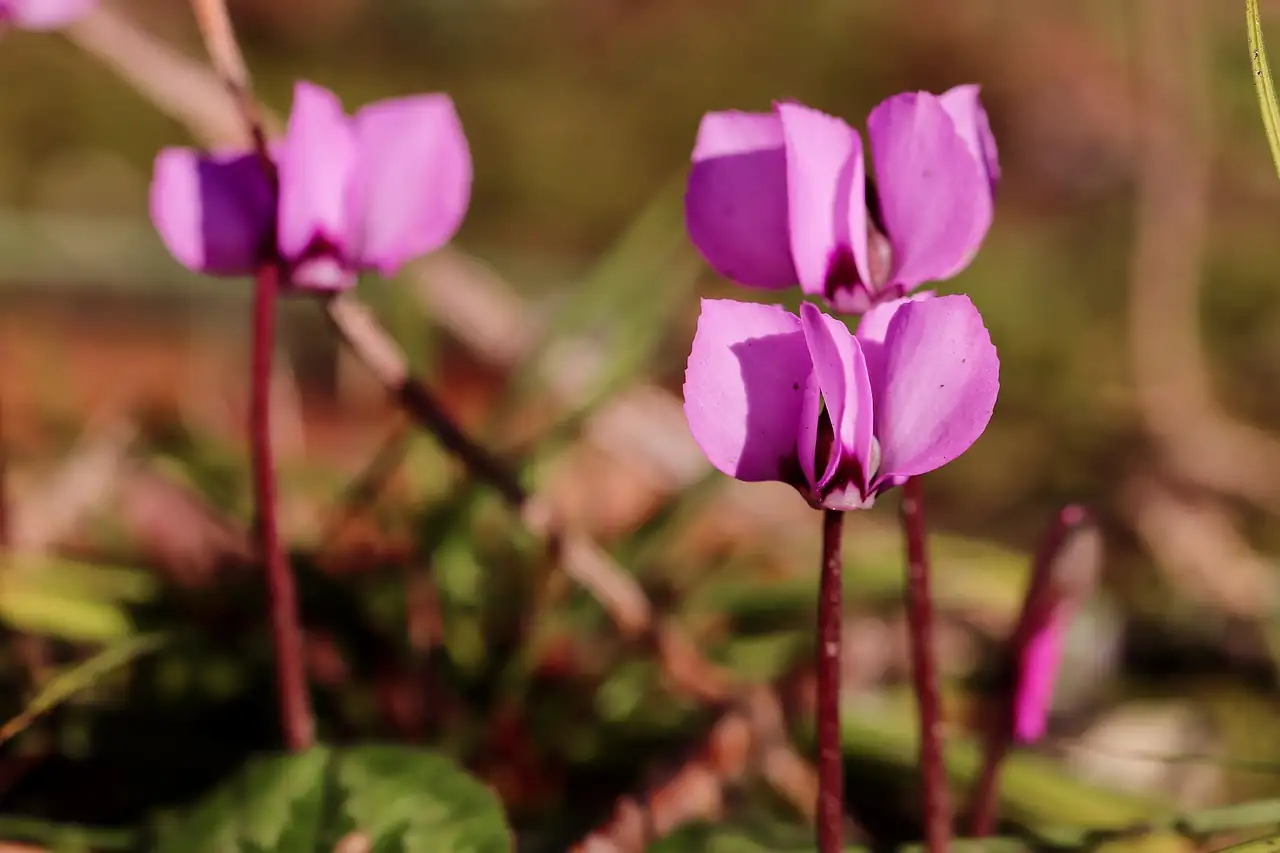
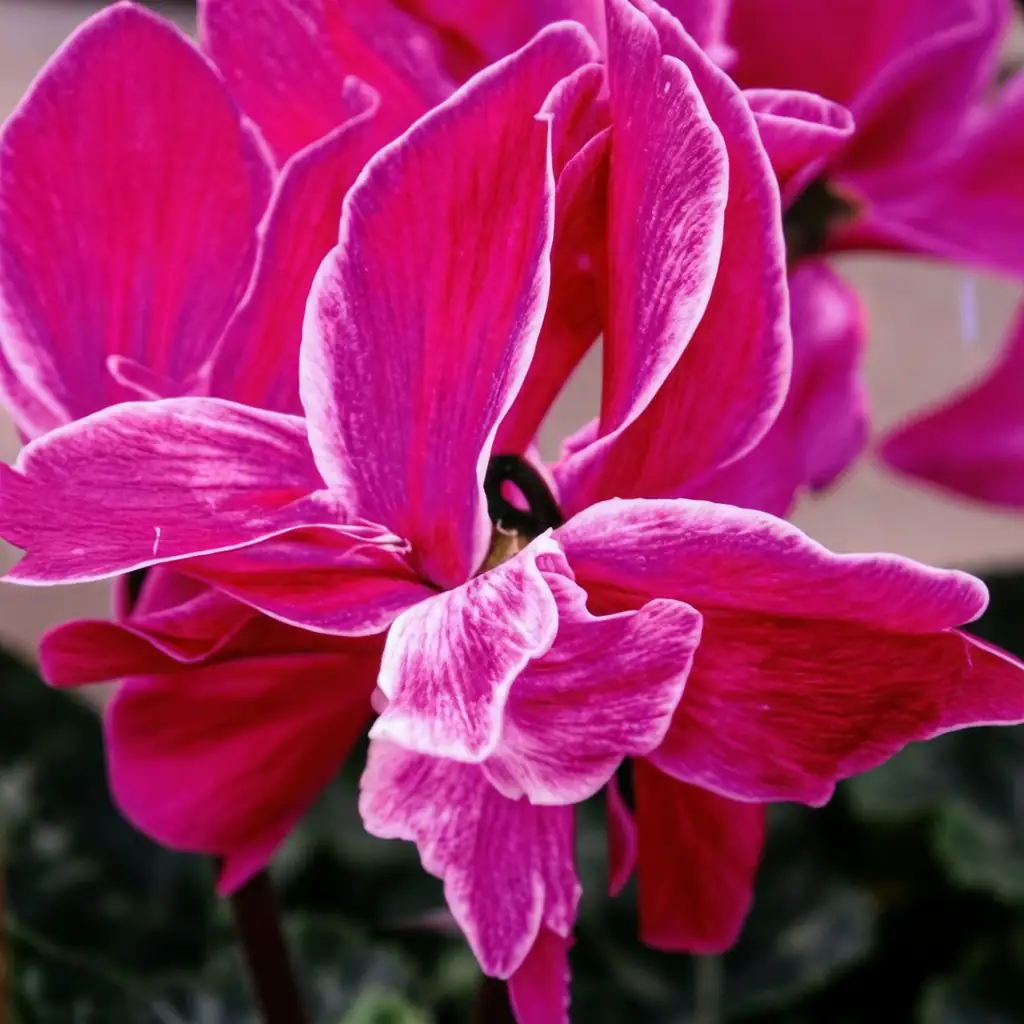
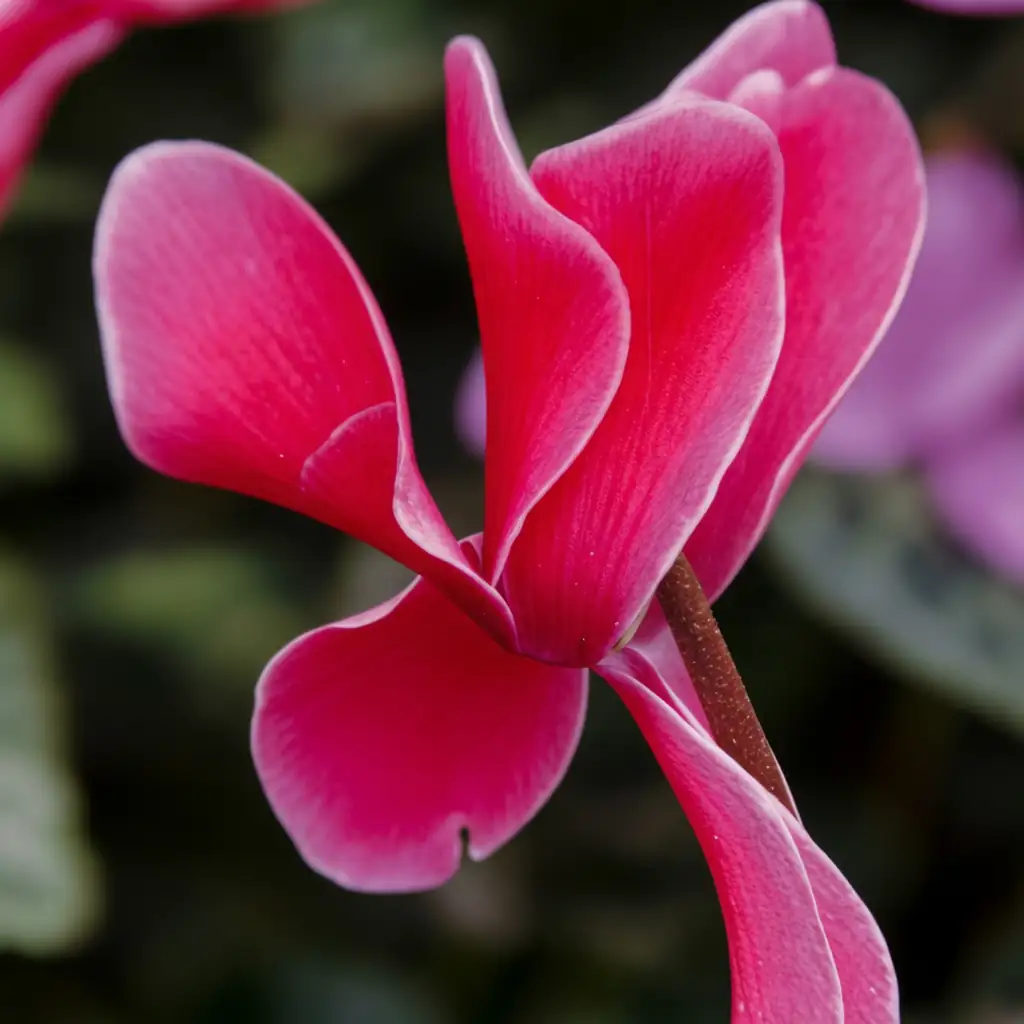
- Flower: Flowers rise on upright stems above the leaves; buds nod, then open into the signature reflexed (swept-back) petals—usually five per bloom. Colors commonly include white, pink, red, magenta, purple, and bicolors. Blooms last longest in cool, bright conditions. When watering, keep water off petals and out of the flower center/crown to reduce spotting, fading, and rot.
- Flowering Season: Late autumn to early spring (often winter to spring indoors; commonly late fall through early spring).
- Growth Habit: A tuberous, clump-forming perennial grown as a cool-season flowering pot plant; often enters a summer rest (dormancy) period.
Environment
Sunlight
Bright light is ideal, with gentle sun from an east-facing window or bright south exposure with filtering. Avoid harsh midday direct sun (especially in warmer seasons). Too little light leads to leggy, floppy leaves and weaker flower color.
Temperature
Performs best in cool conditions: about 12–20°C (54–68°F). Keep winter temperatures above ~10°C (50°F). Avoid prolonged heat; sustained temperatures above ~35°C (95°F) can trigger rapid decline, dormancy, and increased risk of rot.
Humidity
Prefers a cool, moderately humid environment with good ventilation. It dislikes stagnant, very humid air during bloom and hates constantly wet potting mix. If indoor air is very dry, lightly mist leaves (not flowers) and prioritize airflow.
Soil
Use a loose, airy, free-draining potting mix (peat/compost or leaf mold based) amended with coarse sand and/or perlite for drainage. Keep the mix evenly moist during active growth but never soggy. When potting, keep the top of the tuber at or slightly above the soil surface to reduce crown rot risk.
Placement
Indoors in a bright, airy spot—an east or bright south window is ideal. Also suitable for a bright balcony/sunroom if protected from harsh sun and heat. Avoid keeping it in dim interior rooms for long, where stems stretch and blooms fade faster.
Hardiness
Frost-tender and generally grown as a houseplant. Not frost-hardy; roughly comparable to USDA Zone 10–11 outdoors. Protect from temperatures below 10°C (50°F) and avoid prolonged heat above ~35°C (95°F).
Care Guide
Difficulty
Moderate. It’s not difficult once you respect its personality: it wants bright light, cool temperatures, fresh air, and careful watering that never leaves the tuber sitting wet—plus a gentler approach as it heads into its post-bloom rest.
Buying Guide
Choose plants with many buds and only a few open flowers for the longest display. Look for upright, clean, firm flower stems; compact, richly patterned foliage; and no soft spots at the crown/tuber. Avoid plants with yellowing leaves, mushy bases, spots, or obvious pests. Once home, place it immediately in bright light with good ventilation and avoid moving it around frequently while blooming.
Watering
Water thoroughly, then let the mix dry noticeably (or at least the surface dry slightly) before watering again—never leave the pot standing in water. During active growth and bloom, aim for evenly moist but not wet soil; water carefully to keep water off petals and out of the crown/center. Overly wet soil encourages tuber rot, while letting it go bone-dry can slow growth and reduce flowering. After flowering, as leaves yellow, reduce watering gradually. During the summer rest period, keep it shaded, cool, and airy, watering very sparingly—just enough to prevent the tuber from shriveling.
Fertilization
Feed during active growth about every 10 days to every 2 weeks with a balanced liquid fertilizer (e.g., a properly diluted general houseplant feed; some growers use a balanced formula such as 20-20-20). When flower stems begin to rise, one additional feed that’s higher in phosphorus and potassium can support flowering. Avoid splashing fertilizer solution onto leaves.
Pruning
Remove spent flowers and yellowing leaves promptly to reduce mold/rot and keep the plant looking neat. For best hygiene, twist and pull the stem cleanly from the base rather than snipping and leaving a stub.
Propagation
Most reliably by seed. Sow in early autumn (often around September). For faster, more even germination, soak seed in warm water around 30°C (86°F) for about 4 hours, then germinate at 12–15°C (54–59°F); seedlings may appear in roughly 2 weeks. Many cultivars flower about 24–32 weeks from sowing (mini types often around 26–28 weeks). Tuber division is possible during dormancy but is riskier and best for experienced growers. Leaf-based propagation is sometimes mentioned but is generally unreliable for florist’s cyclamen compared with seed.
Repotting
Repot when growth restarts in early autumn (commonly September–October). Use an airy, free-draining mix and a pot typically about 12–16 cm (4.7–6.3 in) wide (often 12–15 cm / 4.7–5.9 in). Ensure excellent drainage and keep the top of the tuber at or slightly above the soil surface to reduce rot.
📅 Seasonal Care Calendar
Year-round basics: bright light, cool temperatures, good airflow, and no waterlogging.
Typical indoor seasonal rhythm:
– Early autumn (Sep–Oct): new growth resumes; repot if needed, keep tuber top exposed, increase watering gradually, restart feeding.
– Winter–spring: peak flowering; water when the mix partly dries, feed regularly, and keep conditions cool and bright.
– Late spring: flowering fades; remove spent blooms, gradually reduce watering as leaves yellow.
– Summer (often Jun–Aug): rest period; keep shaded, cool, and ventilated; water very lightly only to prevent tuber shrivel. Avoid hot, wet conditions which strongly increase rot risk.
Pests, Diseases & Safety
Common Pests & Diseases
The biggest threats are soft rot (especially in hot weather combined with wet soil—often worst in mid-summer) and leaf spot (often noticed in late spring). Prevention is mostly cultural: keep it cool, avoid soggy mix, keep water out of the crown, and provide steady airflow. Remove affected leaves/flowers promptly and isolate plants if problems appear. Pests can include aphids and other sap-suckers; manage with sanitation and insecticidal soap or an indoor-approved treatment per label directions. In some cases, nematodes can damage tubers—discard severely affected plants and replace the potting mix rather than trying to “save” contaminated soil.
Toxicity
Toxic if eaten, especially the tuber. Keep out of reach of children, cats, and dogs. Ingestion can cause gastrointestinal upset, and larger amounts may cause more serious symptoms.
Culture & Symbolism
Symbolism: Often linked with affection and thoughtful love, and widely used as a cheerful winter celebration plant. In many gifting traditions it represents good wishes, success, and family happiness. (Local customs vary—white forms may be avoided for certain occasions in some regions.)
History & Legends: Native to the eastern Mediterranean, Cyclamen persicum became a beloved global houseplant through intensive horticultural selection and breeding. The florists’ cyclamen sold today is the result of generations of cultivation aimed at bigger flowers, richer colors, longer bloom, and compact pot-friendly growth—making it a winter holiday staple in many countries.
Uses: Primarily ornamental: a premium indoor potted plant for winter and early-spring color, widely used for seasonal gifting and home décor (windowsills, tables, entry displays). Flowers can also be used briefly as cut stems for a quirky, elegant arrangement, though they’re generally short-lived once cut.
FAQ
How do I choose a good cyclamen, and what should I do after bringing it home?
Pick one with lots of buds and just a few open flowers, plus compact, firm leaves with no spots, mushy areas, or pests. At home, put it straight into bright light with good airflow. Keep the soil evenly moist but never soggy, keep water off the flowers and crown, and try not to move it around constantly while it’s blooming.
What are the key points for growing florist’s cyclamen well?
Keep it cool and bright (about 12–20°C / 54–68°F), use a free-draining mix, and never let the tuber sit in waterlogged soil. Provide airflow to prevent rot and leaf problems. Feed lightly but regularly during active growth, and reduce watering after bloom as leaves yellow and the plant heads toward its rest period.
Why are my cyclamen flower stems stretching and becoming floppy?
It’s usually too little light, rooms that are too warm, or uneven watering/overly nitrogen-heavy feeding. Move it to brighter light with gentle sun, keep it cool (12–20°C / 54–68°F), water only when the mix partly dries, and use a balanced fertilizer rather than pushing leafy growth.
Fun Facts
- Cyclamen are “backwards” compared with many houseplants: they naturally grow and bloom in cool seasons and often rest in summer.
- Those swept-back petals are called reflexed petals—part of what gives cyclamen their signature butterfly-like look.
- Keeping cyclamen cool is the secret to long-lasting blooms; warm rooms shorten flowering and increase the risk of decline.
- Florist’s cyclamen (Cyclamen persicum) has been bred into a huge range of colors and forms, from minis to ruffled and bicolored varieties.
- Many common cyclamen problems trace back to two things it strongly dislikes: soggy soil and stale, stagnant air.