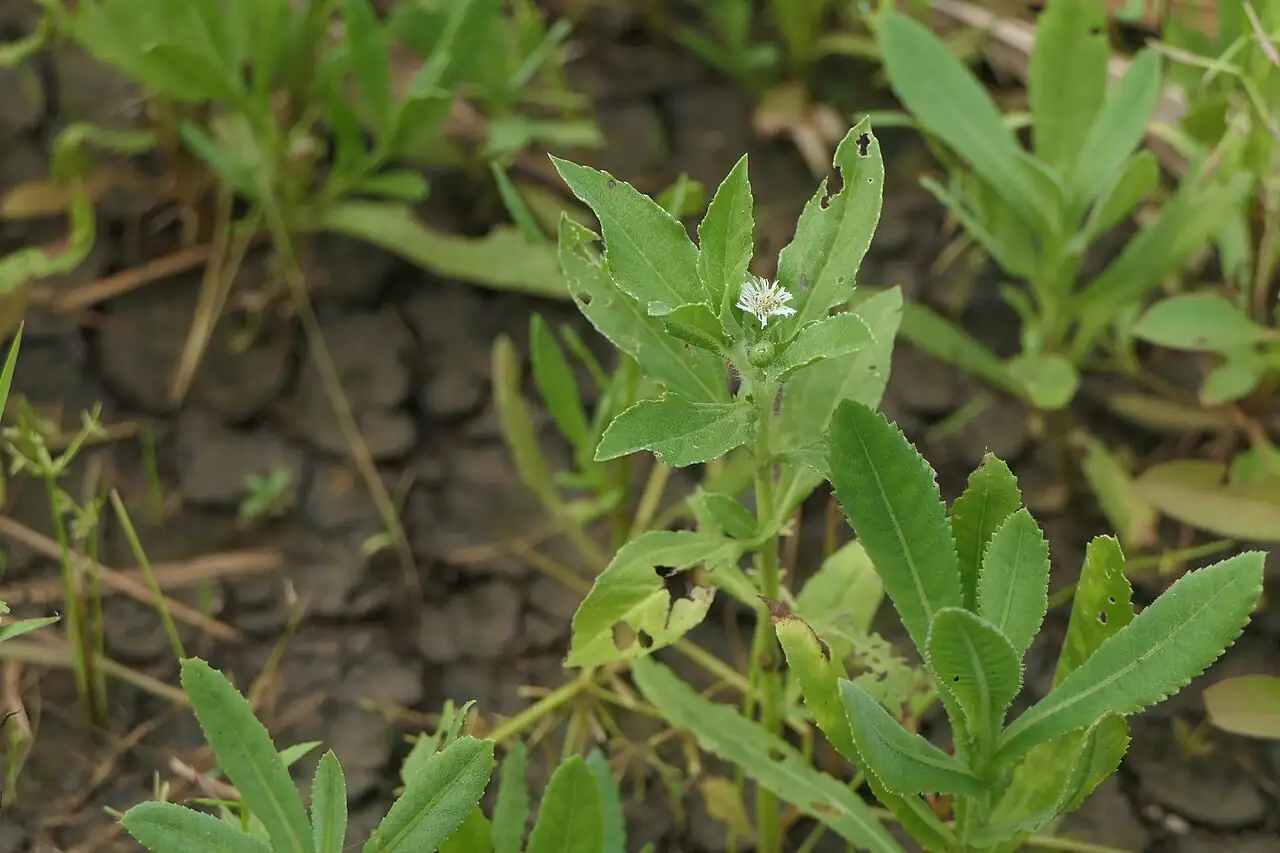
Plant Features
- Size: Up to 60 cm (24 in) tall; typically forms low, spreading mats or small upright clumps depending on how consistently moist the site is.
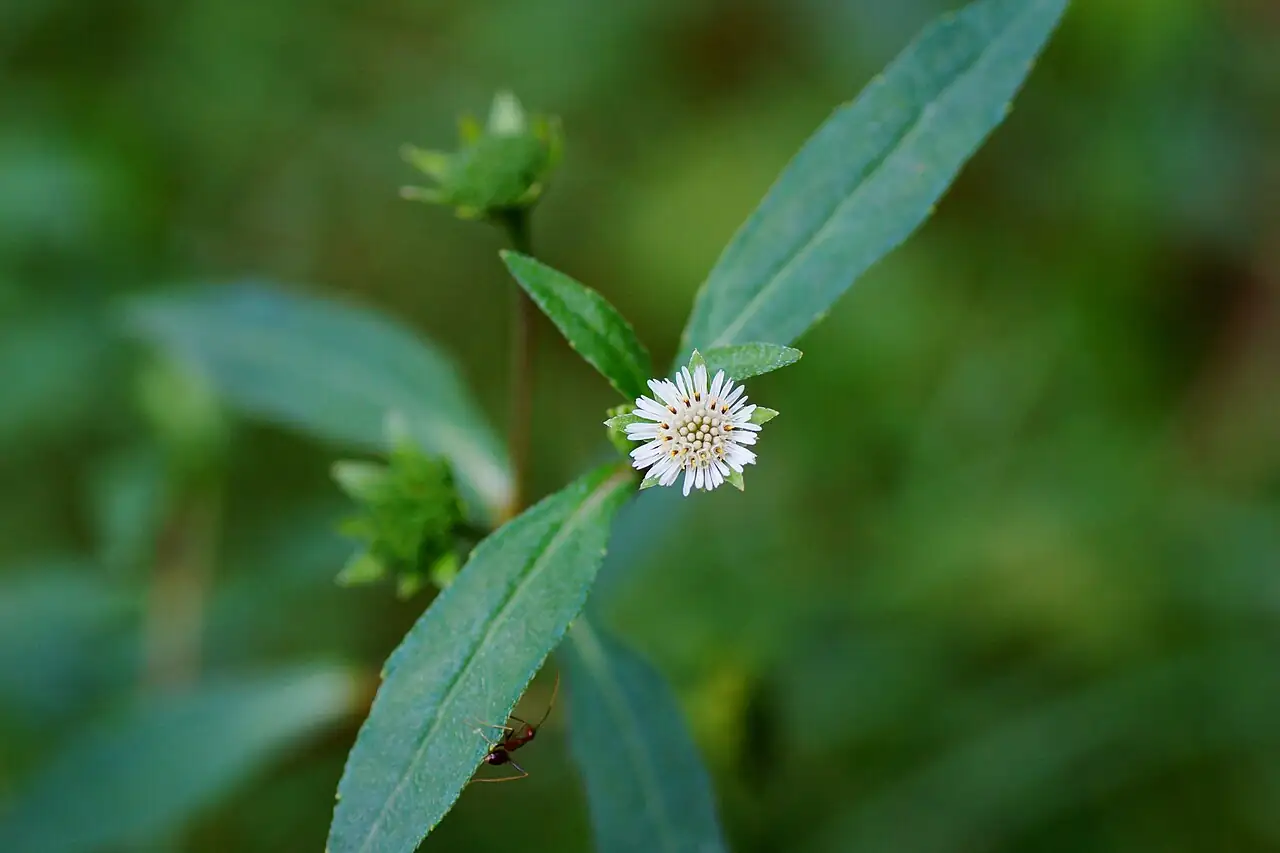
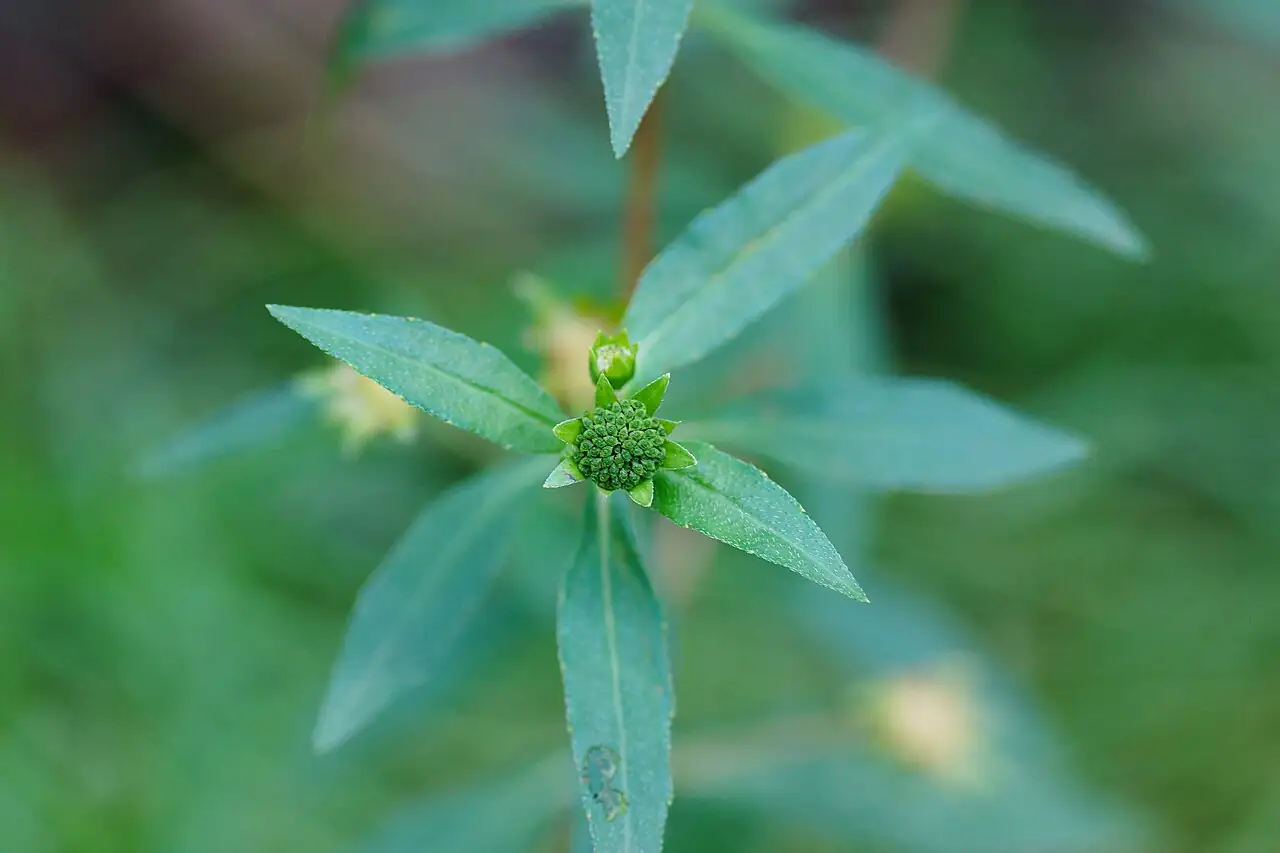
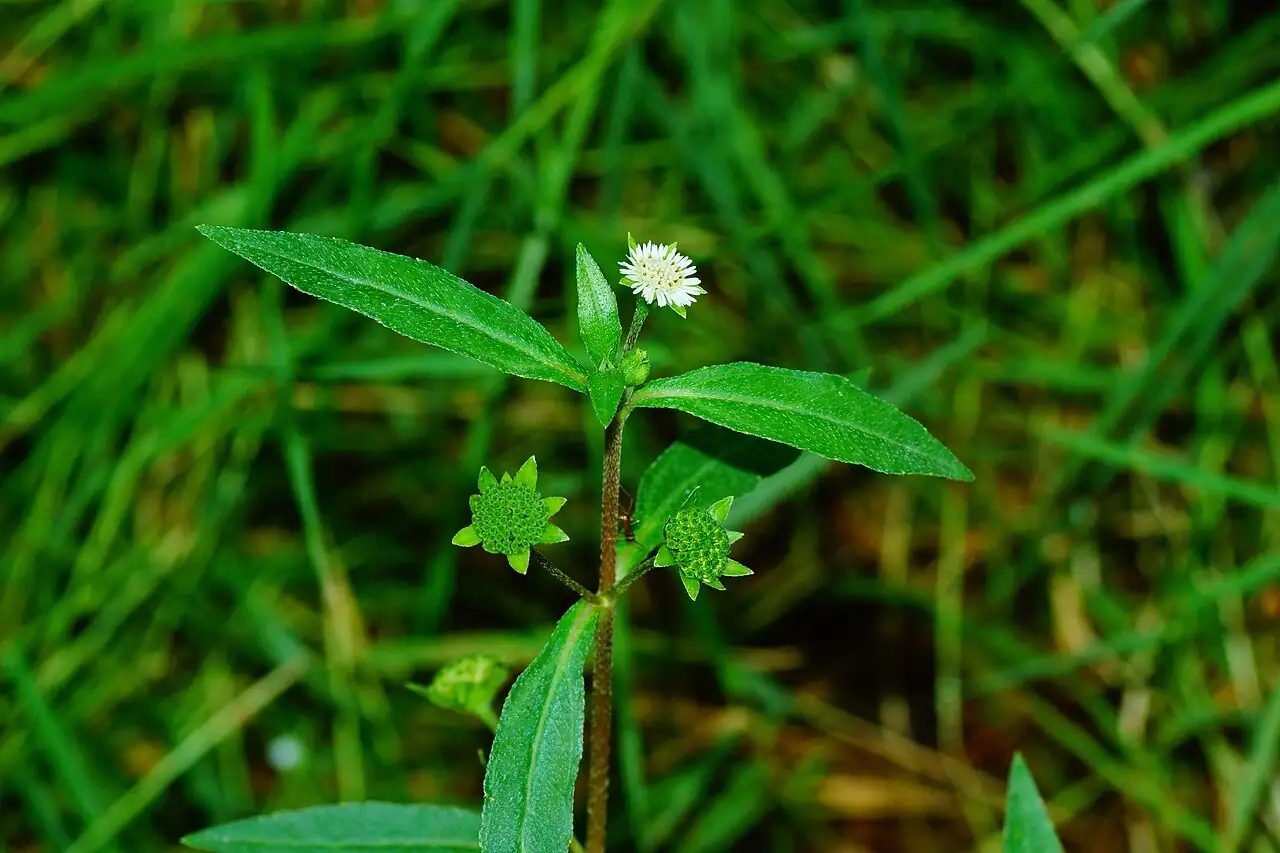
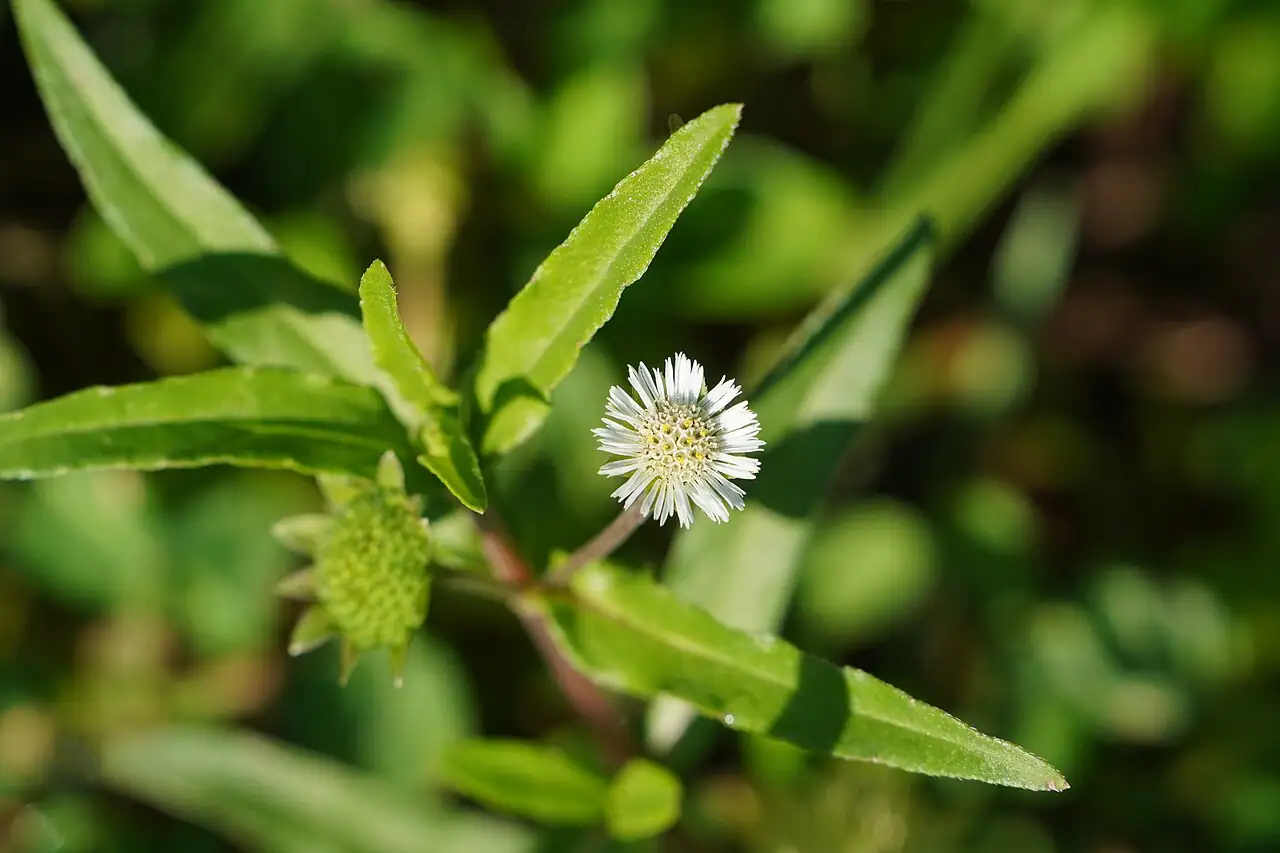
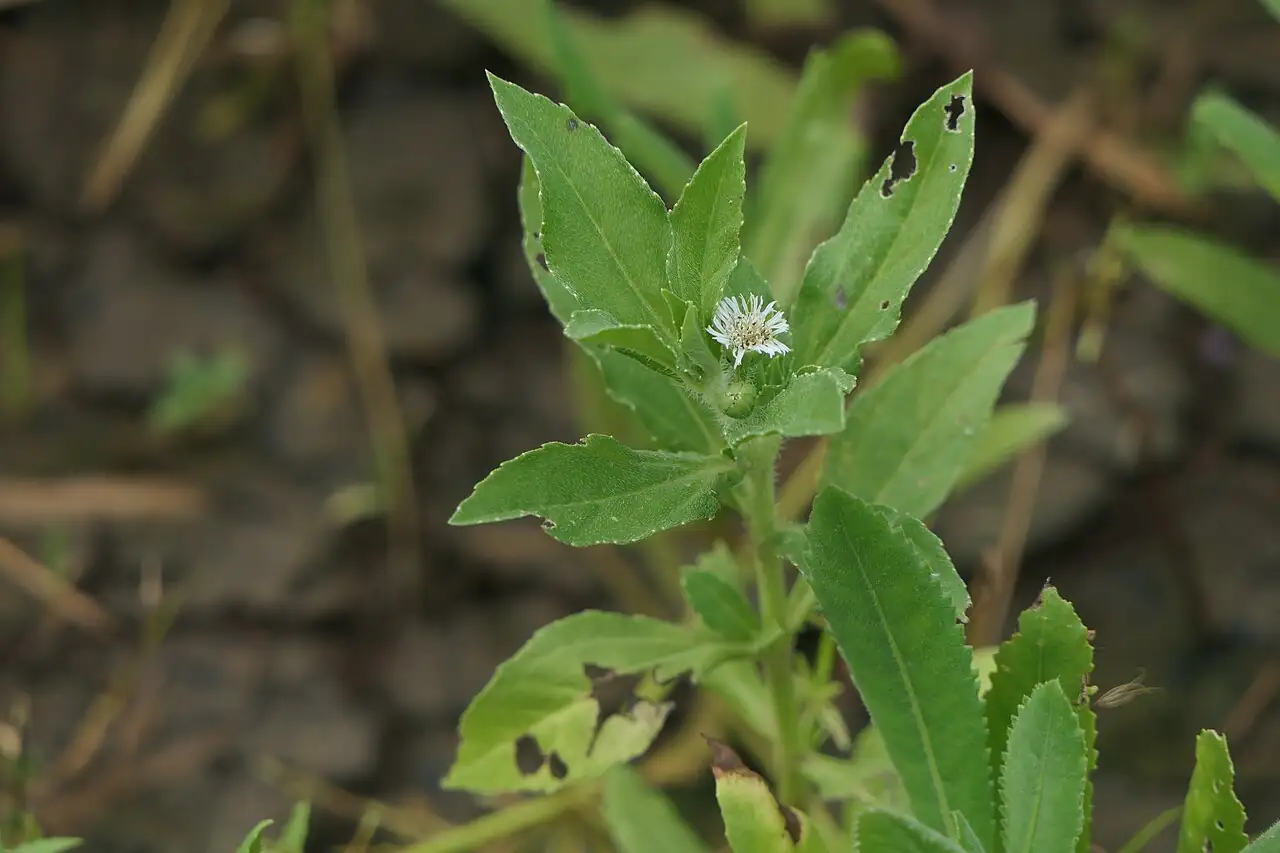
- Foliage: Leaves are narrow, lance-shaped, and slightly rough, with stiff hairs on both sides. Stems are also hairy and may sprawl along the ground or stand more upright; in consistently moist soil they can root where they touch.
- Flower: Small daisy-family flower heads with white, tubular florets. The blooms are modest up close, but can look surprisingly charming when the plant is covered in many little flowers.
- Flowering Season: June–September
- Growth Habit: Fast-growing annual herb; prostrate to spreading or upright, often rooting at the nodes in persistently moist ground.
Environment
Sunlight
Full sun to partial shade; handles shade well as long as the soil stays evenly moist.
Temperature
Grows best in warm conditions around 20–30°C (68–86°F); not tolerant of hard frost.
Humidity
Prefers higher humidity and a consistently damp microclimate.
Soil
Moist to wet, loose, fertile loam rich in organic matter/humus; tolerates periodic waterlogging.
Placement
Pond and wetland margins, damp garden edges, along ditches, or a shady/moist woodland-style bed where it can naturalize.
Hardiness
Frost-tender annual in temperate regions; may self-sow and behave like a returning annual where winters are mild and soil stays suitable.
Care Guide
Difficulty
Easy—provided you meet its main demand: consistently moist soil. Let a few plants set seed if you want a natural, self-renewing patch.
Buying Guide
Choose plants that look fresh and green with firm stems and no wilting. Avoid pots that have been allowed to dry out completely, since repeated drying stresses the plant quickly.
Watering
Water often to keep the substrate evenly moist; do not let it dry out fully. In hot weather (especially in containers), check moisture daily.
Fertilization
Usually not needed in fertile, humus-rich soil. If growth looks weak, apply a balanced fertilizer at half strength every 2–4 weeks during active growth.
Pruning
Not necessary. Light pinching or trimming can keep it compact; remove spent stems if you’d like to reduce self-seeding.
Propagation
Mostly by seed and it readily self-sows. You can also sow seed onto moist soil and keep evenly damp until seedlings establish.
Repotting
In pots, use an organic-rich, moisture-retentive mix and repot when rootbound. The key container mistake to avoid is letting the pot dry out.
📅 Seasonal Care Calendar
June–September: flowering. September–October: fruiting/seed set—leave some seedheads to mature if you want it to reseed next year.
Pests, Diseases & Safety
Common Pests & Diseases
Usually low-maintenance outdoors. In stagnant air, overcrowding, and constantly soggy conditions, watch for stem/root rot and leaf spotting—thin plants for airflow and avoid extreme crowding.
Toxicity
Not known to be toxic. Traditionally used as an edible/herbal plant in parts of Asia. Only consume if correctly identified and sourced from clean, uncontaminated sites.
Culture & Symbolism
Uses: A great ornamental for naturalistic wet or shady plantings, valued for its delicate white summer blooms and relaxed, wild look. It is also traditionally used as an edible and herbal plant in some regions.
FAQ
Can false daisy grow in shade?
Yes. It tolerates partial shade well, especially when the soil remains consistently moist.
Will it come back next year?
It’s typically an annual, but it often returns by self-seeding if you let it set seed in late summer through autumn.
Fun Facts
- Despite the name “false daisy,” it’s genuinely in the daisy family (Asteraceae).
- It naturally favors damp, disturbed ground such as riverbanks, field edges, and roadsides.
- Flowering is usually June–September, followed by seed set in early autumn.
- Its fruits (achenes) are dark and may have tiny bump-like surface projections.
- It can be a charming “let it naturalize” plant in wetland-style gardens because it reseeds itself easily.