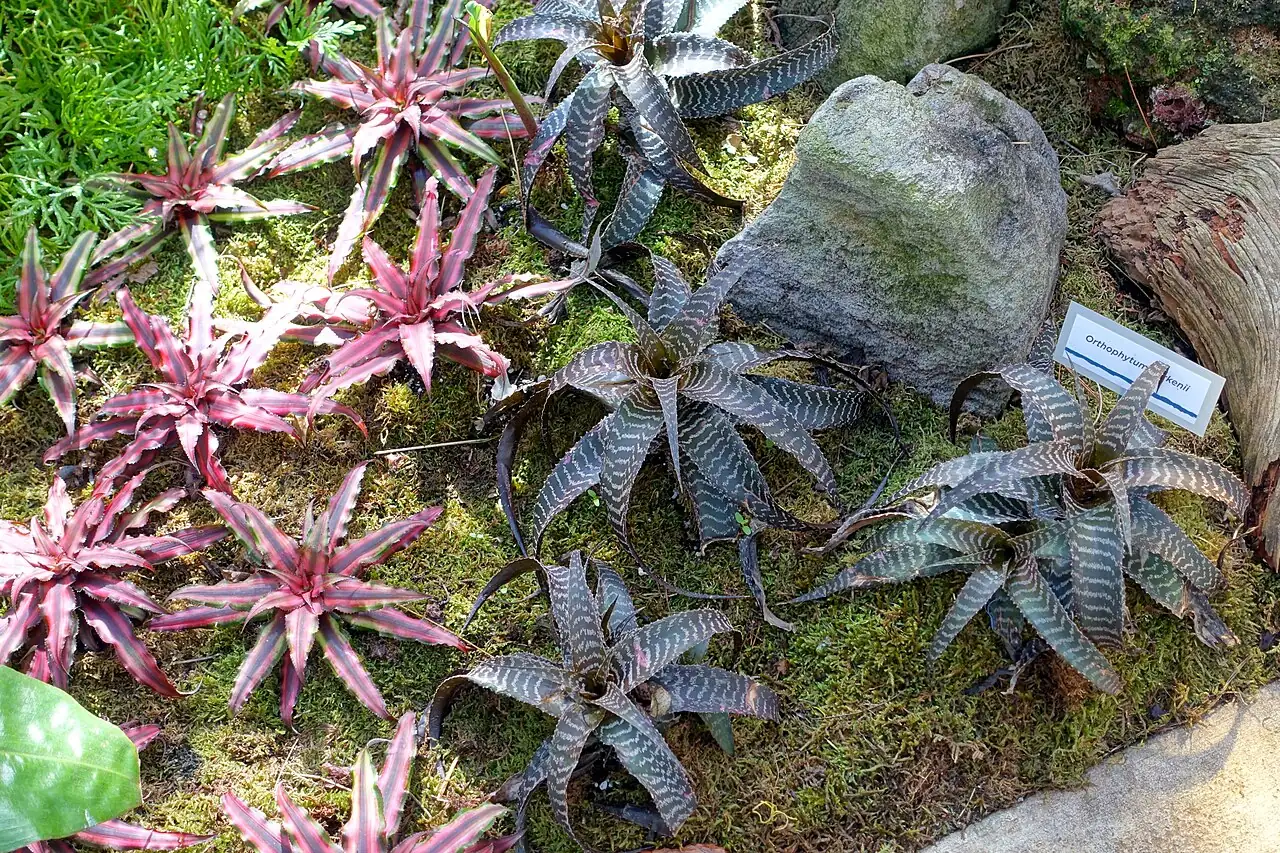
Plant Features
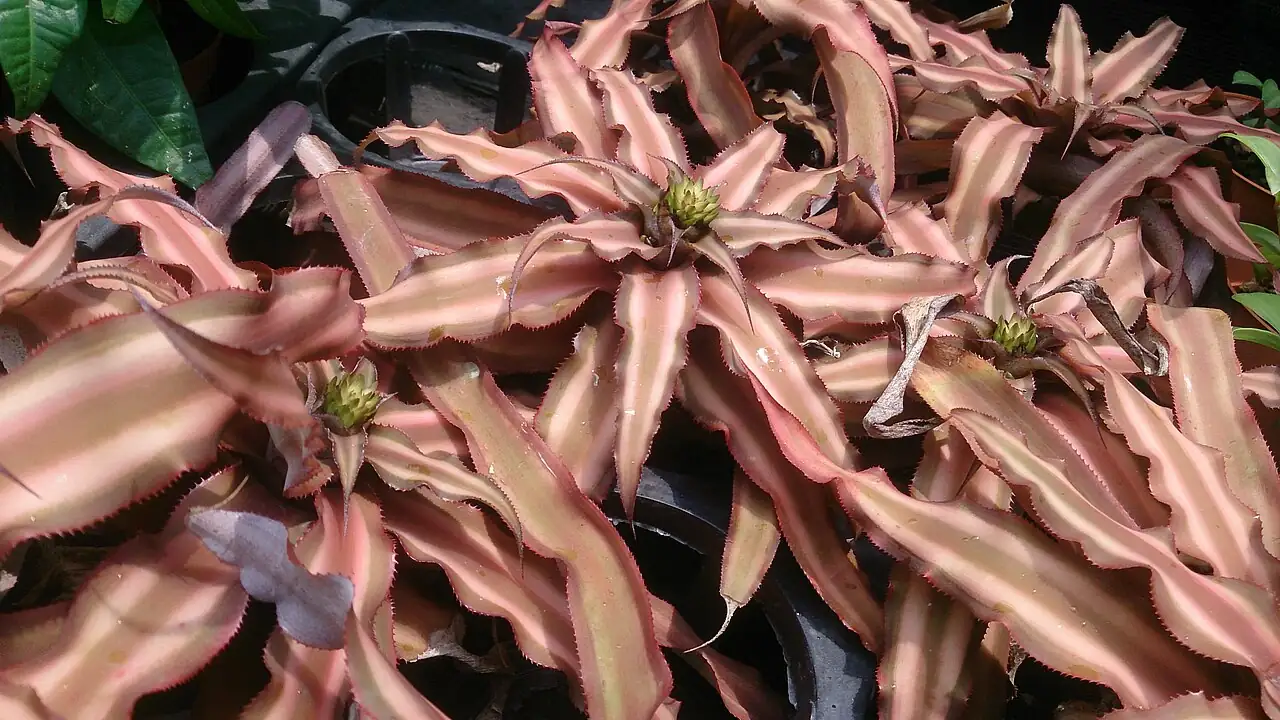
- Size: Typically about 15 × 15 cm (6 × 6 in) as a mature rosette; individual plants stay low and compact.
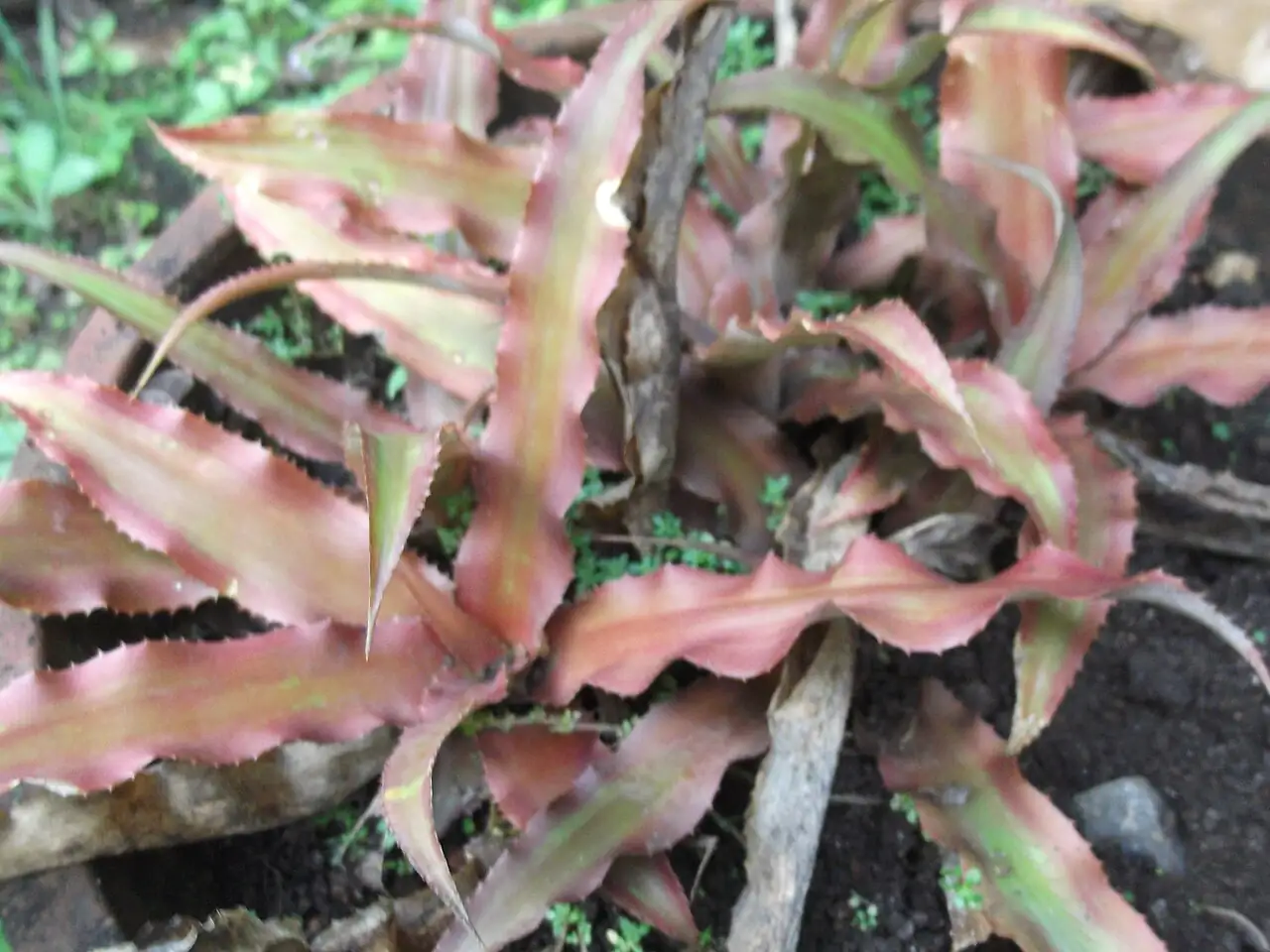
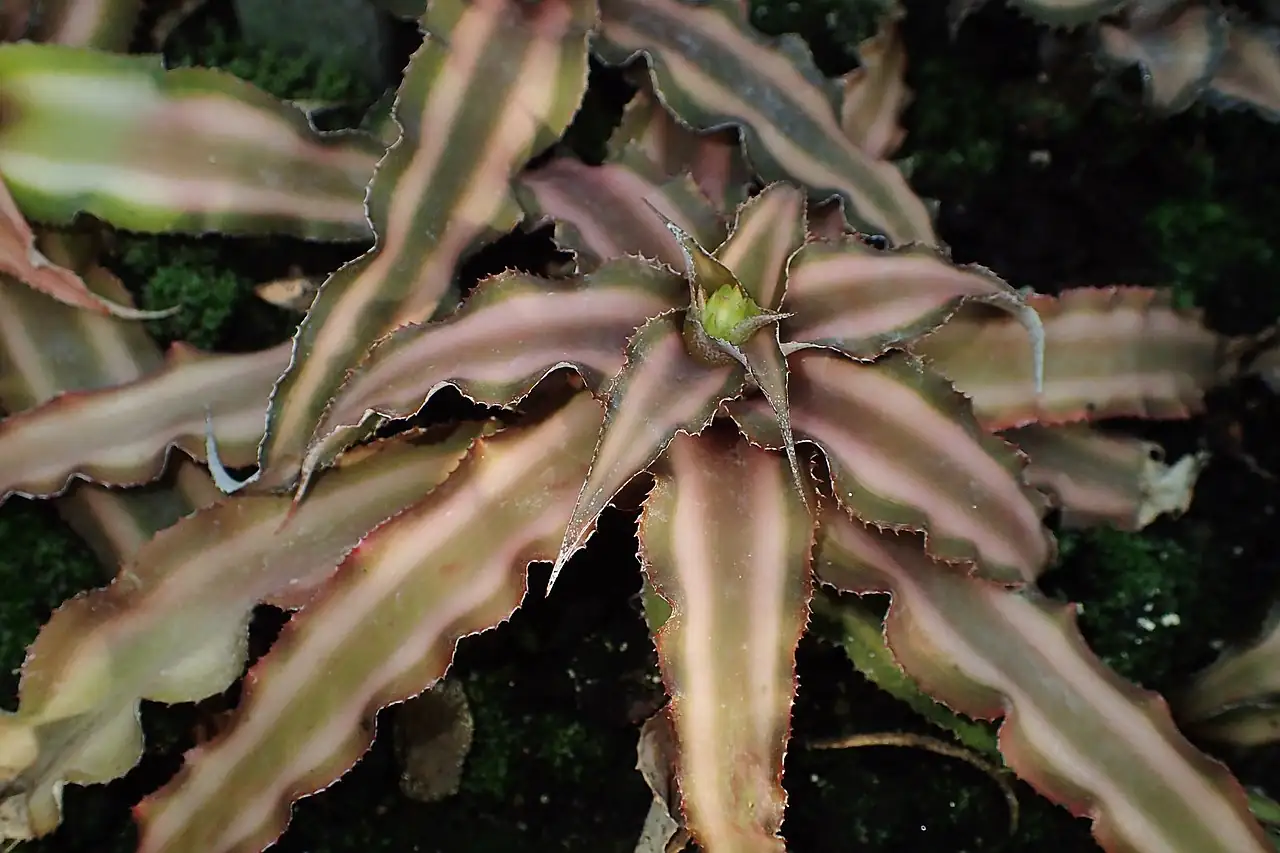
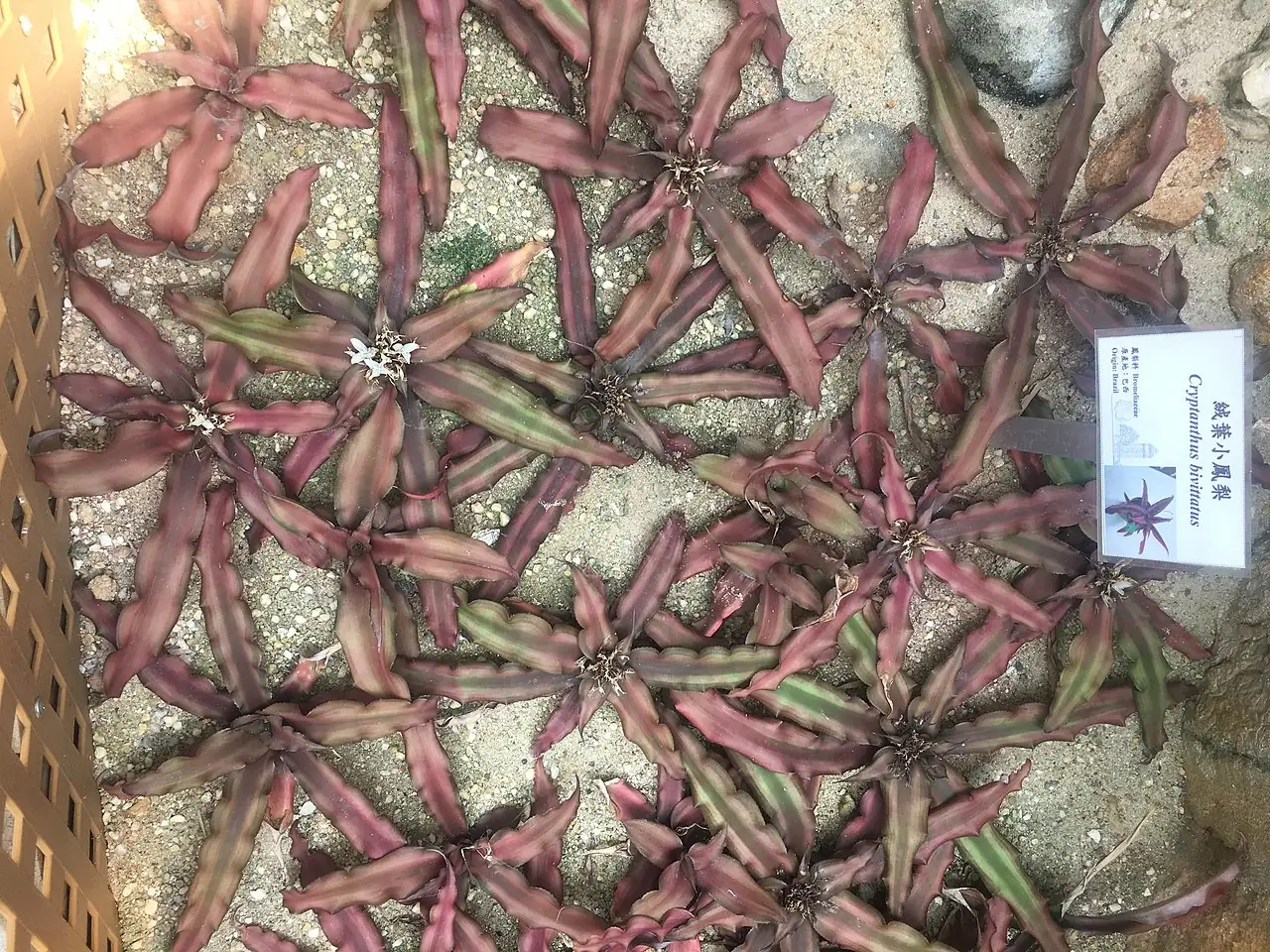
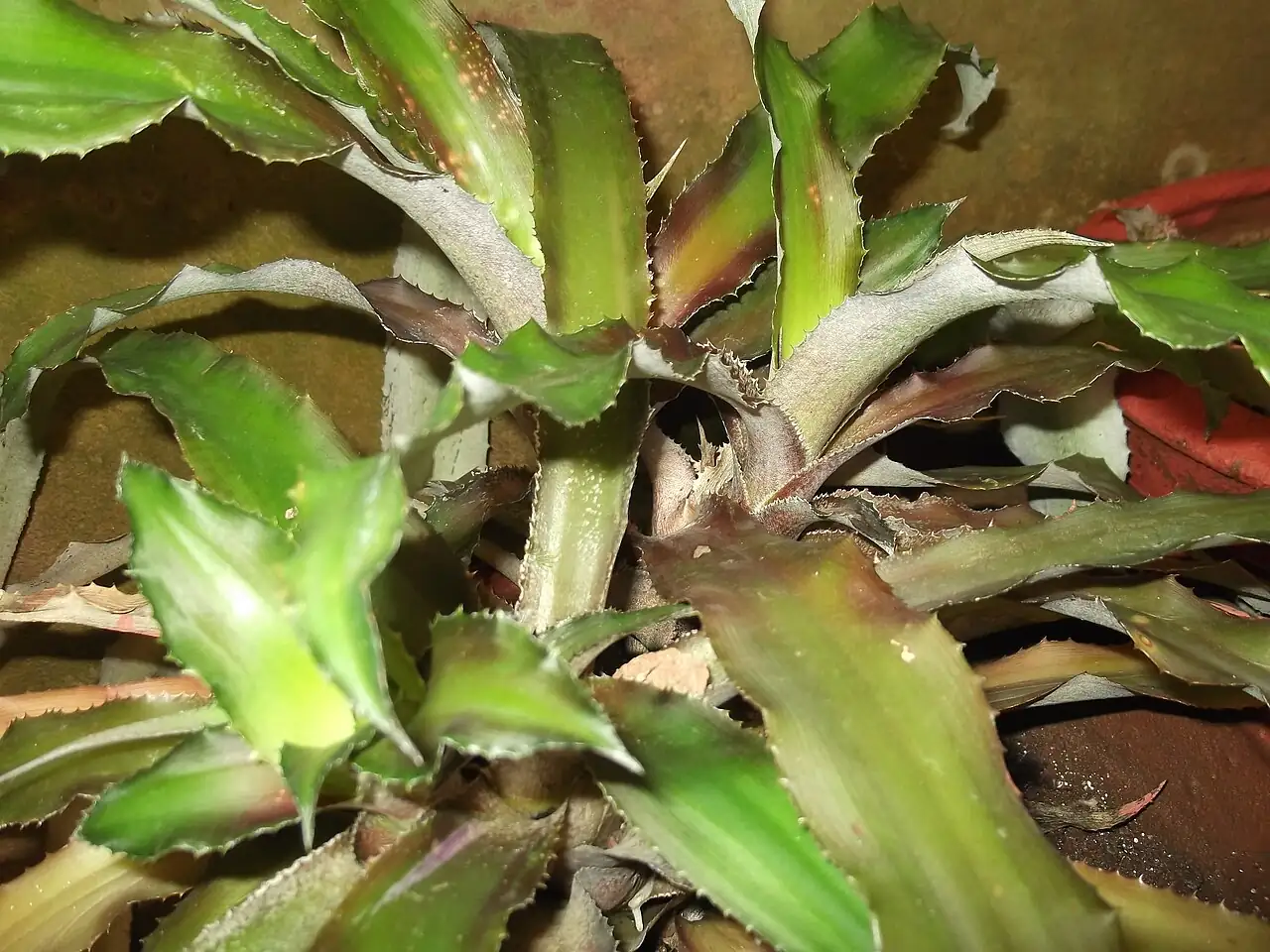
- Foliage: Wavy, serrated leaves arranged in a fan-like, starry rosette. Color varies widely from green to pink, red, orange, and purple, often with distinct striping; colors generally become richer and more intense in brighter light.
- Flower: Small, usually inconspicuous white flowers tucked low in the center of the rosette; this plant is grown mainly for its foliage rather than for showy blooms.
- Flowering Season: Intermittent; most often in warmer months indoors (spring to summer).
- Growth Habit: Low-growing, terrestrial bromeliad forming a flat, star-shaped rosette; slowly produces offsets (pups) over time.
Environment
Sunlight
Bright light is ideal, and it can take some direct sun. Indoors, a sunny windowsill works well if the plant is acclimated; full sun to partial sun is generally suitable.
Temperature
16–27°C (61–81°F); avoid prolonged chills below about 10°C (50°F).
Humidity
Moderate humidity is fine, but higher humidity improves leaf quality. If air is dry, mist with lukewarm water (ideally rainwater or distilled).
Soil
Very free-draining, airy mix (bromeliad-style). Good options include equal parts orchid bark, perlite, and coco coir, or a 1:1 blend of orchid mix and all-purpose potting mix. Keep the crown from sitting in soggy media to reduce rot risk.
Placement
A bright windowsill with good airflow is ideal; also works in dish gardens and warm terrariums as long as ventilation prevents stagnant moisture.
Hardiness
Not frost-hardy; usually grown as a houseplant. Outdoors only in warm climates roughly USDA Zone 10–11.
Care Guide
Difficulty
Easy—stays compact and forgiving as long as it gets bright light and is never left waterlogged.
Buying Guide
Pick a plant with a tight, symmetrical rosette and firm leaves. Avoid mushy bases, blackened centers, or a constantly wet crown (classic rot warnings). Check between leaves for mealybugs and scale.
Watering
Spring–summer: use rainwater or distilled water; keep the mix evenly moist but never soggy. Winter: reduce watering and keep it just barely moist. Mist regularly with lukewarm rainwater/distilled water if indoor air is dry. Always let excess water drain freely to prevent crown/root rot.
Fertilization
Spring through late summer: feed every 2–3 months with a balanced liquid fertilizer at 1/2 strength. Too much fertilizer can lead to softer growth and less vibrant color.
Pruning
No routine pruning. Remove only dead or damaged outer leaves by gently pulling or trimming them close to the base.
Propagation
By offsets (pups). Separate when a pup is about 1/3–1/2 the size of the mother rosette and has its own roots; pot into a small container with an airy mix.
Repotting
Use a 10 cm (4 in) pot and a very airy bromeliad mix (e.g., equal parts orchid bark, perlite, and coco coir; or 1:1 orchid mix and all-purpose potting mix). Repot every 2–3 years in spring, or sooner if the mix breaks down.
📅 Seasonal Care Calendar
Spring–summer: keep evenly moist (not wet), mist as needed, and feed at 1/2 strength every 2–3 months. Autumn–winter: water less (barely moist) and continue occasional misting if the air is dry. Repot in spring every 2–3 years.
Pests, Diseases & Safety
Common Pests & Diseases
Watch for mealybugs, scale, and spider mites (especially when air is dry). Prevent rot with a very free-draining mix, good airflow, and by avoiding standing water in the crown. Treat pests with insecticidal soap or horticultural oil, repeating as needed.
Toxicity
Generally considered non-toxic to people and pets, though sap may mildly irritate sensitive skin. Discourage chewing to prevent possible stomach upset.
Culture & Symbolism
Symbolism: Often linked with resilience and a punchy “starburst” energy thanks to its bold rosette shape and bright, shifting colors.
History & Legends: Earth stars rose to popularity as houseplants because they stay small, color up beautifully in strong light, and fit neatly into windowsill collections and terrarium-style displays.
Uses: Ornamental foliage plant for bright indoor spots—great on windowsills, in small rooms, dish gardens, and warm terrariums (with ventilation).
FAQ
What light does it prefer?
Bright light is best, and it can handle some direct sun. A sunny windowsill works well if you acclimate the plant gradually.
What temperature range is best?
16–27°C (61–81°F); try not to let it sit below about 10°C (50°F) for long.
How should I water it?
In spring and summer, keep the potting mix evenly moist (not soggy) using rainwater or distilled water. In winter, water less and keep it just barely moist; mist if the air is dry.
How often should I fertilize?
Every 2–3 months from spring through late summer with a balanced liquid fertilizer at half strength.
What pot size and soil mix are recommended?
A 10 cm (4 in) pot and a very airy, fast-draining bromeliad-style mix (e.g., orchid bark + perlite + coco coir).
Is it hard to keep alive?
Not at all—give it bright light, don’t let it stay wet, and use rainwater or distilled water for best leaf quality.
Fun Facts
- Unlike many bromeliads, earth stars are mainly terrestrial, so they’re typically grown in pots rather than mounted.
- Stronger light often brings out the most dramatic reds and pinks (while low light can leave it greener).
- After flowering, the mother rosette may slow down and redirect energy into making pups.