Plant Features
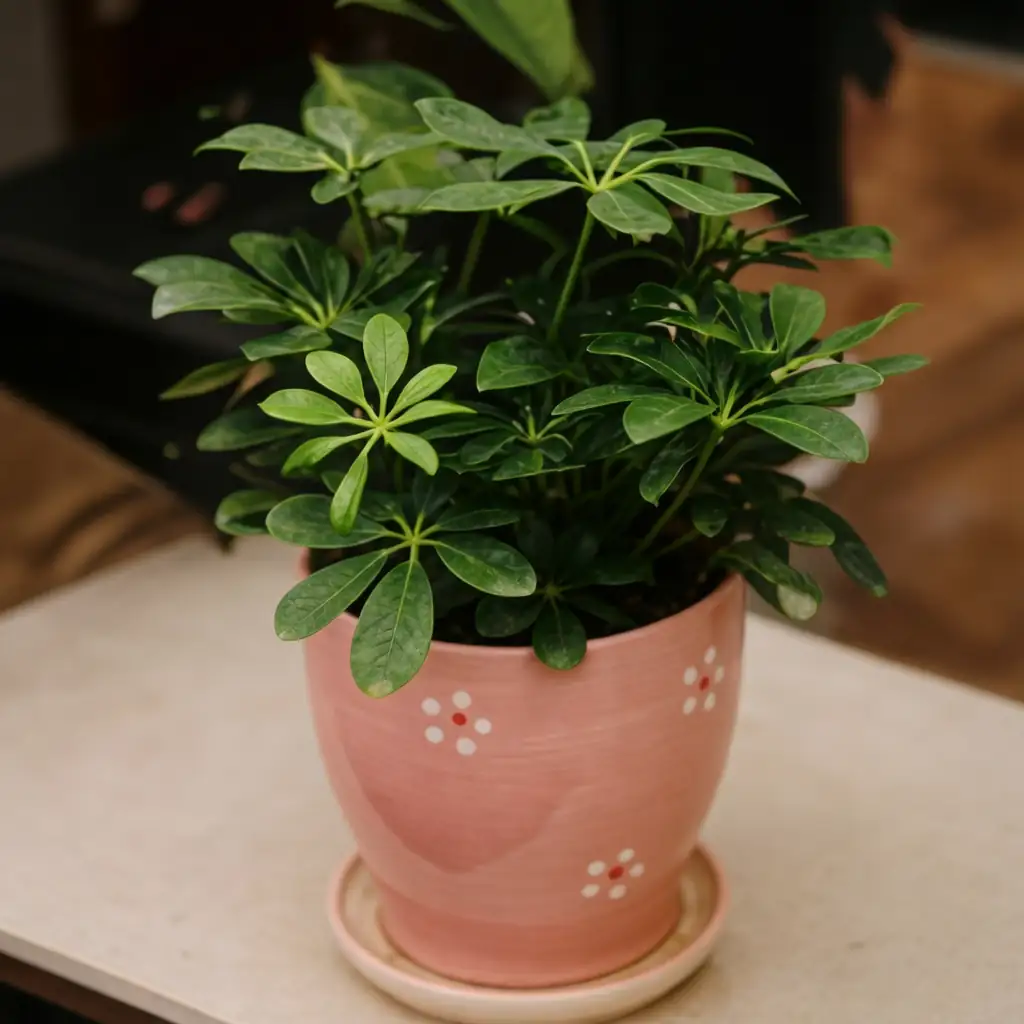
- Size: Evergreen shrub to small tree; indoors commonly 1–2 m (3–6.5 ft) tall, but can reach about 2.4 m × 1.2 m (8 ft × 4 ft) with age, good light, and a large container.
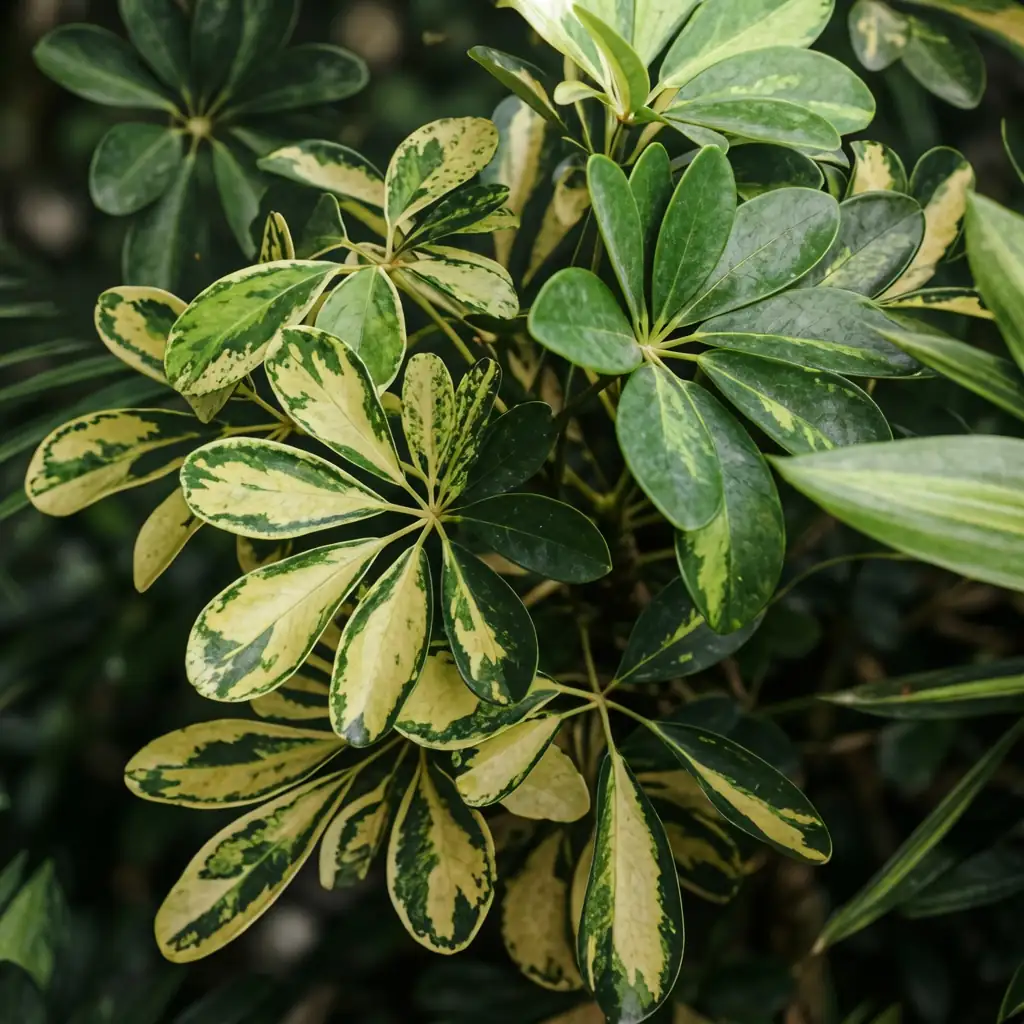
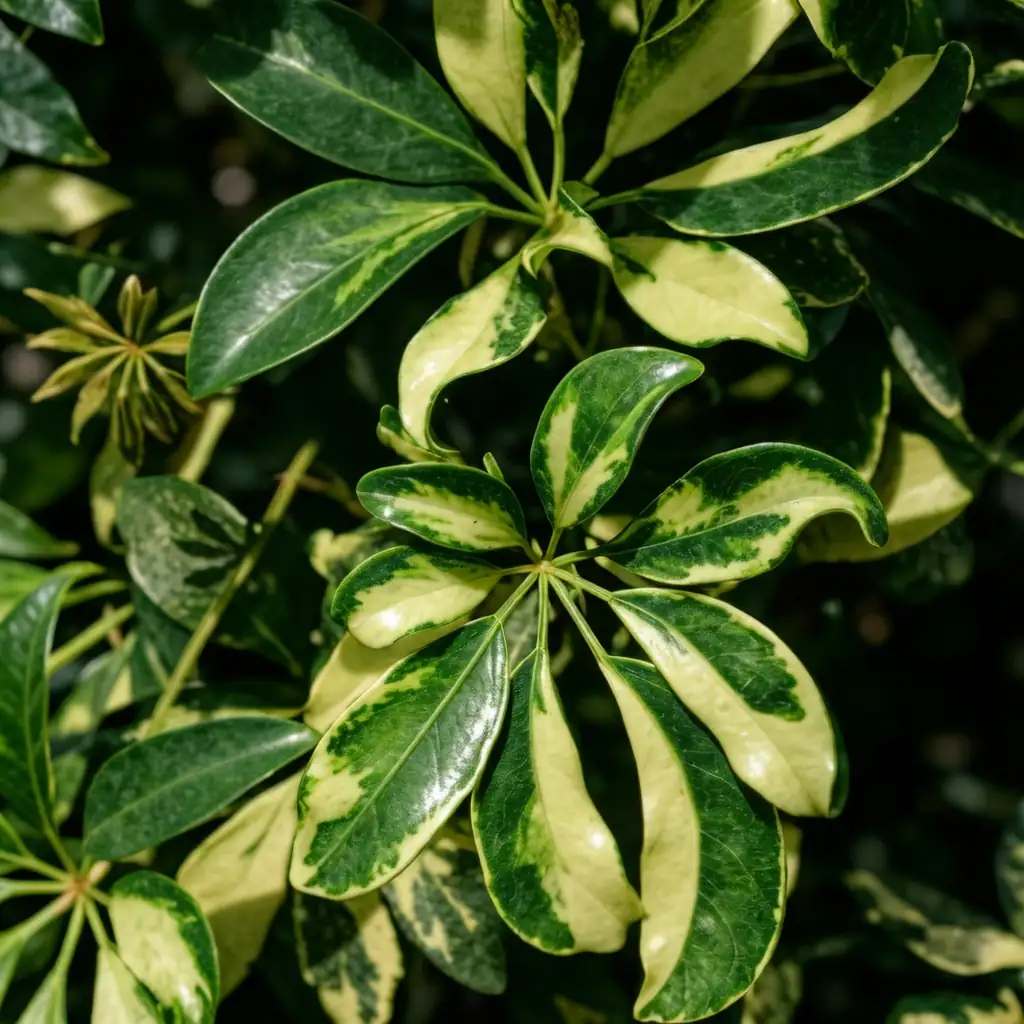
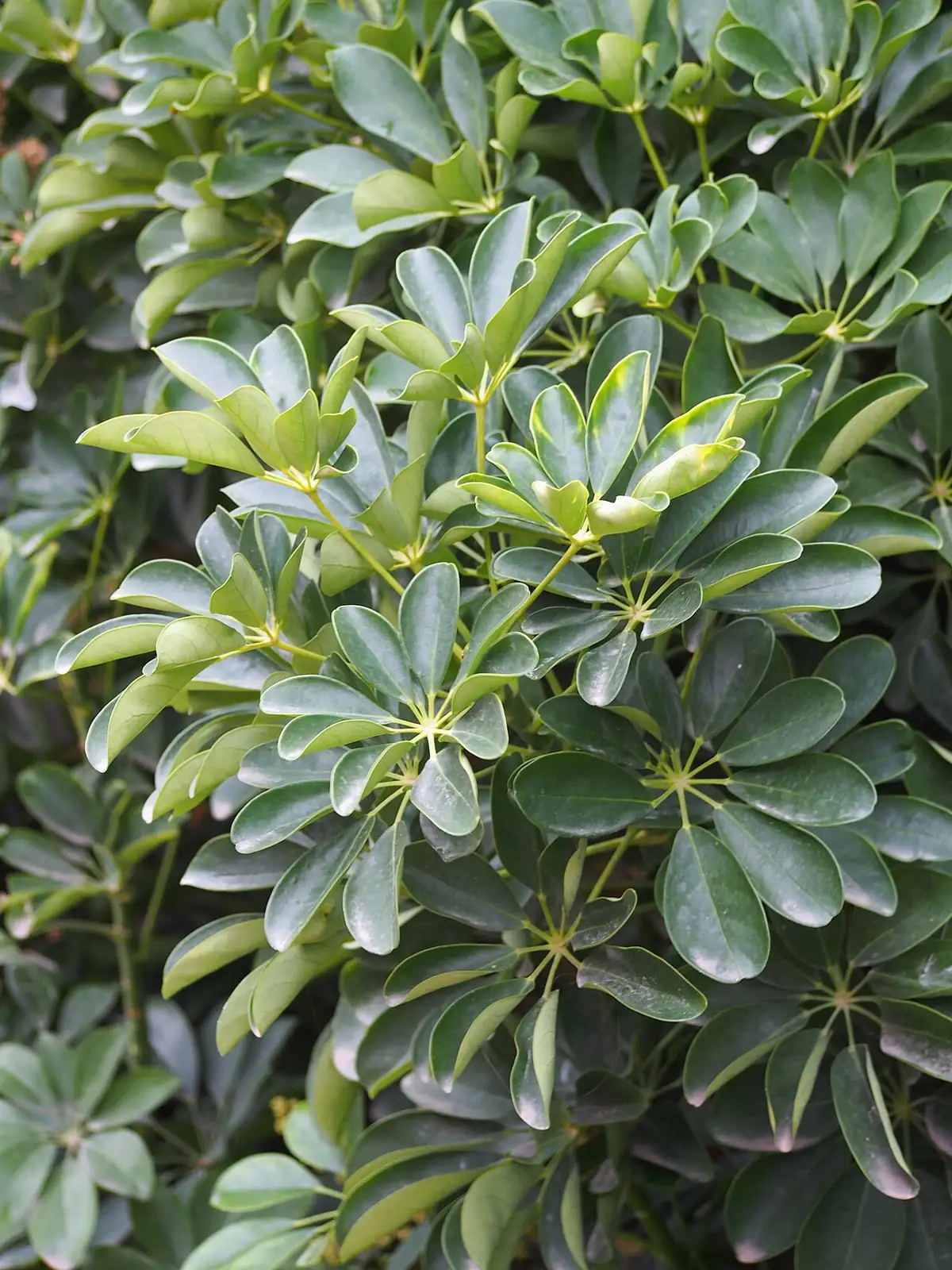
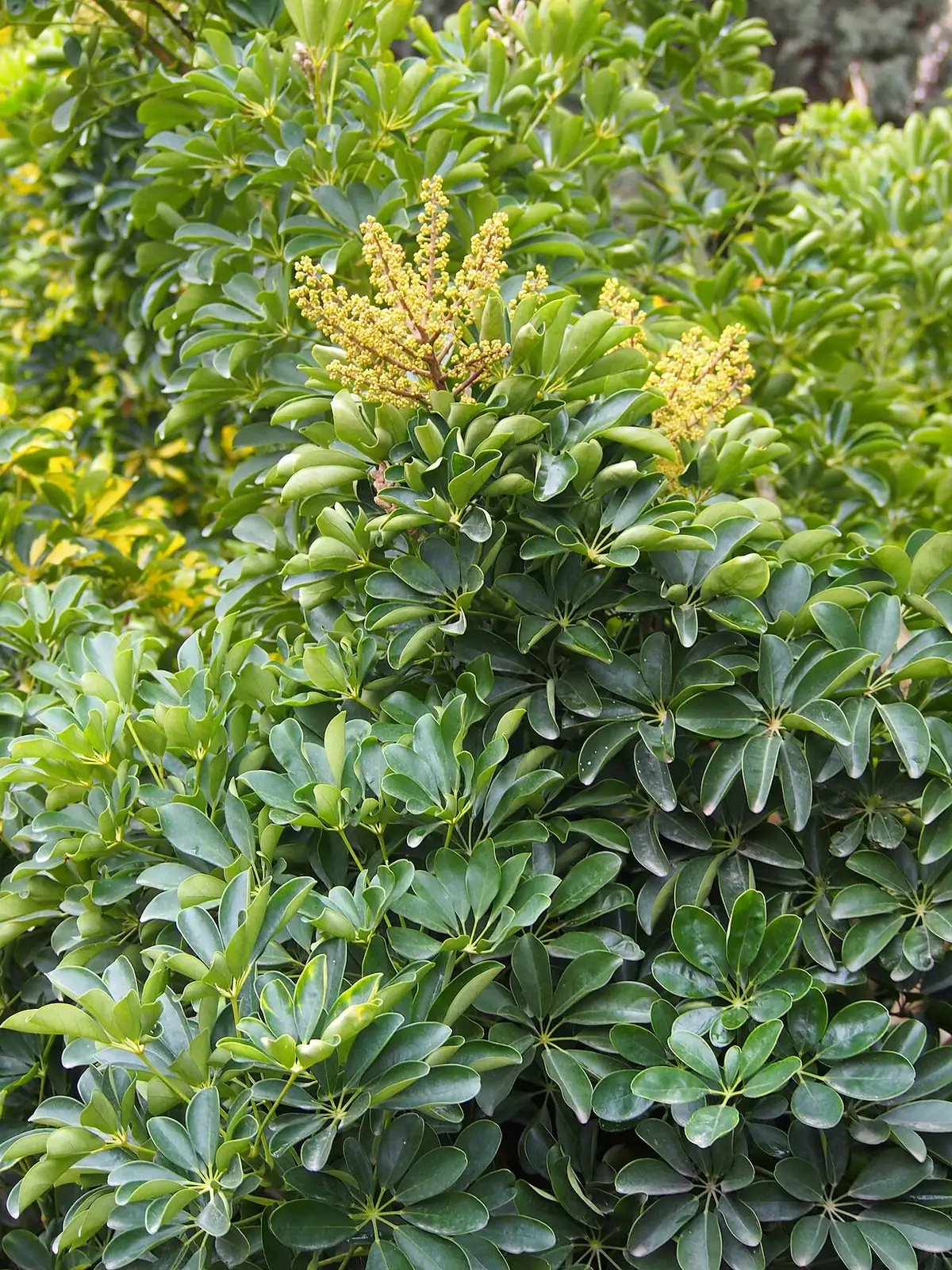
- Foliage: Palmately compound, glossy leaves with multiple oval leaflets. Most plants are rich green, while variegated cultivars show cream/yellow patterning (best maintained in brighter light). In low light it can become leggy; removing weak, stretched shoots helps keep it compact.
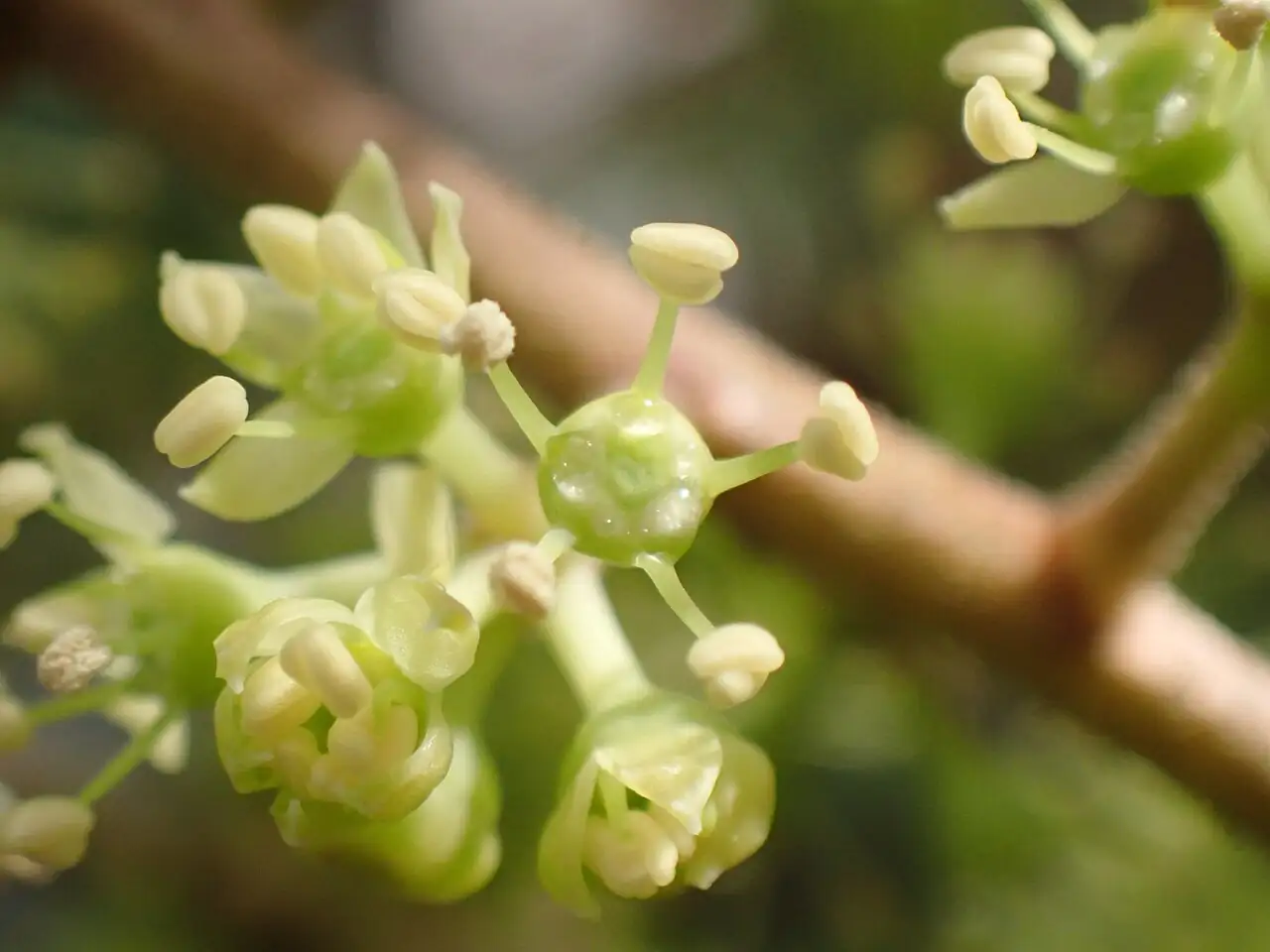
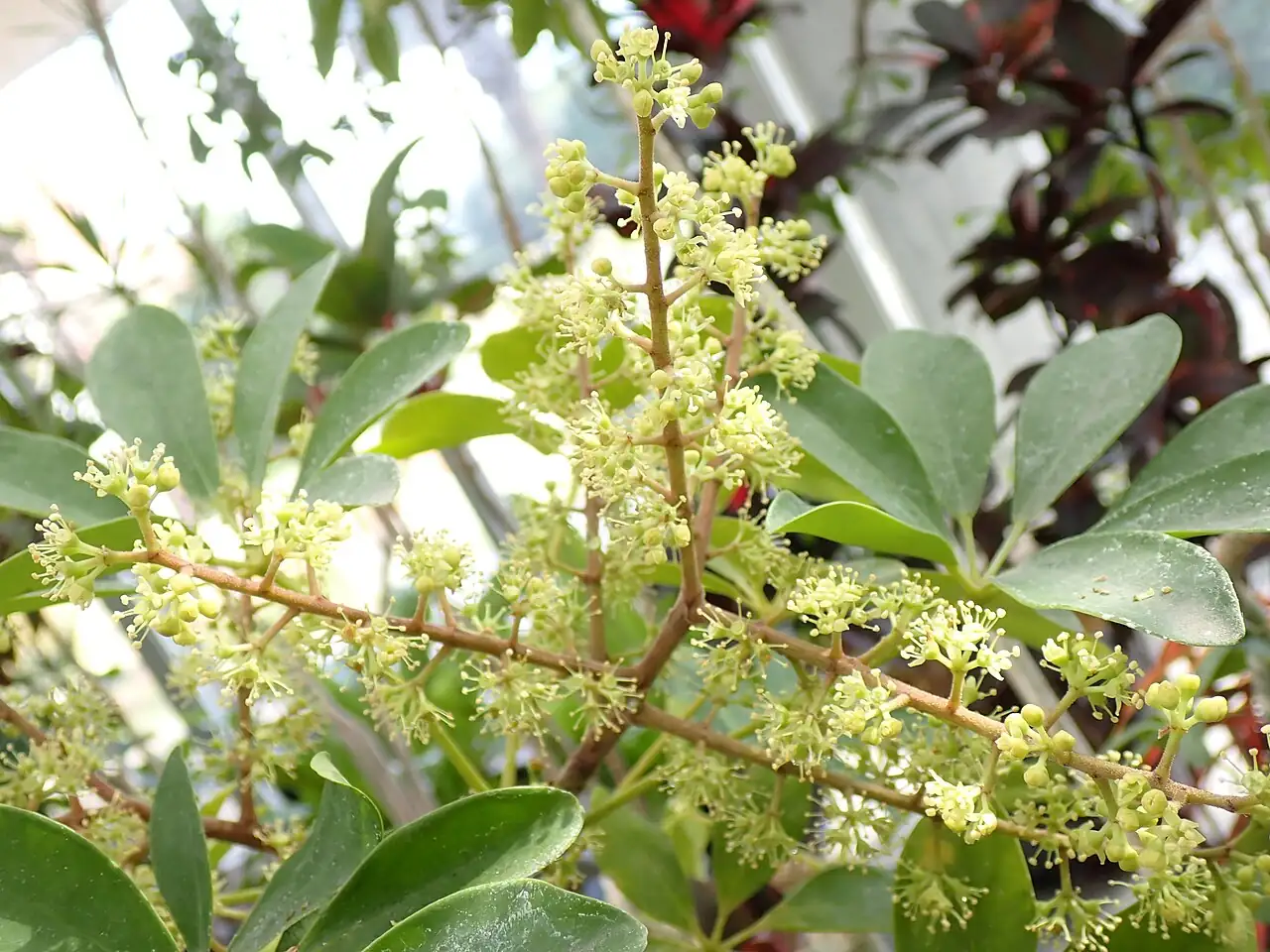
- Flower: Flowers are rare indoors. On mature plants (more often outdoors in warm climates), small greenish flowers appear in branched clusters and may be followed by small berries.
- Flowering Season: Summer (rare indoors); in suitable outdoor climates typically late summer to autumn.
- Growth Habit: Upright, woody, branching, and fast-growing. Often sold trained to a stake or moss pole; responds very well to pruning and can be shaped into a bushy form or a small tree standard.
Environment
Sunlight
Bright, indirect light is ideal; tolerates partial shade. Avoid harsh direct sun—especially summer midday—which can scorch leaves. A bright east window or a filtered south window (sheer curtain) works well.
Temperature
Best kept warm: roughly 15–30°C (59–86°F). Avoid cold drafts and sudden drops; prolonged cold below about 10°C (50°F) can cause stress, and temperatures near 5°C (41°F) may cause chilling injury.
Humidity
Adaptable to normal homes (low to moderate humidity), but looks best with moderate to higher humidity—around 60% if you can manage it. In dry indoor air, occasional misting, a pebble tray, or a humidifier can help; in winter, go easier on misting and focus on stable warmth and good airflow.
Soil
Free-draining potting mix is essential. A practical blend is quality potting substrate with extra aeration (e.g., about 2 parts mix to 1 part perlite/coarse sand), or a mix that includes bark/leaf mold plus coco coir/peat and perlite. Choose a sturdy, heavier pot sized to the root ball (often about 15–20 cm / 6–8 in for smaller plants) to reduce tipping and prevent waterlogging.
Placement
Indoors near a bright window out of direct sun—great for living rooms, offices, and dining areas. After purchase or transport, let it acclimate in bright shade with good ventilation until you see fresh new growth.
Hardiness
Frost-tender; suitable outdoors year-round only in warm regions (approximately USDA Zone 10–12).
Care Guide
Difficulty
Easy and forgiving overall, especially with light and humidity—but it strongly dislikes soggy soil and cold drafts. Most problems trace back to overwatering or low light.
Buying Guide
Pick a plant with sturdy stems, balanced branching, and dense, glossy foliage (or evenly patterned variegation). Avoid yellowing-heavy plants, sticky residue, webbing, visible scale/mealybugs, torn leaflets, or a sour smell from the pot (often a sign of overwatering). After bringing it home, keep it in bright shade with airflow, keep the mix lightly moist (not wet), and boost humidity if your air is very dry; once it starts pushing new leaves, move it to its long-term bright spot.
Watering
Spring through autumn: water when the top layer has dried—about the top 2–3 cm (1 in)—then water thoroughly and let excess drain. Never leave it standing in water. Winter: reduce sharply; in many homes this can be about once a month, or only when the pot is mostly dry. Avoid a cycle of bone-dry then soaking-wet, which often triggers leaf drop.
Fertilization
During active growth (spring to autumn), feed with a balanced liquid fertilizer. A common rhythm is monthly at half strength, or every 2 weeks at label strength if the plant is growing vigorously and you’re comfortable monitoring watering. Pause or greatly reduce feeding in winter.
Pruning
Prune to control height and prevent legginess. Best timing is spring into early/midsummer (roughly May–July): cut back long stems (often by about 1/3) just above a node to force branching, then lightly refine after new shoots appear. Repeating light shaping 2–3 times in the growing season can build a noticeably fuller canopy.
Propagation
Stem cuttings are easiest. From April to September, take 10–12 cm (4–5 in) tip or semi-ripe cuttings, remove lower leaves, and root in moist perlite/sand or a very airy mix. Warmth helps (around 25°C / 77°F) along with high humidity; rooting often takes about 1 month. Water propagation can work too. Seed is possible: sow in spring; germination is best around 19–24°C (66–75°F) and often takes 3–4 weeks; pot up once seedlings reach about 10 cm (4 in).
Repotting
Repot in spring. Many plants appreciate annual repotting when young and fast-growing; established large specimens are often fine every 2 years or when rootbound. Step up one pot size at a time and keep the mix free-draining; a heavier pot can help support top-heavy growth.
📅 Seasonal Care Calendar
Spring: repot if needed, start feeding, and prune to encourage branching. Summer: protect from harsh sun, keep watering consistent, and support humidity/airflow. Autumn: slow feeding and watch for dry indoor air as heating begins. Winter: stop fertilizing, water sparingly (often about monthly), and keep warm—avoid cold drafts and prolonged chill.
Pests, Diseases & Safety
Common Pests & Diseases
Common indoor pests include spider mites (more likely in dry air), scale insects, and mealybugs. Treat early by wiping leaves and using horticultural oil or insecticidal soap, repeating as directed. Overwatering can cause root rot—improve drainage and let the mix dry more between waterings. Leaf spot can appear in overly humid, stale air; remove affected leaves and increase ventilation (fungicide only if necessary).
Toxicity
Toxic if ingested; sap may irritate skin and mouth and can cause mild gastrointestinal upset in people and pets. Keep away from children and animals, and wash hands after pruning.
Culture & Symbolism
Symbolism: Often linked with protection, resilience, and good fortune—its “umbrella” canopy is a popular feng-shui-style symbol of shelter and abundance.
History & Legends: The Chinese name highlights the leaf shape, which resembles a goose’s foot. Long used in interior landscaping, it became a worldwide favorite because it adapts well to typical indoor conditions and is easy to train and shape. Modern taxonomy has shifted many “Schefflera” houseplants (including this one) into the genus Heptapleurum.
Uses: Primarily an ornamental foliage plant for homes and offices—used as a tabletop bush, a floor plant, or a trained specimen on a stake/moss pole. Valued for glossy evergreen leaves and how well it responds to pruning.
FAQ
How do I make my dwarf umbrella tree fuller and better shaped?
Give it brighter indirect light and prune for branching. In spring to early/midsummer (about May–July), cut back long stems by roughly 1/3 just above a node; once new shoots appear, lightly trim again. Doing this 2–3 times during the growing season encourages a dense, bushy canopy.
Why are the leaves dropping?
The usual culprits are overwatering, a sudden temperature drop/cold draft, or light that’s too low. Let the mix dry more between waterings, keep it warm (ideally above 15°C / 59°F), and move it to brighter indirect light.
Can it live in low light?
It can tolerate partial shade, but it will grow slower and often gets leggy. For the best shape (and for variegated varieties to keep their pattern), bright, filtered light is much better.
What should I look for when buying one, and what should I do after bringing it home?
Choose a plant with firm stems, dense foliage, and clean leaves—no webbing, sticky residue, scale bumps, or lots of yellow leaves. At home, let it acclimate in bright shade with airflow, keep the mix lightly moist (not wet), and only move it into stronger light once you see fresh new growth.
Fun Facts
- It’s famous for leaves that look like little umbrellas—or a bird’s foot—depending on who you ask.
- Indoors it rarely flowers, which is why it’s mostly grown for foliage.
- Many plants still sold as “Schefflera” are now classified as Heptapleurum in modern taxonomy.
- Variegated forms generally need brighter light than green forms to keep their cream/yellow patterns sharp.
- With pruning, it can be trained as a compact shrub, a braided/trunked floor plant, or a small indoor tree.