Plant Features
- Size: Approx. 60 × 60 cm (24 × 24 in)
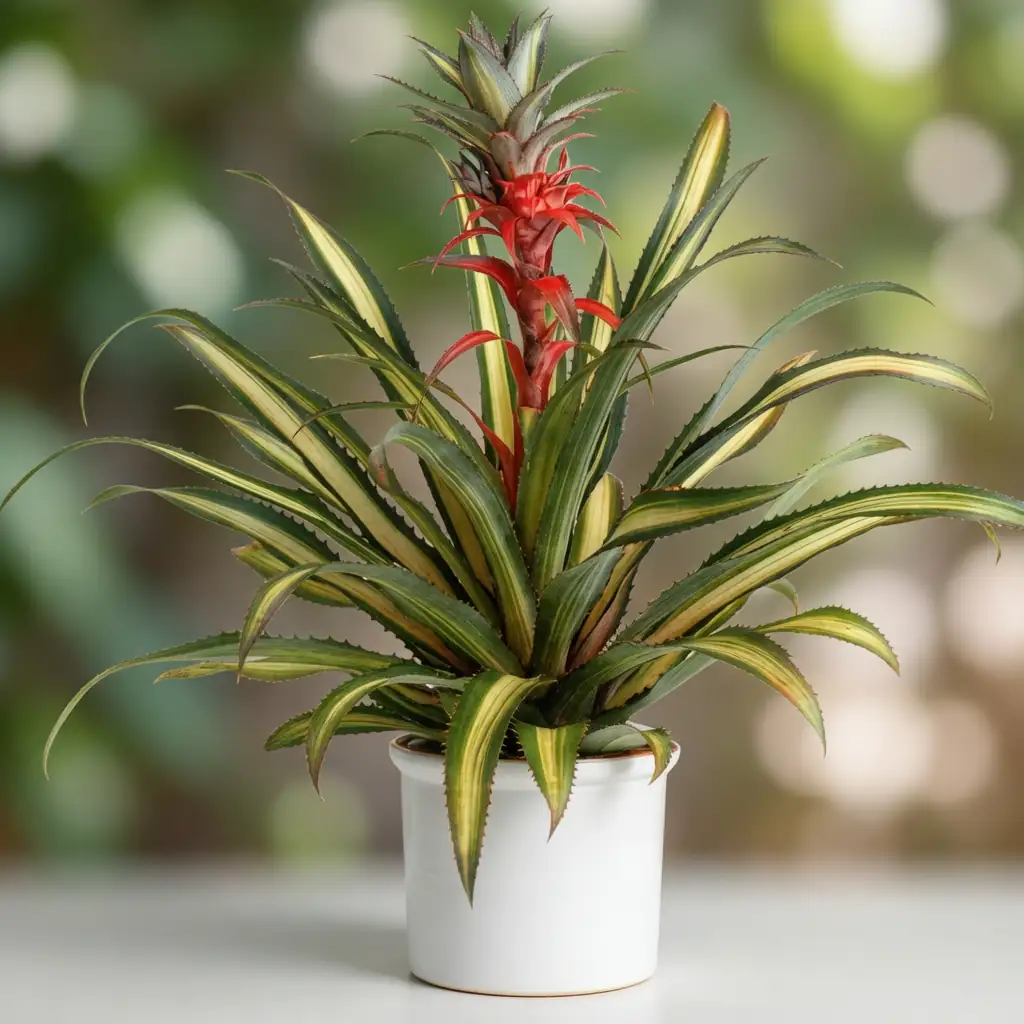
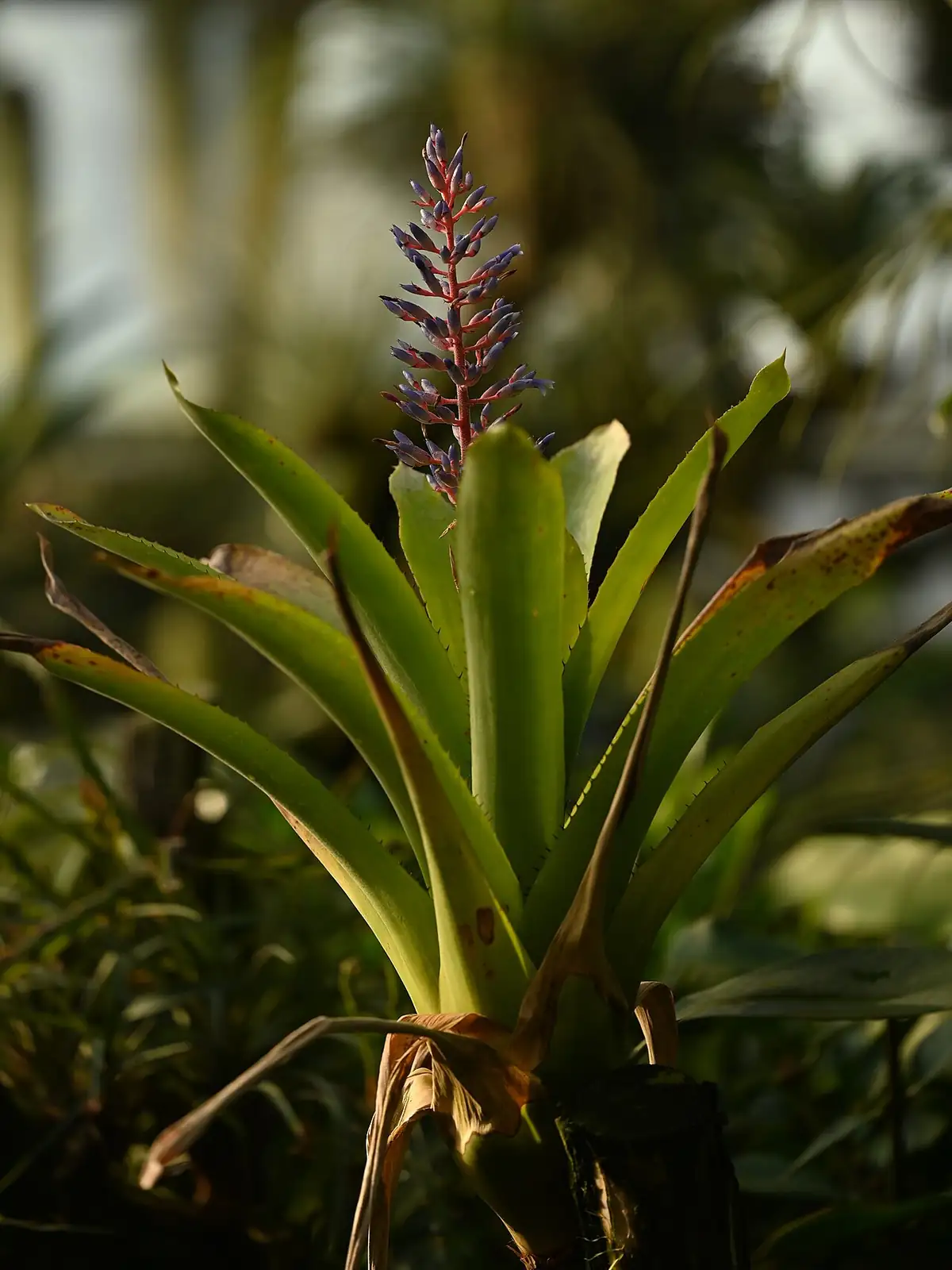
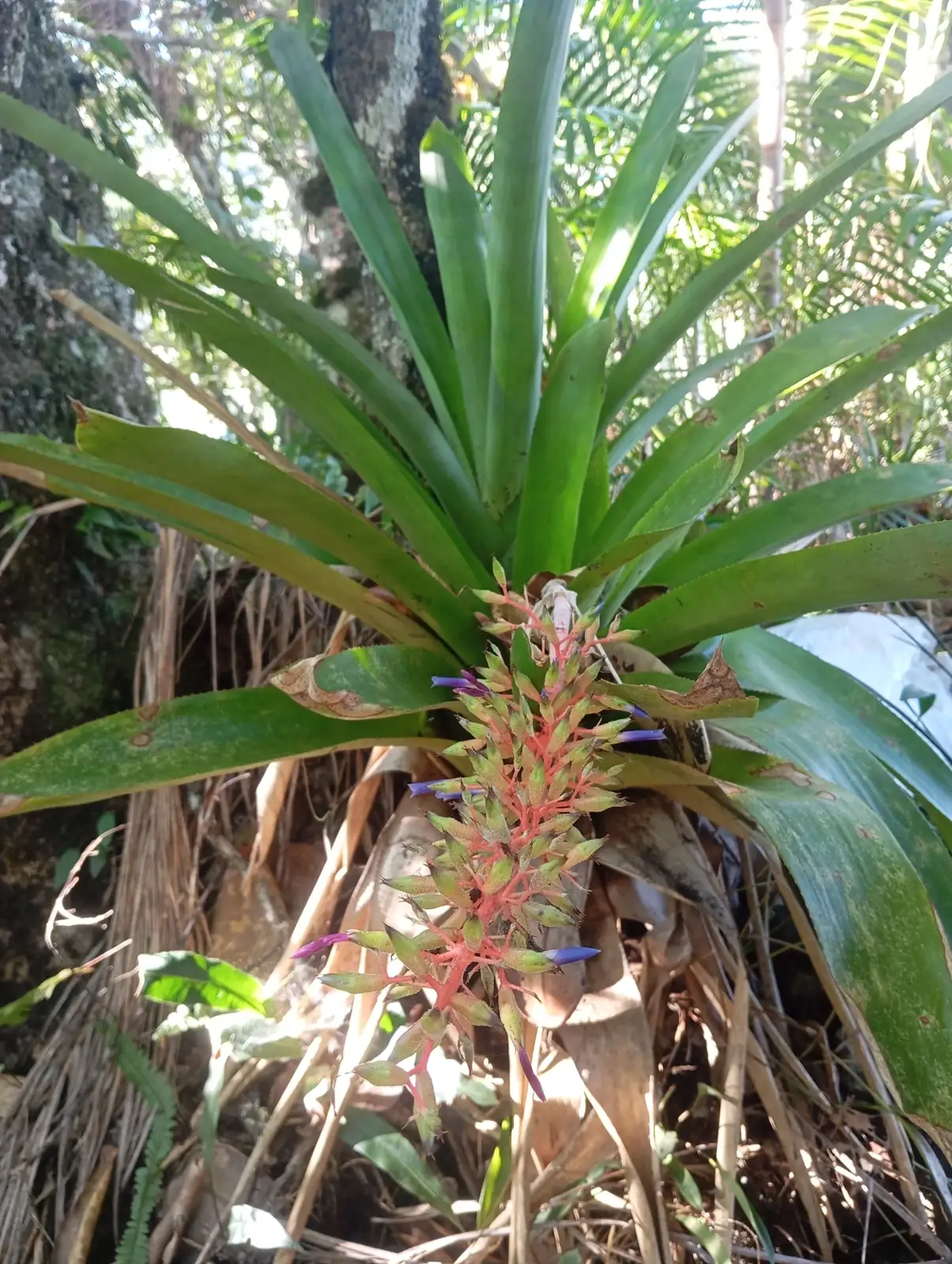
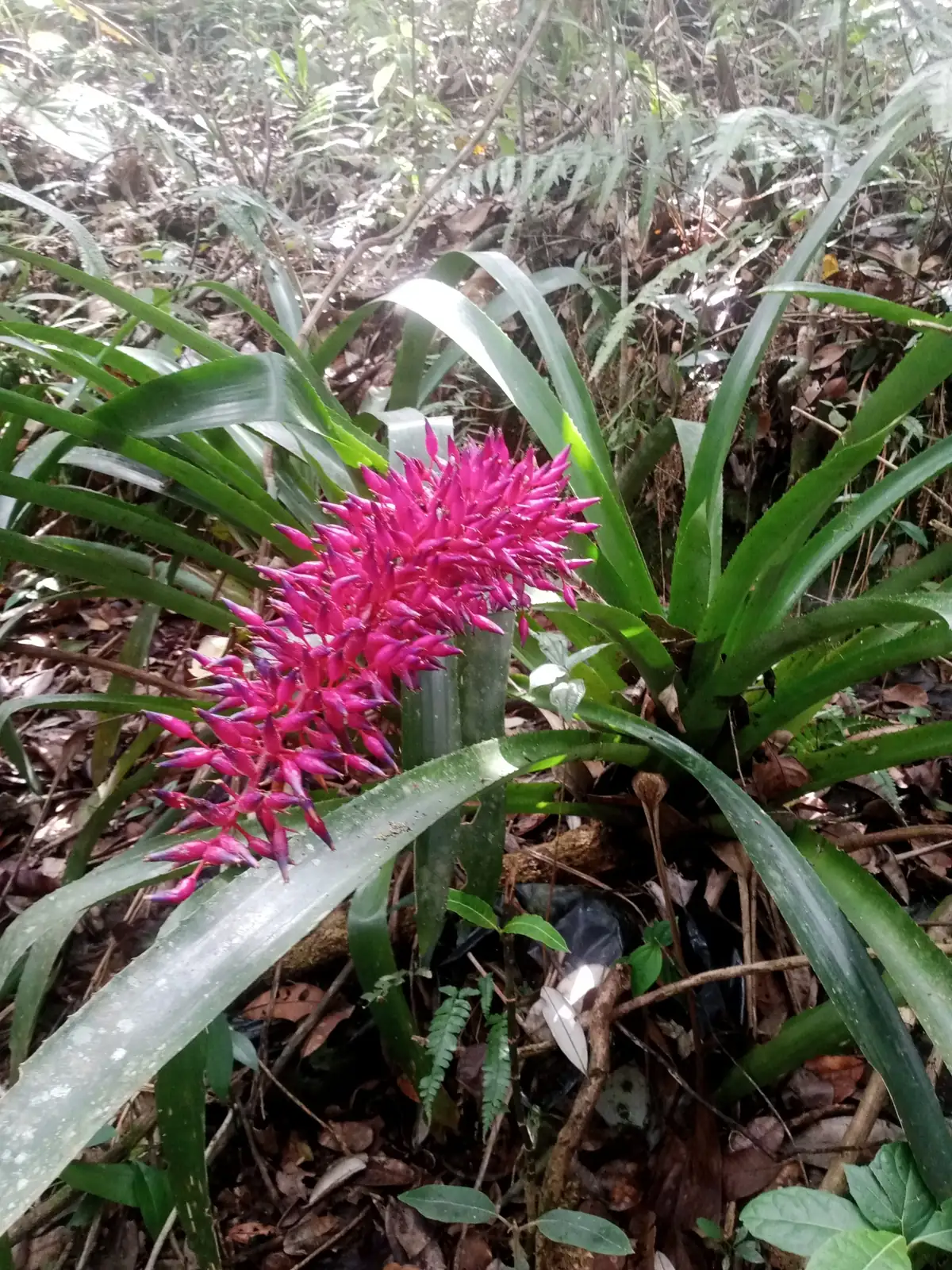
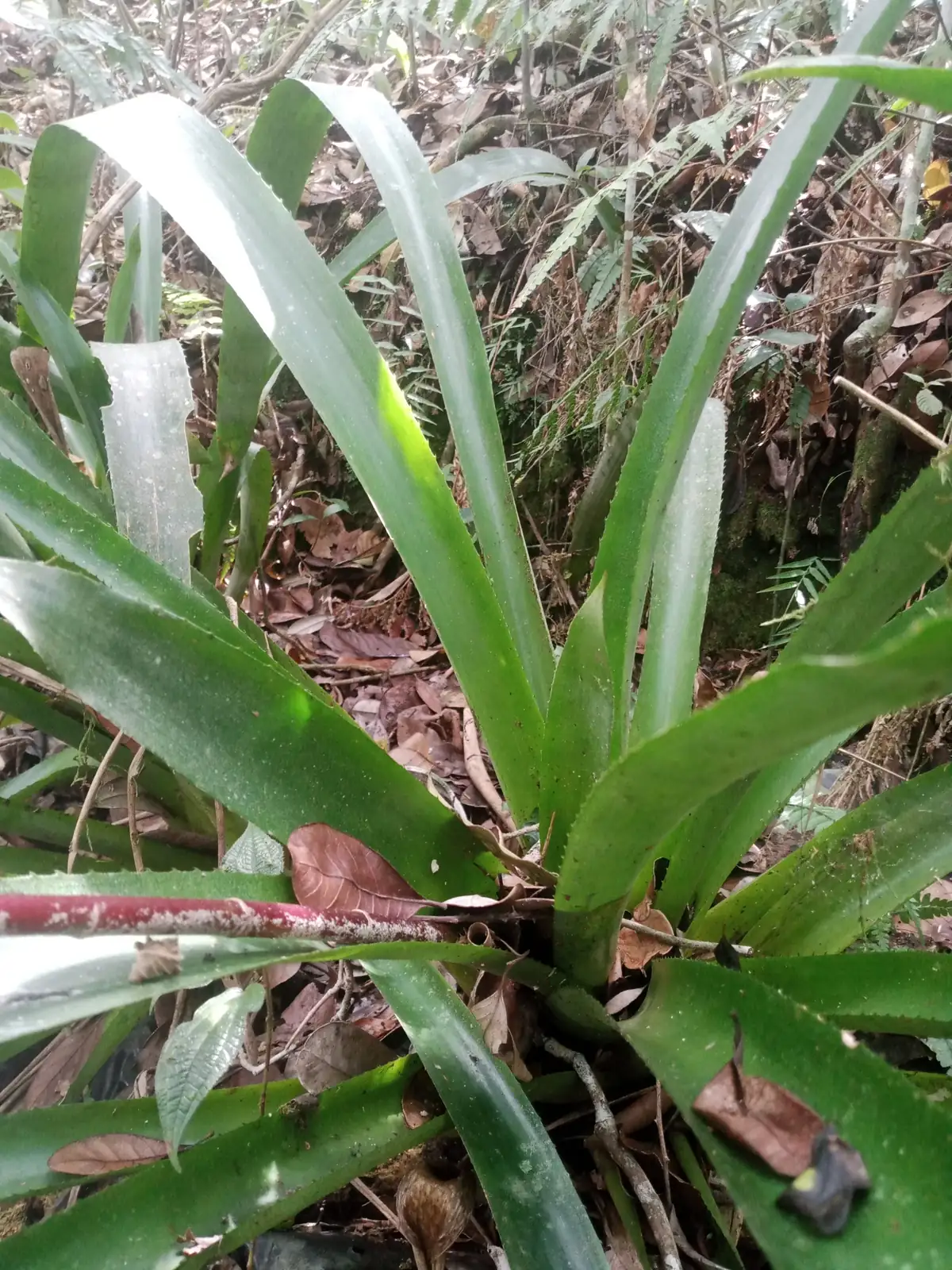
- Foliage: Arching, strap-like leaves with a refined silver-green, subtly banded look. Leaves form a tight, vase-shaped rosette with a central “cup” that naturally holds water.
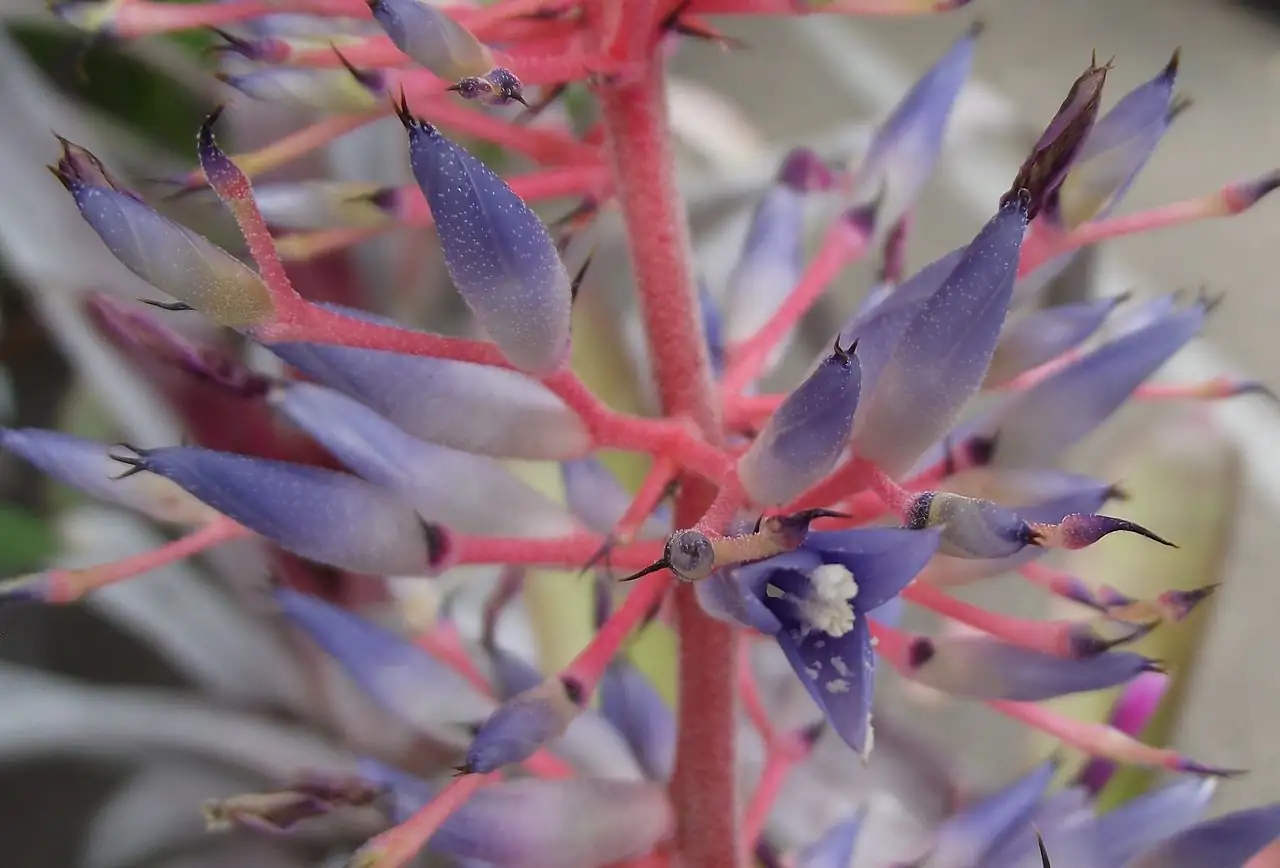
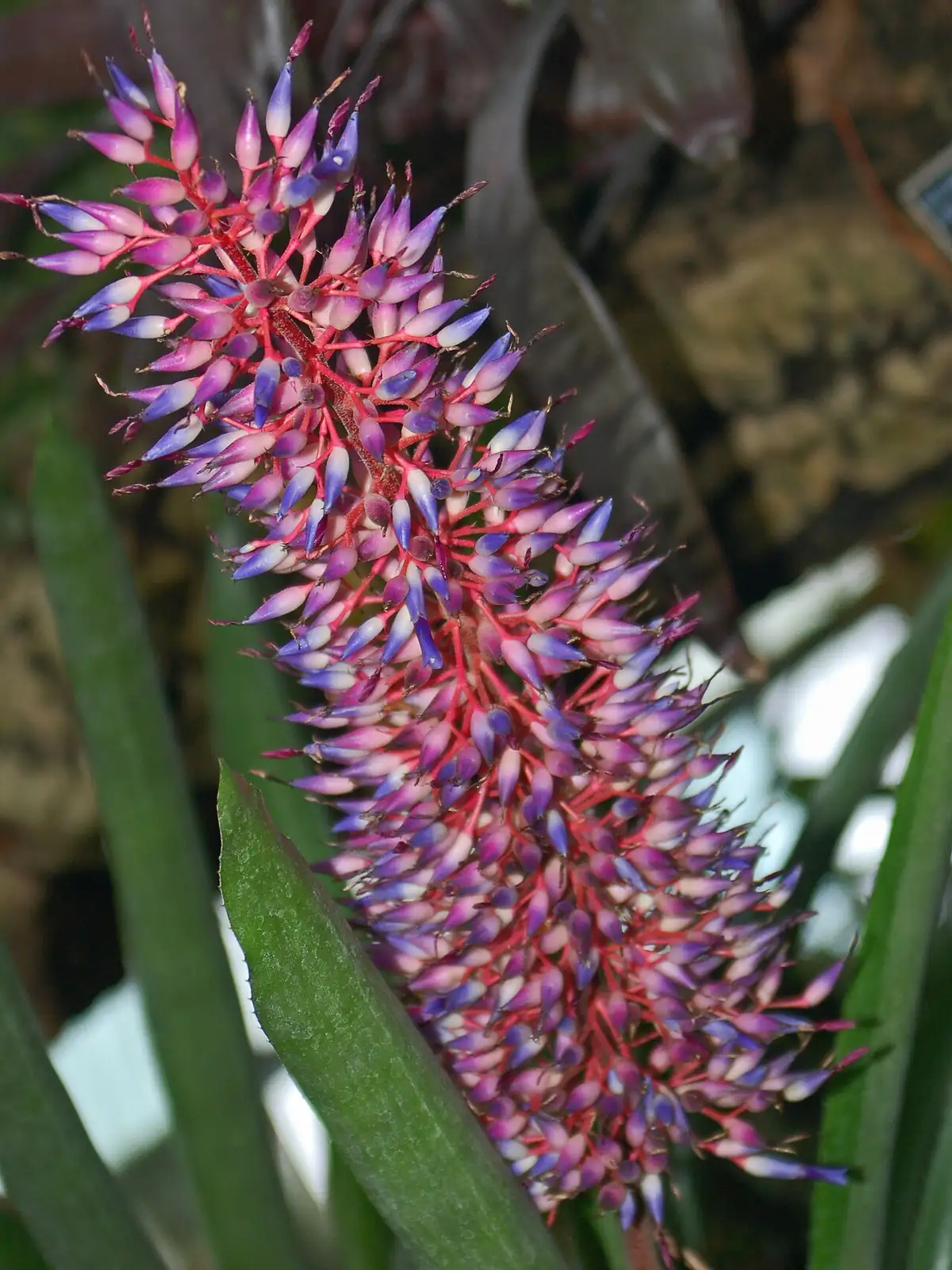
- Flower: In summer, a tall central inflorescence rises above the rosette, topped with showy pink bracts and small purple flowers. The bracts typically remain decorative longer than the short-lived flowers.
- Flowering Season: Summer
- Growth Habit: Rosette-forming epiphyte; forms a vase-shaped rosette and gradually clumps as it produces offsets (pups) around the base.
Environment
Sunlight
Bright, filtered light; partial sun/partial shade. Avoid harsh midday sun, which can scorch the leaves.
Temperature
15–27°C (59–81°F). Best kept above 10°C (50°F).
Humidity
Moderate humidity; appreciates extra humidity in hot weather. Dry indoor air can encourage spider mites.
Soil
Airy, fast-draining epiphyte mix. Good options include equal parts orchid bark mix + perlite + coconut coir, or a 1:1 blend of orchid bark mix and general-purpose potting mix. Prioritize airflow and quick drainage.
Placement
Indoors near an east window or bright north window; or set a few feet back from a south/west window with a sheer curtain. Also does well in bright bathrooms or kitchens with good airflow.
Hardiness
Not frost-hardy. Outdoors year-round only in warm, frost-free climates (roughly USDA Zone 10–11).
Care Guide
Difficulty
Easy—especially forgiving when given bright filtered light, an airy mix, and clean water management in the central cup.
Buying Guide
Look for firm, upright leaves and a clean, odor-free central cup. Avoid plants with a mushy base, blackened leaf bases, or pots that stay persistently soggy (a common setup for rot).
Watering
Use rainwater or distilled water (tap water can leave mineral buildup) to fill the central rosette “cup.” Refresh/top up about every 4–8 weeks. Keep the potting mix lightly moist during the growing season, but never waterlog it; in winter, let the mix dry out before watering again. In hot weather, mist daily or every other day if humidity is low.
Fertilization
Spring through late summer: feed with a balanced liquid fertilizer at 1/2 strength every 2 weeks, applied into the rosette cup or as a foliar feed. Flush occasionally with plain water to reduce salt buildup.
Pruning
After blooming, remove the spent flower spike. Only trim fully brown, dead leaf tips; avoid cutting into healthy green tissue.
Propagation
By offsets (pups). Separate pups when they’re about 1/3–1/2 the size of the mother plant and have their own roots. Pot into the same airy bromeliad/orchid-style mix.
Repotting
Use a snug pot rather than an oversized one to prevent soggy mix. A common container size is about 12.5–15 cm (5–6 in). Repot young plants up just one pot size when crowded.
📅 Seasonal Care Calendar
Spring–late summer: keep mix lightly moist and fertilize every 2 weeks. Summer: maintain water in the central cup; mist daily/every other day during heat. Winter: water only after the mix dries; refresh/top up cup water about every 4–8 weeks.
Pests, Diseases & Safety
Common Pests & Diseases
Watch for mealybugs, scale, and spider mites (more common in dry indoor air). Root/crown rot can occur if the potting mix stays waterlogged or airflow is poor. Use an airy mix, avoid standing water in the pot (as opposed to the rosette cup), and provide gentle air movement.
Toxicity
Generally considered low toxicity. Sap may irritate sensitive skin, and chewing may cause mild gastrointestinal upset in pets—best kept out of reach of curious animals.
Culture & Symbolism
Symbolism: Often linked with hospitality and resilience—fitting for a plant that holds its own little “cup” of water and stays ornamental for a long time.
History & Legends: Bromeliads are classic New World epiphytes, and Aechmea species are beloved in homes and conservatories for their long-lasting bracts and bold, sculptural rosettes.
Uses: Primarily grown as an ornamental houseplant, a warm-season patio accent, or an epiphyte-style display in a bark-based mix.
FAQ
How should I water a dragonfly bromeliad?
Fill the central rosette cup with rainwater or distilled water and refresh/top up about every 4–8 weeks. Keep the potting mix lightly moist in warm months, but in winter water only after the mix dries. Mist daily or every other day during hot, dry conditions.
When should I fertilize it?
From spring through late summer, feed every 2 weeks with a balanced liquid fertilizer at 1/2 strength, applied into the rosette cup or as a foliar spray. Flush with plain water occasionally to prevent salt buildup.
What potting mix is best?
Choose a fast-draining epiphyte mix—equal parts orchid bark mix + perlite + coconut coir works very well, or use a 1:1 blend of orchid bark mix and general potting mix.
When should I repot?
Repot when crowded, moving up only one pot size at a time (often around 12.5–15 cm / 5–6 in). Avoid oversized pots because they hold too much moisture and increase rot risk.
Fun Facts
- The central “cup” is a natural water reservoir; in the wild it can host tiny ecosystems of insects and microorganisms.
- What looks like the “flower” is often mostly bracts (modified leaves), and they usually stay colorful longer than the true flowers.