


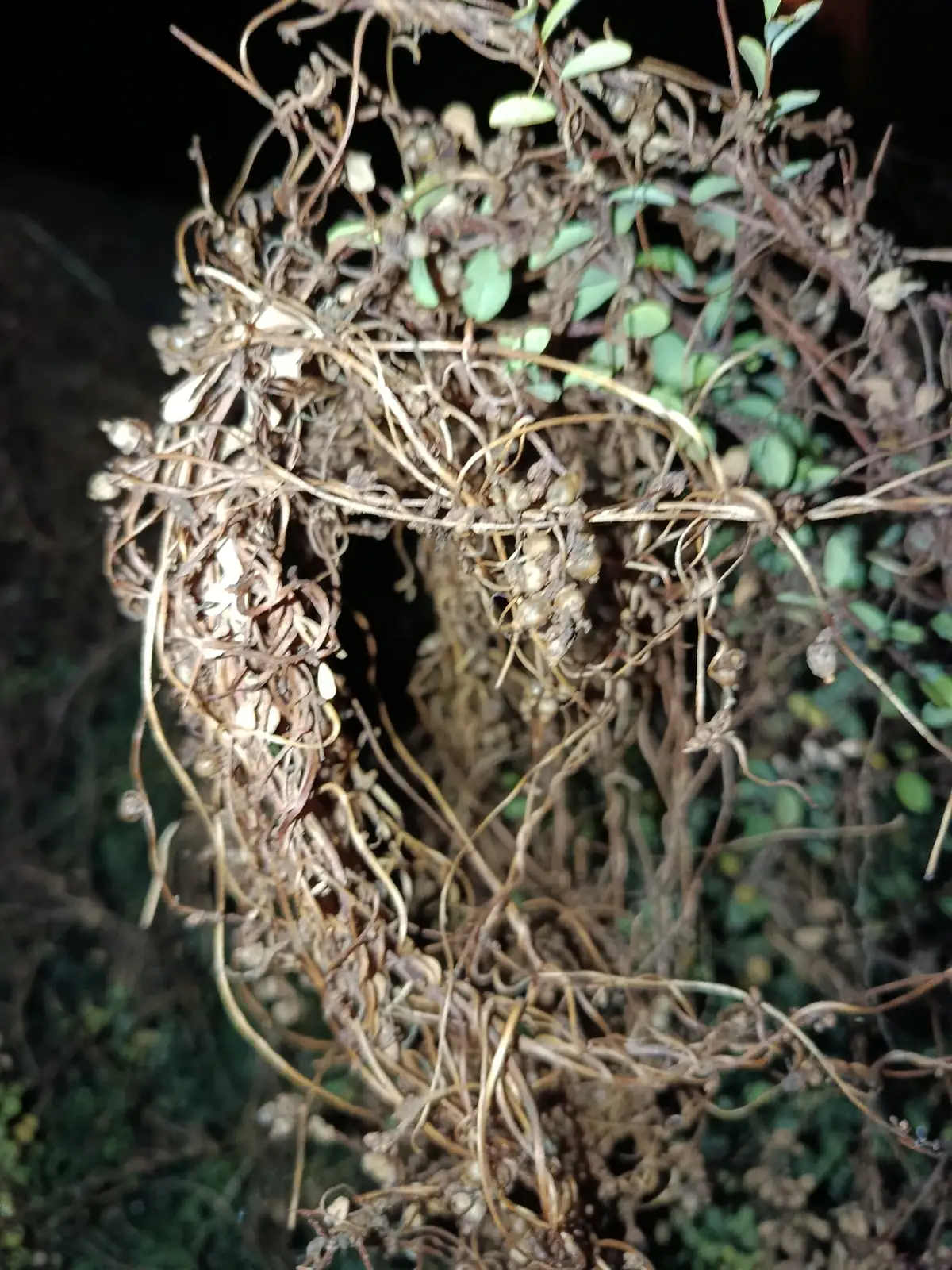
Plant Features
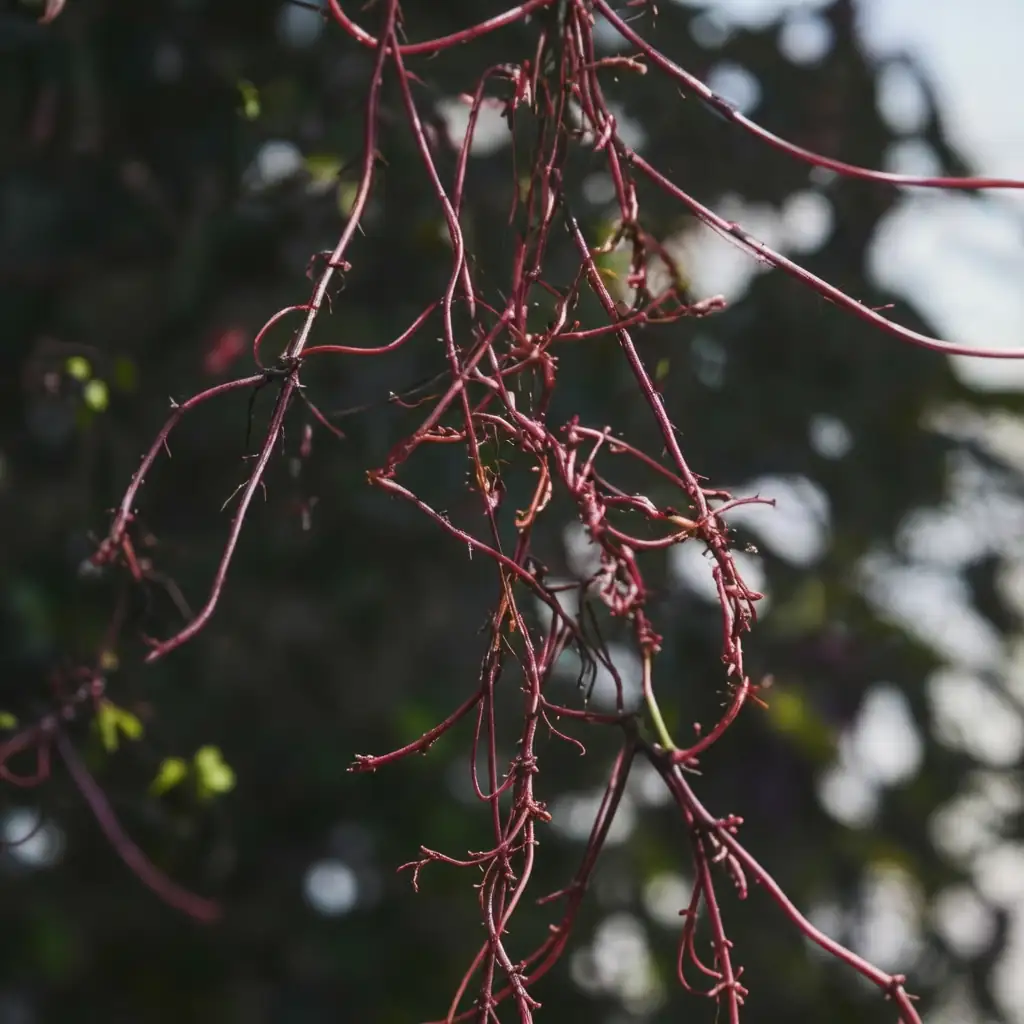
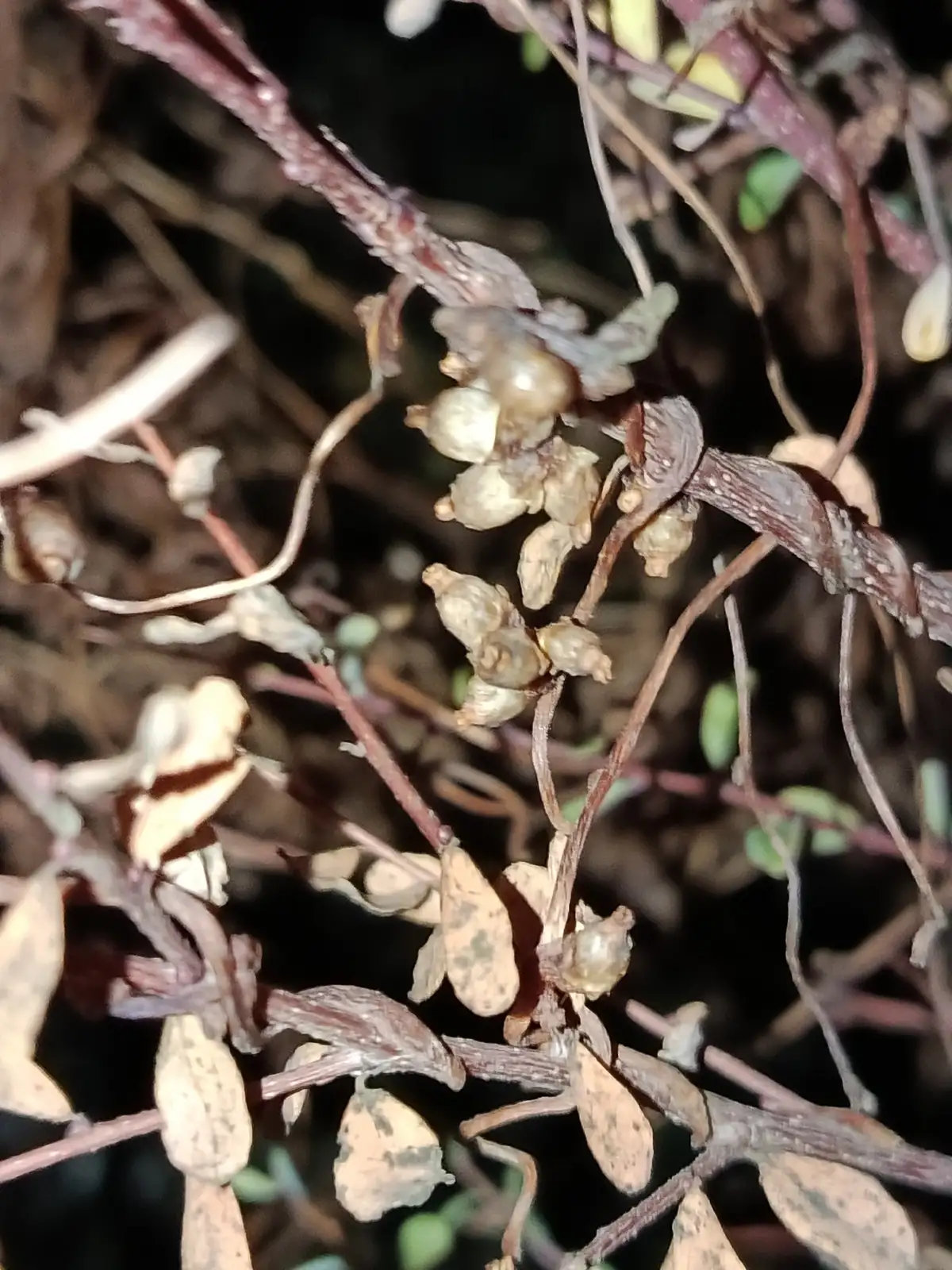
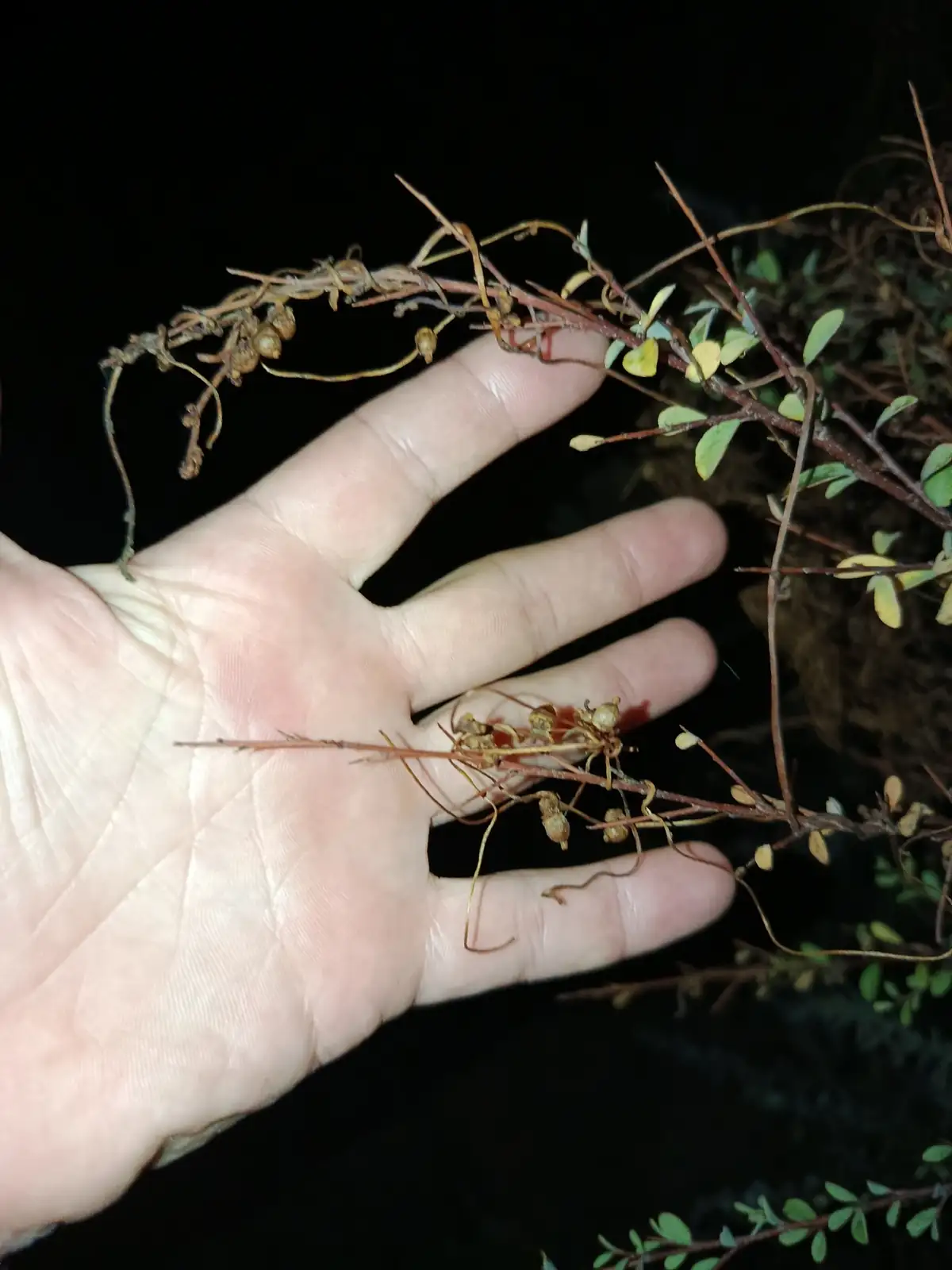
- Size: Slender, strongly branching twining stems; stem diameter up to about 2 mm (0.08 in). Often slightly reddish and marked with dark purple, wart-like bumps.
- Foliage: No true leaves; the plant body is essentially leafless and hairless.
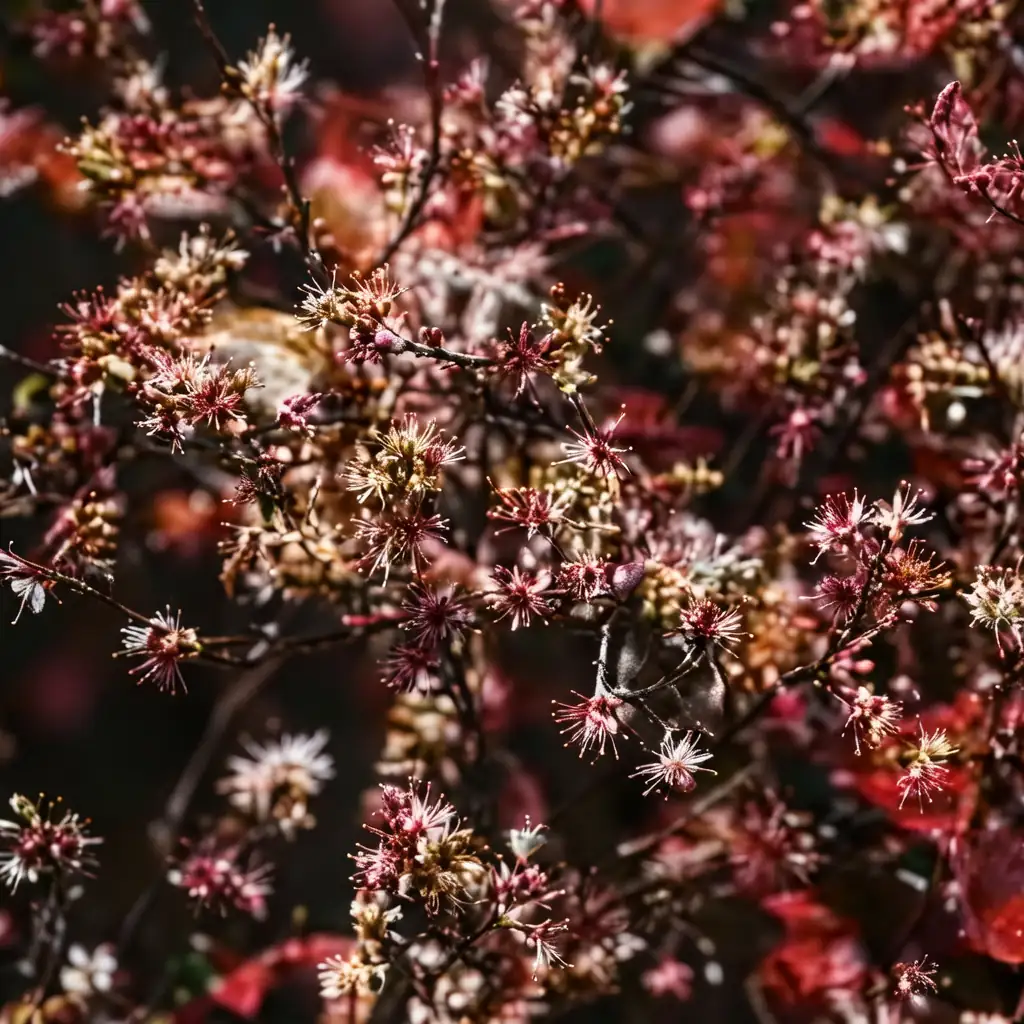
- Flower: Flowers are borne in axillary, spike-like to paniculate clusters. Each flower is tiny with a fleshy perianth; color can look whitish or faintly red-tinged. The calyx is cup-shaped and may show purplish-red, wart-like projections; the corolla is urn-shaped. Ovary nearly spherical; style very short with a capitate stigma. Fruit is a small ovoid to globose capsule; seeds are smooth and dark brown.
- Flowering Season: July–August
- Growth Habit: Obligate parasitic, twining and scrambling over host plants; vigorous and much-branched.
Environment
Sunlight
Indirectly determined by the host plant’s site. Typically occurs where hosts grow in full sun to partial sun (bright light).
Temperature
Warm-season growth; roughly 20–35°C (68–95°F) suits active growth.
Humidity
Prefers humid to moderately humid air; about 50–80% relative humidity is suitable. Higher humidity can make establishment easier.
Soil
Not soil-dependent after attachment to a host. For germination, it can start in many soil types as long as moisture is available and a host is nearby.
Placement
Best treated as a wild parasitic plant, not a houseplant. Found directly on living hosts (trees, shrubs, vines, perennial herbs) in natural or semi-natural habitats.
Hardiness
Not frost-tolerant. Persists mainly as seed from year to year in temperate climates (behaves like a warm-season annual).
Care Guide
Difficulty
Not recommended for cultivation: it requires a living host and can severely weaken (or even kill) the host plant.
Buying Guide
Generally not sold as an ornamental. Avoid introducing it intentionally—especially near gardens, orchards, or crops—because it can spread and cause damage.
Watering
Water the host plant according to its needs; dodder takes its water from the host. Avoid keeping host plants excessively wet if dodder is a concern, since moist conditions can favor seedling establishment.
Fertilization
Fertilize the host only if appropriate for that host. Dodder feeds from the host; heavy nitrogen on the host can create lush growth that may help dodder spread and scramble faster.
Pruning
For control, remove promptly: cut and dispose of infested host stems well below the attachment points. Do not compost infested material if flowers or seeds are present.
Propagation
By seed. Seeds germinate near potential hosts; seedlings must contact a host soon after germination or they die.
Repotting
Not applicable in typical container culture; management focuses on the host plant and preventing spread.
📅 Seasonal Care Calendar
Summer: regularly inspect susceptible host plants and remove early strands before they thicken and branch. July–August: flowering and seed set period—remove before seeds mature to reduce future infestations.
Pests, Diseases & Safety
Common Pests & Diseases
No specific pests/diseases noted for the dodder itself. The key “health” issue is what it does to hosts: infestations reduce vigor, can cause dieback, and may leave hosts more vulnerable to stress and secondary problems.
Toxicity
No reliable toxicity details provided in the source. Treat as non-edible; avoid ingestion, keep away from pets/children, and wash hands after handling.
Culture & Symbolism
Symbolism: Not documented in the provided source.
History & Legends: Not documented in the provided source.
Uses: Primarily of ecological interest as a broad-host-range parasitic vine. It is not used as an ornamental because it can seriously harm host plants.
Fun Facts
- It’s a true parasite with no functional leaves—more like living threads than a typical plant.
- Its stems are very thin (up to about 2 mm / 0.08 in) and can show dark purple, wart-like bumps.
- Dodder seedlings must find and wrap a host soon after germinating, or they won’t survive.
- It flowers in mid to late summer (July–August), then sets smooth, dark brown seeds that carry it into the next year.
- The source notes it is primarily recorded from Xinjiang in northwestern China, and it can parasitize trees, shrubs, vines, and perennial herbs.


