

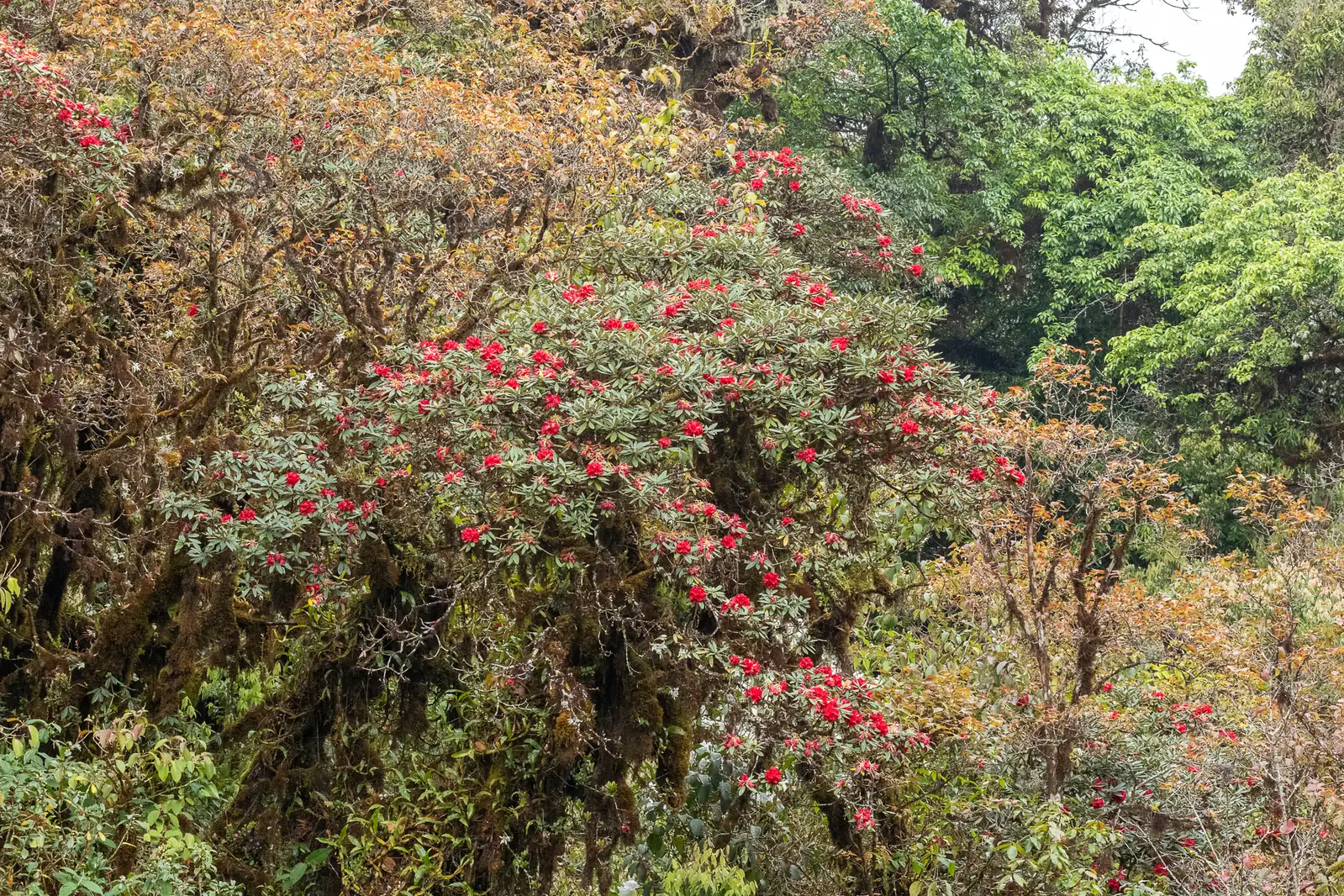
Plant Features
- Size:1–7 m (3.3–23 ft) tall
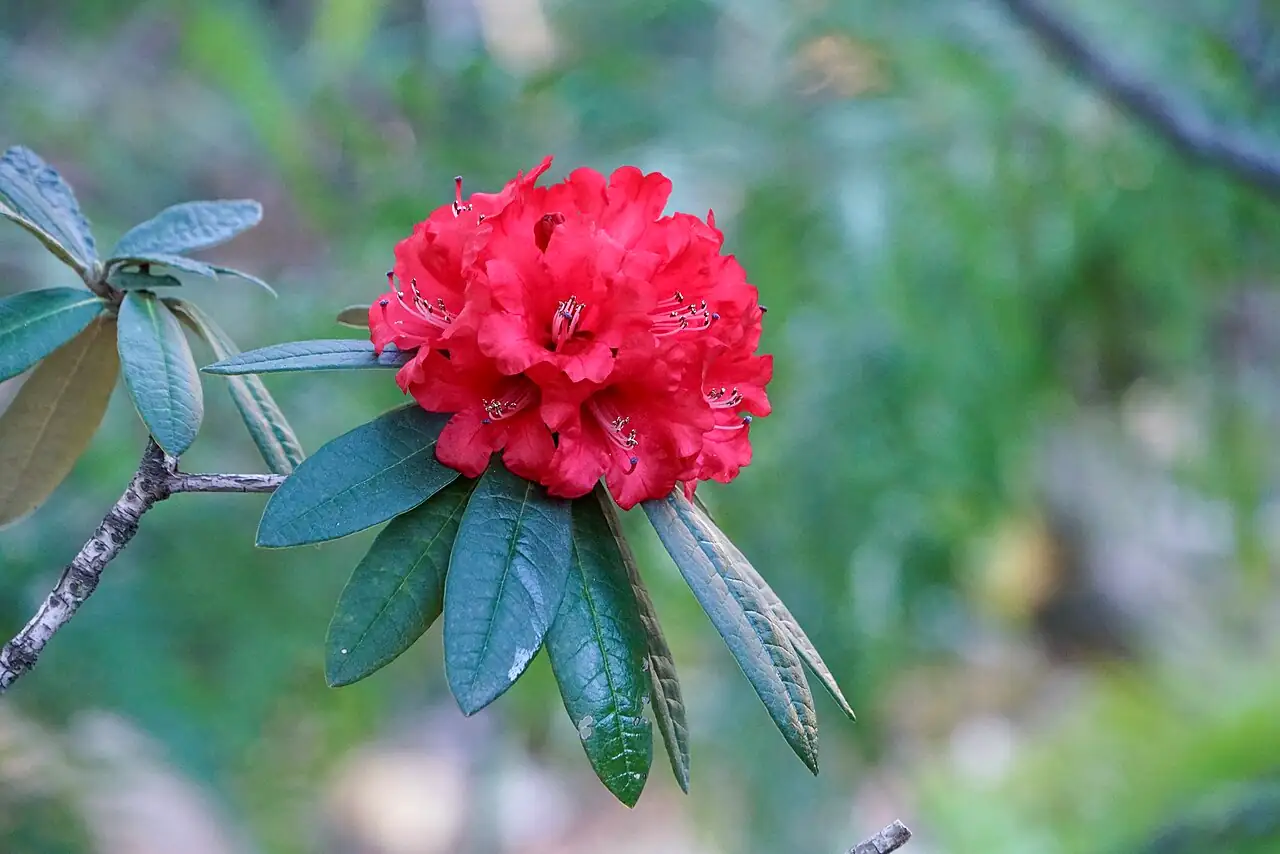
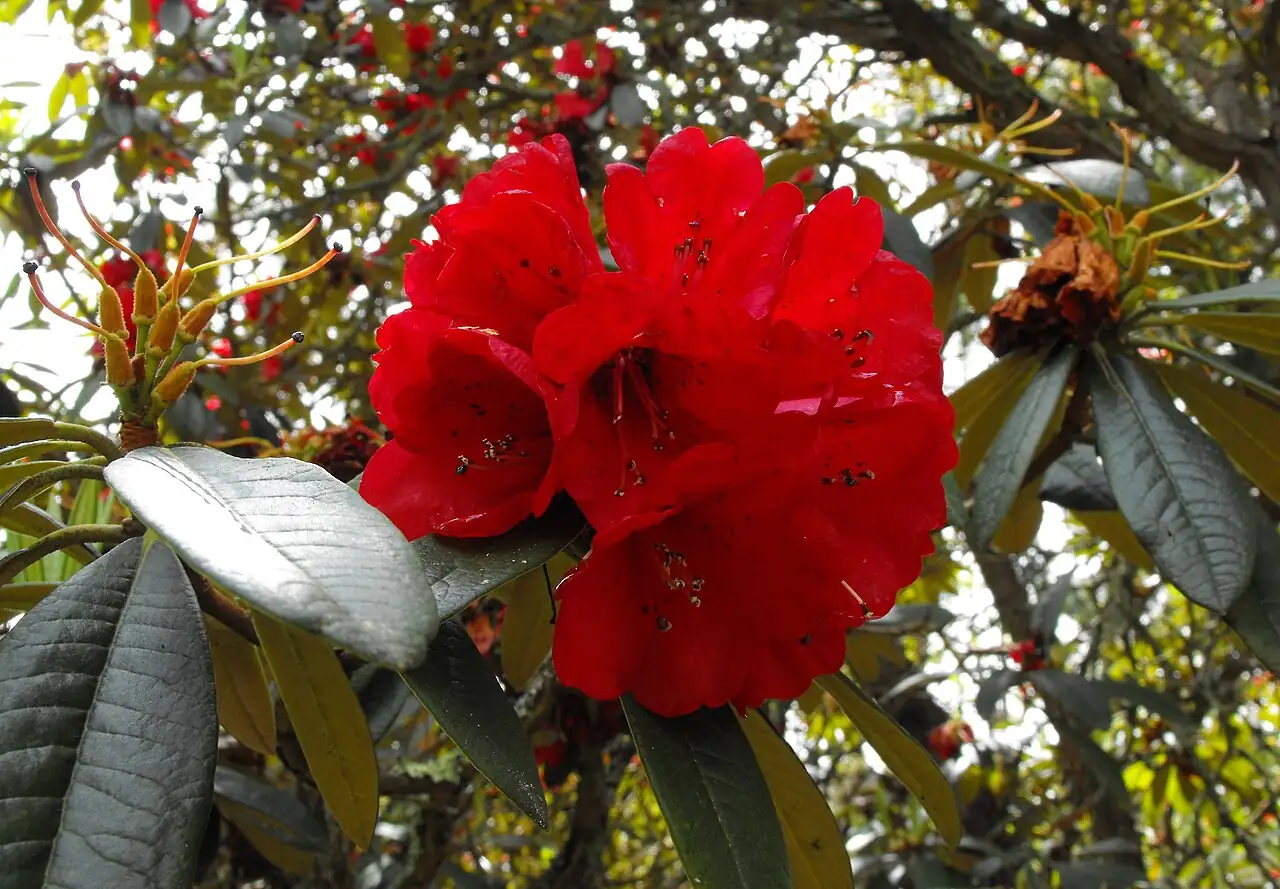
- Foliage: Leaves are leathery and oblong to lance-shaped, staying evergreen year-round. Winter buds are egg-shaped and pale green, often wrapped in a whitish, woolly covering. New shoots are stout and noticeably white-woolly at first, then gradually smooth out as they mature. Older stems show pale gray-brown bark that can peel away in thin flakes, adding a bit of character even when the plant isn’t in bloom.
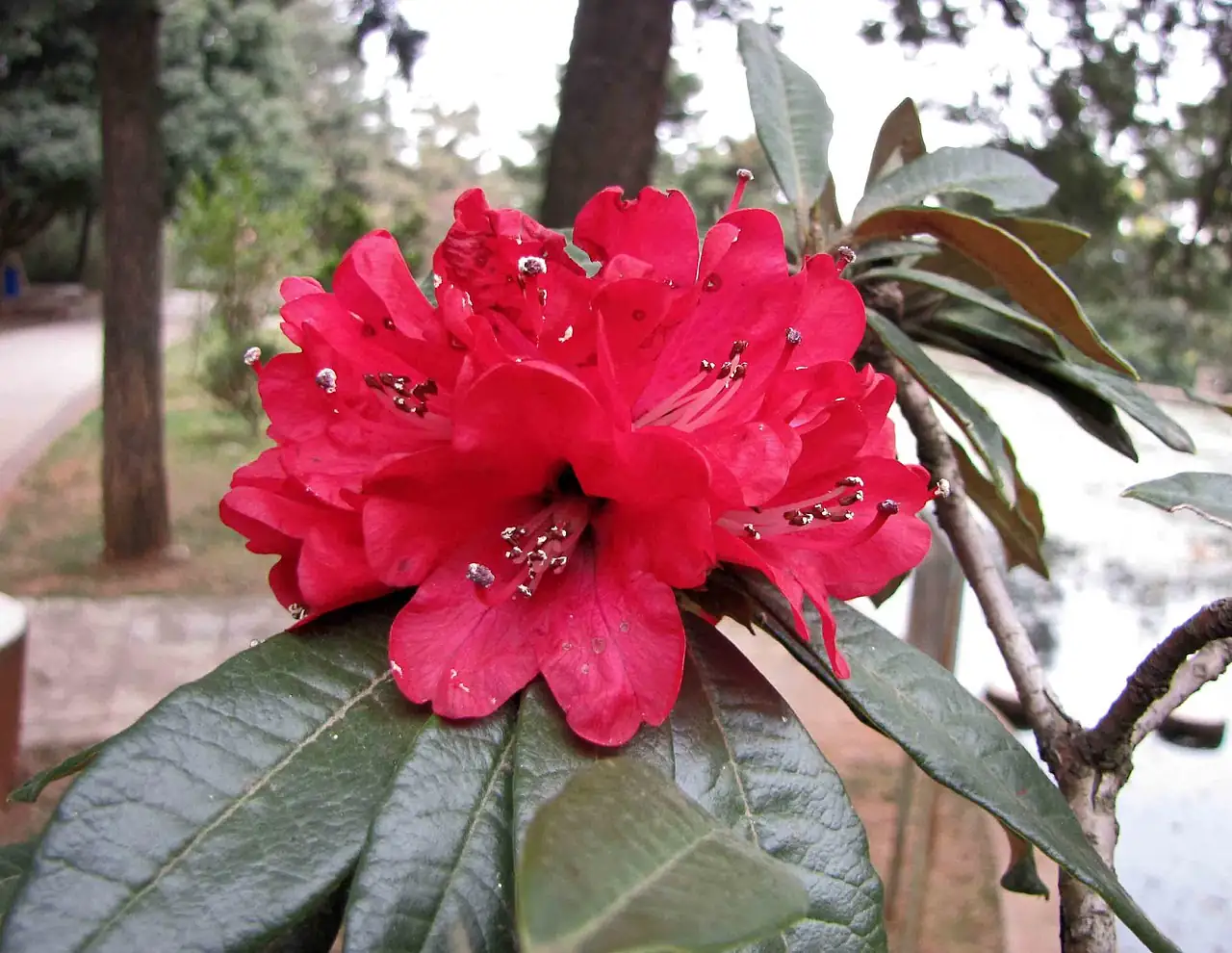
- Flower: Flowers are carried in dense, terminal, umbrella-like clusters (typically about 10–20 blooms per truss), creating a bold “bouquet” effect at the ends of branches. After flowering, it forms a cylindrical seed capsule that ripens dark brown to nearly black.
- Flowering Season: May
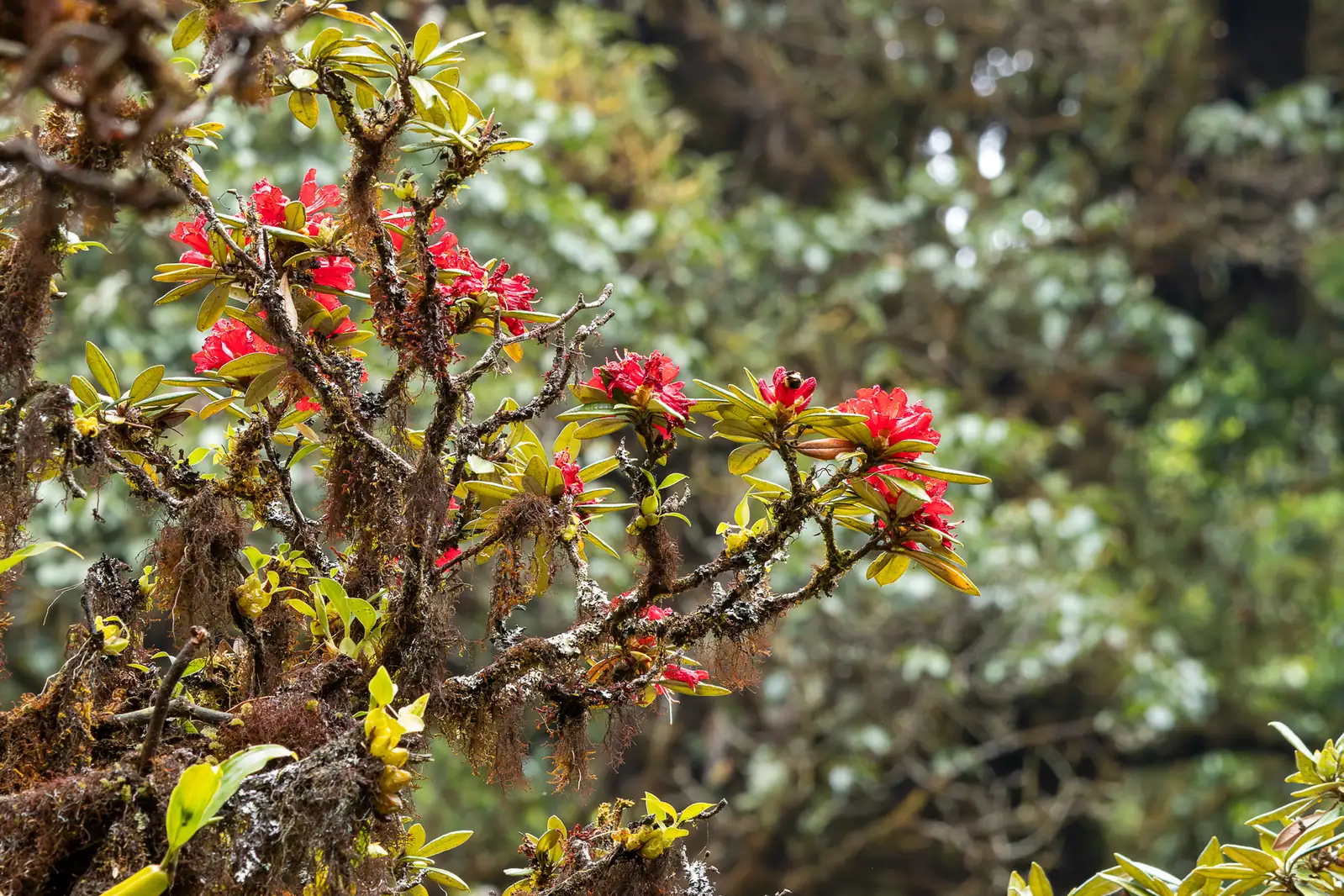
- Growth Habit: Evergreen shrub or small tree
Environment
Sunlight
Bright light with protection from harsh midday sun. Dappled light—like a woodland edge or high-canopy shade—suits it well, especially in warmer regions. Avoid intense, baking sun in hot, dry climates.
Temperature
Prefers cool to mild conditions and dislikes prolonged heat plus dry air. A practical growing range is about 10–25°C (50–77°F); provide extra shade, moisture, and wind protection during hot spells.
Humidity
Enjoys consistently moist air and evenly moist soil; performs best with moderate to high humidity (about 50%+).
Soil
Acidic, humus-rich soil that stays moist but drains well; ideal pH about 5.5–6.5. An ericaceous (acid-lover) mix with excellent aeration is recommended, especially in containers.
Placement
Outdoors in a cool, sheltered position such as a woodland garden, or a north/east aspect. In warm climates, aim for morning sun and afternoon shade. Container plants should be protected from severe freezes and drying winds.
Hardiness
Often grown successfully in USDA Zone 7–9 (approx. -17 to -1°C / 1 to 30°F). Cold tolerance can vary by provenance; overall it performs best where summers are not hot and dry and where winter winds don’t desiccate evergreen foliage.
Care Guide
Difficulty
Moderate. It’s quite manageable where the climate is naturally cool and moist, but becomes trickier in regions with hot, dry summers. Success hinges on keeping the root zone cool, maintaining steady moisture (without waterlogging), and ensuring acidic soil conditions.
Buying Guide
Pick plants with deep green, healthy leaves and firm buds. Avoid yellowing foliage (often a sign of high pH/iron chlorosis), crispy leaf edges (drought stress), or severely pot-bound roots. Confirm the label is Rhododendron delavayi and that it has been grown in an ericaceous (acidic) compost.
Watering
Keep soil evenly moist, never soggy. Water deeply when the top 2–5 cm (1–2 in) begins to dry. Rainwater or other low-mineral water is ideal; hard water can slowly raise pH and lead to chlorosis.
Fertilization
Feed lightly in spring using an ericaceous (acid-loving) fertilizer. Avoid heavy feeding—too much nitrogen can reduce flowering and may stress sensitive roots.
Pruning
Prunes well. Shape lightly after flowering, removing dead, weak, or crossing branches. Deadhead spent flower trusses when practical to help the plant focus on setting buds for next year.
Propagation
Most commonly propagated from semi-ripe cuttings in summer or by layering. Seed propagation is possible but slower and offspring can be variable.
Repotting
For container plants, repot after flowering or in early spring into a fresh ericaceous mix. Step up just one pot size, disturb the root ball as little as possible, and ensure excellent drainage.
📅 Seasonal Care Calendar
Spring: maintain even moisture, apply a light ericaceous feed, and watch for late frosts on developing buds. Late spring (May): main flowering period; deadhead after bloom. Summer: protect from heat and drying winds, mulch to keep roots cool, and water consistently. Autumn: stop heavy feeding, keep evenly moist as next year’s buds form. Winter: protect pots from hard freezes and desiccating winds; avoid waterlogged soil.
Pests, Diseases & Safety
Common Pests & Diseases
Can be troubled by lace bugs, aphids on soft new growth, and spider mites when conditions are hot and dry. Vine weevil is a common risk for container-grown plants. Poor drainage can invite Phytophthora root rot. Yellowing leaves may indicate chlorosis from soil that is too alkaline (often worsened by hard water).
Toxicity
Toxic if ingested (people and pets), as with many rhododendrons. Keep away from children and animals that may chew plants.
Culture & Symbolism
Symbolism: Often linked with beauty, passion, and resilience—fitting for a plant that naturally shines in rugged mountain landscapes.
History & Legends: The species name commemorates Father Jean Marie Delavay, a 19th-century French missionary and botanist known for extensive plant collecting in Yunnan, China.
Uses: Primarily an ornamental shrub/small tree grown for its spectacular spring flower trusses. It is also mentioned in some traditional local medicinal contexts, but self-treatment is not advised because rhododendrons can be toxic.
FAQ
When does it flower?
Typically in May, with the show concentrated in dense terminal flower clusters.
When does it fruit?
The cylindrical seed capsules commonly mature around December, turning dark brown to nearly black.
How tall does it grow?
Roughly 1–7 m (3.3–23 ft), depending on age, pruning, and local growing conditions.
Where is it native and what habitat does it prefer?
It’s native to southwestern China (including Yunnan and southern Tibet) and naturally grows in evergreen broadleaf forests and shrub thickets—cooler, moist mountain settings.
What growing conditions does it need?
Cool, moist conditions with protection from hot, dry weather, plus acidic, humus-rich, moist but well-drained soil (pH 5.5–6.5). It also tolerates pruning.
What family and genus is it in?
Family: Ericaceae; Genus: Rhododendron.
Fun Facts
- It can mature from a dense evergreen shrub into a small, tree-like rhododendron with subtly flaking bark.
- Young shoots and overwintering buds often wear a distinctive whitish, woolly coating.
- A single flower truss can carry around 10–20 blooms, creating a dramatic clustered display.
- Its seed capsules are cylindrical and darken to deep brown or nearly black when ripe.
- It’s considered a signature rhododendron of southwest China’s mountain forests, especially in Yunnan.


