Plant Features
- Size:30–120 cm (12–47 in) tall; often spreads widely via creeping rhizomes, forming dense patches.
- Foliage: A perennial herb with a powerful underground rhizome network. Stems are upright and ridged; young stems may show whitish, cobweb-like hairs. Leaves are classic thistle-style—often lobed and armed with spines to varying degrees (spinosity can change with form and growing conditions).
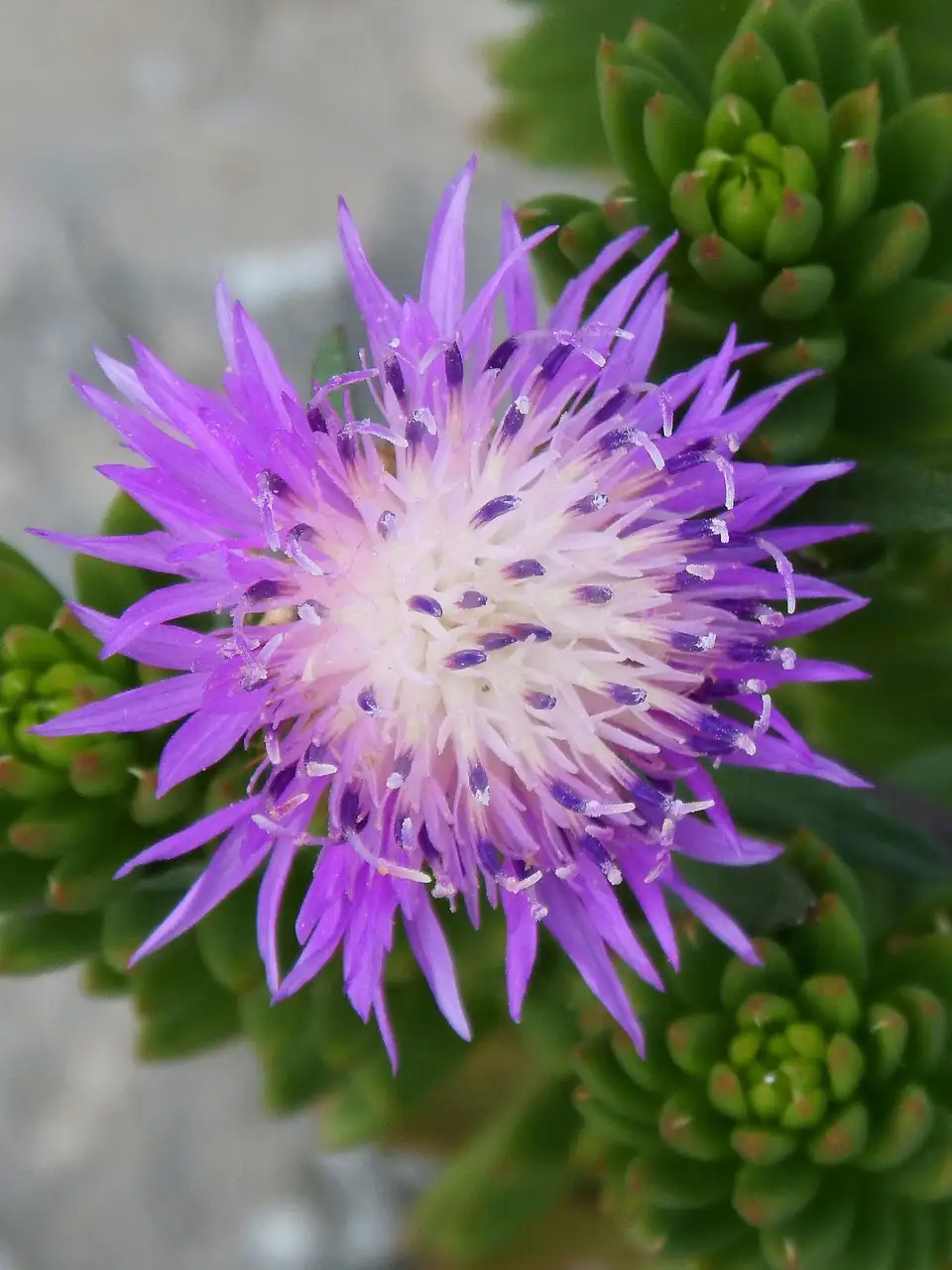
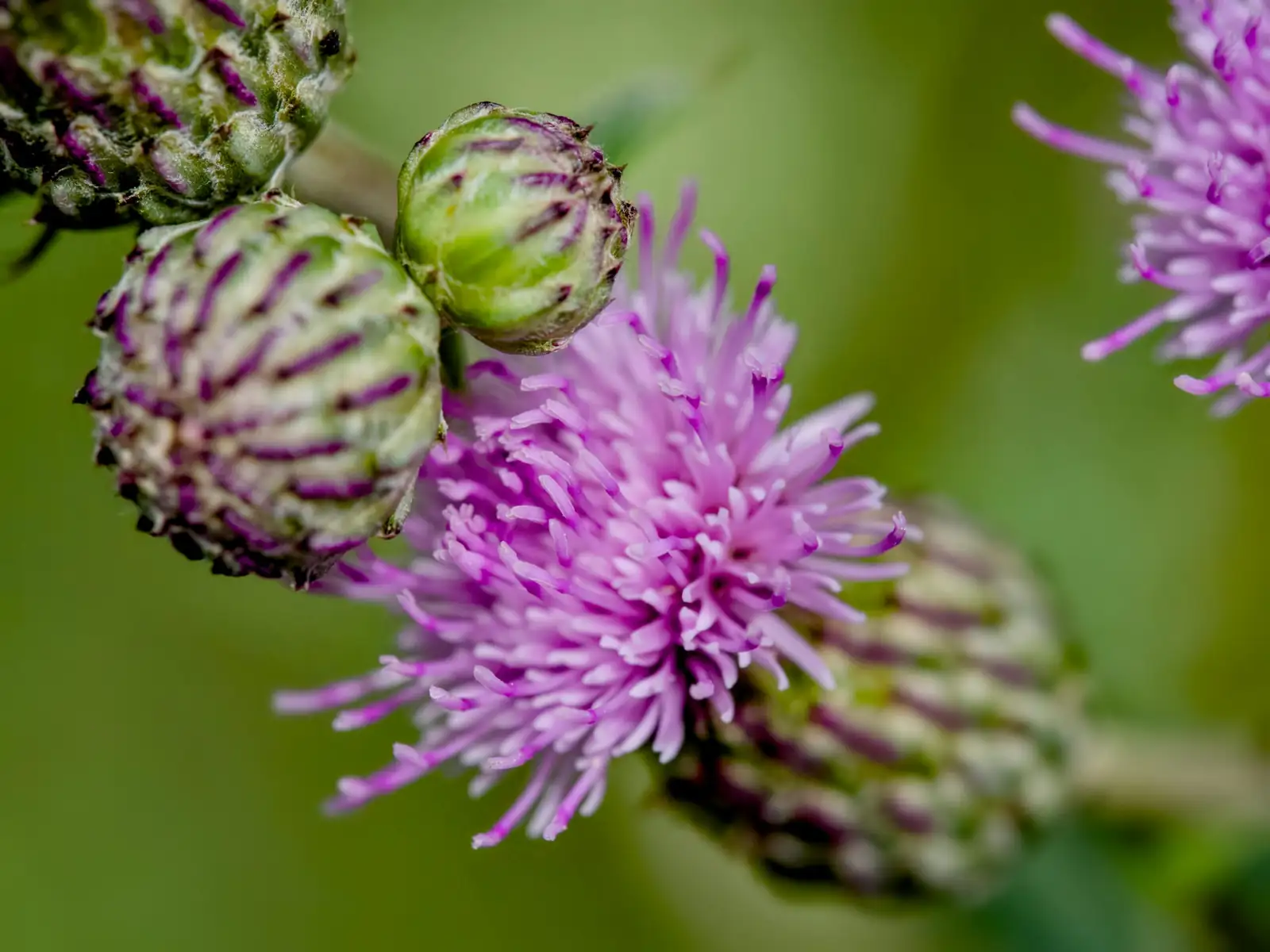
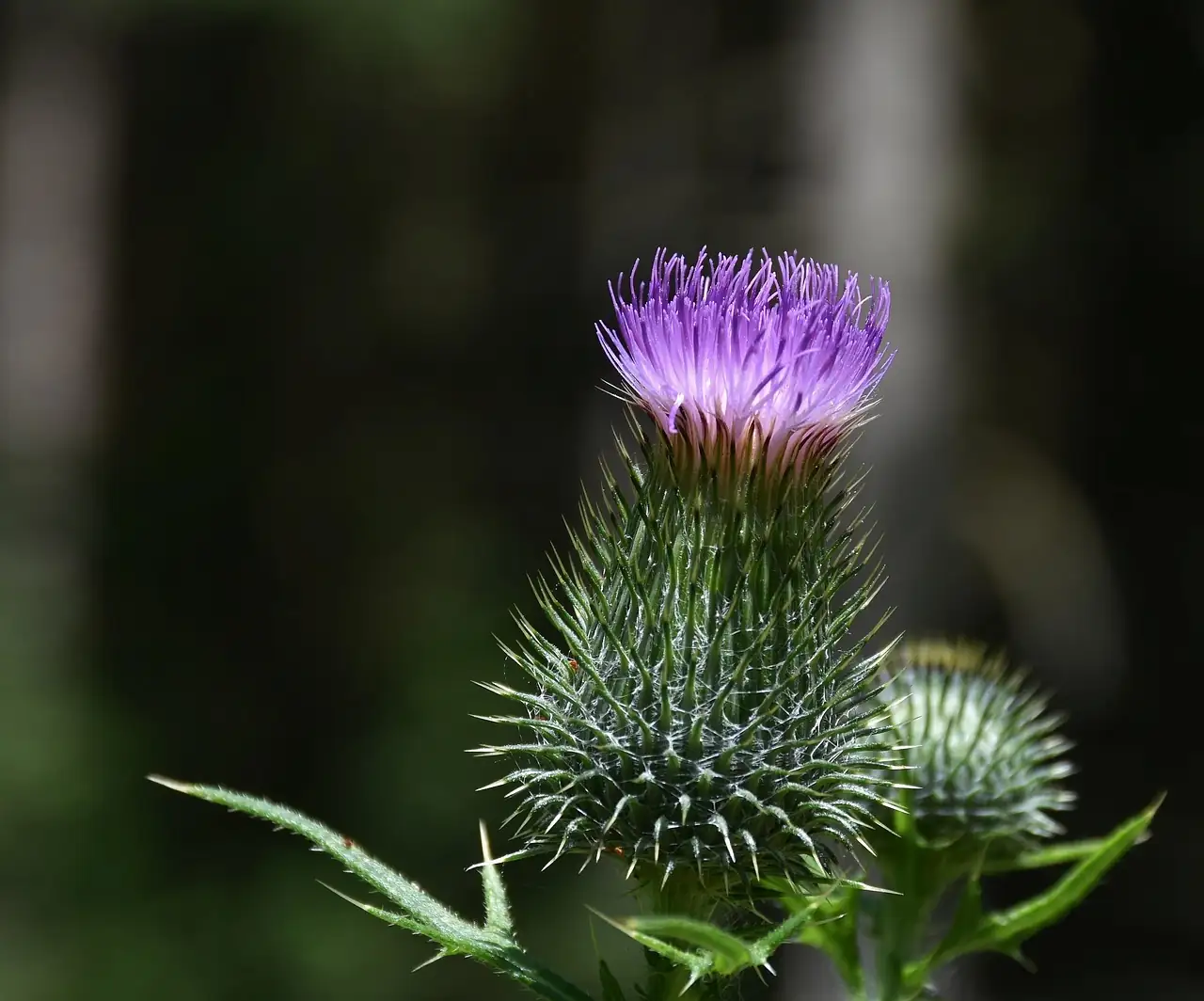
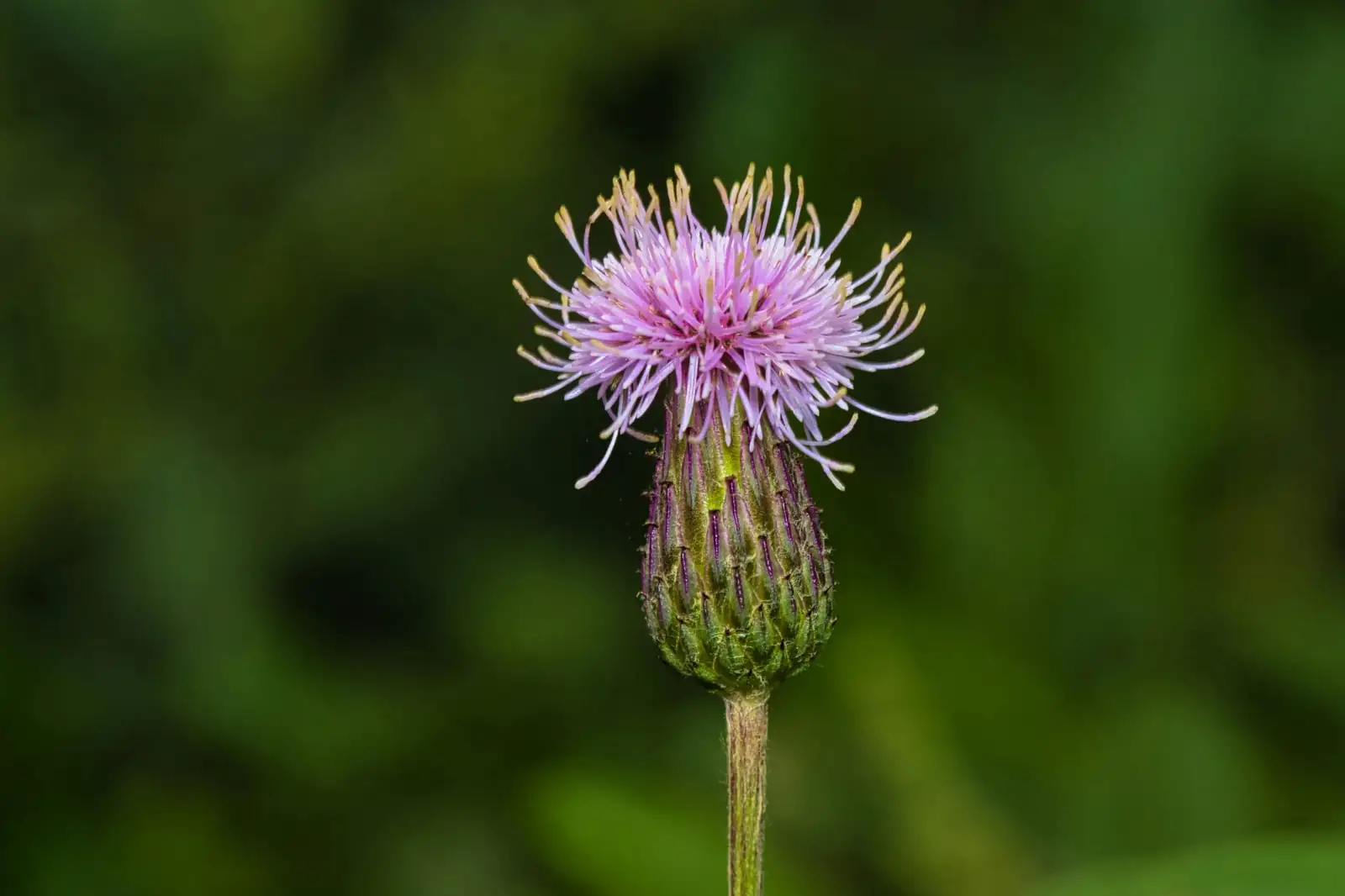
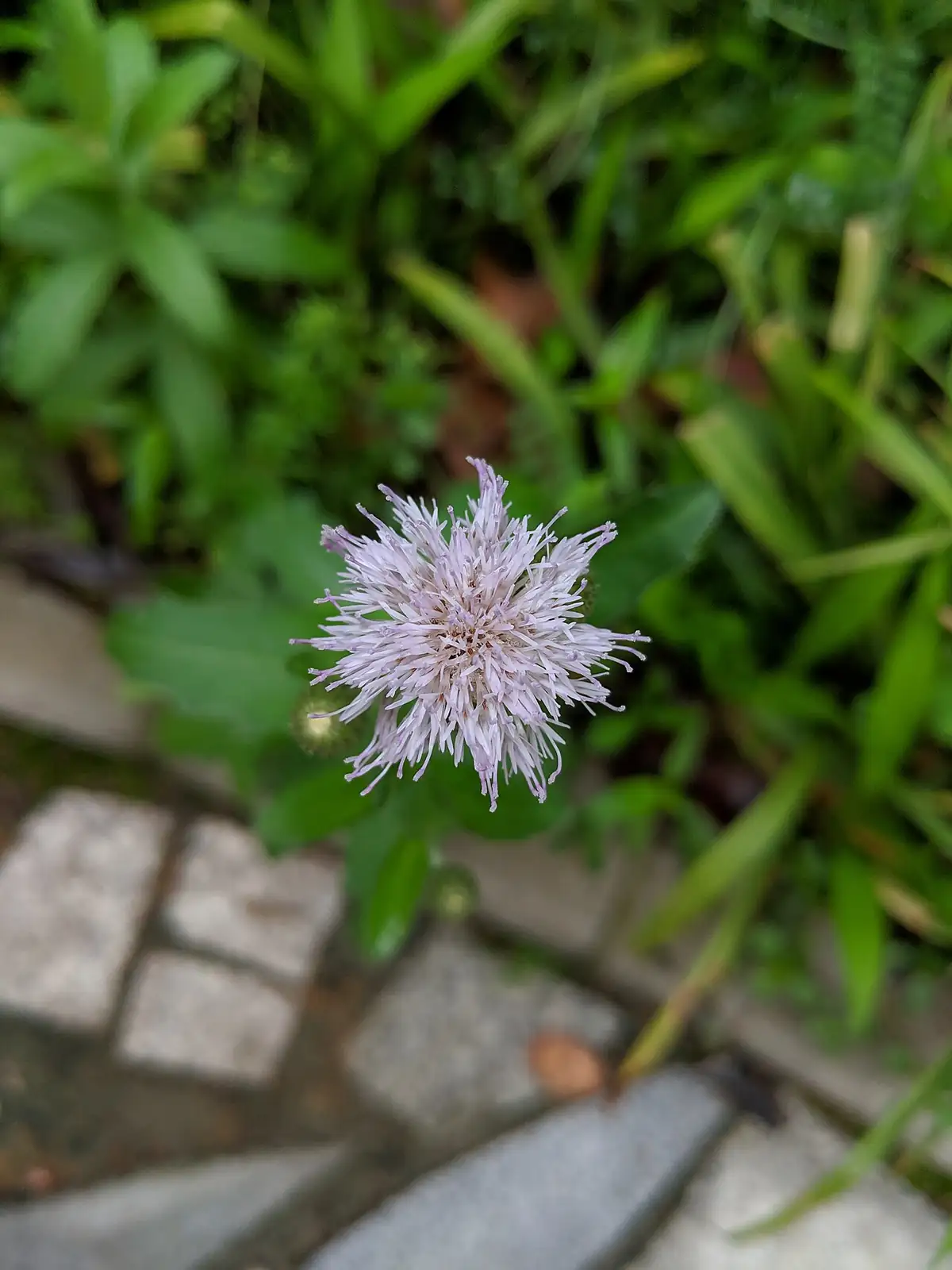
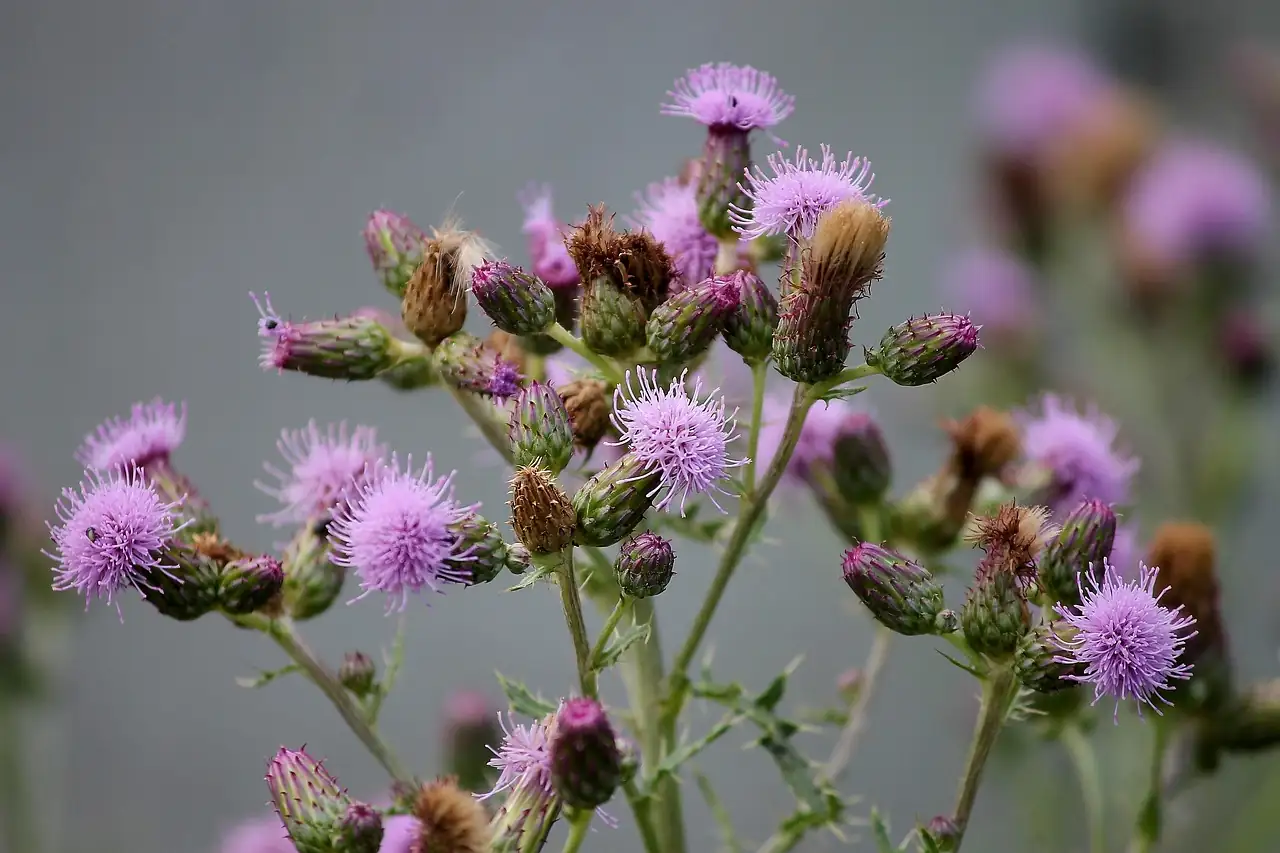
- Flower: Flower heads are made up of many small florets, usually purple-red but occasionally white. Flower clusters may be nearly hairless or lightly downy. After flowering, it produces pale yellowish achenes (dry fruits), oval to slightly oblique-oval.
- Flowering Season: May–September
- Growth Habit: Upright, rhizomatous perennial that commonly forms dense colonies in disturbed habitats such as wasteland, farmland, roadsides, and near settlements.
Environment
Sunlight
Full sun to partial shade; blooms best with brighter light. Naturally thrives in open, disturbed places.
Temperature
Tolerant from cool-temperate to warm-temperate conditions; commonly grows strongly around 10–30°C (50–86°F) in the active season.
Humidity
Adaptable; handles average outdoor humidity and a wide range of conditions.
Soil
Very adaptable and willing to grow in many soils, especially disturbed ground. Performs best in well-drained loam but tolerates poor soils.
Placement
Best for wild areas, meadow edges, large naturalistic landscapes, or restoration-style plantings where vigorous spreading is acceptable. Not recommended for small gardens due to persistent rhizomes.
Hardiness
Cold-hardy; approximately USDA Zone 3–8 (−40 to −7°C / −40 to 20°F), depending on local conditions.
Care Guide
Difficulty
Easy to grow outdoors, but difficult to control—spreads aggressively by creeping rhizomes and can become weedy.
Buying Guide
If buying for ecological or wildflower use, source from reputable native-plant/ecological suppliers and check local guidance first—creeping thistle can be regulated or treated as invasive in some regions.
Watering
Once established, water only during prolonged drought. For new plantings, keep evenly moist for the first few weeks, then let the top 2–5 cm (1–2 in) of soil dry between waterings.
Fertilization
Usually unnecessary. Avoid high-nitrogen fertilizer (it can push leafy growth and encourage rampant spread). If soil is extremely poor, use a light, balanced fertilizer at 1/4–1/2 strength in spring.
Pruning
Deadhead to reduce self-seeding (note: rhizomes will still spread). Cut stems back after flowering or at season’s end. Wear gloves—spines can scratch.
Propagation
Easily propagated (and most commonly spreads) by rhizome fragments. Can also be grown from seed. Dividing rhizomes in spring or fall is the quickest method.
Repotting
Not ideal for containers. If grown in a large pot, choose a deep container and refresh soil every 1–2 years; expect rhizomes to fill the pot quickly.
📅 Seasonal Care Calendar
Spring: shoots emerge; divide, edge-cut, or install barriers if containment is needed. Summer (May–Sep): flowering; deadhead to limit seeding. Autumn: cut back stems and keep an eye on spread. Winter: top growth is dormant, but rhizomes persist—check and repair containment barriers.
Pests, Diseases & Safety
Common Pests & Diseases
Usually quite trouble-free. In damp, crowded growth it may develop leaf spots or mildew. Aphids sometimes cluster on tender shoots—rinse off with water or support beneficial insects.
Toxicity
Not known to be toxic. In some places young parts are eaten as a wild vegetable, but always confirm identification and local food-safety advice, and avoid harvesting from roadsides or contaminated soils.
Culture & Symbolism
Symbolism: Often linked with resilience and toughness—this plant thrives where others struggle, especially in disturbed ground.
Uses: Primarily ornamental in wild, naturalistic settings and restoration-style plantings where its thistle blooms support biodiversity. In some regions it is also collected as a seasonal wild edible when young (with proper identification and safe harvesting practices).
FAQ
Is creeping thistle good for a home garden?
Usually not. It can look charming in bloom, but it spreads powerfully through underground rhizomes and is notoriously hard to remove once established.
Why does it keep coming back after cutting?
Because most of its “engine” is underground. Cutting helps reduce seed production, but the rhizomes can resprout and expand unless they’re removed or carefully contained.
Fun Facts
- Its underground rhizome network can be more extensive than the entire visible plant above ground.
- Young stems may show a whitish, cobweb-like fuzz along noticeable ridges.
- Flower clusters can be nearly hairless or softly downy, and the florets are usually purple-red but sometimes white.
- Its fruits are pale yellowish achenes, shaped oval to slightly skewed-oval.
- In China it commonly forms colonies in wasteland, farmland, roadsides, and around villages, and is broadly distributed across many provinces.