


Plant Features
- Size: Up to about 1.2 m tall × 0.9 m wide (4 ft × 3 ft) indoors, depending on cultivar and conditions
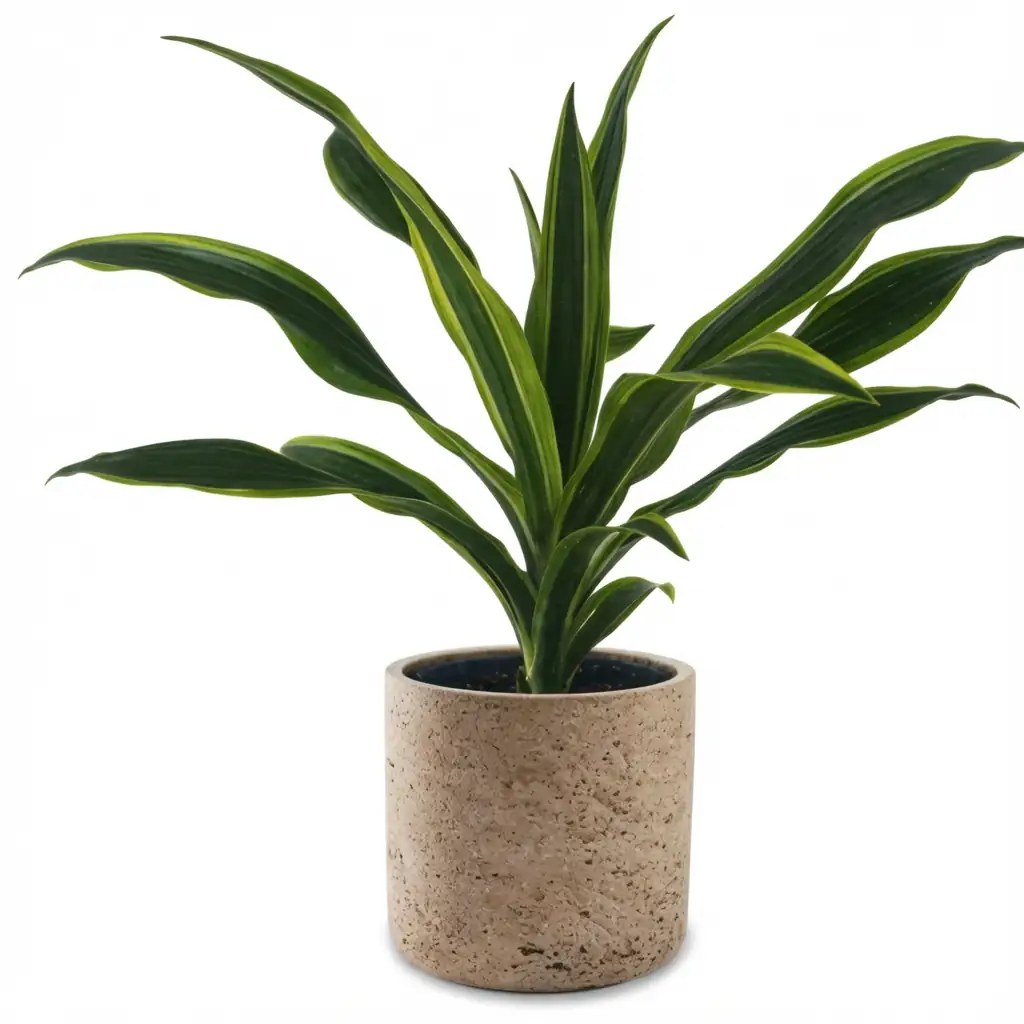
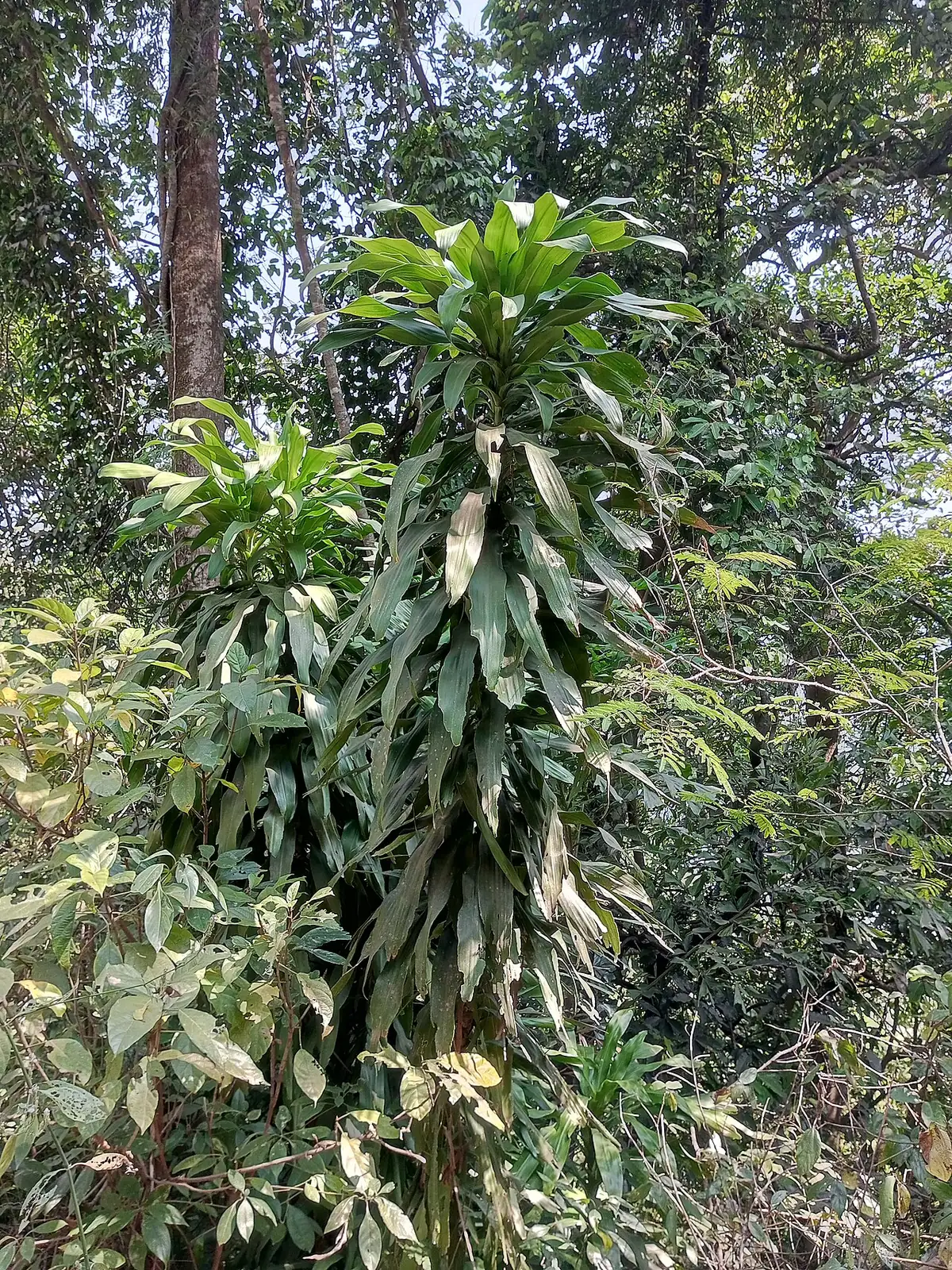
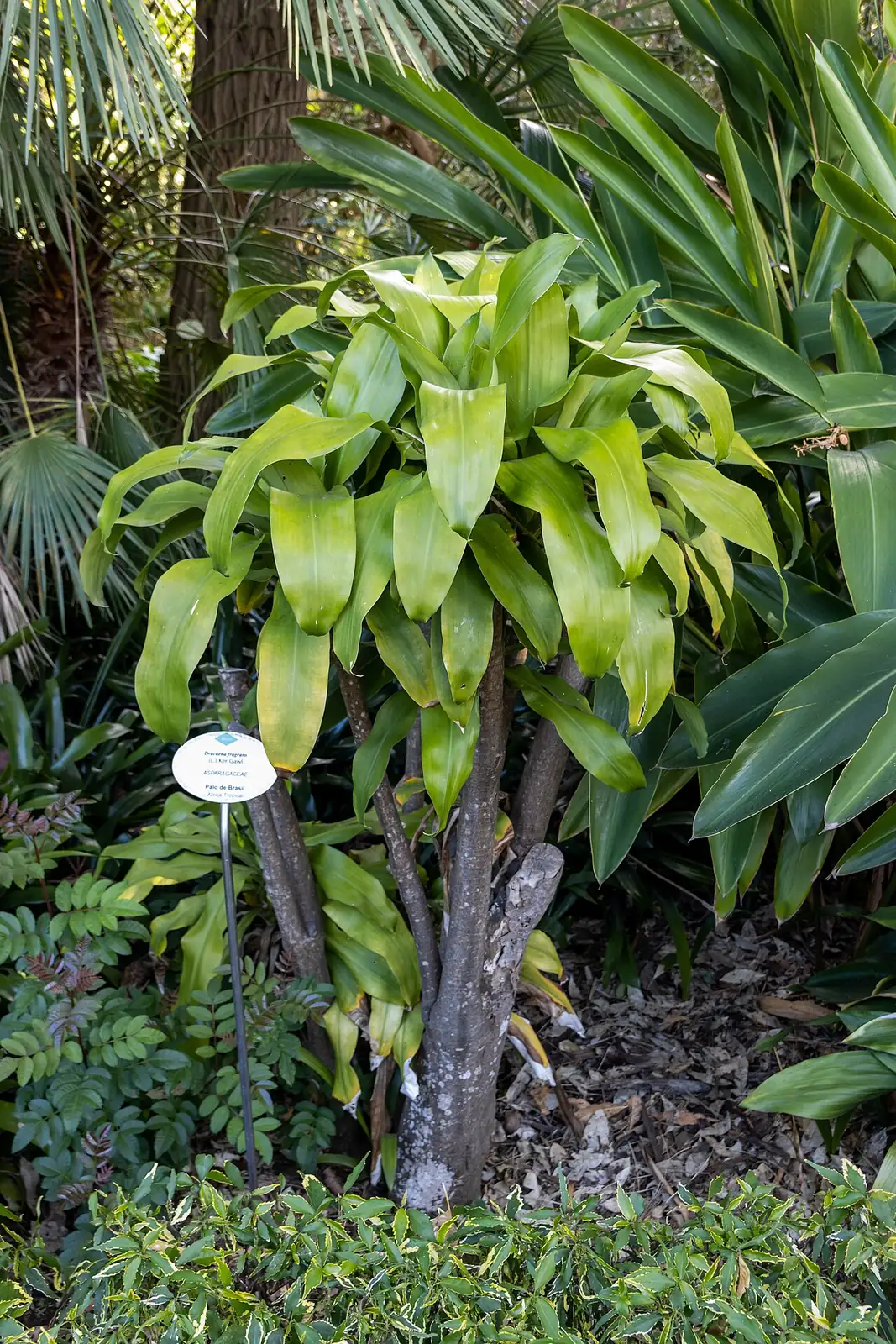
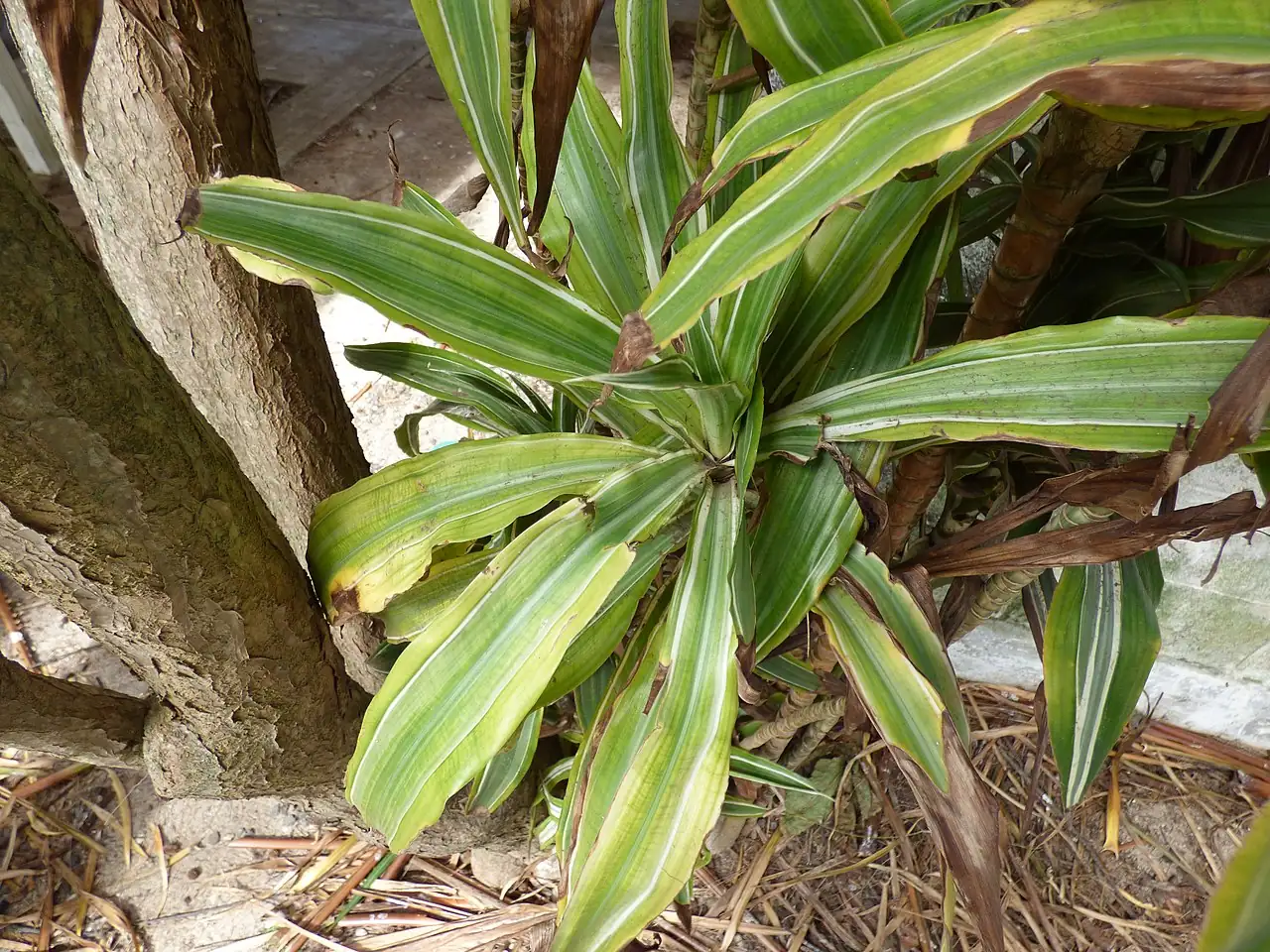
- Foliage: Long, narrow, arching, strap-shaped leaves arranged in dense rosettes at the tips of woody, cane-like stems. Many popular indoor forms are variegated, showing a yellow central stripe or yellow-green margins around a deeper green center.
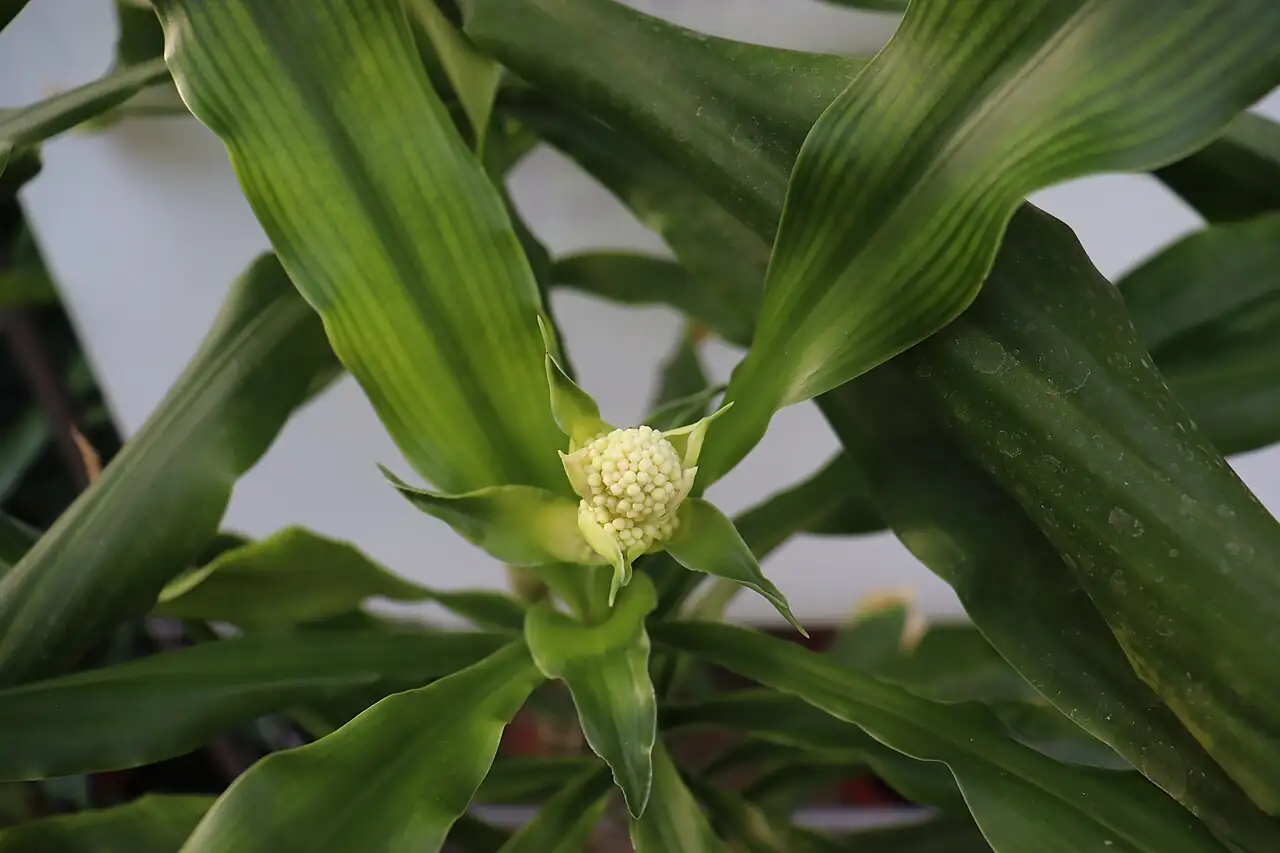
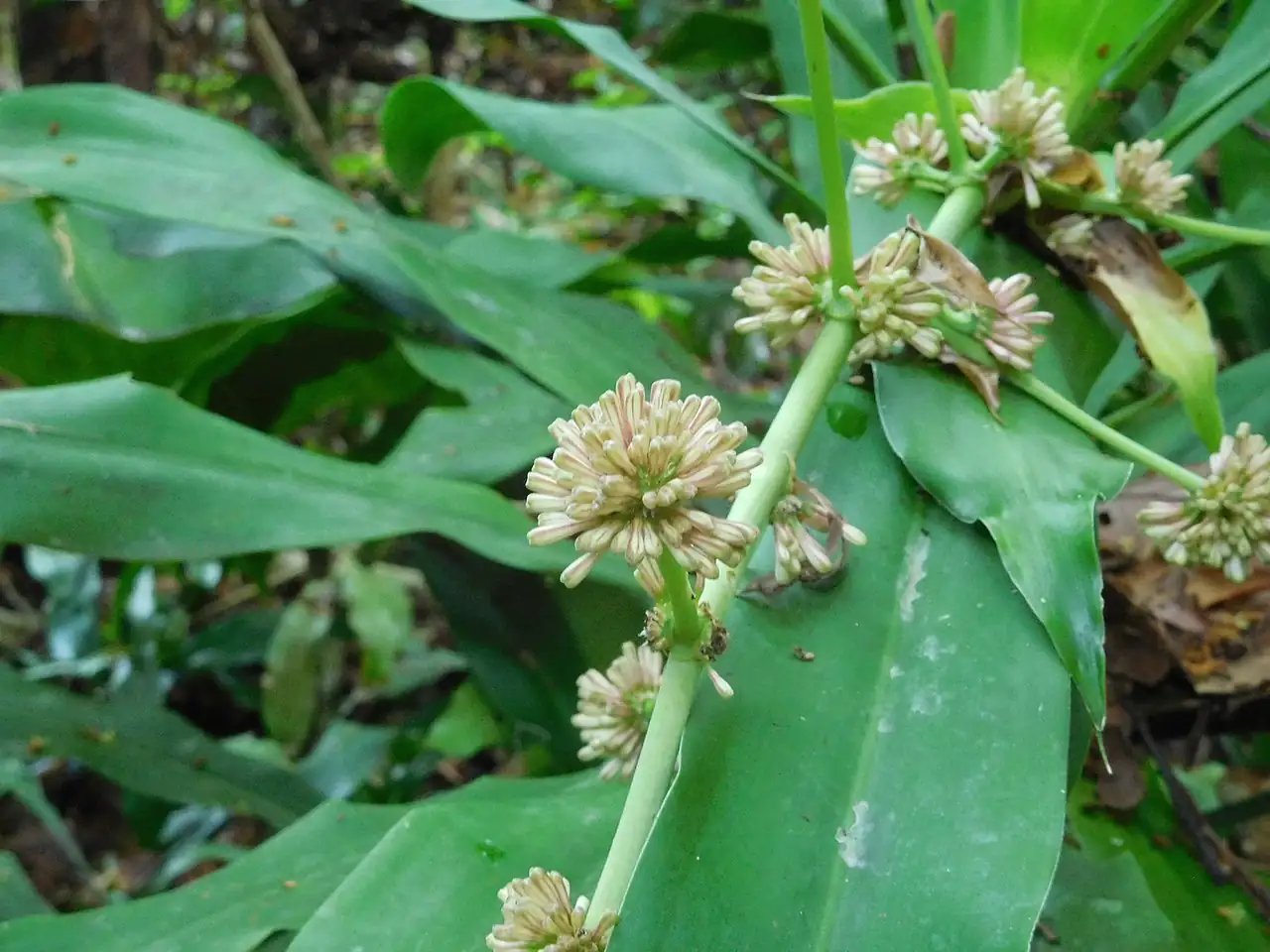
- Flower: It rarely flowers indoors, but mature plants can occasionally produce clusters of small, creamy-white blooms that are extremely fragrant—often noticed more for their scent than for their looks.
- Flowering Season: Irregular indoors; more likely on mature plants in bright light (often winter to spring when it occurs)
- Growth Habit: Upright, cane-forming shrub with leaf rosettes at stem tips; can be topped to encourage branching and a fuller shape
Environment
Sunlight
Bright, indirect light to partial shade. Avoid harsh midday sun. It tolerates lower light, but growth slows and variegation may fade.
Temperature
15–24°C (59–75°F). Avoid prolonged exposure below about 10°C (50°F).
Humidity
Low to medium humidity; appreciates occasional misting or a pebble tray in very dry homes.
Soil
Well-draining, peat/coir-based houseplant mix in a pot with drainage holes. Keep the container only slightly larger than the root ball to avoid staying wet too long.
Placement
Indoors near an east- or north-facing window, or a few feet back from a bright south/west window. Great for living rooms and offices.
Hardiness
USDA Zone 10–12 (about 10–13°C / 50–55°F and above); not frost tolerant.
Care Guide
Difficulty
Easy; forgiving and well-suited to beginners.
Buying Guide
Choose plants with firm canes, tight leaf rosettes, and clean foliage. Avoid soft stems, blackened roots, or lots of brown tips. On variegated types, look for strong striping without big bleached patches (often a clue of sun scorch).
Watering
Spring to fall: keep the mix evenly moist but never soggy—water when the top 2–5 cm (1–2 in) dries. Winter: reduce watering and keep the mix just barely moist. If your home air is very dry, mist occasionally or set the pot on a tray of damp pebbles.
Fertilization
Spring to fall: feed every 2 weeks with a balanced liquid fertilizer at 1/2 strength. Pause or reduce feeding in winter.
Pruning
To control height and make the plant bushier, cut (top) the cane at the desired height—new shoots will sprout below the cut. Remove yellowing leaves as needed.
Propagation
Stem cuttings are the classic method: top cuttings or cane sections can be rooted in water or in a moist, well-draining medium. Best results come with warm temperatures and bright, indirect light.
Repotting
Repot every 2–3 years into a pot only one size larger, using fresh, well-draining houseplant mix. Avoid oversized pots, which can stay wet and stress roots.
📅 Seasonal Care Calendar
Spring–fall: water to keep evenly moist; fertilize every 2 weeks at half strength. Winter: water sparingly. Prune/tip canes to shape and encourage branching. Repot every 2–3 years.
Pests, Diseases & Safety
Common Pests & Diseases
Can attract spider mites, mealybugs, and scale indoors. Brown leaf tips are commonly linked to low humidity, inconsistent watering, or sensitivity to minerals/fluoride in tap water—keep watering steady, raise humidity a touch, and consider filtered/rainwater; flushing the pot occasionally helps reduce salt buildup.
Toxicity
Toxic to pets (cats and dogs) if chewed or ingested; may cause drooling, vomiting, and appetite loss. Keep out of reach of pets.
Culture & Symbolism
Uses: Grown mainly as an ornamental indoor foliage plant for homes and offices. It’s prized for its upright cane form, striped leaves, and ability to tolerate typical indoor conditions.
FAQ
Why are the leaf tips turning brown?
Dry air, inconsistent watering, or salts/fluoride in tap water are the usual culprits. Water more consistently, raise humidity slightly, switch to filtered or rainwater, and flush the pot now and then to wash out excess salts.
Can I cut the stem to control height?
Yes. Topping the cane at the height you want encourages new shoots below the cut, so the plant branches and looks fuller.
Fun Facts
- The nickname “corn plant” comes from its long, arching leaves, which resemble corn foliage.
- Variegated cultivars keep their bold striping best in brighter (but still indirect) light.


