Plant Features
- Size: Typically 10–50 cm (4–20 in) tall; forms low clumps that knit together nicely for groundcover-style planting.
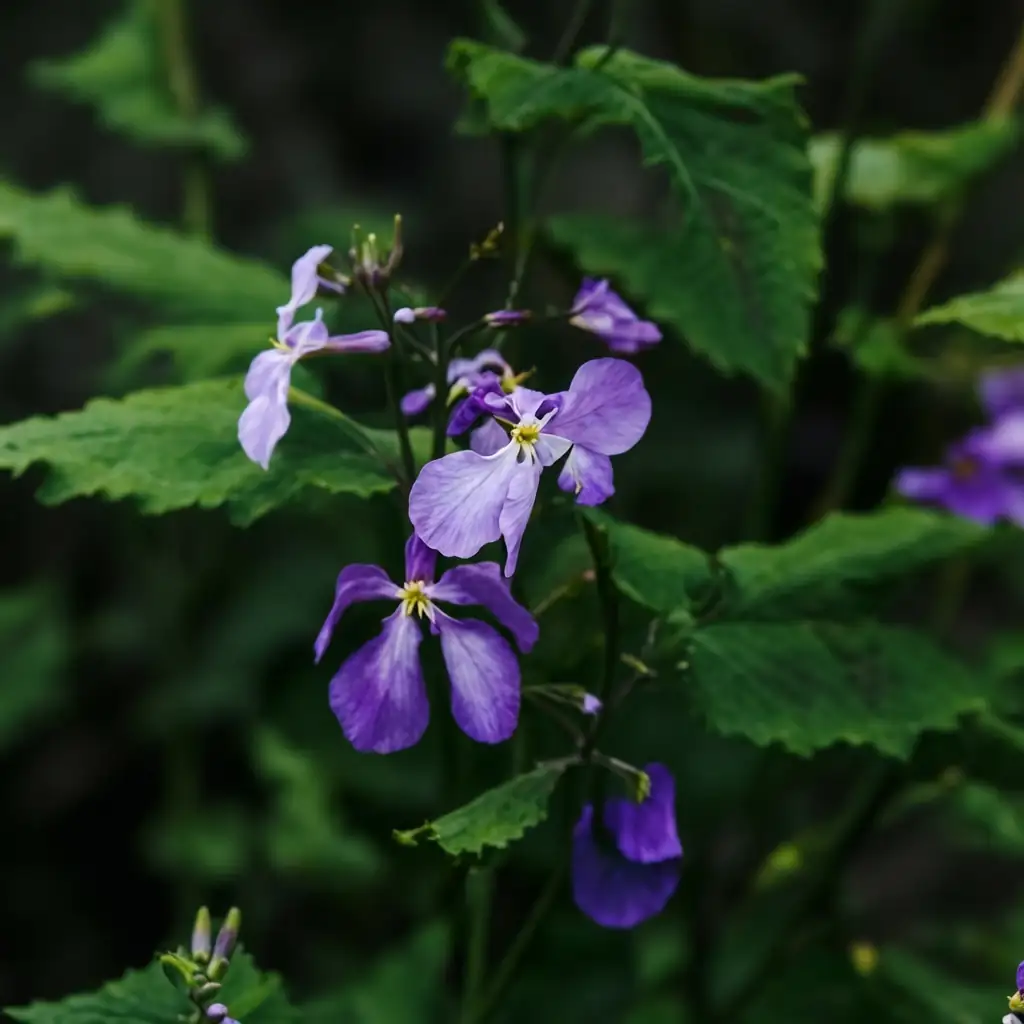
- Foliage: Leaves are mostly smooth and hairless (glabrous). Basal and lower stem leaves are often pinnately divided, with a rounded to short-ovate terminal lobe, giving the plant a soft, ferny-meets-mustard look at ground level.
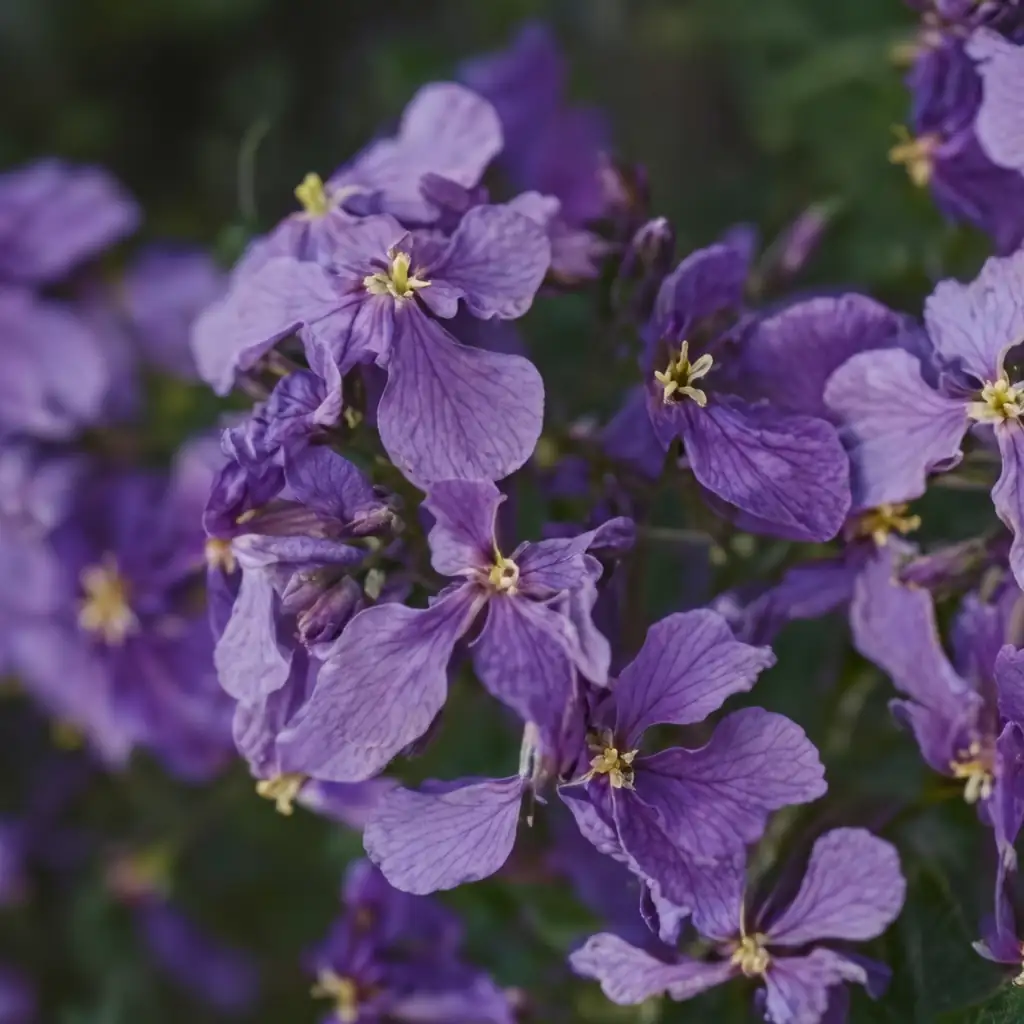
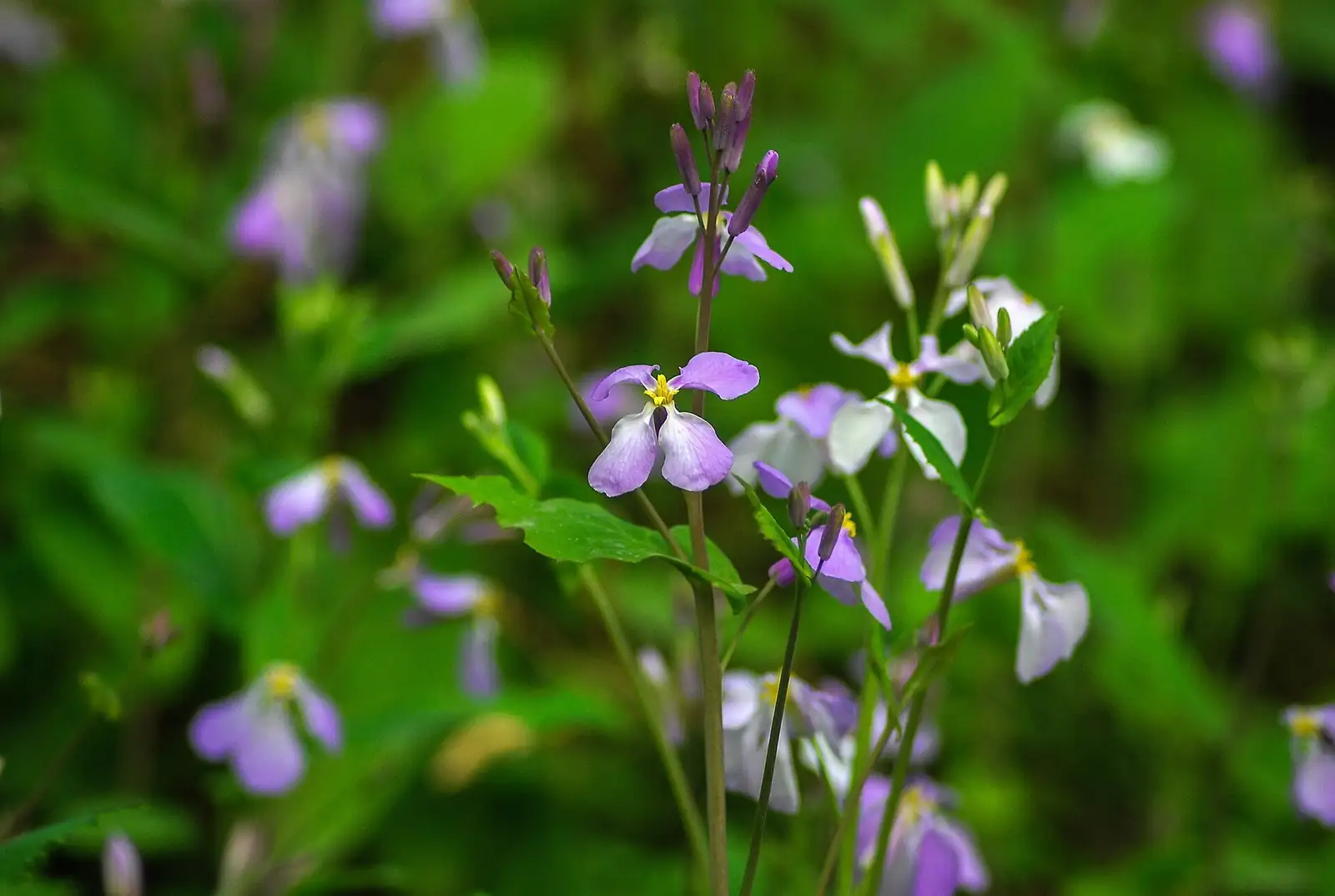
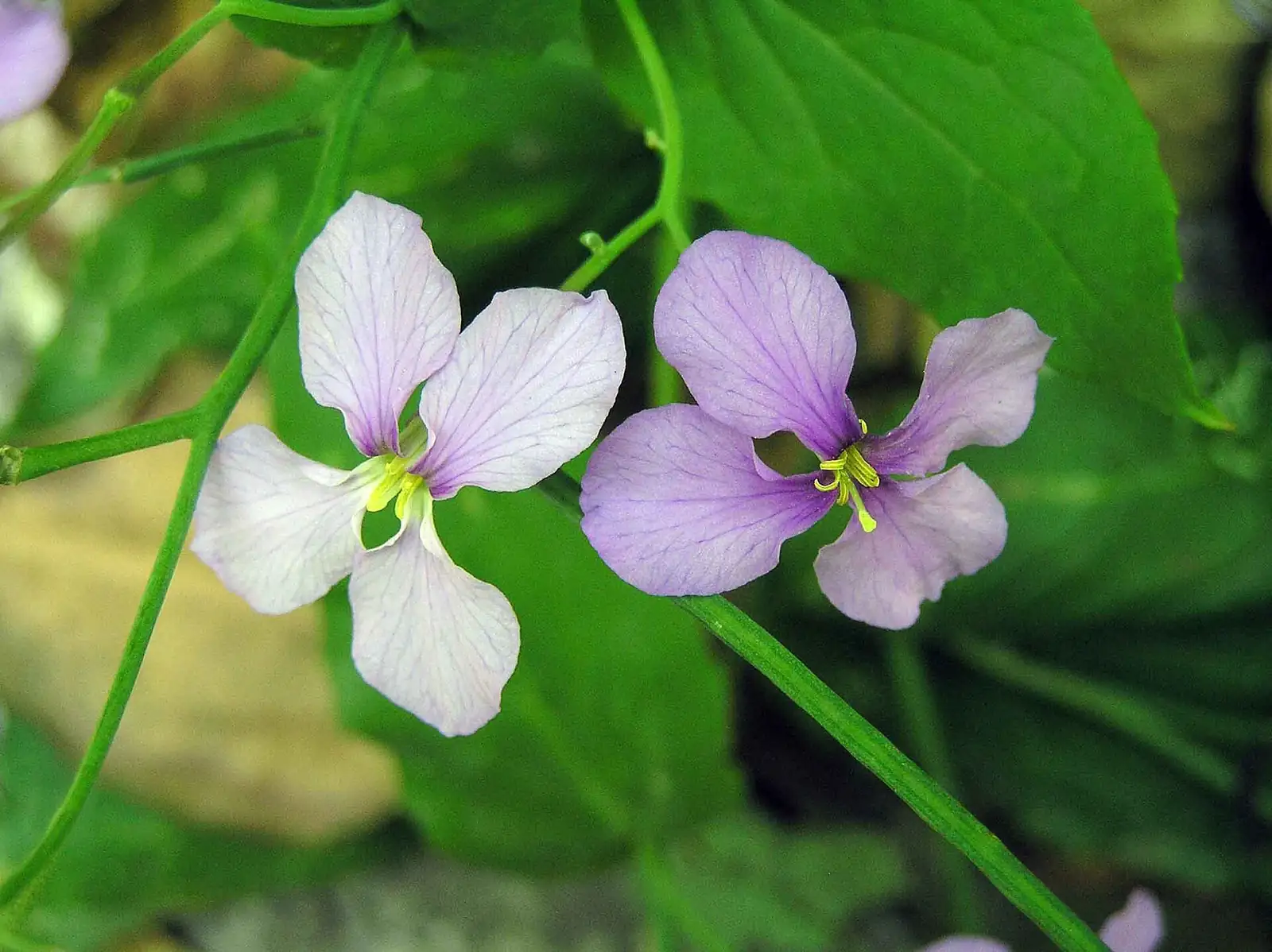
- Flower: Flowers are classic mustard-family blooms with four petals, appearing violet-purple to pale pink and sometimes fading to white as they age. After flowering, the plant develops long, narrow seed pods (linear siliques) about 7–10 cm (2.8–3.9 in) long. Seeds are tiny—about 2 mm (0.08 in) long—oval to oblong, slightly flattened, dark brown to nearly black, and faintly ridged lengthwise.
- Flowering Season: March–May
- Growth Habit: An annual to biennial herb with an erect main stem; in plantings it behaves like a spreading, self-filling groundcover when grown in drifts and allowed to seed lightly.
Environment
Sunlight
Full sun to light shade; flowers most generously in full sun, but tolerates light shade (including under deciduous trees in spring).
Temperature
Cool-season performer. Cold-hardy and able to germinate early; grows best around 5–20°C (41–68°F).
Humidity
Average outdoor humidity is fine. In dense patches, good airflow helps prevent mildew issues—especially in damp weather.
Soil
Very adaptable and tolerant of both acidic and alkaline soils. For best results, provide moderately fertile, well-drained soil; avoid persistently soggy ground.
Placement
Great for tree pits, slopes, borders and edging, roadsides, naturalized lawns/meadows, rock-garden edges, and lightly shaded spots under trees.
Hardiness
Cold-tolerant; commonly grown as a cool-season annual/biennial. Approx. USDA Zone 6–9 (local performance may vary).
Care Guide
Difficulty
Easy—one of those low-fuss plants that rewards you simply for giving it decent drainage and cool-season conditions.
Buying Guide
Choose compact, healthy seedlings/rosettes with fresh green leaves. Skip plants that are lanky, yellowing, or show crown rot or heavy pest damage. For large drifts, tray-grown plugs or seedlings are usually the most economical option.
Watering
Water well at planting and keep evenly moist for the first 1–2 weeks to help it establish. After that, water when the top 2–3 cm (0.8–1.2 in) of soil dries. Avoid constant waterlogging, which can weaken the crown and invite disease.
Fertilization
Often unnecessary in average garden soil. If plants look pale or growth is weak, apply a balanced slow-release fertilizer in early spring at label rate, or give a light feed every 4–6 weeks during active cool-season growth.
Pruning
Deadhead to keep the planting tidy and potentially stretch bloom. If you’d like natural self-seeding, let some pods mature. After flowering, cut back tired growth to refresh the look or make space for summer plants.
Propagation
Mostly by seed. Let siliques dry on the plant, then collect and sow. Direct sow in autumn or early spring for best results (cool temperatures help). Seeds are about 2 mm (0.08 in), dark brown, slightly flattened.
Repotting
Usually grown in-ground. In containers, use a well-drained mix and pot up when roots fill the pot (increase pot diameter by about 2–5 cm / 1–2 in).
📅 Seasonal Care Calendar
Autumn: sow or allow seedlings to establish for winter-green cover (in mild climates). Winter: foliage often stays green in cool conditions. Spring: peak display and flowering (March–May). Late spring to early summer: seed set (May–June). Overall ornamental window can run from September to June depending on climate.
Pests, Diseases & Safety
Common Pests & Diseases
Generally trouble-free, but like many mustard-family plants it can attract aphids, flea beetles, and caterpillars. Downy mildew can appear in crowded, damp plantings. Improve airflow, avoid late-day overhead watering, and use insecticidal soap for aphids if needed.
Toxicity
No well-established toxicity concerns for typical garden handling. Still, it’s best to discourage nibbling by pets/children and seek medical/veterinary advice if significant ingestion occurs.
Culture & Symbolism
Symbolism: Often appreciated as a symbol of early spring and resilience—one of the plants that flowers when the year is just beginning to warm up.
Uses: Primarily grown as an ornamental groundcover for early-spring color and long-lasting cool-season greenery. Especially useful for naturalistic planting schemes, under trees, along paths, and on slopes where you want quick, pretty coverage.
FAQ
When does it bloom?
Typically March–May, depending on local spring temperatures.
When does it set seed?
Usually May–June, after flowering finishes.
How tall does it get?
About 10–50 cm (4–20 in).
Where can I plant it?
In borders, slopes, rock-garden edges, tree pits, lawns/naturalized areas, and in light shade under trees—especially where you want early-season color.
What kind of soil does it need?
It’s not picky: many soils work (even acidic or alkaline) as long as drainage is reasonable and it isn’t left waterlogged.
Fun Facts
- Flower color can shift as blooms age—often starting violet-purple or pinkish and fading paler, sometimes to white.
- Its long, slender siliques (7–10 cm / 2.8–3.9 in) are a signature feature of the mustard family.
- The seeds are tiny—about 2 mm (0.08 in)—dark and subtly ridged.
- In many regions it offers a long ‘green season,’ staying lush from autumn through late spring.