Plant Features
- Size: Typically 6–10 m (20–33 ft) long when supported; spread depends on training and support.
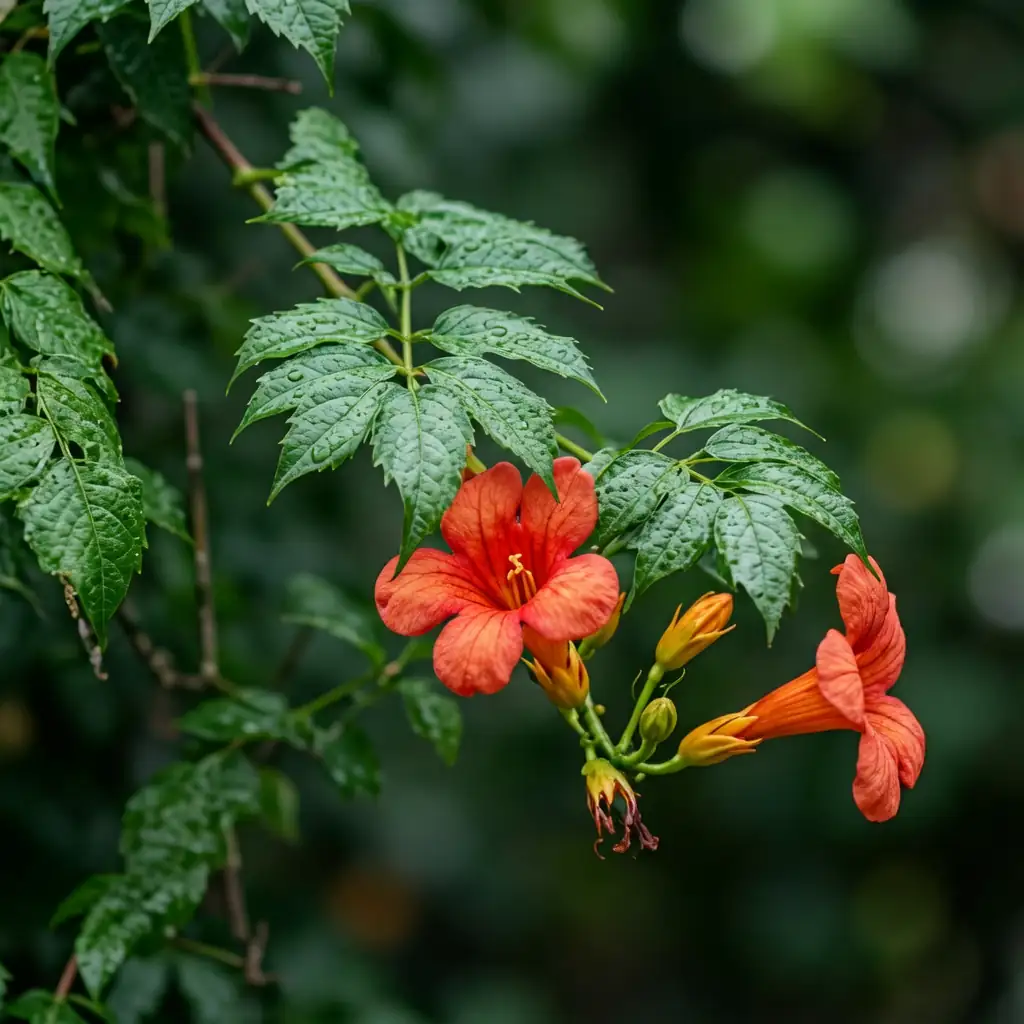
- Foliage: Opposite, odd-pinnate compound leaves with usually 7–9 smooth, hairless leaflets; makes a dense, fresh green canopy through the growing season.
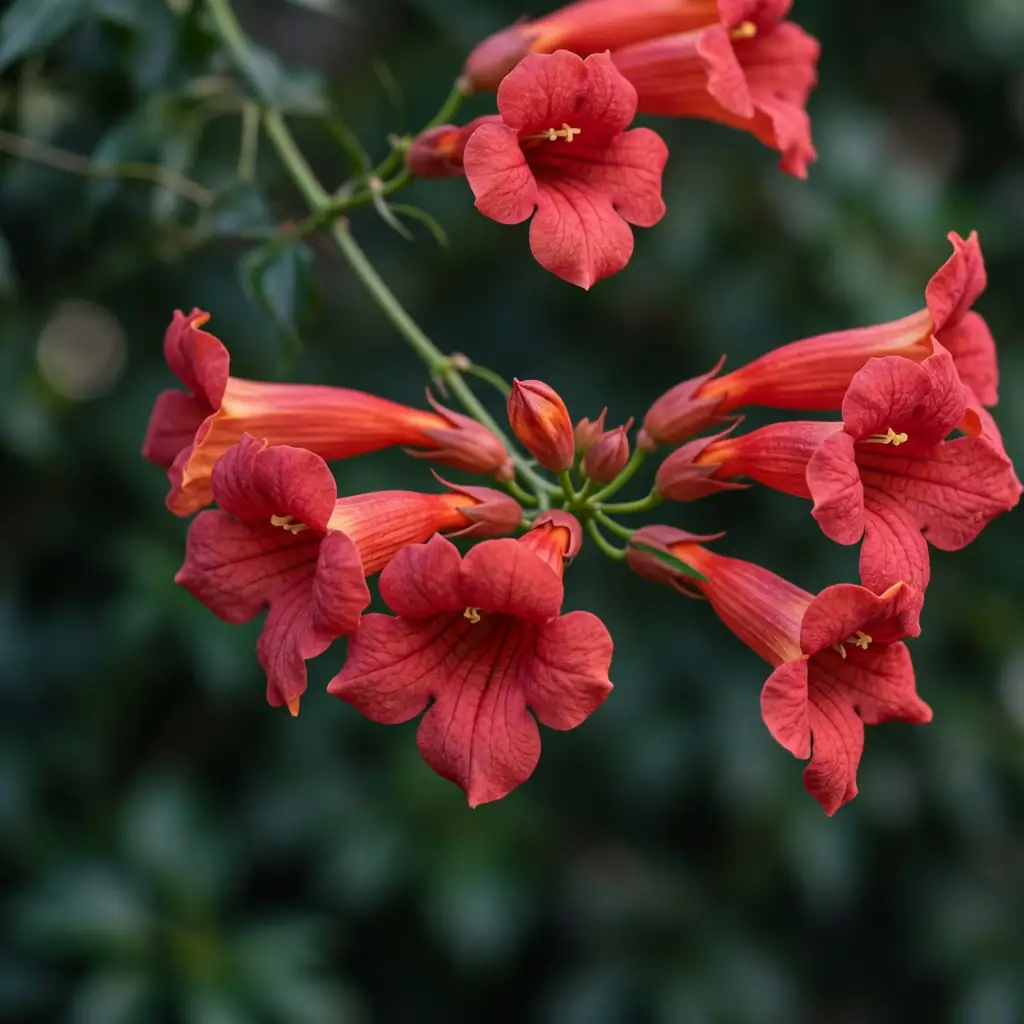
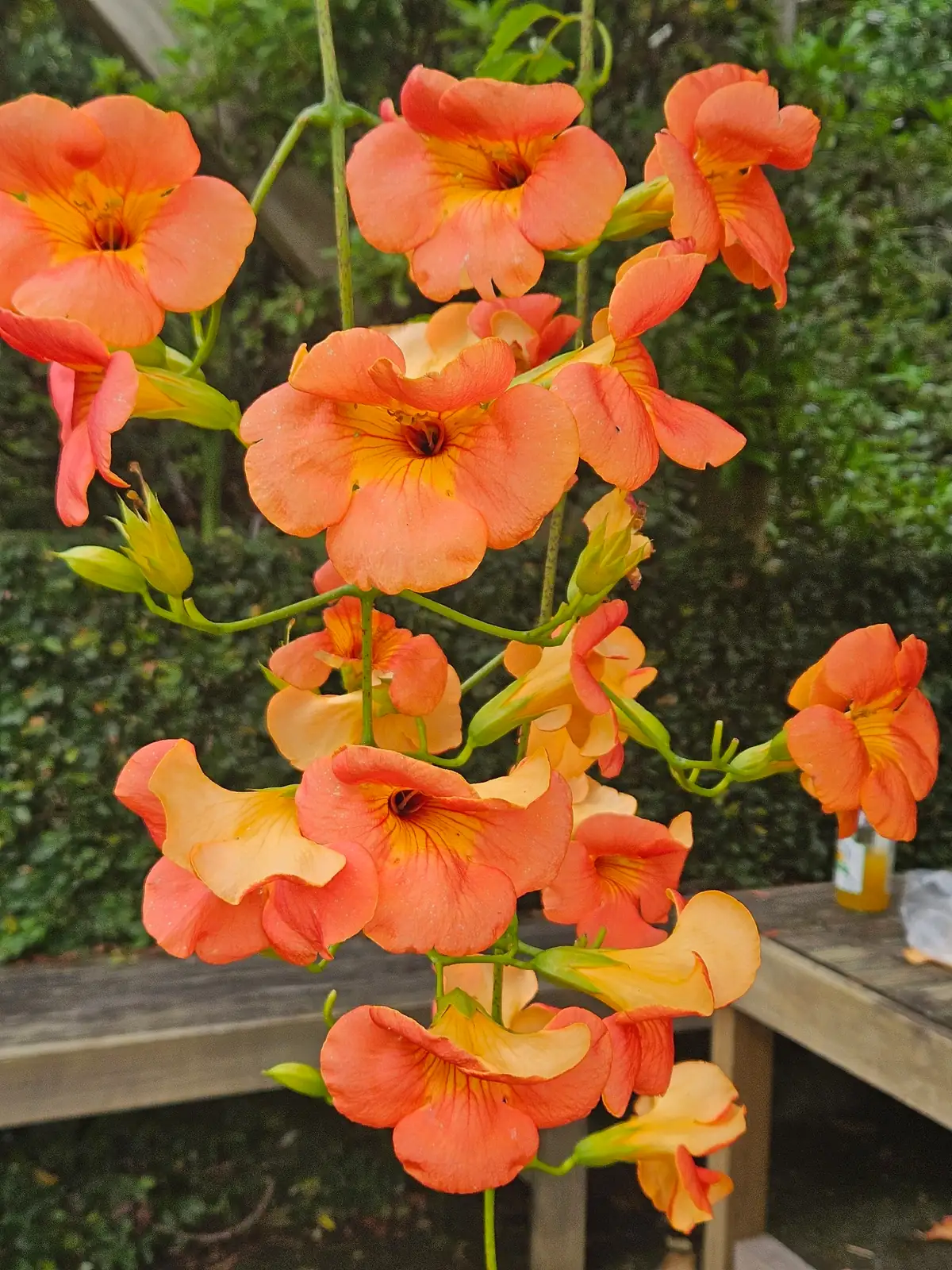
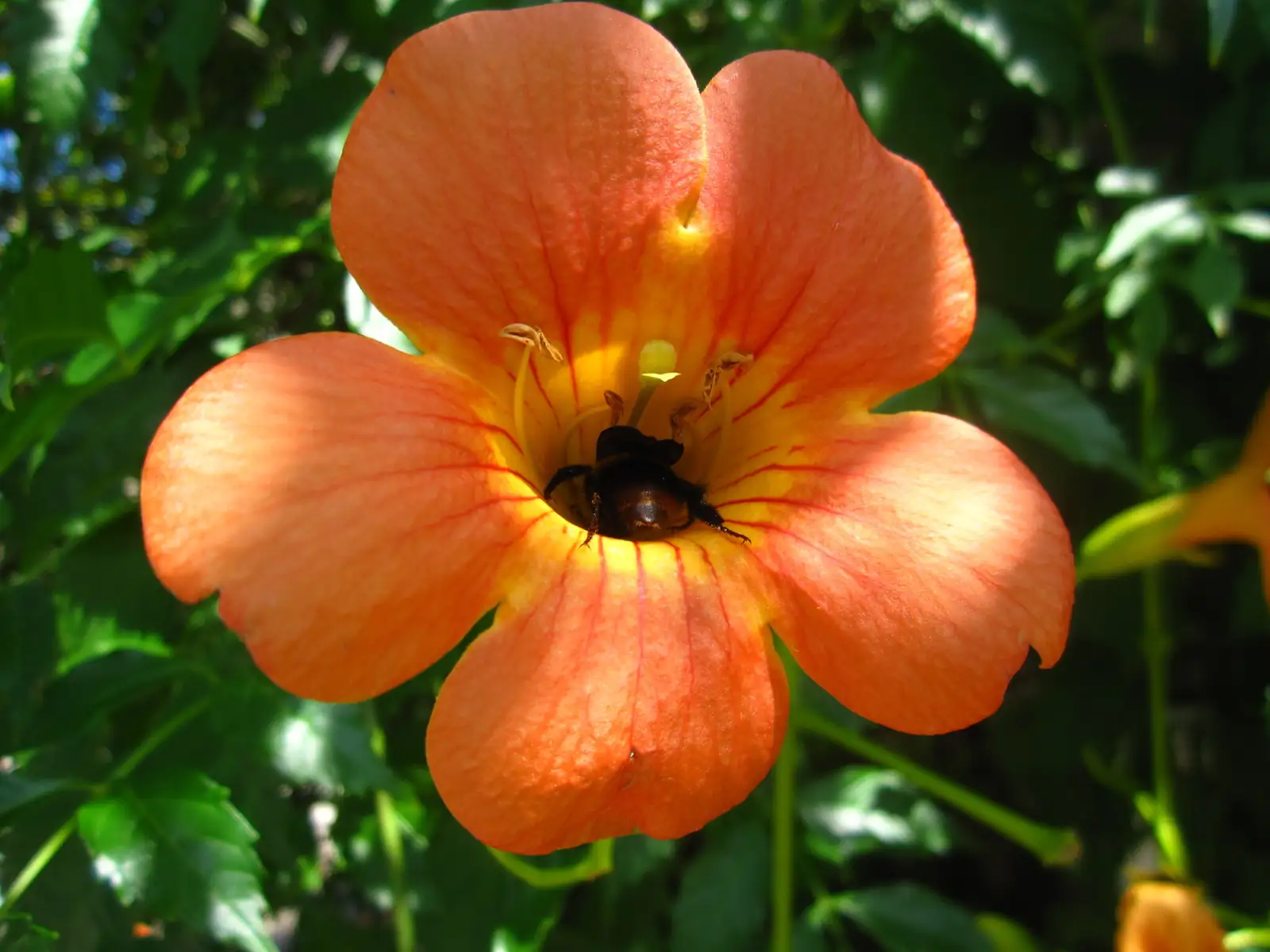
- Flower: Produces terminal clusters of large, flared, trumpet-like flowers. The inner corolla is vivid red to red‑orange, with more orange tones on the outside. After bloom, it develops long, narrow, pod-like seed capsules.
- Flowering Season: May–August
- Growth Habit: Perennial woody climber. Older stems turn brown and can shed bark with age, becoming twisted and sculptural. Climbs by attaching aerial rootlets to walls, rocks, and other supports.
Environment
Sunlight
Full sun for the heaviest flowering; tolerates partial shade, but blooms will be fewer in deeper shade.
Temperature
Prefers warmth; best growth around 18–30°C (64–86°F). Once established it tolerates winter cold, though young plants benefit from protection in harsher winters.
Humidity
Does well in average outdoor humidity. Avoid persistently soggy, stagnant conditions around the roots.
Soil
Adaptable (can cope with poorer or slightly alkaline soils), but looks its best in deep, fertile, well-drained, slightly acidic soil; target pH about 6.0–6.8.
Placement
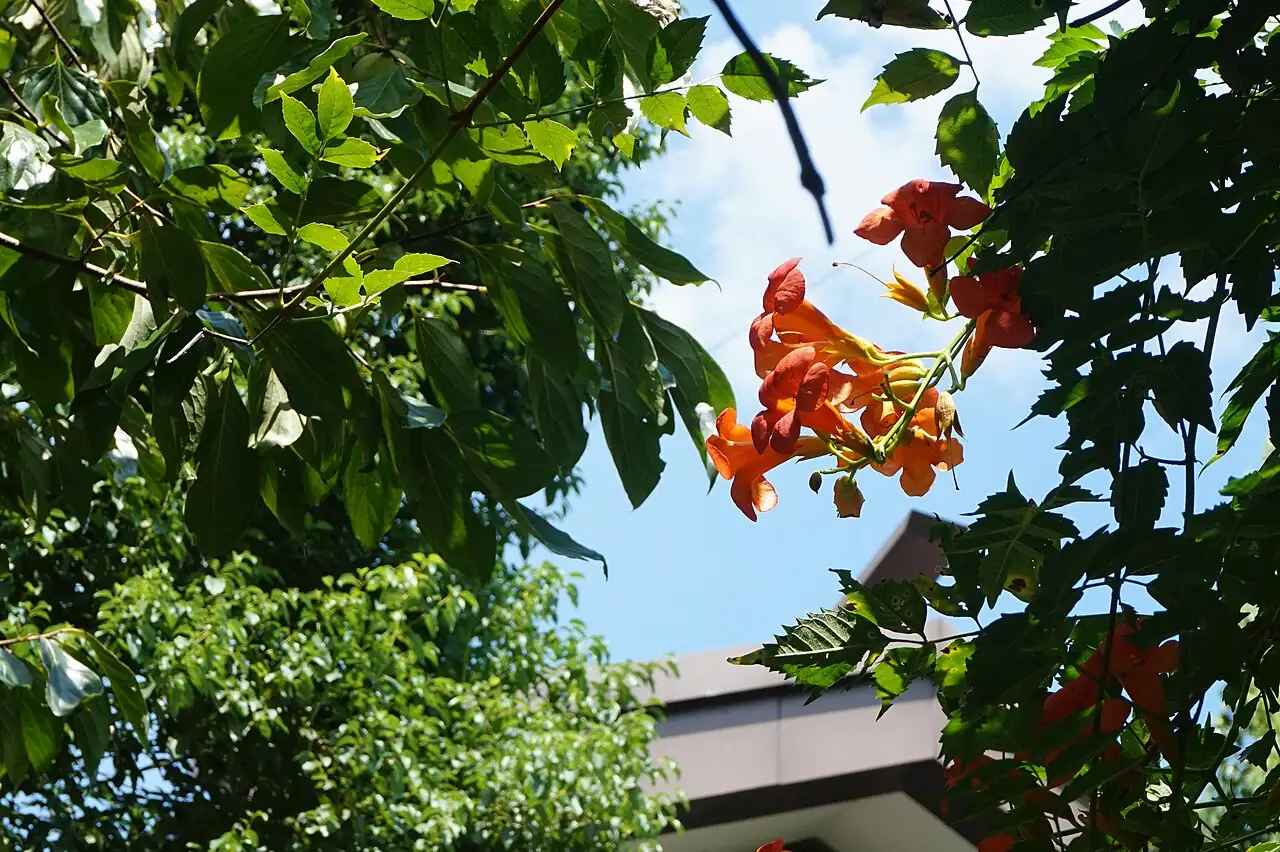
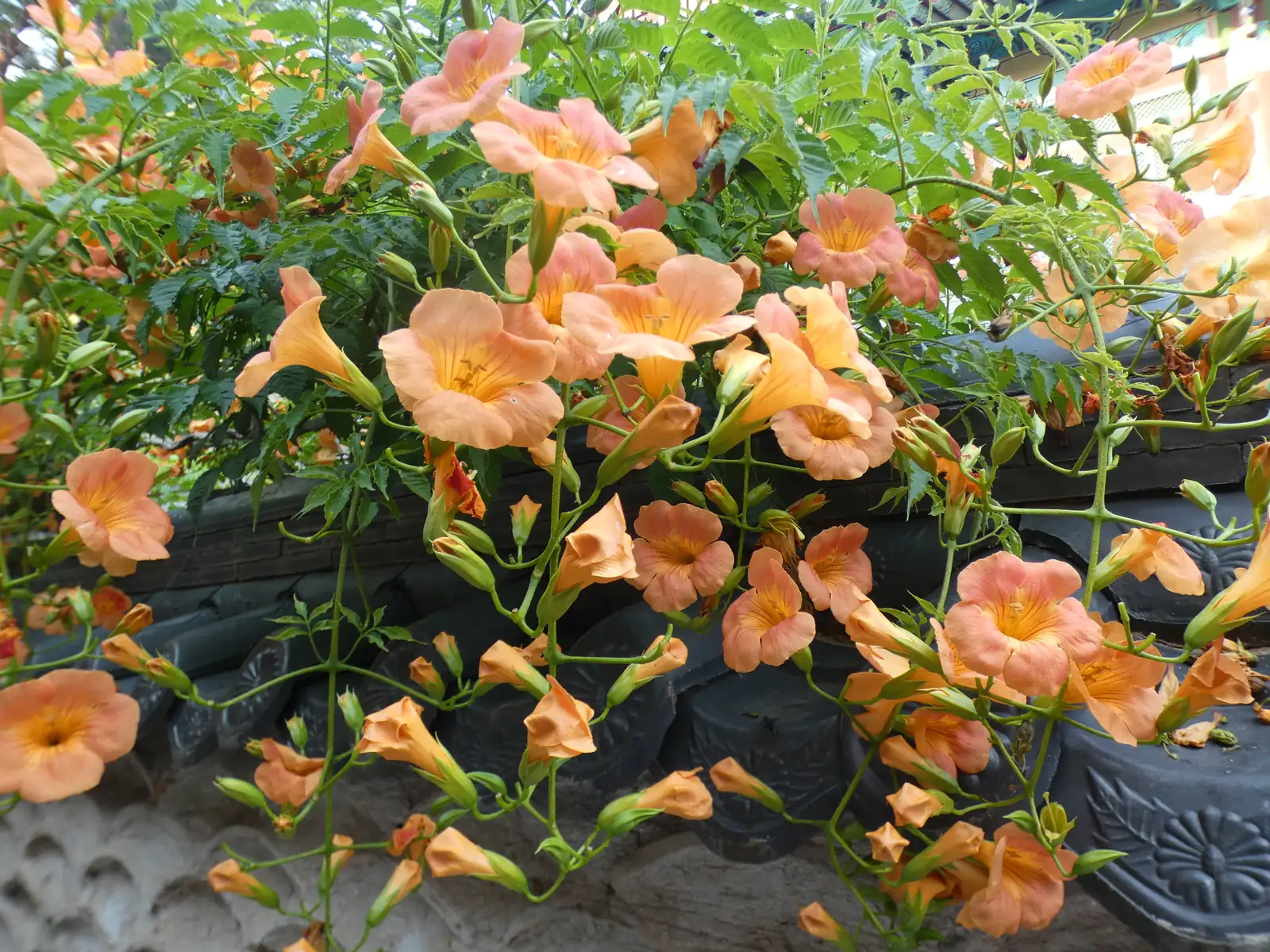
Best trained on strong structures such as pergolas, trellises, fences, or garden walls. If you’re worried about wall surfaces, use a trellis set slightly off the wall. Also attractive when planted among rocks or along boundary walls for dramatic vertical color.
Hardiness
Hardy to about -15 to -10°C (5 to 14°F) once established (roughly USDA Zone 6–9). Protect young plants from hard freezes.
Care Guide
Difficulty
Easy to moderate. It’s a fast, enthusiastic grower once settled in—great for coverage, but it needs sturdy support and routine pruning to keep it tidy and blooming well.
Buying Guide
Choose plants with firm, healthy stems and no obvious dieback. Check leaf undersides and stems for pests. If your goal is wall or trellis training, starting with a younger plant makes it easier to guide and shape early.
Watering
Water regularly during the first growing season to establish a deep root system. After establishment, water when the top 5–8 cm (2–3 in) of soil feels dry. Aim for “deep and occasional” rather than frequent shallow watering, and avoid constantly soggy soil.
Fertilization
Feed in spring with a balanced slow-release fertilizer or a compost top-dress. Avoid heavy nitrogen feeding—too much can produce lots of leafy growth with fewer flowers.
Pruning
Prune in late winter to early spring. Remove dead, weak, or tangled stems and shorten long shoots to encourage strong new flowering growth and to control size.
Propagation
Propagate by softwood or semi-hardwood cuttings in warm weather, or by layering. Seed propagation is possible but slower and less reliable if you want consistent ornamental performance.
Repotting
Not usually a long-term pot plant because it becomes large and vigorous. If grown in a container, repot every 1–2 years into a larger pot with a very sturdy trellis, and refresh the top layer of soil annually.
📅 Seasonal Care Calendar
Spring: feed lightly and tie/train new shoots. Summer: water in dry spells; deadhead if desired. Autumn: reduce feeding and tidy growth. Winter: prune for structure; protect young plants in colder regions.
Pests, Diseases & Safety
Common Pests & Diseases
Can attract aphids, spider mites, and scale insects; occasional fungal leaf spots may occur. Keep good airflow, avoid late-day overhead watering, and use horticultural soap or oil when needed.
Toxicity
Not generally considered highly toxic, but sap may irritate sensitive skin. Wear gloves for pruning if you’re prone to irritation, and discourage chewing by children or pets.
Culture & Symbolism
Symbolism: Often linked with summer vitality and exuberance—big blooms, bold color, and a joyful “look at me” presence on walls and pergolas.
History & Legends: Long cultivated in China as a treasured ornamental vine, traditionally trained over walls and garden structures. With age it develops rugged, twisting stems that add character even when not in flower.
Uses: Primarily ornamental. Grown for its dramatic vertical coverage, long summer flowering, and the sculptural look of mature stems. Commonly used on trellises, fences, pergolas, rocks, and garden walls to create living color at eye level and above.
FAQ
Will it damage walls?
It climbs with aerial rootlets that grip rough surfaces. On fragile, old, or painted masonry it can leave marks or worsen existing cracks. If you want the look without the risk, grow it on a trellis set a little away from the wall.
Why is it not flowering well?
Most often it’s too much shade, too much nitrogen fertilizer, or not enough pruning. Give it more sun if possible, feed lightly, and prune in late winter so it flowers strongly on new growth.
Fun Facts
- Older stems can become gnarled and sculptural, giving the vine a dramatic, aged look.
- The long seed pods resemble slender bean pods and can add interest after flowering.
- It’s widely distributed in China, especially around the Yangtze River basin.