

Plant Features
- Size: Climbing vine to about 10 m (33 ft) long; develops thick, cylindrical tuberous roots.
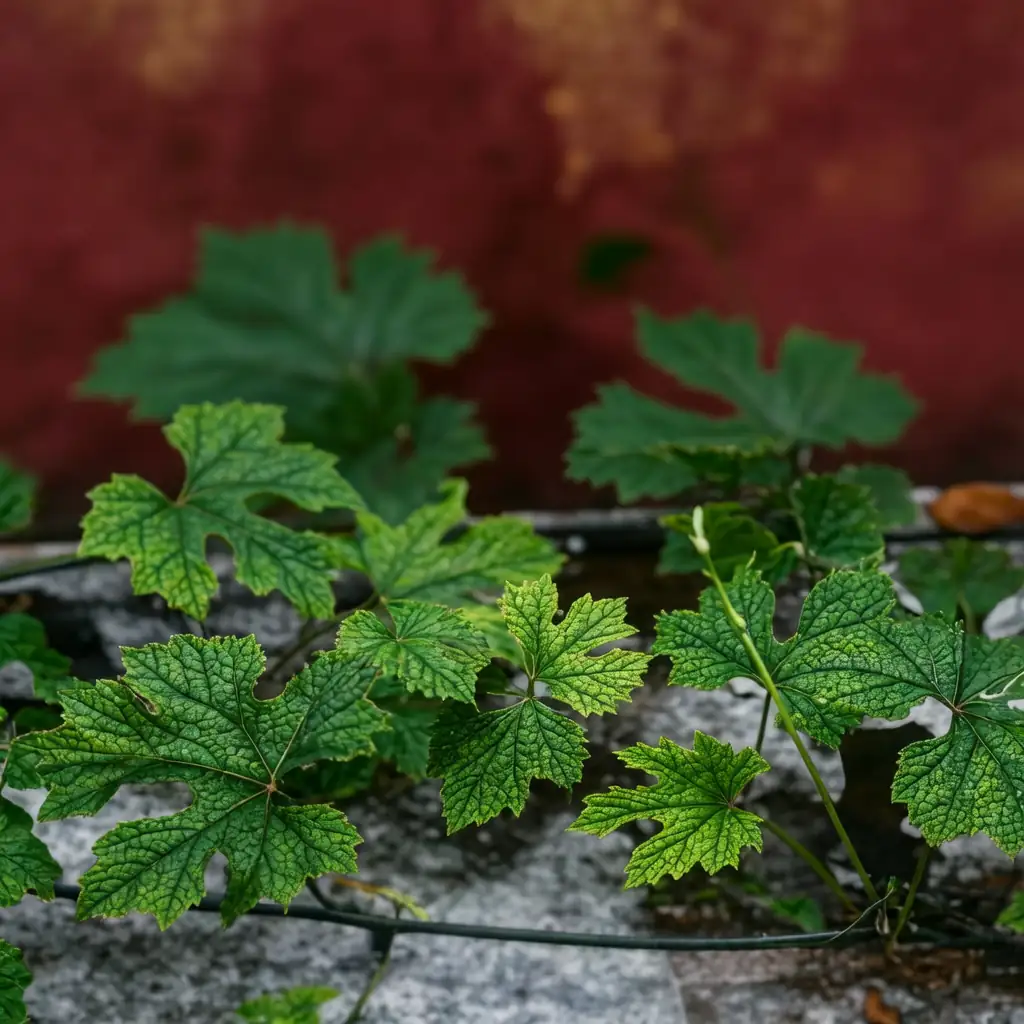
- Foliage: Leaves are papery-textured and broadly rounded in outline, creating a lush, leafy look as the vine climbs. Stems are relatively thick, vigorous, and much-branched.
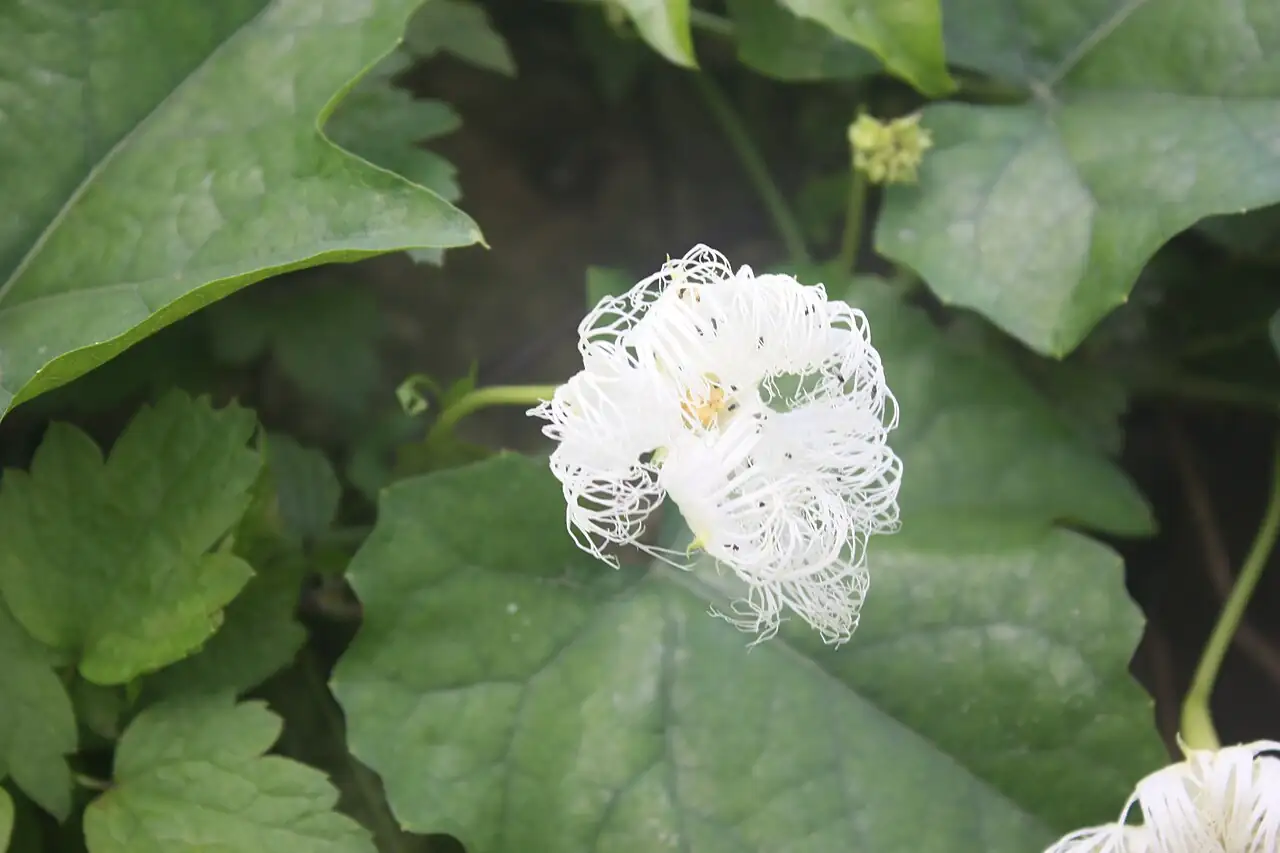
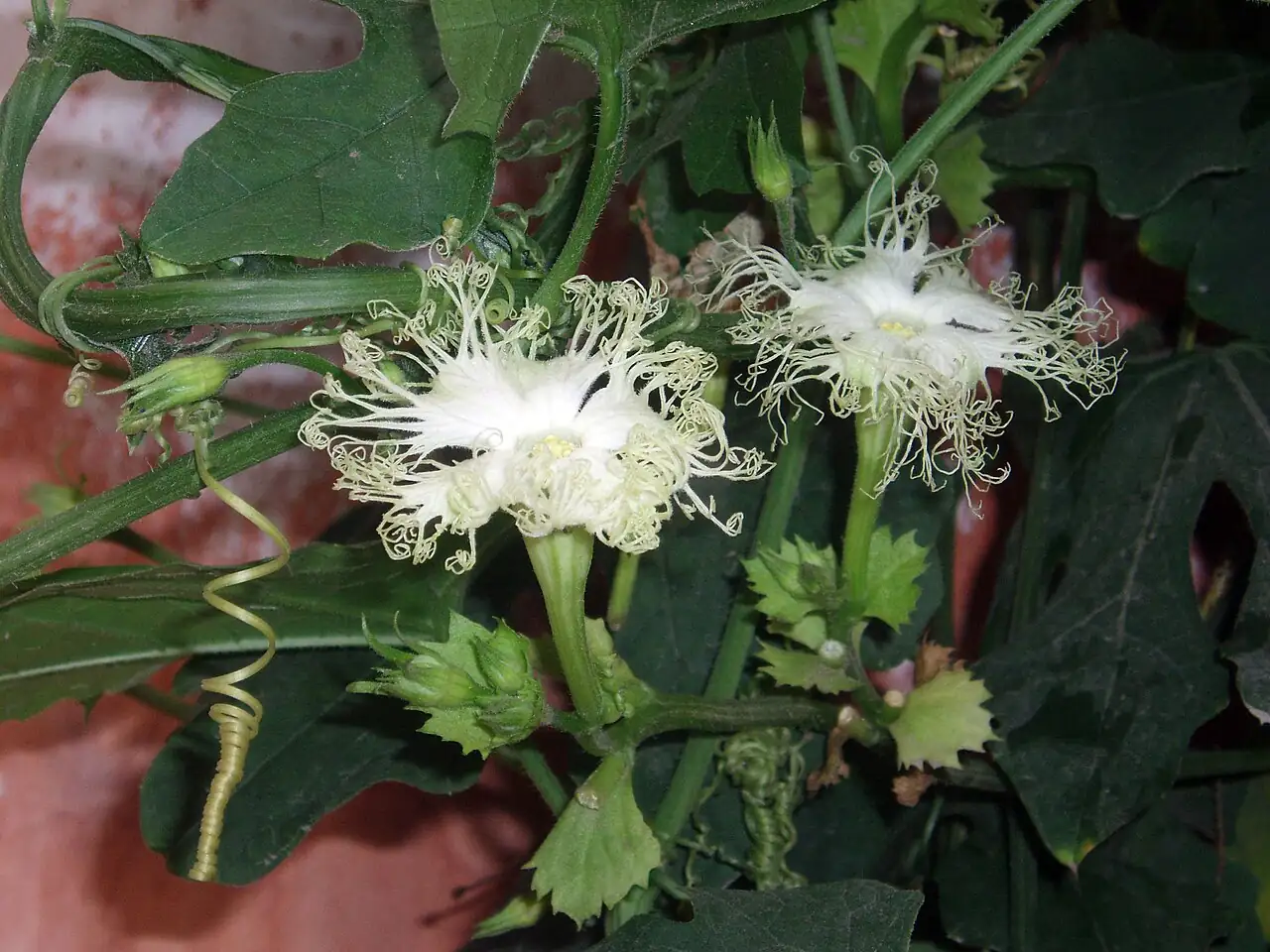
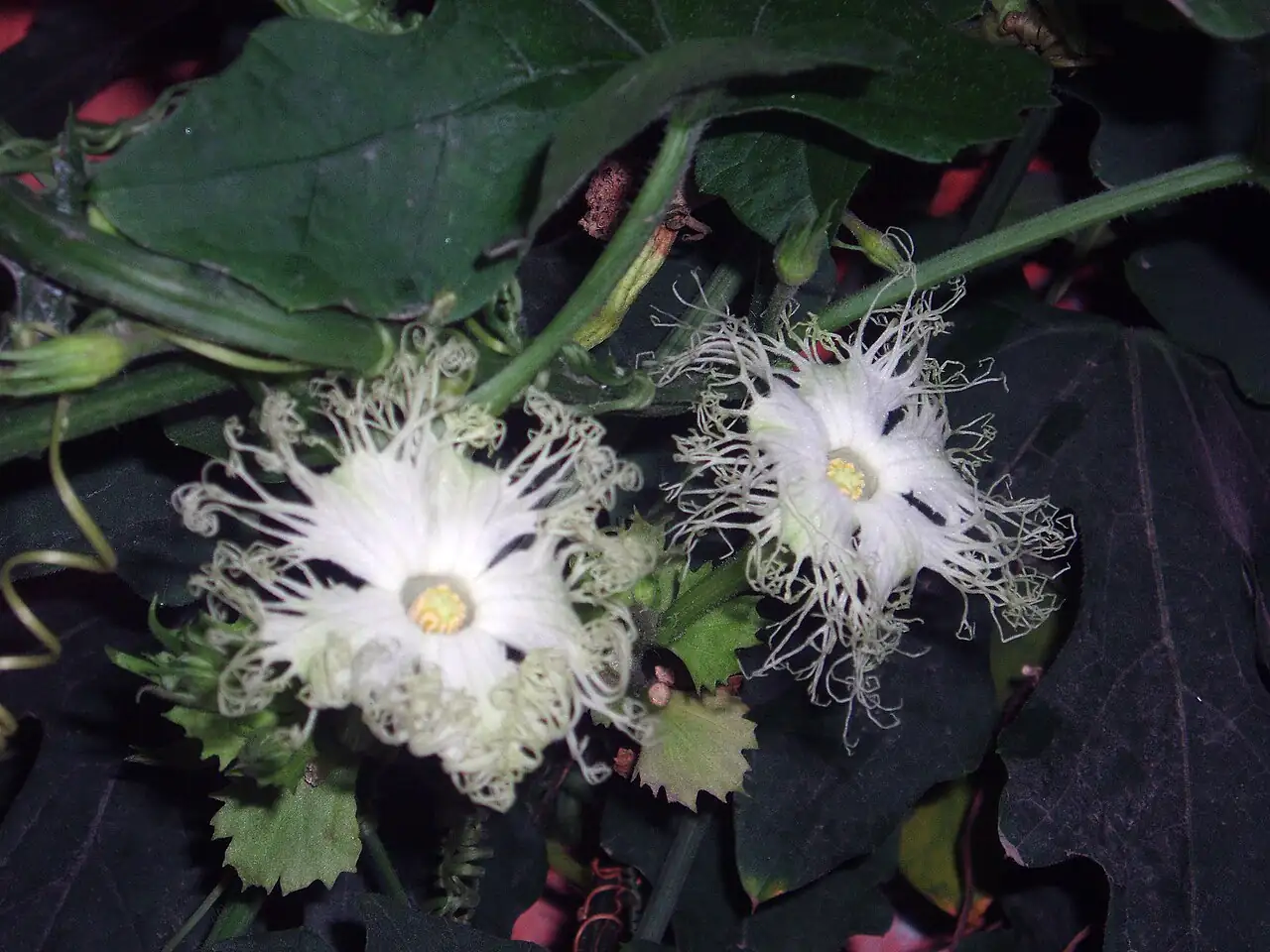
- Flower: Dioecious (separate male and female plants). Male flowers are borne in racemes, while female flowers are typically solitary; both are produced on separate plants, so fruiting requires a male and a female nearby.
- Flowering Season: May–August
- Growth Habit: Vigorous twining/clambering vine with spreading growth and thick, branching stems; readily scrambles over supports.
Environment
Sunlight
Full sun to light shade; flowers and fruits best in full sun.
Temperature
Prefers warm conditions; aim for about 18–30°C (64–86°F) during active growth. Moderately cold-tolerant once established, but protect from hard freezes—especially when young.
Humidity
Prefers moderate to high humidity and evenly moist conditions; prolonged dryness can cause stress and poor growth.
Soil
Deep, loose, fertile sandy loam with good drainage. Avoid waterlogged low spots and saline/alkaline soils.
Placement
Outdoors on a sunny trellis, arbor, fence, or pergola. Also works in naturalistic plantings along woodland edges and field margins where it can climb.
Hardiness
Often grown in roughly USDA Zone 7–10 depending on local conditions. Not reliably frost-proof when young; provide winter protection in colder areas and avoid droughty sites.
Care Guide
Difficulty
Moderate. Easy to grow where summers are warm and moisture is steady, but it dislikes drought, compacted soil, and waterlogging. The key is sun + deep fertile soil + consistent moisture, with good drainage.
Buying Guide
Buy from a reputable source and confirm whether you’re getting a male or female plant if you want fruit (it’s dioecious and needs both). Choose a vigorous vine with clean foliage and no signs of root rot or chronic wilting.
Watering
Keep soil evenly moist in spring and summer. Water deeply when the top 2–5 cm (1–2 in) dries out. Mulch helps hold moisture. Avoid long dry spells, but also don’t let the roots sit in soggy soil.
Fertilization
Feed during active growth with compost or a balanced fertilizer. As a practical guide: balanced granular fertilizer every 4–6 weeks, or liquid feed every 2–4 weeks, from late spring to midsummer. Ease off after flowering/fruit set.
Pruning
Train stems onto supports and prune to control size and improve airflow. Remove weak, tangled, or damaged growth; after fruiting, trim back overly long runners as needed.
Propagation
Propagate by seed or by division of tuberous roots. Seeds germinate more reliably with warmth; divisions are best done when dormant or just as new growth begins.
Repotting
If container-grown, use a large pot and a sturdy trellis. Refresh the mix or move up a pot when roots fill the container—typically every 1–2 years. Prioritize drainage and regular watering.
📅 Seasonal Care Calendar
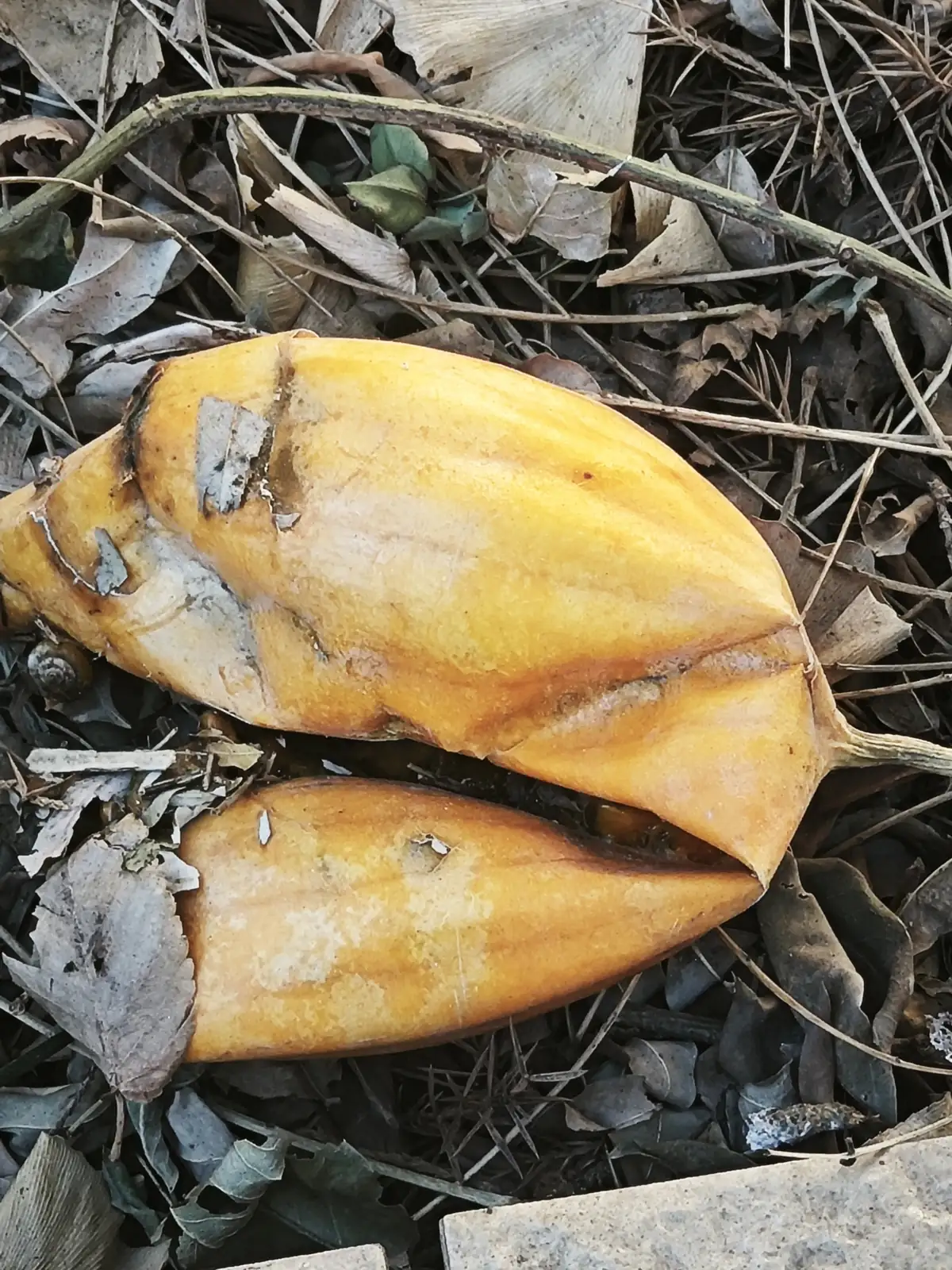
Flowering: May–August. Fruiting: August–October. Keep moisture and nutrition high from late spring through summer; as weather cools, reduce watering slightly while preventing the root zone from drying out completely.
Pests, Diseases & Safety
Common Pests & Diseases
Watch for typical cucurbit pests and problems: aphids, spider mites, whiteflies, powdery mildew, and root rot (especially in poorly drained soils). Improve airflow, avoid late-day overhead watering, and keep the soil well-drained.
Toxicity
Household toxicity guidance is not well standardized. Although it has traditional medicinal uses, misuse can be harmful—do not ingest without qualified guidance. Keep plant parts away from children and pets.
Culture & Symbolism
Uses: Grown as an ornamental climber for its vigorous green cover, flowers, and distinctive ripening fruits; also widely used in traditional herbal contexts (use requires appropriate expertise).
FAQ
When does it flower?
May–August.
When does it fruit?
August–October.
Where is it found naturally and what habitats does it prefer?
Native to China and recorded across many regions (including Shaanxi, Gansu, Sichuan, Guizhou, and Yunnan). It grows on wooded slopes, in shrubland and grassland, and along field margins near villages, and it is also widely cultivated.
What growing conditions does it like?
Warm, humid conditions with consistent moisture. Give it full sun (or light shade), deep fertile well-drained soil, and avoid waterlogging and saline/alkaline sites.
Why isn’t my plant making fruit?
Chinese snake gourd is dioecious—male and female flowers occur on separate plants. You’ll need both a male and a female flowering at the same time (and pollinators, or hand-pollination) for fruit to develop.
Fun Facts
- It forms thick, cylindrical tuberous roots that store a lot of starch.
- With a support, the vine can reach about 10 m (33 ft) in a season.
- Male and female flowers are on separate plants (dioecious), so fruiting needs both sexes nearby.
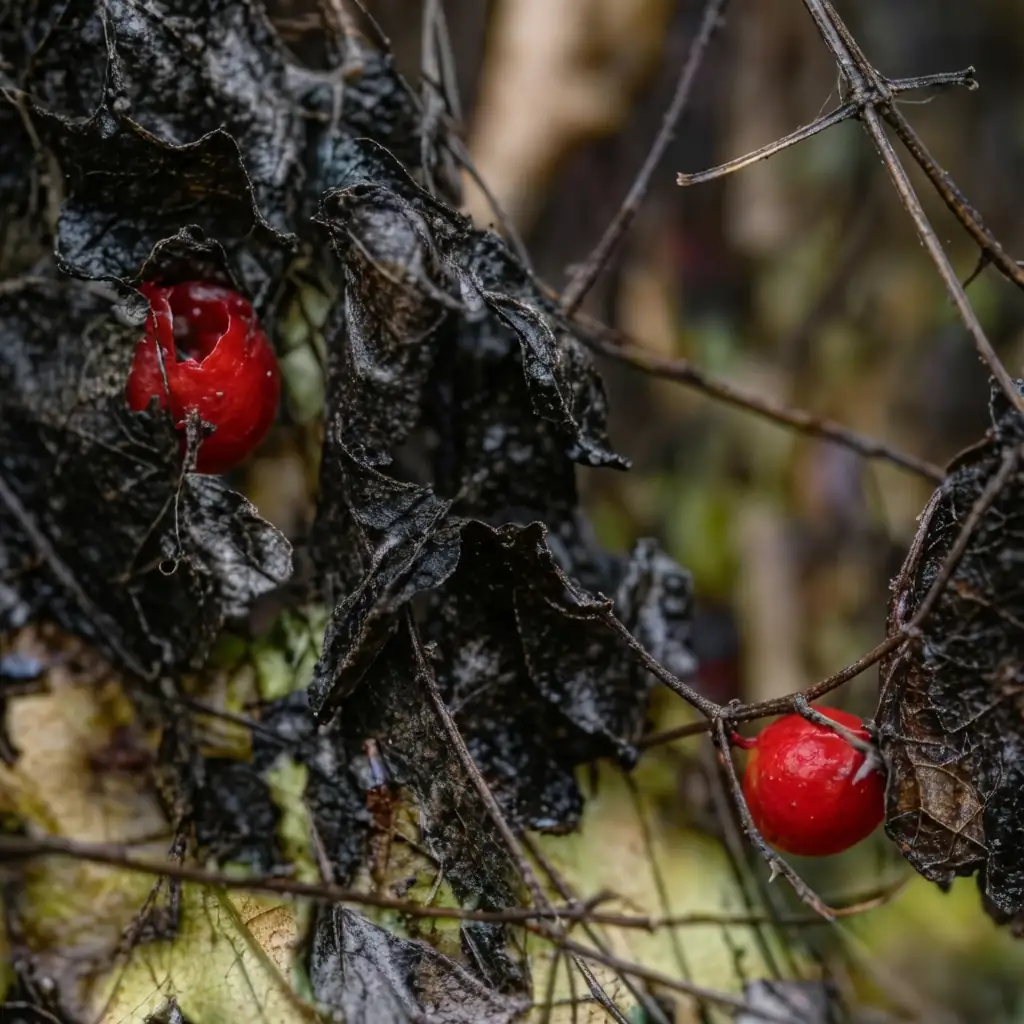
- Fruits ripen to yellow-brown or orange shades later in the season.
- It’s widely cultivated beyond its native range for ornament and traditional uses.


