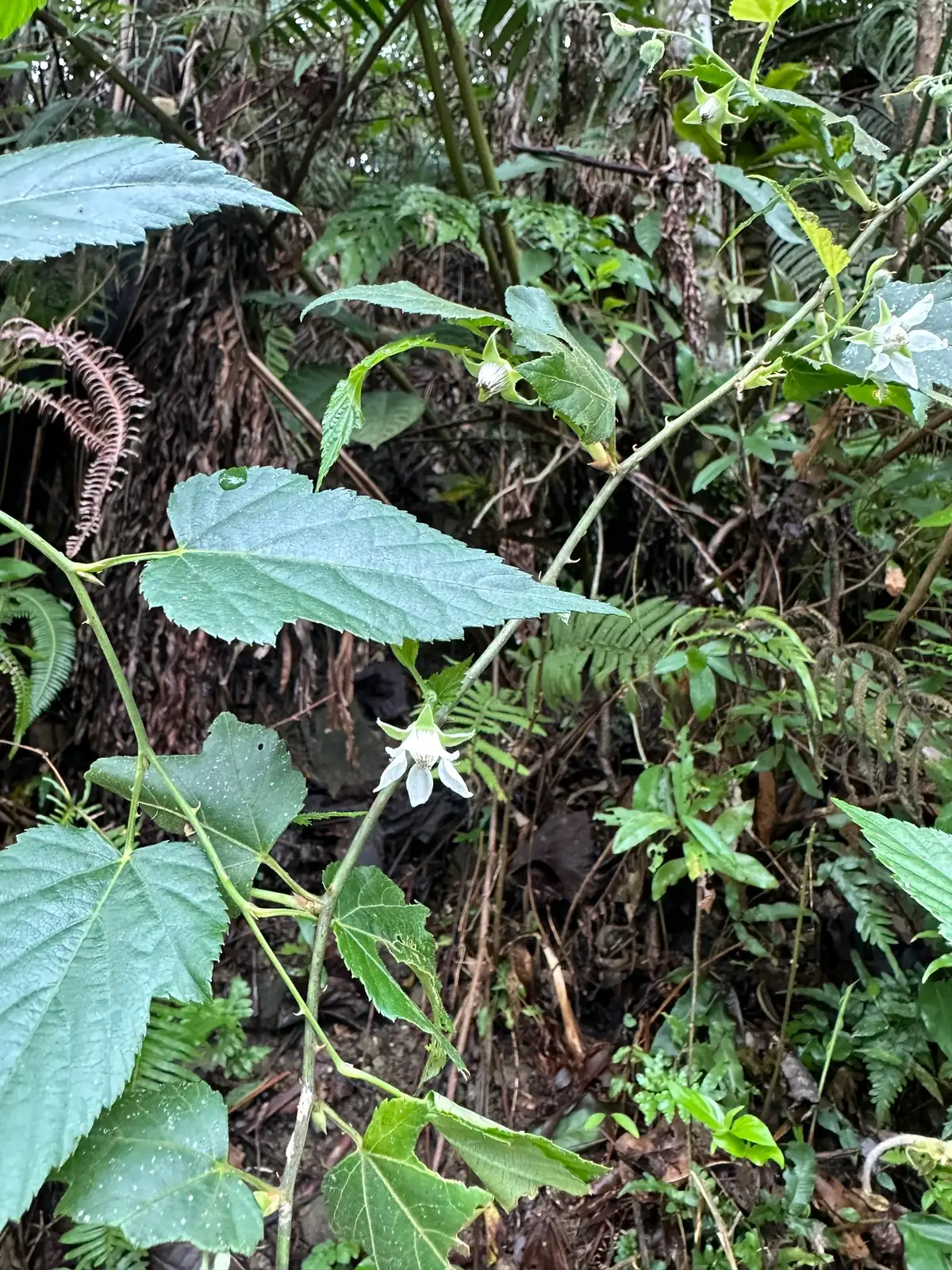
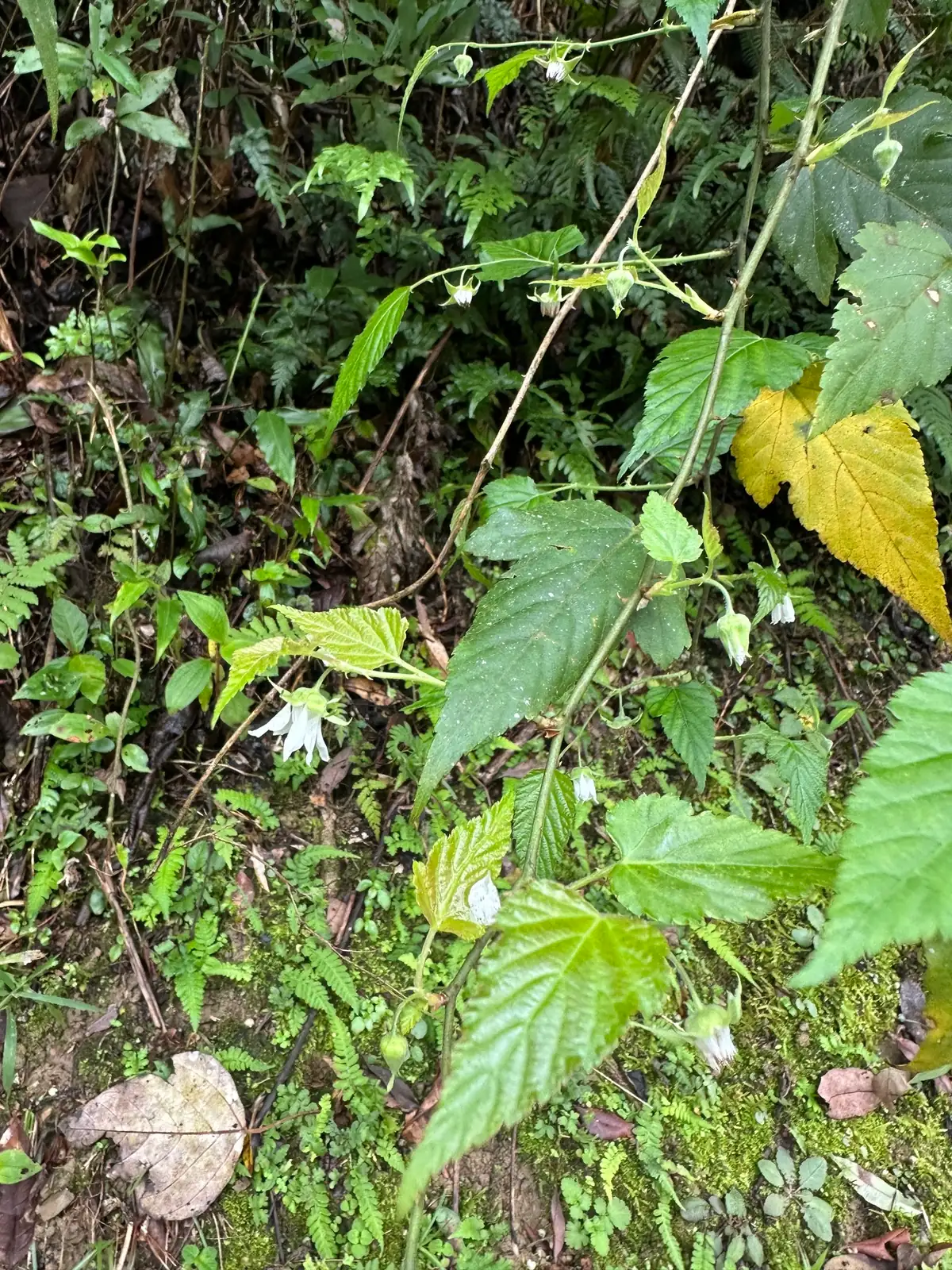
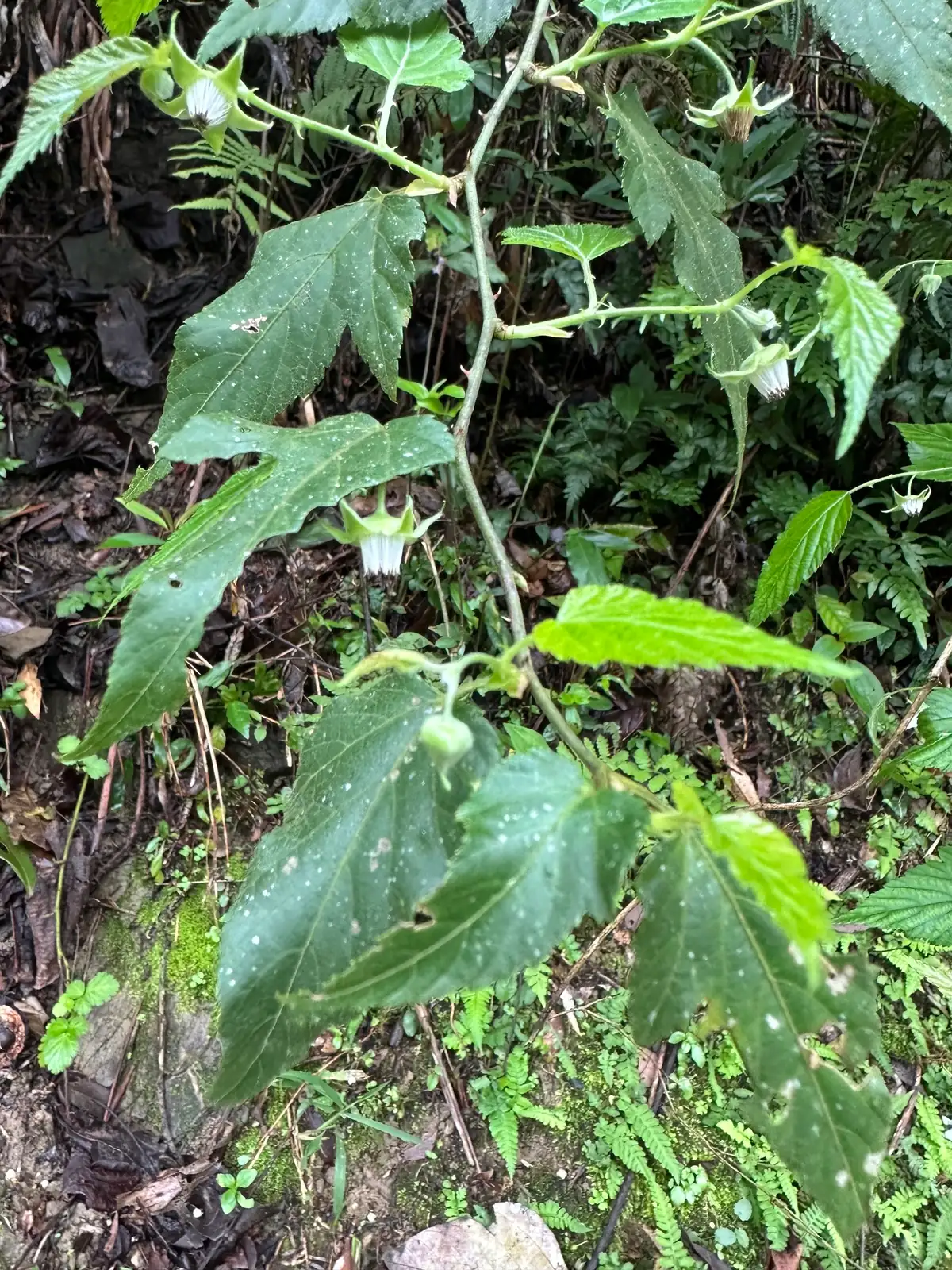
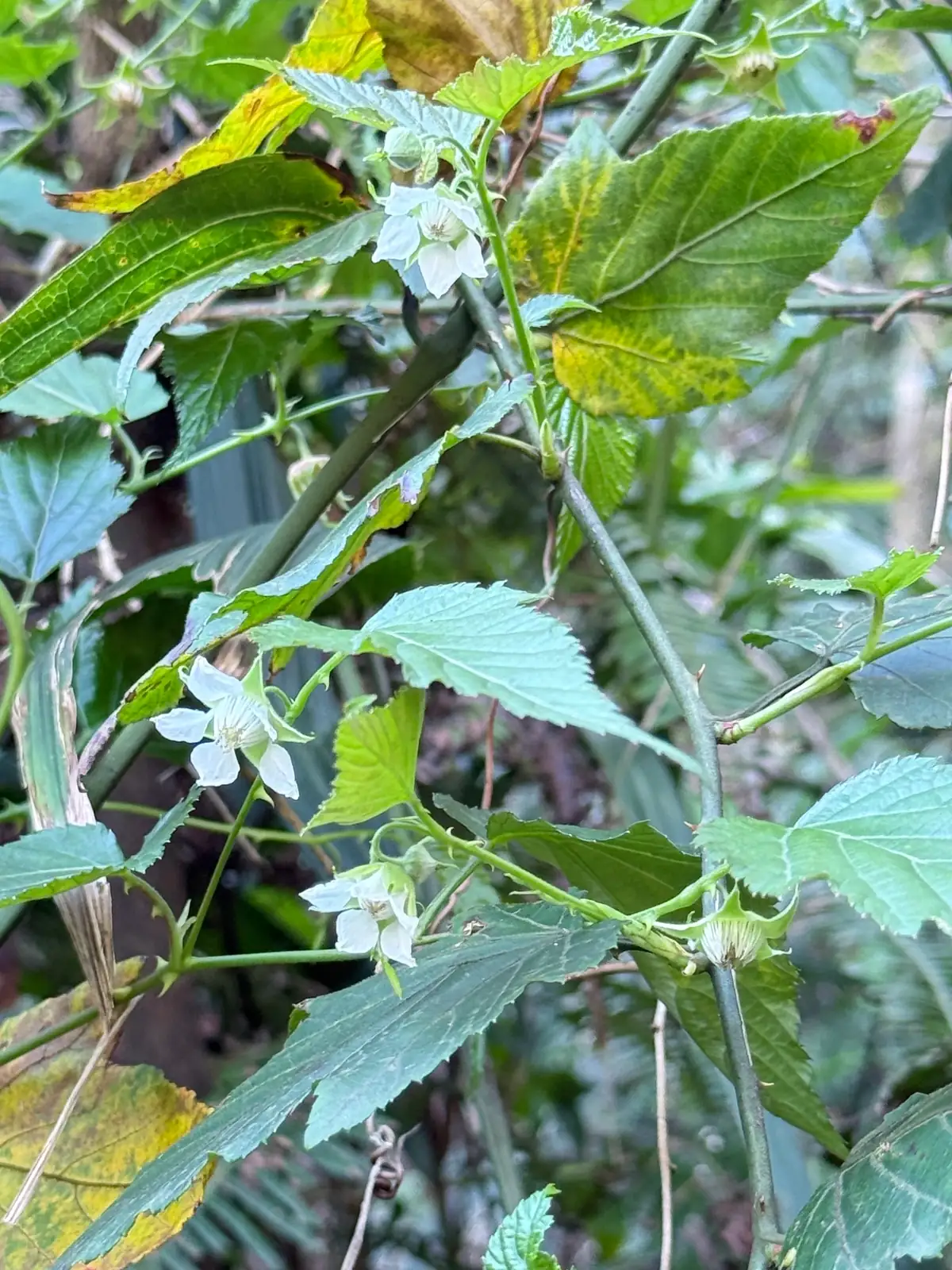
Plant Features
- Size: Typically 1–3 m (3.3–9.8 ft) tall; forms an upright, thicketing shrub.
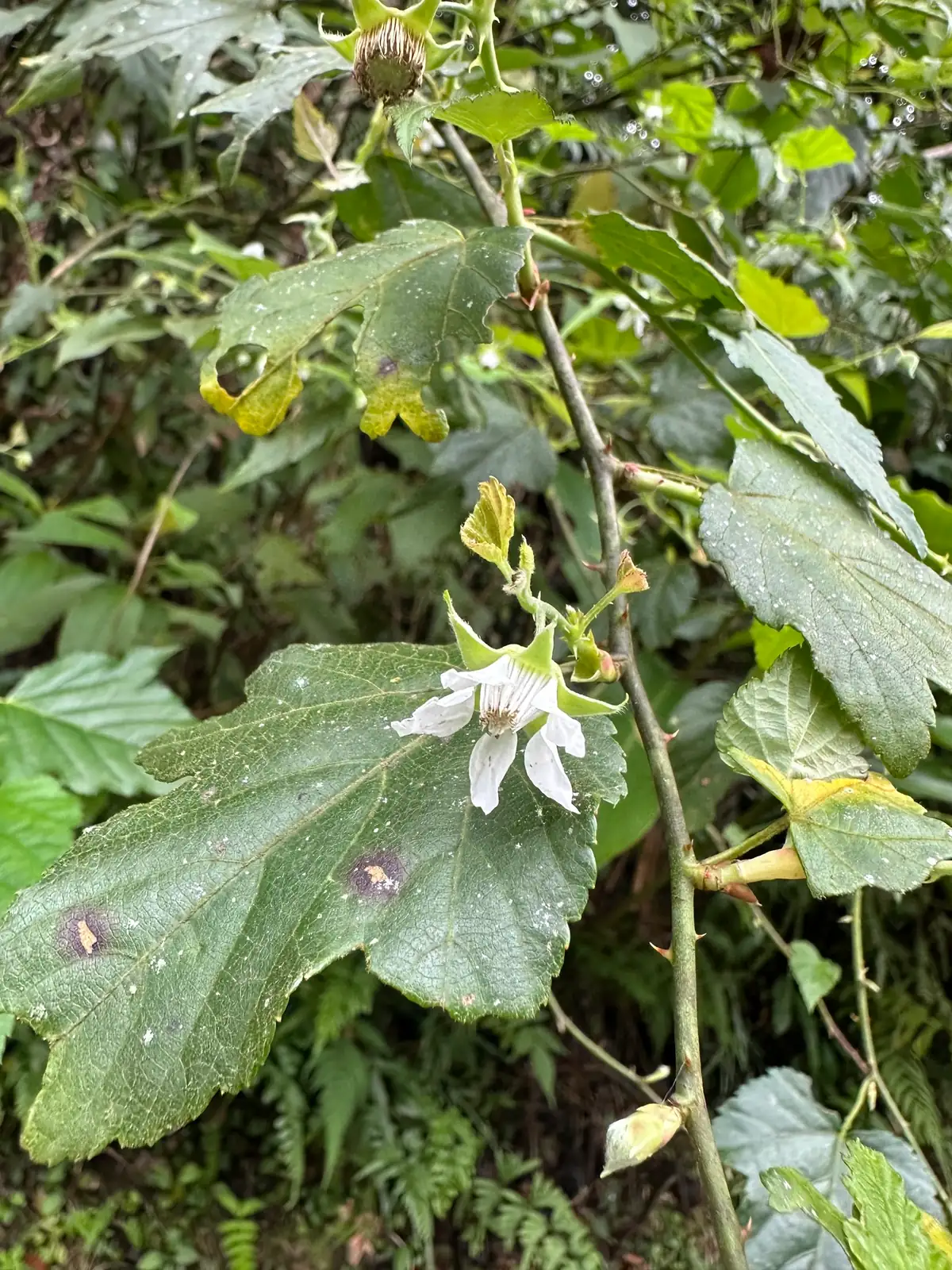
- Foliage: Leaves are simple and generally ovate to ovate-lanceolate. Young foliage is often softly hairy, giving new growth a slightly fuzzy look and feel.
- Flower: Small, pale flowers (often white to slightly pinkish, typical of many Rubus) are borne singly or in small numbers on short side shoots. Flower stalks are about 0.6–2 cm (0.24–0.79 in) long and finely hairy.
- Flowering Season: February–March
- Growth Habit: Upright, thicket-forming bramble shrub with prickly stems; young growth commonly has fine hairs.
Environment
Sunlight
Full sun to light shade; best flowering and fruiting in full sun.
Temperature
Temperate outdoor shrub; generally cold-hardy in many regions, though exact tolerance depends on local provenance and site conditions.
Humidity
Prefers consistently moist conditions and is commonly found in wetter micro-sites within shrublands, stream edges, and valleys.
Soil
Adaptable—even tolerates poorer soils—but performs best in well-drained, moisture-retentive ground. Avoid long-term waterlogging.
Placement
Outdoors: sunny slopes, hedgerows, naturalistic/wild gardens, stream edges, valley gardens, shrub borders, and restoration/rehabilitation plantings.
Hardiness
Generally hardy and adaptable for temperate climates; typically grown outdoors rather than as a houseplant.
Care Guide
Difficulty
Easy outdoors once established—vigorous and forgiving. The main challenge is managing its prickly, thicketing growth (gloves recommended).
Buying Guide
Choose plants with healthy, firm canes and no cane dieback. Avoid wilted stock, heavy leaf spotting, or visible pest infestations. For better fruiting potential, pick vigorous plants with multiple basal shoots and a well-developed root system.
Watering
Water regularly while establishing. Once established, keep soil evenly moist during flowering and fruit set; deep water during dry spells. Avoid prolonged waterlogging, which can stress roots and increase disease risk.
Fertilization
In spring, feed with compost or a balanced slow-release fertilizer. Don’t overdo nitrogen—too much can mean lots of leaves but fewer flowers and fruits.
Pruning
After fruiting, remove weak, damaged, and overcrowded canes to keep the shrub open and airy. Thinning improves light penetration and reduces fungal issues. Wear gloves and long sleeves due to prickles.
Propagation
Propagate by seed, root suckers, layering, or division of established clumps. Softwood to semi-hardwood cuttings can also work when kept humid and protected from drying out.
Repotting
Most often planted in the ground. If grown in a container, repot every 1–2 years into fresh, well-draining mix; use a large pot to accommodate vigorous roots and cane growth.
📅 Seasonal Care Calendar
Late winter–early spring: tidy and thin canes. Spring: feed and mulch. Early summer (flowering/fruiting): keep moisture steady. After harvest: prune and thin to maintain an open, healthy framework.
Pests, Diseases & Safety
Common Pests & Diseases
May encounter typical bramble pests such as aphids, spider mites, scale insects, and leaf/fruit-feeding caterpillars. Possible fungal problems include leaf spots, rusts, powdery mildew, and cane blight. Prevention focuses on airflow (thinning), sanitation (removing diseased material), and minimizing overhead watering.
Toxicity
Not known to be toxic; fruits are edible. The prickles can cause minor skin scratches—handle carefully. For wild foraging, confirm identification and avoid collecting from polluted roadsides or contaminated sites.
Culture & Symbolism
Symbolism: Often linked with resilience and abundance—thriving in rough places and still offering a generous crop of berries.
History & Legends: A long-familiar wild Rubus in China, traditionally gathered for food and used locally in herbal practices, especially in rural areas where it naturally appears after disturbance.
Uses: Edible fruit (fresh or processed). Useful pioneer shrub for revegetation of disturbed ground and wasteland. Also associated with traditional medicinal use in some regions and can have local economic value when managed or harvested.
FAQ
Is Chinese raspberry the same as the common garden raspberry?
No. It’s a different Rubus species, though it produces similar aggregate “raspberry-like” fruits and grows as a prickly bramble. Flavor, growth habit, and hardiness can differ from cultivated raspberries.
How do I get more fruit?
Give it full sun, keep soil evenly moist while it flowers and develops fruit, and thin crowded canes so light and air can reach the flowering shoots.
Fun Facts
- It’s a classic pioneer species—quick to colonize disturbed or barren ground.
- It’s widespread across most of China, with reports of absence from Qinghai, Xinjiang, and Tibet.
- The fruit is an aggregate of many small drupelets, typically about 1–1.2 cm (0.39–0.47 in) across, red, and often finely hairy; seeds are wrinkled.