

Plant Features
- Size: Typically 1–2 m (3.3–6.6 ft) tall
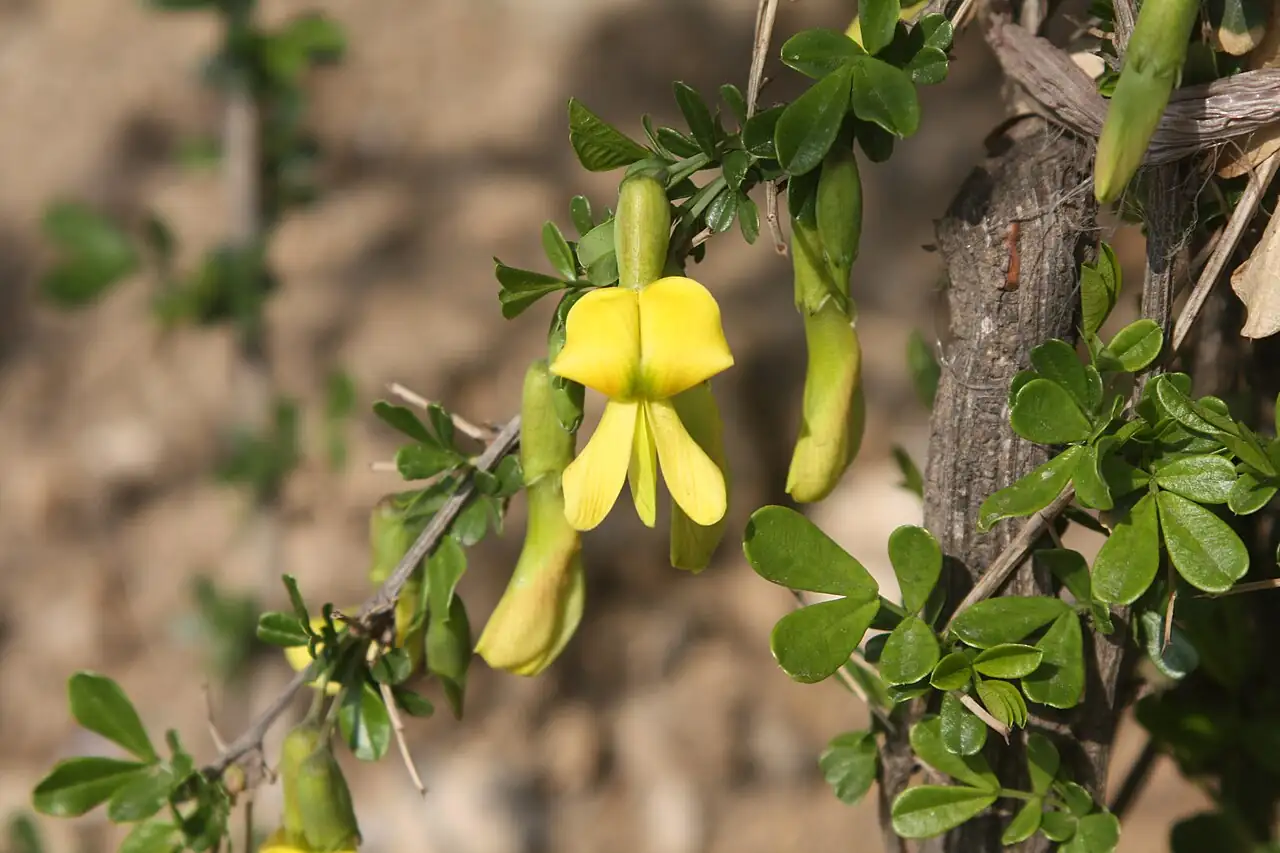
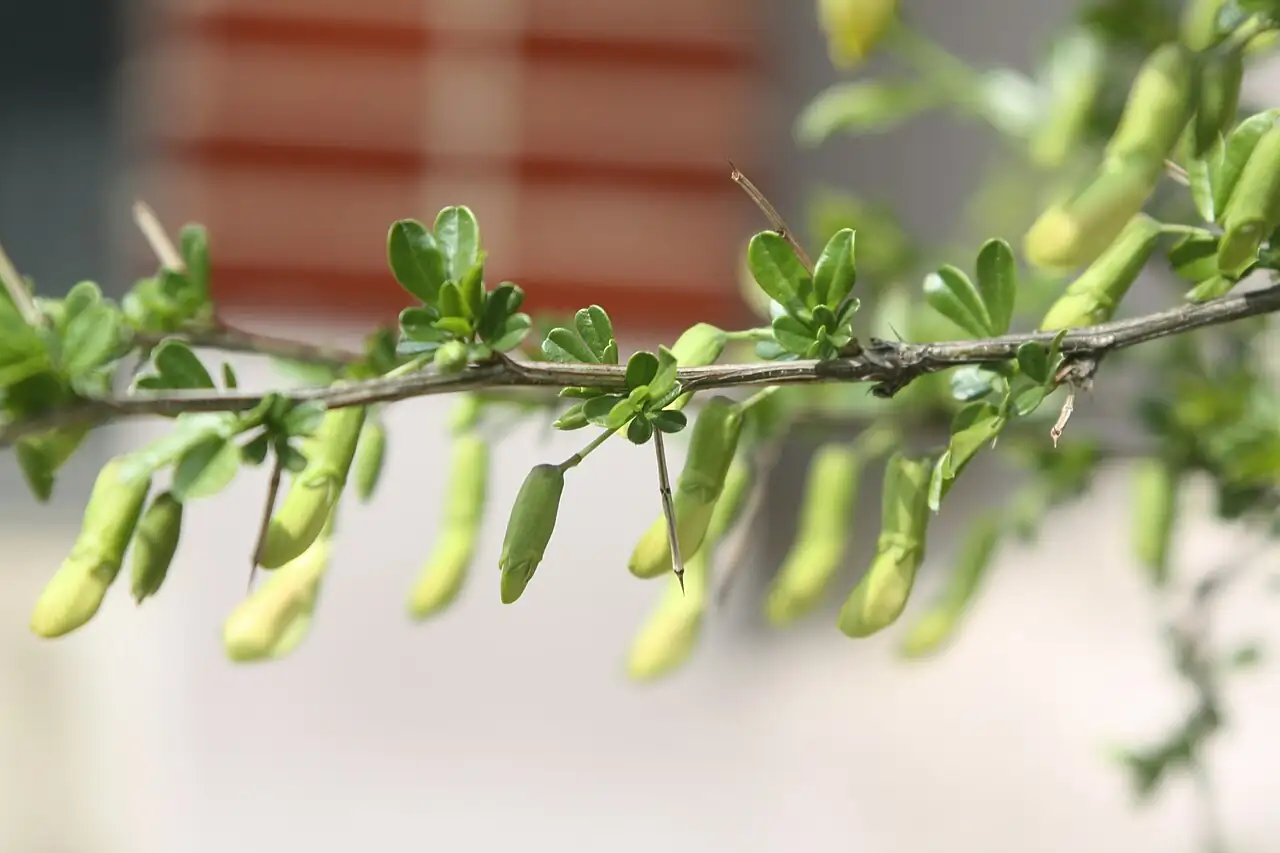
- Foliage: Leaves are usually made up of two pairs of thick, leathery leaflets that are obovate to oblong-obovate. A distinctive feature is its triangular stipules, which harden into sharp spines. Bark is dark brown, while young twigs are ridged and hairless.
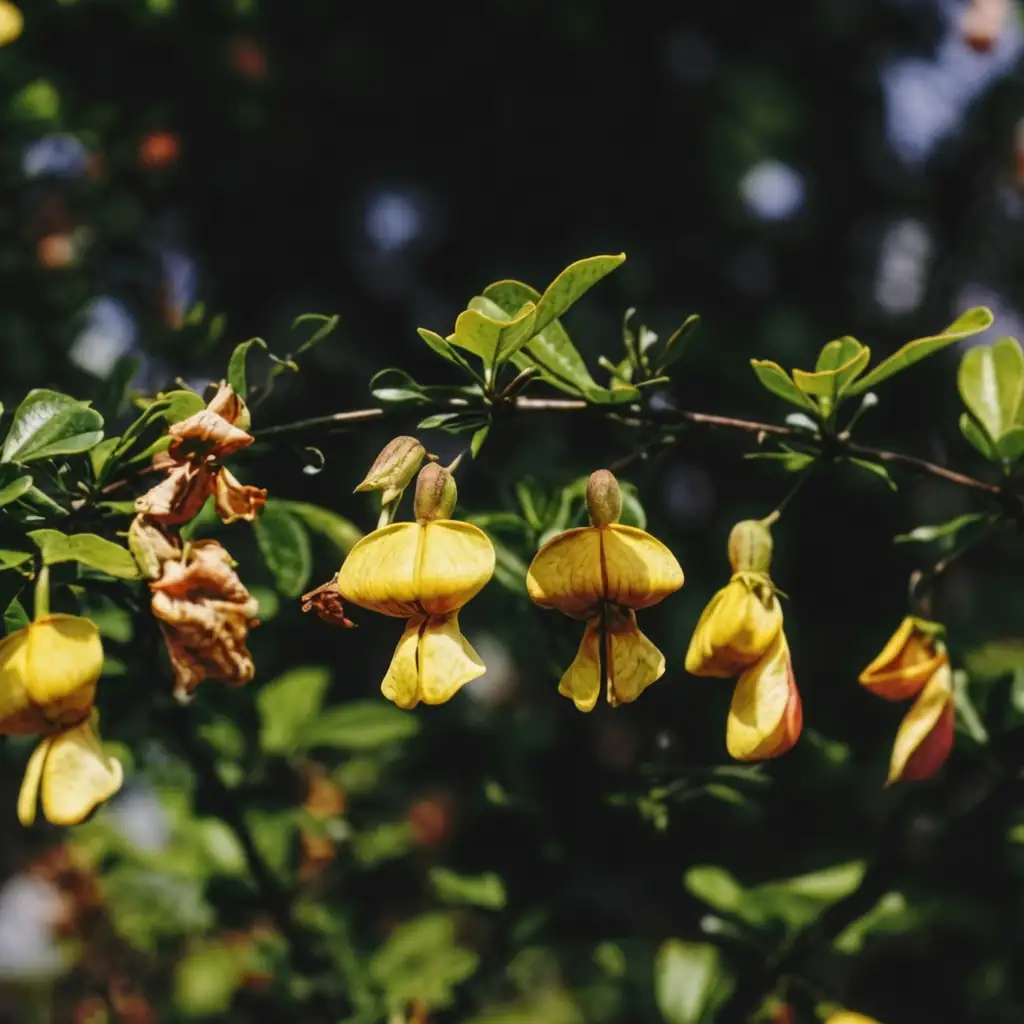
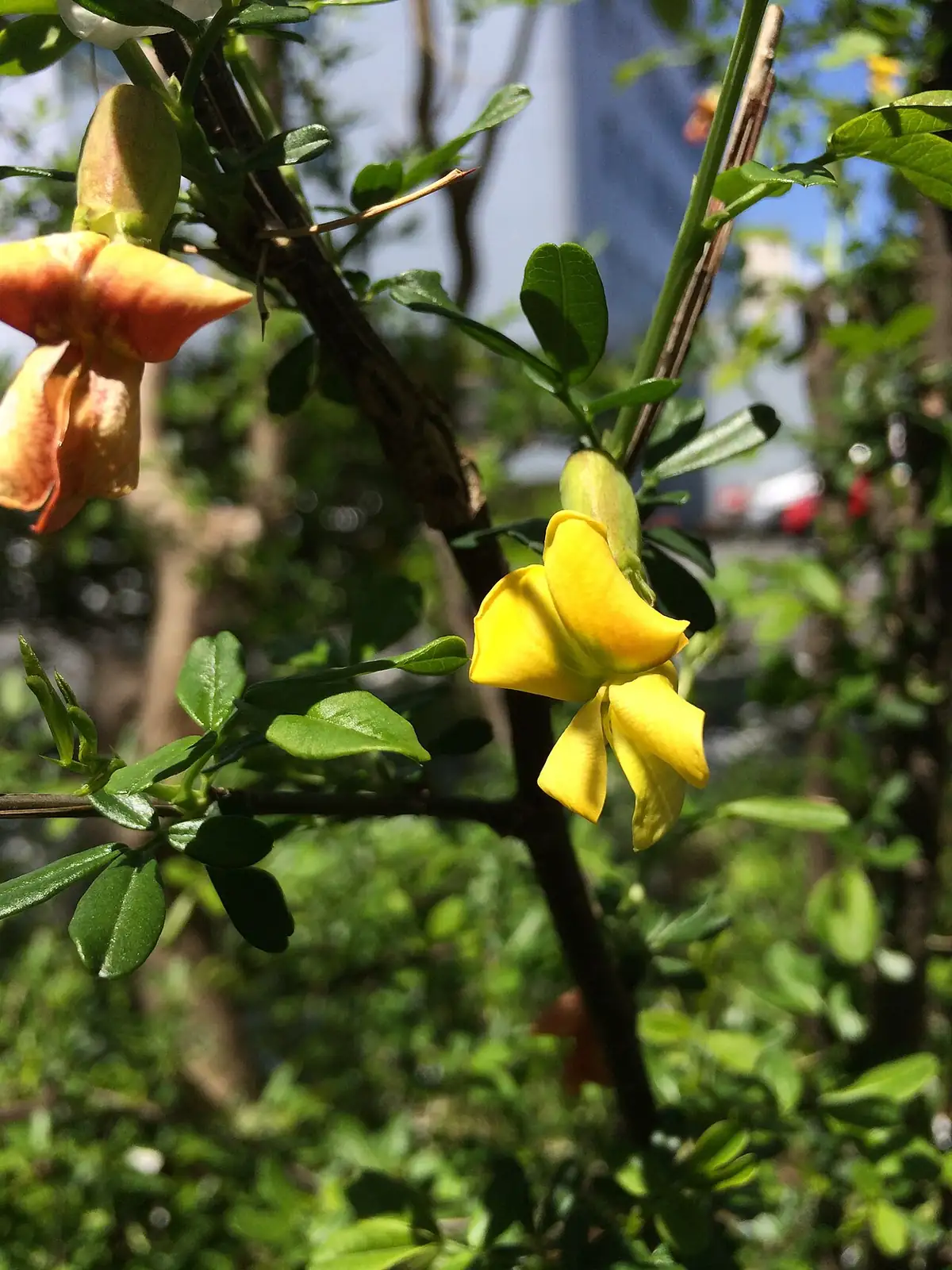
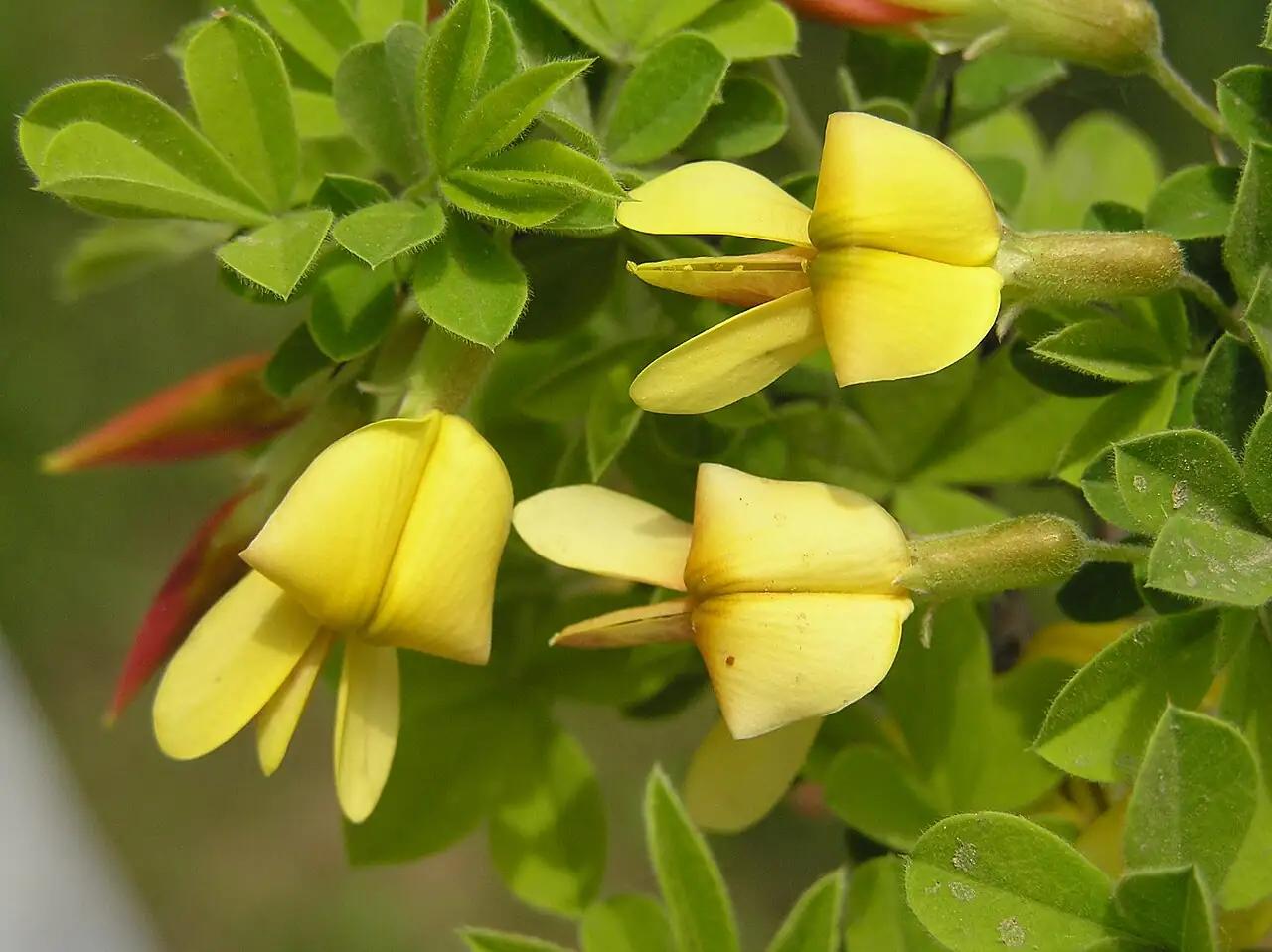
- Flower: Solitary, pea-shaped flowers with a bright yellow corolla that is often tinged red. After flowering, it forms slender, cylindrical seed pods.
- Flowering Season: April–May
- Growth Habit: Deciduous, upright shrub. Best performance comes with warmth and strong sun, but it is notably tolerant of cold, drought, and low-fertility soils. It dislikes wet feet and can suffer in waterlogged conditions; in nature it may grow in rocky crevices and on shrubby slopes.
Environment
Sunlight
Full sun for best flowering; tolerates light shade but may bloom less.
Temperature
Cold hardy once established; roughly -20 to -10°C (-4 to 14°F) depending on local conditions and exposure.
Humidity
Low to moderate humidity; tolerates dry air and drought once established.
Soil
Well-drained soil is essential. Tolerates poor, sandy, stony, or otherwise low-fertility soils. Avoid persistently wet ground and heavy, waterlogged media.
Placement
Best outdoors in sunny gardens, courtyards, slopes, and bright borders. For containers/bonsai, place in a bright, airy spot with excellent drainage.
Hardiness
Broadly hardy in temperate climates (approx. USDA Zone 4–8). Key limitation is poor tolerance of waterlogging rather than cold.
Care Guide
Difficulty
Easy. Extremely adaptable and forgiving—so long as drainage is excellent and the roots are not kept wet.
Buying Guide
Pick plants with firm, plump stems and healthy buds. Avoid anything with sour-smelling, soggy potting mix or signs of blackened/rotting roots. If buying for bonsai, look for compact growth, short internodes, and a sturdy base/trunk line.
Watering
Water deeply after planting and during the establishment phase. Once established, water only when the top few centimeters of soil are dry. In pots, never let it sit in water—soggy mix is the fastest route to root trouble.
Fertilization
A light feeder. In spring, use a balanced slow-release fertilizer, or feed with a diluted liquid fertilizer about every 4–6 weeks during active growth. Avoid heavy nitrogen, which can push soft, lanky growth and reduce flowering.
Pruning
Prune after flowering to shape the shrub and to remove dead, weak, or crossing shoots. For older plants, rejuvenate gradually by cutting some of the oldest stems back close to the base to encourage fresh growth.
Propagation
Most commonly grown from seed; scarification and/or a brief soak in warm water improves germination. Semi-hardwood cuttings in summer may also succeed with good humidity and a sharply draining medium.
Repotting
For containers or bonsai, repot every 2–3 years in early spring using a fast-draining mix. Trim circling or damaged roots, then keep slightly on the dry side until new growth restarts.
📅 Seasonal Care Calendar
Spring: plant, feed lightly, and prune after flowering. Summer: keep in strong sun; water only as needed and feed sparingly. Autumn: reduce watering and stop feeding. Winter: keep soil relatively dry; protect pots from repeated freeze–thaw cycles.
Pests, Diseases & Safety
Common Pests & Diseases
Generally very trouble-free. Aphids may appear on tender new growth. Powdery mildew can show up in crowded, shady, low-airflow spots. Most serious issues are root-related and tied to poor drainage or overwatering.
Toxicity
No well-documented serious toxicity for typical ornamental use. Still, do not consider it edible (legumes can vary widely), and discourage pets from chewing ornamental plants—especially because the stipules can become sharp spines.
Culture & Symbolism
Symbolism: Often seen as a symbol of resilience and endurance, thanks to its ability to thrive through cold, drought, and poor soils.
History & Legends: Long appreciated in northern and central Chinese landscaping for its rugged performance and bright spring display. Compact, small-leaved forms are especially valued by bonsai growers for training into miniature and stump-style compositions.
Uses: Primarily an ornamental shrub for gardens, courtyards, sunny borders, and difficult sites like slopes with poorer soils. Also used in bonsai, where its hardiness and responsive pruning make it a dependable subject.
FAQ
Why is my Chinese peashrub not flowering well?
The usual culprits are not enough sun and feeding too heavily (especially with high nitrogen). Move it to a brighter spot and use lighter, balanced feeding. Also, prune after flowering—pruning too early can remove flower buds.
Can it handle drought?
Yes. Once established it’s drought tolerant, though it will flower and grow more nicely with occasional deep watering during long dry spells.
What is the biggest mistake when growing it in a pot?
Keeping the potting mix too wet. Use a gritty, fast-draining mix and a pot with excellent drainage holes, and let the surface dry between waterings.
Fun Facts
- It can naturally establish in cracks and crevices on rocky slopes.
- Its triangular stipules harden into sharp spines, which can help deter browsing.
- Dwarf, small-leaved forms are particularly prized for bonsai and stump-style designs.
- Its flowers and seed pods are classic pea-family (Fabaceae) signatures.


