

Plant Features
- Size: Typically about 30 × 30 cm (12 × 12 in) in containers; can grow taller with age in ideal conditions.
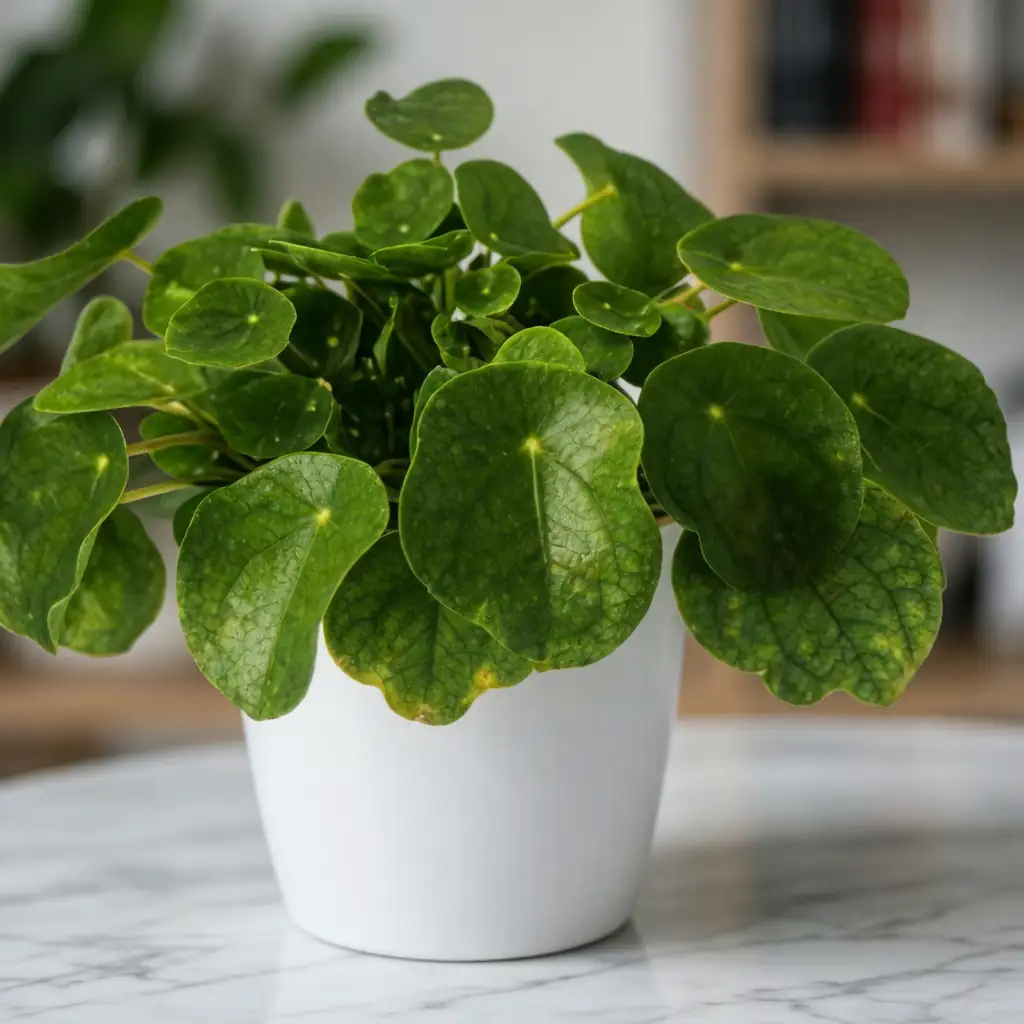
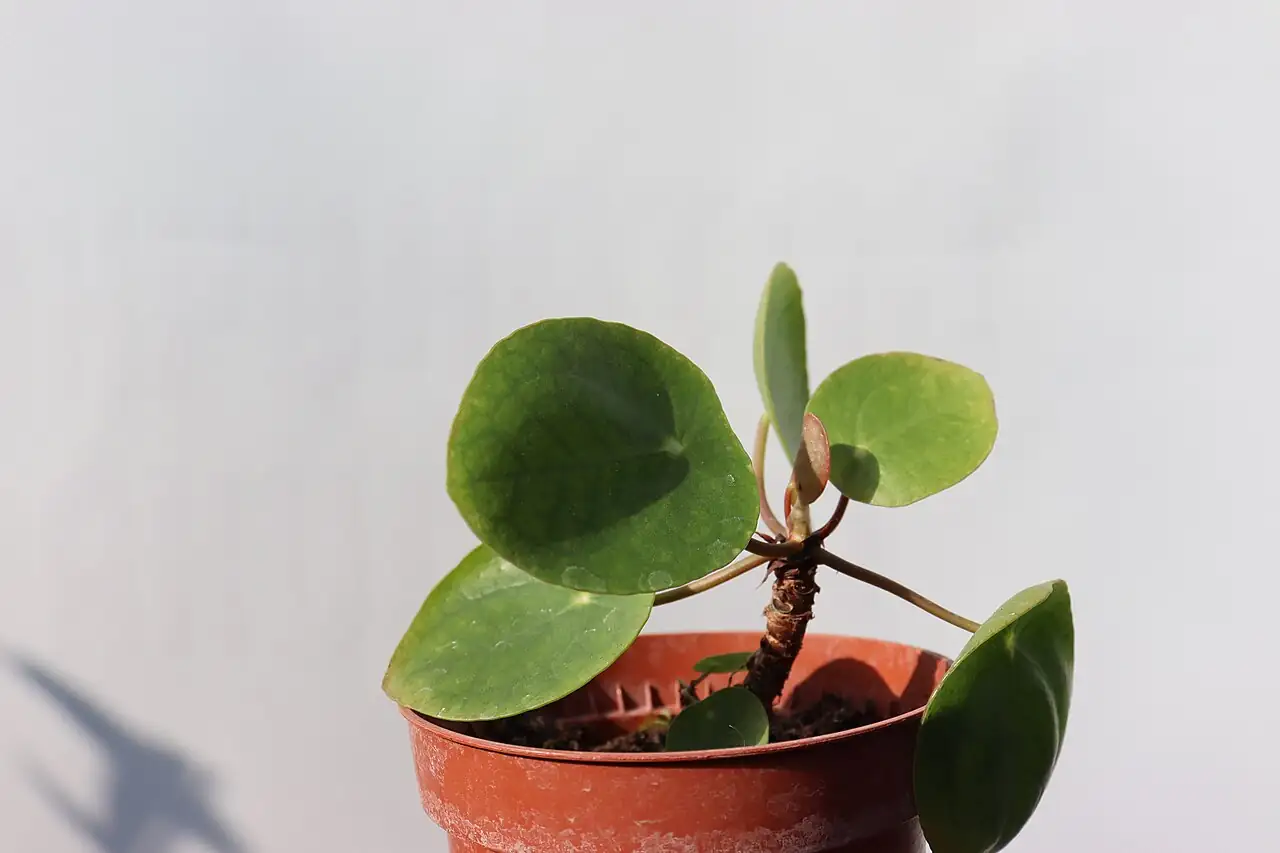
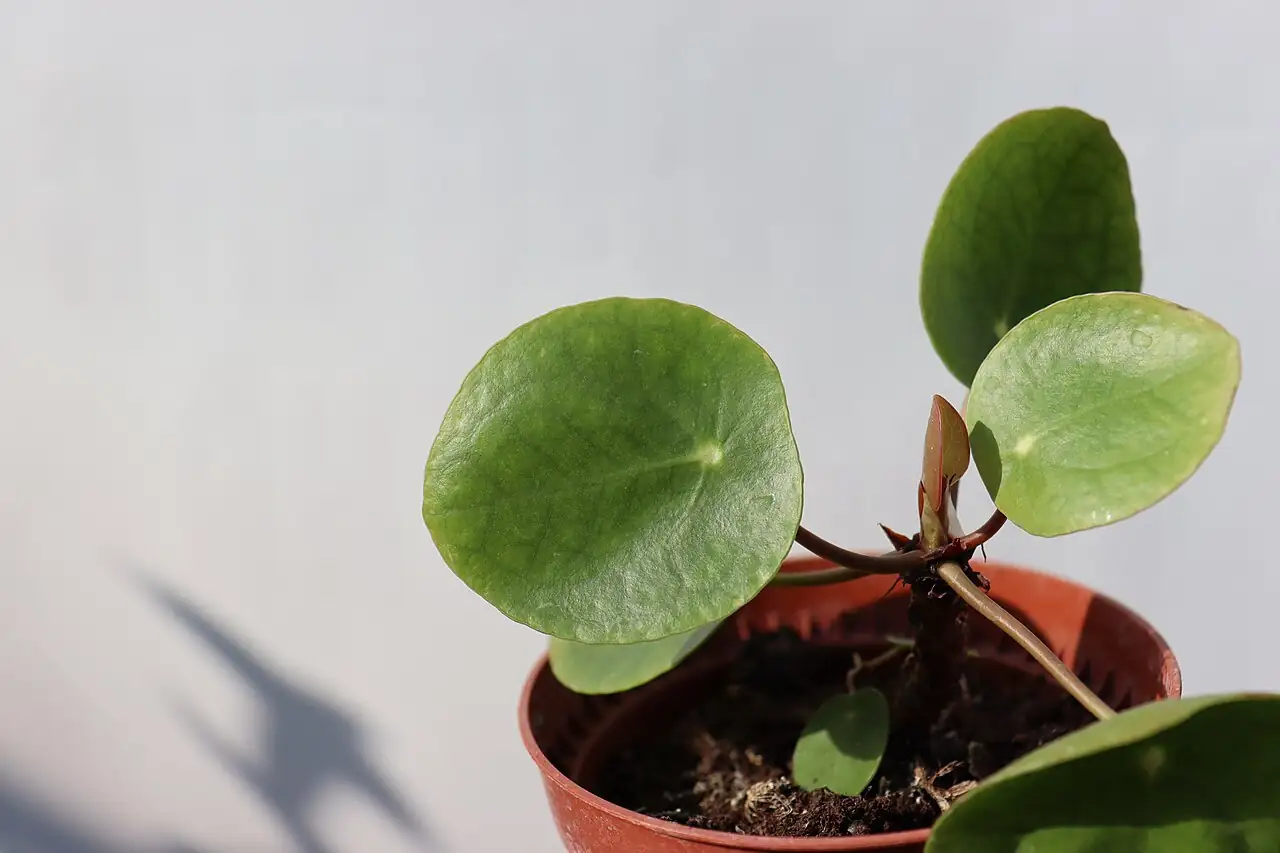
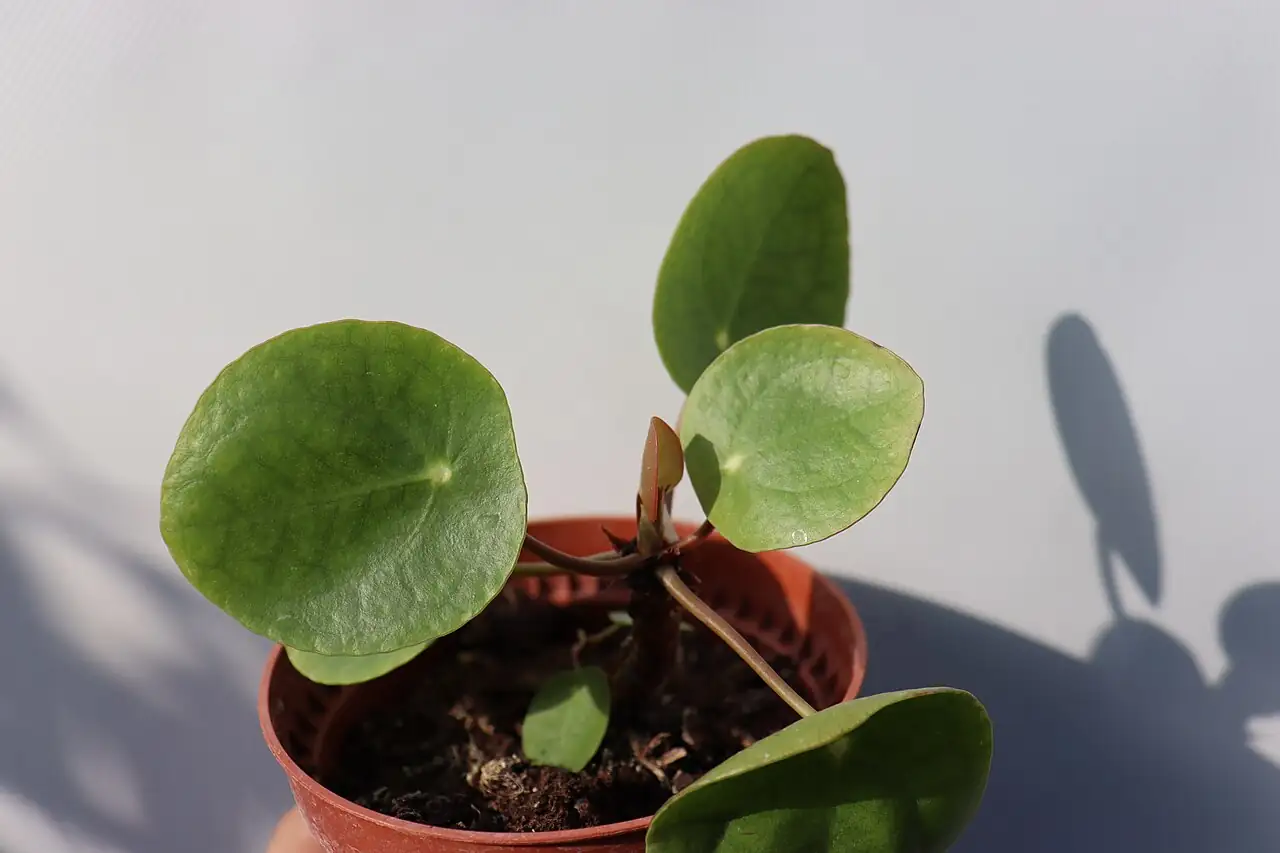
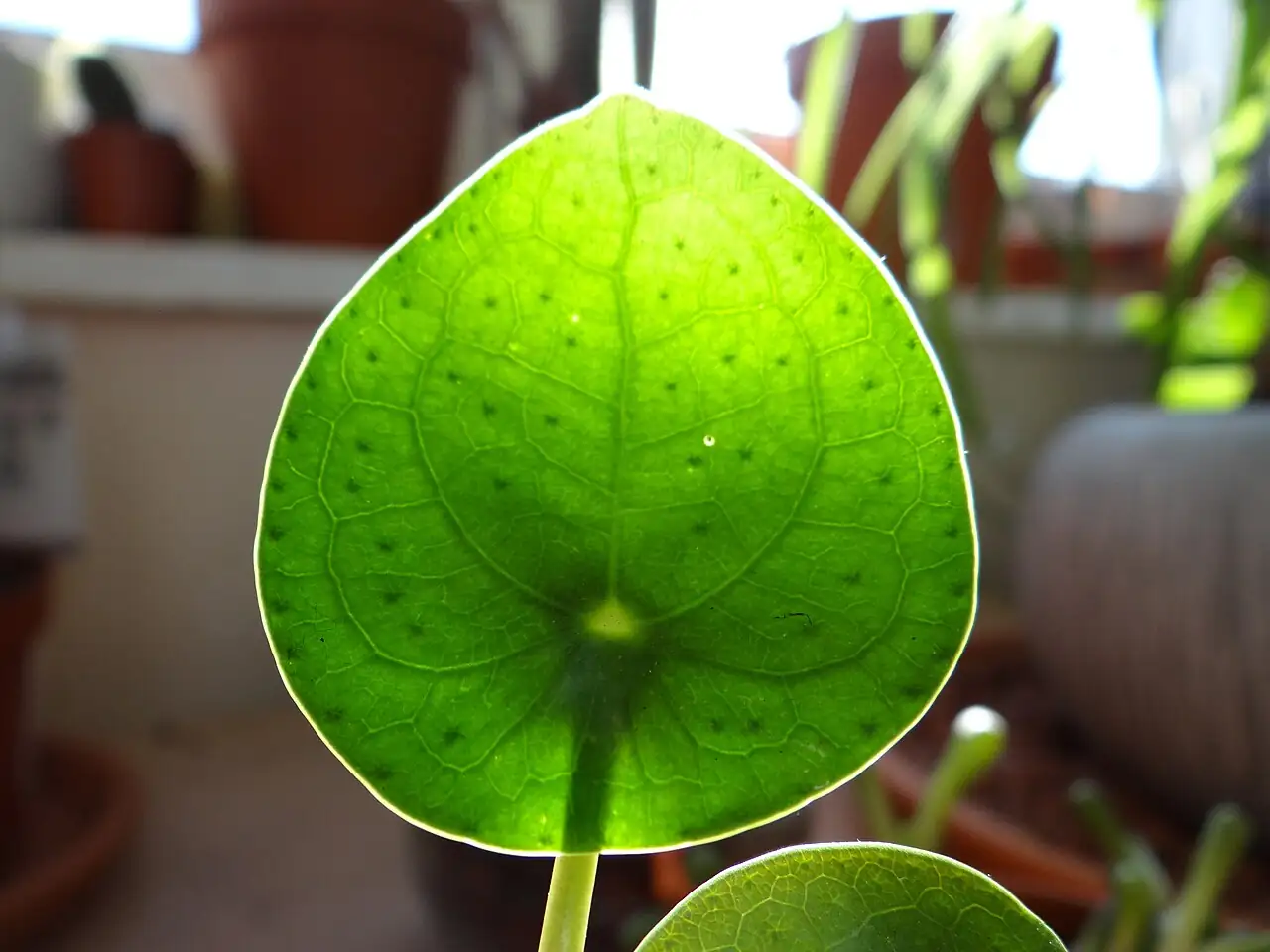
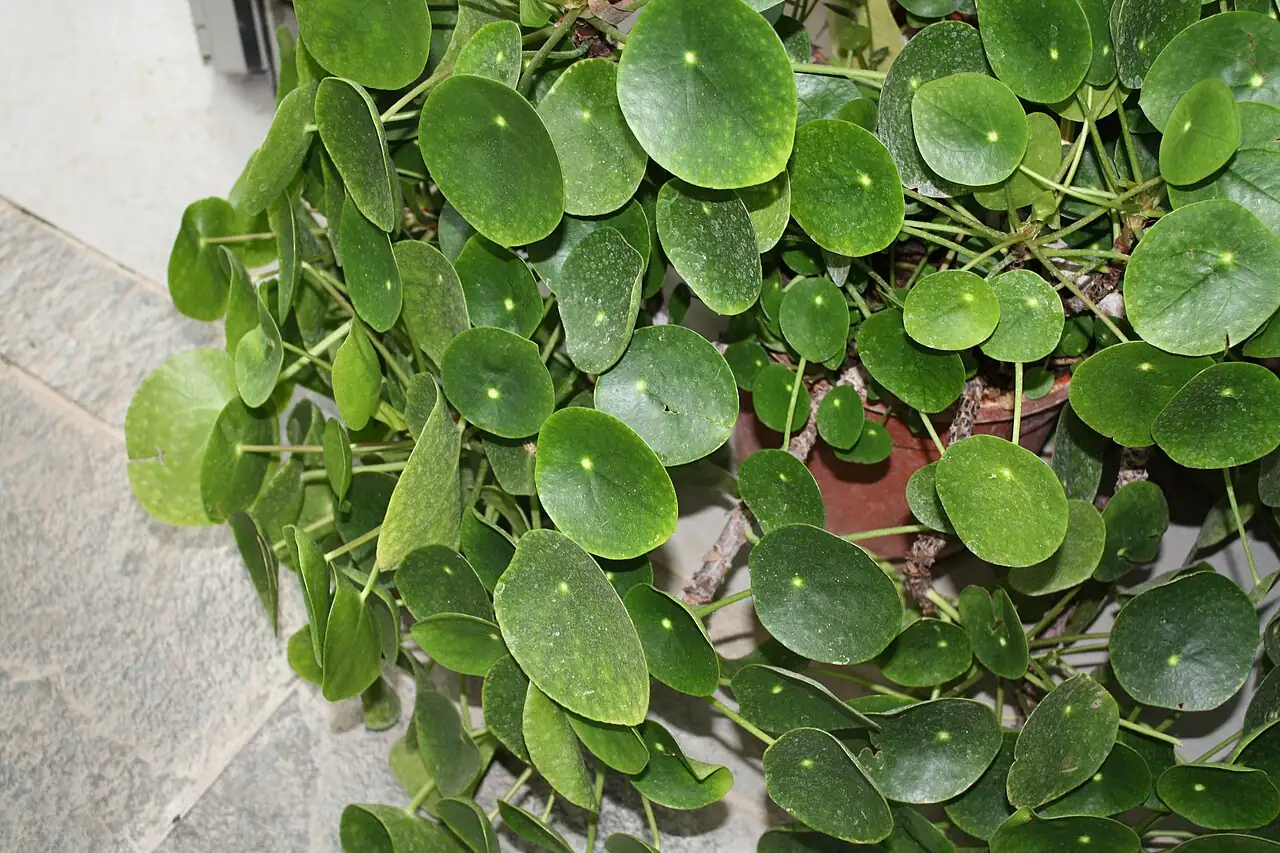
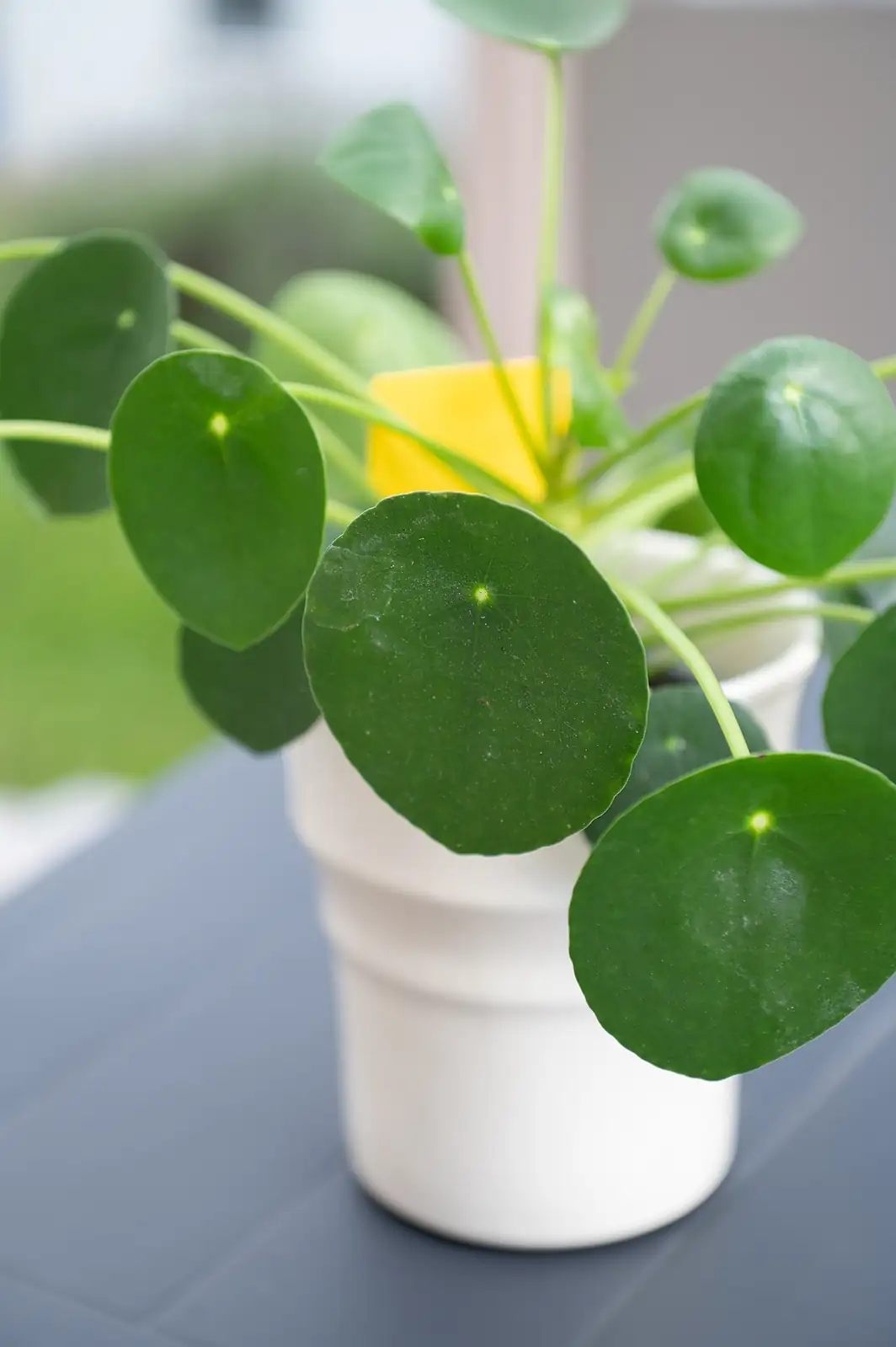
- Foliage: Nearly circular, glossy green leaves carried on long petioles. Leaves radiate from upright stems, creating a balanced “pancake/UFO” silhouette that looks clean and graphic indoors.
- Flower: May produce small, pale greenish, inconspicuous flowers indoors; they’re usually not showy and are grown for the foliage.
- Flowering Season: Occasional and not reliable indoors; most often spring to summer.
- Growth Habit: Upright stems with a loose, mounded rosette-like effect; frequently produces basal offsets (“pups”).
Environment
Sunlight
Bright, indirect light is ideal; tolerates partial shade. Avoid harsh direct midday sun which can scorch leaves.
Temperature
Best at 15–24°C (59–75°F). Protect from cold drafts and avoid temperatures below about 10°C (50°F).
Humidity
Moderate household humidity is usually fine. Appreciates occasional misting in dry rooms, but don’t keep leaves wet for long periods.
Soil
Loose, well-draining potting mix. A practical blend is 2 parts potting mix to 1 part perlite (by volume).
Placement
Near an east- or north-facing window, or set back from a bright south/west window with filtered light. Keep away from heater/AC blasts and strong airflow.
Hardiness
Not frost hardy; suitable outdoors year-round only in very mild climates, roughly USDA Zone 10–12 (about 10–13°C / 50–55°F and above).
Care Guide
Difficulty
Easy: generally forgiving, fast-growing in good light, and happy in smaller pots.
Buying Guide
Pick a plant with firm stems and evenly green, perky leaves. Avoid limp plants, blackened spots, or pots sitting in soggy soil. Check the crown and leaf undersides for pests before buying.
Watering
Spring to fall: water when the top layer of the mix feels dry, then drain excess. Winter: water more sparingly—aim for barely moist rather than wet. Good drainage is essential; avoid leaving water sitting on leaves after misting.
Fertilization
Spring to fall: feed every 2 weeks with a balanced liquid fertilizer at 1/2 strength. Reduce or stop in winter if growth slows.
Pruning
Remove yellowing or damaged leaves by cutting at the base of the petiole. Rotate the pot regularly so the plant grows evenly instead of leaning toward the light.
Propagation
Easiest by separating and potting up offsets (“pups”) once they have their own roots. You can also root a pup in water or soil first, then pot it up.
Repotting
For a compact look, a 12.5–15 cm (5–6 in) pot often suits well. Repot every 1–2 years in spring when rootbound, stepping up one pot size and refreshing the mix.
📅 Seasonal Care Calendar
Spring–Fall: water when the surface dries; fertilize every 2 weeks at half strength. Winter: keep only lightly moist; avoid heavy feeding. Spring: repot every 1–2 years if rootbound. Year-round: keep warm, avoid hot direct sun, and protect from drafts.
Pests, Diseases & Safety
Common Pests & Diseases
Can attract spider mites, mealybugs, and aphids, especially in dry air. Overwatering can lead to root rot. Improve light, let the mix dry slightly between waterings, and treat pests with insecticidal soap or horticultural oil when needed.
Toxicity
Generally considered non-toxic to cats, dogs, and people (often listed as pet-safe). If chewed or eaten, mild stomach upset is still possible.
Culture & Symbolism
Symbolism: Often linked with prosperity and good luck because its leaves resemble coins.
History & Legends: Became widely popular internationally in the mid-20th century after being passed from friend to friend as an easy-to-share houseplant—helping inspire the nickname “Missionary Plant.”
Uses: Primarily an ornamental foliage plant for bright indoor spaces. Its tidy, architectural leaves make it a favorite for windowsills, desks, and small-pot groupings.
FAQ
What temperature and light are best?
Keep it around 15–24°C (59–75°F) with bright, indirect light. It can handle partial shade, but protect it from strong direct midday sun and cold drafts.
How should I water it?
In spring through fall, water when the top of the potting mix dries, then let excess drain away. In winter, water less—keep the mix only slightly moist, never soggy.
How do I fertilize it?
Use a balanced liquid fertilizer at half strength every 2 weeks during active growth (spring–fall). Reduce or stop feeding in winter if growth slows.
How do I pot it and repot it?
Use a loose, well-draining mix (for example, 2 parts potting mix to 1 part perlite). A 12.5–15 cm (5–6 in) pot keeps it neat. Repot every 1–2 years in spring when rootbound.
Fun Facts
- The leaves naturally turn toward the light; rotating the pot helps keep the plant symmetrical.
- It readily produces “pups,” making it one of the easiest houseplants to propagate and share.


