

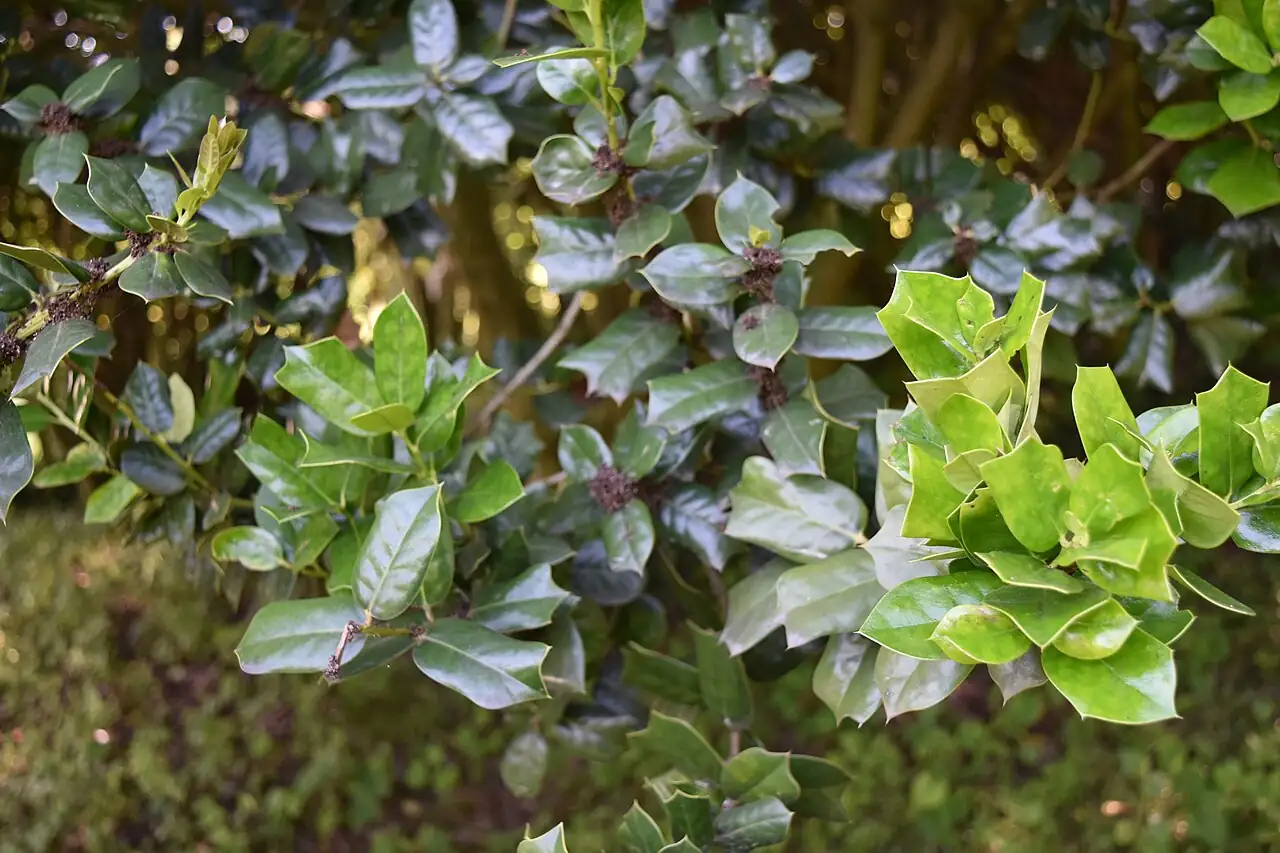
Plant Features
- Size: Typically 3–4 m (9.8–13.1 ft) tall; often kept smaller with pruning or in containers.
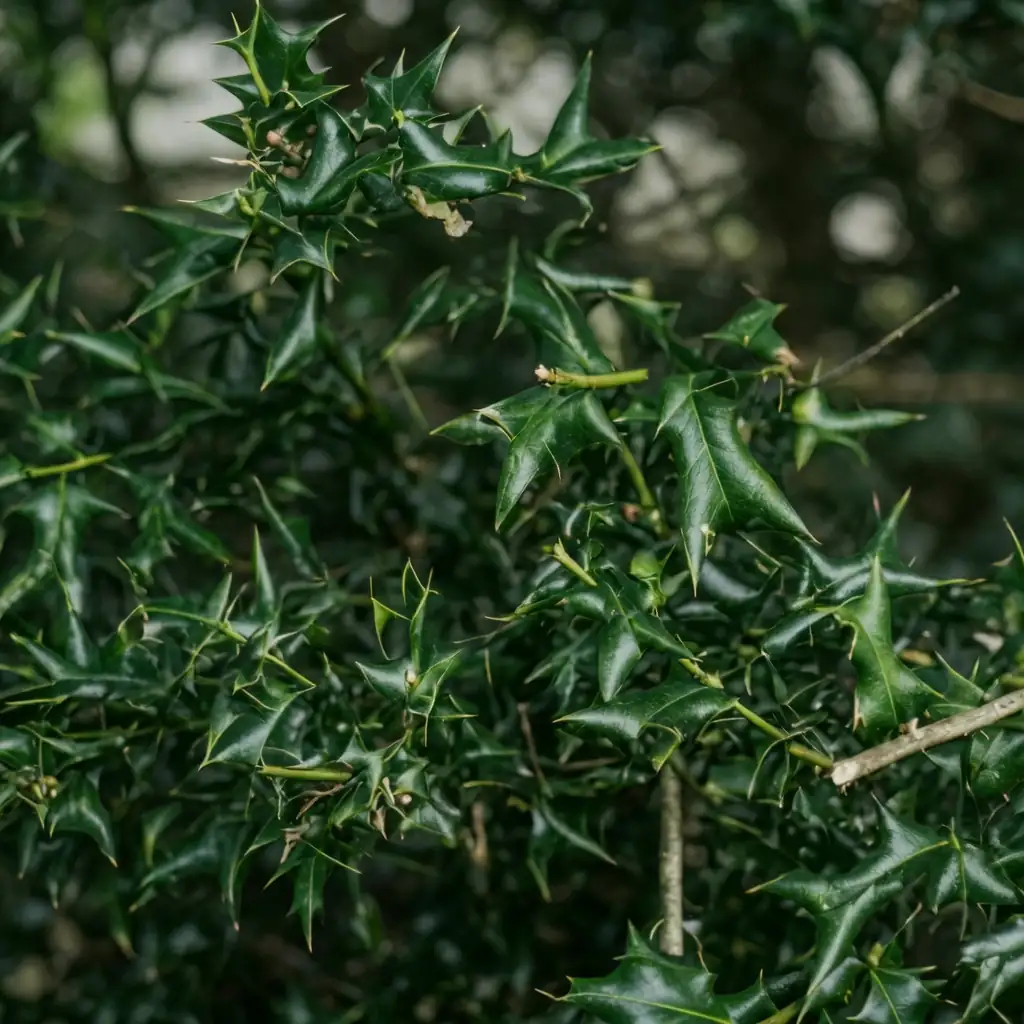
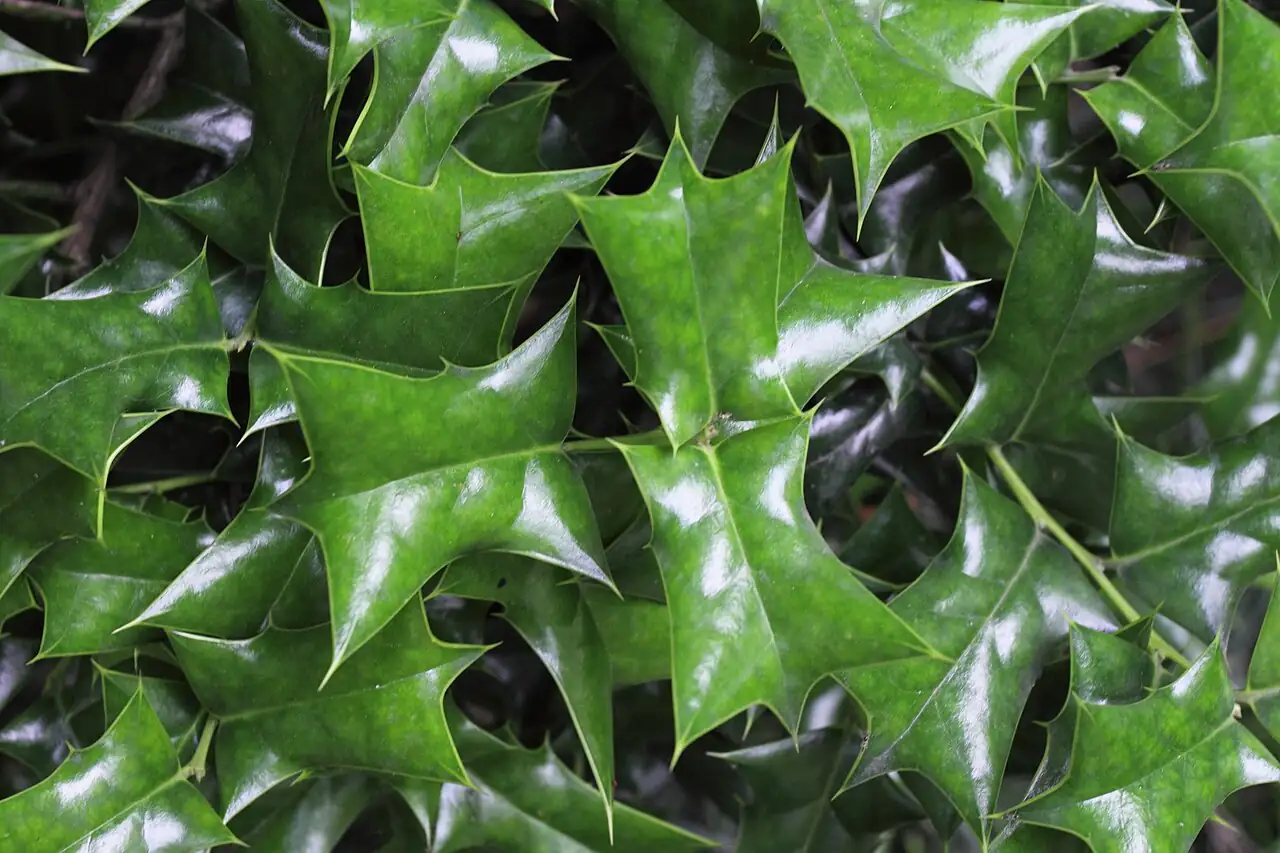
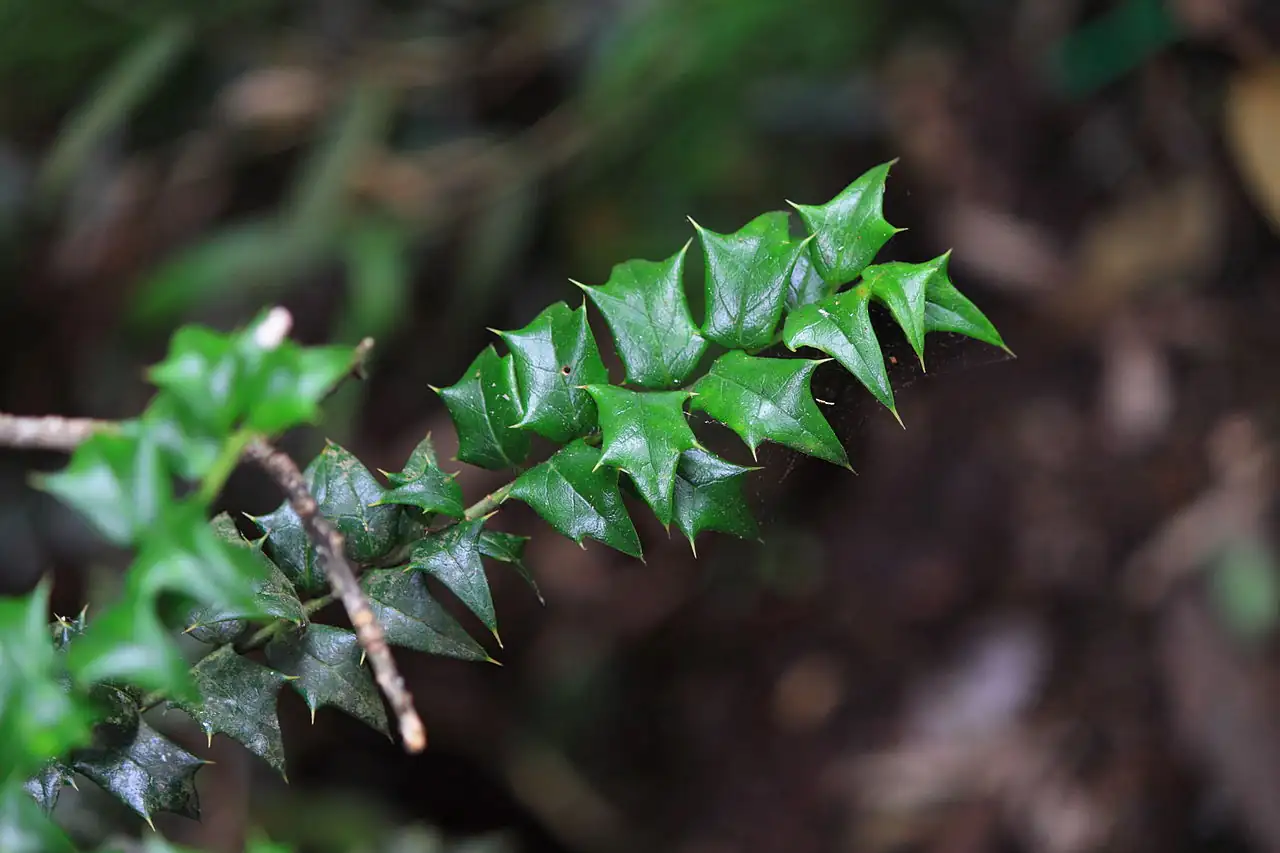
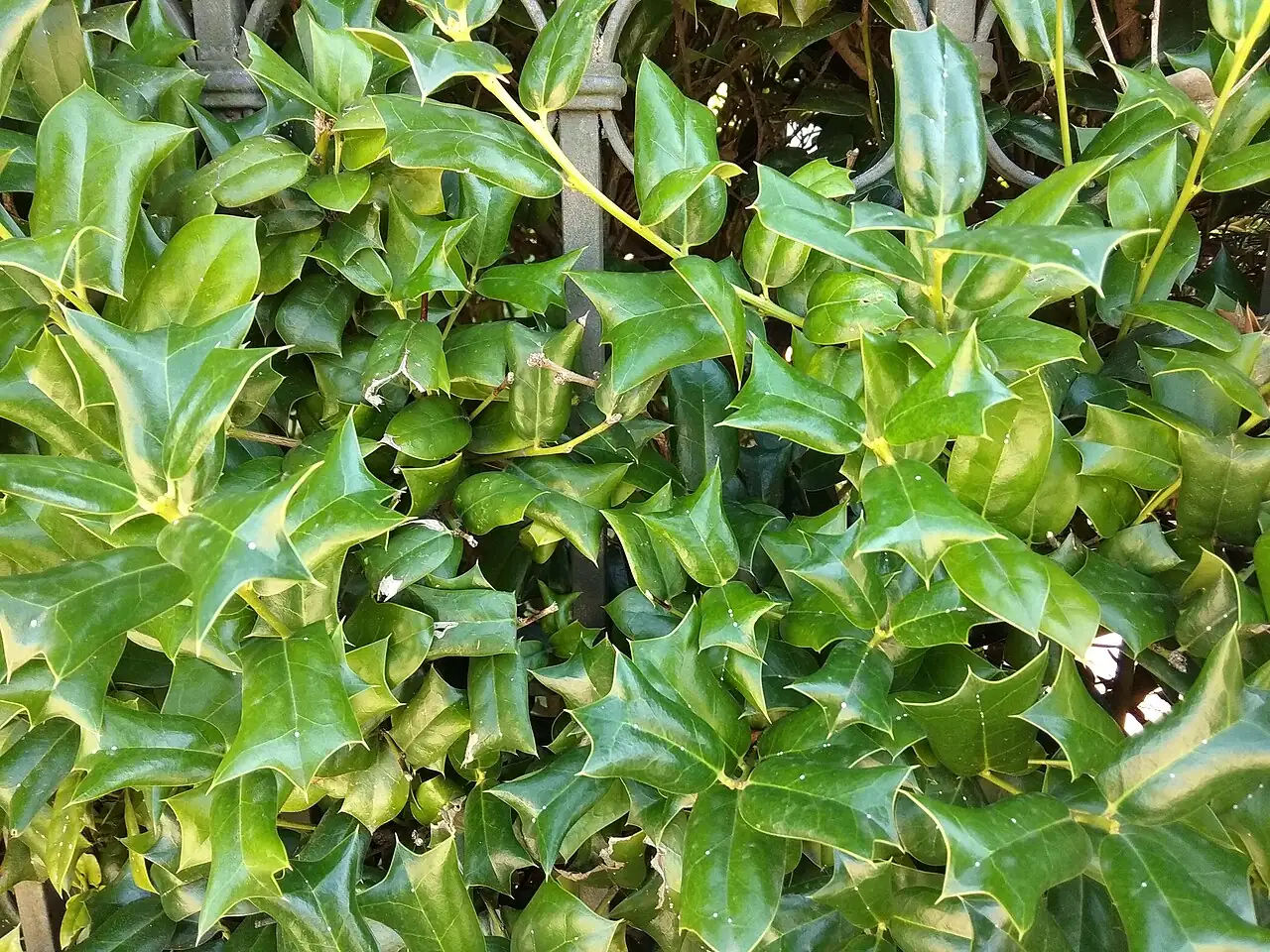
- Foliage: Leaves are thick, leathery, and very glossy; broadly oval to oblong with stiff, sharp teeth/spines—often a distinctive set near the tip (commonly three) plus additional spines along the margins. Young twigs are smooth (hairless), giving the plant a clean, polished look year-round.
- Flower: Flowers are small and yellow-green, appearing in spring in clusters in the leaf axils on older wood. Plants are dioecious (male and female flowers occur on separate plants). On female plants that receive pollen, the plant produces round, bright red, berry-like drupes that are highly ornamental and can persist into winter.
- Flowering Season: April–May (spring)
- Growth Habit: Evergreen, slow-growing shrub to small tree. It responds strongly to pruning and resprouts readily, making it excellent for shaping, hedging, and bonsai training. Transplanting established plants can be tricky because the root system may be relatively sparse and not very fibrous, so keeping the root ball intact matters.
Environment
Sunlight
Full sun to part shade; best fruiting typically occurs with more sun.
Temperature
Prefers mild to warm conditions and grows best around 15–28°C (59–82°F). Moderately cold-hardy once established; protect container plants from hard freezes.
Humidity
Enjoys moderate humidity but adapts well; prolonged hot, dry air can encourage pests (like spider mites) and reduce leaf quality.
Soil
Well-drained, fertile loam is ideal. Tolerates a range of soils as long as drainage is good. Keep evenly moist, but never waterlogged.
Placement
Great outdoors as a garden shrub/small tree, hedge, courtyard planting, or patio container specimen. Can be displayed in a bright indoor spot temporarily (especially for winter berry show). Also valued for cut branches with leaves and berries, and for bonsai—particularly older plants with characterful trunks.
Hardiness
USDA Zone 7–9 (approx.).
Care Guide
Difficulty
Easy to moderate. Day-to-day care is straightforward, but it grows slowly and can be sensitive to root disturbance, so transplanting/repotting takes a gentle hand. Pruning is easy—this plant forgives a lot and resprouts well.
Buying Guide
Pick plants with dense, glossy foliage and no leaf spotting. Check closely for scale insects (common on hollies). If you want berries, make sure you’re buying a female plant and have access to a compatible male pollinator nearby—or choose a female that’s already proven it can fruit.
Watering
Water deeply, then let the top 2–5 cm (0.8–2 in) of soil dry slightly before watering again. Avoid constantly soggy soil (it can lead to root issues). In winter, water less, but don’t let the root ball dry out completely—especially in pots.
Fertilization
Feed from spring through mid-summer with a balanced slow-release fertilizer, or use a liquid fertilizer at half strength every 4–6 weeks. Avoid heavy feeding late in the season to prevent tender new growth going into cold weather.
Pruning
Prune in late winter to early spring, or right after flowering, to shape and manage size. It tolerates hard pruning and works well for formal hedges and renewal pruning.
Propagation
Most commonly propagated by semi-hardwood cuttings in summer. Seed is possible but slow and variable. Because it resprouts strongly, it also responds well to training and shaping (though moving older plants can be difficult).
Repotting
Repot container plants about every 2–3 years in spring. Disturb roots as little as possible (keep the root ball intact), and use a well-draining mix in a pot with drainage holes.
📅 Seasonal Care Calendar
Spring: feed lightly, prune for shape, and watch for flowering/pollination if you want berries. Summer: keep moisture steady; take semi-hardwood cuttings; monitor for pests in hot/dry spells. Autumn: enjoy the berry display; taper off fertilizing and avoid heavy pruning. Winter: protect pots from severe cold; water sparingly but don’t let the soil go bone-dry.
Pests, Diseases & Safety
Common Pests & Diseases
Watch for scale insects, aphids on tender new growth, and spider mites—especially in dry indoor air. Sooty mold can appear secondary to sap-sucking pests. Root problems are most likely in poorly drained, constantly wet soil. Improve airflow, rinse foliage when dusty, and treat infestations with horticultural oil or insecticidal soap as needed.
Toxicity
Like many hollies, the fruits are considered mildly toxic if eaten in quantity and may cause gastrointestinal upset in people and pets. It’s best to keep berries out of reach of small children and animals that may chew them.
Culture & Symbolism
Symbolism: Often linked with protection and endurance—staying green all year and carrying bright fruit into winter makes it a classic “tough beauty.” It’s also widely used for seasonal decoration thanks to its festive berries.
Uses: Primarily grown as an ornamental for glossy evergreen foliage and winter berries—ideal for hedges, foundation plantings, courtyard gardens, and containers. It’s also a popular bonsai subject (especially older specimens) and its leafy, fruiting branches are widely used in cut arrangements.
FAQ
When does it flower?
April–May (spring).
When do the fruits ripen?
Typically October–December (autumn into early winter), and they often persist into winter.
How tall does it get?
About 3–4 m (9.8–13.1 ft) if left unpruned, but it stays much smaller in containers or with regular pruning.
Where is it native and what habitat does it prefer?
It’s native to eastern and south-central China, where it grows in shrub thickets on hillsides and in valley habitats; it’s also widely cultivated in gardens.
Does it prefer sun or shade?
It does best in full sun to part shade; more sun usually improves fruit set and berry color.
Is transplanting easy?
It can be challenging because the root system may be less fibrous. Transplant in spring, keep the root ball intact, and provide steady aftercare (even moisture, good drainage, and reduced stress).
Fun Facts
- Those glossy, spiny leaves are not just for looks—hollies evolved tough foliage that helps deter browsing.
- Because it’s dioecious, a lone plant may never fruit; a nearby male is the secret behind a berry-heavy female.
- The bright red drupes are one of the most reliable winter color accents in many temperate gardens.
- It takes pruning extremely well, which is why it’s often clipped into neat hedges or trained as bonsai.
- Chinese holly is noted for tolerating urban conditions like dust and some air pollution better than many shrubs.


